

We handpick and explain the most important stories at the intersection of climate, land, food and nature over the past fortnight.
This is an online version of Carbon Brief’s fortnightly Cropped email newsletter. Subscribe for free here. This is the last edition of Cropped for 2025. The newsletter will return on 14 January 2026.
Key developments
Economic risks from nature loss
RISKY BUSINESS: The “undervaluing” of nature by businesses is fuelling its decline and putting the global economy at risk, according to a new report covered by Carbon Brief. The Intergovernmental Science-Policy Platform on Biodiversity and Ecosystem Services (IPBES) “business and biodiversity” report “urg[ed] companies to act now or potentially face extinction themselves”, Reuters wrote.
BUSINESS ACTION: The report was agreed at an IPBES meeting in Manchester last week. Speaking to Carbon Brief at the meeting, IPBES chair, Dr David Obura, said the findings showed that “all sectors” of business “need to respond to biodiversity loss and minimise their impacts”. Bloomberg quoted Prof Stephen Polasky, co-chair of the report, as saying: “Too often, at present, what’s good for business is bad for nature and vice-versa.”
Tensions in deep-sea mining
-
Sign up to Carbon Brief’s free “Cropped” email newsletter. A fortnightly digest of food, land and nature news and views. Sent to your inbox every other Wednesday.
JAPAN’S TAKEOFF: Japan’s prime minister, Sanae Takaichi, announced on 2 February that the country became the first in the world to extract rare earths from the deep seabed after successful retrievals near Minamitori Island, in the central Pacific Ocean, according to Asia Financial. The country hailed the move as a “first step toward industrialisation of domestically produced rare earth” metals, Takaichi said.
URGENT CALL: On 5 February, the International Seabed Authority (ISA) secretary general, Leticia Reis de Carvalho, called on EU officials to “quickly agree on an international rule book on the extraction of critical minerals in international waters”, due to be finalised later this year, Euractiv reported. The bloc has supported a proposed moratorium on deep-sea mining. However, the US has “taken the opposite approach”, fast-tracking a single permit for exploration and exploitation of seabed resources, and “might be pushing the EU – and others” to follow suit, the outlet added.
CAUTIONARY COMMENT: In the Inter Press Service, the former president of the Seychelles and a Swiss philanthropist highlighted the important role of African leadership in global ocean governance. It called for a precautionary pause on deep-sea mining due to the potential harmful effects of this extractive activity on biodiversity, food security and the economy. They wrote: “The accelerating push for deep-sea mining activities also raises concerns about repeating historic patterns seen in other extractive sectors across Africa.”
News and views
- ARGENTINE AUSTERITY: The Argentinian government’s response to the worst wildfires to hit Patagonia “in decades” has been hindered by president Javier Milei’s “gutting” of the country’s fire-management agency, the Associated Press reported. Carbon Brief covered a new rapid-attribution analysis of the fires, which found that climate change made the hot, dry conditions that preceded the fires more than twice as likely.
- CRISIS IN SOMALIA: The Somali government has begun “emergency talks” to address the drought that is gripping much of the country, according to Shabelle Media. The outlet wrote that the “crisis has reached a critical stage” amid “worsening shortages of water, food and pasture threatening both human life and livestock”.
- FOOD PRICES FALL: The UN Food and Agriculture Organization’s “food price index” – a measure of the costs of key food commodities around the world – fell in January for the fifth month in a row. The fall was driven by decreases in the price of dairy, meat and sugar, which “more than offset” increasing prices of cereals and vegetable oil, according to the FAO.
- HIGH STANDARDS: The Greenhouse Gas Protocol launched a new standard for companies to measure emissions and carbon removals from land use and emerging technologies. BusinessGreen said that the standard is “expected to provide a boost to the expanding carbon removals and carbon credit sectors by providing an agreed measurement protocol”.
- RUNNING OUT OF TIME: Negotiators from the seven US states that share the Colorado River basin met in Washington DC ahead of a 14 February deadline for agreeing a joint plan for managing the basin’s reservoirs. The Colorado Sun wrote: “The next agreement will impact growing cities, massive agricultural industries, hydroelectric power supplies and endangered species for years to come.”
- CORAL COVER: Malaysia has lost around 20% of its coral reefs since 2022, “with reef conditions continuing to deteriorate nationwide”, the Star – a Malaysian online news outlet – reported. The ongoing decline has many drivers, it added, including a global bleaching event in 2024, pollution and unsustainable tourism and development.
Spotlight
Aftershocks of US exiting major nature-science body
This week, Carbon Brief reports on the impacts of the US withdrawal from the global nature-science panel, IPBES.
The Trump administration’s decision to withdraw the US from the world’s main expert panel that advises policymakers on biodiversity and ecosystem science “harms everybody, including themselves”.
That’s according to Dr David Obura, chair of the Intergovernmental Science-Policy Platform on Biodiversity and Ecosystem Services, or IPBES.
IPBES is among the dozens of international organisations dealing with the fallout from the US government’s announcement last month.
The panel’s chief executive, Dr Luthando Dziba, told Carbon Brief that the exit impacts both the panel’s finances and the involvement of important scientists. He said:
“The US was one of the founding members of IPBES…A lot of US experts contribute to our assessments and they’ve led our assessments in various capacities. They’ve also served in various official bodies of the platform.”
Obura told Carbon Brief that “it’s very important to try and keep pushing through with the knowledge and keep doing the work that we’re doing”. He said he hopes the US will rejoin in future.
Carbon Brief attended the first IPBES meeting since Trump’s announcement, held last week in Manchester. At the meeting, countries finalised a new “business and biodiversity” report.
For the first time in the 14-year history of IPBES, there was no US government delegation present at the meeting, although some US scientists attended in other roles.
Cashflow impacts
Dziba is still waiting for official confirmation of the US withdrawal, but impacts were being felt even before last month’s announcement.
Budget information [pdf] from last October shows that the US contributed the most money to IPBES of any country in 2024 – around $1.2m. In 2025, when Trump took office, it sent $0, as of October.
Despite this, IPBES actually received around $1.2m extra funding from countries in 2025, compared to 2024, as other nations filled the gap.
The UK, for example, increased its contribution from around $367,000 in 2024 to more than $1.7m in 2025. The EU, which did not contribute in 2024 but tends to make multi-year payments, paid around $2.7m last year. These two payments made up the bulk of the increase in overall funding.
Wider effects of US exit
Dziba said IPBES is looking at other ways of boosting funds in future, but noted that lost income is not the only concern:
“For us, the withdrawal of the US is actually much larger than just the budgetary implications, because you can find somebody who can come in and increase the contribution and close that gap.
“The US has got thousands of leading experts in the fields where we undertake assessments. We know that some of them work for [the] government and maybe [for] those it will be more challenging for them to continue…But there are many other experts that we hope, in some way, will still be able to contribute to the work of the platform.”
One person trying to keep US scientists involved is Prof Pam McElwee, a professor of human ecology at Rutgers University. She told Carbon Brief that “there are still a tonne of American scientists and other civil society organisations that want to stand up”.
McElwee and others have looked at ways for US scientists to access funding to continue working with the Intergovernmental Panel on Climate Change, which the US has also withdrawn from. She said they will try and do the same at IPBES, adding:
“It’s basically a bottom-up initiative…to make the message clear that scientists in the US still support these institutions and we still are part of them.
“Climate science is what it is and we can’t deny or withdraw from it. So we’ll just keep trying to represent it as best we can.”
Watch, read, listen
UNDER THE SEA: An article in bioGraphic explored whether the skeletons of dead corals “help or hinder recovery” on bleached reefs.
MOSSY MOORS: BBC News covered how “extinct moss” is being reintroduced in some English moors in an effort to “create diverse habitats for wildlife”.
RIBBIT: Scientists are “racing” to map out Ecuador’s “unique biological heritage of more than 700 frog species”, reported Dialogue Earth.
MEAT COMEBACK: Grist examined the rise and fall of vegan fine dining.
New science
- Areas suitable for grazing animals could shrink by 36-50% by 2100 due to continued climate change, with areas of extreme poverty and political fragility experiencing the highest losses | Proceedings of the National Academy of Sciences
- The body condition of Svalbard polar bears increased after 2000, in a period of rapid loss of ice cover | Scientific Reports
- Studies projecting the possibility of reversing biodiversity loss are scarce and most do not account for additional drivers of loss, such as climate change, according to a meta-analysis of more than 55 papers | Science Advances
In the diary
- 9-12 February: Climate and cryosphere open science conference | Wellington, New Zealand
- 18 February: International conservation technology conference | Lima, Peru
- 22-27 February: American Geophysical Union’s ocean sciences meeting | Glasgow, UK
Cropped is researched and written by Dr Giuliana Viglione, Aruna Chandrasekhar, Daisy Dunne, Orla Dwyer and Yanine Quiroz. Please send tips and feedback to cropped@carbonbrief.org

The post Cropped 11 February 2026: Aftershocks of US withdrawals | Biodiversity and business risks | Deep-sea mining tensions appeared first on Carbon Brief.

Saturday, 17 October 2026
7.18 AM AWST
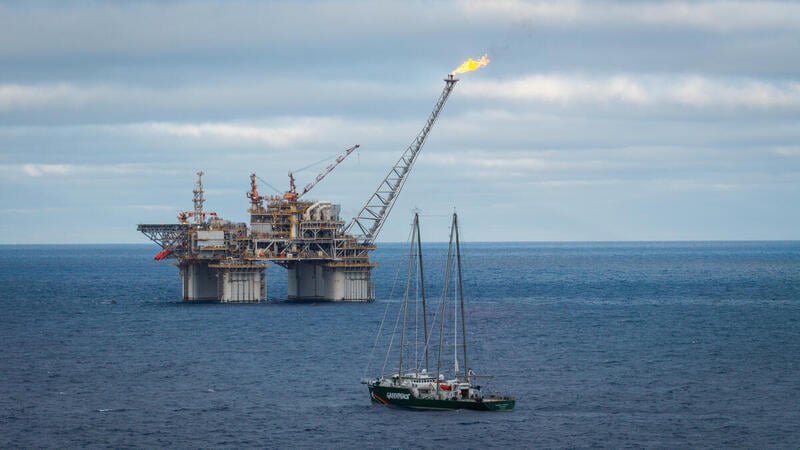
Hi folks! We’re joining you live from the Rainbow Warrior where we will be providing you with updates as our four activists continue scaling and occupying Woodside’s gas platform. The activists are peacefully protesting against Woodside’s latest gas expansion plans, the Browse project, which would see up to 57 toxic wells drilled at Scott Reef.
“Right now our activists are scaling Woodside’s massive Floating Production Unit. They are scaling the South-East pillar and the underside of the Helideck. They’ll be setting up camp soon and have plenty of provisions with them – so stick around!”
5:45 AM AWST
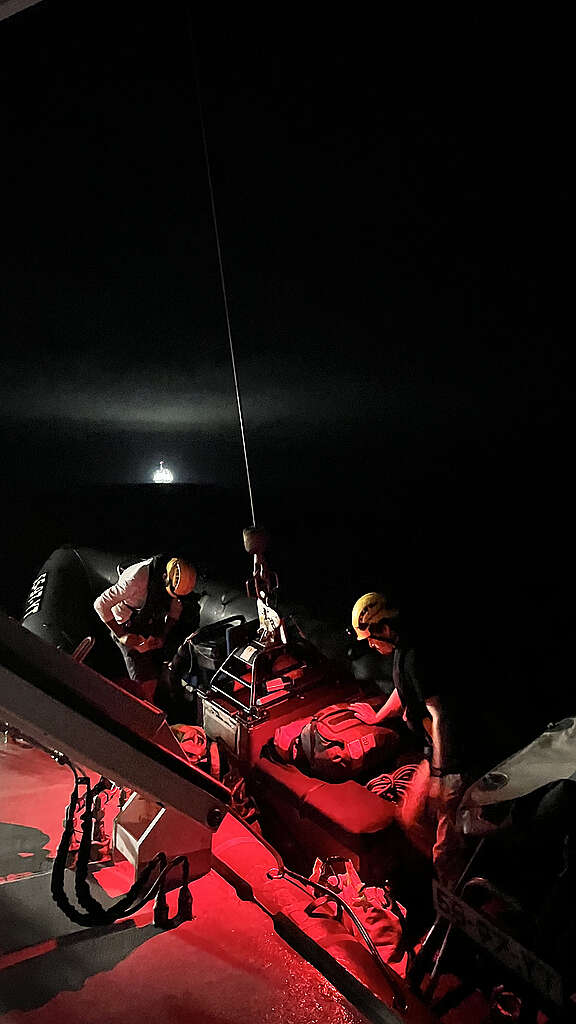
Our RHIBS are in the water! We’ve deployed our four activists and our ship crew on our small fast boats, headed to the gas platform. We’re carrying crew and equipment, plenty of food, all of our safety climbing gear, some big banners, cameras and a whole lot of heart… someone even has something to read after they get settled in.
5:26 AM AWST
Before sunrise activists prepared to launch RHIBS from the Rainbow Warrior.
Looking for a front seat view?
You can follow along with the Live Rainbow Warrior bow cam here!
Looking for more?
Follow us on Instagram for a peek behind the scenes and hear from our Rainbow Warrior crew.
Live blog: Greenpeace activists occupy Woodside gas project to save Scott Reef
Climate Change
Greenpeace activists climb and occupy Woodside’s Scarborough gas project calling on the Australian government to “Stop Woodside’s Dirty Gas” and “Save Scott Reef”
PERTH, Saturday 17 October 2026 — Four Greenpeace Australia Pacific activists are scaling and occupying a Floating Production Unit at Woodside’s Scarborough gas project off the coast of Western Australia, displaying banners reading: “Stop Woodside’s Dirty Gas. Save Scott Reef.”
- Photos and video available here and here. More will be uploaded throughout the day.
- Content and live updates will be uploaded to a live blog and to Instagram
Early this morning at 05:45 AWST, Greenpeace Australia Pacific activists launched from the Rainbow Warrior, Greenpeace’s flagship vessel, scaling and attaching themselves to a Floating Production Unit (FPU), a key piece of gas processing infrastructure at the Scarborough gas field over 200km off the coast of Exmouth.
Woodside has since confirmed it has initiated a temporary shut down of the FPU.
Greenpeace Australia Pacific is occupying the gas platform in peaceful protest of Woodside’s plans to drill for oil and gas at Scott Reef as part of its Browse proposal.
David Ritter, CEO at Greenpeace Australia Pacific, said: “Greenpeace Australia Pacific is taking action today to expose the unacceptable risk to Scott Reef posed by Woodside’s plans.
“Australians love our oceans. Woodside’s reckless Browse gas proposal would turn the magnificent Scott Reef into an industrial gas zone. Woodside wants to drill up to 57 toxic wells around Scott Reef, Australia’s largest oceanic reef, home to nesting green sea turtles, and endangered species like pygmy blue whales and the dusky sea snake; it is a place like nowhere else on Earth.
“Woodside has an alarming track record of oil spills, incidents and environmental neglect, and can’t be trusted with our oceans. From whaling in Albany in the seventies, to Woodside’s threat to Scott Reef today, there’s more than fifty years of history, of Greenpeace taking action off WA’s coasts to protect our oceans.
“There’s no future in new gas projects. Our future is in secure homegrown renewable energy, green industry and exports, where communities and places like Scott Reef are protected — there’s no future in dirty gas shipped offshore.
“The prospect of drilling for oil or gas on the Great Barrier Reef would be considered absolute madness today, but that is exactly the decision before the government: save Scott Reef or risk its destruction at the hands of a gas corporation.”
From aboard the Floating Production Unit, Dr Chris Holden, Greenpeace Australia Pacific activist said: “As a doctor, when I see new fossil fuel projects like Woodside’s Browse project being put forward, I can’t help but think about the impact this is going to have on the health of our communities and planet, and feel a sense of duty to act.
“Not only will this project do irrevocable harm to nature at Scott Reef, it will have a terrible impact on our climate, putting all of our lives at risk.
“On the Rainbow Warrior I’m carrying a copy of the 2025 Lancet countdown report, which warns that health impacts of climate change are worsening, with millions dying needlessly each year due to fossil fuel dependence, growing emissions, and failure to adequately adapt.
“With warnings like this from the leading global health professionals, our government simply can’t allow fossil fuel projects like Woodside’s Browse project to go ahead. It is their duty to do what is in the best interest of our communities.”
Almost half a million people have signed a petition calling on the government to Save Scott Reef and Woodside’s Browse gas project.
-ENDS-
Notes:
- Dial-in, SimSat and Zoom interviews with Geoff Bice, WA Campaign Lead at Greenpeace Australia Pacific, currently aboard the Rainbow Warrior, can be organised separately
Media contact:
Greenpeace Australia Pacific media team on +61 406 231 892 or +61 407 581 404
The board of the Fund for Responding to Loss and Damage (FRLD) will decide on Thursday on whether to “provisionally set aside” $20 million for Nepal to deal with some of the effects of the climate-driven flood it suffered in August.
The motion, seen by Climate Home News, has been drafted by a group of board members from both developed and developing countries and so is likely to pass easily at the fund’s first-ever extraordinary board meeting on October 22.
It invites the government of Nepal to submit a proposal for how to use the money, with the board then deciding at one of its regular board meetings whether to approve the proposal or not.
While Nepali officials have described $20 million as merely “symbolic” in the face of the $4.8 billion estimated costs of recovery and reconstruction, it would be the first time the new FRLD – agreed in 2022 months after devastating floods in Pakistan – has set aside money for a specific disaster.
Until now the fund has only taken requests through a single call for proposals, launched at COP30 in Belém last November, that gave countries six months to submit requests.
Most of the 180 projects the FRLD is currently considering are designed to help countries avoid damage from future climate disasters, for example by strengthening responses to floods in Bangladesh and Lagos.
The draft decision says Nepal’s proposal will serve as a pilot for how funding requests can be submitted outside of the fund’s current timetable. That could let governments seek funds quickly after a climate disaster strikes, rather than waiting for the next call.
This arrangement would set the fund apart from other United Nations funds designed for climate adaptation or cutting emissions like the Green Climate Fund.
Climate campaigners from Fill the Fund said the draft decision is “a real step forward” as it is “the first time this Fund has moved to respond to a specific disaster”.
Too little, too late
The FRLD was agreed by governments at COP27, set up and operationalised at COP28 in 2023 but has yet to award any money. The 180 funding requests it is currently considering would cost around $2.8 billion, but it only has $350 million to allocate.
The United Nations Secretary-General António Guterres has described the amount of money available in the fund as “ridiculously small” and Fill the Fund said $20 million “is a meaningful signal but it is a drop against an ocean of need”.
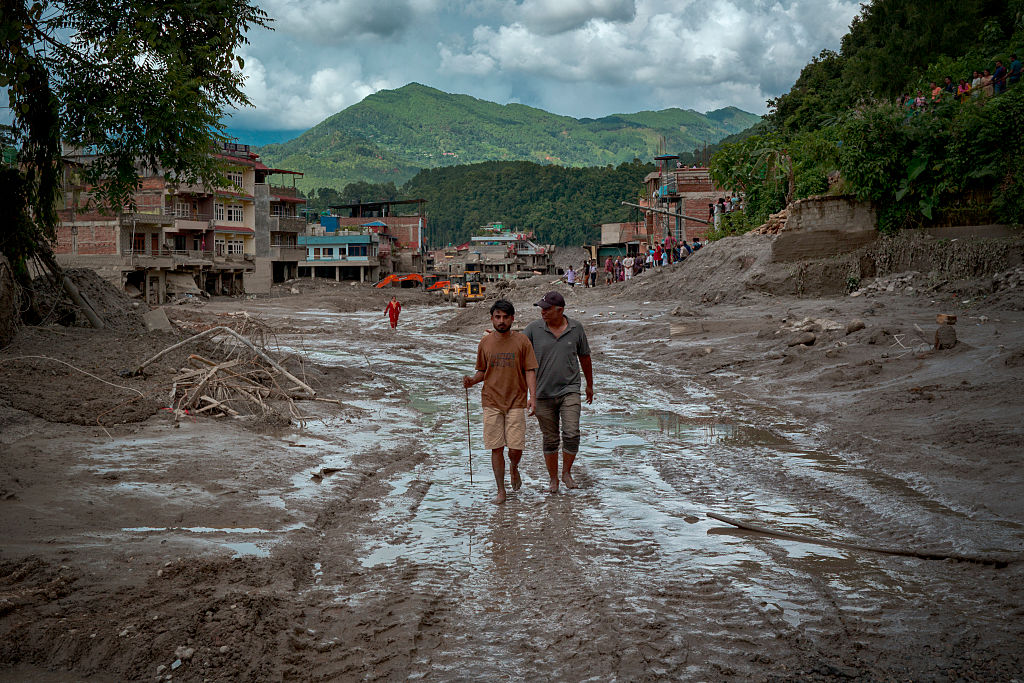
A glacial rock and ice collapse sent a torrent of water and debris through Nepal and the Chinese-administered region of Tibet on August 26. It killed more than 1,400 people, left thousands more missing and destroyed homes, bridges, roads and hydropower plants. Nepal’s finance and environment ministers quickly appealed to the FRLD board for funds, saying that “time is of the essence”.
Their call was followed swiftly by a letter from developing country FRLD board members urging the board’s co-chairs to organise an extraordinary meeting to allocate funds to Nepal.
But developed countries initially called for an informal consultation rather than a full board meeting. It took a further 45 days for the board’s co-chairs to organise an extraordinary board meeting for October 22 and to draft a motion for adoption.
Fill the Fund called for a permanent way of the fund rapid responding to disasters as “Nepal should not have required historic letters, an informal drafting group and the Fund’s first-ever extraordinary meeting simply to unlock an emergency response. The next country cannot wait two months and a bureaucratic marathon. Speed must be built in, not improvised.”
The post UN’s loss and damage fund set to give Nepal $20m for flood recovery appeared first on Climate Home News.
UN’s loss and damage fund set to give Nepal $20m for flood recovery
