

Welcome to Cited, your essential guide to new climate research.
In the news
SCIENCE ‘UNDER ATTACK’: Climate Home News reported that “dozens” of countries called out “coordinated attacks” aimed at “undermining the role of climate science” at UN climate talks in Bonn, Germany, last week. According to the outlet, the countries said that UN decision-making had to remain based on the “best available science”, including the reports of the Intergovernmental Panel on Climate Change. One negotiator said that India and Saudi Arabia “opposed calls in draft texts to encourage scientific work on scenarios that would minimise the magnitude and duration of any overshoot of 1.5C”, the article noted. For more, read Carbon Brief’s summary of the negotiations.
REPORT OPPOSITION: “Oil industry allies” in the US are targeting a report on extreme weather attribution, due to be published by the National Academies of Sciences, Engineering and Medicine, according to Politico. The outlet reported that the “heightened scrutiny – which involves a secretive opposition research group scouring scientists’ emails – has prompted two people to leave the 15-person panel tasked with producing the report”. Separately, the Guardian reported that the Trump administration has “reversed its decision” to dismantle the Ocean Observatories Initiative, a $368m deep-sea observation system.
SUPER EL NIÑO: BBC News reported that the US National Oceanic and Atmospheric Administration announced that El Niño had “officially begun”. Forecasts suggest the event could be among the “strongest ever recorded”, it added. Meanwhile, a “vigorous debate” is taking place about whether climate change is making the El Niño phenomenon more intense, according to the New York Times. The outlet explained that some scientists see the run of “comparatively strong” El Niño events in recent decades as an indication that “climate change is supercharging El Niño”. However, it added that “others say there is no clear evidence to support that theory”.
Research picks
Water
- Global sea level rise has nearly tripled the number of days since the 1970s when coastal water levels have surpassed average tide gauge readings | Science Advances
- As the Arctic warms, increased iceberg activity could “reshape” deep-sea habitats and “elevate” navigational hazards as maritime traffic expands | Nature
- Sea level rise has quadrupled the frequency of extreme coastal sea-level events since the year 1900 | Nature Climate Change
Inequality
- The top 10% of consumers are responsible for $1.7-5.7tn of environmental damage each year, surpassing international climate and biodiversity financing gaps | Communications Sustainability
- Calculating an individual’s emissions based on their asset ownership suggests that wealthier people are responsible for an even higher share of global greenhouse gas emissions than indicated by past studies | Nature Climate Change
- A plan that places equity at the “centre” of climate adaptation efforts in cities is needed to address the “stark disparities” between “affluent” and “disadvantaged” urban communities’ ability to prepare for extreme heat | PLOS Climate
Extremes
- In the western US, 42% of burned area over 2001-24 occurred during, and immediately following, heatwaves | Science Advances
- “Hot-to-wet” whiplash events have become more frequent across Australia over the past century, with south-eastern Australia emerging as a hotspot | Journal of Climate
- Rapid urbanisation, combined with more intense rainfall from tropical cyclones, have increased people’s exposure to “extreme” rainfall from tropical cyclones across China | Journal of Hydrometeorology
Captured
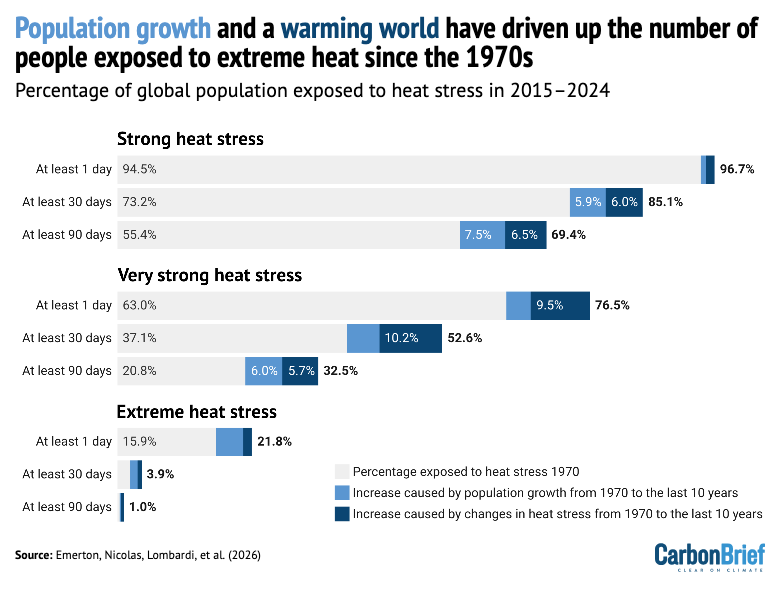
One billion additional people face at least one day of “extreme heat stress” every year compared to the 1970s, according to research published in Nature Climate Change.
The chart shows changes in “strong” (top), “very strong” (middle) and “extreme” (bottom) heat stress, defined as a “universal thermal climate index” above 32C, 38C and 46C, respectively. The grey bar shows the percentage of the global population exposed to at least one, 30 or 90 days of heat stress in 1970. The light and dark blue bars show the number of additional people experiencing heat stress over 2015-24 due to population growth and rising global temperatures, respectively.
10%
Equivalent damage to the UK’s GDP caused by climate change if global warming reaches 4C by 2100, according to new research in Nature Climate Change. The study estimates a range of 2-20%.
Spotlight
Introducing: Project Cosmos
Carbon Brief explains how it built a major new database of climate science research and unveils a new ranking of the 500 most highly cited publications, authors and institutions in climate science.
This week, Carbon Brief launched Project Cosmos – the world’s largest and most complete database of climate change research.
The database features more than 1.8m academic papers, books and reports, capturing the vast body of human knowledge about climate change that has accumulated over more than a century of academic study.
The climate science “universe” is based on reports from the Intergovernmental Panel on Climate Change (IPCC), which are recognised as the world’s most authoritative summaries of the latest climate science.
Since its first report was published in 1990, humanity’s knowledge about human-caused climate change has ballooned. The IPCC has published six sets of reports in total – each one longer than the last.
In total, IPCC reports reference more than 100,000 other papers, books and reports. This is the core of our climate science universe. Carbon Brief then built on this core, by looking at four other sources of data. Read more about how the Cosmos database was created here.
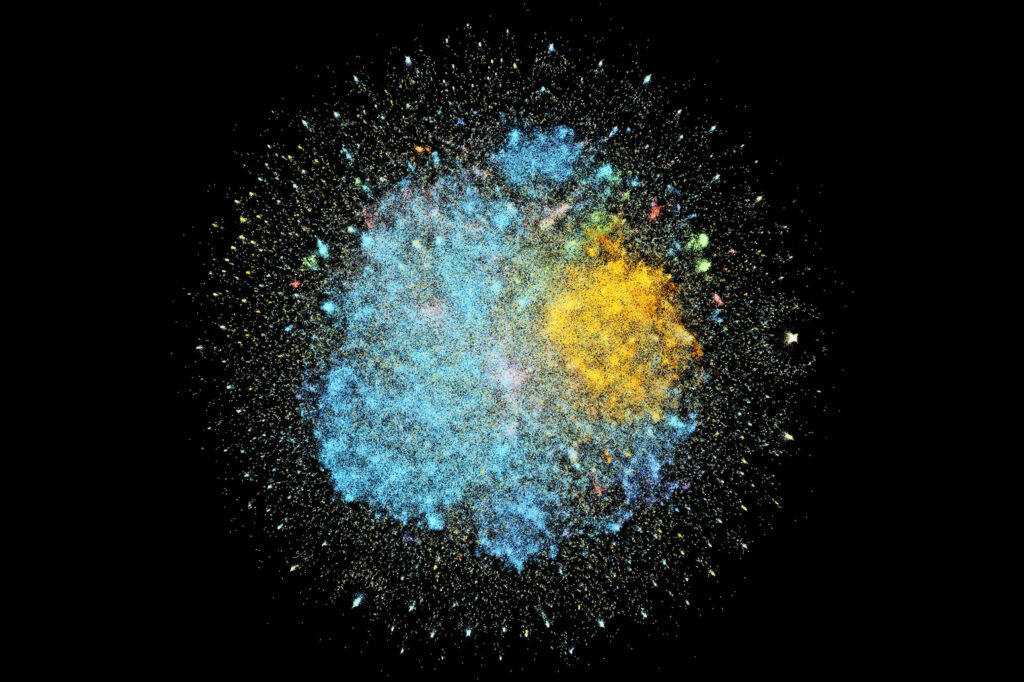
Every single publication in the Cosmos database is linked to at least one other through references. Visualising these links reveals a “galaxy” of references. In the image above, each colour and cluster reveals different topics and densities of research. Explore the galaxy in an interactive map here.
Cosmos 500
As part of an initial wave of preliminary analysis to demonstrate the scope of the Project Cosmos database, Carbon Brief has ranked the 500 most highly cited publications, authors and institutions in the database.
The most highly cited climate scientist is Prof Philippe Ciais, who has spent almost four decades researching the planet’s carbon cycle – and the ways in which humans have been impacting its balance. Carbon Brief recently interviewed Ciais in Paris.
The US tops the tables for the most highly-cited authors and institutions. Almost half of the 500 most highly-cited authors are from US institutions. This raises particular concerns for the future of climate science, as American climate scientists and institutions are coming under attack under the Trump administration.
Experts from global south countries account for only 4% of all authors in the Cosmos 500. China stands out as the most highly-cited global south country. Meanwhile, only 10% of authors in the Cosmos 500 are women.
There are many possibilities for future avenues of research using the Cosmos database. Over time, the database could be used to reveal, for example, how interest in different areas of climate science has changed over time, plus identify potential knowledge gaps and, thus, opportunities for future research.
Carbon Brief invites researchers – including academics, journalists and analysts – to submit their own proposals for co-authored studies, literature reviews and analytical projects.
Preprints to watch
Carbon Brief’s pick of new papers still going through peer review
- Regional reductions in aerosol emissions can “temporarily amplify” the likelihood of record-breaking heat events | Environmental Research: Climate
- Analysis of Reddit posts suggests the Fridays for Future movement has created “wider awareness” of global warming by drawing attention to climate change and “climate actions” | npj climate action
- Periods of simultaneous low wind and solar power generation, known as “renewable energy droughts”, will “intensify progressively” as the planet warms | Nature portfolio
Noticeboard
- 28-30 June: Seventh global conference on climate and sustainable development goal synergies, Bangkok, Thailand
- 29 June-1 July: Exeter climate conference, Exeter, UK
- 29 June-1 July: National Academy of Sciences hybrid workshop on seabed critical mineral resources, Irvine, US
- 30 June: Submission deadline for abstracts for MedCLIVAR conference, scheduled for 21-25 September in Limassol, Cyprus
- 30 June: Application deadline for postdoctoral position in ice-ocean interactions at the Physics Laboratory of Ecole Normale Supérieure de Lyon | Salary: €3,071-4,714 per month. Location: Lyon, France
- 30 June: Submissions open for abstracts for the pan-African conference on environment, climate change and health, scheduled for 21-24 October in Nairobi, Kenya
- 8 July: Application deadline for position as research officer in climate science and law at the Grantham Research Institute | Salary: £43,277-51,714. Location: London, UK
- 10 July: Application deadline for position as associate or senior editor at Nature Water | Salary: Unknown. Location: Shanghai, Beijing or Milan
Cited is researched and written by Cecilia Keating, Robert McSweeney, Ayesha Tandon, Daisy Dunne and Dr Giuliana Viglione.
Please send tips, feedback and upcoming climate research to cited@carbonbrief.org
This is an online version of Carbon Brief’s fortnightly Cited email newsletter. Subscribe for free here.
The post Cited 23 June 2026: Project Cosmos launch | Science ‘under attack’ at Bonn | Emissions inequality appeared first on Carbon Brief.
Cited 23 June 2026: Project Cosmos launch | Science ‘under attack’ at Bonn | Emissions inequality

When oil and gas shipments stopped flowing through the Strait of Hormuz at the start of the Iran war, Southeast Asian nations were left reeling as the supply crunch laid bare their acute reliance on fossil fuel imports.
As prices soared, governments in the region scrambled to introduce emergency energy-saving measures – from a four-day working week to curbs on air conditioning. Thailand revived decommissioned coal plants while the Philippines, which imports nearly all of its oil, declared a “national energy emergency”.
But the crisis has also prompted renewed resolve to find a long-term solution to their vulnerability at a time when electricity demand is booming to power the region’s growing industry, cooling needs and the mushrooming of energy-hungry data centres.
At the heart of Southeast Asian nations’ response is a longstanding infrastructure project to connect the region’s power grids by 2045 and enable cross-border trading of clean electricity through a network of underground and subsea interconnectors.
-
Southeast Asia’s fragile grids threaten billions in clean energy investment
Renewables developers need reliable electricity infrastructure and stable policies to help the region meet climate goals and surging demand for power -
UN backs push to upgrade grids slowing clean power uptake in Africa and SE Asia
The Global Grids Accelerator will help turn national and regional plans to expand electricity infrastructure into viable projects on the ground -
China keeps Indonesia’s battery dream afloat but future less certain
Chinese capital and technology turned Indonesia into the world’s top nickel supplier, but its dependence on China and the rise of nickel-free batteries could upset its battery ecosystem plans
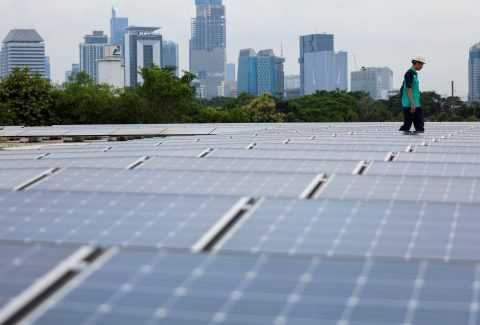
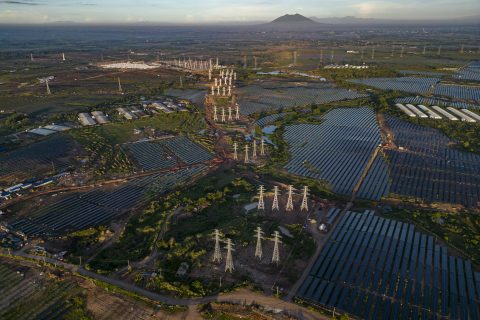
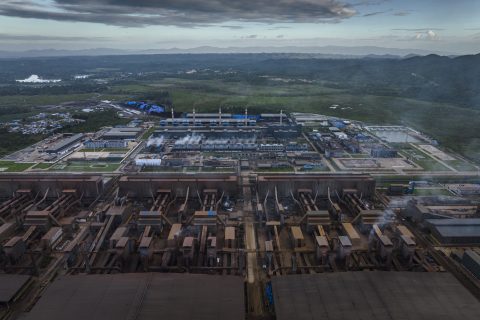
The plans will allow nations with high renewable energy generation potential to trade surplus power to their neighbours and major demand centres like Singapore, helping to integrate more renewables into the power mix and reduce reliance on fossil fuel imports.
“[It] will give us more energy security,” the Philippines’ energy secretary, Sharon Garin, told a press conference after a meeting of the Association of Southeast Asian Nations’ (ASEAN) energy ministers last week, when they discussed accelerating the delivery of the regional grid as part of measures to respond to the energy crisis.
“The Philippines is rich in solar power, Malaysia is rich in hydropower and Indonesia has geothermal: different countries have different resources. [The ASEAN Power Grid] will optimise the utilisation of renewables to the benefits of each member state,” said Garin.
But turning this decade-old political vision into a reality has been slow, held up by painstaking work to harmonise a patchwork of regulatory and legal frameworks and mobilise the private capital needed to build cross-border infrastructure.
More than $300 billion is needed to expand and modernise the region’s fragile grids to support the projected energy demand increase by 2050. This includes $27 billion required to deliver the cross-border interconnections by 2040, according to the International Energy Agency (IEA).
Every year of delay could cost the region billions of dollars in additional fuel costs and lock in new gas infrastructure for decades to come, according to analysis by global energy think-tank Ember.
The building block for energy security
With electrification high on the agenda of the COP31 climate talks in Türkiye next month, there is growing attention on the need to modernise and expand grid infrastructure to cope with growing electricity use and more renewables in the power mix.
Clean electrification and energy efficiency could deliver about a third of cumulative carbon emission reductions between 2026 and 2050, according to the International Renewable Energy Agency’s World Energy Outlook. But delivering that would require doubling annual global grid investment to $1 trillion between now and 2035.
Last month, the UN launched an initiative to accelerate investment into expanding and modernising grids in Southeast Asia and Africa.
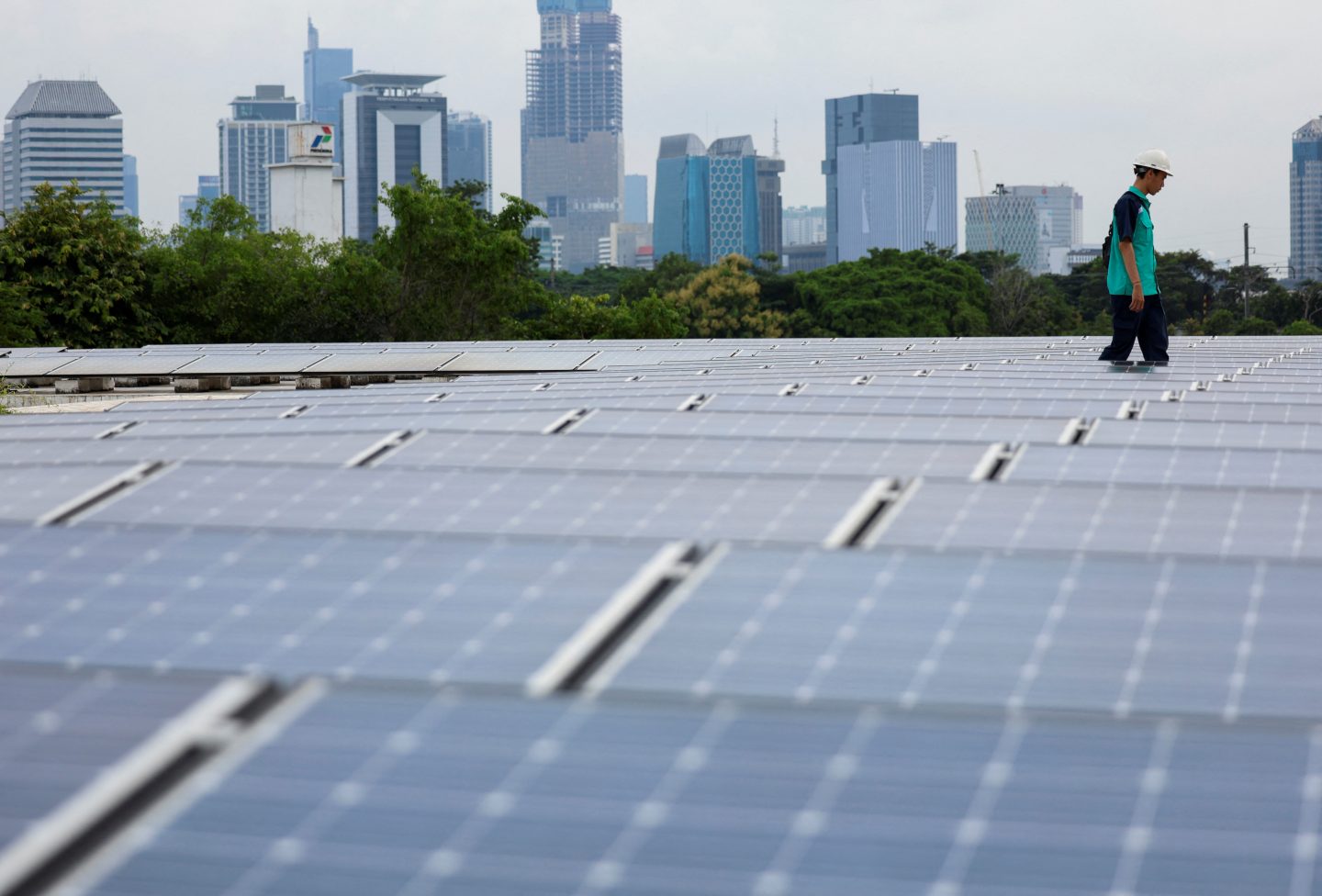
First conceptualised in 1997, the ASEAN Power Grid has gained fresh impetus in recent years as countries turn to renewables to cut their emissions and move away from volatile fossil fuel markets.
Energy supply disruption caused by wars in Ukraine and the Middle East has strengthened the case for regional grid connections. Before this year’s conflict began, the Middle East accounted for 60% of Southeast Asia’s crude oil imports. Competition for fewer, more expensive oil and gas shipments has left Southeast Asia facing a $160 billion energy import bill this year. Based on current policies, this could rise to $400 billion by mid-century.
In the Philippines last week, energy ministers agreed on an enhanced planning framework to deliver the ASEAN Power Grid and made progress on regulatory guidelines.
Garin said ministers were considering accelerating the project’s delivery. “The first study was to connect [by] 2045 – that’s too far,” she said.
A strong business case
The economic benefits of the plan have “captured the political imagination” of leaders in the region, Robert Cooke, grids advocacy lead at the Global Renewables Alliance, told Climate Home News. “The business case is stronger than ever,” he said.
“If countries were to go about building their own separate grids, of course that would be an expensive endeavour. But the discussion around the ASEAN Power Grid includes what costs could we share in building out this grid,” added Tiza Mafira, director of the Indonesia office for the Climate Policy Initiative.
Stronger grids would help the region meet collective targets to increase the share of renewable energy in total primary energy supply from 14% to 30% and in installed power capacity from 34% to 45% by 2030.
Connecting and pooling dispersed renewable resources would also help smooth local power shortages caused by daily and seasonal variations, reducing the need for backup gas plants and battery storage.
The IEA found the ASEAN Power Grid could help unlock some of the 20 terawatts of untapped solar and wind potential across Southeast Asia – an amount around 55 times the region’s current total power capacity.
From lines on a map to shovels in the ground
Rather than building a single unified network, the ASEAN Power Grid is developing cross-border links between neighbouring countries and smaller groups of nations.
As of 2025, nine of 18 priority interconnection projects are operational – accounting for around 10 GW of capacity with an additional 13.7 GW planned by 2040.
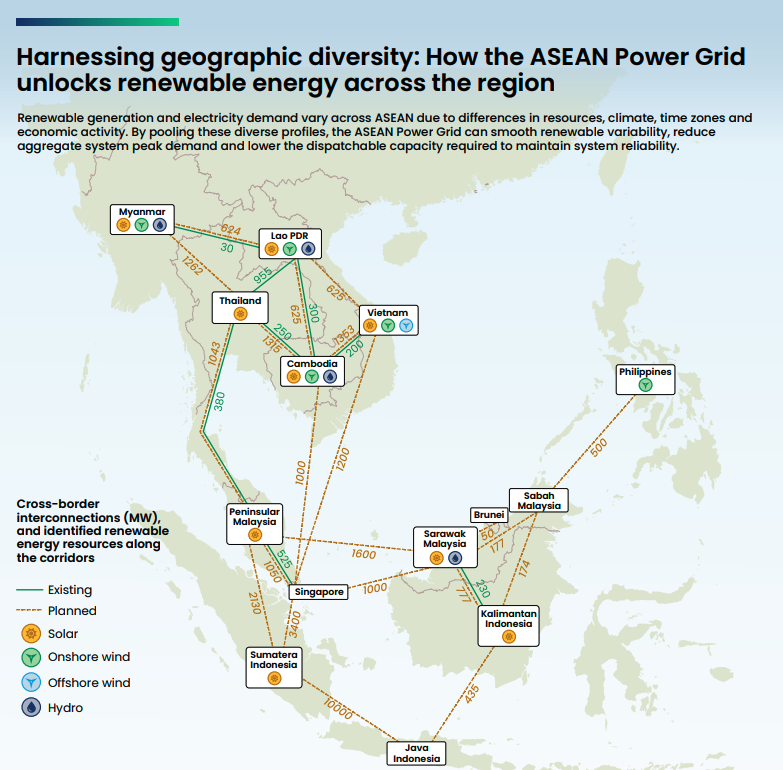
Source: Ember
A power line channelling up to 200 MW of clean electricity generated from hydropower in Laos to Singapore via Thailand and Malaysia has emerged as a key building block for grid-to-grid trading.
Progress on technical discussions will also help provide the clarity the private sector needs to invest in bankable projects, said Cooke.
In 2025, the Asian Development Bank and the World Bank announced a dedicated funding initiative to support the project.
“The enabling pieces are emerging,” said Monalisa Dimalanta, former chair of the Philippine Energy Regulatory Commission and the National Renewable Energy Board. “But the timelines remain unclear and a 2045 vision cannot answer today’s emergency,” she said.
“A power grid… that exists only on paper will not keep the lights on.”
Singapore: the delivery test
The implications of failing to deliver the ASEAN Power Grid are most acute in Singapore.
Constrained by space, with few renewable energy resources and dependent on gas for more than 90% of its electricity mix, Singapore has emerged as a leading proponent of a regional power grid as it seeks to achieve net-zero emissions by 2050.
To meet its power needs, the city-state aims to import 6 GW of low-carbon electricity by 2035, around one-third of its energy demand – a target which it is set to miss, however.
The plans heavily rely on building interconnectors to import solar power from Indonesia across the South China Sea. Around 40% of the ASEAN Power Grid’s planned interconnections are directed towards Singapore.
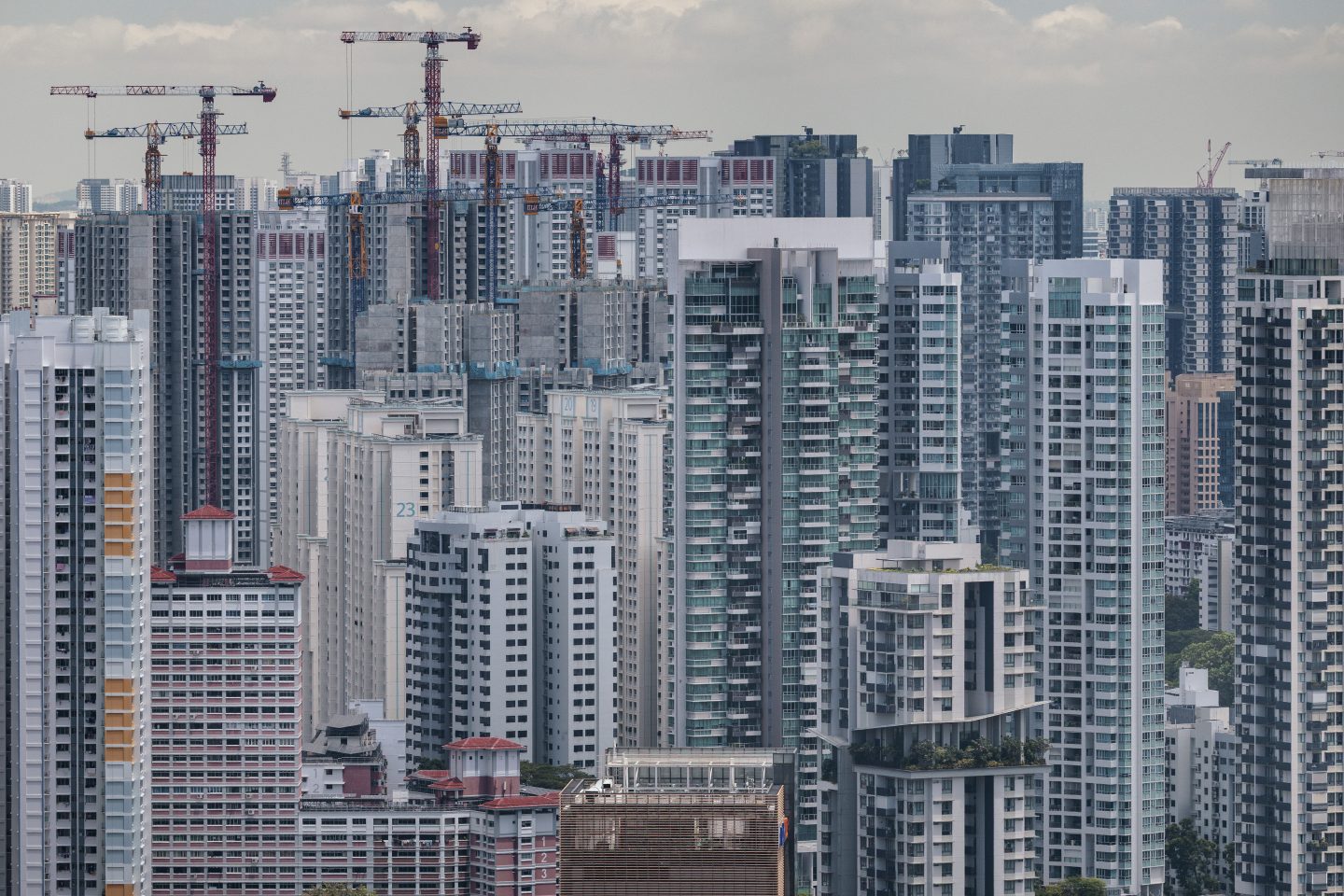
Ember’s analysis found that delivering the planned interconnectors by 2035 could enable renewables to meet nearly half of Singapore’s electricity demand. Delays could drop this to only a fraction of the country’s needs, and risk locking in new gas capacity until the 2050s. Without the ASEAN Power Grid, Singapore would need to install an additional 300 MW of gas-fired power capacity to bridge the gap by 2035.
Already home to the largest data centre capacity in Southeast Asia, Singapore’s electricity demand keeps rising, driven by the boom in AI infrastructure. “At one point, [it] either has to build a new gas plant, or it has to get the interconnection to supply that demand,” Lam Pham, an Ember energy analyst and the report’s author, told Climate Home News.
A region at a crossroads
With capital increasingly available, political will is now the biggest risk standing in the way of timely execution, said Pham.
But there are other challenges too, including the lack of frameworks on transmission tariffs and how to share the benefits of clean power trading. “It’s really hard to justify projects without that,” he said.
In addition, climate-fuelled weather events, including extreme heat and tropical storms, pose major threats to the region’s grid infrastructure. Experts say stronger grid interconnection can isolate damage and build the system’s resilience.
Efforts to deliver on the ASEAN Power Grid also come as ministers stressed the “continued importance of oil and gas” for economic development and seek to secure fossil fuel supplies and stockpile oil to prepare for the next crisis.
Despite an acceleration of renewable deployment, particularly solar, coal still generates nearly half the electricity supply in ASEAN member states and dominates the power mix in Indonesia, the Philippines and Vietnam, while Singapore and Thailand rely on gas.
While these measures might help the region with the immediate crisis, “the long-term answer is more domestic renewable energy, electrification, storage, efficiency and regional power trade”, Dimalanta said.
Main image: An aerial view of the MTerra solar project in the Philippines, set to become one of the world’s largest solar-and-battery developments (Photo by Ezra Acayan/Getty Images)
The post SE Asia speeds up plan for connected clean power grid after oil shock appeared first on Climate Home News.
SE Asia speeds up plan for connected clean power grid after oil shock
Climate Change
“Sink or swim”: WA Gov hugely underestimating decline in regional gas demand while sleeping on green exports, new report finds
PERTH, Tuesday 13 October 2026 — A new report from Greenpeace Australia Pacific and Springmount Advisory reveals green commodity exports are an untapped economic opportunity for Western Australia in a de