

What’s not to love about a go-to dress in your wardrobe? The right one can be dressed up or down, it can be worn alone, or worn as a skirt with the right top layered on. A dress is arguably the easiest outfit to put together that still looks put together. The right sustainable dress is the kind of closet staple you can reach for on any kind of summer day, even when you have no idea what to wear.
From t-shirt dresses and house dresses to chic midi frocks and fun mini’s for a night out, this roundup of sustainable dresses has just about everything.
So if you’re looking for that perfect eco-friendly dress to complement your wardrobe this year, I’ve got you covered with this guide to sustainably and ethically-made dresses. This guide has brands with both casual and more formal dresses, but if you’re shopping for exclusively special occasion dresses, I’d recommend also browsing my guide to formal dresses.
What Qualifies As (More) Sustainable Dresses?
Wearing what we have in our closets is the most sustainable approach! But if you’re here, you probably already evaluated that option and you’re looking to add something fresh to your closet.
Secondhand Dresses are Sustainable Dresses
The second most sustainable option is to look secondhand. ThredUp can be a versatile option for pieces at any price point and The RealReal is my favorite choice for more premium brands.
Online secondhand marketplaces like Poshmark or Depop are also good options — but something to watch out when it comes to peer-to-peer marketplaces is that they can sometimes contain new fast fashion disguised as “vintage” pieces, so it can require some additional digging.
For more suggestions, find my full guide to secondhand clothing retailers in this post.
If you’re looking for a new sustainably-made dress, here are some considerations:
- Materials: what is it made from? Is it made with a natural fabric like hemp, linen, or organic cotton? Perhaps made from deadstock or upcycled materials?
- Production Practices: does the brand take efforts to not overproduce? Do they produce in small batches? (No matter how “eco-conscious” the material is, if a brand is throwing away 30% of their stock, that’s not sustainable!)
- Timelessness and Quality: this doesn’t have to mean boring and doesn’t necessarily mean the brand never participates in a trend. But does the brand constantly hop on every single trend and push you to buy more and more? Or do they encourage slow mindful consumption with well-designed dresses? Do they pay attention to construction and details that ensure you’ll be wearing this dress year after year?
- Manufacturing: most brands do not produce their own clothing, but are they sourcing from facilities that pay their workers fairly? Do those facilities minimize waste, use renewable energy, and responsibly manage chemical usage?
- Ethical Production: who made the dress? were they paid fairly and were they working in safe conditions? do they have worker’s rights, such as the right to organize? how does the brand ensure this? Certifications can be helpful here. But sometimes factories cannot afford these, so look for other assurances, such as that the founder personally visits the factories.
- Ownership: is it a small woman-owned business or major fashion brand owned by billionaires? What are your values when it comes to where your money is going?
I know that’s a lot! But these are elements to start looking for as you browse through brands. This isn’t about perfection — it’s just about learning and doing the best we can.
My Top Picks for Ethical and Sustainable Dresses
To help you out (because I get it — it’s complicated!) I’ve curated retailers and brands with sustainable and ethical dresses. These brands aren’t necessarily perfect, but they’re doing things better for people and the planet. I’ve included “Conscious Qualities” by each brand or retailer, so you can get an idea about why the brand is on the list and which sustainability criteria they meet.
I’ve also curated brands at a range of price points, to accommodate for different budgets.
This Guide’s Price Range Key:
- $ = Dresses under $100
- $$ = Dresses $100 – $200
- $$$ = Dresses $200+
Keep in mind that while price and quality aren’t necessarily directly tied to each other, lower prices may sometimes mean a sacrifice on quality and the highest quality picks are often on the higher end of the price spectrum. Better quality fabrics cost more, more skilled seamstresses are typically paid more, and many of the details that take a piece from good to great — such as pockets, well-fastened buttons, and linings — add to the product cost as well.
This article features affiliate links, which means we earn a small commission at no additional cost to you (which helps us fund this website) if you choose to purchase through one of these links. As always, we only feature brands that meet high standards for sustainability that we love and that we think you’ll love too!
1. Christy Dawn
Best for flowy, romantic dresses
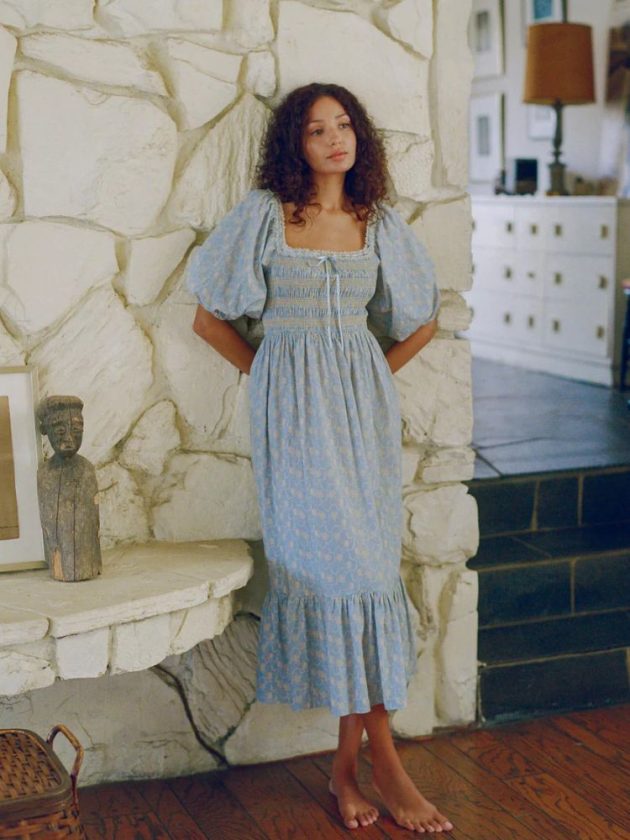
Crafting “dresses you want to live in”, Christy Dawn’s pieces are a fairytale come true with their romantic silhouettes and dreamy prints. The sustainably-minded brand sources organic cotton as well as regenerative organic cotton grown in India by their partners Oshadi Collective. This “Farm-to-Closet” collection is also vegetable-dyed and block-printed in India using traditional time-honored practices.
Conscious Qualities: Organic & Regenerative Fabrics, Local & Ethical Production
Size Range: XS-3XL
Price Range: $$$
2. Whimsy + Row
Best for flirty and feminine frocks
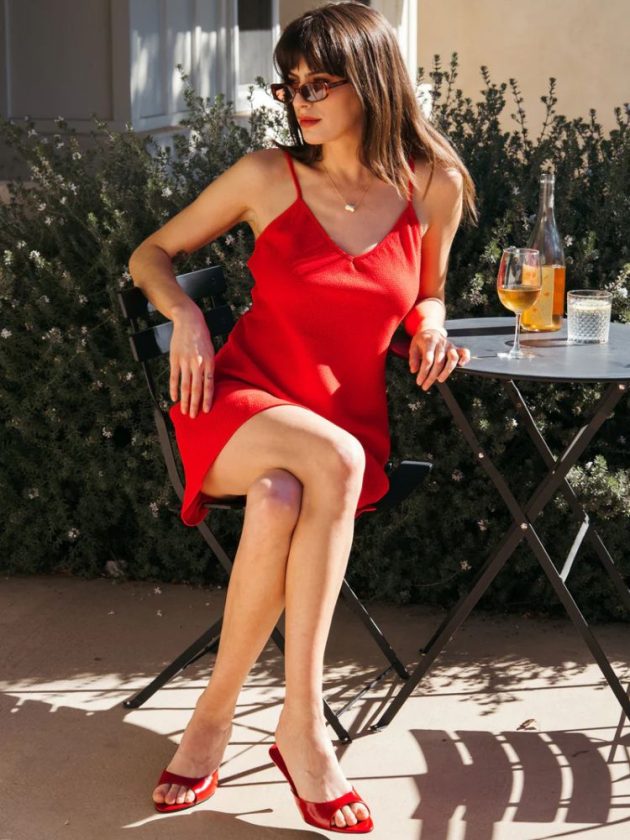
If you want a sustainable dress that doesn’t scream “sustainable”, Los Angeles-based Whimsy + Row is the brand for you.
The slow fashion label manufacturers their clothing in limited batches just a few miles away from their office and sources repurposed fabrics (i.e. deadstock) and lower-impact natural materials (such as linen and organic cotton) for their unapologetically feminine clothing. And don’t sleep on their bridesmaid dress options!
Conscious Qualities: Lower Impact Fabrics, Small Batch Production
Size Range: XS-XL
Price Range: $$-$$$
3. Tradlands
Best for effortless house dresses
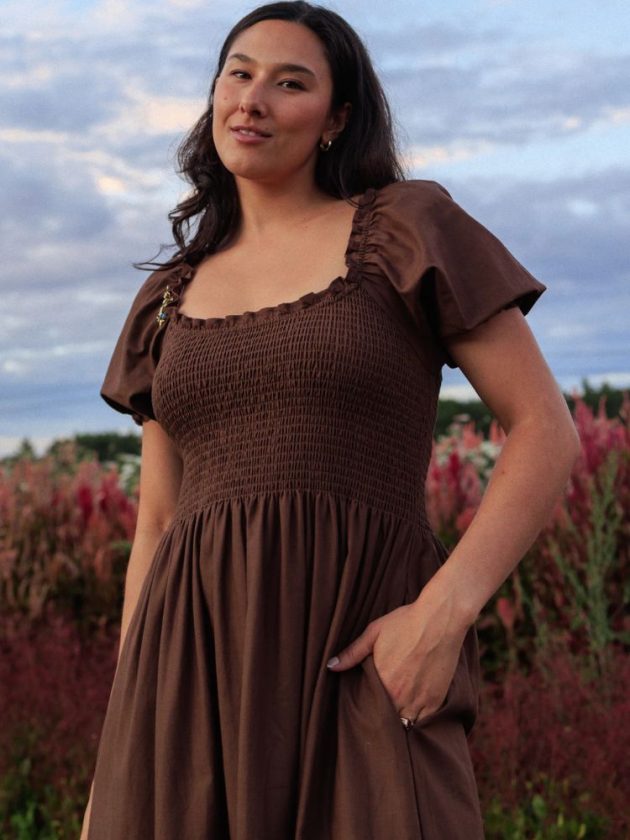
Created out of co-founder Sadie’s desire for classic, high-quality pieces, Tradlands is designed with longevity and versatility top of mind. And their effortless dresses are just as simple to care for — Tradlands uses natural — but washable! — fibers like cotton and linen.
The 100% cotton tiered dress I have from Tradlands (this one’s similar) is one of my summer go-to’s — breathable, flattering, and easy to dress up or down. I can wear it as a house dress working from home, or paired with jewelry and elegant sandals to dinner. (Monofiber fabrics — i.e. 100% of one fiber — is also easier to recycle than fabric blends.)
Conscious Qualities: Natural Fibers, Small Batch Production, Extended Sizing
Size Range: XS-4XL
Price Range: $$
4. Magic Linen
Best for 100% linen dresses
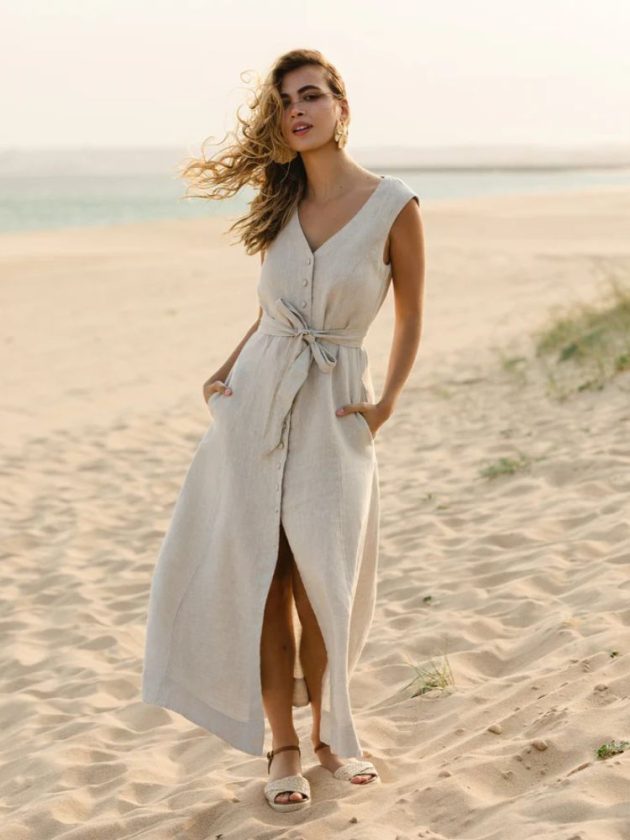
Versatile, breezy, and perfect for simmering temps, Magic Linen’s relaxed styles offer everything you need to feel calm and collected all summer long. Crafted from pure linen that has been stone-washed to provide unparalleled softness against your skin, these relaxed fits are the ideal intersection between vacation chic and functional style.
All of Magic Linen’s summer-ready pieces are created on a made-to-order basis, ensuring their garments are not overproduced. The brand also minimizes wastage by repurposing most of its fabric offcuts to create smaller items.
Conscious Qualities: Lower Impact Natural Materials, Woman-Owned, Made-To-Order
Size Range: US 2–18
Price Range: $$-$$$
5. Rare & Fair
Best for special occasionwear
Made thoughtfully with time-honored practices by master artisans and craftspeople in small batches, Rare & Fair has truly exceptional sustainable dresses. Each piece is made in a fully transparent, traceable process from fiber to final stitch.
Conscious Qualities: Sustainable Fabrics & Processes, Artisan Made, Cultural Preservation
Size Range: XXS-XL
Price Range: $$$
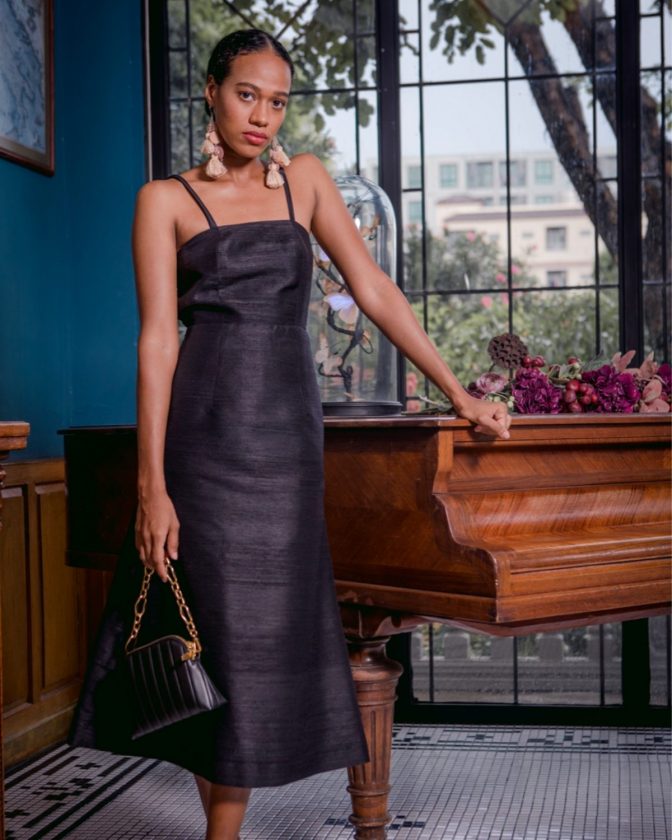
6. tentree
Best for casual weekend dresses
When warm weather approaches, all you want is a dress you can throw on. And if your style skews minimalist, all you desire is a dress that has interesting details but doesn’t make too much of a fuss or song and dance about itself. Lucky for you, tentree has an array of simple dresses that fit the bill.
Button-down, wrap, cami, or even hooded, these pieces make everyday dressing feel like a breeze. Made from breathable materials like modal, hemp, TENCEL Lyocell, linen, and organic cotton, these dresses are an ideal investment for the long haul.
Conscious Qualities: Eco Materials, Supply Chain Transparency, Plants Trees, Circularity Programs
Size Range: XS–XL
Price Range: $$-$$$
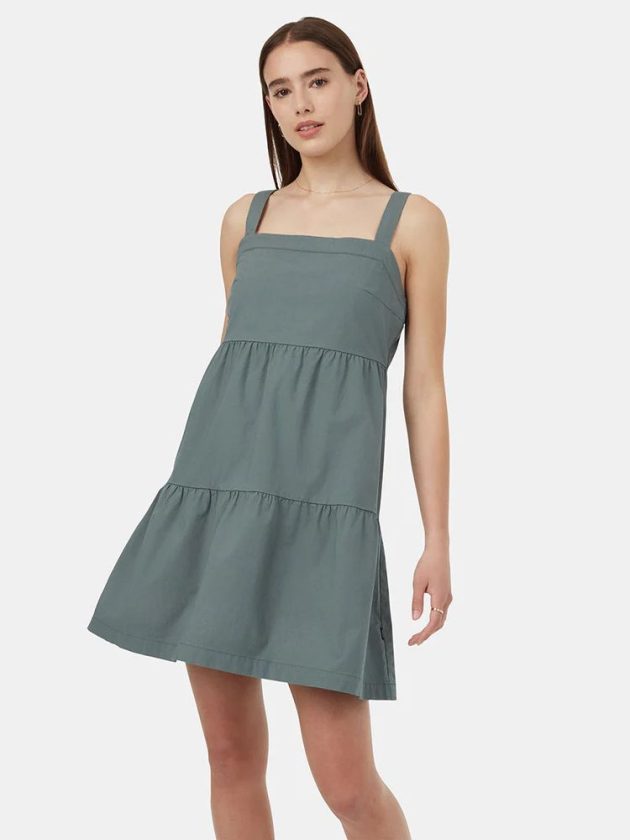
7. MATE
Best for non-toxic dresses
There’s nothing more satisfying than finding summer dresses that make you look instantly put together without much effort – and MATE’s curation checks every box.
From breezy maxi dresses to functional dresses that come with a removable belt bag, their styles are made using GOTS Certified Organic Linen, ideal for keeping the heat at bay when the mercury rises to unbearable temperatures.
What’s more? You can work up a sweat feeling relieved knowing that all of their pieces are made using non-toxic dyes that don’t rely on harmful chemicals like pesticides, BPA, PFAS, and formaldehyde.
Size Range: XS – XL
Price Range: $ – $$$
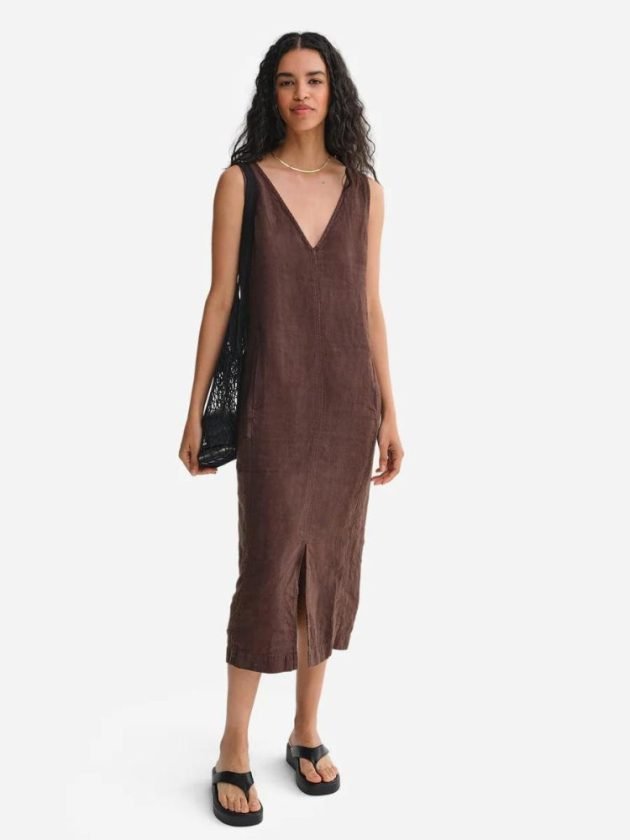
8. OhSevenDays
Best for elevated dresses with a point of view
OhSevenDays’ dresses feature feminine silhouettes, muted colors, and unique details to impress. Made from deadstock fabrics sourced from Istanbul, Turkey. The slow fashion brand also offers a transparent behind the scenes look at their production process, all done in-house by a team of four tailors.
With the level of detail on OhSevenDays dresses, all you need is an elevated pair of sustainably-made sandals and you’ve got a complete look.
Conscious Qualities: Reclaimed Fabrics, Transparent Production
Size Range: S-L + custom sizing
Price Range: $
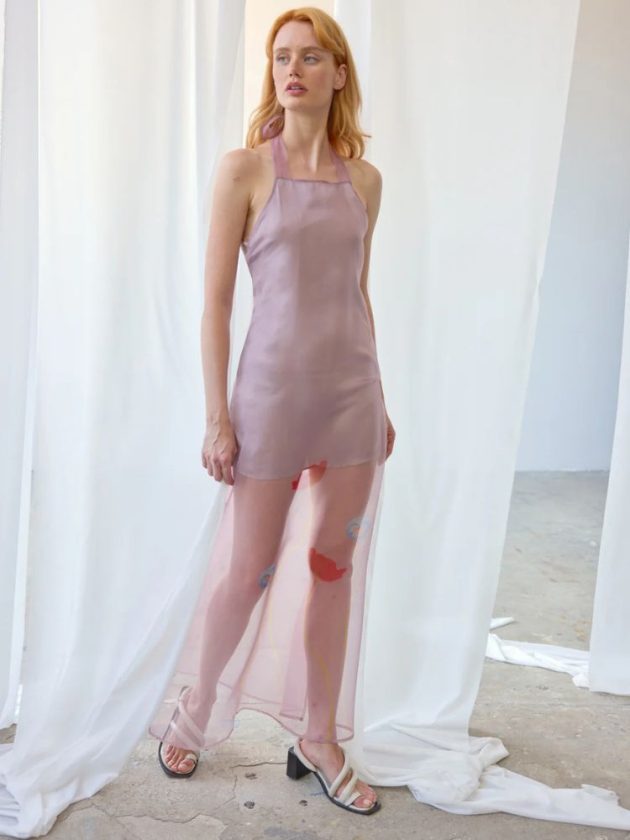
9. No Nasties
Best for vacation dresses with vibrant hues
No Nasties creates 100% organic cotton fair trade dresses perfect for wearing to the beach with flip flops or pairing with heeled sandals for date night. Their versatile sustainable dresses are comfy, organic, and affordable with most pieces priced at under $100.
Conscious Qualities: Organic Fabrics, Traceable Supply Chain, Fair Trade
Size Range: XS-L
Price Range: $
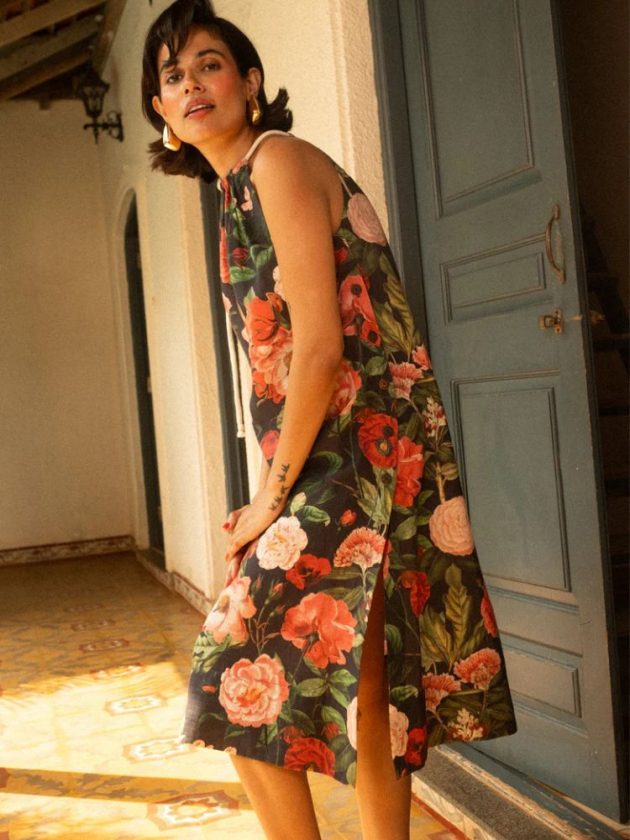
10. Míe
Best for dresses you won’t see anywhere else
Míe is an independent fashion brand prioritizing natural fibers like linen and distinguished design details like tiered puff sleeves and unique necklines. Based in Nigeria and only sold in select global retailers, you’re unlikely to see anyone else wearing something similar.
Each dress is designed and handcrafted responsibly at their atelier in Lagos, Nigeria.
Conscious Qualities: Natural Fibers, Black Woman-Owned
Size Range: XS-3XL
Price Range: $$$
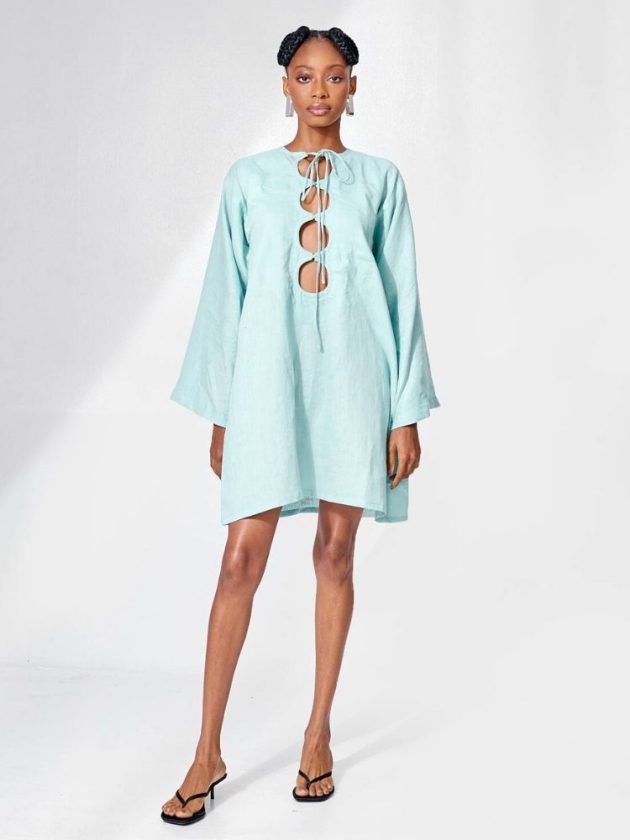
11. Reformation
Best for going out styles
Reformation is one of the more transparent and accountable mainstream sustainable brands. In 2023, Reformation used 97% recycled, regenerative, or renewable materials and nearly 1 in 5 of their sales were resale, vintage, or rental. They also have a number of circularity programs. (Find more details in their sustainability report.)
That said, they’re still a growth-focused brand selling trend-driven clothing, which has inherent sustainability limits.
Conscious Qualities: Responsible Material Sourcing, Circularity Initiatives, Traceability
Size Range: 0 – 12 and 14 – 24 in select styles
Price Range: $$$

12. Toad & Co
Crafted from fabrics like hemp, TENCEL, and organic cotton, and designed with easygoing silhouettes, Toad & Co’s has the perfect natural fiber dresses for warm sunny days.
The airy dresses can be worn as naturally breathable house dresses or with their delicate details and subtle prints, easily worn out with a pair of strappy sandals or slingbacks.
My top picks would be the brands midi dresses, but they also have wrap and tank dresses that hit mid-thigh if you prefer a shorter hemline.
Conscious Qualities: Lower Impact Fabrics, Resale Program, Factory Transparency
Size Range: XS-XL
Price Range: $$
You Might Also Be Wondering…
Are sustainable dresses worth the higher price tag?
It depends! The key here is to look at cost-per-wear. A $250 organic linen dress you wear 80 times costs $3.12 per wear. A $40 fast fashion dress you wear 5 times costs $8 per wear. More sustainable dresses tend to have timeless design and be made with higher quality materials and construction, meaning they last longer, hold their shape better, and don’t need replacing as often. That said, always look at the care instructions! Natural fibers may require a bit more attention than synthetic fibers (such as air-drying instead of throwing in a machine dryer) but they’re well worth the additional effort.
And there are also genuinely affordable sustainable options (like No Nasties and tentree) that prove sustainability doesn’t always mean expensive. Some brands are priced very competitively with their less sustainably-minded couterparts.
What certifications should I look for when buying a sustainable dress?
The most meaningful certifications for dresses are:
- GOTS (Global Organic Textile Standard) for organic fibers and other sustainability assurances during production
- OEKO-TEX STANDARD 100 for chemical safety in finished garments (note that this is a product certification, not a material certification — and many brands miscommunicate this label)
- Made in Fair Trade Certified factories which ensure that the brand is paying into a premium that goes to a Community Development Fund that workers can vote on to determine how to use those funds
However, many small brands cannot afford to buy certified products, fabrics, or pay into fair trade programs. There are other ways to ensure ethical sourcing as well, so look into a brand’s sustainability or sourcing pages too.
What’s the most sustainable type of fabric for a dress?
This is a nearly impossible question to answer because no single fiber is the “best” by all measures. There are so many considerations (land use, water use, biodegradability, longevity, carbon emissions, and so on) that I cannot tell you the single “best” fiber.
That said, I avoid synthetic materials, which are made from fossil fuels and release microplastics into our environment when washed. Among natural options, different fibers have different use cases, so I recommend looking for the best version of each. This deep dive has much more on fabrics.
But even then there are nuances — is 50% organic cotton blend with hemp or linen better than a 100% conventional cotton fabric considering that monofiber fabrics are much easier to recycle at the end of their life? As you can see, the most sustainable question is complicated.
Should I buy secondhand instead of new sustainable dresses?
From a pure environmental standpoint, secondhand is almost always the better choice — no new resources used, no new manufacturing emissions. Platforms like ThredUp, The RealReal, Poshmark, and Depop are great starting points. That said, buying new from sustainably-minded brands does serve a purpose: it signals market demand for responsible production and can support artisans, ethical manufacturers, and/or women-owned small businesses, depending on the brand. The best approach in my mind? Check secondhand first. If you can’t find what you need, then invest in a quality piece from a trusted more sustainable brand if you can.
What sustainable dresses come in plus sizes or extended sizes?
Size inclusivity is an area where sustainable fashion has historically underperformed — but it’s improving. LOUD BODIES is the standout on this list, offering 15 sizes from XXS to 10XL. Christy Dawn goes up to 3XL in some styles, Míe up to 3XL, and Tradlands to 4XL. When shopping, always check the full size range on the brand’s website, as some brands offer extended sizes only in select styles.
The post The Best Sustainable Brands — for Any Budget (2026) appeared first on Conscious Life & Style.

Just like fashion has been overrun by fast fashion, home goods and furniture have similarly seen a rapid decline in quality. Rugs are no exception.
And similar to fashion, these cheap goods come at a high cost — namely, to the planet and to people. In fact carpet and rug production is rampant with exploitation.
On the other hand, fair trade rugs present the best of what a rug can bring to your home: artistry, craftsmanship, and heritage.
The brands featured in this guide are partnering with (and fairly paying!) skilled artisans who are using generations-old — and sometimes even centuries-old — techniques. These artisans are sustaining long lines of crafts, preserving their cultural diversity, and celebrating the richness of their time-honored crafts.
There’s simply no replacement for a timeless, quality artisan-made rug — they’re like pieces of art you can lay out on your floor or hang on your walls.
So, enjoy browsing through this guide to sustainable rug brands listed out below and best of luck on your search for the right fair trade rug!
Where to Find Ethical and Fair Trade Rugs
Note that this guide includes affiliates and partners. As always, brands must meet high standards for ethics and sustainability to be featured and all opinions are my own.
1. Obakki
Best for: warm-hued handwoven wool rugs
Categories: Area Rugs, Runners, Accent Rugs
Obakki partners with artisan weavers primarily in Oaxaca, Mexico — including individual makers like José — who hand-dyes and weaves rugs on a traditional pedal loom using locally sourced sheep’s wool and natural dyes derived from native plants. The brand also works with Rrres Design Studio, a Latin American studio dedicated to preserving traditional Oaxacan weaving techniques, and sources handwoven textiles from artisan communities beyond Mexico as well, including Morocco.
Each rug is made from 100% wool with no synthetic dyes or backing. Most pieces are made-to-order with a 4-8 week production window, shipped directly from the artisan partners.
Price Range: $460 – $4,159
Conscious Qualities: Natural Fibers, Natural Dyes, Craft Preservation
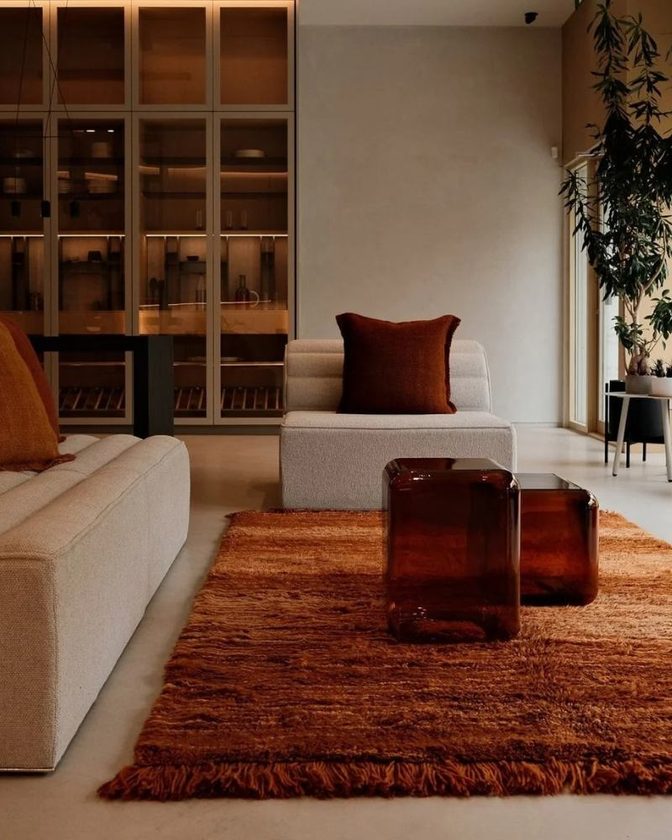
2. Kiliim
Best for: modern wool kilim rugs
Categories: Area Rugs, Accent Rugs
If you’re well-versed in rug terminology, you may recognize that this brand’s name looks similar to the word kilim.
Kiliim’s rug are made using authentic kilim rug craftsmanship by artisans in Egypt coming from generations of kilim artisans. To ensure ethical production and to support the preservation of this heritage craft, Kiliim pays living wages to all artisans.
Price Range: $95 – $4,812
Conscious Qualities: Ethical Production, Heritage Craft Preservation, Natural Fibers