

Welcome to Carbon Brief’s China Briefing.
China Briefing handpicks and explains the most important climate and energy stories from China over the past fortnight. Subscribe for free here.
Key developments
Climate leadership and cooperation
ENVOY REMARKS: Xinhua published an exclusive interview with Chinese climate envoy Liu Zhenmin, in which he spoke about how China-Europe cooperation could make a “positive contribution” to combating climate change. In the interview, Liu said that developed countries were “generally worried about who will share the responsibilities that the US should bear” after its withdrawal from the Paris Agreement, adding that China “deeply regretted” the “shrinking space” for US-China climate cooperation. The outlet quoted Liu saying: “However, we must see that China and the US do not have fundamental differences in the field of climate change, but rather have broad space for cooperation.”
EU AMBIVELANCE: Meanwhile, the EU’s ambassador to China, Jorge Toledo, warned that the EU may not hold an expected “high-level economic [and] trade dialogue” with China in July, due to current negotiations over Chinese EV tariffs and supply chains “not making progress”, reported the Hong Kong-based South China Morning Post (SCMP). European countries, such as the Netherlands, France and Germany, on the other hand, have expressed interest in more collaboration in areas such as climate and the low-carbon transition, said state-supporting media the Global Times. Belinda Schäpe, China policy analyst at Centre for Research on Energy and Clean Air (CREA), nevertheless wrote on LinkedIn that while both China and Germany “expressed support” for tackling climate change, it is “unclear how this will translate into Germany’s position on cooperation in areas like energy transition or climate diplomacy”.
EARLY PEAK?: China’s emissions will “likely peak a few years ahead of its self-set deadline of 2030”, Bloomberg said, reporting comments by Zhu Guangyao, who was the country’s vice minister of finance from 2010-2018 and who cited analysis recently published by Carbon Brief. The outlet quoted Zhu saying: “It’s most likely China will realise the peak of carbon emissions a few years before 2030…That’s good news for China, also good news for Asia, for the whole world.” Meanwhile, the SCMP published a comment article by former UN secretary general Ban Ki-moon on China’s “green energy leadership”. In the article, Ban called on China to target a 30% reduction in emissions below 2023 levels by 2035 in its next international climate pledge (nationally determined contribution, NDC).
New plan for ‘green’ manufacturing

‘GREEN TRANSFORMATION’: China’s central government approved an action plan for “advancing the green and low-carbon development” of the manufacturing sector between 2025 and 2027 at a State Council executive meeting, reported state news agency Xinhua. The full text of the action plan is not yet public. The meeting called for “deep[ening the] green transformation of traditional industries” while “accelerat[ing] innovation in green technologies”, added the outlet. The state-owned newspaper Securities Daily said that the policy extends “intensive” regulatory support and will affect a range of industries, including steel, metals and construction. About 20% of the “total output of China’s manufacturing industry” in 2024 had already come from “national-level green [factory] plants”, added the newspaper. (According to the “general principals” outlined by the Chinese government, such plants have tighter requirements on their emissions of greenhouse gases and other pollutants.)
RECTIFY THE ‘RAT RACE’: Meanwhile, the National Development and Reform Commission (NDRC) commented on “neijuan” (内卷) – officially translated as “rat race competition” that leads to oversupply in affected industries, including clean energy, steel and oil refining, reported Xinhua. According to the newswire, the NDRC said at its May press conference that this “rat race” had “disrupted” fair competition and “must be rectified”. According to the NDRC transcript, government officials called for eliminating “inefficient and backward production capacity” in the oil refining and steel industries, “preventing blind new construction” in the coal chemical and aluminium industries, and “guiding” “new-energy vehicle” (NEV) and solar companies to “focus on technology research and development”. Nevertheless, the officials stated that the majority of the investments the NDRC had approved from January to April this year were still in the “energy” and “advanced technology” sectors, among others, reported Chinese media outlet Dazhong News. The NDRC also said its “two new” policy “stimulated green consumption” of products such as NEVs, according to the transcript. Separately, the production of NEVs rose by 39% in April, said the Communist party-affiliated People’s Daily, adding that China’s “shift toward intelligent and green development is gaining momentum”.
‘Record’ solar added as policy deadline looms
SOLAR RUSH: China installed a “record” 105 gigawatts (GW) of solar capacity between January and April 2025, industry outlet PV Tech said, citing a recent data release by the National Energy Administration (NEA). It added that “April alone” accounted for 45GW of new additions – compared to a total of 46GW solar installations in China between January and March 2024 – as a deadline set by a new renewable pricing policy “triggered a project installation rush”. [Outside China, the US is the only country in the world to have more than 105GW of solar capacity in total. The UK has 18GW.]
THERMAL FALL: Analysis by thinktank Climate Energy Finance found that the amount of new solar installations between January and April was eight times larger than that of new thermal capacity (13GW, mainly coal). It added that China’s coal plants were only running 46% of the time on average in the first four months of 2025, saying that this was a “record low”. Similarly, Reuters reported that “thermal power generation in China, fuelled mainly by coal, fell 2% in April and 4% from January to April amid slower overall power output growth”. New data from energy thinktank Ember found that wind and solar power generated 26% of the country’s electricity in April 2025, the “highest monthly share on record”.
ROOFTOP ‘BOOM’: Meanwhile, separate data from consultancy Rystad Energy found that, of the 60GW of solar installed between January and March 2025, rooftop solar installations accounted for 36GW, marking the “highest quarterly total for distributed solar in [China’s] history”, solar news outlet PV Magazine reported. Industry news outlet SolarQuarter said that, according to Rystad Energy’s forecasts, the rooftop solar installation “boom” will continue through to June 2025, “potentially pushing total distributed solar capacity additions for the year to 130GW”.
SOLAR CYBER SCARE: Reuters reported that the US government is “reassessing the risk posed by Chinese-made” renewable energy components after “rogue communication devices not listed in product documents ha[d] been found in some Chinese solar power inverters by US experts”. The newswire added that it “was unable to determine how many solar power inverters and batteries they have looked at”. Following this, the Japanese government also “launched an investigation into Chinese-made solar panels”, reported SCMP. Tom Nunlist, associate director at consultancy firm Trivium China, wrote on LinkedIn that while “an industrial-scale plot to disrupt the US power grid” cannot be ruled out, it is “far more likely that we’re dealing with commonplace bill of materials errors”. He added that “given the atmosphere, I think there’s a good chance this will get blown way out of proportion”. Meanwhile, the industry association SolarPower Europe called for stronger cybersecurity rules for Europe’s clean-energy installations, following the discovery of “unexplained electronic components in imported circuit boards from an unnamed country destined for [Denmark’s] energy infrastructure”, PV Magazine said. It added that the “suspicious elements were not solar components”.
Extreme weather sweeping across China
RAIN AND FLOODING: Four people were killed by “torrential rain” in Guizhou province in southwest China and 17 people remained missing, reported Reuters on 23 May. China is facing “hotter and longer heatwaves and more frequent and unpredictable heavy rain as a result of climate change” and its “huge population” made the country “especially vulnerable to the effects of climate change, authorities have said”, added the outlet.
-
Sign up to Carbon Brief’s free “China Briefing” email newsletter. All you need to know about the latest developments relating to China and climate change. Sent to your inbox every Thursday.
EXTREME HEAT: Temperatures in north China reached as high as 43C in May, according to China Qixiang Aihaozhe, a popular scientific blog. State broadcaster CGTN reported that many places in the provinces of Henan and Hebei broke local temperature records for May and that ground temperatures in “multiple places” broke 70C on 20 May. The outlet noted that May is a “critical” period for maximising wheat harvest yields. Reuters reported that China disbursed 1.4bn yuan ($194m) for “agricultural production disaster prevention and relief”. Meanwhile, cooling demand from air conditioners could drive electricity demand to be about 100GW higher than last year, Bloomberg cited the NEA as saying. Lauri Myllyvirta, lead analyst at CREA, posted on Bluesky that, even if this demand does disrupts the recent plateau in China’s emissions, the “structural trend” of clean-energy additions pushing overall emissions down will continue to drive reductions in the long-term.
68%
The share of China’s overseas energy investments that went to solar and wind projects between 2022-2023, reported Inside Climate News citing data from Boston University’s Global Development Policy Center. Only 13% of investments had gone into solar and wind from 2000-2021, added the outlet, noting that 2021 was the year that China pledged to stop funding overseas coal projects.
Spotlight
What is China’s ‘Shenzhen model’ for city-level low-carbon transition?
Shenzhen, a city bordering Hong Kong that is known for pioneering China’s economic reforms, is leading the country in several carbon mitigation measures and is seen as a “pilot” for the construction of “low-carbon cities”.
Carbon Brief looks back at Shenzhen’s efforts to date and assesses its progress on carbon mitigation. The full article will be available on Carbon Brief’s website.
Electric transportation
Since the 2000s, Shenzhen has developed strategies for “low-carbon development”. Part of this included nourishing the growth of a number of “strategic emerging industries”, such as “new-energy vehicles” (NEVs).
According to a government work report, Shenzhen – whose population makes up 1% of the country’s total – produced 22% of China’s NEVs in 2024. NEV also comprised 77% of the new car sales in Shenzhen last year, significantly higher than the national share of 48%.
The city has also replaced all of its buses, taxis and ride-hailing cars with electric versions – the first city to have done so in China.
Heran Zheng, lecturer in sustainable infrastructure economics and finance at University College London (UCL), told Carbon Brief that a city’s green transition mainly requires two focuses: “transport transition” and “industry decarbonisation”.
With no major heavy industries, Shenzhen has an “advantage” in industry low-carbon transition, said Zheng, which allows it to set “more ambitious” emissions targets.
Carbon control
Shenzhen was China’s “first city to explicitly state its commitment to the ‘dual control [of carbon]’ system”, according to Dialogue Earth. It issued two “implementation plans” towards this effort and developed a city-level carbon emissions cap.
Shenzhen plans to reduce its energy intensity by 14.5% before the end of 2025, compared to 2020 levels. The national energy intensity target is 13.5% during the same period.
Zheng said that Shenzhen’s commitment “should be within its capacity”, adding:
“There are three major carbon mitigation areas – steel, cement and electricity. Shenzhen has no major steel and cement industries, so it only needs to largely focus on electricity…In addition, the city is a technology hub. A lot of high-emission manufacturers have moved out of Shenzhen to its neighbouring cities.”
Another “big difference” between Shenzhen and other cities is that “Shenzhen has its own nuclear power”, said Zheng, which is “important” for the city’s electricity transition – the remaining sector that Shenzhen needs to put efforts on towards green transition.
Low-carbon energy
According to a 2021 report, nuclear power is Shenzhen’s “largest local power source”. It contributed 35% of the city’s total power generation in 2021.
Nuclear dwarfs all the other clean energy sources feeding into the city’s grid. The Shenzhen local authority’s 2025 government work report says current solar power capacity stands at about 1GW – and it does not mention wind capacity.
Its “14th five-year plan for climate change response” says that Shenzhen’s renewable energy capacity has “little room” for future growth due to “scarce” energy resources and “limited” land for wind and solar power.
In 2024, China approved the construction of more nuclear reactors in Shenzhen’s neighbouring city of Huizhou.
The Shenzhen government also aims to “raise the combined share of natural gas, nuclear and renewable energy to 90% in 2025, up from the current figure of 77%, which is noticeably ahead of the nationwide figure of 52%”, according to research published in 2022.
‘Green finance’
Shenzhen was one of the first seven cities and provinces in China that established a local “pilot” emissions trading system (ETS) in 2013, ahead of the national rollout in 2021.
Yan Qin, carbon analyst at consultancy firm ClearBlue Markets, told Carbon Brief that despite Shenzhen’s plans to expand the coverage of its ETS, most pilot ETSs are seeing their coverage “shrinking” due to enterprises leaving to join the national ETS.
In the meantime, Shenzhen issued China’s first overseas sales of “green government bonds” in 2021 in Hong Kong. In contrast, China’s national sovereign bonds were only available to international buyers from April 2025.
Zheng said that the impact of the green bonds is “hard to evaluate”. He added that projects, such as sewage treatment, can “also fall into the category of ‘green bonds’”. Although linked to energy efficiency improvement, they nonetheless make only “limited contributions” to cutting carbon emissions, he added.
‘Shenzhen model’
The local government and media outlets have touted the city’s achievements on climate as the “Shenzhen model”.
But Shenzhen’s journey is not all “replicable”, said Shen Xinyi, analyst and China team lead at the Centre for Research on Energy and Clean Air (CREA), adding that “Shenzhen capitalised on the opportunities of its era”.
Zheng said Shenzhen can “only represent a [certain] type of city in China, the ‘top tier’, such as Beijing, Shanghai and Guangzhou”. He added:
“There are more than 300 cities in China, all facing unique transition situations. It is meaningless for coal-heavy industrial cities to learn from Shenzhen.”
Other cities must “adapt strategies according to their unique conditions”, Shen added.
This report is by freelancing climate journalist Henry Zhang and Carbon Brief’s China section editor Wanyuan Song.
Watch, read, listen
CRITICAL MINERALS: An episode of consulting firm Trivium China’s podcast discussed China’s critical mineral export controls.
‘MARSHALL PLAN’?: Sam Geall, Dialogue Earth’s outgoing chief executive officer, published a comment on China’s new role amidst shifting “climate politics”.
US-CHINA DECOUPLING: In an exclusive interview with Chinese financial media Caixin, Huang Hanquan, dean of the Chinese Academy of Macroeconomic Research – a thinktank under the direct management of NDRC – said there are still “risks” in US-China decoupling.
‘ZERO-CARBON’ PARKS: The 21st Century Business Herald, a Chinese media outlet, published an interview with Chai Qimin, director of the International Cooperation Department at the National Center for Climate Change Strategy and International Cooperation, a thinktank under the China’s Ministry of Ecology and Environment, talking about “zero-carbon industrial parks”.
New science
Peer effects on rural household carbon emissions in China
Scientific Reports
New research found that the “peer effect” – a phenomenon where an individual’s behavior and attitudes are influenced by their peers – has a “significant positive impact” on carbon emissions in rural China. The paper quantified emissions from rural Chinese households over 2012-20 using data from “China family panel studies” and “carbon emission accounts and datasets”. The authors found that carbon emissions from “low social status families” are influenced by those of “high social status families”. They added that the “peer effect has a relatively greater impact on the carbon emissions of farmers in the eastern region”.
The impact of carbon news coverage on corporate green transformation
Scientific Reports
A new study of Chinese companies found that “carbon news coverage significantly enhances the corporate green transformation”. The authors examined the effect of “carbon news coverage” on the green transformation of “Chinese A-share listed enterprises” over 2013-21. They found that “carbon news coverage” can help enterprises with their “green transition” by “alleviating financing constraints, strengthening environmental information disclosure and increasing R&D investment”. They added that “carbon emissions trading market and carbon news coverage serve as multiple co-regulations of formal and informal environmental regulation, synergistically advancing enterprises’ green transformation”.
China Briefing is compiled by Wanyuan Song and Anika Patel. It is edited by Wanyuan Song and Dr Simon Evans. Please send tips and feedback to china@carbonbrief.org
The post China Briefing 29 May 2025: The ‘Shenzen model’; Record solar growth; NDRC rejected industrial ‘rat race’ appeared first on Carbon Brief.

Climate Change
“Sink or swim”: WA Gov hugely underestimating decline in regional gas demand while sleeping on green exports, new report finds
PERTH, Tuesday 13 October 2026 — A new report from Greenpeace Australia Pacific and Springmount Advisory reveals green commodity exports are an untapped economic opportunity for Western Australia in a declining Asian gas market, while offering a genuine solution for decarbonising Asia.
From Gas to Green: Building Western Australia’s Future State is a comprehensive analysis of the declining gas market in Asia, and the untapped economic opportunity for WA to become a global leader in green commodity exports while driving the regional shift away from fossil fuels.
The report offers key recommendations for the WA Government to support regional decarbonisation through an orderly phase out of gas exports in favour of green iron and other green exports. It comes as global climate leaders from across business, politics and advocacy prepare to meet for the Global Citizen Now: Perth event focused on decarbonising WA.
Key findings:
- Gas demand is falling across WA’s core markets in Asia: Gas demand fell in 2025 and is projected to continue to decline, driven by a combination of global geopolitical factors and domestic concerns.
- Policy shifts in key markets since the war on Iran now prioritise renewables and nuclear over gas: Japan, South Korea and China have legislated energy plans that prioritise renewables and nuclear over gas.
- New WA gas would arrive in a saturated, uncertain Asian market filled with cheaper gas: The US is now the world’s largest liquefied gas producer and plans to double its capacity as it also targets Asian markets.
- Green commodities offer a real solution to sustain WA’s economy: WA can lead Australia’s green commodity exports, which by 2060 could be worth almost a trillion dollars.
- Exporting more WA gas is likely to delay or impede Asia decarbonisation: Despite claims by the gas industry, there is no evidence that WA gas is displacing coal in Asia, and in fact diverts resources from genuine decarbonisation options.
Geoff Bice, WA Campaign Lead at Greenpeace Australia Pacific said: “As our export partners in Asia shift away from expensive and polluting gas, the WA Government has a golden opportunity to pivot our economy to green exports, like green iron, which is the most effective way to help our region to decarbonise.
“The writing is on the wall: gas is in decline, renewables are our future. In this context, it makes zero sense for the government to encourage high risk projects like Woodside’s reckless Browse gas proposal at Scott Reef.
“This report clearly shows that the WA Government faces a choice: sink or swim. They can either allow the gas industry to keep ripping off West Australians and continue propping up its decline, or choose the path that will deliver enormous benefits to the state and the world by becoming a leader in the rapidly expanding green economy.”
Tom Quinn, Managing Director of Springmount Advisory: “Western Australia prospers when it looks to the future and builds for future demand. Twenty years from now, what the world needs is green commodities made using WAs abundant renewable resources. Just like it did with iron ore in the 1950s and gas in the 1970s, WA should look to the future and build what the world will need, not sunsetting industries like gas that are already past their peak.”
-ENDS-
Media contact
Kate O’Callaghan on 0406 231 892 or kate.ocallaghan@greenpeace.org
Lucy Keller on 0491 135 308 or lucy.keller@greenpeace.org
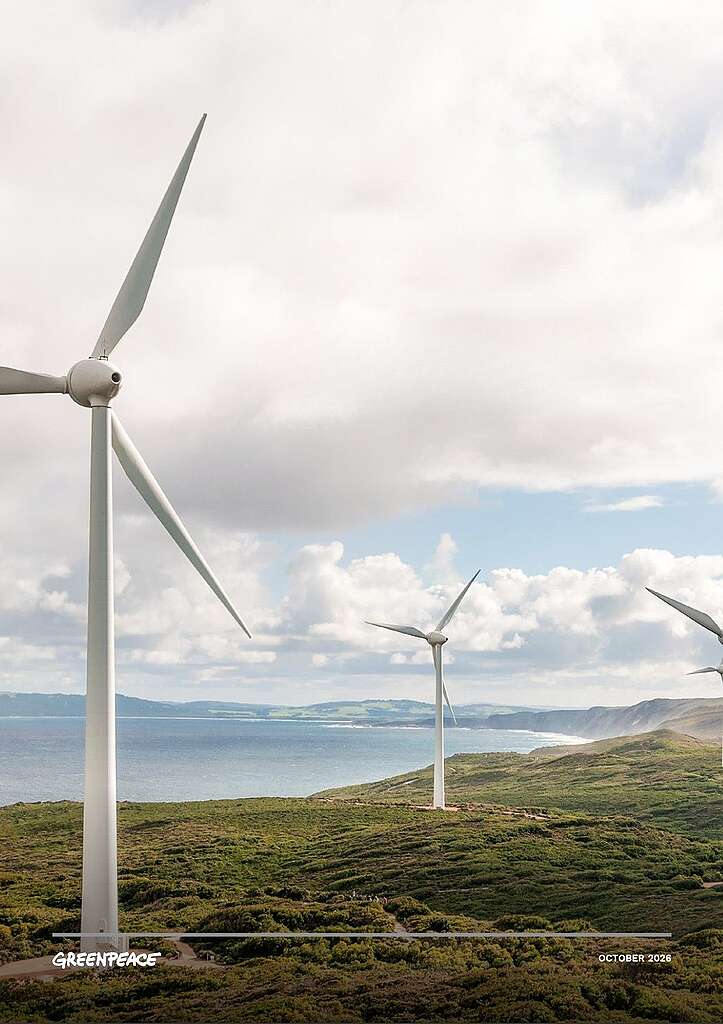
A report from Greenpeace Australia Pacific and Springmount Advisory reveals the untapped green economic opportunity for Western Australia in a declining Asian gas market, which also offers a genuine solution for decarbonisation in Asia.
Is Western Australia clinging to a fading gas industry while a thriving green future passes it by? As major Asian trading partners rapidly pivot away from volatile gas imports toward cheap solar and battery storage, this report exposes a high-stakes choice: risk becoming stranded in an oversupplied fossil fuel market, or harness WA’s unmatched sun and wind to lead the global clean energy transition.
Summary
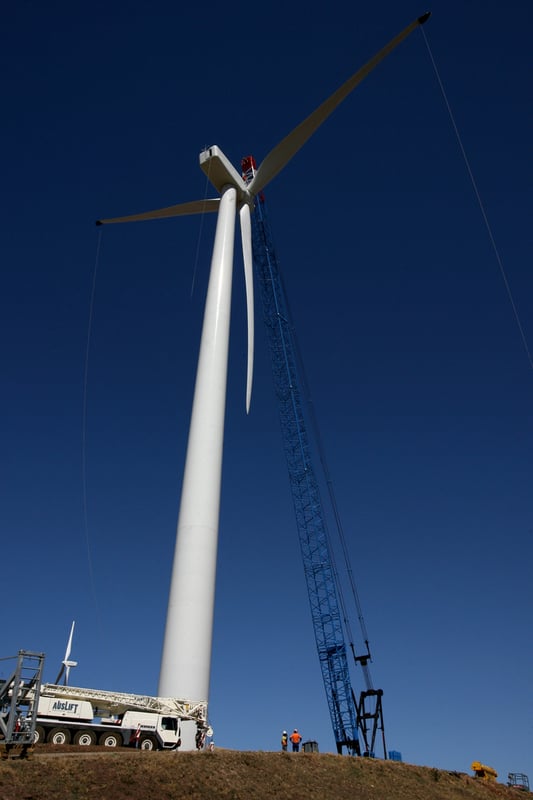
From Gas to Green: Building Western Australia’s Future State reveals that Western Australia (WA) faces a critical juncture as falling Asian gas demand, geopolitical gas supply volatility and accelerating renewable energy deployment undermine the long-term economic viability of gas exports. By harnessing its world-class wind and solar resources, the report demonstrates that WA can execute an orderly phase-out of gas and pioneer a green commodity export economy that could generate $987 billion in economic value by 2060, create 24,000 ongoing jobs, and drive a 9.6% reduction in global greenhouse gas emissions.
Key Findings
- Gas demand is falling in Asia – WA can no longer rely on gas exports: Gas demand in core Asian markets fell in 2025 and is projected to continue to decline in 2026. Legislated energy plans in Japan, South Korea, and China now prioritise renewables and nuclear over gas.
- Asia is increasing renewables, importing gas just gets in the way: Evidence from markets like Thailand suggests that gas imports are increasingly crowding out cheaper renewable energy investments and battery storage rather than displacing coal, locking in more emissions over time.
- Green commodities offer a real solution to decarbonise Asia – this is a major win for WA: With world-class renewables, WA can lead Australia’s green commodity exports, which by 2060 could be worth almost a trillion dollars ($987 billion) and support a genuine 9.6% reduction in global emissions.