

Andrea Vidaurre’s long fight to protect Southern California communities of color from the freight industry’s toxic emissions helped convince state regulators to improve air quality by adopting groundbreaking zero-emission rules for trucks and trains.
The vast landscape east of Los Angeles known as the Inland Empire is among the fastest-growing regions in California, driven by a booming warehouse and logistics industry that keeps residents breathing some of the most polluted air in the nation.
California Community Organizer Wins Prestigious Goldman Environmental Prize



More than 92,000 people have registered to attend the COP31 climate summit in Antalya, Turkey, potentially making it the largest COP in history.
Carbon Brief analysis of the provisional lists of delegates, published by the United Nations Framework Convention on Climate Change (UNFCCC), reveals that more than 14,000 delegates have been registered as “host country guests”.
For comparison, the provisional list for COP30 in Belém, Brazil, last year included only around 1,000 delegates in this category.
As with COP30, Donald Trump’s US government has not sent a delegation. Other no-shows include Israel and Myanmar.
It was reported ahead of the summit that Taliban officials from Afghanistan had been registered for the event as observers; however, there are no delegates from observer states in the provisional lists.
With more than 3,000 “virtual” delegates signed up to attend the summit online, the total number of people registered for the event surpasses 95,000.
Further analysis of the participant lists will be added to this article in due course.
Party delegates
With 92,934 participants registered, COP31 is provisionally the largest COP in history – topping COP28 in Dubai, which was attended by more than 80,000 people.
This total is based on the delegates that have registered to be at the summit in person. The UNFCCC releases the final figures – based on participants collecting a physical badge at the venue – after the summit has ended.
The chart below shows how the provisional figures for COP31 compare to the final totals in previous COPs – going back to COP1 in Berlin in 1995.
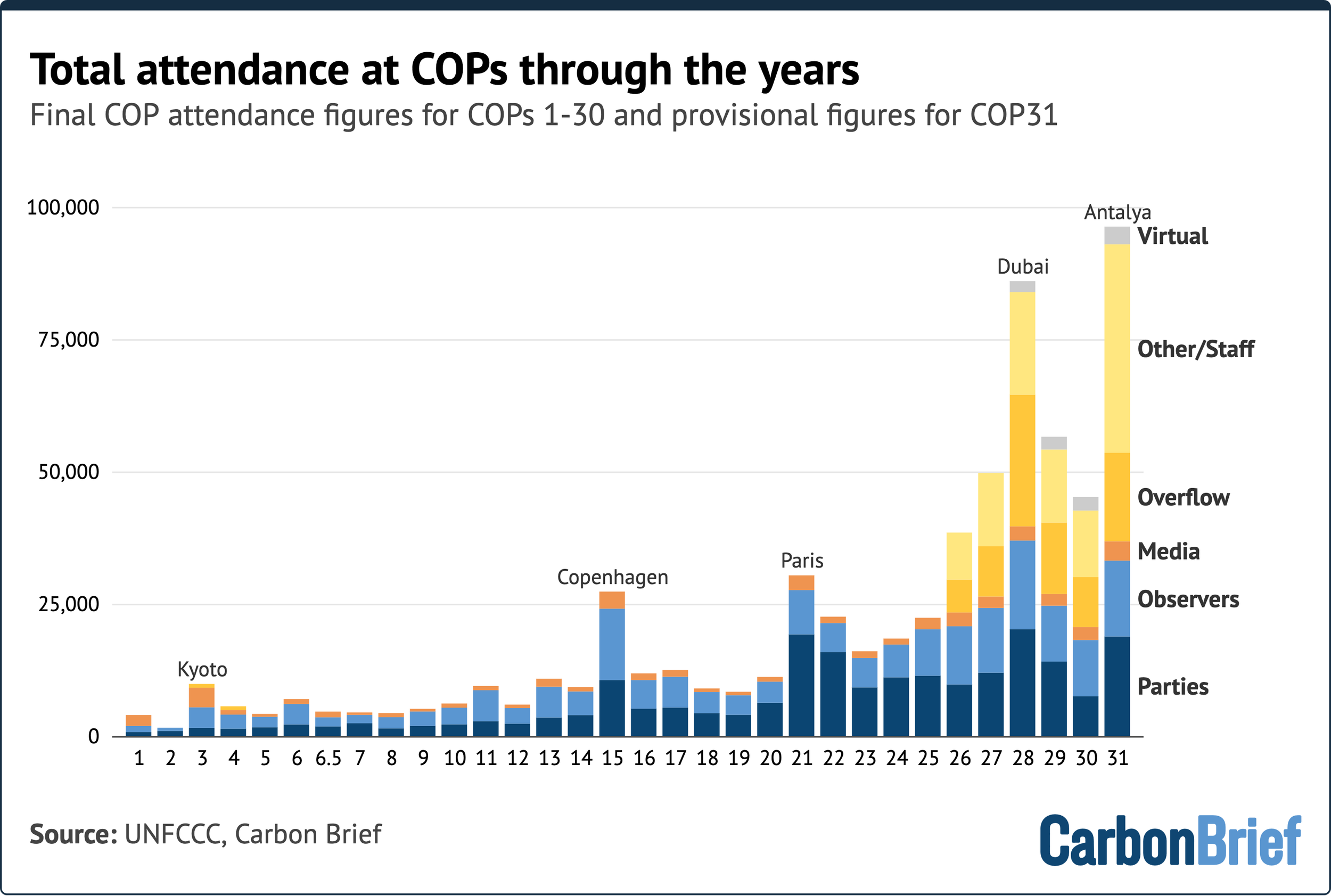
The participant lists provided by the UNFCCC are divided between the different types of groups and organisations attending the summit. The largest group at COP31 is for delegates representing parties. These are nation-states, plus the European Union, that have ratified the convention and play a full part in negotiations.
This group adds up to 18,812 delegates – the second largest after COP28.

Membership
Support award-winning climate journalism
(In keeping with recent COPs, the UNFCCC has published spreadsheets that name every single person that has registered for the summit – excluding support staff. Previously, COPs have typically included thousands of “overflow” participants in which countries and UN agencies could nominate delegates without their names appearing on their official lists.)
For consistency with Carbon Brief’s analysis of previous COPs, the above chart includes overflow delegates as a single group. However, the participant lists do divide the overflow delegates between parties and observer groups. Including the overflow numbers takes the total for party representatives to more than 34,000.
Nations
The map and table below present the delegation size – split between party and overflow badges – for all the countries registered for COP31. The darker the shading, the more delegates that country has signed up. Use the search box to find the data for a specific party.
Unsurprisingly, host nation Turkey has registered the largest delegation for COP31 – with 2,950 people.
Following behind are Brazil (1,994 people), Nigeria (1,506), China (1,021) and Indonesia (978).
The rest of the top 10 is made up of Australia (835), Uganda (627), Italy (607), Japan (588) and Kazakhstan (557).
The UK comes someway down the list with a delegation of 255.
The smallest delegation comes from North Korea (two), followed by Eritrea and Nicaragua (three) and San Marino and Trinidad and Tobago (four).
(It is worth noting that some countries – such as Brazil – allocate some of their party badges to NGOs, which can artificially inflate the size of their official delegation.)
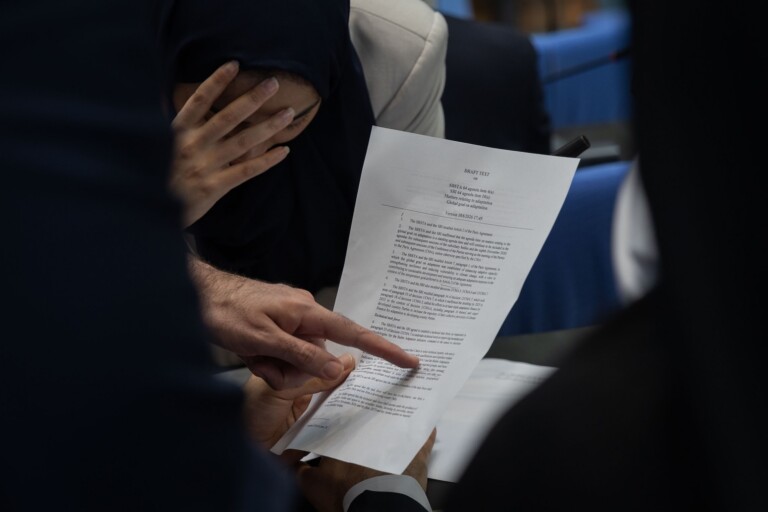

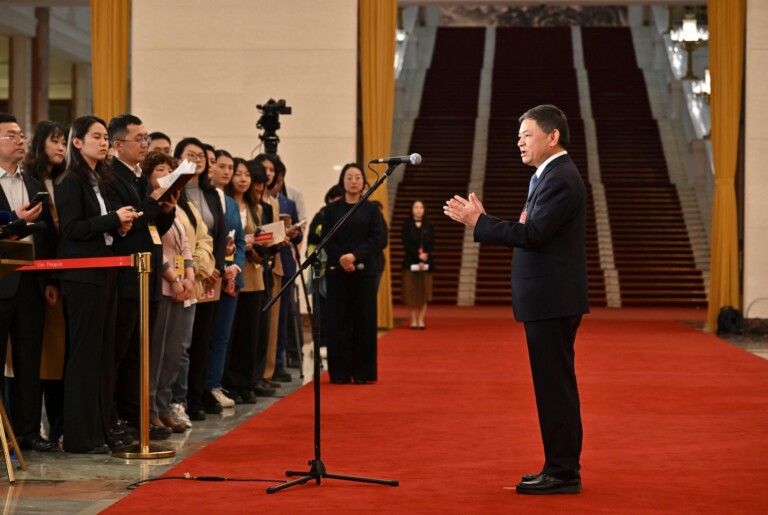
The post Analysis: Which countries have sent the most delegates to COP31? appeared first on Carbon Brief.
Analysis: Which countries have sent the most delegates to COP31?
Some big fossil fuel-producing countries – among them India, Nigeria and Germany – have swung behind the Brazil-led roadmap to phase out coal, oil and gas, while the UN chief said on Tuesday that all countries should start to make progress on cutting fossil fuels by 2028.
COP30 President André Corrêa do Lago presented the newly published global roadmap on Transitioning Away from Fossil Fuels (TAFF) to a packed plenary room in Antalya, cheered on by rounds of applause from delegates and civil society.
Nigeria – an OPEC oil producer that participated in the Santa Marta conference on phasing out fossil fuels earlier this year – welcomed the roadmap and said its recognition that countries have different starting points is “fundamental”.
“As a developing country with significant energy resources, energy access challenges and growing industrial ambitions, we must industrialise and decarbonise simultaneously,” the Nigerian delegate told the event.
She welcomed the roadmap’s proposed system for nations to self-identify their fossil fuel demand, supply and exposure of their wider economies, but said the “real test of this roadmap” will be translating transition pathways into “investable opportunities”.
-
COP31 Bulletin Day 2: Momentum builds on electrification and fossil fuel transition
The COP31 presidency whips up support for its 35×35 electrification goal, while the UN chief calls on all countries to plan their shift away from fossil fuels -
Japan urged to ditch fossil fuel support to maximise clean-tech exports
Japan could be one of the big winners of Asia’s electrification push, but it must radically pivot its policies away from propping up fossil fuels, a new analysis says

India – the world’s third-largest oil consumer and its second coal user – also praised Brazil’s efforts to make the roadmap inclusive, saying it “strikes a delicate balance” and that the energy transition “must be co-created”.
Its representative added that cheap renewables are what makes the transition away from fossil fuels possible, and energy security can support the case as long as countries avoid swapping “one dependency with another”.
The new TAFF roadmap invites countries to draw up national plans to build clean energy systems by 2028, while envisaging the main push to cut coal, oil and gas supply and demand after 2031. Some European countries, including Germany, France and the Netherlands, have published their own national roadmaps this year, while Brazil is also working on one.
Germany, Netherlands, UK and Australia are among the countries that have publicly backed the COP30 roadmap.
Africa calls for talks on TAFF to focus on justice
The chair of the African Group of Negotiators (AGN), Ghana’s Antwi-Boasiako Amoah, told journalists in Antalya that “we need to transition, bearing in mind that it must be a just one”. That means fossil fuel-dependent African nations would be supported and have flexibility on the phase-out timeline.
“Big emitters have already developed and we have the right to develop, so we cannot allow those [fossil fuel] assets to be stranded. If you want us to be able to go the way you want us to, then give us the finance and technology for a just transition,” he said.
Comment: COP31 outcome needs to prioritise transition away from fossil fuels
COP30 president Corrêa do Lago told Climate Home News at a press conference that countries “that have some concerns about this debate recognise the effort that we made” so that it’s not “one group against another”.
“Normally in these discussions, it’s extremes on the two sides and we don’t advance so much. So I believe the structure proposed here allows us to start the debate from another basis in a much more constructive way,” he said.
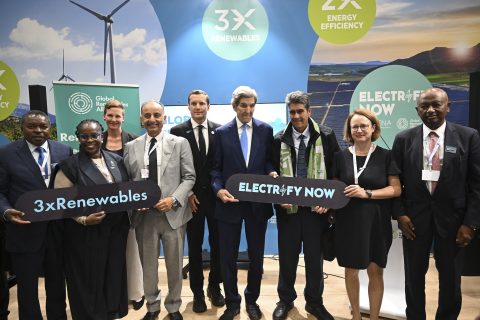
Speaking at the plenary event, former US climate envoy John Kerry said the debate on roadmaps away from fossil fuels “is the prime discussion that we need to engage in”, given that current policies are leading the planet to warming of 2.8C.
Roadmap as key input for global stocktake
Several countries that spoke, including the Netherlands and Germany, urged Australia and Türkiye as COP31 co-presidents, and Ethiopia as COP32 president, to carry the debate forward into the next Global Stocktake in late 2028.
UN Secretary-General Antonio Guterres said countries should use the new roadmap to build their own concrete national plans including clear timelines, responsibilities and financing needs.
By the 2028 Global Stocktake, “every country should be able to show what it has done to cut fossil fuel use or production, what it will do next, and how it will measure progress,” he said, in a challenge to governments.
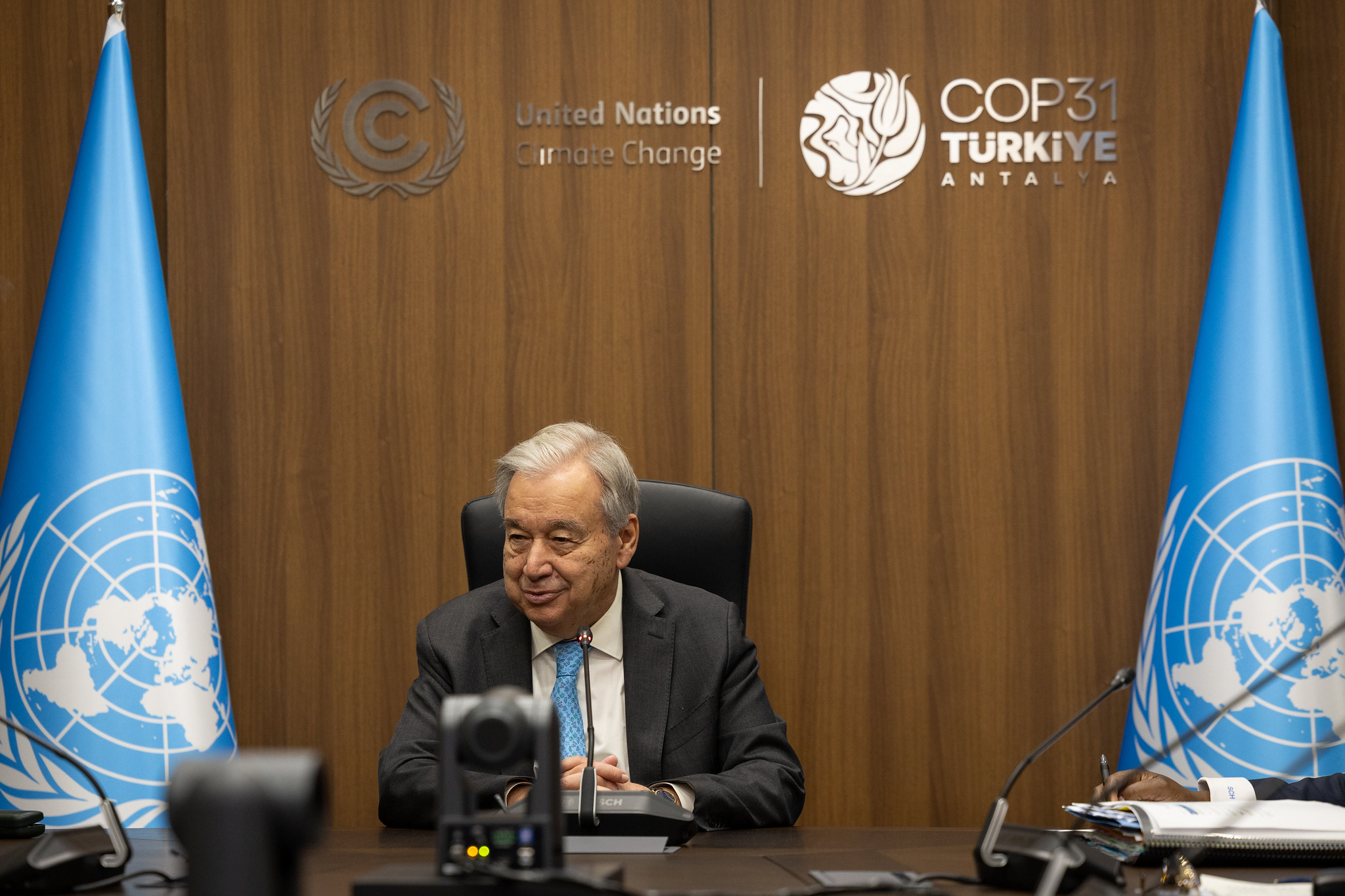
He added that it is “long past time to stop treating the transition away from fossil fuels as taboo or intractable” and called on COP31 to “move from discussing the transition to organising it, financing it, and delivering it”.
France’s COP21 president and one of the architects of the Paris Agreement, Laurent Fabius, stressed that 2028 is approaching fast, adding that “agreed commitments are agreed commitments” which have to be fulfilled.
COP presidencies keep extracting fossil fuels
Despite Türkiye’s COP31 co-presidency sending a representative to the roadmap event, the country’s leader, President Recep Tayyip Erdoğan, praised in a post on X the start of production at two new oilfields in his country last month as “good news” coming from the mountains of Gabar.
He added that with further development, daily production from 230 wells in the region will increase by 30% to reach more than 100,000 barrels a day in the second half of 2027, contributing billions of dollars a year to the Turkish economy.
Turkish giant sponsoring COP31 cut climate goals then cashed in on oil boom
COP31 co-president Australia has also been the target of criticism by environmental groups in Antalya over a recent expansion of coal and gas infrastructure, while former COP host Brazil will continue its oil extraction plans, including in the Amazon region, despite the re-election of left-leaning President Lula da Silva.
At the international level the TAFF process remains a pick and choose effort. Some fossil fuel-producing nations are adamant it will stay that way and are likely to resist any attempt to anchor the roadmap in the cover decision or other negotiated outcomes at COP31.
The post Big fossil-fuel countries back Brazil-led transition roadmap appeared first on Climate Home News.
Big fossil-fuel countries back Brazil-led transition roadmap
Japan’s exports of clean energy technologies could more than double by 2035 as Asia accelerates its electrification, according to energy think-tank Ember, but it urged the government to abandon policies that support fossil fuels to maximise its clean-tech potential.
The nation’s exports of batteries, electric vehicles (EVs) and motors, heat pumps and grid equipment could be even higher with the right policies in place to ensure it remains competitive and fully embraces the market for clean energy technologies, Ember’s analysis found.
Rapid electrification also means the country’s exports of combustion engine cars, engines, hybrid vehicles and other fossil fuel-powered equipment could more than halve by 2035, falling to about $70 billion from $161 billion in 2024 amid faster-than-expected EV adoption in the region.
Ember director Kingsmill Bond said Japan had the potential to become a leader in clean energy technologies due to its strong engineering base and some of the world’s lowest borrowing costs.
“It should be one of the big winners of the electric age,” he said. “Instead, public money is going into cheap fuel, ammonia for coal plants and new gas plants. Every yen spent propping up the old system is a yen not spent building the home market that Japan’s electrotech companies need to compete abroad,” he added.
Japan in the age of electricity
Ember’s analysis is based on its rapid-change scenario, in which clean energy technology exports keep rapidly winning market share. It also assumes that Japan keeps its share of export markets.
Japan is already the world’s fifth-largest exporter of clean-tech goods, following China, Germany, the US and Mexico. In 2024, it exported clean energy technologies worth $44 billion, driven by exports of EVs and grid equipment.
-
COP31 electrification pledge leaves out clean power commitment
Campaigners and experts say the goal’s effectiveness in reducing emissions may be limited unless countries agree to meet it using only clean energy -
COP31 Briefing: What to expect from the Antalya climate summit?
Electrification, the fossil fuel transition, adaptation to rising impacts, climate science and trade are key themes as governments gather for COP31 in Türkiye
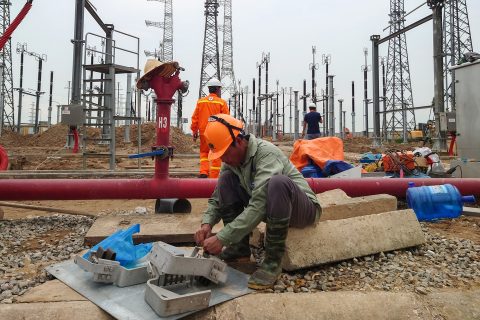

At home, it is also one of the world’s most electrified countries, with electricity supplying 32% of its final energy use, according to the International Energy Agency, meaning Japanese buildings and factories already run on electricity more than those in China, the EU or the US. Yet, Japan’s electrification rate has barely increased in the past decade.
At COP31 in Türkiye this week, a coalition of countries is expected to back a global pledge to increase the share of electricity in final energy consumption to 35% by 2035.
In addition, Japan’s solar and wind potential, including on rooftops and offshore, could generate 13 times the country’s electricity demand every year, according to Ember. Despite this, Japan imports nearly all of the fuel it burns, having almost no fossil fuel reserves.
At the same time, its early manufacturing lead in areas such as batteries and EV drivetrains is slipping away, Ember said.
Falling behind
In Southeast Asia, where Japanese brands have long dominated, the energy supply crisis triggered by the Iran war and the closure of the Strait of Hormuz sped up the uptake of EVs, and Chinese companies are pulling ahead.
In Thailand and Indonesia – two of the region’s largest car markets – more than 85% of EV sales came from Chinese brands in 2025, according to BloombergNEF’s latest EV outlook.

The shift illustrates the rapid transformation of a region which remains highly exposed to fossil fuel imports. Asia holds just 4% of the world’s oil and gas reserves but has become home to three-quarters of its clean-tech factories, according to Ember.
But Japanese carmakers bet on manufacturing hybrid vehicles rather than fully electric ones. Since 2019, the share of Japanese carmakers in global car sales has fallen from 31% to 26%.
“Unless Japan pivots fast to electric cars, it will cede one of its biggest industries to China,” said Sam Butler-Sloss, manager at Ember.
A way forward
Japan’s current energy policies favour fossil fuels and are holding back its potential to deploy electricity technologies, according to Ember.
Since 2022, Japan has spent about $86 billion on fuel and energy-bill subsidies intended to keep prices down, the report found. At the same time, the country has struggled with high electricity prices and slow electrification growth.
Meanwhile, the government has spent public money on technologies that rely on the old fossil-based system such as LNG, hydrogen and carbon capture and storage.
-
COP31 Bulletin Day 1: Agenda settled as COP urged to “supercharge solutions”
An agenda row is averted at the opening session, where the UN climate chief said strong results are needed from the talks to boost “real-world outcomes” -
COP31 Briefing: What to expect from the Antalya climate summit?
Electrification, the fossil fuel transition, adaptation to rising impacts, climate science and trade are key themes as governments gather for COP31 in Türkiye
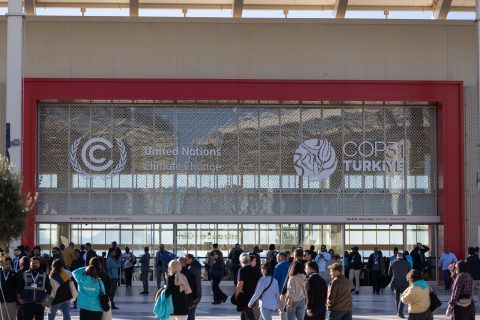
Ember called on the government to set an electrification target and to respond to the energy crisis with renewable power, EVs and batteries rather than fuel subsidies. It found the government can leverage the country’s industrial strength for producing electric technologies by building up its domestic market.
This could include putting an end date on sales of new petrol cars and coal power generation, providing funding for suppliers and regions to switch to clean power generation, shifting taxes from electricity to fossil fuels, and pivoting public funding to electricity technologies.
Rolling out clean energy technologies across the transport, electricity and heating sectors could also significantly reduce Japan’s dependence on fossil fuel imports.
Noriaki Oba, energy analyst and founder of the Japan-based Post-Oil Strategy Institute, said contributing Japanese technology to Asia’s electrification “would offer Japan a major opportunity for both its industrial competitiveness, as well as its diplomatic and economic security”.
The post Japan urged to ditch fossil fuel support to maximise clean-tech exports appeared first on Climate Home News.
Japan urged to ditch fossil fuel support to maximise clean-tech exports



-
Climate Change1 year ago
Guest post: Why China is still building new coal – and when it might stop
-
Greenhouse Gases1 year ago
Guest post: Why China is still building new coal – and when it might stop
-

 Greenhouse Gases2 years ago
嘉宾来稿:满足中国增长的用电需求 光伏加储能“比新建煤电更实惠”
-

 Climate Change2 years ago
嘉宾来稿:满足中国增长的用电需求 光伏加储能“比新建煤电更实惠”
-

 Renewable Energy1 year ago
Sending Progressive Philanthropist George Soros to Prison?
-
Greenhouse Gases1 year ago
嘉宾来稿:探究火山喷发如何影响气候预测
-

 Climate Change2 years ago
Analysis: China’s CO2 falls 1% in Q2 2024 in first quarterly drop since Covid-19
-

 Climate Change1 year ago
嘉宾来稿:探究火山喷发如何影响气候预测