

A controversial auction of oil blocks in the Amazon by COP30 host Brazil drew bids on only 20% of the areas offered, a result that green campaigners have hailed as a partial victory as they prepare to challenge the bidding process in the courts.
Nine oil companies, led by a consortium between Petrobras and ExxonMobil, secured the rights to 34 exploration blocks – 19 of them in the Amazon basin – in last week’s auction in Rio de Janeiro, which put 172 onshore and offshore oil and gas blocks up for grabs and was hailed as a success by the energy minister.
The Amazon rainforest emerges as the new global oil frontier
Environmental and Indigenous rights campaigners led condemnation of the auction, saying it dealt a sharp blow to Brazil’s COP Presidency months before it hosts the next U.N. climate conference in the Amazon city of Belém. They say exploration in the sensitive area threatens fragile ecosystems and traditional communities, and undermines efforts to move away from fossil fuels.
Asked about such criticism, COP30’s Executive Director Ana Toni said reducing oil and gas production globally needed to happen in an orderly manner.“When we agreed that we should be transitioning away from fossil fuels, which is a global goal, we also said in an orderly, just and actable way,” she told the We Don’t Have Time platform in an interview during mid-year climate talks in Bonn.
‘Partial victory’ for climate fight
But some campaigners said the fact that most of the licences went unsold had brought them some solace. Juliano Bueno, technical director of the Arayara Institute, a Brazilian climate nonprofit, said in a statement the “weak market uptake” was a “partial victory” for climate campaigners and their actions against the auction.
“After intense mobilisation by civil society and five lawsuits, the auction was partially unsold,” Bueno said.
The Federal Prosecution Office (MPF) and the Oil Workers’ Unions had also called for the suspension of the auction, saying it represented a “serious contradiction” in Brazil’s climate commitments and inadequate environmental studies.
That came in spite of higher global oil prices due to conflict in the Middle East, which according to Nicole Oliveira, executive director at the Arayara Institute, would have generally “increased companies’ appetite to acquire blocks in the bid”.
She added that there had been no bids on blocks overlapping areas defined as directly affecting Indigenous lands or in the Potiguar Basin, where the marine-rich volcanic islands of Fernando de Noronha lie about 350 km (215 miles) off the coast.
Both the Potiguar Basin and the Foz do Amazonas basin are part of the Equatorial Margin, which stretches as far as Guyana and is seen as Brazil’s most promising frontier for oil exploration. Brazil wants to produce 20% more oil and gas by 2030.
Chevron, ExxonMobil and China’s state-owned CNPC, which snapped up offshore blocks in the auction, may have been encouraged by recent signs that Brazil’s state-run energy firm Petrobras might be getting closer to receiving environmental permission to drill in Foz do Amazonas.
‘No legal basis’
Brazilian climate campaigners say the government rushed to carry out the auction using environmental permits granted under former President Jair Bolsonaro that were due to expire on June 18 – just a day after the bidding – and which they say are incomplete.
The Arayara Institute said the bidding process can only be completed when the winning companies have presented several rounds of documents and signed concession contracts, which is expected to happen in November – when COP30 takes place. That timeframe would mean the deadline had been broken.
“Those contracts will have no legal basis whatsoever,” Oliveira said. “We’ll continue to challenge this process in court to ensure that the sale of these blocks is cancelled.”
Cláudio Ângelo, international policy coordinator at Observatório do Clima, a Brazilian environmental network, told Climate Home News an oil spill from offshore blocks near Belém and the Amazon River would devastate coral reefs, mangroves and the coastlines of both Brazil and neighbouring French Guiana.
UN expects climate finance roadmap to offer “clear next steps”
Patricia Baran, head of Brazil’s ANP oil regulator, said after the auction that the blocks acquired for exploration would have additional environmental and social protections.
But campaigners dispute that, and much of their criticism over the auction has accused the government of double standards in efforts to shift away from fossil fuels.
Ângelo called the auction a “double act of sabotage” – endangering the environment and undermining Brazil’s COP30’s leadership and the efforts of its diplomats to foster a just transition.
According to research by Oil Change International (OIC), Brazil ranks higher than Saudi Arabia in projected CO2 emissions from oil and gas expansion to 2035, though four Global North countries – mainly the United States – are driving the expansion.
Toni said it was not fair to put all the blame for increasing oil demand on producers like Brazil.
“Obviously countries producing oil have a lot of responsibilities… but consumer countries also have a lot of responsibilities,” Toni said.
The post Brazilian activists vow to fight Amazon oil auction in court, hail ‘partial victory’ over unsold blocks appeared first on Climate Home News.

KOROR, PALAU, Wednesday 2 September 2026 — The new global heating projection by the United Nations Environment Programme (UNEP) has laid bare the dire realities of inevitable climate disaster, loss and damage for the Pacific and Australia in a 1.8°C world, with Greenpeace warning ‘we are now in bloody dangerous territory’, and must do everything possible to return warming to 1.5°C.
The report, Limiting Overshoot – Navigating exceedance of 1.5°C and pathways towards return, released as world leaders meet at this year’s Pacific Islands Forum in Palau, highlights the urgency of the climate crisis, the greatest security threat facing the Pacific. It comes as fracked gas from the Beetaloo Basin, one of Australia’s biggest climate bombs, began flowing for the first time.
Australia is the biggest polluter of all Pacific Islands Forum member states, far exceeding all other forum members combined. Greenpeace is calling on Prime Minister Anthony Albanese to centre Pacific priorities at the Forum, and walk the talk on climate solutions as a genuine family member of the Pacific.
Speaking from Palau, Shiva Gounden, Head of Pacific at Greenpeace Australia Pacific, said: “The latest UNEP report has printed in black and white that fossil fuel-hungry nations have overstepped, overshot and overindulged at the expense of Pacific lives, livelihoods, cultures and communities. This year’s Pacific Islands Forum has made it more apparent than ever that climate change is the region’s greatest security threat, and we cannot waste time on geopolitical power games when our world is sinking beneath our feet.
“As a person from the Pacific, I know our communities will not quietly accept these dire warnings of climate overshoot as our fate; we are already living and fiercely resisting this reality every single day. With every increment of warming, our lands, our livelihoods, and our island homes are threatened, but the Pacific’s resolve only grows stronger. We draw strength from our ocean and those who walked before us; our people are the protectors of the frontlines of climate change and the beacons of climate justice.
“By harnessing the natural power of our sun, winds, and seas through a rapid transition to renewable energy, and uniting in true global collaboration, we can steer back to 1.5°C – this is our moral, legal, and scientific imperative. A Fossil Fuel Free Pacific can breathe life back into the lungs of our islands.”
Also in Palau, Dr Simon Bradshaw, COP31 Lead and climate expert at Greenpeace Australia Pacific, said: “The UN report is warning that we are now in bloody dangerous territory. It lays bare the deadly consequences of reckless fossil fuel expansion, and a failure to listen to Pacific voices and to the decades of emphatic scientific warnings.
“It is a damning indictment of government climate inaction and negligence, coming just days after fracked gas from the Beetaloo Basin started flowing and Woodside’s disastrous Browse gas mega project undergoes Federal decision — two carbon bombs that would lock in decades of dangerous climate pollution and push us past the point of no return.
“Every new fossil fuel project pushes us closer to dangerous and irreversible tipping points in the climate system, with almost unimaginable consequences for the safety and security of communities in the Pacific, Australia and around the world.
“The task now is to minimise the magnitude, duration and consequences of any temperature overshoot. A pathway back to 1.5°C is possible but this pathway cannot be paved by fossil fuels.
“Accelerating the shift from fossil fuels to renewable energy, and working with our big energy partners across Asia to decarbonise together, is not only the path back from the climate brink, but also the key to our energy security and our future prosperity.”
Also in Palau, Vishal Prasad, Director of Pacific Islands Students Fighting Climate Change, said: “This report is terrifying for the young people of the Pacific. We know what 1.5, and what anything beyond it, means for our future, our families, our culture and our environment. 1.5 to stay alive has never been just slogan. It is our reality.
“The International Court of Justice has made it clear: keeping to 1.5 is not a choice, it is a legal obligation. Every new fossil fuel project drives us further from it. So we are not asking for your goodwill. We are not begging you. We are telling you what international law requires of you: end fossil fuel expansion. No new coal, no new oil, no new gas. Your corporate profits cannot be allowed to extinguish our future.”
—ENDS—
Greenpeace Australia Pacific has delegates from the Pacific and Australia at the PIFLM in Palau available for interview
Headshots can be found here
Media contact: Kimberley Bernard in Palau on +61407 581 404 or kbernard@greenpeace.org
‘Bloody dangerous territory’: UN report an indictment of govt climate inaction
Governments must slash emissions further and faster, and keep every climate promise they have made for the planet to be able to return to 1.5C of warming by the end of the century after an inevitable overshoot, a group of prominent climate scientists has said.
In a flagship new report sketching out a way not to lose the most ambitious Paris Agreement goal, the scientists said that global temperatures need to peak at no higher than 1.8C above pre-industrial levels to give the world “a fighting chance” to reverse course. They added that plans to suck carbon dioxide out of the atmosphere can only play a limited role in this effort and cannot substitute for emissions cuts.
A return to the 1.5C warming limit will only be reached in an optimistic scenario that sees governments turn their full national climate plans – known as NDCs – into reality and meet their additional, more ambitious targets to reach net zero emissions, said the report published by the UN Environment Programme (UNEP).
Actual government policy is far off that track. Current measures to cut emissions that are funded and in force put the world on course for around 2.8C of warming by 2100, UNEP has previously found.
Joeri Rogelj, professor of climate science and policy at Imperial College London and one of the report’s authors, said it is necessary to keep the temperature peak as low as possible as there are limits to how fast the world can reverse global warming.
That is because the scale of carbon dioxide removal (CDR) interventions that can be implemented sustainably and in a just way will otherwise not be sufficient and some measures, such as tree-planting or forest management, will be less effective at higher temperatures, he added.
Commenting on the report, UN Secretary-General António Guterres called for the 1.5C overshoot to be “as small and short as possible”. This, he added, “demands an overshoot of ambition”, involving accelerating the phaseout of fossil fuels and pursuing the renewables revolution, slashing methane pollution, and protecting land, forest and oceans.
“Governments must over-deliver on national climate plans, net-zero commitments, and beyond,” he urged in a video message. “The fight for 1.5 degrees is the fight for humanity.”
Overshoot, peak and decline
The report comes out nearly a year after the UN conceded for the first time that it is inevitable that global warming will exceed 1.5C temporarily and the world should focus on making that overshoot as small and short as possible.
UNEP’s Executive Director Inger Andersen told journalists that 1.5C remains the key goal, but “we now need a different approach from above”, while stepping up efforts to adapt to a warming world.
“A return to 1.5C is not assured,” she added. “But limiting the magnitude, duration and consequences of overshoot, while preserving the possibility of bringing temperatures back down, is the best remaining option to protect vulnerable people, reduce losses and secure a livable future for all.”
Battle over cleaning up shipping set to resume at London talks
Scientists warn in the report that warming above 1.5C should not be seen as safe or acceptable. Climate risks above that threshold intensify with every additional fraction of a degree of warming, they said. The report paints a grim picture of expected climate impacts: glaciers could lose more than a quarter of their remaining mass by 2100 and global food production could fall by as much as 14% by 2050 without effective adaptation.
Some small island developing states and low-lying coastal cities could be partially or completely submerged, while damaged ecosystems could further accelerate climate change.
“This report is a ‘fork in the road’ moment for the planet,” said Surangel Whipps, Jr., president of the Pacific island nation of Palau. “It is a further glimpse into a perilous future that has already arrived. To continue to have a fighting chance, calls for greater ambition are no longer enough – we need to see an urgent and unprecedented increase in political will and investment in a climate-safe future.”
Cut emissions first, remove carbon after
The authors call for a three-phase approach to bringing temperatures back down: an “immediate response” of deep and rapid emissions cuts and urgent protection for the most vulnerable as warming approaches and passes 1.5C; a “coping and containment” phase focused on reaching net-zero emissions and building resilience as temperatures peak; and a “long-term resilience” phase of net-negative emissions through carbon dioxide removal (CDR) and lasting adaptation as temperatures eventually decline.
Richard Betts, who leads climate impact research at the UK Met Office, said CDR is not a “get-out-of-jail-free card” and should only be additional to emission reductions that need to be achieved with “even more urgency than before”.
-
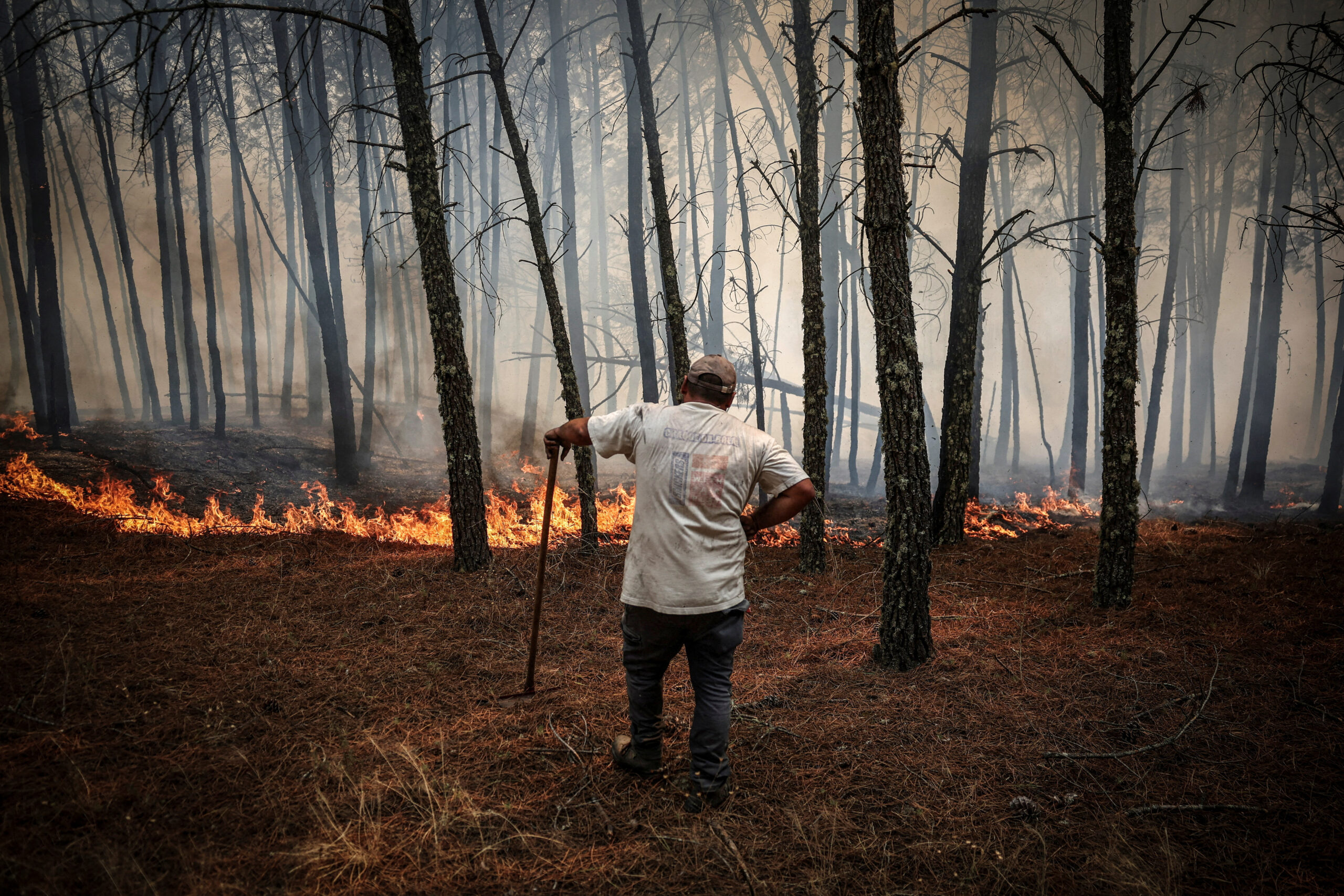
From firefighting to future-proofing: Preventing wildfires must be the priority
While many countries remain locked in a reactive cycle of disaster response, public policy can shift investment upstream to build resilience and cut risks -
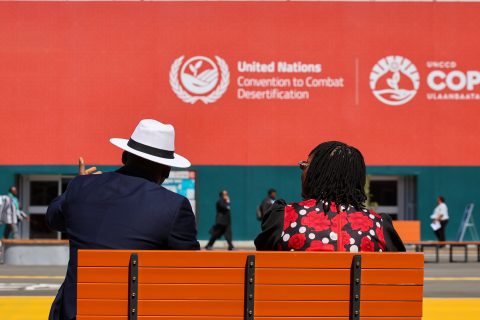
Despite African walkout, fractious land COP ends without drought deal
A strong push for a drought protocol by African countries failed in contentious talks, with negotiations postponed for another two years
Critics of CDR have long pointed to the technology’s record of overpromising and underdelivering, and warn it has been exploited by the fossil fuel industry and some oil-producing states to try to delay the clean energy transition.
Not everyone was fully convinced by the UNEP overshoot report. Veteran climate scientist Bill Hare from Climate Analytics said it “does a good job of describing the hole we’ve dug ourselves into” but “a poor job of showing us that there is a way out”. He argued that its thin treatment of the need for a fossil fuel phase-out and ambitious mitigation pathways to cut emissions risk “turning it into a call to apathy rather than a call to arms”.
“Host of challenges” with CDR
Debra Roberts, honorary professor at the University of KwaZulu-Natal in South Africa, told journalists that limiting global warming to around 1.8C is needed to give the world “a realistic and fighting chance” of returning to the 1.5C limit because of the “questionable” feasibility of interventions above that threshold.
CDR comes with “a whole host of challenges”, she added, including the impacts on food and water security of rolling out large-scale programmes and the unanswered questions of whether newer technologies will work at scale and who will foot the bill.
“It’s going to happen in a very, very complex decision-making space where the risks and impacts are dramatically becoming more complex and interrelated,” she said. “That’s why the pressure there is keep those emissions as low as possible because they give us the greatest fighting chance of the return to 1.5C in a more equitable and just way.”
The post UN sets out narrow path back to 1.5C warming after inevitable overshoot appeared first on Climate Home News.
UN sets out narrow path back to 1.5C warming after inevitable overshoot
Climate Change
Keeping to 1.5C of warming is no longer possible – but we must still limit the overshoot
Laurence Tubiana is CEO of the European Climate Foundation and was formerly France’s Climate Change Ambassador and Special Representative for COP21 in Paris.
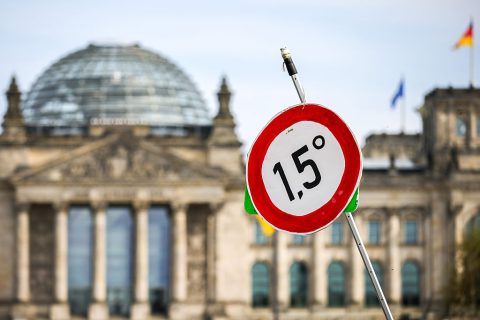
The UN has released a report this week confirming what many people have feared: the world is going to pass 1.5C of warming.
At current emissions, the remaining carbon budget will be exhausted within roughly three years. We are heading into “exceedance” of the 1.5C threshold: a sustained breach of the Paris Agreement’s primary temperature goal before any possible return below it.
1.5C is the line we should not have crossed – and, once we cross it, the line we must quickly get back below, on what the UN Environment Programme calls an “overshoot, peak and decline pathway”.
-
UN sets out narrow path back to 1.5C warming after inevitable overshoot
Leading scientists say warming must peak at 1.8C to be able to reverse course this century, but current government climate policies are way off track -
Battle over cleaning up shipping set to resume at London talks
The US and Saudi Arabia want to scrap shipping’s Net-Zero Framework and have swung behind a far less ambitious alternative

Of course, climate risk is a spectrum: 1.4C is not safe, and 1.5C is not a sudden cliff edge. But the further the world moves beyond that level, the harder it becomes for communities and economies to adapt, and the greater the risk of more abrupt or systemic changes.
The importance of 1.5C
Some will argue that exceeding 1.5C means the Paris Agreement has failed, and that it is no longer a useful threshold. I disagree.
Before Paris, the world was heading for roughly 3.5C to 4C of warming. The UN now estimates that warming will reach a lower level of around 2.6C by 2100, due to policies implemented since Paris. That is still far too dangerous, but it is not the same world we were facing in 2015.
When we negotiated the Paris Agreement, 1.5C was not an arbitrary number. It was fought for by small island states and other climate-vulnerable countries because it represented a red line for their survival. Since then, we have witnessed the stark impacts of global temperature rises even in countries that did not consider themselves vulnerable, as seen with the devastating heatwaves in Europe this summer.
WHO issues new guidance on heat-health action plans, as El Niño sets in
The International Court of Justice underlined this in an advisory opinion, endorsed overwhelmingly by the UN General Assembly earlier this year, recognising 1.5C as the primary temperature threshold under the Paris Agreement and affirming that states must align their commitments with it. Overshoot does not move the goalposts. 1.5C remains the benchmark we must work to return to.
Lasting consequences of overshoot
But even as we fight to get back below 1.5C as quickly as possible, we now have to reckon honestly with what overshoot means. We are entering a period for which our societies, economies and institutions are not prepared. Even if overshoot itself is temporary, many of its consequences will not be. The longer it lasts, and the higher temperatures rise, the greater the lasting damage. We therefore need to limit its duration and magnitude.
The longer warming remains above 1.5C, the greater the risk of crossing tipping points in major Earth systems such as ice sheets, the Atlantic Meridional Overturning Circulation, permafrost and tropical forests. Crossing them can trigger self-reinforcing changes that may prove irreversible even if temperatures later fall. We need to understand and monitor these systems more than ever. That requires sustained investment in climate science – just as funding is being cut in many places.
An overshoot pathway will also strain human systems. When a flood destroys a home, the damage is not undone because global temperatures later fall. Crop failures, missed schooling, debt and displacement can have lasting effects. Farms, cities, healthcare systems and insurance markets will all have to cope with risks they were not designed for, and risk facing “tipping points” of their own, such as financial panic when markets suddenly reprice risks they had underestimated. Infrastructure built today will stand for decades, so we need to design and plan for the climate risks it will actually face.
From firefighting to future-proofing: Preventing wildfires must be the priority
Our priority must be to transition away from fossil fuels and rapidly cut emissions, including short-lived climate pollutants like methane. It traps around 80 times more heat than carbon dioxide over a 20-year period, and cutting it sharply can act as an emergency brake on near-term warming. Much of the methane from fossil fuel operations can be cut with existing technologies.
We will also need sustainable carbon dioxide removal, although its role will be limited: trying to use it as a substitute for emissions cuts would be prohibitively expensive at scale.
The radical options
The major risks of overshoot have led to proposals to explore active intervention in the climate system itself. Solar radiation modification (SRM) is the best-known example: reflecting a small share of sunlight back into space to reduce warming. Other proposals would target different parts of the climate and Earth systems, such as trying to stabilise glaciers.
These responses would bring us into further uncharted territory across Earth systems and nature, diplomacy and governance, technology and societies.
Such ideas are born of genuine concern about the major risks facing vulnerable countries and communities as temperatures rise. But even under the most favourable assumptions, these are tactics for managing some of the symptoms of overshoot, not a strategy for addressing its causes. Greenhouse gases would keep accumulating, oceans would keep acidifying, and many of the social and economic impacts of overshoot would remain.
EU warns on solar geoengineering but research debate grinds on
The more we learn about the complexity of the climate and Earth systems we are disrupting and how much uncertainty there already is, the clearer it becomes that full control is likely an illusion, and new interventions bring new complex risks. SRM, for example, could change regional climates, such as rainfall patterns or agricultural production, in ways that benefit some regions and harm others, with knock-on geopolitical risks.
Governance and research needed
None of this is an argument against research into these technologies. On the contrary, the risks they’re responding to are so extreme that we must explore all the options we might have. But we need to understand the potential effects and capabilities much better and from many more angles, including the political and social implications. Serious global governance is particularly urgent, alongside transparent research that is open to scrutiny.
But the fundamental elements of a strategy to navigate overshoot are already understood. The priority is still to rapidly cut greenhouse gas emissions to limit peak warming, protect people against the warming already locked in, and ensure technological innovation aligns with the public interest.
Overshoot is not just an engineering challenge. We need a full-scale response across societies, economies and political systems to prepare to navigate a more uncertain climate.
The post Keeping to 1.5C of warming is no longer possible – but we must still limit the overshoot appeared first on Climate Home News.
Keeping to 1.5C of warming is no longer possible – but we must still limit the overshoot



-
Climate Change1 year ago
Guest post: Why China is still building new coal – and when it might stop
-

 Greenhouse Gases2 years ago
嘉宾来稿:满足中国增长的用电需求 光伏加储能“比新建煤电更实惠”
-
Greenhouse Gases1 year ago
Guest post: Why China is still building new coal – and when it might stop
-

 Climate Change2 years ago
嘉宾来稿:满足中国增长的用电需求 光伏加储能“比新建煤电更实惠”
-
Climate Change2 years ago
Bill Discounting Climate Change in Florida’s Energy Policy Awaits DeSantis’ Approval
-

 Renewable Energy10 months ago
Sending Progressive Philanthropist George Soros to Prison?
-
Greenhouse Gases1 year ago
嘉宾来稿:探究火山喷发如何影响气候预测
-

 Carbon Footprint2 years ago
US SEC’s Climate Disclosure Rules Spur Renewed Interest in Carbon Credits