

- What are the benefits and challenges of using AI in weather and climate forecasting?
- What are some other current uses of AI in climate science research?
- How is AI being used to advance climate policy and action?
- How could AI be used in climate research over the coming years?
- Are there any misconceptions about the use of AI in climate science?
- Could AI improve or exacerbate inequalities in climate research?
- What are some other risks and challenges of AI in climate change research?

‘Blended finance’ took centre stage at Cop28, with the Green Climate Fund among its supporters. But there are still major problems with the concept that must be addressed before considering any further expansion.
Blended finance is a combination of public concessional finance (i.e. with more generous terms than the market) with private or public resources. The the aim of it is to ‘mobilise’ development finance from other actors.
But, as Eurodad’s new joint report with ActionAid shows, it can perpetuate climate coloniality through the extraction of renewable resources from the global south to power Green New Deals in the global north.
Financial actors outside of recipient countries are favoured in these projects. The largest recipients of blended finance for climate action have been corporates and project developers, who got four-fifths of the finance throughout between 2019 and 2021.
Problems mount for Sahara gas pipeline, leaving Nigerian taxpayers at risk
A report by Follow the Money shows that big climate-based funds from the global north charge extractive commissions in countries which are in dire need of resources, further impoverishing their economies.
The high salaries and commissions of such funds are a problematic example of who is actually profiting from the emerging privatised green climate agenda in global south countries.
New debt
Furthermore, blended finance often brings new debt, which needs to be repaid, even if the beneficiaries are provided with softer terms than purely commercial loans.
This can contribute towards recipient countries’ indebtedness. A lack of transparency around projects, and poor accountability to the communities they are supposed to serve, are also pressing problems.
Another issue is the limited amount of private finance currently mobilised by blended finance.
In 2021, Development Finance Institutions financed long-term projects totalling US$13 billion supported by blended concessional finance.
Argentine resistance hinders Milei’s forest and glacier destruction
Of this, the total volume of private finance mobilised was approximately US$5 billion, while the rest was either from the institutions’ own-account ($5 billion) or from other public sources.
Zambian example
Many of these issues were evident in Zambia’s Scaling Solar programme, an initiative launched in 2015 by the International Finance Corporation (IFC) – the World Bank Group’s private sector arm.
To implement a solar energy project in the country, the investors received subsidies which ultimately raised the project’s costs to the public.
In fact, estimates show that around US$3.50 of public international finance was used to attract each dollar of private finance.
Indonesia turns traditional Indigenous land into nickel industrial zone
If governments are to continue promoting blended climate finance, they need to ensure that public money could not have achieved better impacts if spent in alternative, cost effective ways. Improvements to transparency are also crucial.
Ultimately, climate change has been caused by the global north’s extraction and exploitation of natural resources. Blended finance must not be seen as a substitute for delivering on existing climate finance commitments and reducing emissions in the global north.
Farwa Sial is senor policy and advocacy officer at the European Network on Debt and Development (Eurodad)
The post Blended finance can perpetuate climate colonialism appeared first on Climate Home News.
Continue Reading
Artificial intelligence (AI) is developing at a rapid pace and is increasingly being used by scientists to better understand climate change.
AI is perhaps best-known for its use in “large language models”, such as ChatGPT, Claude and Gemini.
However, the field is vast.
From weather forecasting to analysing satellite images, climate scientists are using various types of AI to develop faster and more efficient ways to study the warming planet.
However, the technology comes with no shortage of risks and challenges, including overreliance on unverified results, intensive energy use and exacerbating existing inequalities in climate science.
Carbon Brief spoke to 10 experts working across a range of climate-related fields – from developing climate forecasts to analysing changes in the energy grid – about how AI is being used.
Their answers are set out below, grouped by theme.
- What are the benefits and challenges of using AI in weather and climate forecasting?
- What are some other current uses of AI in climate science research?
- How is AI being used to advance climate policy and action?
- How could AI be used in climate research over the coming years?
- Are there any misconceptions about the use of AI in climate science?
- Could AI improve or exacerbate inequalities in climate research?
- What are some other risks and challenges of AI in climate change research?
What are the benefits and challenges of using AI in weather and climate forecasting?
Dr Doug McNeall, science lead in data-driven climate modelling at the UK Met Office:
One of the most significant recent developments has been the success of AI weather-prediction models, which learn from large volumes of weather data to predict the next few hours ahead and then repeatedly feed those predictions back into themselves to generate forecasts up to two weeks into the future.
These models have demonstrated that AI can provide accurate predictions while requiring far less computing power than existing numerical models [which rely on mathematical equations to simulate the climate].
One of the main challenges is that AI weather-prediction models have been developed for relatively short timescales, where large amounts of observational data [for example, temperature, rainfall or sea ice extent data] is available and model performance can be evaluated quickly and rigorously.
Climate prediction is fundamentally different. To provide useful climate information, we need to make projections for future climates that lie outside the observational record.
One promising route forward is, therefore, to use AI to emulate or accelerate these existing models, rather than relying solely on purely data-driven approaches. This blended approach could make climate risk information far more accessible and affordable to produce, while retaining the physical understanding [based on mathematical and scientific principles] that underpins confidence in climate projections.
Prof William Collins, professor of AI for climate science at the University of East Anglia:
We’re seeing a really exciting renaissance in both weather and climate science…Machine learning [a subset of AI that uses algorithms to let computers learn from data and make predictions without being explicitly programmed] has had an enormous impact on numerical weather prediction.
So, for example, the European Center for Mid-Range Weather Forecasts is now deploying an AI forecast system as part of their official communication of weather predictions to the European community, alongside the traditional forecast system. AI systems have become good enough that they’re absolutely competitive with the world’s leading numerical weather prediction…So that’s been quite remarkable.
Much of machine learning and AI involves learning from data and climate represents a future for which we do not have data. We’re literally trying to predict the future. We don’t have observations of it. So, where does the data come from to inform the models? That is, at the moment, the central challenge that the climate community is attempting to overcome.
Dr Amirpasha Mozaffari, researcher in Earth artificial intelligence at the Barcelona Supercomputing Centre:
AI forecast models do well on typical weather, but underperform physics-based models on record-breaking and unprecedented extremes – precisely the events that matter most for adaptation [to climate change].
Solving that – whether through hybrid models [which combine AI with traditional models], physical constraints [in which rules are implemented based on the laws of physics to help the models make realistic forecasts] or new ways of evaluating models on what they have not seen – is the central open problem for the field.
What are some other current uses of AI in climate science research?
Dr Stefano Materia, researcher in climate variability and change at the Barcelona Supercomputing Centre:
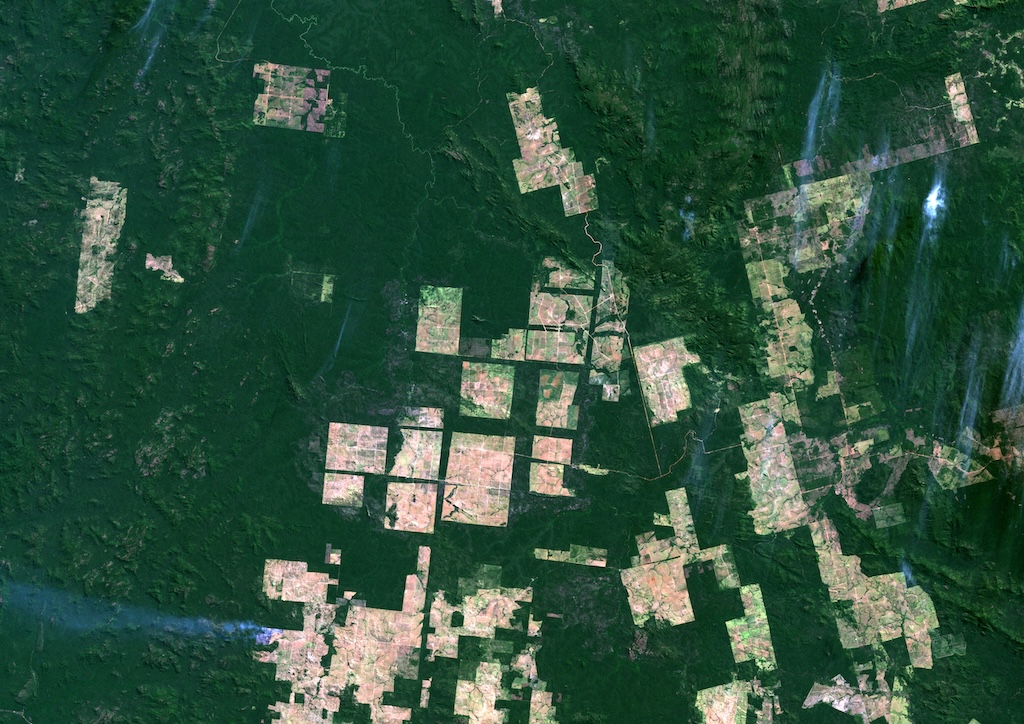
Besides the climate modelling and prediction framework, the proliferation of Earth-observation satellites has created a massive influx of geospatial data (for example, images showing deforestation or sea ice melt). AI is used to translate raw pixel data into actionable climate intelligence.
Methane tracking and ecosystem monitoring are two examples of this kind of application. Methane is a potent greenhouse gas, but leaks are largely invisible and hard to track. AI algorithms now automatically scan hyperspectral imagery [which uses data from across the electromagnetic spectrum] from satellites to pinpoint specific industrial methane leaks globally, alerting operators in near real-time.
At the same time, machine-learning models process thousands of satellite images daily to detect illegal logging, track land-use changes and monitor glacier retreat long before humans could manually review the footage.
Dr Clare Eayrs, polar research scientist at the Environmental Fluid Dynamics Lab at New York University:
In sea ice research, machine learning is now used across the sea ice modelling workflow…The most mature application is extracting more information from observations, for example, mapping fine-scale sea ice deformation from ship radar and classifying snow layers in micropenetrometer profiles [which measure the hardness or softness of different layers of snow].
Forecasting is the most visible application in this field. Ice Net [a sea ice forecasting system] was an early demonstration that a deep-learning system [which uses models inspired by the layers of a human brain to process information] could outperform a leading physical model in seasonal Arctic forecasts. Machine-learning systems are now used to predict [climate] variables such as sea ice concentration, thickness and drift.
Prof Cristiana Stan, vice-chair of the World Climate Research Programme (WCRP):
AI now appears across all major parts of the WCRP. [For example,]…the ”weather prediction model intercomparison project” [an initiative to create a centralised database of physics- based, machine-learning and hybrid model forecasts] includes physics-based numerical weather prediction models, hybrid [models] and AI weather prediction models. Because it is focused on operational models, the project offers a direct comparison between state-of-the art systems. [It] is intended to accelerate the deployment of the next generation of operational models and contributes to development of metrics needed to assess relative strengths and weaknesses of models.
Downscaling is another area that is harnessing AI power to refine the coarse-resolution model output into high-resolution.
Dr William Collins:
The Intergovernmental Panel on Climate Change (IPCC) is performing its seventh assessment report (AR7)…This time, for the very first time, there’s a model intercomparison project just for models using AI [for weather and climate forecasting]. So that is a real milestone…It’s a very exciting proof of principle or proof of concept and, I think, the harbinger of many more developments of this kind to come.
[For more on how model intercomparison will inform IPCC AR7, see Carbon Brief’s recent guest post.]
Dr Amirpasha Mozaffari:
A few years ago, it took two or three years for a new architecture to make its way from the machine-learning community into weather and climate work. Today it is a matter of months: diffusion models, foundation models and generative ensembles have all arrived in our field almost as soon as they appeared elsewhere. That speed opens up things that were previously out of reach.
And the cost of running a global forecast has dropped by orders of magnitude…which, in principle, changes who can produce weather and climate information at all.
How is AI being used to advance climate policy and action?
Prof Priya Donti, assistant professor at the Massachusetts Institute of Technology and co-founder of Climate Change AI:
As we introduce more solar, wind and other renewable energy into the power grid, we need to rethink how we actually manage the various sources on the power grid…
AI is used in a few different ways here. One of them is just trying to get better predictions of solar and wind power production in order to reduce that uncertainty and allow us to plan with a little more foresight.
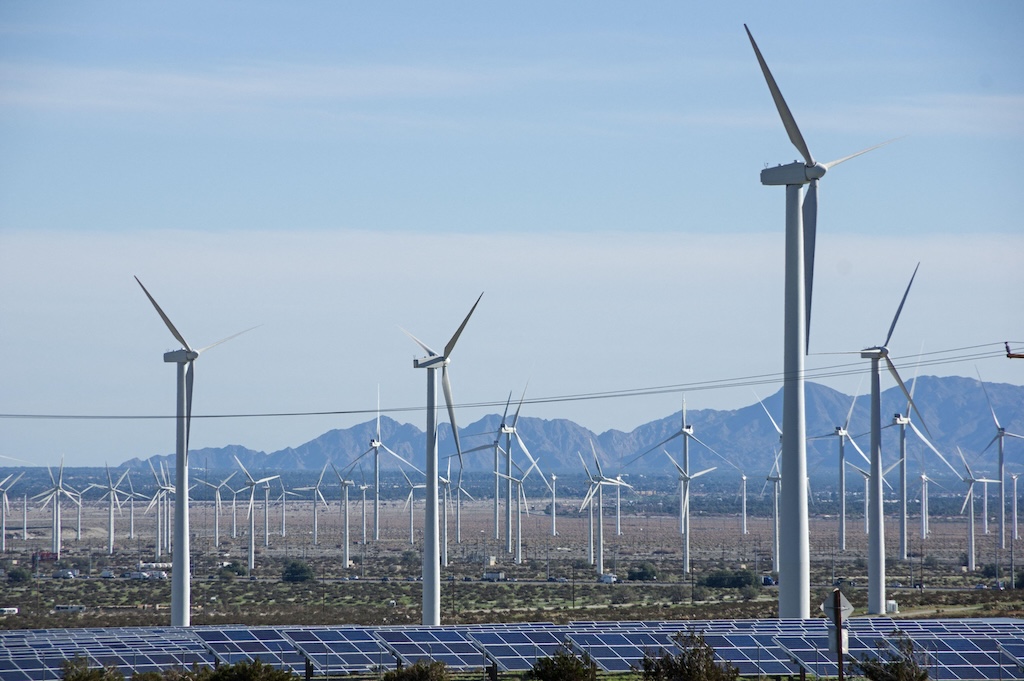
Another big one is helping to actually optimise and control the various components we have on power grids – the power generators, the batteries, flexible loads like industrial loads or the batteries in your electric vehicles or heating and cooling systems.
Dr Carlos Rodriguez-Pardo, postdoctoral researcher at Politecnico di Milano, affiliated scientist at the European Institute on Economics and the Environment and at the Euro-Mediterranean Center on Climate Change:
AI is already useful at every stage of the climate policy cycle.
The first stage is measurement: understanding what is happening, what has been tried and who is exposed. Machine learning helps us process satellite imagery to estimate emissions, improve air quality monitoring, harmonise fragmented policy databases and map a scientific literature that has grown far beyond what any human team could read.
The second stage is modelling futures. The models we use to explore climate and economic scenarios are computationally very expensive, so AI-based emulators [simple models that can be used to represent more complex mathematical models] that reproduce their behaviour at a small fraction of the cost are transforming what we can do. Instead of a handful of scenarios, we can explore thousands and quantify uncertainties that were previously out of reach.
Reinforcement learning [a type of AI in which a computer programme learns to make decisions through a process of trial and error] is also allowing us to study how multiple actors, such as countries or electricity producers, compete and cooperate under different policy designs. This can reveal strategies that classical analysis misses.
The third stage is evaluation, where causal machine learning is extending the toolkit we use to answer whether a policy actually worked. That is a different – and much harder – question than predicting what will happen next.
How could AI be used in climate research over the coming years?
Prof Cristiana Stan:
The WCRP has established a task team to address this very question. The focus areas considered by the task team include modelling and projections, data and observations [and AI] impacts and services, engagement with the private sector supporting development and integration of AI and machine learning into climate research and applications and the scientific rigour and trustworthiness of AI and machine learning methods.
Dr William Collins:
I think the IPCC’s eighth assessment [likely due in the late 2020s] may itself largely be written using large language models. Basically, the job of the people writing the IPCC report is to synthesise…One could certainly argue whether or not that needs to be done by people. AI should be telling us the known unknowns, not the known knowns… The thing that’s value-added [by AI] as part of that assessment process is to tell us what isn’t certain, what isn’t known well. Because then that tells you where the science should be heading.
[In September 2026, the IPCC established an “informal group” on AI to “provide timely guidance on the responsible use of AI and emerging digital technologies in IPCC processes”.]
AI will also be an integral part of the eighth Coupled Model Intercomparison Project, with machine-learning codes running alongside traditional climate models.
Dr Stefano Materia:
The inclusion of AI in climate and land-vegetation modelling represents a paradigm shift. Rather than replacing physical models entirely, hybrid modelling merges the mathematical rigour and physical consistency of traditional process-based Earth system models [advanced computer models that combine physical, chemical and biological processes to simulate the climate] with the pattern-recognition power and speed of machine learning.
This new approach will be able to overcome computational bottlenecks, replace unresolved subgrid processes [which are too small to be captured by the grid cells of a computer model], improve the terrestrial biosphere – finally narrowing down the uncertainties on the terrestrial carbon sink and accurately pinpointing emergent constraints and non-linear tipping points.
Dr Clare Eayrs:
Much of what we know about Antarctic sea ice comes from the satellite era, which begins in 1979. That is a short record for a system with strong decadal variability. A great deal of information about earlier conditions is contained in ship logs, whaling records, expedition photographs and early aerial and pre-1979 satellite imagery. Machine learning is well suited to extracting it. Lengthening the observational record would improve almost everything else we do, including training and testing AI systems.

Are there any misconceptions about the use of AI in climate science?
Dr David Rolnick:
AI is frequently thought of as large generative models, like [those] developed by large tech companies. But that is not mostly what is useful in AI for tackling climate change.
People talk a lot about energy usage of AI and negative impacts on society, including on the climate, as a result of that energy usage and associated negative impacts like water usage. These are very real worries. However, it is worth noting that the massive energy and other requirements of AI systems are referring to those large-scale generative and agentic systems. They’re not mostly about the kinds of AI systems that are actually used to fight climate change.
Prof Priya Donti:
I think the general public thinks of AI as this one specific thing…often large language models, chatbots, etc…People who are making allocation decisions for who funds scientists might have a mismatched understanding of what needs to happen, which means the right science doesn’t necessarily get funded.
Could AI improve or exacerbate inequalities in climate research?
Dr Amirpasha Mozzafari:
Frontier models [which are at the cutting edge of AI research] are built almost exclusively in the global north, trained on data that is densest where observations are richest and validated against benchmarks that reflect the same regions.
Cheap inference [in which a trained AI model applies its learned patterns to new, unseen data] does not fix that on its own: being able to run someone else’s model is not the same as having a say in what it is trained on, how it is evaluated, or whether it serves your decisions.
Without deliberate effort to share data infrastructure, evaluation metrics that centre on people’s wellbeing and genuine co-production of knowledge, AI risks automating and amplifying the existing divide in the global climate information system rather than closing it.