


Geothermal
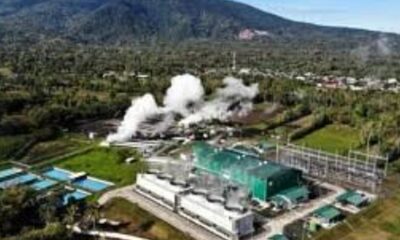
Beowawe Geothermal power plant- Nevada, United States
The Beowawe Geothermal Power Plant is located in Beowawe, Nevada, in the United States. It is owned and operated by Ormat Technologies, Inc., which is a leading geothermal power company.
The power plant has a total installed capacity of 30 megawatts (MW) and generates approximately 240 gigawatt-hours (GWh) of electricity per year. The plant uses a binary cycle system, which is a type of geothermal power generation technology that is particularly suitable for low-temperature geothermal resources.
The binary cycle system works by using a heat exchanger to transfer heat from the geothermal fluid to a working fluid, which has a lower boiling point. The working fluid is then vaporized and used to drive a turbine, which generates electricity.
The Beowawe Geothermal Power Plant has been in operation since 1985 and has been expanded several times over the years. It provides clean, renewable energy to the local grid and helps to reduce greenhouse gas emissions by displacing the use of fossil fuels.
The plant also provides direct benefits to the local community, including job creation and increased tax revenue. Additionally, the use of geothermal energy helps to reduce the dependence on imported energy sources and improve energy security for the region.
History of Beowawe Geothermal power plant- Nevada, United States
The history of the Beowawe Geothermal Power Plant dates back to the mid-1970s, when geothermal exploration and development began in the region. The Beowawe geothermal resource was discovered in 1976 by Atlantic Richfield Company (ARCO) during their exploration program in Nevada.
ARCO developed a pilot plant at the site in 1980, which had a capacity of 1.5 megawatts (MW). The pilot plant was used to test the geothermal resource and the binary cycle technology, which was a relatively new technology at the time.
Following the success of the pilot plant, ARCO expanded the plant to 11 MW in 1985 and sold it to Ormat Technologies, Inc. in 1989. Ormat continued to expand the plant, adding additional units in 1990, 1992, and 1995.
In 2007, Ormat began construction on a new 30 MW power plant, which replaced the existing units. The new power plant, which uses the latest binary cycle technology, was completed in 2009 and has been in operation since then.
Today, the Beowawe Geothermal Power Plant is one of the largest geothermal power plants in Nevada and provides clean, renewable energy to the local grid. Its history is a testament to the innovative spirit of the geothermal industry and its ability to develop new technologies and expand the use of geothermal resources.
Beowawe Geothermal power plant- Nevada, United States, financial and international investment
The Beowawe Geothermal Power Plant was initially developed and owned by Atlantic Richfield Company (ARCO), a major American oil and gas company. In 1985, ARCO sold the plant to Ormat Technologies, Inc., which is a leading geothermal power company based in Nevada.
Ormat Technologies has invested significant capital into the Beowawe Geothermal Power Plant over the years, including the construction of a new 30 MW power plant in 2007-2009, which replaced the existing units. The company has also invested in upgrades and maintenance to ensure the plant operates efficiently and reliably.
In terms of international investment, Ormat Technologies has a global presence and has developed geothermal power plants in various countries around the world, including Kenya, Guatemala, Indonesia, and New Zealand. The company has also partnered with international investors to develop geothermal projects, such as the Sarulla Geothermal Power Plant in Indonesia, which was developed in partnership with Medco Energi Internasional, Itochu Corporation, and Kyushu Electric Power Company.
The development of geothermal power plants requires significant capital investment, and international investment can play an important role in supporting the growth of the geothermal industry. The Beowawe Geothermal Power Plant is an example of how private investment can drive the development of clean, renewable energy and support the transition to a low-carbon economy.
Beowawe Geothermal power plant, operated by
Beowawe Geothermal Power Plant is operated by Ormat Technologies, a company that specializes in the development, construction, and operation of geothermal power plants.
Ormat Technologies was founded in 1965 and has become a global leader in geothermal energy with operations in more than 30 countries. The company’s expertise includes the design, construction, and operation of geothermal power plants using a variety of technologies, including binary cycle, flash, and hybrid systems. Ormat Technologies also develops and sells power generation equipment and provides energy storage solutions.
The company is committed to providing sustainable, reliable, and affordable energy solutions to meet the world’s growing energy needs.
https://www.exaputra.com/2023/04/beowawe-geothermal-power-plant-nevada.html



It’s actually surprising that it took so long for Trump to favor Putin in Russia’s war with Ukraine.
Trump loves all the things that Putin stands for: brutality against dissidents, defying the law, war crimes, lies, and fascism.
If it were possible, Trump would enjoy the same absolute power that Putin has, and Kim Jong Un has in North Korea.
 To his credit, Trump is astute when it comes to the timing of his atrocities. Had he abandoned Ukraine in favor of Putin’s Russia too early, the American people would have been outraged.
Now, after Iran, detention centers, gas prices, farm failures, killing clean energy, years of support for white nationalism, gutting U.S. education, and so forth, Trump’s backing Russia seems perfectly normal.
 Bercerra comes with some baggage, but at least he’s not endorsed by Trump.
The bulk of California’s population lives on or near the Pacific Coast, and consists of affluent and well-educated people who want to see Trump removed, convicted, and incarcerated. Yes, the inland folks are largely farmers, but their numbers are far too small to elect a Republican in the GOP of today, with this corruption, ignorance, racism, and cruelty.


-
Climate Change1 year ago
Guest post: Why China is still building new coal – and when it might stop
-

 Greenhouse Gases2 years ago
嘉宾来稿:满足中国增长的用电需求 光伏加储能“比新建煤电更实惠”
-
Greenhouse Gases1 year ago
Guest post: Why China is still building new coal – and when it might stop
-

 Climate Change2 years ago
嘉宾来稿:满足中国增长的用电需求 光伏加储能“比新建煤电更实惠”
-

 Renewable Energy12 months ago
Sending Progressive Philanthropist George Soros to Prison?
-
Climate Change2 years ago
Bill Discounting Climate Change in Florida’s Energy Policy Awaits DeSantis’ Approval
-
Greenhouse Gases1 year ago
嘉宾来稿:探究火山喷发如何影响气候预测
-

 Climate Change2 years ago
Analysis: China’s CO2 falls 1% in Q2 2024 in first quarterly drop since Covid-19