

Geothermal
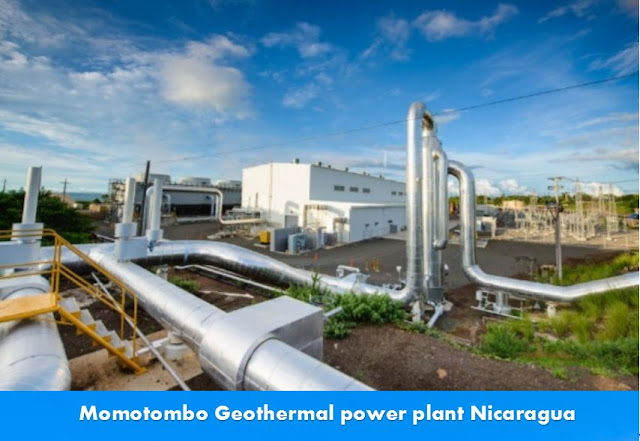
Momotombo Geothermal power plant Nicaragua
The Momotombo Geothermal Power Plant is a geothermal power plant located in Nicaragua, near the Momotombo volcano on the north shore of Lake Managua.
The power plant has a total capacity of 73 MW and was constructed by the Japanese International Cooperation Agency (JICA) in 1983.
The Momotombo Geothermal Power Plant operates by harnessing the heat and steam produced by the volcanic activity of the Momotombo volcano. The plant’s facilities include two production wells, two injection wells, and a steam turbine generator system.
Geothermal power plants like Momotombo are considered a clean and renewable energy source, as they do not produce greenhouse gas emissions. The Momotombo plant has played a significant role in reducing Nicaragua’s dependence on fossil fuels for electricity generation, helping to promote sustainable development in the country.
However, it is worth noting that geothermal power plants can also have environmental impacts, such as the potential to disrupt local ecosystems and groundwater resources. It is essential for geothermal power plants to be designed, operated, and regulated responsibly to minimize these impacts.
History of Momotombo Geothermal power plant Nicaragua
The history of the Momotombo Geothermal Power Plant dates back to the 1970s when the Nicaraguan government began exploring the country’s geothermal potential. In 1973, the Japanese International Cooperation Agency (JICA) conducted a geothermal survey of Nicaragua, identifying the Momotombo volcano as a potential site for a geothermal power plant.
After further research and feasibility studies, the Nicaraguan government and JICA signed an agreement in 1979 to construct the Momotombo Geothermal Power Plant. Construction began in 1980 and was completed in 1983, with a total investment of around $168 million.
The plant initially had a capacity of 35 MW, which was later expanded to 72 MW in 1999 with the addition of a second turbine. The power plant has been operated by Nicaragua’s state-owned energy company, Empresa Nicaragüense de Electricidad (ENEL), since its inception.
The Momotombo Geothermal Power Plant has played a significant role in Nicaragua’s energy sector, providing a reliable source of electricity to the country’s grid. The plant has also helped to reduce Nicaragua’s dependence on fossil fuels for electricity generation and promote sustainable development in the country.
In recent years, there have been plans to expand the Momotombo plant’s capacity further, with proposals for a third turbine that could add an additional 35 MW of capacity. However, these plans have faced some opposition from local communities concerned about the potential environmental impacts of the plant’s expansion.
Momotombo Geothermal power plant Nicaragua – Profile
The Momotombo Geothermal Power Plant is located in the northwest region of Nicaragua, near the Momotombo volcano on the north shore of Lake Managua. The plant has a total capacity of 72 MW, making it one of the largest geothermal power plants in Central America.
The plant operates by harnessing the geothermal energy produced by the volcanic activity of the Momotombo volcano. This energy is extracted through two production wells that draw hot water and steam from the ground. The steam is then separated from the water and used to power a steam turbine generator system, which produces electricity.
The Momotombo plant has played a significant role in Nicaragua’s energy sector, providing a reliable source of electricity to the country’s grid. The plant’s operations have also helped to reduce Nicaragua’s dependence on fossil fuels for electricity generation and promote sustainable development in the country.
The Momotombo Geothermal Power Plant is actually located in Nicaragua, not Tumkur, Karnataka, India. The capacity of the Momotombo plant is 36 MW, not 2,000 MW.
Here’s a corrected profile for the Momotombo Geothermal Power Plant:
Location: Leon, Nicaragua
Capacity: 36 megawatts (MW)
Area: Not available, as the plant is located on the side of the Momotombo Volcano.
The Momotombo Geothermal Power Plant is owned and operated by Polaris Energy Nicaragua, a subsidiary of Polaris Infrastructure. The plant began operations in 1983 and was modernized and expanded in 2015. The plant uses geothermal energy from the Momotombo Volcano to generate electricity for the national grid.
The plant has two production wells and one injection well, and the electricity is generated using a binary cycle system. The plant also has a cooling tower to reduce the temperature of the geothermal fluid after it has been used to generate electricity.
The Momotombo Geothermal Power Plant is a significant contributor to Nicaragua’s electricity supply, providing a reliable source of renewable energy. The plant has also been recognized for its environmental and social sustainability efforts, including reforestation projects and support for local communities.
Momotombo Geothermal power plant Nicaragua – Technology
The Momotombo Geothermal Power Plant in Nicaragua uses geothermal energy to generate electricity. Geothermal energy is heat energy that is generated and stored within the Earth’s crust. The heat is produced by the decay of radioactive materials in the Earth’s core, and it is conducted to the Earth’s surface through magma and hot water.
The technology used at the Momotombo Geothermal Power Plant is called a binary cycle system. The system works by using the heat from the geothermal fluid to vaporize a low-boiling-point working fluid, which then drives a turbine to generate electricity. The geothermal fluid is kept separate from the working fluid, so there is no direct contact between the two fluids.
The binary cycle system used at the Momotombo plant is a closed-loop system, which means that the working fluid is continually reused. The plant has two production wells, which are drilled into the geothermal reservoir to extract the hot fluid, and one injection well, which is used to reinject the cooled fluid back into the reservoir.
To prevent the release of harmful gases into the atmosphere, the Momotombo plant uses a cooling tower to reduce the temperature of the geothermal fluid after it has been used to generate electricity. The cooling tower uses air to cool the fluid, and the cooled fluid is then reinjected into the reservoir.
The technology used at the Momotombo Geothermal Power Plant is a sustainable and environmentally-friendly way to generate electricity, as it does not produce any greenhouse gas emissions or air pollution.
Momotombo Geothermal power plant Nicaragua – Operator
The Momotombo Geothermal Power Plant in Nicaragua is owned and operated by Polaris Energy Nicaragua, which is a subsidiary of Polaris Infrastructure. Polaris Infrastructure is a Toronto-based company that specializes in the development and operation of renewable energy projects, with a focus on geothermal energy.
Polaris Energy Nicaragua acquired the Momotombo plant in 2016 from Ram Power Corp, which had owned and operated the plant since 2010. Polaris Energy Nicaragua has since modernized and expanded the plant, increasing its capacity from 36 MW to 72 MW.
As the operator of the Momotombo Geothermal Power Plant, Polaris Energy Nicaragua is responsible for the day-to-day management and maintenance of the plant, including ensuring the safety of its employees and the local community, monitoring the plant’s performance, and complying with all relevant regulations and standards.
Polaris Energy Nicaragua is committed to operating the plant in a socially and environmentally responsible manner, and has implemented a number of initiatives to minimize the plant’s environmental impact and support the local community. These initiatives include reforestation projects, support for local farmers, and the provision of clean drinking water to nearby communities.
Momotombo Geothermal power plant Nicaragua – Cost and Financial
The exact cost of building the Momotombo Geothermal Power Plant in Nicaragua is not publicly available, as the plant was originally built in 1983 and has undergone several expansions and modernizations since then. However, the total cost of geothermal power plants typically includes the costs of exploration, drilling, construction, and equipment, and can range from several hundred million to several billion dollars, depending on the size and complexity of the project.
In 2016, Polaris Infrastructure acquired the Momotombo plant for $33 million, which included the plant’s existing debt. Since then, Polaris has invested additional capital into modernizing and expanding the plant, with a goal of increasing its capacity to 72 MW.
The Momotombo plant sells its electricity to Nicaragua’s national grid, with a long-term power purchase agreement in place with the country’s state-owned utility, Empresa Nicaragüense de Electricidad (ENEL). The price at which the plant sells its electricity to ENEL is not publicly disclosed.
The Momotombo Geothermal Power Plant is a significant investment for Polaris Infrastructure, and the company has stated that it expects the plant to generate a stable and reliable source of revenue for many years to come, due to the long lifespan of geothermal power plants and the relatively low operating costs associated with them.
Momotombo Geothermal power plant Nicaragua – Energy Contribution
The Momotombo Geothermal Power Plant in Nicaragua is a significant contributor to the country’s electricity supply, providing a reliable source of renewable energy. The plant has a current installed capacity of 72 MW, which is enough to power approximately 100,000 households in Nicaragua.
Geothermal energy is a reliable and constant source of electricity, as it is not dependent on weather conditions like wind and solar power. The Momotombo plant operates 24 hours a day, seven days a week, and has a capacity factor of around 90%, which means that it is able to produce electricity at its full capacity for most of the time.
The Momotombo plant is also an important source of renewable energy for Nicaragua, which has set a target of generating 90% of its electricity from renewable sources by 2020. In 2019, renewable energy accounted for around 60% of Nicaragua’s electricity supply, with geothermal energy contributing approximately 14% of the total.
The Momotombo Geothermal Power Plant is an important part of Nicaragua’s energy mix, providing a reliable and sustainable source of electricity that helps to reduce the country’s dependence on fossil fuels and support its transition to a low-carbon economy.
Conclusion for Momotombo Geothermal power plant Nicaragua Review
The Momotombo Geothermal power plant in Nicaragua is a significant development in the country’s energy sector. The plant is situated near the Momotombo Volcano and utilizes geothermal energy to generate electricity. The plant has been operational since 1983 and has a total installed capacity of 70 MW, making it the largest geothermal power plant in Central America.
The plant’s operation has had several positive impacts, including reducing the country’s dependence on fossil fuels, decreasing greenhouse gas emissions, and providing reliable and cost-effective electricity to the grid. The plant has also created job opportunities and stimulated economic growth in the region.
However, the plant has faced some challenges, including technical issues, environmental concerns, and social conflicts. The area surrounding the plant is prone to earthquakes and volcanic activity, which can affect the plant’s operation. The plant has also faced criticism from some groups concerned about the potential environmental impact of geothermal energy production, including the disposal of wastewater.
The Momotombo Geothermal power plant in Nicaragua is a crucial development in the country’s energy sector. While it has faced challenges, the plant has had significant positive impacts and has the potential to continue to contribute to the country’s sustainable development.
https://www.exaputra.com/2023/04/momotombo-geothermal-power-plant.html


Renewable Energy
Is a Team of Is a Bunch of MAGA Thugs Beating the Snot Out of a Woman a New Low, or Is it What We Now Need to Expect?
 Just when we think there is a bottom, the United States sinks just a bit lower. It’s our brand nowadays.
That’s quite a left cross this thug delivered to this helpless female protestor.
It wasn’t too long ago that beating up women was taboo in America. My 11-year-old, sixth-grade son saw a male classmate of his badly bruise a girl by pushing her hard down to the ground–and proceeded to punch him in the mouth. A fellow father witnessed the scene and told me, “Your son’s fist was in that kid’s teeth within a fraction of a second.”
I had brought him up to avoid violence and achieve peaceful resolutions to conflicts, but I couldn’t fault him here.
What a disgusting bunch of turds we’ve become.
We’re starting to see intimations that stupidity like this is generated and posted by Russian data centers so as to appeal to MAGA idiots and favor the Republicans in the upcoming midterms.
 Every day, we come across articles that summarize Trump’s “accomplishments.”
I thought I’d publish this masterpiece.


Is a Team of Is a Bunch of MAGA Thugs Beating the Snot Out of a Woman a New Low, or Is it What We Now Need to Expect?

Live blog: Greenpeace activists occupy Woodside gas project to save Scott Reef
Greenpeace activists climb and occupy Woodside’s Scarborough gas project calling on the Australian government to “Stop Woodside’s Dirty Gas” and “Save Scott Reef”
-
Climate Change1 year ago
Guest post: Why China is still building new coal – and when it might stop
-

 Greenhouse Gases2 years ago
嘉宾来稿:满足中国增长的用电需求 光伏加储能“比新建煤电更实惠”
-
Greenhouse Gases1 year ago
Guest post: Why China is still building new coal – and when it might stop
-

 Climate Change2 years ago
嘉宾来稿:满足中国增长的用电需求 光伏加储能“比新建煤电更实惠”
-

 Renewable Energy12 months ago
Sending Progressive Philanthropist George Soros to Prison?
-
Climate Change2 years ago
Bill Discounting Climate Change in Florida’s Energy Policy Awaits DeSantis’ Approval
-
Greenhouse Gases1 year ago
嘉宾来稿:探究火山喷发如何影响气候预测
-

 Climate Change2 years ago
Analysis: China’s CO2 falls 1% in Q2 2024 in first quarterly drop since Covid-19