

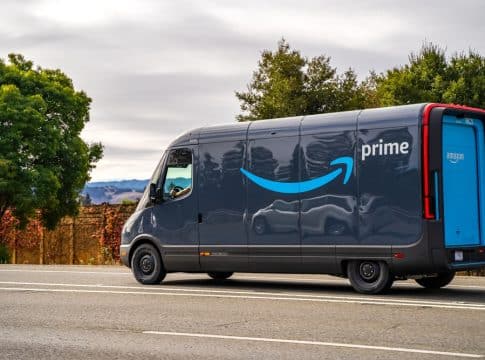
Amazon is making waves in its journey toward sustainability with a groundbreaking $1 billion investment to electrify its European transportation network. This initiative is part of the company’s broader Climate Pledge to achieve net-zero carbon emissions by 2040. It underscores its commitment to tackling Scope 3 emissions, which account for the majority of its carbon footprint.
By electrifying its fleet and investing in sustainable infrastructure, Amazon sets a new corporate environmental responsibility standard.
Driving Change: Amazon’s Electric Fleet Revolution Across Europe
Amazon’s recent order of more than 200 electric heavy goods vehicles (eHGVs) represents the company’s largest single purchase of electric trucks to date. Mercedes-Benz Trucks will supply the eActros 600 vehicles, which will be deployed on high-mileage routes in the UK and Germany.
These trucks will transport over 350 million packages annually, eliminating tailpipe emissions and significantly reducing the carbon intensity of Amazon’s logistics operations. Highlighting the importance of this investment, Andreas Marschner, Vice President of Amazon Worldwide Operations Sustainability, remarked:
“This order of more than 200 electric trucks underlines our commitment to being a leader in electrifying heavy goods transportation in Europe. It is the biggest electric heavy truck order by Amazon to date anywhere in the world, and is an important step as we work to achieve our Climate Pledge commitment to reach net-zero carbon emissions across our operations by 2040.”
To support this ambitious rollout, Amazon is investing heavily in charging infrastructure. This includes 360kW chargers capable of charging a 40-ton truck from 20% to 80% in just over an hour. This infrastructure ensures that the operational efficiency of the electric fleet is maintained while significantly cutting emissions.
The electrification move is crucial for the retail giant’s journey toward net zero, particularly in slashing its Scope 3 emissions.

How Amazon Tackles Its Carbon Emissions
In 2023, Amazon reduced its absolute carbon emissions by 3%, with Scope 2 emissions (from electricity use) dropping by 11% and Scope 3 emissions falling by 5%. However, Scope 1 emissions, tied to direct operations like transportation fuel use, increased by 7%. This uptick reflects the growing scale of the company’s logistics network and highlights the need for investments like the electrification of its fleet.

Amazon’s Scope 3 emissions, which include those from supply chain and transportation activities, represent 75% of its total carbon footprint. The integration of eHGVs into its middle-mile network directly addresses these emissions.
By leveraging rail networks and urban innovations like on-foot deliveries and electric cargo bikes, Amazon is further reducing its reliance on fossil fuels. In London alone, the company has made over 150 million zero-emission deliveries using electric vans and cargo bikes since 2022. These measures highlight Amazon’s multi-pronged approach to achieving its net-zero goals.
One significant approach is the company’s own carbon credit standard ABACUS. This initiative aims to overcome the shortage of quality-labeled offsets that Amazon can use for its residual emissions and achieve its net zero goal.
Building the Future: Amazon’s Investment in Charging Infrastructure
Amazon’s $1 billion commitment extends beyond fleet electrification. The company is working to address key barriers to widespread electric truck adoption, including the lack of charging infrastructure for heavy vehicles.
By installing advanced charging stations and partnering with stakeholders to expand external networks, Amazon is paving the way for a broader industry shift toward electrification.
This effort aligns with government initiatives, such as the UK’s $252 million Zero Emission HGV project. It supports the decarbonization of heavy goods vehicles in the country.
Lilian Greenwood, the UK’s Future of Roads Minister, lauded Amazon’s efforts as a critical step toward reducing emissions across the logistics sector.
The Climate Pledge Fund and Amazon’s $1 Billion Investment
Amazon’s Climate Pledge Fund, a $2 billion initiative, is driving innovation in clean energy technologies. From direct air capture (DAC) systems to modular carbon removal solutions, Amazon is investing in transformative technologies to accelerate decarbonization.
Additionally, Amazon is engaging with its highest-emitting suppliers, expecting them to develop decarbonization plans. By fostering collaboration through the Amazon Sustainability Exchange, the company is influencing broader supply chain sustainability.
Amazon’s electrification initiative is a pivotal component of its strategy to address Scope 3 emissions and achieve net-zero goals. The transition to electric trucks will eliminate millions of metric tons of CO₂ from its logistics operations.
- For perspective, the average freight gas-powered truck emits roughly 162 grams of CO2 per ton-mile. So, for a truck that travels 1,000 miles with 20 short tons of cargo (or 2,000 lbs), 3.24 metric tons of CO2 is emitted.
The electrification move also signals Amazon’s recognition of the economic opportunities within the clean energy transition. Investments in electric vehicles, renewable energy, and carbon-neutral technologies reduce environmental impacts and also future-proof Amazon’s operations against regulatory changes and rising energy costs.
Setting the Bar for the Logistics Industry
The global logistics and e-commerce sectors face increasing scrutiny over environmental impacts. Global logistics carbon emissions have been increasing and will continue to rise, mirroring the overall increase in global carbon emissions.
Notably, logistics emissions from freight and warehousing represent around 7% of global greenhouse gas emissions, highlighting its considerable environmental impact. According to McKinsey’s analysis, the share of this emission is as follows:
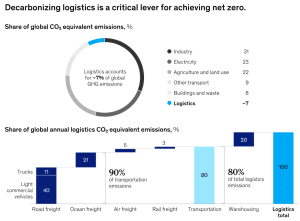
Amazon’s initiatives provide a promising solution to the industry’s carbon pollution. Its $1 billion investment is more than a corporate strategy—it’s a commitment to set a benchmark for other corporations and inspire industry-wide shifts to cleaner logistics.
The post Amazon’s $1 Billion Move Towards Net Zero: Logistics Electrification Across Europe appeared first on Carbon Credits.

EU carbon credit claims changed on 27 September 2026, the day the Directive (EU) 2024/825 began to apply across the European Union. The change is narrow. It changes how a company can talk about the credits it buys. A product can no longer be called neutral on the strength of compensation alone; however, every specific, evidenced statement about what a company measured, reduced, and funded stays fully available.

The post Promoting Improved Cooking Practices in Nigeria appeared first on Terrapass.



-
Climate Change1 year ago
Guest post: Why China is still building new coal – and when it might stop
-

 Greenhouse Gases2 years ago
嘉宾来稿:满足中国增长的用电需求 光伏加储能“比新建煤电更实惠”
-
Greenhouse Gases1 year ago
Guest post: Why China is still building new coal – and when it might stop
-

 Climate Change2 years ago
嘉宾来稿:满足中国增长的用电需求 光伏加储能“比新建煤电更实惠”
-

 Renewable Energy12 months ago
Sending Progressive Philanthropist George Soros to Prison?
-
Climate Change2 years ago
Bill Discounting Climate Change in Florida’s Energy Policy Awaits DeSantis’ Approval
-
Greenhouse Gases1 year ago
嘉宾来稿:探究火山喷发如何影响气候预测
-

 Climate Change2 years ago
Analysis: China’s CO2 falls 1% in Q2 2024 in first quarterly drop since Covid-19