


A reality without AI is beyond comprehension! AI is a powerful tool that transforms resource-intensive industries, products, and services by offering data-based suggestions and making smart decisions. As clean tech continues to evolve, the integration of artificial intelligence (AI) will be crucial to driving further advancements.
AI and Microchips: Driving the Clean Tech Revolution
AI and microchips are transforming renewable energy. AI makes processes faster and more efficient, boosting clean energy innovation. Microchips, crucial for AI and data centers, are key to this progress.
In clean energy, these chips enable smarter trading, improve forecasts for wind and solar power, and enhance safety and efficiency.
Machine learning has been used in clean tech for years to monitor wind farms and detect faults. However, applying AI in energy trading was slower. Now, advances in generative AI are changing that. They optimize power markets and improve renewable energy management.
Furthermore, top companies are heavily investing in clean technology, using AI to transform the sector. For instance, Google, Microsoft, and Meta are applying AI in clean energy projects to enhance efficiency and sustainability.
Battery makers like CATL and Tesla are also on board. They use AI to boost battery performance, improve energy storage, and streamline operations. Meanwhile, NVIDIA, the leading chipmaker, is focused on creating advanced AI chips for clean tech.
Together, these companies are revolutionizing technology. They are making renewable energy systems smarter, more efficient, and ready for a sustainable future.

AI-Driven Grid Solutions for Clean Energy
Grid Enhancing Technologies (GETs) play a vital role in optimizing power transmission. These systems help improve the integration of clean energy while reducing the need for costly infrastructure expansions. GETs use a mix of hardware, like sensors and data analytics software to make grids more efficient and adaptable.
So why are they important?
- GETs reduce grid congestion by preventing bottlenecks in energy flow.
- They help manage peak loads by handling sudden spikes in energy demand.
- GETs improve planning by enhancing the accuracy of day-ahead energy forecasts.
- They reroute power effectively during outages or maintenance to ensure energy delivery.
How AI Boosts GETs
AI, especially ML is transforming how GETs operate. AI analyzes data in a fraction of time and improves the performance of grid-enhancing technologies.
Real-Time Data
ML uses real-time weather data to adjust transmission line thermal ratings. This improves grid efficiency and capacity to handle more renewable energy without adding new infrastructure. AI also processes different kinds of grid data, like impedance and voltage angles, at high speed. This optimizes power flow, reduces congestion, and boosts efficiency.
Customer Energy Consumption
AI plays a crucial role in understanding customer energy consumption. It accurately predicts energy needs and leverages advanced tools like generative adversarial networks (GANs) to generate synthetic data. These capabilities enhance forecasting accuracy, energy management, and grid reliability.
Supervisory Control and Data Acquisition (SCADA)
Systems like Supervisory Control and Data Acquisition (SCADA) also benefit. AI makes SCADA more accurate and responsive, providing real-time grid performance data that helps operators make better decisions.
As renewable energy grows, smarter grid solutions are essential. In short, GETs, powered by AI, tackle challenges like congestion, peak loads, and clean energy integration.
Supporting Smarter Grid Investments
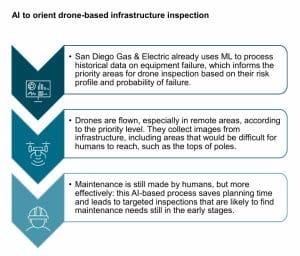
The rise of renewable energy requires stronger grid infrastructure. AI helps identify weak points in the grid and suggests where investments are most needed. This prevents curtailments and ensures a smoother transition to clean energy systems.
By supporting grid flexibility, AI makes infrastructure investments smarter and more effective. It predicts challenges and optimizes resource allocation, ensuring the grid is ready for the growing share of renewables.
Efficient Wind and Solar Energy Management with AI
Wind energy depends on weather- which is an unpredictable force of nature. So the energy output is also inconsistent. AI solves this problem with weather analyzing tools and historical data for accurate energy forecasts. These forecasts help operators plan better and reduce energy waste.
AI also enhances wind farm operations through predictive maintenance. Sensors collect real-time data to identify potential issues early.
- For example, AI detects yaw system misalignments that reduce turbine output or gearbox problems from unusual vibrations.
- It eliminates the need for manual pitch inspections by spotting blade alignment issues automatically.
With AI-driven insights, wind farms run efficiently which further minimizes downtime and maximizes energy production. Here’s a snapshot of it.

Solar energy relies on consistent performance, but challenges like shading, dust, and equipment issues can reduce output. Traditional systems often miss early warning signs, as inverters have limited processing capabilities.
AI-based monitoring offers a better solution. By analyzing vast amounts of data quickly, it detects small performance issues that inverters might overlook. This enables real-time adjustments and faster maintenance.
Subsequently, distributed solar systems connecting to low- or medium-voltage grids also benefit from AI. It optimizes energy flow and establishes a uniform distribution of solar power across decentralized networks. By tackling these challenges, AI helps solar systems deliver reliable, clean energy while reducing operational delays.
AI’s Role in Battery Management Systems
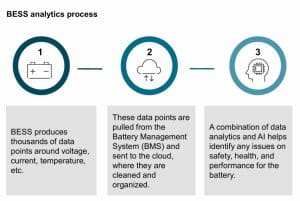
Measuring the state of charge (SOC) in lithium-iron-phosphate (LFP) battery cells is challenging. These problems and inaccuracies are mostly associated with traditional battery management systems (BMS), that majorly impact battery performance.
But AI provides a better solution to this problem. It uses data analytics and machine learning to spot safety, health, and performance issues. This leads to more accurate SOC predictions. As a result, less downtime is needed for BMS recalibration, thereby maximizing efficiency and revenue.
The process, however, is complex. For instance, AI-based SOC estimation employs the Single Extended Kalman Filter algorithm. This algorithm estimates SOC by calculating the battery’s open-circuit voltage. Machine learning then fine-tunes the Kalman filter for improved accuracy.
Data Complexities in Clean Tech AI
AI offers powerful solutions for clean technology but comes with challenges. Training AI algorithms requires vast amounts of data, which demands advanced data management systems. Therefore, clean tech industries must collect, store, and analyze massive data sets while protecting sensitive information through robust privacy measures.
Similarly, ethical concerns also need much attention. AI systems must prioritize fairness, transparency, and accountability. Clear guidelines are crucial to avoid biases, respect privacy, and ensure clean tech benefits reach all communities equally.
Thus, from this report, we can comprehend how AI is transforming clean energy with smarter tools that improve forecasting, maintenance, and efficiency. As innovations continue to emerge, we can expect AI to crawl more rapidly in clean tech which is driving the future of renewable energy.
The post AI and Clean Tech: A Revolution in Renewable Realms appeared first on Carbon Credits.

EU carbon credit claims changed on 27 September 2026, the day the Directive (EU) 2024/825 began to apply across the European Union. The change is narrow. It changes how a company can talk about the credits it buys. A product can no longer be called neutral on the strength of compensation alone; however, every specific, evidenced statement about what a company measured, reduced, and funded stays fully available.

The post Promoting Improved Cooking Practices in Nigeria appeared first on Terrapass.



-
Climate Change1 year ago
Guest post: Why China is still building new coal – and when it might stop
-

 Greenhouse Gases2 years ago
嘉宾来稿:满足中国增长的用电需求 光伏加储能“比新建煤电更实惠”
-
Greenhouse Gases1 year ago
Guest post: Why China is still building new coal – and when it might stop
-

 Climate Change2 years ago
嘉宾来稿:满足中国增长的用电需求 光伏加储能“比新建煤电更实惠”
-

 Renewable Energy12 months ago
Sending Progressive Philanthropist George Soros to Prison?
-
Climate Change2 years ago
Bill Discounting Climate Change in Florida’s Energy Policy Awaits DeSantis’ Approval
-
Greenhouse Gases1 year ago
嘉宾来稿:探究火山喷发如何影响气候预测
-

 Climate Change2 years ago
Analysis: China’s CO2 falls 1% in Q2 2024 in first quarterly drop since Covid-19