Connect with us

Published

on

ACORE Applauds Bipartisan Energy Permitting Reform Legislation

Following is a statement from Ray Long, President and CEO of the American Council on Renewable Energy (ACORE):

“America’s burdensome permitting process has for years held back clean energy and transmission projects that are vital to our nation’s electricity future. Virtually no interregional transmission lines have been built in the last decade despite their critical importance to grid reliability. We applaud Senators Joe Manchin (I-WV) and John Barrasso (R-WY) for releasing the Energy Permitting Reform Act of 2024, which will help reduce the permitting timelines for clean energy projects and accelerate interstate transmission in the U.S. The legislation also notably directs FERC to establish an interregional transmission planning process which ACORE has long championed.

These provisions are a positive step forward with crucial bipartisan support, and we look forward to analyzing the impacts these reforms will have on clean energy investment and growth.”

About ACORE:
For over 20 years, the American Council on Renewable Energy (ACORE) has been the nation’s leading voice on the issues most essential to renewable energy expansion. ACORE unites finance, policy, and technology to accelerate the transition to a renewable energy economy. For more information, please visit www.acore.org.

Media Contacts:
Alex Hobson
Sr. Vice President, Communications
American Council on Renewable Energy
hobson@acore.org | 202.830.3592 (o) | 202.594.0706 (c)

Dylan Helms
Associate, Communications
American Council on Renewable Energy
helms@acore.org | 202.935.6491 (o) | 727.290.8804 (c)

The post ACORE Applauds Bipartisan Energy Permitting Reform Legislation appeared first on ACORE.

https://acore.org/news/acore-applauds-bipartisan-energy-permitting-reform-legislation/

Continue Reading

Renewable Energy

Trump Inspires Artistic Creativity

Published

on

As huge a catastrophe for the nation as Trump is, he brings out some real creative genius.

I hope you’ll check this out.

Trump Inspires Artistic Creativity

Continue Reading

Renewable Energy

Vineyard Wind Battles GE Vernova, UK Funds Blade Innovation

Published

on

Weather Guard Lightning Tech

Vineyard Wind Battles GE Vernova, UK Funds Blade Innovation

Fraunhofer studies uptower carbon blade repairs, Vineyard Wind’s fight with GE Vernova deepens, the UK backs offshore innovation, and a 26-year Horns Rev study tracks how birds adapt to turbines.

Sign up now for Uptime Tech News, our weekly newsletter on all things wind technology. This episode is sponsored by Weather Guard Lightning Tech. Learn more about Weather Guard’s StrikeTape Wind Turbine LPS retrofit. Follow the show on YouTube, Linkedin and visit Weather Guard on the web. And subscribe to Rosemary’s “Engineering with Rosie” YouTube channel here. Have a question we can answer on the show? Email us!

The Uptime Wind Energy Podcast, brought to you by StrikeTape.  Protecting thousands of wind turbines from lightning damage worldwide. Visit striketape.com. And now your hosts.

Allen Hall: Welcome to the Uptime Wind Energy podcast. I’m your host, Allen Hall. I’m here with Rosemary Barnes, Yolanda Padron, and Matthew Stead. Fraunhofer has published peer-reviewed feasibility research in wind energy science. And Rosemary, I don’t know if you read wind energy science, but there’s a lot of good information there about wind turbines and mechanical aspects.

Not much on the electrical side, but a lot about mechanical. Uh, in, in, in wind energy science, uh, they had a discussion or an article about repairing damaged pultruded CFRP spar cap planks while the blade stays on the turbine. Using finite element analysis on a 81.6-meter [00:01:00] blade from a seven-megawatt offshore turbine, the researchers found that a shear web window cut out as short as one meter drops buckling resistance from 20.7 times critical load to four times critical load, a reduction of over 80%.

The fix? Temporary external clamping frames with a pre-tensioned span-wise rod to carry gravity loads, combined with internal push rod assemblies and external stringers profiles to restore buckling resistance, all installed and removed uptower. Wow. I know we’ve discussed the carbon pultrusion repair situation and how critical that is or h- how difficult it is.

I didn’t realize it was that difficult, Rosemary, that if you actually try to replace a one-meter section of a carbon pultrusion, you’re re- reducing the, the, what, the, the buckling resistance by 80%? [00:02:00] Holy moly.

Rosemary Barnes: I don’t think that’s even 100% pultrusion specific, right? They’re talking about cutting a, a window in the shear web.

Allen Hall: Yes.

Rosemary Barnes: So that could be for any kind of repair you might have to do that, including if you need to repair, like sometimes you need to repair the, the shear web. Um, and even though, like, they’re not doing a lot of heavy lifting, um, that’s kind of a structural pun, um, they’re still super important. If they’re not there, then you’re gonna have big problems pretty immediately.

The way that it works with repairs is that there’s certain kinds of damage that you know that you can just do uptower. The technicians know they can do it. They don’t need to call an engineer. The engineer doesn’t call- need to call the expert engineer. But when you need to do something a bit unusual, like a whole meter of web removed, then you’re gonna need to get an engineer to, um, dial in the, y- the, to rerun the design codes basically, um, but with this weak structure now to see is this okay and is it okay, you know, uh, [00:03:00] obviously a turbine that is just, um, idle or it’s not even idle, it’s just fixed in place while they’re repairing it, that has different loads on it to one that’s operating.

So, you know, they’ll run that and make sure that it’s safe, um, before they do the repair. So what I really like about Fraunhofer is that they in some ways, like- Maybe it’s not cutting-edge science or engineering because they are largely repeating what is already well known in industry. But the problem is that industry doesn’t tell everybody else.

And so it is, like, such a vital role to then go and illustrate, um, to everybody else what, what’s happening in industry. And they, they are… Like, there is this problem with wind energy where academia and industry are not, um, talking too much, and a lot of the academic stuff just doesn’t relate at all to what’s happening in the industry.

But Fraunhofer do, like, 90, 90% of the time seem to get it at pretty right.

Allen Hall: When a carbon protrusion is [00:04:00] used, that really localizes where the load is versus in, in some of the more fiberglass designs that I’ve seen, the shell is actually taking some of the load. It’s not all in the shear web, so to speak. So doesn’t that sort of focus the loads into one location a little bit more when you move to carbon?

Isn’t that the point?

Rosemary Barnes: Yeah. Well, the carbon fiber is, is a lot, lot, lot stiffer than, um, fiberglass, and it’s, it’s a lot stronger. So yeah, you are designing… I, I mean, always the spar caps have been the main load carriers, the, um, you know, the main laminate, the bit between the shear webs or over the shear webs.

Um, but it’s, yeah, it probably is, um uh, e- exacerbated or the increased effect when you add carbon fiber. But the, the thing about carbon fiber is it’s so susceptible to small damages or small deviations, so like a tiny little bit of fiber waviness, like if your fibers aren’t perfectly straight, then you can easily get a, a crack.

And [00:05:00] carbon fiber can also be a lot less forgiving than fiberglass. It is not uncommon that it will just break, and you didn’t even know there was anything wrong. So that damage intolerance is what led to people moving away from carbon fiber fabric and into pultrusions, because they’re made with perfectly straight fibers.

Um, but it, it raises some, uh, problems of its own because y- yeah, like how do you repair that? You can’t, um, you can’t get the fibers as straight again unless you repair a whole plank, um, because like they look like, like two-by-fours or something. You know, like they look like little fence palings, basically.

Black, black fence palings. Um, and so yeah, you, you’d have to repair, replace a whole one, and then you’ve got like a big chunk of structure that’s missing there, so that’s pretty hard to do uptower. I, I don’t know anybody that does those uptower, actually. Um, m- maybe they can now with this reinforcement method, but I would still not enjoy being in a blade that was missing a, a [00:06:00] pultrusion and up in the air.

Allen Hall: The offshore versus onshore equation, it, it would make more sense onshore to actually drop the blade, I assume. Offshore adds difficulty, but it sounds like with all the rigging a- and assembly that you would have to do offshore, it, it probably is gonna be close in terms of total cost to do an uptower repair versus a downtower repair I would think.

It, it– Wouldn’t you think it’d be roughly right?

Rosemary Barnes: Yeah, like in, in offshore, there’s always more motivation to do complicated, um, expe-expensive uh, things that will save you from having to do something even more expensive, like bringing, um, a whole blade back. Uh, yeah, going out, getting the vessel with the crane, bringing the blade down, and taking it in is just incredibly expensive.

So you can spend a lot of time faffing around reinforcing a blade uptower before you, um, you know, would come out behind. But you know what? While we’re on topic of carbon pultrusions, I think it, like it, um, it’s almost bypassing the, the biggest risk with them ’cause [00:07:00] what I see is the– Like it’s one thing when you know you’ve got damage that you need to repair, but far more common, I think, is that you don’t even know that you’ve got damage.

It’s very hard to, to see what’s going on in there. Um, I mean, people aren’t just going up periodically and doing ultrasounds, ul-ultrasound scans of their entire blade. But even if they were, it’s still not that easy to find all of the, the little damages in, in pultrusions. So, um, yeah, that’s something…

‘Cause it’s not such an old technology. It’s been around for, I, I don’t know, like not even 10 years these have been, being used consistently, probably more like five, um, that there’s been a lot of them out there. And I just, yeah, I, uh, maybe I’m overreacting because all I see is broken blades in my career, but, um, you know, I am a little bit worried that we’re gonna start to see as, you know, fatigue builds up, that we might start to see some more like sudden breakages in these blades.

Allen Hall: If Fraunhofer’s working on it, there must be a reason for the [00:08:00] analysis and all the engineering time that they spent on it, that it’s a concern. I don’t know how you would do it offshore, honestly, because of all the wind loads. That you would have this damaged blade, and yes, you would have all the engineering calculations, but I would just see the safety people being very concerned about it.

Because if it does go free, you have a couple of people up there minimum, and who knows what’s below.

Rosemary Barnes: But even the amount of time in between knowing that you have to, um, replace a pultrusion and actually getting up there to do it, like I’d be surprised that it didn’t break in that, in that time because it is such a big, a big, a big thing.

Um, so yeah. Uh, but super interesting work and I do, I, I do really, really appreciate that the Fraunhofer exists to, you know, do this sort of stuff and, um, give us the information w-we need to get a better understanding.

Allen Hall: Delamination and bondline failures in blades are [00:09:00]difficult problems to detect early. These hidden issues can cost you millions in repairs and lost energy production. CIC NDT are specialists to detect these critical flaws before they become expensive burdens. Their nondestructive test technology penetrates deep into blade materials to find voids and cracks traditional inspections completely miss.

CIC NDT maps every critical defect, delivers actionable reports, and provides support to get your blades back in service. So visit CICNDT.com because catching blade problems early will save you millions

UK government has deployed 15 million pounds, uh, which is about $20 million, uh, through Innovate UK in a coordinated push to move offshore wind technology from prototype stage into commercial supply chains. The package has three components: a 10 million [00:10:00] pound offshore wind innovation program, open competition for high potential businesses, a five million pound wind innovation hub to align industry, government, and research, and a 12 million pound effort for phase one of a large structures innovation center on the Isle of Wight, with Vestas already signed as its first industry partner for sustainable blade development.

So the, the large structure innovation center is a composite center which is gonna be doing some advanced technology work on blade design. And I think there’s no better place to do that at the moment than in the UK. But it does open the door to a number of UK firms, and even outside the UK firms, to get involved in the UK offshore and somewhat on the onshore side.

This has massive potential, I think, within the UK and outside the UK, Matthew.

Matthew Stead: I, I know from my own firsthand experience that, um, uh, actually getting into the wind space is, like, really [00:11:00] hard. So for this sort of, um, incubator and support around, um, you know, setting up businesses, I, I think this is a really, really good thing for the UK government to be doing.

Um, ’cause, yeah, how do, how do you build up a future industry if you, if you don’t have the new businesses coming through? So I, I think it’s a, it’s a, it’s a great thing that the UK government’s doing. And yeah, and how do you get small companies working with the larger OEMs? How do you get the innovation?

Yeah, it’s, yeah, I think that’s probably, you know, got five gold stars for the UK government.

Allen Hall: What are the areas that they should be focused on over the next couple of years? Obviously, blades is, is a massive one. I’m sure Vestas is gonna be deeply involved with that. Are there some other areas in technologies that the UK should be orienting its supply chains towards?

Matthew Stead: I’m personally 100% biased towards blades ’cause w- we know that, you know, um, if we look at the failures and we look at the failure rate, you know, where is the greatest growth in failure rates? It’s blades. Um, [00:12:00]you know, why, why are we still having failures? Why haven’t we learned? You know, where is the knowledge exchange?

Um, so I- I’m biased, but I think it’s, it’s, it’s, it’s needed in, in the blade space. Yeah, as what, you know, Rosie and you were talking about before, um, you know, knowing more about, um, what’s going on, how it can be repaired, how it can be dealt with, I think is super, super critical.

Allen Hall: Well, Vineyard Wind has its 62 turbines in the water south of Martha’s Vineyard, but the project is delivering only partial power while GE Vernova works through its outstanding repairs.

Now, the financial pressure is breaking into public view on two fronts. Boston landlord BP Hancock LLC is suing Vineyard Offshore, uh, the Avangrid and BP joint venture, for nearly $1.2 million in back rent at its John Hancock Tower offices. Uh, separately, GE Vernova wants out of its turbine supply contract, claiming Vineyard Wind owes [00:13:00] it over $300 million.

Vineyard Wind fires back that it is actually owed more than 800 million from GE Vernova, so that, that saga will continue for a while. But it is a little odd that the rent is not being paid by Vineyard Wind at, at, in the John Hancock Tower. And if you’re familiar… That’s downtown Boston. If you’re familiar with downtown Boston, that, the John Hancock Tower is one of those iconic buildings you see in pretty much every downtown photo of Boston.

There must be a lot happening at the moment at Vineyard that they’re not able to pay the rent, or they’re trying to shuffle some money around or, or seek more financing. Sounds like they’re in a refinancing phase, honestly. Yeah,

Yolanda Padron: I know that at, at times there’s– it’s really common for, for an asset manager to think, you know, “Oh, we have X amount of money,” and then all of a sudden you– it’s all of the, the additional [00:14:00] repairs or the additional operational costs stack up to a bit more than they thought they were gonna have, and then maybe they don’t even have enough money to go do trash removal or anything.

And that happens, and it’s more often than, than we’d like to admit. Um, but this is on a bigger scale, right? Like, this is a project that we’ve talked a lot about, everyone’s talked a lot about, and it has a lot of eyes on it. And so for it to, to be so behind on rent on such an iconic place and such an important place and such an important part of the country, backed by a very important company, it’s really, it’s really interesting to, to think about kind of what they’re thinking.

‘Cause in, in my mind, right, like, if I was the people backing them, I would think, “Okay, well, the f- first thing’s first, like, let’s not give them any additional reason to hate us right now.” Right? Or like, you know, the public opinion is really big on these kind of things. Um, so I, I don’t, I don’t know what the, what [00:15:00] the exact plan is here.

Allen Hall: Well, I wonder if this is part of the, the negotiation with GE Vernova, that, uh, the, the payments and the, the power which leads to payments, uh, hasn’t been at it- its desired output from Vineyard Wind and is this an effort to, uh, shore up their legal case with GE Vernova to say, “Hey, look, uh, Avangrid’s not gonna throw a bunch of money in, even for rent.

This project needs to stand on its own two feet, and it can, but GE Vernova needs to be involved with it and get the turbines up and running to the level at which they were contracted to do”? Is this part of that play? ‘Cause it just feels like it. You know Avon Grid has the money to pay the rent. That’s not even a question.

It’s, but it’s why they are not doing it is probably the bigger question at the moment. Is, is it just all legal maneuvering at the minute?

Matthew Stead: I, I wonder if it’s a bit like, uh, you get the utility billing, you get the [00:16:00] electricity billing, you put it in the, the drawer over there, and then you forget about it, and then you forget to pay it, and-

Allen Hall: It’s a million dollars

Matthew Stead: $1 million out of, uh, 600 or whatever billions, you know? Maybe it was, maybe it was just a simple oversight.

Allen Hall: It could totally be oversight, but it’s, it seems like with the amount of attention that Vineyard Wind and GE Vernova are, are getting, and they are literally within a stone’s throw of one another, they can s- I’m– You could probably see the GE Vernova building from the John Hancock Tower, that, uh, you, you think that some of this would get settled, but it’s not.

It’s still going on. It’s, it’s crazy. It– With, and with Avon Grid and BP still being involved with it somewhat, uh, there’s something happening behind the scenes that has not poked its head up yet. It’s coming, though. This is all coming to a head pretty quickly. The– Massachusetts needs Vineyard Wind to run.

They really do, and it’s, it is a little surprising at [00:17:00] times that the state of Massachusetts is standing on the sidelines in this.

Matthew Stead: As wind energy professionals, staying informed is crucial, and let’s face it, difficult. That’s why the

Allen Hall: Uptime Podcast recommends PES Wind Magazine. PES Wind offers a diverse range of in-depth articles and expert insights that dive into the most pressing issues facing our energy future.

Whether you’re an industry veteran or new to wind, PES Wind has the high-quality content you need. Don’t miss out. Visit peswind.com today. In this quarter’s PES Wind, there’s a lot of good articles in there. If you don’t have a copy, you can go to peswind.com and download one. A interesting article from Safe Lifting, which is a European-based lifting company that does basically bespoke engineering on lifts, and they’ve been making a push that’s saying that the next wave of projects depends on bigger [00:18:00] turbines, of course, which means bigger lifts, but they need to have some standardization to them.

Uh, things like spreader beams and rigging systems that are pre-built and pre-validated, uh, just reduce the overall engineering time it takes to do these lifts. Uh, and rental equipment models are a lot lower cost than buying OEM-specific or site-specific lift equipment, trying to keep the capital costs down.

That’s one of the big pushes in the wind industry is lowering the overall cost of installation. It does make sense, but it– as we were talking off-air a minute ago, a lot of lifts for basically the same kind of turbine are different. The, the connection points are different. There’s a lot of engineering that goes on there, and as the turbine sizes reach 15 megawatts plus, and the cells are massive, blades are massive.[00:19:00]

But it does seem like in a lot of other aspects of wind, there is some standardization, an IEC spec or some sort of overall guidance document for the industry that like, let’s put the lift points here, here, here, and here and lift with the right equipment. And Matthew, we just haven’t done it in lifting, even in smaller turbines, same thing.

Matthew Stead: Oh, it’s crazy. Um, I was, I was thinking about it, and, you know, my, my suggestion would be that, you know, when I buy 100 turbines, I should get, um, a blade lifting kit. It’s like when you buy a car, you, you get a, you get a kit to change the tire, don’t you? So I would’ve thought it would be just fundamental. Um, but, but, but we know that the wind industry is not always logical.

Um, so what is, what might be considered normal in a car is not normal for a wind turbine. Um, but yeah, uh, you know, this sounds like a perfect way of going to have more of a sort of standardized and, you know, not, not wait for the OEMs, but actually lead this and, and [00:20:00] drive this standardization. So yeah, thumbs up from me.

Yolanda Padron: I think this is really cool. Uh, I really hope that if we can standardize the way that we do that, we can make sure that the teams are trained in, like, the standard ways of, of lifting. I know that, um, I’ve, I’ve seen a few cases where someone didn’t know, there hadn’t- been exposed to a particular blade type and they were in char- you know, in charge of, of lifting it to, to, to do a blade replacement and then, um, they accidentally ended up damaging the blade and so you had this bad crack that they kind of painted over because it was a little bit embarrassing for them at the time.

And then, you know, a year later it’s like, well, okay, well, maybe next time ask someone, um, if you if you don’t know the, the exact lifting protocols or, or if you mess up, you know, let someone know. Um, but, but [00:21:00] yeah, the, you know, a lot of these, these smaller and, and larger structural cracks that, that come from, from lifting errors would be avoided if everybody was doing the same thing or the same two iterations of Of lifting standards, which is really exciting

Matthew Stead: Y- y- if you’ve got a wind farm, y- y- you’re guaranteed you’re gonna have to drop a blade at some point, aren’t you?

Allen Hall: And a gearbox

Matthew Stead: and a generator It’s, it’s pretty much a given. So like, like I said before, I reckon it should just be part of the standard kit that you buy, is you, you, you buy a substation, but you also buy a lifting, a lifting kit as well.

Allen Hall: It’s one of the more, uh, dangerous parts of wind is lifting, clearly, and we’ve seen that over time.

And, uh, having standardized equipment, back to Yolanda’s point, does make a lot of sense because if you’re out there doing this quite often and you have different rigging for every different OEM, you can get crosswise, and things happen. And if we had some standardization there, that would make a tremendous [00:22:00] amount of sense.

That’s why, uh, Safe Lifting wrote this article on PES Wind. So if, if you wanna read this article, just visit peswind.com. When engineers plan an offshore wind farm, they try to account for everything, including seabirds. And at the Horns Rev wind farm in the Danish North Sea, the layout was meant to leave birds a clear way through, but the birds had, uh, ideas of their own.

After 26 years of patient monitoring, researchers found that the turbines did not simply chase wildlife away. Instead, they reshuffled the entire neighborhood in the sky, turning some species into avoiders and others into opportunists. So this has been a big discussion in the wind industry for a long time, particularly for offshore wind projects, of what to do with the birds.

And the early assumption was that, hey, let’s just give them a pathway where they can fly [00:23:00] through, and birds have made up their minds. Some are taking that path. Others are avoiding it because of the change in the which, uh, species are hanging out where. This is a remarkable outcome, and it’s been going on long enough that there’s, uh, some statistical relevance to it now.

Do we need to get some bird psychologists involved in these offshore projects on how we think of how birds behave? Because I think to the engineering community, you know, like, you, you put a road there for you to fly through, bird, and then you decide not to. This is at a different level than engineering.

Yolanda Padron: I think it’s great to do as much as you can do, right? It’s amazing that they did all of this work. It is kind of funny. I mean, it’s, it’s sad. I’ve… I’m, I’m gonna get into trouble on LinkedIn or something by someone. I, I mean, it’s, it’s sad, of course, if, if birds get hit, right? But it’s, it’s, we can’t control everything.

You [00:24:00] know, as much planning that went into this, it’s

And what’s the next step here?

Matthew Stead: Well, first of all, 26 years? Is that correct? Yeah, 26 years. I mean, m- I, my- the thought that came to mind is that sometimes engineers don’t understand the natural environment. Sorry, just, just take that as a, as a observation. But, you know, I- it just reminds me of when, um, when civil engineers lay out paths and pavement, you know, they put a path in, but then people walk around it.

People do whatever they wanna do. And so, you know, I, I don’t think we can actually design out some of these things because we just will never understand the bird, we’ll never understand the human. Um, so yeah, I think put a little bit of effort in. I think going back to what Yolanda said, just put a, a bit of effort in.

But yeah, actually, there are some things in this world we can’t control.

Yolanda Padron: Yeah, I mean, [00:25:00] there’s, there’s of course endangered species. There’s of course, you know, a lot of, a lot of monitoring companies out there that do a really good job. Depending on what you need and depending on, you know… You can tailor your site needs around w- what’s gonna happen, right?

Or, you know, if you know that you’re in the migratory pattern of a particular species- There’s, I know there’s a lot of very smart people hard at work to make sure that your site is tailored to fit what needs to, what needs to happen there. And it’s great. I think it’s a great, it’s great to know, you know, that, that people in this industry care about birds.

I know I once had to go through extra check at TSA because the, the person there said, you know, “Oh, you work in wind? Save the birds.” And then he sent me through this, like, a lot, because he, he thought I was killing birds every day. Um, so I mean, you know, [00:26:00] we’re not killing birds out here, and it’s great, and it’s lovely to see all the hard work that goes into this.

But it, but it also, it’s, it’s important to note that the plans aren’t gonna be 100% foolproof, and that’s okay. You can just try your best.

Allen Hall: What’s the one bird you would assume as an engineer would not care if the wind turbines were there or not? The bird you see absolutely everywhere around the sea.

Matthew Stead: Seagull.

Allen Hall: Seagull. They do not care. They love wind turbines. They’ll use them as perches. I’m sure that, uh, yeah, a lot of, uh, technicians had to deal with seagulls, uh, hanging around the wind turbines. That has to be a thing. So it just depends on the species, for sure. Which is unique, right? E- every species has its own separate personality and things that it likes to do.

Uh, so in some of the wind turbines, I’m sure the seagulls are probably an annoyance, but they’re gonna let them be. And s- and some other species just don’t wanna be around the wind turbines, so even if you put a pathway through them, they’re just not gonna be [00:27:00] there. That’s an interesting finding.

Matthew Stead: It’s like onshore as well.

I mean, cows and sheep love to stand in the shade of a wind turbine, so they like to hang around. They scratch themselves on the, on the, the stair. You know, they, they rub themselves on the bolt covers. You know, they try and eat stuff. Goats, goats are particularly bad.

Allen Hall: Goats are really aggressive on wind farms for finding wires.

Absolutely. An- anything to eat.

Yolanda Padron: Raccoons.

Allen Hall: Yes. Raccoons.

Yolanda Padron: Snakes.

Allen Hall: The snakes do hide out in the shade. That is one thing you gotta be careful about is, uh, especially in Texas, of kicking over a rock and finding a snake, so make a lot of noise when you’re walking in Texas. That’s the plan. That wraps up another episode of the Uptime: Wind Energy podcast.

If today’s discussion sparked any questions or ideas, we’d love to hear from you. Reach out to us on LinkedIn, and don’t forget to subscribe so you never miss an episode. And if you found some value in today’s conversation, [00:28:00] please leave us a review. It really helps other wind energy professionals discover the show.

So for Rosie, Yolanda, and Matthew, I’m Allen Hall, and I’ll see you here next week on the Uptime: Wind Energy podcast.

Vineyard Wind Battles GE Vernova, UK Funds Blade Innovation

Continue Reading

Renewable Energy

The Sharia Law Onslaught

Published

on

Here’s an ultra-right-winger who thinks that his voters are so stupid that they’ll believe that U.S. courts are routinely sentencing thieves to have their hands amputated.

We have huge problems in this country, but the “onslaught” of Sharia Law isn’t one of them.

This is a fine example of the decay of American education. Think back to when you were in junior high school.  If someone said something like this, wouldn’t you have asked, “Are you serious? Radical Islam has usurped the U.S. Constitution?  Can you provide any evidence to support this?

Now, we accept it, because some Trump supporter in congress tells us it’s true.

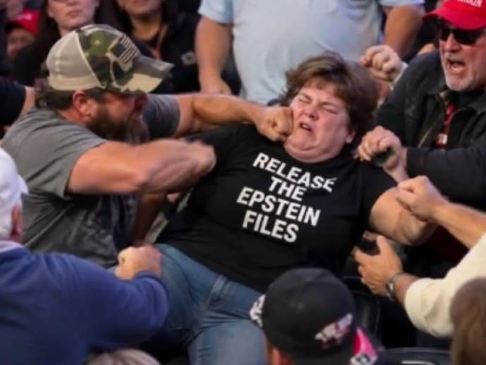
Forget about the Epstein files and the overt corruption in the White House.  Let’s focus on Sharia Law.

The Sharia Law Onslaught

Continue Reading

Trending

Copyright © 2022 BreakingClimateChange.com