

Weather Guard Lightning Tech

Vineyard Wind GE Blade Failure, Mechanix Wear TRAC Program
A blade has failed at the Vineyard Wind Farm off the coast of Nantucket–what will the fallout be? How is GE responding? Will this effect the US Presidential Election? Plus a warning about electrostatic eliminators and mid-blade lightning protection: they don’t work. And Mechanix Wear’s TRAC (Trial Research and Collaboration Kit) program offers on-site assessments to identify specific hand protection needs for employees. NextEra’s Walleye Wind Farm in Minnesota is our wind farm of the week!
Visit AMI’s website to book a spot at the Wind Turbine Blades conference!
Sign up now for Uptime Tech News, our weekly email update on all things wind technology. This episode is sponsored by Weather Guard Lightning Tech. Learn more about Weather Guard’s StrikeTape Wind Turbine LPS retrofit. Follow the show on Facebook, YouTube, Twitter, Linkedin and visit Weather Guard on the web. And subscribe to Rosemary Barnes’ YouTube channel here. Have a question we can answer on the show? Email us!
Pardalote Consulting – https://www.pardaloteconsulting.com
Weather Guard Lightning Tech – www.weatherguardwind.com
Intelstor – https://www.intelstor.com
Allen Hall: Welcome to the Uptime Wind Energy Podcast. I’m AllenHall, and I’ll be bringing you this week’s top stories in the wind energy sector. Siemens Gamesa has secured a 1. 2 billion euro line of green guarantees from the Spanish government and major banks. This support comes at a crucial time for the wind energy subsidiary of Siemens Energy, which has been grappling with financial challenges.
The Spanish export credit insurance company and a banking syndicate led by BBVA and BNP Paribas are backing this initiative. The Spanish state is providing a 50 percent guarantee, up to 600 million euros. Sharing the risk with the guarantor banks. This line of guarantees is designed to support Siemens Gamesa’s projects in technical guarantees, allowing the company to execute its substantial order backlog of 40 billion euros in the wind business.
We now turn our attention to the competitive landscape in the U. S. offshore wind market. Siemens Gamesa is currently leading the pack with a commanding 57 percent share of the order pipeline for offshore wind projects that have already selected a supplier. This translates to six projects with a capacity of Denmark’s Vestas follows in second place with a 32 percent share, while U.
S. based GE Vernova rounds out the top three with 11 percent. Shifting gears to labor news, approximately 300 workers at a Siemens Gamesa wind turbine factory in Hull, England, Are being balloted for a potential strike. The dispute centers around a pay offer that the Unite Union claims amounts to a real terms pay cut.
The union warns that a strike could cause significant disruption to production. The Unite Union argues that the workers’ pay has fallen in real terms since 2018, due to below inflation increases and a performance related bonus scheme. The hull factory specializes in constructing 108 meter long blades.
In technology advancements, Orsted has successfully tested a new lower noise installation method for offshore wind foundations in Germany. The groundbreaking technology could revolutionize the way offshore wind foundations are installed. The new method, tested at Goda Wind III Offshore Wind Farm, uses a patented jetting technology attached to the monopile.
This allows the foundation to sink into the seabed, replacing conventional installation methods such as pile driving. The result is a substantial decrease in underwater noise levels, with a reduction of 34 decibels compared to most commonly used installation methods. This installation not only enhances marine life protection, but also has the potential to make installations more efficient and cost effective.
On the equipment front, German company Emitech is launching a new wind turbine blade turning unit designed to facilitate easier on site service and maintenance. This innovative unit allows a rotor blade to be pitched on the ground around its longitudinal axis, enabling smooth and continuous rotation for repairs.
For The company believes this technology could save millions in service costs by allowing most repairs to be carried out directly at a wind turbine site, eliminating significant logistics efforts. Emtec plans to debut this new technology at the Wind Energy Hamburg event this September. Lastly, we have a developing story from Texas, where Senator John Cornyn has called for the Pentagon to shut down a wind farm linked to a Chinese billionaire, citing national security concerns.
The wind farm located in Val Verde County was initially blocked due to fears of potential espionage given the owner’s ties to the Chinese Communist Party. Although the rights to develop the Blue Hills Wind Farm We’re sold to a Spanish energy firm last year. Senator Cornyn believes there still may be Chinese involvement in the project.
He has requested an urgent investigation, emphasizing the potential threat to a nearby Air Force Base. That’s this week’s top news stories. After the break, I will be joined by my co host, renewable energy expert and founder of Pardalote Consulting, Rosemary Barnes. CEO and founder of IntelStor, Phil Totaro, and the chief commercial officer of Weather Guard, Joel Saxum.
I guess this is a consumer alert. We, Joel and I have seen a lot of lightning products being offered to wind turbine operators. And if you’re not a lightning expert or haven’t been around the business about 30 years, like I have it’s hard to gauge what’s real and what’s not. There has been, more recently some companies selling electrostatic eliminators, basically devices that, in theory, would suck all the charge out of the cloud, preventing lightning from hitting your wind turbine.
Those don’t work. They’re very serious. They’re very serious. It’s, it’s a dangerous situation, everybody. Those devices don’t work. They’ve been tried on multiple, multiple occasions and all around the world. They don’t change the equation. If lightning is coming down from the sky It’s coming down from the sky.
What it hits is random. And if you’re the tallest object out there, you got a pretty good chance of being hit regardless of what device is on it. That’s the first one. The second one I’ve seen advice more recently where someone’s doing a repair, say halfway up the blade, three quarters up the blade.
And they want to put some lightning protection on that area. Again, that can be a big mistake. If it’s not tied to the lightning protection system, a lot of times where there’s damage on a blade, the lightning protection system. Is, is not around there. There’s no receptor or any place to ground to.
Putting some sort of lightning protection device in the middle of a blade is going to encourage lightning to strike there again. And let’s just be aware of that, everybody. And you don’t have to take advice from weather guard Joel or me. We’re here. You can call us. We would love to help. But I understand you want to get a second opinion.
Go get it and get somebody who actually has worked in wind or worked on aircraft for a long time. And knows what works and what doesn’t, and has a good sense about it. Cause you can get yourself into a world of hurt, playing around with lightning and wind turbines. Very expensive.
Philip Totaro: Allen, let me ask the, the supposedly dumb question here.
Aren’t, when you put something two thirds of the way up the length of the blade, and it’s not connected to the receptor and conductor, et cetera, And you’re ionizing the air around that area, that’s what you’re saying is necessarily going to result in additional strikes in that area.
Allen Hall: Yeah, that, that material you add is going to connect the down conductor through the blade to the lightning on the outside.
So it’s going to create another puncture, probably where you’ve just repaired it. And it’s just going to be horrible. And, and that’s, that’s a dilemma, right? So just putting lightning, lightning protection on a blade seems simple. It is not, you need to get good advice from people who’ve done this out in service and have a track record like us at WeatherGuard, right?
So just be, just be aware because we’ve run into this quite often recently in the United States because there’s been so many lightning strikes and so many damaged turbines that every operator is reaching out just to try to get some information. We at the Uptime Podcast try to bring you a lot of good information on all kinds of subjects.
Lightning being one of them. So if you run into difficulty, feel free to reach out to Joel, reach out to me, and we can get you pointed in the right direction. Mark your calendars for AMI’s Winter in Blades conference happening October 2nd and 3rd in historic Boston, Massachusetts. This two day event, which is similar to the well established edition in Europe, We’ll bring together the whole blade value chain to examine market outlook, innovations in blade materials, design, manufacturing, testing, and lifecycle management with a special focus on the North America market.
Gain insights from experts from Vestas, Along with scientists and engineers from the National Renewable Energy Laboratory and the Oak Ridge National Laboratory. Plan your trip to Boston this fall by visiting the link in the show notes or just Google 2024 Blades Boston. Off the coast of Martha’s Vineyard at the Vineyard Wind offshore wind site GE had a problem.
One of the new wind turbines there had a blade bust and parts of that blade hit the water. Now, this happened on a Saturday, so there was, obviously, people were around that area and saw the debris, the ship, boats and things, saw the debris in the water and started posting images on Facebook and on Twitter about it, and the Coast Guard cordoned off an area and Vineyard Wind has been working to, to find out what’s going on, but today, which is Tuesday, Four days later now, they’re finding debris up in Nantucket, so the, as Rosemary well knows, when the blades are full of foam, it likes to float, and that foam from that blade, when it came apart, float out to sea and ran into the south side of Nantucket, so he marked his vineyard on the west, and then Nantucket on the east, and so Nantucket has a beach full of foam.
And Penny Wynne’s out there trying to pick all this stuff up at the minute, but Joel, as and Phil, as being Americans, a lot has happened over the last several days on the political front, and the Republican National Convention’s going on at this moment as we’re recording. And the candidate on the Republican side is not a big fan of offshore wind.
And then we had a GE turbine essentially break without spending any production time. It’s, it’s essentially new. So first off to everybody, what do we think happened here with that blade? And did this has, has this happened previously with this particular kind of turbine?
Philip Totaro: Too soon to say if this is, so they did have an issue with the same product platform at Dogger Bank.
I believe they said it was a similar type of issue where there was potentially some type of mistake or something got hit or whatever during the installation process. And either they didn’t notice it or they checked it and cleared it but then it failed anyway type of a situation. It sounds like a similar scenario here.
From the public statements that have been made so far but it’s obviously, it’s too soon to say what was really the root cause of this the reality of it is stuff breaks all the time, whether it’s a wind turbine or any other piece of industrial equipment, your car breaks all the time, hopefully not, but, things break and, but the timing of it is bad as Allenmentions, because we’re at a point where we’re trying to whip up support.
For offshore wind and get everybody excited about the fact that we’re, greening the electricity supply and all that good stuff. But it’s coming at a point in time when this is going to end up being used as as bad optics against the industry. And it’s just unfortunate that that’s the reality.
I guess.
Joel Saxum: Yeah, I think going back to that blade. Some of the reports say that there was a lifting or handling issue with it. When you look at the image it looks like somewhere right, just north of like the, basically the root. It looks like it broke. So it’s not the whole blade didn’t hit the water.
The blade’s still hanging there from the turbine. But of course, lots of pieces and debris floating. And like you said before, Alan when it’s the core foam and things like that, they’re going to float right at the top and then they’re very visible. But yeah, as far as I’ve heard, or I know nothing, serial Lee wrong with these blades.
I
Allen Hall: don’t know everything. How do you split a blade open that’s not under some severe strain? I guess that’s my first question. If it was damaged in lifting, wouldn’t that be noticeable? Rosemary? Who has lifted blades and had blades shipped and fallen off ships and all kinds of other things happened.
Rosemary Barnes: Lifted them with my own, my own bare hands. Pretty tall, so I just, I just picked them up and put them on.
Allen Hall: So how do you, how do you break a blade when you’re installing it?
Rosemary Barnes: Yeah, you can see from the pictures that the failure was a little bit further outboard than where, like at the blade route, it’s like a cylindrical cross section, and then it becomes like a wing shape a little bit further out.
And it seems like it’s broken just after that transition. It’s at the blade route where it’s a really big chord. And you can see from all the debris that’s washed up and been floating around, there’s a lot of foam around, so it would have been in one of the sandwich, the, the, yeah, the sections where there’s a lot of damaged material.
So I’m, I’m going to assume that there was some sort of failure that went, a damage that went undetected and then it failed in buckling, seems a likely. Likely way for it to fail based on where it’s happened. The only other option would be that yeah, there’s been a massive damage that has gone unnoticed, which seems unlikely, or a really, really bad manufacturing defect that went unnoticed.
Yeah, it does seem unlikely. I’d be pretty surprised if this is like a serial defect because it’s obviously a bad enough defect that he didn’t, it wasn’t even operating right. So it’s not like it’s a big storm has caused this to get overloaded and it’s broken. It’s broken at the first, the first little puff of wind that’s pushed on it.
So it was, it was pretty significant. And if it was a serial thing, then this would be the norm for that, for that blade, like there’s no way that you would have had, many turbines installed already without this happening. So yeah, it, it seems likely to me that it’s probably a one off some, some damage somewhere to one of the big panels that have foam in them.
And then, yeah, with buckling is, I don’t know if that’s like a commonly understood term, but it’s when you crush an aluminum can it can take a lot of force, but as soon as there’s a slight deviation away from the, the direction that the force is being applied, then it will bulge out suddenly.
And then there’s just no, no strength in it at all. So if it’s a small defect, then that really significantly reduces the load that it can take before it buckles. So I’m going to, yeah, make it, it’s total guess, but I will just say, it makes me so sad to see it, to see these it’s what are these birds, like 107, 108, I can’t remember exactly, meters long.
Yeah. And so that’s like longer than an Olympic sprint. And they’ve got, it’s like the largest man made structure, basically like one single component. So solid and then it’s hanging there like a banana peel, cause it’s just it’s just been split apart.
Yeah, like grabbing a banana and just squeezing. It’s, it’s really sad to see that. I feel, yeah, I feel great looking at it.
Allen Hall: Is there any load monitoring? Rosemary, when they install a blade like that offshore, is there any load monitoring on the blade as it’s lifted and connected to the hub?
Rosemary Barnes: No, not that I know of.
There’s like very few blades have load monitoring, installed within the blade. Sometimes you do that for maybe a prototype blade or something, or there was some attempts a few years ago to, Try and do all sorts of tricky things by monitoring the position and strain in blades, but it’s yeah, no, I would be expecting, no, it’s, it’s very complicated and painful and expensive and just creates a whole lot of data that you have to then do something with.
You need more people. It’s, it’s not normally done.
Allen Hall: Having moved blades on ships, would that be possible? If there was going to be some sort of problem when they were lifting it or moving it, it would make a lot of noise. That’s a big blade. And if something happened inside of it, structurally, it’s, you would think someone would
Joel Saxum: notice.
It’s, it’s so loud on a, it’s so loud on a vessel, especially you’re on the back deck or you’re in the crane. Like things can happen out there that you, you’d have no idea. Like I I’ve seen with my eyes, 20 foot containers get dropped on the deck and you don’t even hear them. Yeah. So there’s, there’s, with the motors going, especially if that, those vessels, whether it was installed with a jackup or a DP two or a DP three vessel, when those motors are cranking and stuff like you just, it’s, it’s, it’s like you’re in an industrial facility on that vessel the whole time.
Philip Totaro: Because also normally when you install. a blade and the turbine is yet to be commissioned, you typically pitch the blades downwind to prevent the buckling. Did they just not get to that? Or, why would they have left it in a position where the blade would have been subject to these, potential buckling loads that, that would have caused this if there was some type of, minor defect or whatever, from, from transportation, presumably, or installation.
Joel Saxum: There would be Phil, right? Cause that, if that blade, say that thing’s pinwheeling, it’s not locked out cause it’s just been built, but not in production. And that blade is pitching flat, pitch negative. Then you are, you, you are on that buckling side.
Rosemary Barnes: I don’t think you would eliminate all, all the forces from that, that could cause it.
But that’s what I’m saying is that it, it, it was not a, extreme load that’s caused this, it was something small, which means that it, there’s some big enough. Defect, or yeah, whether it’s a manufacturing defect or it’s damage that’s occurred, it was big enough that something very small set it off.
Allen Hall: And in the U. S., the Bureau of Safety and Environmental Enforcement has oversight over the Indian Wind Project. It looks like they’ve put put out a press release just this is Tuesday. So it was about four days later talking about it. But if they were lifting a blade and something like this were to happen, where they have a blade with a break, that’d be a huge safety issue.
So for right now, I think they have stopped all the turbines at Vineyard Wind. And I’m curious as to what next steps would likely be. Are they going to have to do a full data review, corrective action before they turn the farm back on again? How, how long will this take? To get some power out of vineyard wind.
Rosemary Barnes: They’ll, they’ll move some way through the root cause analysis to have a, a decent understanding of, of what’s caused it and whether it’s likely to be present in other other blades in the, in the wind farm. But what I think is strange is that you do a visual inspection usually right before you would install a blade.
And it’s, it’s was that either not done or. Was the damage not visible from the outside? And that’s like really scary if that’s the case that you could have such a large damage and that’s not yeah, just visible to the eye. Because yeah, like you need to. Not just be sure that this is not likely to be there in other blades, but you need to, ensure that it can’t happen again to other blades.
So I guess like probably the best case scenario is that there was no visual inspection done. That would be, like a really nice finding actually, like terrible that the procedure wasn’t followed, but at least you know how to fix it. But, if everything was done according to the normal procedures.
And this still happened. That’s kind of a bigger, a bigger problem because then it’s really hard to know how you can. Make sure that it’s not going to happen again and also give your customers trust that it’s not going to happen again, give the, yeah, the government the locals in places where you’re installing these turbines, you’ve got to give them confidence as well, because yeah, like it’s in a way that we’re lucky that it was such a bad failure that it happened immediately because imagine if it didn’t happen until they turned the turbine on and then, you’ve got the, the thing rotating at the same time as it might snap off and then it can, it can javelin away hit someone out to, out to sea.
Yeah. So my, my point is it could have, it could have been worse. So it needs to be taken so seriously.
Joel Saxum: So say the inspection was done, an external inspection was done and an internal inspection, internal inspection being as much as open the hatch and look in whatever, that’s usually what happens on a site now offshore.
I’ve never been there, so I don’t know. So what I’m thinking is this, this thing is 107. It’s 107 meters long, built in a mold, two shells. You put the shear web in or multiple shear webs, whatever they are, close the mold up. When you, before you do that, you have to apply glue to that shear web. So when the second piece of the shell closes on, it gets the.
Now, when you’re doing that to a 40 and 50 meter blade, that’s one thing because you’ve got 40 or 50 meters to run and put glue down. Now you’ve got 107 meters to run. Not the whole thing, right? But proportionally that much longer to go and put glue down. Is it possible that this thing closed up the blade looks fine.
However, that mechanical or chemical bond for the shear web. Isn’t that good in that, like they left the mold open too long or something. And then, so the thing goes through transportation fine, everything looks great, and then you hang it up and then there’s no strength in the shear wipe.
Rosemary Barnes: So I think that you’re right that the glue bond is a like a good contender for the root cause of this problem.
I’d be incredibly surprised if it’s because they left the mold open too long. They have a big, when you’re closing up a blade in the factory everyone is acutely aware of the amount of time that you have to work safely while before the, the glue cures and you’ve got a big, like a big shot clock there counting down.
And it’s like that, that, that part of the manufacturing process is just like a choreographed dance. Like everybody knows exactly what to do, exactly how long it’s going to take exactly where to be. People are, you probably have a dozen or maybe even more for such a large blade.
People yeah, like walking all over the blade, doing all of their little jobs. And then when, you’ve got, I don’t know, 30 seconds left on the clock, everyone just knows to everyone at the exact same time is finished their job and walks away and then it and then it closes and. If if, if they, something happened and they couldn’t close in time, then they would have to they wouldn’t close it because you, you can save it at that point because you can scrape all the glue off, you can grind it back to, to fresh and have another go the next day.
It’s super unlikely that that’s what it is. that, what else could it be? Could it be a bad batch of glue? They do as part of the closing process, they will take little samples of the glue and save them. So they’ll be able to go back and and test that glue if in case there was something wrong, if it was, not the right one. If it was past its shelf life, if it, I dunno, wasn’t mixed in the right ratio. And that’s definitely not just done. Like they don’t just eyeball it like you do when you’re doing like a little epoxy repair at home, there’s there’s a lot of it. There’s a lot of equipment in place to make sure that, that, that is done right, because it is so critical.
And then after it’s closed, they do inspect those glue joints yeah, with non destructing testing methods, but it, it is one of the challenging, the challenging parts of quality control is making sure that the glue, the glue joint is correct all the way along. And that sometimes it can look like it’s joined, but really it’s just just, just touching, just kissing, they say.
And so it’s not really structurally there, but you can’t tell. And that’s a known thing. It’s been known, it’s been a, a challenge for probably decades in the, in the wind industry. They get around that by they, they use a lot more glue than they actually need. If you look, you’ve been inside a blade, you, you, there’s lumps of glue.
Everywhere kind of like, like coming off and some of it even flings off during the first operation and, try and try and get it all out. Yeah, so definitely that is a critical, a critical joint and that buckling failure mode that I mentioned, if, if your webs aren’t attached, then that would definitely be a trigger for a buckling failure and much smaller load than what it was designed to withstand.
So yeah, it’s definitely a possibility. Yeah, it could also, there’s any number of, of defects. If it was a defect in the main, a manufacturing defect in the main laminate as well but because it’s known that, that these kinds of defects are so critical, they have like really, they really take a lot of care in the factory.
And they keep good records. So the root cause analysis, we’ll be able to go back through and make sure that all their proper inspections were done. You can look at the images that were taken from the non destructive testing. And everything, everything like that. So there’ll be an answer found if that’s what the, if that’s what it was.
But I tend to suspect that I think it’s probably more likely that some damage has happened in transport that got missed. And that to me is a little bit more worrying because. Yeah, like when it’s something that happens in the factory, like that’s a really controlled environment and you can just, change your procedures to make sure that this never happens again.
But when it happens during transport and it was missed, then that’s harder to say what are you going to change to make sure that we never see a failure like this again?
Allen Hall: I want to take a quick break right here, but when we come back, I want to talk about the certification authority. and what involvement they’re going to have in this investigation.
And second, what the political consequences of this are being we’re in a political season. As wind energy professionals, staying informed is crucial and let’s face it, difficult. That’s why the Uptime Podcast recommends PES Wind Magazine. PES Wind offers a diverse range of in depth articles and expert insights that dive into the most pressing issues facing our energy future.
Whether you’re an industry veteran or new to wind, PES Wind has the high quality content you need. Don’t miss out. Visit PESWind. com today. Alright, we’re back. Now, Joel, Rosemary, Phil, there was a certification body that Put a stamp on this wind turbine. And if this all goes away, I think it’s going to go, there’ll be two.
Failures of this particular turbine type offshore where blades have broken, I believe the first one over at Dogger Bank was due to some lifting error that blade was damaged in transport or during the lift, though the one in at Vineyard Wynn, we don’t really know yet, but kind of Rosemary has pointed out it was probably something to do with the lift or the transport.
How does the certification body fit into this? Will they be involved in the investigation? Was there anything done during the type certification of the wind turbine that said, this is how you lift it. If you lift it this way, it’s going to be fine. Did any of that
Philip Totaro: happen? Typically not. The certification body would potentially be involved in the RCA, but it sounds like if it was a transportation issue or installation issue, they’re not going to have liability.
GE is going to be the one with the liability.
Joel Saxum: I’d agree with Phil on and what, how I would say is it happens is like this. There’s probably going to be about four concurrent RCA’s here. There’s going to be one by the, by Vineyard Wynn. There’s going to be one probably by Vineyard Wynn’s insurance company.
There will be one by, more than likely, whatever marine logistics company is out there, just for CYA there, and then there will probably be the finance one will probably be done through that
Philip Totaro: insurance company. But the state, the, the state or the feds, Joel, the, the state or the feds are also going to do an investigation.
Joel Saxum: Of
Philip Totaro: their own,
Joel Saxum: but I don’t think there’s won’t, there’s won’t be an RCA. There’ll be more of a safety investigation, right? It won’t, they won’t dive into the, why the, the deep, deep dive of why the failure happens, but what it’s going to be is it’s going to be a lot of finger pointing based on trying to figure out if, what was it?
Down to a manufacturing error, or was it this or that? But either way, the certification body probably won’t have any, their documents will be pointed to through by all the RCA’s, the documents will be pointed at, they’ll be called out in every one of the reports, but I don’t think there’ll be a part of it unless they’re called, say it’s some, a group that has another, technical arm that will go do an RCA, they won’t get called directly to the certification body people.
Yeah. Unless, unless it gets bigger and bigger and bigger and bigger and you, then you run into a, and a federal inquiry or something of a serial defect type, then you, then you shouldn’t deal with a certification body.
Allen Hall: So if I’m an investor or an operator, an offshore wind, say I, I purchased some of the bite auction territory and with the political environment I’m in, and I, I, I would, I’m going to say, I think they probably overpaid for that spot of, of ocean.
Now, with the political changes that are happening in the United States at a very rapid pace, this week we’re recording is the week of the Republican National Convention and the future Trump administration show, if it happens. But has made it clear they’re anti offshore wind, what are you doing right now as an operator or developer on offshore wind, particularly off the east
Philip Totaro: coast?
Trying to get your steel in the water before he takes office,
Joel Saxum: january 20th, yeah, get your steel, as much steel in the water as you can by January 20th.
Philip Totaro: We don’t have the ships to do that. But by the way, Alan, that’s why BOEM’s speeding up the pace at which they’re approving things, because if they can get something approved before a new administration comes in, this is what happened, and we talked about this before too if you look at the installation data During 2016 to 2020, it all looks up, like the installations were going crazy, and it’s why would that happen during an administration where they supposedly hate wind?
But wind farms don’t just get rubber stamp approved in five minutes, after you make the, the application. It’s years and years worth of permitting that goes into place before you get to go build the thing. And the point is that all that stuff that was built between 2016 and 2020 was You know, approved during presumably the previous administration.
If you look at the early years of the Biden administration, installations went down, but it’s because the approvals were down during 2016 to 2020. And so that’s, now, Biden’s administration, frankly, has some culpability there, because they could have sped up the process a little faster rather than waiting till Six months or less before the election to start getting on the project approval bandwagon here You know that so that’s on them But the reality is that’s like Joel saying get as much steel in the water as you can At this point so that you can guard against the plug getting pulled Anything that hasn’t been already consented is likely to get stopped.
So that’s any future Boehm auctions. This is Oregon, potentially Maine, which probably isn’t going to happen before January, further off the Atlantic coast as well. Beyond the projects that have already been permitted out there. We’re talking Maryland, up to, New York, New Jersey bite and then back down even towards Virginia, South Carolina, North and South Carolina, I should say.
That’s, that’s the sort of stuff that probably gets the plug pulled on it. The other thing, the other complication to this that I would introduce is, besides all this political drama, this comes on the heels of GE having this public, and again, this, the, the thing that we talked about a couple last week or two weeks ago on the show about the AEP issue with GE and their failure to, to fulfill the obligations under their warranty agreement, that lawsuit is triggering a lot of conversations in the industry and potentially more lawsuits against GE as an OEM for not fulfilling their obligation.
Now, if they have some kind of liability issue, and again, it’s either going to be down to the EPC contractor here, or a combination of. The EPC contractor and GE is going to probably have to share liability with this. And again, they may have a certain amount of insurance to cover this, but. And again, one blade isn’t the, like a whole turbine coming down or something, they, they, the reality is it’s, it’s coming at a bad time for GE when, people are questioning their service agreements.
They’re questioning. The investors are necessarily going to question the amount of service revenue that GE is getting. I don’t think something like this is going to cause somebody to cancel an order, per se. But the fact that there was an issue, that sounds like it was a similar issue, at Dogger Bank, where there was a transportation and logistics error.
And the thing got installed anyway, and then it failed. You have a similar issue here, where there’s a transportation issue, the thing got installed, and then it failed. That is starting to sound like a, a bad process. And, we’ve talked before about the issues Boeing has had on the show, hopefully this is the last of these issues because if it happens again, we’re going to start having the conversation.
Do they have a cultural problem?
Joel Saxum: So when Trump administration got in the office, their first thing was we’re going to erase the Obamacare. We’re going to try to gut it as much as we can and get rid of it. Is it possible that something like that happens with a new administration if it happens to the IRA bill?
Because it is such a beacon of. Green spending
Allen Hall: bills are harder to break, right? And, but when you’re, when you’re, it’s just like with the oil and gas up in Alaska on federal land, offshore wind and federal waters is the same. The president said, stop,
Joel Saxum: it stops. So that was, that was one comment.
And then the other one was when there’s administration change in the United States, whether it goes from left to right to left, it doesn’t really matter. There’s usually always a correlating market change. That you could have something where the markets go crazy, or you could have something where markets dive.
But there is a big possibility that in the next year, with an election change here, with an administration change, if that happens, that the fight, it might be easier to get financing for some of these wind farms, or rates might come down. That’s possible. So that could be something where like it may not line up with agendas, climate change, green spending, all these different things.
However, it might be easier to get some of these projects moving
Philip Totaro: because it’d be cheaper cash. And that’s a good point because it, it would necessarily address some of those issues we’ve talked about because you start lowering Interest rates. It starts triggering more developers to even foreign direct investment.
More developers are going to say, all right we can make this feasible. Now that unlocks investment in factories. That is jobs. And that’s good for the, the electorate and and whatever administrations in power because then they can claim. Oh, look at all the jobs we created during our administration.
That’s the sort of thing they, they want to be able to do, and, and look, at the end of the day, for, for all the rhetoric during Trump’s first administration, he didn’t actually really slow down, other than, some of the stuff with Offshore, with Boehm, where he did really screw things up.
He didn’t really do anything for onshore wind. It, it, no, no big deal. We, we still managed.
Allen Hall: So in the latest edition of PES Wind Magazine, there is an article very applicable to Joel, who tends to hurt himself. That’s true. It’s from Mechanicsware. And if you’ve ever seen this product or series of products, it’s PPE, right?
For hands. So it’s protection when you’re working around hot environments or sharp environments or turning wrenches or those kinds of things. And the, if you haven’t seen their products, just Google it. You’ll find it everywhere, but they have this really interesting program called TRAC, which stands for trial research and collaboration kit.
And it’s an onsite assessment to identify the specific hand protection needs for your employees. So this is a free service evidently. And. They come back and say, here, here’s where, how we can upgrade you in the, the hand where, so your employees spend less time getting fixed up. And I thought this was really interesting because you see this in helmets a little bit, get the helmet fitted just right.
Make sure you write, have the right helmet, but they’re, they’re standardized when Joel, when you get to gloves. Those are really specific, right? If you’re working with thorny material brush, you want to have specific kind of glove, you work in a hot areas, you want a different kind of glove. So those gloves do make a difference, right?
Joel Saxum: Oh, absolutely. Everything’s foreign for, for what you’re doing. It was one like, like I was saying off air why I do hurt myself a lot. I hurt myself today. I should have been wearing gloves and cut myself on a piece of wire. But I have a whole bunch of these in my pickup because of mechanics.
Whereas these, this is not new, right? Mechanics where has been a really good brand of gloves. They’ve been around for 15 or 20 years. I remember working in the oil field and trying to get your hands in a pair of because sometimes the HSE guys didn’t want to. Bust the PPE budgets out for the nice stuff.
But yeah, you get into the area where it’s too hot or you want cut proof gloves or your you’re just handling equipment. You should always be using gloves. PPE is people think about it as, it’s personal protective equipment. However, PPE and the, the matrix of safety is the last line of defense, right?
You have engineering safety mechanisms in place and all kinds of other stuff before you get to PPE. PPA is the last line of defense. People always think hard hats and safety glasses. Safety vests, safety toed shoes, gloves are always on that list. So the fact that they’re doing this program to come out to industrial facilities, walk through with them as a, as a partner rather than just a sales outlet, I think it’s awesome.
And I would have loved to have seen them come through and, and I hope they come through with boxes of free gloves that they can just hand out everywhere.
Allen Hall: So if, if you’ve used their products, obviously they wear better than the stuff you get at Walmart, right? They’re purposeful, they work, and they’re comfortable while you wear them.
Absolutely. Absolutely. So if you want to learn more about mechanics where you need to go check out the latest PES wind magazine at PES wind. com and check it out.
Joel Saxum: The wind farmer of the week is next era’s walleye wind project. Why it is the wind farmer of the week is because I am up in the Midwest and I went for fishing for walleyes the other night and I caught a couple and they were delicious.
The Walleye Wind Project is 109 megawatts encompasses approximately 31, 000 acres, which is about 49 square miles and it started up in production December of 2022. So there’s 40 turbines on the project, mostly GE 2. 8s. And some smaller GE 2. 3s. An interesting thing about this wind farm is, most, most, if not all wind farms should have a decommissioning plan.
But this wind farm’s decommissioning plan is actually available online. It’s an interesting read. It’s very detailed, what will happen with roads and pads. Agricultural land interactions and silt some other things, but it actually outlines the costs of decommissioning this wind farm With of course some offsetting steel prices, but three and a half million dollars in 2020 US dollars another interesting part about the wind farm is that only 47 acres over the 31, 000 project acres We’ll have permanent impact of vegetation.
I thought it was a cool number to show that even though we getting all this production out of these wind farms green power, the only soil that’s being disturbed is, is of that 47 acres is a 45 acres on cultivated land, just for roads and pads. So this wind farm about 135 to 140 million when being built is in Southwest Minnesota and it is the Walleye Wind Farm.
You’re the wind farm of the
Allen Hall: week. That’s going to do it for this week’s Uptime Wind Energy podcast. Thanks for listening. Please give us a five star rating on your podcast platform and subscribe in the show notes below to Uptime Tech News, our weekly newsletter. And check out Rosemary’s YouTube channel, Engineering with Rosie.
And we’ll see you here next week on the Uptime Wind Energy podcast.
https://weatherguardwind.com/vineyard-winds-ge-blade-mechanix-wear/

Renewable Energy
Is a Team of Is a Bunch of MAGA Thugs Beating the Snot Out of a Woman a New Low, or Is it What We Now Need to Expect?
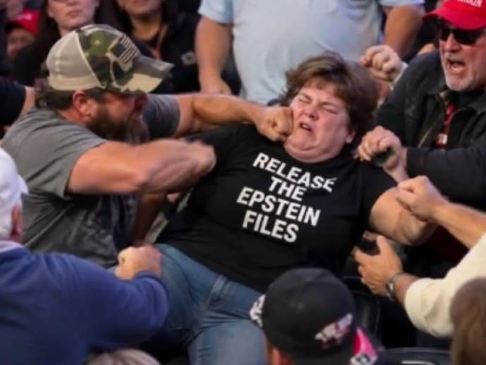 Just when we think there is a bottom, the United States sinks just a bit lower. It’s our brand nowadays.
That’s quite a left cross this thug delivered to this helpless female protestor.
It wasn’t too long ago that beating up women was taboo in America. My 11-year-old, sixth-grade son saw a male classmate of his badly bruise a girl by pushing her hard down to the ground–and proceeded to punch him in the mouth. A fellow father witnessed the scene and told me, “Your son’s fist was in that kid’s teeth within a fraction of a second.”
I had brought him up to avoid violence and achieve peaceful resolutions to conflicts, but I couldn’t fault him here.
What a disgusting bunch of turds we’ve become.