

1. A Global Response Plan to address the 1.5°C emissions gap
Right now, countries’ new climate pledges — their Nationally Determined Contributions (NDCs) — still fall far short of what’s needed to keep global warming below 1.5°C. If governments don’t step up, the world is on track to blow past this critical limit, with devastating consequences for Australia, the Pacific, and the entire planet. We can’t wait for another review cycle — COP30 must deliver a strong, credible Global Response Plan that drives urgent action.
To kickstart this, world leaders at the start of COP30 need to send a clear message: the energy transition is happening, fossil fuels are on the way out, and closing the emissions gap is non-negotiable.

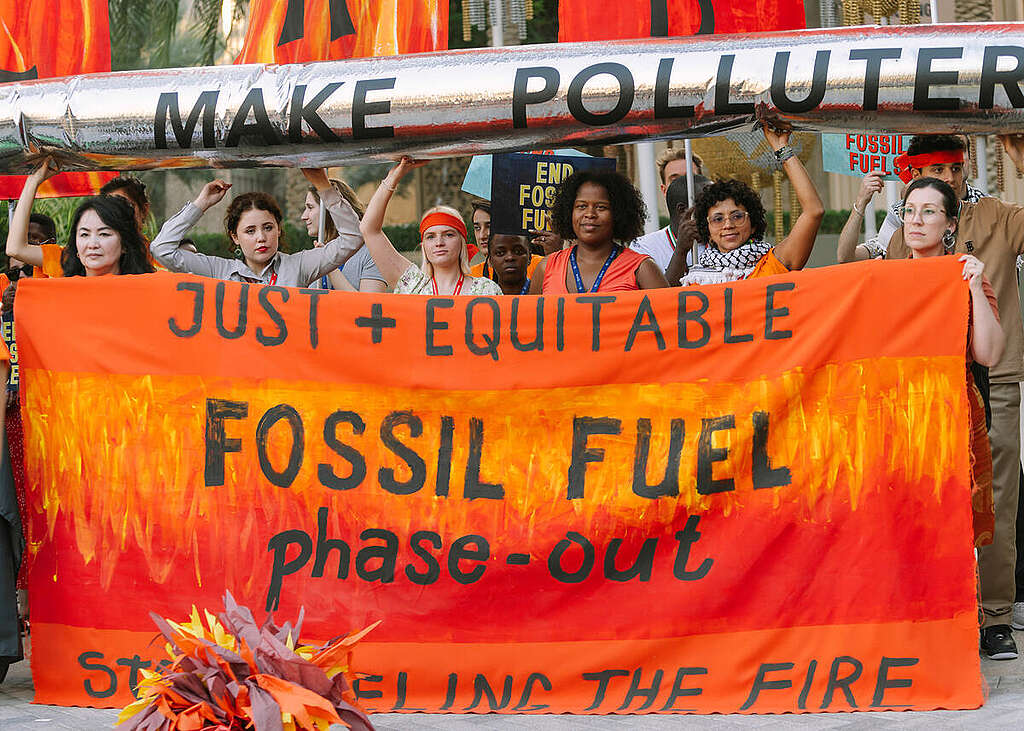
The 29th UN Climate Conference, COP29, takes place in Baku, Azerbaijan, from 11 to 22 November 2024. Greenpeace is at the COP to hold governments to account to make fossil fuel polluters pay for the climate crisis they have created, and put fossil fuel phase out plans at the heart of national climate action.
2. Protect Forests and Biodiversity
Forests are vital for life and climate stability — yet global pledges to protect them are fragmented and weak. COP30 must deliver a five-year Forest Action Plan to halt and reverse deforestation by 2030 and bring together all international efforts under one clear roadmap.
Biodiversity and climate are two sides of the same crisis. Addressing one without the other risks harm. COP30 must unite the three Rio Conventions on climate, biodiversity, and desertification so nature and people thrive together.

3. Make Polluters Pay and Fund Climate Action
A lack of finance is blocking progress. COP30 must create a strong accountability plan for the new global climate finance goal — starting with US$300 billion and scaling to US$1.3 trillion — ensuring funds reach First Nations, local communities, and vulnerable nations. Governments must back polluter-pays reforms so big emitters fund real climate solutions, not greenwash.
4. Towards a Pacific-Led COP31
A Pacific COP is a historic opportunity for bold climate leadership. Australia must ensure Pacific voices shape every decision — from closing the 1.5°C gap to phasing out fossil fuels and securing fair finance.
COP31 must also deliver a fast, fair fossil fuel phase-out — turning words into concrete action and signalling the end of coal, oil, and gas.

Hi, I’m Daniel and I am the Chief Mate. Having worked at Greenpeace for over 31 years I often work as the Captain on all Greenpeace ships.
The oceans connect everyone. Our goal this trip is to turn visibility into accountability by documenting impacts, informing the public, and strengthening protections for Australia’s Commonwealth Marine Parks.
https://www.greenpeace.org.au/team/daniel/
Hello, I am Jimmy and the Captain of Oceania. I learnt to sail in my hometown of Hobart, Tasmania. I’ve spent years navigating Tasmania’s wildly spectacular coastline, and crossed Bass Strait many times, including the Sydney to Hobart yacht races. My first time sailing with Greenpeace was in 2017 as a volunteer on the Rainbow Warrior.
It is a privilege to be a part of the Oceania project, and I hope we can achieve many things with this beautiful ship.
https://www.greenpeace.org.au/team/jimmy/
I’m Steve the Engineer onboard. My happy place is on or under the ocean – offshore sailing, Surf Life Saving, scuba diving and ocean swimming .
I love adventure, problem solving and getting my hands dirty.
I’m excited to see Oceania on the high seas and promote and defend our magnificent oceans.
As an engineer it’s my job to keep everything running from the engine to the water and the bathrooms, (make cups of tea) and help sail the boat.
https://www.greenpeace.org.au/team/steve/


-

 Greenhouse Gases2 years ago
嘉宾来稿:满足中国增长的用电需求 光伏加储能“比新建煤电更实惠”
-
Climate Change1 year ago
Guest post: Why China is still building new coal – and when it might stop
-
Greenhouse Gases1 year ago
Guest post: Why China is still building new coal – and when it might stop
-

 Climate Change2 years ago
嘉宾来稿:满足中国增长的用电需求 光伏加储能“比新建煤电更实惠”
-

 Renewable Energy11 months ago
Sending Progressive Philanthropist George Soros to Prison?
-
Climate Change2 years ago
Bill Discounting Climate Change in Florida’s Energy Policy Awaits DeSantis’ Approval
-
Greenhouse Gases1 year ago
嘉宾来稿:探究火山喷发如何影响气候预测
-

 Carbon Footprint2 years ago
US SEC’s Climate Disclosure Rules Spur Renewed Interest in Carbon Credits