

Laura Clarke has been the CEO of environmental non-profit organisation ClientEarth since September 2022.
ClientEarth works in more than 60 countries, using the law to “bring about systemic change that protects the Earth”.
It has recently been involved in high-profile climate litigation cases, such as against Brazil’s Devastation Bill, against Shell’s board of directors for “failing to move away from fossil fuels fast enough” and against Cargill for “its failure to adequately deal with its contribution to soy-driven deforestation”.
Additionally, ClientEarth joined others in successfully taking the UK government to court in 2024, arguing that its climate strategy was “not fit-for-purpose and, therefore, breaches the UK Climate Change Act”.
Clarke joined the organisation after spending two decades in diplomatic roles across Africa, Asia and Europe, including being British high commissioner to New Zealand, governor of the Pitcairn Islands and high commissioner to Samoa.
- Clarke on what ClientEarth does: “If you get the right laws in place, you change the rules of the game.”
- On the International Court of Justice ruling: “It strengthens climate litigation and will absolutely open the door to even more litigation.”
- On ‘lawfare’: “I think if you use the law in the right way, it can really help build agency and build public buy-in for environmental action.”
- On ‘slapp’ suit tactics: “It is a very aggressive tool, the chill effect can be enormous and it’s hugely anti-democratic.”
- On multilateral cooperation: “Geopolitics are really tough…But I think that doesn’t mean that you give up. There’s no space, there’s no time for defeatism.”
- On attribution science: “[It] opens a greater prospect for class action, for damages cases against these big emitters.”
- On cases using such science: “Lots of people will be thinking about [such cases] now, with that very close collaboration between the science community and the legal community.”
- On what’s next for climate litigation: “I think climate litigation, in terms of fossil fuels, is very well established. What’s next? We’ll see a lot more on ‘Big Food’.”
- On holding companies liable: “I think the human rights angle at the country and government level is very powerful.”
- On the ‘Trojan Horse’ of local pollution: “The cost to the US of these unplugged oil and gas wells is estimated to be $1.5bn in terms of the climate impact, the health impact, the pollution [and] the cost of cleaning it up.”
- On the ESG backlash: “Whatever the political weather, whether ESG is in or out, what doesn’t change, a bit like gravity, is the materiality of climate risk.”
- On operating in China: “We work very differently in different places. And that’s really important.”
- On David Gilmour’s charitable gift: “It was the most amazing gift from David Gilmour that has enabled us to scale what we do, to expand [and] to expand internationally.”
- On the ‘art of the possible’: “Sometimes we carry a big stick of litigation, but it’s always about thinking creatively.”
- On her experiences in the South Pacific: “It’s not just about climate. It’s about everything. It’s about how we live our lives, how businesses operate [and] how governments think.”
- On COP30: “It’s really critical at this COP30 that we do see countries come together with ambition and not just putting forward new nationally determined contributions, but really having a plan for what that looks like in the real world.”
- On the need for climate laws: “Turkey recently agreed its first-ever climate law. But there are others where it would be hugely beneficial.”
Listen to this interview:
Carbon Brief: Please can we just begin with you explaining briefly what ClientEarth is and does? Can you give us a couple of recent examples of where you’ve had a legal victory or win – and why you see that as a win?
Laura Clarke: Yes, absolutely. Well, there’s quite a lot there. So ClientEarth is a legal environmental nonprofit. We’ve got 300 people globally and we work across the full lifecycle of the law, essentially using the law to try and accelerate climate and environmental action and get to those positive tipping points faster.
So that means we work on what the right laws are that you need. Because if you get the right laws in place, you change the rules of the game. We support governments with drafting climate legislation. We work on regulatory reform for the energy transition, for example. So we strengthen the laws.
We litigate to hold governments and corporations to account for what they’re doing, to try and change mindsets, shift [and] accelerate action there.
Now we also do what we call “build the field”. So we work with lots of partners globally, we train judges, lawyers, prosecutors [and] work with community groups, so they’re also using the law to defend the environment and uphold their rights. So there’s a lot there and there’s a lot of advocacy as well.
But, of course, it’s normally our big-piece litigation that hits the headlines. And you asked for a few examples there. Most recently, I think a really lovely example is a case that we brought and we supported in Spain [where] community groups were suffering from the extreme pollution caused by industrial pig and poultry farming that was affecting their human rights. It was polluting their water, polluting their air [and] people were getting really ill.
We brought this case in Galicia in Spain and the court ruled that a clean and healthy environment is interdependent with human rights and ordered the authorities to take action to ensure the pollution was cleaned up [and] pay compensation to those citizens.
It’s cases like that that are important, both in terms of the experience of those communities who are living there on the front line of the impacts, but they’re also important in terms of the precedent that it sets. Because that’s a court saying very, very clearly that there is a human-rights obligation on authorities to take action on the environment, a clean and healthy environment, which includes, of course, tackling climate change [and] stopping pollution, [that this] is critical for human health and human rights.
So, it’s one example. I can give more if you want…
CB: Well, there’s a very notable kind of case that many of our audience would have heard about in the summer, which is the International Court of Justice, which made headlines around the world when it issued this landmark advisory opinion on climate change. In practice, though, how does that actually change things? For example, in terms of reparations, the opinion talks about a need to establish a “sufficiently direct and certain causal nexus linking a wrongful act to climate damages”. So how might that actually play out and be achieved in practical terms? In your work, for example, how does something like the ICJ opinion change or move the dial?
LC: So the ICJ opinion is hugely important. It’s a hugely important and authoritative articulation of what states’ obligations are on climate change under international law. So that’s hugely relevant for any courts in any country when they’re hearing litigation. This decision will be on their tables, right on their desks. They will be having regard to it, because it sets out very clearly that states have an obligation under international law to take action on climate change. [That] they need to regulate companies [and] countries that are historic emitters have a greater responsibility. So it’s hugely important in terms of really understanding what states need to do.
It doesn’t have an enforcement mechanism. It is an advisory opinion. [But] it’s a decision from the highest court in the world, [so] it is authoritative in terms of cases that are brought at the national level, at the regional level, in regional bodies, for example. And it’s also really useful in terms of really putting the pressure on states and as an advocacy tool in the run-up to big events like COP30 in Belém, the climate change conference.
You ask about how it would work in terms of damages claims? Under international law, there’s a long-established principle of transboundary harm, for example, so that could come into play there.
I think it’s still quite hard to really draw a direct line from the ICJ advisory opinion to right now. You’re absolutely going to have damages claims from climate vulnerable countries against big emitting countries, but it strengthens the arm of those communities that are calling for action. It strengthens climate litigation and will absolutely open the door to even more litigation on this front.
CB: Where do you stand on the strategic use of, as some choose to characterise it, “lawfare“, as a campaigning and legal strategy amid all the current geopolitical headwind? At the moment, populist politicians and their media allies are working hard, it seems, to paint lawyers and judges as “elitists” who are using courts to frustrate and block the “will of the people”, as they describe it. I’m particularly thinking of the US, where the rule of law and climate legislation are both under intense political attack. So where do you stand on the strategic use of what people are calling “lawfare”?
LC: So, I think it’s more important now than ever, when you have these really challenging political winds, geopolitical winds, when you have this political polarisation [and people are making] an attempt to say, “well, if you care about environmental issues, that inevitably puts you in a certain political bracket”.
I think the law is critically important in lifting us from that sort of polarisation. It’s not political to want to breathe clean air. It’s not political to want to drink clean water or ensure that your children have a safe and livable climate. And, so, I think if you use the law in the right way, it can really help build agency and build public buy-in for environmental action.
So we have a number of cases, clean-air cases with the local communities – the pig farming pollution case that I talked about and a case on zombie oil wells in Colorado – which are designed to increase the number of people who feel like they’re getting their arms around these things and using the law to achieve better outcomes. I think that’s one thing. It’s not a matter of politics, [it’s] actually, what are people’s needs and rights and how do we use the law to achieve those?
I think the other thing is that, regardless of what’s happened with politics, if you get something in law, in legislation that builds in a longer-term time horizon, which can insulate a little bit from the politics of the day. So that’s really important.
It is getting more heated, particularly in the States, but you’re seeing also strategic litigation from organisations like us that are trying to get progressive environmental outcomes from their work, but you’re also getting your big Slapp [strategic lawsuits against public participation] suits, so “strategic litigation against public participation”. The most famous one recently, of course, being Energy Transfer against Greenpeace in the US, calling for $660m in terms of costs.
So that sort of thing is on the increase. That’s always top right of our risk register, that idea that those who are seeking to delay the transition or stop the transition will see us as a threat and will come after us with some sort of defamation.
CB: Do you need to go toe-to-toe with those kinds of legal [challenges]? The way that the opposition, some might say, are kind of using law or undermining the law or, however their tactics play out, [so] you need to step up and go into that fight, as opposed to not being sucked into that. I’m just intrigued about the strategy.
LC: So, what’s the strategy for dealing with this sort of “lawfare” from big oil companies, say? It’s about being incredibly careful. That’s the first thing. So we’ve done a lot as ClientEarth in the environmental movement on saying, how do you defend against Slapp suits? What does the proper due diligence look like?
But, also, there are important measures in place on anti-Slapp legislation, which is really important to defend, because it is a very aggressive tool, the chill effect can be enormous and it’s hugely anti-democratic.
So I think it’s about not stopping this work and [being] there to push for a clean and healthy environment, to defend [the] planet and people, but it’s about doing it in a very careful way and always being alert to the risks.
CB: So, more broadly, in terms of international law, if you like, amid an era of war crimes and human rights abuses in Gaza, Ukraine, beyond, etc, many have expressed a loss of faith in the potency of international law. What could this mean specifically for global climate treaties and the sort of multilateral cooperation required to tackle a global commons challenge, such as climate change?
LC: So, look, I think there’s no getting away from the fact that the world is a really scary place right now. It’s very uncertain. Geopolitics are really tough. Multilateralism is under strain. But I think that doesn’t mean that you give up. There’s no space, there’s no time for defeatism. And it’s about how we work through different multilateral channels to drive the work necessary?
COP in Belém is going to be critically important. A huge amount of work [is] going into that [and into] saying this is about implementation, about doing what we said we would do. Countries need to be coming forward with their new nationally determined contributions. And, yes, some countries will step away; the US, of course, has left the Paris Agreement. But that doesn’t mean that that cooperation at multilateral level stops. We need to find different ways of enhancing it.
And, at the same time, alongside all that diplomacy and multilateralism, you’ve got what’s happening in the economy, right? You’ve got the renewable revolution, [which is] absolutely scaling exponentially. You’ve got countries seeing that this is the way to secure growth, but also national security resilience and a cleaner way, a healthier way of life for citizens. So there is a lot of that real-world action being taken.
And you see it, for example, in China, which is way ahead in terms of renewable tech. [China is] absolutely seeing the economic advantage, the advantage for its citizens and the geopolitical advantage as well. So, I think progress can often go in fits and starts, and it’s about working out which talent you’ve got to sort of keep pushing on every front, but some will sometimes be more fruitful than others.
CB: So changing gear a little bit. I’m interested in the evidence base that the lawyers in your organisation will work with and take into court. Attribution science is a growing academic field, with climate scientists increasingly exploring the causal and probabilistic links between the numerous impacts of health economic issues, including those of extreme weather events. There has been a push to attribute even extreme weather to corporate emissions as well. So how might advances in attribution science shape climate litigation?
LC: Yes, it’s a really interesting developing frontier in climate litigation. Really interesting. And you will know about the case that was just earlier this year, Lliuya vs. RWE in Germany. This is the Peruvian farmer who took a case against RWE, the German energy company, essentially saying that his farm was at risk from glaciers melting as a result of climate change.
So it was really [a] very, very interesting attribution science claim. Now the court confirmed that corporate businesses can be held liable for their emissions. So that’s a hugely important precedent. [But] it didn’t actually rule that Lliuya was entitled to compensation because it didn’t find on that front.
But that’s really important. And, you know, as you say, attribution science – there was a really interesting article on it in Nature just a couple of months back – attribution science has come on so far in [its] ability to say, “well, this is what’s happening in terms of climate impacts, this is how it connects to emissions”. And it is only a matter of time before you get successful cases that show this extreme weather event or this sea level rise, or this temperature rise is directly attributable in proportion to the emissions of this company. Because, particularly these big fossil fuel companies, they are collectively – I think, Saudi Aramco as one company, if its emissions were a country, it’d be the fourth biggest [emitting] country in the world. So there’s a huge amount there.
Why is that exciting in the real world? Because then you open a greater prospect for class action, for damages cases against these big emitters. And when those really, really scale, saying “actually, fossil fuel company A is responsible for all this damage that’s been done to our way of life, to our community, to our economy”. When those damage claims scale, those really, really change the calculations and the business model of those companies.
CB: I’m interested in the timescale of that and also actually taking that science into court. In terms of the robustness of the science, if you like, in terms of a lawyer actually presenting it as evidence in a court case, you suggested we’re moving towards that? Can you give a sense of time? Is that many years away before you anticipate that there are some territories and countries with their legal systems that are probably more likely to accept that kind of evidence and in terms of a legal victory downstream of that?
LC: So, I’m not a scientist, but I think these are cases that lots of people will be thinking about now, with that very close collaboration between the science community and the legal community. And, as with any new frontier, if you like, in terms of legal, environmental activism, climate litigation, there will be cases that are attempted and that don’t win, and then some that will. And, of course, judges will require a very, very high evidentiary burden, looking at that attribution. But I think it’s a promising and interesting area.
CB: More widely, where is climate litigation going in the years ahead? How is it going to evolve? What are your sort of predictions or thoughts on that?
LC: Yes, so I think there’s a lot to talk about here – I think climate litigation, in terms of fossil fuels, is very well established. What’s next? We’ll see a lot more on ‘Big Food’. There’s the spotlight shifting to Big Food, both in terms of these massive food companies that have these huge supply chains, and that’s a question of emissions. It’s also a question of environmental degradation, deforestation [and] human rights abuses. So I think that’s one to look out for.
We’ll see even more human rights cases, on, for example, extreme heat. I think that’s going to be increasing as we’re in the era of climate consequences, right? We’re already seeing places becoming hard to live in. So there will be extreme heat human rights cases.
We’ll see increasing cases around the petrochemicals industry and what that does to human health. We’ve talked about attribution science. I sometimes talk about the under-the-radar enablers of the status quo, right? So you can’t build a new oil pipeline without the insurance, without the management consultancy, without the legal contracting, without the advertising companies. And, so, I think it’s really important that these professional services companies really look at what they’re responsible for.
CB: So you think it’s these – it sounds like you’re saying that it’s these companies and corporates that are potentially more liable and open to legal kinds of cases against them, as opposed to [fossil-fuel companies] per se…
LC: I think both. But I think in [different] countries you have to pick quite carefully to avoid unintended consequences or impact. But I think the human rights angle at the country and government level is very powerful, because it’s very well understood in governments that you have to look after your citizens and, actually, if you’re not protecting them from very severe climate impacts, you’re not doing your job. So I think we’ll see more of those human rights cases directed at the obligations of states, but then a lot also on corporates and what corporates need to do.
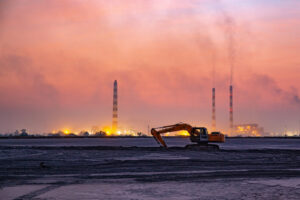
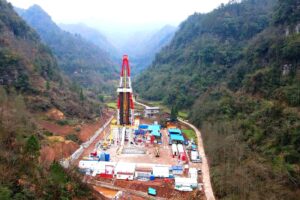
And trying to fix lots of the absolutely egregious practices that are underway. We’ve got a really, really exciting case live in the US at the moment, which is about unplugged oil and gas wells. There are 2.1m unplugged oil and gas wells across the US and the reason for that is that the fossil fuel company owns the oil well, makes all the profit, but towards the end of its life, sells that oil well on to a shell company. And, at the point, when the oil well needs to be plugged, made safe [and] the area around it remediated, that shell company goes bust, right?
And so, essentially, Big Oil are evading what are called their asset retirement obligations through very complex bankruptcy and fraud. And, so, we are bringing a case on behalf of Colorado landowners who often are faced with the impacts and the costs of this pollution, and our case is really designed to shift that accountability, so really making a reality of the polluter pays principle. Saying, “actually, it’s not OK to put private profit at the expense of public good, and your business model will be very, very different if you actually have to account for the damage that you’re doing, environmentally, for asset retirement obligations”. All these things. And that will actually shift how the economics of it work and that will help accelerate action.
CB: It is presumably easier to win over public sympathy for a case, if you’re dealing with local pollution, even if it’s a Trojan horse for a wider atmospheric pollution issue, it’s actually the local element…
LC: It’s very local and so what happens is, when Big Oil evades its asset retirement obligations, that lands on the local authorities, on the taxpayer, on the local landowners. And we’re talking about massive methane leaks. We’re talking about poisoning of the local land [and] kids getting ill. It’s a very, very real issue. And, actually, it points also to a really interesting point about the leverage of successful climate litigation.
So the costs to the US of these unplugged oil and gas wells is estimated to be $1.5bn in terms of the climate impact, the health impact, the pollution [and] the cost of cleaning it up. [So], if we succeed in in shifting the accountability for just 10% of those oil and gas wells, then that’s $150m saved, right? And our case costs $1.5m, so there’s a bit of maths there.
But the point is, if you can shift through corporate law, shift some of these corporate practices that are totally unjust, then you’re really getting to a point where the playing field is more level between the fossil fuels of the past and the energy of the future.
CB: Talking of corporates, we’re in this era of ESG [environmental, social and governance] backlash. And it feels like we’ve gone in recent years from a sort of dynamic of greenwashing amongst corporates to a kind of greenhushing. And how is that all affecting your work at ClientEarth, that sort of shift backlash against ESG?
LC: So I think what’s important to hold on to – whatever the political weather, whether ESG is in or out, what doesn’t change, a bit like gravity, is the materiality of climate risk, right? What will climate change mean for your business, for your operations, for your bottom line [and] what is your long-term commercial viability?
And there’s an amazing open letter written in March by people representing 50% of the UK’s food industry, talking about the materiality of climate risk and biodiversity risk for the food industry at large.
It’s a huge issue for companies everywhere and sometimes they might be doing less in terms of the PR and posturing around it, but any company that is thinking seriously about its long-term commercial viability is thinking about climate and biodiversity risk. They’re putting steps in place and they should also be advocating for the right regulation so that it is a level playing field.
CB: ClientEarth operates in a variety of countries. How does ClientEarth interact with environmental law enforcement in countries with more closed judicial systems, such as China?
LC: Yes, we work very differently in different places. And that’s really important. So, in Europe, we do lots of litigation advocacy.
In China, it’s a very different model. We’re there at the invitation of the Supreme Court of China. We’ve been there for a long time now and [have] been training environmental judges in environmental law, because it’s not enough to have the right laws in place. You need to make sure that those are enforced. And we’ve also been supporting the Supreme People’s Procuratorate in developing public interest environmental litigation.
So we’re not doing the litigation ourselves. We’re bringing our expertise from the rest of the world to support them. And, actually, the results are really quite amazing in terms of the number of cases that have been brought now by public-interest litigators in China focused on pollution, cleaning up the rivers [and] cleaning up air pollution. Most recently, we supported a case on mist nets that trap birds. So, mist nets that are used in agriculture and trap and kill birds.
So it’s a very different way of working. We work very much in collaboration with the authorities. You know, with the permission of the authorities, the invitation of the authorities, having a really, really significant impact.
And another thing we did was provide advice on no longer financing coal in the “belt and road initiative”. And that was a decision that went all the way up through the authorities, and then was implemented. And so the avoided emissions, avoided fossil-fuel infrastructure from that is important, too.
So it’s all about working out where we can have the greatest impact? Where do we need to be and how do we need to work in that context to get the greatest return for the planet?
CB: I suspect not everyone knows this about ClientEarth, but, in 2019, before your time as CEO, admittedly, Pink Floyd’s David Gilmour kind of famously auctioned off some of his guitars and gave all the proceeds to support your work. I think it was reported at the time that it raised something like $21m or something incredible.
So, how has that gift been used? I mean, that probably did massively transform the finances and opportunities for ClientEarth. But how does that actually trickle into your work downstream?
LC: Oh, it’s been hugely important, and it was the most amazing gift from David Gilmour that has enabled us to scale what we do, to expand [and] to expand internationally.
So we now have a much larger presence in China. We’ve opened a programmatic office in the US. We’ve been able to build our teams here, but also build our capability around our communications, our fundraising, for example. So it’s just strengthened us as an organisation.
But, importantly, also we’ve used it to really develop our ability to innovate and to bring really, really exciting test cases. So, hugely, hugely important. It’s led to a sort of very rapid growth, which sometimes brings problems, but it’s been hugely valuable in terms of the impact that we can have.
CB: You personally have a very interesting CV with time deployed as a diplomat across lots of locations with a variety of, actually, environmental impacts, notably from climate change, which must have been apparent to you in your role at those times. How have those experiences shaped your current role at ClientEarth and your sort of thinking in your role?
LC: Yes, I loved being a diplomat and I often say that diplomacy, at its best, it’s about the art of the possible. How do you build connections? How do you understand other people? How do you collaborate to effect change? And I really think about this work as the art of the possible. Yes, sometimes we carry a big stick of litigation, but it’s always about thinking creatively. If we use the law at the right place at the right time, how can we get to these positive tipping points for us to accelerate the change we need?
And I think what I bring is that sense of, how do we collaborate? How can we be creative and use the law in a creative way? But, importantly, how do we build those friendships, networks [and] influence? Because none of this – this is all a team sport, right?
These problems that we face are so all-encompassing. The law plays one part, but it has to be with business, with government, with the science, with the arts and culture, the hearts-and-mind piece. And so how do we all come at these issues collectively, but from different angles to really try and drive the change that’s needed.
CB: I think you’ll be able to list all your postings. But you’ve got experience in Oceania, Asia, Africa, wherever, all over the planet in terms of those climate impacts. Where can you remember occasions or locations where it’s been almost like an epiphany moment, where you’ve seen real impact?
LC: Yes, I mean, it’s always been a huge focus for me, but it was when I was in New Zealand – I was high commissioner to New Zealand and high commissioner to Samoa and governor of the Pitcairn Islands. And when you spend a lot of time in the South Pacific and you go to these small island developing states – and I didn’t just go to Samoa, I travelled all around the Pacific in my role – climate change there is existential, you know. They’ve got no time for culture wars, [no questioning whether] is it happening? Is it not? It is an existential and a day-to-day lived reality, whether that’s about sea level rise, whether it’s about their economy [or] whether it’s a loss of livelihoods. And so that, for me, made me want to work on these issues full-time.
But I also saw, from my role as governor of Pitcairn, I saw the impact of plastic pollution. So Henderson Island in Pitcairn is one of the most plastic-polluted territories in the world, even though it’s uninhabited, and we did a lot of work there to clean up the plastic, study its impact on the natural environment [and] communicate that to the world.
And then, on the other side, on the more positive side, Pitcairn has got a massive marine protected area and we did a lot of science expeditions studying what the effect is of that marine protected area on the health of the oceans and marine life there, which was really, really inspiring.
And so I sort of came, thinking holistically about these issues [and] the art of the possible. But, you know, it’s not just about climate. It’s about everything. It’s about how we live our lives, how businesses operate [and] how governments think. How do we get away from that short-term thinking to thinking in the longer intergenerational sort of ways, is really important.

CB: So, final question. As we head towards COP30, I’m intrigued about two things: what ClientEarth’s role will be at COP30, but also, how do you think Brazil’s domestic politics might affect the outcome? I’m thinking particularly of the dynamics behind Brazil’s devastation bill, which I believe ClientEarth has been actively focused on.
LC: Look, I think it’s really, really challenging to have those dynamics domestically. And [Brazilian president] Lula did veto – well, veto or amended – that bill, but we mended the most devastating elements of it. But, clearly, the politics there is really hard. You’re seeing a lot in terms of new permits being issued for oil-and-gas extraction. So that’s really hard. It hampers a [COP] presidency.
It’s not the first time, of course, that a presidency has been holding multiple truths in its hands at the same time; that importance of international climate coordination and then the sort of messy domestic politics. But, you know, it’s really critical at this COP30 that we do see countries come together with ambition and not just putting forward new nationally determined contributions, but really having a plan for what that looks like in the real world.
It’s one thing to make a commitment internationally. It’s another thing to turn that into real-world changes.
And ClientEarth has been advocating, along with global legislators and WWF, for a next generation of climate laws, because that’s really how you close that gap between the international commitment and the real world change, and how you provide certainty, predictability for businesses, for all of the economy. And so we’ve supported a number of countries on their climate laws. We’re advocating for other countries to adopt next-generation climate laws to really make a reality of those international commitments.
CB: Is there a particular country where you think that effort is most needed on climate law? Can you think of…
LC: There are a number, and when we’re seeing, and I mean, for example, Turkey recently agreed its first-ever climate law. But there are others where it would be hugely beneficial, where there are still no climate laws, and others where it needs updating.
CB: OK, Laura, thank you so much for taking the time.
LC: It’s been a pleasure. Really nice, really nice to talk to you. Thanks a lot.
The post The Carbon Brief Interview: ClientEarth CEO Laura Clarke appeared first on Carbon Brief.

Three countries have been named by the Paris Agreement’s compliance committee for failing to submit a nationally determined contribution (NDC) and repeatedly snubbing offers of help with their climate plans.
After months of internal debate over whether to identify serial non-responders, the Paris Agreement’s Implementation and Compliance Committee (PAICC) named the three countries which have failed to engage with it over their NDCs on Friday.
It named Democratic Republic of Congo, Senegal and North Korea in a footnote of its