

Each year, the U.S. discards 38 to 40 percent of its food, a stubbornly high figure. Yet, other countries like the Czech Republic, Israel, and Denmark show promising solutions that American cities are beginning to adopt.
The global challenge is similarly daunting. The UN Food and Agriculture Organization estimates that about one-third of all food produced for people worldwide is lost or wasted each year. This is not just a moral issue, since so many people go hungry, but also a big climate problem. Project Drawdown lists cutting food waste as one of the top three ways to fight climate change. Some countries have been working on this for years and offer lessons for others.
Czech Republic: Rooted in Preservation Culture
Home-grown produce from backyard vegetable gardens supplements family meals throughout the Czech Republic. Residents tend fruit trees, greenhouses, and chicken coops. Many rent municipal allotment plots to use as supplemental gardens. Home composting is common and deeply normalized.
Czechs don’t just eat what their gardens yield—they savor the adventure! During mushroom and wild garlic season, families head outdoors to forage together. Extra produce finds a second life as jams or pickles, or gets frozen and fermented into tangy cabbage. Got leftover fruit? Send it to a local distillery for a splash of homemade liquor. Even stale bread avoids the bin, reborn as crispy breadcrumbs straight from your kitchen.
Apps like Nesnězeno let Czech restaurants, bakeries, cafés, and grocery stores sell extra food as discounted ‘rescue bags,’ priced 50 to 70% below retail — for pickup before closing. This connects surplus food with local buyers looking for a good deal. By the end of 2024, Nesnězeno had 1,487 partner businesses, a 132% increase from the year before, and had expanded across all Czech regions. Prague led with 239,000 rescued packages (41% of the total), followed by South Moravian and Pilsen, according to MediaGuru.
The app has been downloaded by more than 3 million users and has saved over 3 million packages of unsold meals overall.
The Czech Republic’s recycling rate for municipal waste went up from 32% in 2017 to 44% in 2021, just below the EU average. However, separating and collecting food waste is still inconsistent. A new national program for collecting kitchen animal-based waste, starting in 2026, aims to fix this.
Israel: Food Rescue as National Resilience
Food and water security in Israel are inseparable from politics. Leket Israel, the country’s largest food bank, pursues a mission of “food rescue” that serves Israelis regardless of background, coordinating with farms, packing houses, hotels, and catering operations to redirect surplus food to 200 nonprofits serving those in need.
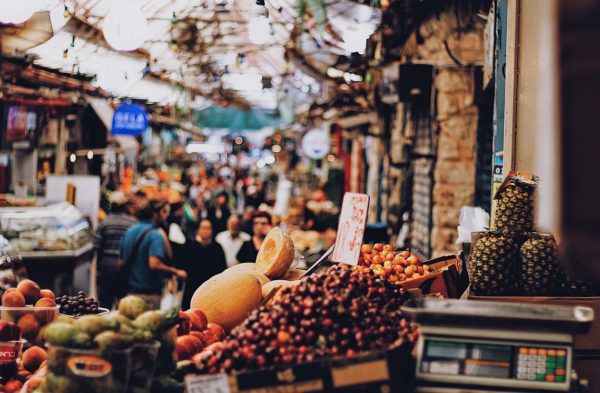
Bustling outdoor food markets are traditional fixtures in Israeli cities, bringing consumers closer to the source of their food. In such busy places, edible food regularly ends up on the ground. Volunteers with Leket collect leftovers to distribute to people in need.
Leket released its 10th annual Food Waste and Rescue Report in late 2025. The report showed that Israel threw away 2.6 million tons of food, or 39% of what it produced, similar to the U.S. This wasted food was worth about $7 billion, or 1.3% of the country’s GDP. Still, there has been progress: food waste per person dropped 13.3% over the last ten years, from 300 kg to 260 kg per year. This improvement is thanks to more public awareness, serving food on individual plates in cafeterias, and more online food orders. But population growth and higher food prices have kept the total amount of wasted food high.
Leket and its partners now rescue about 45,000 tons of food each year, 2.25 times more than a decade ago. Still, this is only 5% of the food that could be saved in Israel. The Food Donation Encouragement Law, first passed in 2018, was updated in 2024 to give more legal protection to donors and require large public institutions to donate food.
In September 2025, Israel released its first national plan to cut food loss and waste, written by the Ministries of Environmental Protection and Agriculture. This was a big step toward better policy coordination. Israeli AgTech companies are also known worldwide for using technology to reduce food waste. For example, Sufresca makes edible coatings to keep produce fresh longer, and Taranis uses drones and AI to spot crop problems early.
Denmark: Culture as Infrastructure
In Denmark, people often leave free food in boxes on the sidewalk. Signs in front of homes might offer free apples or potatoes, or eggs for sale using the honor system. There are also Facebook groups in every major Danish city for dumpster diving, where people collect edible food that supermarkets throw away after the best-by date.
Supermarkets in Denmark lower prices on food that is close to its best-by date, especially baked goods, which are marked down every evening after 7 or 8 p.m. Food producers and supermarket chains work with groups like Too Good To Go and WeFood, Denmark’s first surplus food supermarket, to sell rescued food at big discounts. Chains like REMA 1000, Coop, and LIDL have also stopped offering bulk-buy discounts that encouraged people to buy more than they needed.
Too Good To Go started in Copenhagen in 2015 and has grown quickly. In 2023, the app saved 121.7 million meals worldwide, up 46% from 2022, and helped prevent about 362,000 tons of CO2 emissions. The app now works in over 17 countries and has more than 85 million users.
The WeFood surplus grocery network, which began as a single location in Copenhagen in 2016, has grown to six stores across Denmark. And a voluntary national commitment, “Denmark Against Food Waste,” united more than 25 food producers and retailers behind a shared goal of halving food waste by 2030. An independent third party measures and publishes annual progress.
What the U.S. Has Borrowed
Some of the ideas first used in these three countries are now catching on in the United States. However, there are still big challenges slowing progress.
Too Good To Go started in the U.S. in late 2020 and has been growing ever since. By mid-2025, the app was available in almost half of U.S. states, including cities such as Boston, Chicago, Denver, Los Angeles, New York, Portland, San Francisco, and Seattle. The number of meals saved grew by 67% each year. In 2024, Circle K convenience stores joined the app nationwide. Too Good To Go now also works with big chains like Whole Foods, Peet’s Coffee, and Just Salad.
Since 2020, most progress on food waste in the U.S. has happened at the state level. In 2024, 29 states introduced 100 distinct food waste bills, and 18 passed. California’s SB 1383, which started in 2022, brought organics collection to 94% of communities and rescued 217,000 tons of surplus food in 2023. Washington state also passed a major law in 2022, requiring businesses that generate large amounts of organic waste to compost or arrange for collection.
Federal legislation has moved slowly. As of 2024, 13 pending federal food waste bills were before Congress, including the bipartisan Food Date Labeling Act of 2023, which would standardize confusing “best by” and “sell by” date labeling — but none had passed. The lack of national date-label standards is a key driver of household waste, as consumers discard food that is still safe to eat.
In 2015, the U.S. promised to cut food waste in half by 2030. But a 2025 study in Nature Food found that the amount of food wasted per person in 2022, at 328.5 pounds, was about the same as in 2016. The study said that no state is on track to meet the federal goal with current policies. It also pointed out that the U.S. focuses too much on recycling food waste instead of preventing or rescuing it. In contrast, Denmark and the Czech Republic work to keep food from becoming waste in the first place, while U.S. policy mostly deals with food after it’s already lost.
What You Can Do
- Download Too Good To Go or a similar app to save extra food from restaurants and grocery stores in your area.
- Volunteer at a local food bank to help get rescued food to people who need it. You’ll also learn more about food inequality in your community.
- Check out local CSAs and farmers’ markets to help cut down on food lost in big supply chains.
- Composting at home is a simple way to recycle food scraps. If you live in an apartment, see if your city has a compost drop-off program.
- Ask your supermarket to start marking down food that is close to its best-by date. This is common in Denmark but not in the U.S.
- Reach out to your congressional representatives and ask them to support the Food Date Labeling Act. Standardized date labels could make a big difference at the national level.
- Use the Earth911 recycling search tool to find recycling and food drop-off options near you.
Editor’s Note: Originally written by Chloe Skye on March 10, 2020, this article was substantially updated in April 2026.
The post 3 Countries’ Food Waste Strategies: What Can They Teach Us? appeared first on Earth911.
https://earth911.com/inspire/3-countries-food-waste-strategies-what-can-they-teach-us/

Just like fashion has been overrun by fast fashion, home goods and furniture have similarly seen a rapid decline in quality. Rugs are no exception.
And similar to fashion, these cheap goods come at a high cost — namely, to the planet and to people. In fact carpet and rug production is rampant with exploitation.
On the other hand, fair trade rugs present the best of what a rug can bring to your home: artistry, craftsmanship, and heritage.
The brands featured in this guide are partnering with (and fairly paying!) skilled artisans who are using generations-old — and sometimes even centuries-old — techniques. These artisans are sustaining long lines of crafts, preserving their cultural diversity, and celebrating the richness of their time-honored crafts.
There’s simply no replacement for a timeless, quality artisan-made rug — they’re like pieces of art you can lay out on your floor or hang on your walls.
So, enjoy browsing through this guide to sustainable rug brands listed out below and best of luck on your search for the right fair trade rug!
Where to Find Ethical and Fair Trade Rugs
Note that this guide includes affiliates and partners. As always, brands must meet high standards for ethics and sustainability to be featured and all opinions are my own.
1. Obakki
Best for: warm-hued handwoven wool rugs
Categories: Area Rugs, Runners, Accent Rugs
Obakki partners with artisan weavers primarily in Oaxaca, Mexico — including individual makers like José — who hand-dyes and weaves rugs on a traditional pedal loom using locally sourced sheep’s wool and natural dyes derived from native plants. The brand also works with Rrres Design Studio, a Latin American studio dedicated to preserving traditional Oaxacan weaving techniques, and sources handwoven textiles from artisan communities beyond Mexico as well, including Morocco.
Each rug is made from 100% wool with no synthetic dyes or backing. Most pieces are made-to-order with a 4-8 week production window, shipped directly from the artisan partners.
Price Range: $460 – $4,159
Conscious Qualities: Natural Fibers, Natural Dyes, Craft Preservation

2. Kiliim
Best for: modern wool kilim rugs
Categories: Area Rugs, Accent Rugs
If you’re well-versed in rug terminology, you may recognize that this brand’s name looks similar to the word kilim.
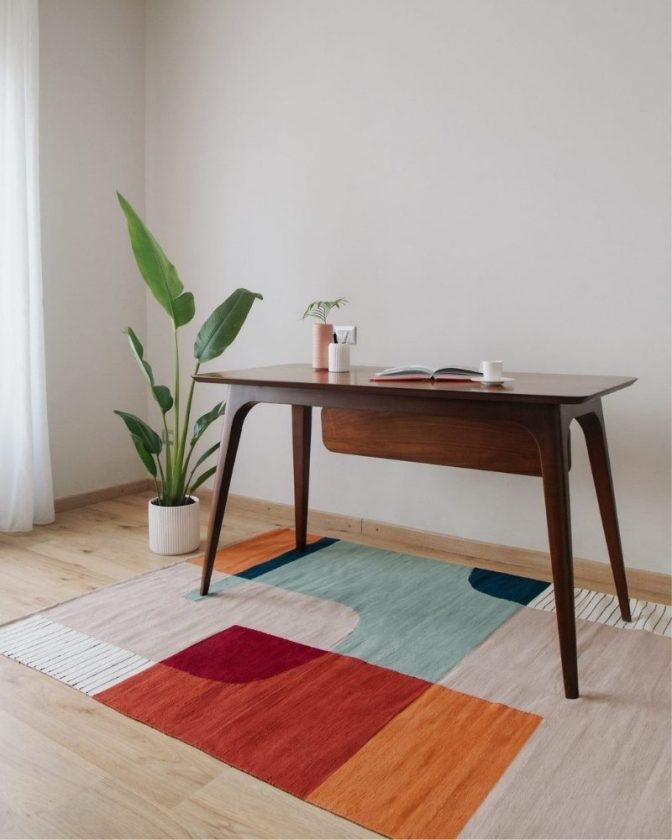
Kiliim’s rug are made using authentic kilim rug craftsmanship by artisans in Egypt coming from generations of kilim artisans. To ensure ethical production and to support the preservation of this heritage craft, Kiliim pays living wages to all artisans.
Price Range: $95 – $4,812
Conscious Qualities: Ethical Production, Heritage Craft Preservation, Natural Fibers
3. Urban Natural
Best for: browsing fair trade rugs in lots of styles and sizes
Categories: Outdoor, Area Rugs, and Accent Rugs
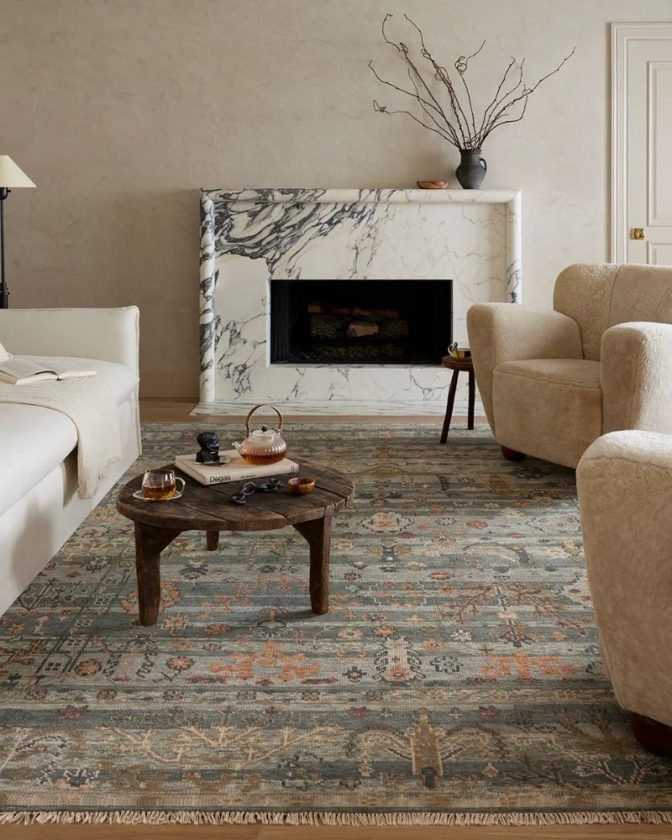
This natural home and lifestyle retailer has a beautifully curated selection of sustainably-made rugs crafted with materials like jute, sisal, wool, and cotton.
Several brands on Urban Natural are also ethically hand-loomed or hand-knotted, such as Loloi — a GoodWeave partner — and Jaipur Living — a brand that partners with thousands of local artisans to sustain heritage crafts.
Price Range: $259 – $9,755
Conscious Qualities: Eco-Conscious Materials
4. LOOMY
Best for: pet-friendly and performance rugs
Categories: Area Rugs, Accent Rugs, Runners, Outdoor Rugs
Founded by a weaver, LOOMY is dedicated to crafting beautiful artisan-made rugs that will last for decades to come.
LOOMY partners with highly-skilled artisan weavers who craft quality rugs made from eco-minded materials like banana silk, jute, and recycled cotton, plus performance options made from 100% recycled polyester built to withstand whatever life brings you.
Price Range: $298 – $8,298
Conscious Qualities: Natural Fibers, Craft Preservation, Vintage Options

5. West Elm
Best for: fair trade rugs in on-trend mainstream styles
Categories: Area Rugs, Accent Rugs
West Elm is bringing ethical rugs to a broader market with their collection of Fair Trade Certified wool and cotton rugs. While I recommend browsing the smaller shops listed above first, West Elm is supporting the movement to responsibly-made, fair trade rugs.
Price Range: $$$
Conscious Qualities: Fair Trade production, Majority Natural Materials
6. Jubi
Best for: Modern rugs in vibrant prints
Categories: Accent Rugs, Circle Rugs, Runners
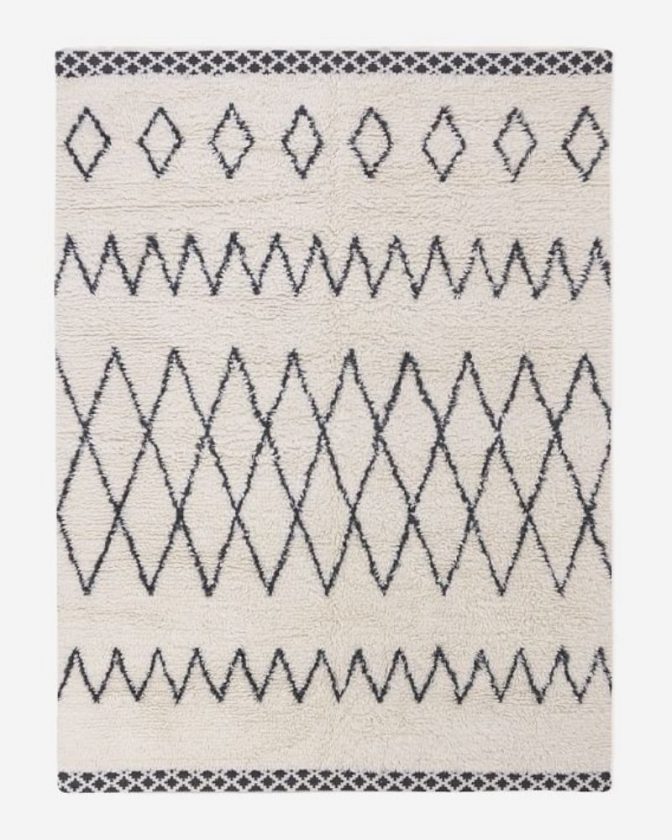
Jubi is a Brooklyn studio founded by textile designer Cassie Dagostino. Every rug is handmade from New Zealand wool by fourth-generation weaving families in Bhadohi, India using traditional techniques. Each rug is made-to-order, meaning no excess stock. Since everything is made to order, expect between 3 and 7 weeks for your rug, depending on the technique used.
Conscious Qualities: Pays Above Market Rates, 100% Wool, Made-to-Order
Price Range: $228 – $668
Shipping: Free worldwide shipping

7. Rejuvenation
Best for: Classic rug styles made in Fair Trade factories
Categories: Accent Rugs, Runners, Area Rugs
Home retailer Rejuvenation has a selection of rugs made in Fair Trade Certified factories. Their collection includes undyed hand-loomed rugs to geometric flatwoven wool rugs. And while I’d typically avoid synthetics, it tends to be unavoidable for outdoor rugs — so Rejuvenation’s Fair Trade 100% recycled poly rug is a good option.
Conscious Qualities: Fair Trade Certified, Mostly Natural Materials
Price Range: $79 – $1,649
Shipping: Contiguous U.S. shipping for 10% of product price (add $20 for HI, AK, and US. territorries)
Liked this guide to ethical rugs? You might also enjoy:
Ethical Home Decor Brands to Curate a Beautiful, Conscious Space
Eco-Friendly Furniture to Furnish Your Home Sustainably
Fair Trade and Eco-Friendly Blankets to Cozy Up With
The post 5 Best Ethical Fair Trade Rugs to Elevate Your Space appeared first on Conscious Life & Style.
As a longtime book lover, I may be biased, but I think a full bookshelf is one of the most beautiful additions to a space. There’s nothing better than seeing a showcase of your favorite reads alongside a TBR list.
A bookcase, though, can of course be used for all sorts of purposes from placing your favorite photos of family and friends to showcasing treasured vintage finds.
Whatever the case, this guide will help you find the right sustainable bookshelf for your living room, office, or wherever you like to cozy up with a good read!
So what make a bookcase more sustainable? What makes a bookshelf non-toxic?
First of all: sustainable and non-toxic are two overlapping — but distinct — criteria. And both of those terms can come with a lot of opinions and varying definitions.
When it comes to sustainable bookcases, I look for:
- Responsibly Sourced Materials: most bookshelves are made primarily with wood. While natural, unsustainable wood sourcing can be a cause of deforestation, so we want to see that the wood was from responsibly managed forests or made from reclaimed or repurposed wood. Some bookshelves may feature metal, in which case recycled materials here are important.
- High Quality Construction: sustainability includes longevity — how long will you be able to use that furniture piece before it goes to the landfill and gets replaced? Look for transparency around craftsmanship and woodworking processes. Another sign of quality is the length of warranty a company has for its products.
- Ethically Made: this one is straightforward in theory — were the people making it paid fairly and working in safe conditions? — but is unfortunately not always easy to find information. In this category, I look for transparency in practices, what relationship the brand has with the manufacturer (some produce in-house which is the best case scenario for transparency!), where it was made, and how well the makers were paid.
Ideally a sustainable bookshelf would also be non-toxic — as toxic chemical fumes aren’t exactly sustainable! But this isn’t always the case. For example, if a company prioritizes upcycled materials, they don’t necessarily have control over what inputs were part of the original materials. And sometimes a company focuses more on ethical artisan partnerships and sustainable wood sourcing, more than, say, using non-toxic finishes.
But when it comes to non-toxic bookshelves, this is what I look for. (Note that non-toxic doesn’t necessarily mean safe for all chemical sensitivities. Nor does it mean zero potentially irritating chemicals.)
- Solid Wood (where possible): MDF or pressed wood contains glue to stick the various wood pieces together, which can contain added formaldehyde. I prefer solid wood, or if it is engineered wood, I’d make sure the company is transparent around the type of glue used and/or they at least have a product certification like GREENGUARD. (More on that in a second.)
- Low or Zero VOC Finishes: most wood furniture is completed with some sort of finish to provide a protection against scratches or moisture. Many of these finishes are synthetic, and some can contain high levels of toxic chemicals. Look for a natural finish like linseed oil or beeswax or a low VOC synthetic finish.
Relevant Certifications
You’ll see a few certifications referenced throughout this guide. Here’s what each one covers:
- FSC Certified = the wood sourcing was responsibly managed; this is not a finish, foam, or textile guarantee.
- GREENGUARD / GREENGUARD Gold Certified = the finished product was tested for low chemical emissions, including VOCs, with Gold representing the stricter tier.
- Fair Trade Certified
 = verifies that a factory meets standards for fair wages, safe working conditions, and ethical labor practices.
 - Cradle to Cradle Certified (Gold) = evaluates a product or material across material health, circularity, clean air/climate, water/soil stewardship, and social fairness.
Where to Find Sustainable Bookcases and Shelving
I’m always a secondhand first proponent, and that goes for furniture, too. While your local thrift store might not have used bookshelves, check for dedicated furniture resale shops near you or estate sales. (I use EstateSales.net to find ones near me.) You can also find gently used pieces on online marketplaces like Facebook Marketplace, OfferUp or AptDeco.
If you can’t find something you love secondhand, and you don’t want to DIY your own bookshelf, then the next best choice is to shop from one of the sustainable furniture companies below. (If you’re simply looking for a bookstand, I’d suggest browsing Etsy for a collection of solid wood, bamboo, and reclaimed wood book stands and cookbook stands!)
Note that this guide includes affiliate links, which means we may earn a small commission if you purchase through these links which helps us continue to run this website and create resources like these. As always all brands meet strict sustainability criteria and are brands we love — and that we think you’ll love too!
1. Medley
Best for: low VOC wood bookcases
Medley’s bookshelves are elegant and elevated, perfect for a living room. Each piece is made with 100% solid FSC-certified hardwood for the tops and sides, though low-VOC CARB 2 compliant plywood is used for the shelves.
Every eco-friendly bookcase is handcrafted in the US (California or North Carolina) and completed with a low-VOC wood finish.
Price: $2,395 – $2,995
Materials: White Maple, American Walnut Wood
Conscious Qualities: Made-to-Order, US-Made, FSC-Certified Wood, Natural Finish

2. Thuma
Best for: non-toxic modular bookshelf
Thuma’s eco-friendly bookshelf is made from upcycled wood sourced from rubberwood trees no longer being used to source rubber. The brand’s bookshelf is also GREENGUARD Gold certified.
What makes Thuma’s bookshelf stand out to me, though, is its modularity — their Pillar Bookshelf can be set in 10 different configurations. And if you start with just a few shelves but later decide you want a larger bookshelf, you can simply buy an additional shelf or two to add on to it!
Price Range: $550 – $3,300
Materials: Upcylced Rubber Wood
Conscious Qualities: GREENGUARD Gold Certified, Repurposed Materials, Adaptable

3. West Elm GREENGUARD Certified
Best fo</