

Weather Guard Lightning Tech
Vineyard Wind Sues GE, Ørsted Overhauls Its Board
Vineyard Wind sues GE Renewables to block a walkout over $300M in withheld payments and defective blades. Plus Ørsted posts a $262M quarterly loss and shakes up its board.
Sign up now for Uptime Tech News, our weekly newsletter on all things wind technology. This episode is sponsored by Weather Guard Lightning Tech. Learn more about Weather Guard’s StrikeTape Wind Turbine LPS retrofit. Follow the show on YouTube, Linkedin and visit Weather Guard on the web. And subscribe to Rosemary’s “Engineering with Rosie” YouTube channel here. Have a question we can answer on the show? Email us!
Uptime316
Matthew Stead: [00:00:00] The Uptime Wind Energy Podcast brought to you by Strike Tape, protecting thousands of wind turbines from lightning damage worldwide. Visit strike tape.com And now your hosts.
Allen Hall: Welcome to the Uptime Wind Energy Podcast. I’m your host Allen Hall, and I’m here with Matthew Stead and Rosemary Barnes who are in Australia. Before we get too far into this episode, I would like to mention that the UK US relationship has been very tense recently, as you have seen in the, in the news articles and on television.
But there was one good news piece that just happened, which is the band Oasis just got inducted into the Rock and Roll Hall of Fame. So that is trying to mend those relationships, bring the UK and US back together. In at least a musical sense. So I know Rosemary was watching that closely as the votes were counted.
But, [00:01:00] uh, everybody in the UK is super thrilled about it as they should be. And all us Oasis fans can’t wait for the induction ceremony. In fact, we’re planning to go to Cleveland. They’ll go watch it if we can. We shall see now onto more important information this week. Vineyard, wind and GE are not getting along.
And if you have been paying attention for the last two years, you would’ve noticed that there’s been a couple of tense moments. Well, uh, that wind project is a little bit up in the air because vineyard wind has filed suit against GE renewables to stop the turbine maker from walking away after GE sent a termination notice.
Over a $300 million ish, uh, disagreement in unpaid bills. At the center of this dispute are defective blades, of course, that, uh, broke off in 2024 and caused a number of problems, uh, for GE and vineyard Wind is particularly a delay in the [00:02:00] project and ge having to fix pull blades off of turbines that were already installed and I think they ended up sending those back to France.
Reading the lawsuit, it seems like GE did not repair those blades. They replaced those blades because, uh, they may not have been able to repair them or maybe is the amount of time it’s gonna take to repair them. You can repair almost anything made out of. Composite. Uh, but this is a big problem because, uh, if GE does walk away and they’re talking about walking away from this project at the end of April, vineyard, wind believes that the turbines are not ready to be operated, and they don’t have a way to operate those turbines.
They don’t have the knowledge or the people because the people belong to GE that need to make some of these turbines operate. Even there’s even some question about if all the turbines are operating at the required [00:03:00]handover requirements. This is unique because I don’t think I’ve ever seen a wind turbine manufacturer leave before a wind site is finished.
It must have happened before, but. It does put both sides in quite a pinch. Right.
Rosemary Barnes: Can I just jump, jump back to, to something that you said, um, that you can repair almost anything when it comes to composites? I would say that that doesn’t necessarily apply if your design was insufficient in the first place.
And I mean the design for manufacturing in this case, I think that the, like computer model design worked fine, but obviously it was not as easy to manufacture or as possible to manufacture. With the correct quality as what they expected. It can’t have been so simple to just, just repair. That’s, um, that’s what I want to say.
Like it, it’s obvious to me that if it was possible to repair, that would’ve been much easier than what they’ve ended up with, which I think is pretty foreseeable. Or most [00:04:00] engineers would probably have foreseen that if you, you know, put blades out there that, um, don’t meet your. Standard, um, quality control acceptance criteria that, you know, the consequence of that would be that it would be more likely to fail.
So yeah, I think you can repair nearly anything on a standard blade that is possible to make correctly. But if you’ve got big quality problems, then it’s not, it’s, it’s not easy and it’s possibly not possible to, you know, just get, um, just get onto that in repair.
Matthew Stead: I, I think you’re both right. Because it all comes down to economics.
So I think Alan’s statement, you know, things can be repaired. It just comes back to economics, doesn’t it?
Rosemary Barnes: U usually, yes. And like for your average, like if you’ve got a wind farm and you’ve got a blade with a big, a big repair, or you know, like a big defect right on the main laminate, that’s gonna require, you know, like a huge repair, taking the blade down and keeping it down for, you know, like three months while you rebuild like 20 meters [00:05:00] of laminate.
Yes, that would be technically possible, but you wouldn’t because it would be so expensive. So us usually, like in 99% of cases, that would be it. That it’s not actually impossible to repair. It’s just very hard. But, you know, in these really huge blades and, you know, um, bearing in mind that I don’t, I don’t know the specific quality problems that they face, but, you know, just from my knowledge of composites, you can say what the challenging areas would be, but you know, a really big blade is gonna have a really thick laminate and, um, composites don’t like to have really thick laminates.
When they cure, it’s usually an, an exothermic reaction, puts off heat, you know, like the temperature is changing and um, it works fine for thin laminates, but when it’s really thick you can get hot spots and cold spots and maybe it’s hard to get the resin to go all the way through evenly. But you know, imagine if you’ve got a really thick laminate and there’s a chunk of it that just didn’t get any resin in it.
How are you gonna repair that? Like, I wouldn’t say impossible. I’m sure if the fate of the human race depended on it, then you would, you would make it work. But it’s [00:06:00] certainly very close to impossible.
Matthew Stead: Economically, it does not make sense.
Rosemary Barnes: You would probably have to make a few inventions. Along the way to be able to make it work as well.
I think,
Allen Hall: I think I should read part of, and I don’t like reading these lawsuits, but this is informative in a sense that it provides some relative background as to what Vineyard Wind is thinking in some of the contract details that are involved here. So in June 4th, 2021, this is directly from the lawsuit, uh, vineyard Wind entered into A TSA with GE renewables in which.
GE Renewables agreed to design, manufacture supply, install commission, and test the wind turbine generators for the vineyard wind project at a contract price of more than $1.3 billion. There you go. On the same day as an integral part of the commercial agreement, the parties entered into an SMA, uh, by which GE renewables agreed to maintain and service that wind turbine [00:07:00]generators for the first five years.
Of operations of the project and guarantee that all wind turbine generators will operate at a 97% of production availability. Uh, this guarantee is central, is a central component of the commercial viability of the Vineyard Wind Project. So I would say so, right. Uh, at present, all of the wind turbine generators on the project have been installed.
However, the wind turbine generators are not yet fully operational and are. Able to reduce power at only levels well below those intended under the contracts fundamental to the project’s commitment to Massachusetts to achieve full commercial operation. The project requires repair, commissioning, and maintenance of GE renewables, 62 proprietary wind turbine generators, and their component parts work that only GE renewables knows how to perform.
So it sounds like Vineyard Wind has a five-year contract that GE ISS gonna operate these [00:08:00] turbines, and if they leave in a couple of weeks, vineyard wind really doesn’t have a backup plan. They may have. Were planning on a plan five years down the road where they could operate ’em, but to operate those turbines immediately when they haven’t, at least as.
Indicated here may not be fully commissioned to providing the right amount of availability. That’s a huge problem for Vineyard. Huge.
Rosemary Barnes: It’s interesting to me that they’ve decided to withhold some money that I think everyone agrees that they owe that money to ge. But then there’s a dispute because Vineyard when says that GE owes them money for some other stuff That sounds like GE disputes.
Um, it’s like if you have a problem. With your landlord, they always tell you, don’t, don’t withhold rent, because then they can, you know, that’s, that’s their out of the contract. Right? So it seems weird, like it’s a relatively small amount compared to what vineyard wind is risking. So. It seems to me like, are they, is this a mistake from them?
Are they giving ge an out from this contract that’s gonna be [00:09:00] really hard for them to meet? It might be that GE knows what it would cost to entirely fix the wind farm and have it producing the way that it should. But, you know, let’s say in a worst case scenario, that means remaking every single blade in the um, in the wind farm.
At the, at the French factory, you know, like that could be your, your worst case scenario. GE knows that that’s gonna cost more than what they’re ever gonna pay over the five years of, um, you know, the, uh, of missing the availability guarantee. So then it is worth, for them, the cost effective thing to do is to just walk away and they’re kind of, the amount that they’ll have to pay is limited.
If I’m thinking fairness, it’s so unfair that vineyard wind would be stuck with this wind farm that they can’t really get to do anything. But if I think about how I see these disputes work out in the smaller versions of them that I’ve seen, it seems like vineyard wind actually probably is the one more likely to come out with a bad outcome from the way that they’re [00:10:00] choosing to play this right.
Uh, because they, they risk not being able to operate at all. And they have potentially, like, I’m not a lawyer, I don’t, I don’t know about, you know, how likely it is that the 300 million, that their withholding will be enough for GE to walk away with without having to pay anything for, um, you know, not operating, uh, correctly over the next five years.
But, um, you know, it just seems like it’s not so much money compared to the billions that are at stake. To risk that they will be left unable to operate the wind farm at all. You know, it’s just, uh, I don’t know. It seems risky.
Allen Hall: Let’s start with the kickoff of what happened and what vineyard wind is alleging happened from these, their perspective on it.
It does provide some insight into all the things we talked about on the podcast for the last two years. We, we saw bits and pieces of it. According to vineyard wind, uh, GE Renewable [00:11:00] claims that it is owed quote amounts due unquote for milestone payments is, is contrary in in language to the TSA, so the turbine supply agreement put simply vineyard wind owes nothing to GE renewables because the TSA turbine supply agreement allows vineyard wind to withhold amounts.
The project engineer determines that GE Renewable owes vineyard wind from milestone payments otherwise due under the contract. So what they’re saying is GE owes is a bunch of money. Yes, we do owe GE renewables money, but it’s in Vineyard Wind’s favor. So why would they send GE money? Um, those set off amounts are substantial because GE renewables caused catastrophic injury to vineyard wind by installing 68 defective blades on 24.
Wind turbine generators resulting in two years of delay and over a billion dollars of damages. In July, 2024, one of the GE renewable offshore blades collapsed and fell into the waters off Nantucket resuscitating a massive environmental cleanup and requiring a six month [00:12:00] construction hiatus during which GE Renewable performed a root cause analysis, concluding that 68 of the 72 GE renewable.
Blades installed at the project, nearly all manufactured by GE Renewable in Gaspay Canada, and they say nearly all, not all, nearly all were also defected because they were inadequately bonded together, the original blades were so poorly made that they were beyond repair. Indeed, the federal government required GE renewable to remove all the blades and to replace all gas bay blades with others manufactured at a different facility in Sherbrook, France.
So that’s really the kickoff to all of this disagreement was the quality issues from Gas Bay. Uh, vineyard Wind goes on to say that GE Renewables and, and their CEO, Scott Straza, basically admitted to, uh, a, a serious, um. Overlook or quality issue? Quality escape, something of the [00:13:00] sort, uh, in some of the statements, which I, I remember him talking about
Rosemary Barnes: allegedly, in your opinion.
Allen Hall: Well, and Scott Streek did say it. In fact, here’s, here’s what Scott Streek did say. Streek, uh, acknowledged that the blade failure and said, quote, we have identified a material deviation or a manufacturing deviation. In one of our factories that through the inspection or quality assurance process we should have identified.
Because of that, we’re going to use our existing data and reinspect all of the blades that we have made for offshore wind and for context in this factory in Gus Bay, Canada, where the material deviation existed. That’s a quote. What happens now,
Rosemary Barnes: obviously I’ve never worked on anything that’s, this is the biggest example of, um, a, you know, a blade quality problem, a serial issue probably that’s ever happened in the wind industry.
I’ve never worked on something this big, but I have worked on probably half a dozen small, small versions that are quite similar. Um. To this, but just on a, you know, a much, much smaller scale. And I will say that it never [00:14:00] feels fair what the owner of the wind farm, like, what the outcome is, never feels fair to the owner of the wind farm.
Like when you’ve got a serial defect in, um, in play it like, and everyone suffers. It costs, it’s gonna cost the, um, you know, the manufacturer a lot of money. But I think that proportionally it is. Affects the owners more in nearly every case. It’s just there are some contractual things that you don’t end up with outcomes that feel, feel fair to anybody that, um, you know, would take a casual look at it.
So I don’t think that an outcome that feels fair is probably likely for, for vineyard wind. Um, and I guess it all just comes down to whether or not GE agree that they owe that 800 million or whatever the figure is. Um, or if a court finds that they owe it. Because surely the contract doesn’t say that Vineyard wins engineer at any time can just, or project manager can at any time decide [00:15:00] that, um, GE owes the money and so they don’t have to pay.
That obviously wouldn’t be a very, um, nice contract for GE to sign. So there’s gotta be some more nuance to it other than. That our project manager says, you owe us money so we’re not paying. And then, you know, you have to continue. Like, I, it’s probably impossible for us to, without, um, you know, having access to all of, all of the documents and the legal degree to understand it.
Probably, probably hard for us to Yeah. Come up with a, a reasonable conclusion.
Allen Hall: It does make you think, usually the progression is dispute. Whatever contractually is obligated in the beginning happens. And so if there’s someone who decides what pot of money goes where, that, that’s usually the first step.
Second step is usually arbitration in the us. I’d be surprised if they haven’t gone through at least an attempt at arbitration. And then once arbitration breaks down, then you go into the courts, which is clearly where they’re at now you’re, you’re at the highest level that you can be in terms of legal proceedings to try to sort this matter out.
And I’m sure both sides. Do not want to be in front of a [00:16:00] courtroom if they can avoid it. So there’s a much more to come about this. I, I think the other operators, uh, GEs this is, is this GEs only? Yeah. This is GEs only wind farm offshore in the us So this is it. But I would imagine that the other, uh, operators in offshore wind in the US or.
Being very careful word through contracts and how this is proceeding.
Rosemary Barnes: That’s something else I think about this case is that it’s going to be like the GE are the ones who have more at stake in terms of reputational harm. I would’ve thought then. Um, so. Yeah, that’s obviously a consideration that they’ve, they’ve gotta have, it isn’t, regardless of where the facts are, it’s not a good look.
Right. Um, to be seen, to be walking away from a wind farm. And it probably would make other people considering big expensive GE wind farms to be like, oh, you know, are we actually gonna get across the line with this? Or is there a risk that they just, you know, throw a tantrum towards the end and threaten to walk away and we have to renegotiate [00:17:00] everything.
So, um, I guess that there’s a, yeah, there’s always just the perception. Is as important in a lot of ways to what the actual facts are.
Matthew Stead: The thing I find is, um, I mean this is largely a legal thing, isn’t it? You know, we, we’ve agreed that it’s, with the lawyers, it’s a largely a legal thing. The, the sort of topic that I’m interested in is, um, like the example of you buy a car, you know, you buy a Toyota, um, you expect to be able to maintain it.
You expect to be able to run it and get a serviced by a Toyota, you don’t expect in the first year to take your Toyota to Ford and get them to fix it in the first year. The bigger issue is the turbine supplier agreement does not actually allow the turbine to be operated without the OEM, so no one knows.
No one knows how to run it. So for me, it’s a massive industry challenge, access of data, access of how to run a turbine. If the OEM is no longer there, so I think hopefully [00:18:00] this can have rama bigger ramifications for the industry that operators and owners can actually run the assets they own.
Rosemary Barnes: Well, there are companies that will come in and pull out your control system of your, you know, your turbine.
If it, you know, if you, um, if you don’t wanna work with them anymore or if the company went bankrupt, then there are companies that will rip it out and put a new one in. It’s not, not saying that that’s like an easy, cost effective thing to do and probably not gonna get the same, um, performance as, as you originally did.
But that’s what happens if you are, um, you know, your turbine manufacturer goes bankrupt and they just don’t exist to support anymore. Sometimes people have to resort to literally pulling out the whole control system and starting again. Not easy. When it’s something as big and new as this one obviously
Matthew Stead: isn’t the better answer that when you buy something, you actually buy the information to actually run it.
Rosemary Barnes: I don’t fully agree [00:19:00] though, because. It’s like, um, o often what you say, oh, you know, like this would be good. Like the one common thing is people say, oh, you know, like it’s planned obsolescence. People, engineers plan design things to fail so that you’ll need to replace them. And I think that that does, that does happen again in like consumer, consumer products.
Like, um, yeah, like your, your battery isn’t really designed to last for 10 years in your, your phone the same way that it is in an electric car. Um, more than 10 years in the case of an electric car. Um. But it’s not. It’s not what happens in industrial scale equipment. You are mostly worried about getting the price point right.
And if you want something to last longer, if you want something that anybody can come in and fix it easily, it costs more to engineer like that and usually like a a lot more. So it’s not just people like evil engineers or evil. Um. Evil management at these, at these companies.
Allen Hall: I already get to evil engineers.
Rosemary Barnes: No, people think it is. People think it’s evil. Engineers like purposely designing bad products to [00:20:00] um, make money, which I actually do think that they do with consumer products. Some of the time. Um, but when it comes to like industrial equipment, I, I don’t think that that’s the main, the main thing that planned obsolescence is not, is not a major factor here.
It’s about trying to get the price point competitive to make sales. And if you want to get better engineering, you, you will, you will pay for it.
Matthew Stead: I got a call with someone today that, which is on this topic. So, you know, we, we are a sensor company and, um, we pro we provide results, okay? So if we actually provided the raw data that we measure, it actually allows people, other people to reverse engineer our products.
So we don’t generally provide the raw data, so we provide the end outcome. Because it means that people can’t copy what we do. It means we can actually charge a lower price. So actually there’s a lot of logic to, you know, having, you know, [00:21:00] all these ways of engineering a product to, you know, give a better outcome to the end customer.
Allen Hall: I know Rosie doesn’t like Elon Musk, but this one of the things that Elon Musk did with Tesla at least, I don’t know about the other companies that he runs, but with Tesla, they went off and. Made patents, right? So they applied for a bunch of patents and received them and then just made them open use. And the reason they did that was so somebody couldn’t jump the patent line, create a patent about some car related electric thing, and prohibit Tesla from doing.
And so Tesla has always had the need to create patents that cost them, I’m sure, a, a pretty penny, just so they can avoid. Patent conflicts and lawsuits going forward. And it’s sort of the same thing, right? That the evil engineer bit, that’s the evil engineer bit I, that I don’t like is that when you get these crazy patent things happening out there that are just there to collect money and not do any of the work,
Rosemary Barnes: and some of the patents are.
Absolutely crazy. Like when you do a patent search and it’s like you’re [00:22:00] reading the language and like it sounds like they’ve just patented the concept of a wheel, you know? And then you’ve gotta try and figure out like what’s actually going on. Yeah. In
Matthew Stead: our world, someone has a patent around the Doppler shift.
Allen Hall: How can you have a patent on Doppler shift? That’s crazy.
Matthew Stead: It’s fundamental physical. You know, there’s a shift in frequency of a sound, um,
Allen Hall: based on speed
Matthew Stead: and yes, sound comes from a blade and there’s a doppler shift.
Allen Hall: That’s real. I, I, I guess, uh, see, that’s, that’s, that’s the craziness of that. See, you should have thought about.
The idiots that were gonna do that and then write a patent about Doppler shift.
Rosemary Barnes: It’s really annoying because it’s like, you know that it’s not gonna be, I mean, a lot of them you are like 99% sure it’s not gonna be possible for them to defend that if it gets challenged. But it’s like, to what extent do we trust that, you know?
Um, so you still usually end up steering around it anyway, but it, it really gets in the way of elegant engineering solutions. All these. Bizaro patents that are out there like clogging up [00:23:00] the design landscape.
Allen Hall: That happened recently. Right? Rosa? You had and I were talking about a particular patent. I thought had it existed and it did at one point exist and I.
Rosie said, I don’t, I don’t see it anymore. So I did some search on it. Yeah, it got pulled off. Uh, the list of valid patents. It was a lightning related thing.
Rosemary Barnes: And you were complaining that it was so obvious that they should never have been able to patent it, but yeah, and somebody obviously said, said something at some.
I don’t think patents are not the best way to protect an idea anyway. Right? Like nobody, if you, if you’ve got a new technology idea and you’re relying on a patent to protect other people from copying it, it’s not the best idea. I do work with a lot of small inventors who are like, oh, I’ve got a patent application, and they think it means something, that it doesn’t.
They think, oh, you know, patent was approved. That means it works. It means it’s a good idea. It doesn’t mean any of those things for like small, outside of big companies. I, I think it’s super rare that you would get more. You would get a positive return [00:24:00] on. On filing and maintaining a patent in all the countries that, um, are relevant
Allen Hall: as wind energy professionals, staying informed is crucial, and let’s face it difficult.
That’s why the Uptime podcast recommends PES Wind Magazine. PES Wind offers a diverse range of in-depth articles and expert insights that dive into the most pressing issues facing our energy future. Whether you’re an industry veteran or new to wind, PES Wind has the high quality content you need. Don’t miss out.
Visit PES wind.com today. Sted posted a net loss of 1.7 billion Danish groner, roughly $262 million for the third quarter, as the cost of battling us anti win policies continues to mount the CEO. Rasmus abo, uh, says the company is about. One year into a turnaround plan, uh, that’s set to [00:25:00] run through beginning of 2028, and that the medicine is starting to work.
Uh, one major strategic change. Ted will enter partnerships on new projects far earlier, and so it will never again, uh, be forced into damaging late stage divestments The company maintained its full year EBITDA and, uh, guidance of, of, of. 24 to 27 billion Danish kroner. That’s a good bit of money. And the sale of a 50% stake in the horn, C3 to Apollo Global Management for a billion dollars is already under.
Well, at least in progress, but there’s a lot more behind the scenes here. Sted had an basically an investor meeting and a shareholder meeting, and, uh, they have three new board members. They let go of, if I remember correctly, three board members that were [00:26:00] employees that they just, uh, had reductions in forces that happen to affect board members, which is very odd.
Very, very odd in my. Humble opinion, having watched number of boards for a long time, usually don’t remove board members in that fashion, but there does seem to be a, a, a more emphasis on the board to help, uh, the CEO of stead get through some of these tumultuous times and maybe a little bit of concern about the, the, the way the board was constructed to get or sit back into profitability sooner rather than later.
This is a big deal up in Denmark. Of course, stead is the power company for Denmark. This has implications worldwide, though, uh, what stead does everybody else follows. And the one thing that, uh, that was sort of in dispute before the shareholder meeting was EOR at one point, was. At least contemplating a board seat.
And then right [00:27:00] before the meeting they backed off and said, no, it’s fine. We don’t want a board seat. Maybe they had some sense of what the changes were gonna be made to the board, so they felt better about it. But orsa is not out of the rough seas at the moment. There’s a couple more years of, of growing pains and learning some lessons that they wish they didn’t have to learn.
I guess that’s the way I would look at it. What implications does this have on the greater offshore wind community? Is stead taking basically a step back and, and trying to focus. Herding offshore wind, or is it just other, another companies are gonna step into that, that space that Sted may have previously occupied?
Matthew Stead: I think what you’re talking about, um, Alan, is, is all logical. I mean, you know, you can’t have everything. So, um, as in you can’t, you know, getting late to a project and expect it to go well, um, spreading risk is a good thing, you know, so the whole, you know, [00:28:00] doing it fast. Doing it cheap and doing it well. Um, you, you, you can’t have all of those things at once.
So actually what they’re talking about, I think is entirely logical. Um, so yeah, I think if they can lead the way that way and, and you know, I’ve come from, um, some other industries like construction and they, they spread the risk across multiple. Organizations that know what they’re doing. So the idea of joint ventures where you get the best of both worlds makes complete sense to me.
Allen Hall: Do they start making different decisions on projects based upon their financial stake at the moment? A And more importantly, when they start looking for offshore wind projects, are they likely to hook up with Vestas? Because I, I think that’s where this is all going.
Matthew Stead: Pick a horse.
Allen Hall: Yeah, they’re gonna pick a horse.
I, I mean, that’s the best, best way to think about it. They’re gonna pick a horse and gonna stick with them. Instead of having, uh, a lot of options and playing one against the other, I could see alignment happening, uh, versus being the [00:29:00] one offshore, of course. And or instead being a big player. There is, is that the combo that’s gonna push the industry forward?
Rosemary Barnes: Yeah, maybe. I mean, I think it’s more similar to what Chinese manufacturers are doing, a lot more vertical integration. You can, um, yeah, save, save a lot of money by doing that. It is. Uh, you know, not always ideal from other points of view. And it might be nice to have a, you know, a thriving technology ecosystem of, you know, different manufacturers competing with each other and, you know, making better products.
So, um, yeah, I don’t know, uh, have sit on the fence on this one for what’s good. I do feel really bad for osted though, like in terms of the, the. Shocks that they’ve had over the last couple of years. I, I don’t think most people would’ve foreseen that it would be so risky to try and expand into the US like everybody.
A few years ago, everybody thought that that was the next big profitable frontier in offshore wind. And [00:30:00] I don’t think that many people would’ve foreseen things going the way that they did.
Allen Hall: Is it the result of large industrial projects take time and that in that timeframe, five, 10 years, that the world changes so much?
You can’t. Accurately predict what the outcome will be and or it just got caught up in it.
Rosemary Barnes: Yeah, I think that’s actually one of the themes you guys have read, um, how big things get Done Right by Ben. Um, that’s one of the things that he mentions that the quicker that you can do the execution phase of your project, like spend plenty of time planning it, but when you’re actually committed, work super fast because the longer that you’re working, the more your chance of a, a black swan.
Um, a Black Swan event be, you know, a government that turns out to, you know, want to, you know, tear up contracts and you know, do all these other unprecedented stuff. You know, if you’ve got projects that take 10 or more years to build, then there’s just like a lot more risk of something like that happening.
And I think that, um, you know, like in some ways that’s just one of the inherent weaknesses of [00:31:00] wind energy in general, but offshore wind especially is that it does actually take a long time to get through all of the things that you need to do to. Um, to complete a project. And so it’s just, yeah, a lot more chance for, you know, the government will change two or three times probably in, um, you know, during a project.
How many wars can start, how many, you know, pandemics. Can there be you? Like, the longer that you’re going, you might think none of those things could be predicted and that can’t, but you can predict that those sorts of big things happen. And the longer that you, um, are exposed and the more of them that you’re probably gonna face.
And I think that, yeah, like something like a solar farm is much quicker to roll out. Um, battery projects are much quicker to roll out. So it’s just like that, those are benefits of those technologies compared to wind. You just have to kind of accept that that’s one of the weaknesses of this, this industry that we’re in.
Allen Hall: Is it a benefit to have solar because it can deploy very quickly, or, or is it just [00:32:00] smarter to have. More wind turbines of smaller megawatt outputs because you can manufacture ’em at scale quicker, and so the economies of scale don’t really matter so much. This is an argument we’ve been making for months now, that when you start selecting a single turbine, which doesn’t have any history, and it’s a big one, and it takes a long time to produce, you are really setting up yourself to fall into that window where something can go wrong.
Versus just stamping out two or three megawatt turbines and going like crazy. It just seems so much less risky.
Rosemary Barnes: I think that I definitely agree with you for onshore and then for offshore. Probably also, like I don’t think it’s necessarily go for a smaller turbine. It’s just don’t go for the brand new one.
Like that’s why I don’t understand how many people are like so obsessed with this, you know, small, small amount of improvement that they get from the very biggest. Turbine, but I don’t think that they realize the amount of technical risk. And I think that it gets, it’s getting [00:33:00] more and more like the, um, technology increment is getting more and more the bigger that we go.
It’s not that like, oh, we’re learning how to do this, this, well, it’s, it’s the opposite that, you know, like every, um, increment up in size as an exponentially more like larger number of problems, technical problems that have to be solved. And, um, I think that, yeah, that’s. That’s something people don’t factor in.
Allen Hall: Is it the gold rush problem where the miners were trying to hit that pocket of gold and spending all their time trying to find this gold, find this gold. In the meantime, a lot of them obviously broke, and the people that made money in the gold rush or the stores that sold the pickaxes, if you, you making a pickaxes, you have a customer page, you can just sell those things in.
Levi’s, be the other one, right? So they’re selling genes of pickaxes to the miners. Guess who won in that battle, right? Levi’s.
Rosemary Barnes: But what’s the analogy with win two of the pickax manufacturers,
Allen Hall: the people that make the two megawatt machines? In my opinion, that’s gonna be who the pickaxes are because you don’t have to think about it.
If [00:34:00] you can talk to operators of the United States today and you say, what turbine would you like to buy over again? And they will almost all tell you, GE one point fives. Almost all of them. And you go, yeah. Oh, okay. I understand it because it’s a machine. It’s pretty simple. But it does work. And it is, it is a true warhorse turbine.
And some of the vested ones are the same. Simpson Siemens turbines are very similar, right? Uh, but in today’s world, when we’re talking about 15, 20 megawatt turbines, I just think, man, you gotta be careful doing that just because of the time it takes to develop it and produce it, and. Work at all the kinks?
Uh, Rosemary, I think you’re right about that.
Rosemary Barnes: I think the issue is that, um, when you’re deciding whether to develop a project or not, it really depends a lot on what the spreadsheet tells you your return is going to be. And, um, you know, a bigger turbine with, uh, you know, like larger output over its lifetime, longer lifetime.
Those are all gonna give you really good. Spreadsheet numbers, but what’s not in the spreadsheet [00:35:00] is, oh, you know, you’ve actually increased your risk of having to wait two years while they replace every single blade in this, um, in this wind farm. Oh, by the way, yeah, you’re gonna be dealing with, um, you know, twice as many repairs and your, um, downtime is not gonna be 2%, it’s gonna be 3.5% or, or something.
You know, those, those sorts of things, I don’t think, uh, adequately captured in the, the spreadsheets whe say when you, whether you should or shouldn’t develop a new project.
Matthew Stead: So, so the evil engineering should be making decisions, not the evil lawyers.
Allen Hall: The financial people always make the decisions, right?
The insurance companies make the decisions.
Rosemary Barnes: Don’t think there’s a lot of engineering into, um, input in the, the very first stages. But I also think that if you put in the reality, like most engineers, I think are a little bit pessimistic because our job is to see what problems exist at, you know, and then solve them ideally.
Um, but at least part of it, like our brains are wired to look for problems, right? That’s, um, that’s a necessary part of the job, in my opinion. But if you were, you know, like pessimistic in your assumptions in the [00:36:00] spreadsheet, you would probably the majority of the time say, don’t make this project. The return is not very good.
Allen Hall: Well, that would be a smart move, right? Yeah.
Rosemary Barnes: Yeah. So I don’t actually think you probably should have too many engineers in in involved.
Matthew Stead: Yeah. But what is the CEO incentivized by is the, yeah, so it, it comes back to, you know, what, what, what drives the project And it’s not just engineering.
Allen Hall: That wraps up another episode of the Uptime Wind Energy Podcast.
If today’s discussion sparked any questions or ideas, we’d love to hear from you. Reach out to us on LinkedIn and don’t forget to subscribe. So if you never miss an episode and if you found value in today’s conversation, please leave us a review. It really helps. For Rosie and Matthew, I am Allen Hall and we’ll see you next week on the Uptime Wind Energy [00:37:00] Podcast.

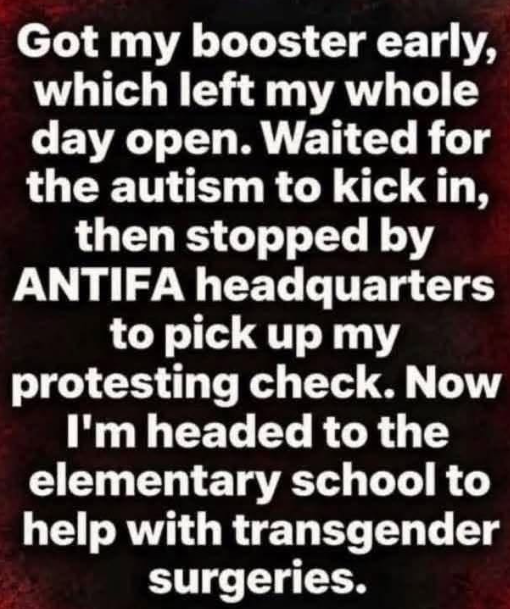 Someone commented on the meme here: “Don’t forget your jihadi prayer group meeting.”
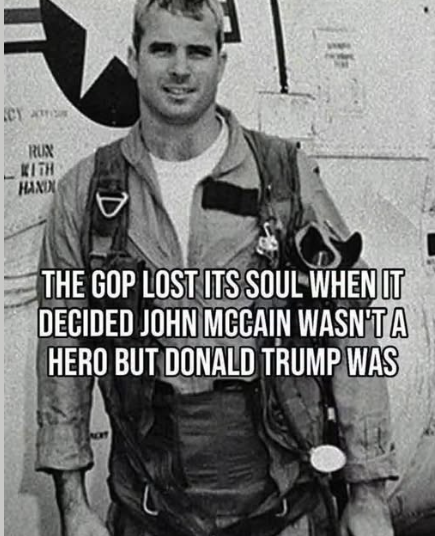 One would think that Republicans could see the stark contrast between John McCain (honest, sane, decent American hero) and Donald Trump (criminal sociopath and traitor to his country).
But alas.