

Weather Guard Lightning Tech

News Flash: Orsted Struggles with Canceled Projects and Siemens Energy Bailout Talk
In this episode of News Flash, hosts Allen Hall, Phil Totaro, and Joel Saxum discuss recent developments affecting major players in the renewable energy industry. The conversation focuses on the outlook for Danish wind energy company Ørsted after the firm canceled two major offshore wind projects in the United States, leading to credit rating downgrades. In addition, the hosts analyze the situation with German industrial giant Siemens Energy, which may require government support to backstop performance guarantees on billions of dollars worth of orders, due to issues with its wind turbine manufacturing subsidiary Siemens Gamesa. As Saxum notes, this raises the specter of Siemens Energy as a “too big to fail” company in Germany, similar to the debates over bailouts for automakers in the United States during the 2008 financial crisis. The hosts provide insight into the strategic and financial implications of these events for two renewable energy leaders.
News Flash 190
Allen Hall: I’m Allen Hall, president of Weather Guard Lightning Tech, and I’m here with the founder and CEO of Intelstor, Phil Totaro, and the chief commercial officer of Weather Guard, Joel Saxum, and this is your News Flash. News Flash is brought to you by our friends at Intelstor. If you need actionable information about renewable projects or technologies, check out Intelstor at Intelstor. com.
Credit ratings firm Fitch changed their outlook for Ørsted from stable to negative due to U. S. offshore wind project issues. And S& P put Ørsted on a credit watch negative due to loss of value and project issues. Of course, this is all revolves around Ørsted ceasing development of Ocean Wind 1 and Ocean Wind 2 off the East Coast of the United States.
Ørsted’s long term credit rating remains at triple B. Plus, but Ørsted also has an impairment charge of roughly 7 billion US dollars from those cancellations. Ocean wind one cancellation fees are somewhere in the realm of two to two and a half billion dollars. So Phil. This is a big deal for Ørsted, not just because they have to cancel these projects, but it’s having ramifications to the stability of the company.
Phil Totaro: Absolutely. And with their market cap basically cut in half one wonders if they’re, they’re saying they’re fine. But the reality is I don’t think the market thinks they’re fine. And the question is, are their customers and partners going to think they’re fine? When it comes to, any kind of commercial agreements.
So the, it. It begs two questions. Do they actually need support and are they going to go seek it from either Danish government or maybe the EU? Second is there’s been a pretty strong rumor about that maybe a company like Equinor would step up and actually make an acquisition. Given the fact that there’s still obviously value there with Ørsted, but, the reduction in their market cap actually potentially makes them more attractive at least in the near term.
There’s some stability that I think management needs to bring. One of the things, if we go back to the transcript of their recent earnings call from the other day. The leadership didn’t exactly provide they provided factual updates about, the cancellation of the projects, the impairments, the write downs, etc.
They did not necessarily provide any visibility or guidance as to their strategy. And I believe it was one of the analysts on the call representing an investment bank that actually brought that up. And it really does bear further kind of examination, where do they go from here?
And how do they plan to get there? And that’s a big kind of gaping hole at this moment from their
leadership.
Joel Saxum: Yeah, it’ll be interesting to see here in the next year or so, of the juggling of the top wind asset owners in the world by valuation, right? Used to always be Ørsted, Iberdrola, Nextera, EDPR, all these big ones up there.
So there’s going to be some shuffles.
Allen Hall: Siemens Energy’s customers may cancel orders if performance guarantees from the government, banks, and Siemens AG, now valued at 15 billion, fall through. Siemens Energy has billions of dollars in potential orders, almost 110 billion in their gas and power division that require performance bonds.
So Phil, it sounds like Siemens Energy has the cash to complete these projects, but their customers are concerned because of the Siemens Gemesa issue. That they there’s some probability they may not finish those projects. So the customers are wanting guarantees and the way those guarantees are going to occur or how the customers want them to occur is with governments and banks backing Siemens Energy with performance guarantees.
This is not unusual. But I think it’s unusual for Siemens Energy to be in this spot.
Phil Totaro: Correct. Yeah, it’s again, it’s not unusual for performance guarantees or bonds to be put in place. It’s slightly unusual in the wind sector, I have to say. And because of the kind of turmoil that Siemens Gamesis caused to Siemens Energy, there have already been discussions about selling off their Indian division of Siemens Energy or a portion of the wind energy related work in India selling that off to Siemens AG basically to bolster Siemens Energy’s balance sheet without the need to to actually go get government support.
It sounds this is still to be negotiated whether or not the customers are going to be happy with what the parent company, Siemens AG, is doing to step in and help out Siemens Energy or I should say majority holder at this point. But Siemens Energy, do they really need to go get the government support?
After the meetings that they had, earlier this past week and later last week it, it seemed like there was a a notion that they were desperate to, to get the support. Once that news became public, their stock price tumbled. And then their CEO actually had to come out and say no, we don’t actually need the government support.
But you heard even the German president come out and say how strategically important Siemens Energy was to the country. So they’re necessarily going to look at this in a too big to fail kind of a light. And, if it becomes necessary to step in and provide some kind of performance guarantees, then…
It’s almost inevitable that’s going to happen.
Joel Saxum: You know It likens to when we were looking at the too big to fail here in the states back in the down economic downturn 2008 2010 when the government provided some bailout money to basically in the form of loans to automakers. Now automakers hallmark of Ford Chevy didn’t take or GM didn’t take them. But ford and some others, in the in the country, it’s a part, it’s a, it’s like a, it’s a woven into the cloth of American, right?
Like all these jobs, all these things they supported. Now you’re talking about in the country of Germany, one of their, largest industrial companies that is a hallmark of the world energy system. Looking at too big to fail. However, now you’re talking about instead of woven into the fabric and cars and jobs, you’re looking at energy security.
And when you start talking energy security, the game changes a little bit. So I wouldn’t be surprised if some of this Support doesn’t actually make its way into Siemens Energy.
News Flash: Orsted Struggles with Canceled Projects and Siemens Energy Bailout Talk

It’s actually surprising that it took so long for Trump to favor Putin in Russia’s war with Ukraine.
Trump loves all the things that Putin stands for: brutality against dissidents, defying the law, war crimes, lies, and fascism.
If it were possible, Trump would enjoy the same absolute power that Putin has, and Kim Jong Un has in North Korea.
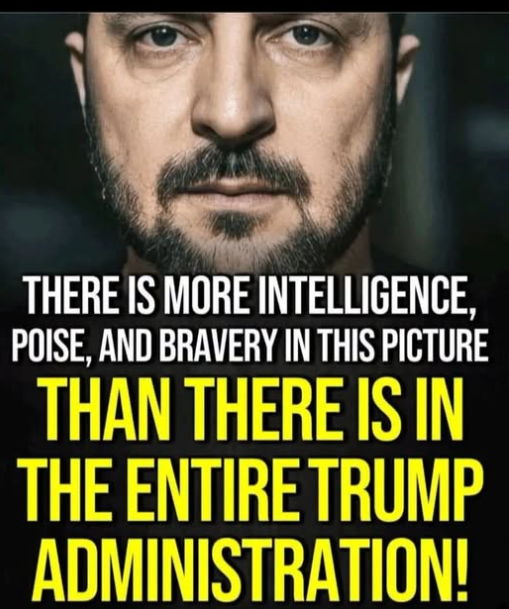 To his credit, Trump is astute when it comes to the timing of his atrocities. Had he abandoned Ukraine in favor of Putin’s Russia too early, the American people would have been outraged.
Now, after Iran, detention centers, gas prices, farm failures, killing clean energy, years of support for white nationalism, gutting U.S. education, and so forth, Trump’s backing Russia seems perfectly normal.
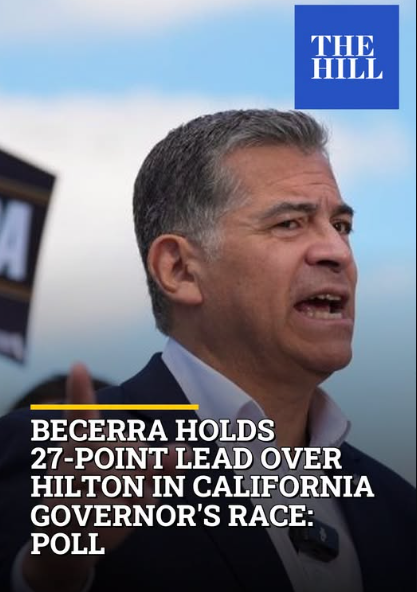 Bercerra comes with some baggage, but at least he’s not endorsed by Trump.
The bulk of California’s population lives on or near the Pacific Coast, and consists of affluent and well-educated people who want to see Trump removed, convicted, and incarcerated. Yes, the inland folks are largely farmers, but their numbers are far too small to elect a Republican in the GOP of today, with this corruption, ignorance, racism, and cruelty.


-
Climate Change1 year ago
Guest post: Why China is still building new coal – and when it might stop
-

 Greenhouse Gases2 years ago
嘉宾来稿:满足中国增长的用电需求 光伏加储能“比新建煤电更实惠”
-
Greenhouse Gases1 year ago
Guest post: Why China is still building new coal – and when it might stop
-

 Climate Change2 years ago
嘉宾来稿:满足中国增长的用电需求 光伏加储能“比新建煤电更实惠”
-

 Renewable Energy12 months ago
Sending Progressive Philanthropist George Soros to Prison?
-
Climate Change2 years ago
Bill Discounting Climate Change in Florida’s Energy Policy Awaits DeSantis’ Approval
-
Greenhouse Gases1 year ago
嘉宾来稿:探究火山喷发如何影响气候预测
-

 Climate Change2 years ago
Analysis: China’s CO2 falls 1% in Q2 2024 in first quarterly drop since Covid-19