

UN climate chief Simon Stiell has said he hopes to see fewer people attend the annual COP climate negotiations after participants at COP28 in Dubai last December hit a record high of nearly 84,000.
Stiell said this month that he personally “would certainly like to see future COPs reduce in size”, telling an audience at London’s Chatham House think-tank that “bigger doesn’t necessarily mean better”.
In Dubai, where the 2023 summit was held from November 30 to December 13, the Expo City site was so large that important delegates were ferried around on golf buggies while electric scooters were available to get around the public area, known as the Green Zone.
“Size does not necessarily translate to the quality of outcomes,” Stiell said in London, noting that the UN climate change secretariat (UNFCCC) is discussing the issue with the hosts of COP29 in Azerbaijan this year and COP30 next year in Brazil.
Last week, Climate Home reporters visited the COP29 host city of Baku, the capital of Azerbaijan – on a tour sponsored by the COP29 presidency – and also the location of COP30, the Brazilian Amazon city of Belém, to see how preparations are going for the November 2024 and 2025 gatherings.
Azerbaijan’s government is expecting just 40,000 people to come to the Baku Olympic Stadium for the talks this year, while Belém’s remoteness, congested roads and lack of hotels are likely to substantially limit how many people can attend the “Amazon COP”.

The number of people attending COPs has shot up in recent years. Close to 40,000 people went to COP26 in Glasgow, around 50,000 were in the Egyptian resort of Sharm el-Sheikh for COP27 and nearly 84,000 headed to Dubai last year. But most of the 28 COPs held since 1995 have been attended by fewer than 10,000 people.
Just over half of last year’s participants belonged to government delegations, with most of the rest comprising staff working at the conference or activists from non-governmental organisations (NGOs).
In practice, the boundaries of these categories are blurred though, as government delegations often include business representatives, NGO employees, journalists and others.

Baku’s Olympic Stadium
The government of Azerbaijan will host COP29 in the country’s Caspian seaside capital, Baku. A member of the organising committee told Climate Home they are expecting around 40,000 people.
The government has not had much time to prepare, as it was only tasked with the presidency last November at COP28 after Eastern Europe’s geopolitical divisions delayed the decision on which country would host the summit.
But it already has a venue: the Olympic Stadium on the outskirts of Baku. According to state media, COP29 chief operations officer Narmin Jarchalova said temporary structures will be built around the stadium to accommodate the negotiations and side events. These are likely to be in car-park areas.
The city is used to hosting major events. Ten thousand come each year for Formula One’s Baku Grand Prix and the 69,870-capacity Olympic Stadium has hosted the 2015 European Games, big concerts, the 2019 Europa League football final and Euro 2020 matches, although no Olympic Games despite the name.
Climate Home visited the area in April while in Baku, as part of a press trip organised by the COP29 presidency team. The stadium is connected to the city centre, where most hotels are located, by a Soviet-era metro railway with a one-way journey taking around 45 minutes.
A car journey should take about half of that, 20 minutes, but heavy traffic gridlocked the main roads in and out of Baku when Climate Home visited.

The Baku Olympic Stadium (Photo: Matteo Civillini)
Climate Home asked the COP29 team for information on how the temporary COP facilities will be built, powered and heated sustainably during the summit, but had received no response at the time of publication.
In February, Climate Home revealed that the government had told hotels in Baku not to sell rooms for COP29’s November 11-22 dates until further notice.
In London this month, UN climate chief Stiell said, with regard to the number of participants, that “we have an opportunity with Azerbaijan and we’re engaging with them”. He did not give further details.
COPs usually feature one big climate demonstration on the middle Saturday of the two-week talks. The UNFCCC is talking to the COP29 team about how this will be enabled.

Protesters march on the middle Saturday of COP26 in Glasgow, UK, in 2021 (Photos: Insure Our Future)
In a meeting at the energy ministry last week, COP29 CEO and deputy energy minister Elnur Soltanov told journalists, including Climate Home, that these discussions were “fruitful”.
Human rights groups like Freedom House say Azerbaijan does not respect freedom of assembly. Police violently arrested opposition protesters in 2019.
Soltanov was asked if the climate march will be allowed to take place in the city, which is governed by Azerbaijan’s police force, or only in the COP29 venue, which is under the jurisdiction of UN security guards.
He replied that “this is too specific a question” but said that protest is “part and parcel of people expressing their views, their anger, their desperation”.
Brazil’s Amazon COP
On Belém, which is in northern Brazil near the Amazon rainforest, Stiell said he was “actively discussing with the Brazilians how we can reduce the size of the COP so that the logistics of it can be supported at that hosted destination”.
Last June, Brazilian climate ministry official André Corrêa Lago told local media he was expecting 40,000-50,000 people. But there are concerns that the city will struggle to cope with those numbers.
Belém is not a major tourist destination and has less than 6,000 hotel rooms. Even at last year’s Amazon Summit – a smaller event than a COP – participants reported difficulty finding rooms and rates soared.
Construction workers are currently turning a 1.6 km-long disused airport runway into the Parque de Cidade (City Park), which will be the size of about 70 football pitches. The park and its new buildings will be the main COP30 venue.
The government of Pará State says it is almost one-third finished. The federal government, meanwhile, is reportedly considering hosting part of COP30 in bigger cities like Sao Paulo or Rio de Janeiro.
A spokesperson for the federal government told Climate Home that “all possibilities to enable the reception of delegations and visitors are being evaluated”.
As well as the park and its new buildings, some of the conference will be held in an existing conference centre on the park’s southern tip called The Hangar – which hosted last year’s Amazon Summit.

The Hangar convention centre (Photo: Alice Martins Morais)
For COP30 delegates though, finding a hotel room and getting to the venue are likely to be challenging.
A spokesperson for the COP30 organising committee said last week that while 84,000 people went to COP28, the peak daily attendance was just 41,000 at the beginning of the conference when heads of state made their speeches.

An Ibis hotel near the COP30 site (Photo: Alice Martins Morais)
The spokesperson told Climate Home the organisers are looking at bringing in cruise ships for COP participants to sleep on, refurbishing schools to serve as hostels and encouraging people to rent out their rooms on Airbnb.
To promote the “modernisation” of the city’s existing hotel rooms, the government has given hotel operators tax exemptions on purchases for new equipment like minibars, televisions and air-conditioning.
The city’s airport, which the government aims to improve before COP30, has few regular international connections and is over three hours by plane from Brazil’s major hubs like Sao Paulo and Rio de Janeiro.
There are no trains to Belém and getting the bus from Rio or Sao Paulo can take more than two days.

The Belém Bus Rapid Transit system is scheduled to be completed by COP30 (Photo: Alice Martins Morais)
Even inside the city, transport is challenging. The roads are congested, particularly in the centre where most of the hotels are, during rush-hour and when it rains.
The authorities have tried to solve the problem by widening roads and building dedicated bus lanes for a Bus Rapid Transit system.
While these are being constructed, they have made traffic worse – but the body in charge told Climate Home work is progressing according to schedule and should be completed by the second half of 2024 – well before the UN climate summit the following year.
“The new fleet will reinforce the capital’s transport system for COP30,” said a spokesperson for the Metropolitan Transport Management Centre, adding that 40 of the 265 new air-conditioned buses will be electric.
Argentinian scientists condemn budget cuts ahead of university protest
Nonetheless, the remoteness of the location is likely to translate into a bigger carbon footprint for delegates travelling from overseas.
While COPs have a sizable carbon footprint, researchers investigating misinformation have found this is often exaggerated on social and traditional media by those trying to undermine climate action.
Examples include pictures of private jets with captions falsely associating them with COP or of biofuel generators with captions erroneously claiming they are diesel.
Questioned about COPs’ carbon footprint by an audience member at London’s Chatham House, UN climate head Stiell replied that “at every COP, we get the reports – how many private planes [and] the CO2 footprint for hosting those COPs”.
But, he added, “taking a very pragmatic view, we need the right people around the table in order for this process to work and there will be a cost to that. How you ensure that those that are present are the ones necessary to contribute positively to the process is also important.”
(Reporting by Matteo Civillini in Baku, Alice Martins Morais in Belém and Joe Lo in London; videos by Fanis Kollias; editing by Joe Lo and Megan Rowling)
The post Peak COP? UN looks to shrink Baku and Belém climate summits appeared first on Climate Home News.

A report from Greenpeace Australia Pacific and Springmount Advisory reveals the untapped green economic opportunity for Western Australia in a declining Asian gas market, which also offers a genuine solution for decarbonisation in Asia.
Is Western Australia clinging to a fading gas industry while a thriving green future passes it by? As major Asian trading partners rapidly pivot away from volatile gas imports toward cheap solar and battery storage, this report exposes a high-stakes choice: risk becoming stranded in an oversupplied fossil fuel market, or harness WA’s unmatched sun and wind to lead the global clean energy transition.

Summary
From Gas to Green: Building Western Australia’s Future State reveals that Western Australia (WA) faces a critical juncture as falling Asian gas demand, geopolitical gas supply volatility and accelerating renewable energy deployment undermine the long-term economic viability of gas exports. By harnessing its world-class wind and solar resources, the report demonstrates that WA can execute an orderly phase-out of gas and pioneer a green commodity export economy that could generate $987 billion in economic value by 2060, create 24,000 ongoing jobs, and drive a 9.6% reduction in global greenhouse gas emissions.
Key Findings
- Gas demand is falling in Asia – WA can no longer rely on gas exports: Gas demand in core Asian markets fell in 2025 and is projected to continue to decline in 2026. Legislated energy plans in Japan, South Korea, and China now prioritise renewables and nuclear over gas.
- Asia is increasing renewables, importing gas just gets in the way: Evidence from markets like Thailand suggests that gas imports are increasingly crowding out cheaper renewable energy investments and battery storage rather than displacing coal, locking in more emissions over time.
- Green commodities offer a real solution to decarbonise Asia – this is a major win for WA: With world-class renewables, WA can lead Australia’s green commodity exports, which by 2060 could be worth almost a trillion dollars ($987 billion) and support a genuine 9.6% reduction in global emissions.
Recommendations to WA government
Recommendation 1: Plan an orderly gas phase-out aligned with a trading partner pivot plan
Implement a managed, orderly phase-out of gas exports aligned with trading partners’ decarbonisation pathways, rather than waiting for demand to collapse, by:
- Developing and implementing a staged phase-out of gas facilities aligned with feedstock supply expiry or typical end of facility lifespans.
- Committing to no new gas development for gas expansion, including Browse and Kimberley fields.
- Developing new, reciprocal trade relationships with existing gas trade partners, structured to progressively replace gas exports with green commodities – integrated with recommendation 2.
Recommendation 2: Develop an integrated green commodity export strategy, positioning WA as a global green iron manufacturing hub
Establish an integrated green commodity export strategy that immediately prioritises green iron development, positioning WA as a global green iron manufacturing hub, by:
- Committing to green commodity export targets to give industry and investors a clear demand signal.
- Prioritising green iron as the lead sector within the broader green commodity strategy, given WA’s iron ore endowment and first-mover potential.
Recommendation 3: Reject false solutions such as carbon dumping (CCS) and blue hydrogen
Reject carbon dumping (also described as carbon capture and storage, or CCS) and blue hydrogen as viable decarbonisation technologies, and prioritise green hydrogen and proven renewables for clean energy and fuel production by:
- Excluding blue hydrogen projects (and CCS-dependent projects) from all government support programs.
- Requiring existing hydrogen-based production (including ammonia, methanol, synthetic fuels) to have clear, near-term transition timelines to switch to green hydrogen production.

What you can do
Together, we can push for a prosperous green future.
You can help by:
- Sending an email to Environment Minister Murray Watt and Prime Minister Anthony Albanese, calling on them to reject Browse.
- Sharing this story to help more Australians understand what’s at stake.
- Encouraging your friends and family to take action.
REPORT: “From Gas to Green” Building Western Australia’s Future State
Cleaner cooking projects in the UN carbon market will have to set aside a share of their credits to insure against the risk that the trees they save are lost to fire, drought or logging, after the market’s regulator rejected calls to exempt the sector.
The requirement is part of a new rulebook that the Paris Agreement carbon market regulator – the Article 6.4 Supervisory Body – approved last Friday for programmes that aim to cut emissions by distributing new and cleaner cookstoves in regions that still burn wood or charcoal for cooking.
These are the UN mechanism’s first rulebooks for cookstoves, one of the carbon market’s most popular credit types and also one of its most criticised for overstating climate benefits.
They consist of two methodologies: one for programmes that aim to cut greenhouse gas emissions by distributing more efficient cookstoves that burn less wood or charcoal, and a separate methodology for projects shifting households to lower-emissions cookers running on electricity or liquid petroleum gas (LPG).
Mkhuthazi Steleki, the South African chair of the Supervisory Body, said “this decision gives cleaner cooking projects a new pathway under the UN carbon market, with clear rules to ensure that each credit represents a real and credible emission reduction”.
Industry and NGOs lobby to weaken UN carbon credit rules in “coordinated” push
In copycat submissions and a private briefing to government officials, the groups have opposed a proposal to tighten safeguards for emissions offsetsLaunch of Africa Energy Bank delayed again in blow to oil and gas hopes
Repeated delays are raising questions about the bank’s momentum and whether it can mobilise investment to finance Africa’s oil and gas ambitions in an era of energy transition

Exemption push rejected
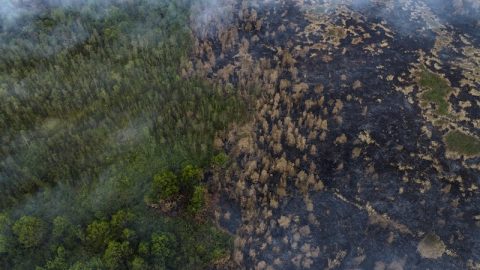
More efficient cookstove projects earn credits based on the amount of carbon they save by preserving trees that would have otherwise been cut down and burned for fuel. But if those trees later burn in a wildfire or are logged, the carbon stored would be released anyway, erasing the climate benefits of the credits.
Several carbon credit developers, conservation NGOs and the UN Environment Programme (UNEP) disputed that cookstove projects face this risk, in what critics described as a “coordinated lobbying campaign”.
They argued that, unlike forest protection schemes, this type of credit represents a “flow” of avoided emissions rather than a “stock” of stored carbon that can be released. They also warned that requiring a buffer would impose disproportionate costs and undermine the financial viability of these activities.
But the UN carbon market regulator was not persuaded by the argument. It decided that projects would have to protect against this reversal risk by handing over a percentage of credits to a so-called “buffer pool” instead of selling them.
‘New paradigm’
The amount of credits to be given up is calculated by applying different methods for natural risks, like wildfires, droughts or hurricanes, and human-caused ones, such as logging or land clearing.
For natural risks, project developers will need to apply local risk values derived from new modelling published by a group of independent scientists.
Campaigners have broadly welcomed the decision. Federica Dossi, an expert at Brussels-based advocacy group Carbon Market Watch, said it sets a new paradigm for calculating reversal risk based on empirical data. “This approach is grounded in science and we hope to see this now being adopted by other carbon crediting mechanisms in the voluntary market,” she added.
Backers claim this method is more rigorous than current practice in the voluntary carbon market, which largely relies on expert guesswork.
Pre-COP draws attention to Pacific’s climate plight and 1.5C goal
Pushback over science
As Climate Home News previously revealed, the same industry and NGO groups that sought an exemption from the “buffer pool”, along with some corporate buyers, criticised the use of a study backed by the UN carbon market’s experts that recommended the new risk assessment approach.
The groups pushed for more flexible rules that would hav