
Chinese electric vehicle maker BYD has accumulated around 6.2 million carbon credits under Australia’s New Vehicle Efficiency Standard (NVES) scheme. This comes from its strong performance in low-emission vehicle production and sales in the country.
The credits reward manufacturers that make and import vehicles with low greenhouse gas emissions. BYD’s haul reflects the company’s large supply of electric vehicles (EVs) that meet or exceed strict emissions benchmarks.
These credits can be sold to other manufacturers that fall short of efficiency targets. They help other car makers comply with regulatory requirements, which can be costly to miss.
BYD’s strong carbon credit position highlights its quick growth in EV markets. This shows the importance of leading in clean vehicles, especially with carbon pricing and regulations.
How Australia’s NVES Turns Emissions Into Tradable Credits
Australia’s New Vehicle Efficiency Standard aims to cut vehicle emissions over time. It sets yearly targets for average CO₂ emissions of new light vehicle fleets sold in the country.
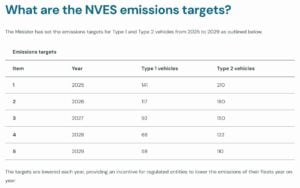
Manufacturers that sell more low-emission vehicles than required earn credits. Those that sell fewer low-emission vehicles can buy credits to balance their performance.
BYD benefited because its vehicles, especially EVs, have very low tailpipe emissions. Each EV imported or sold that performs better than the standard adds credits to BYD’s account. On the other hand, makers of heavier or higher-emission vehicles might face penalties. They may also need to buy carbon credits to comply.
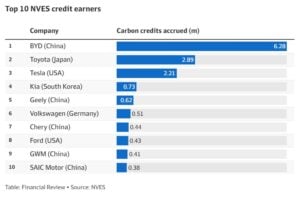
This system creates a market for credits linked to carbon intensity. It rewards companies that adopt clean tech quickly and penalises those that lag. The 6.2 million-credit total shows BYD’s scale in clean vehicle supply under this compliance scheme.
Why BYD Leads in Carbon Credit Generation
BYD’s strong position in carbon credits reflects its dominance in EV production and global sales trends. Per the NVES data, the Chinese EV maker tops the list of companies earning carbon credits under the scheme.
BYD is now the biggest EV maker globally, beating Tesla in 2025. It has been selling millions of electric cars each year since 2023. The company is also growing in markets like Europe, Latin America, Southeast Asia, and Australia.

This scale makes BYD well-placed to earn credits when regulations reward low-emission vehicles. Other carmakers that depend on internal combustion engine (ICE) vehicles might find it hard to earn similar credits for efficiency or emissions programs.
In some regions — including Europe — BYD is even in talks to supply surplus carbon credits to traditional automakers. The aim is to help those automakers avoid fines under strict EU emissions rules by 2025.
These talks could expand BYD’s reach in carbon credit markets. They might go beyond Australia and into global regulatory frameworks.
From Regulation to Revenue: Carbon Credits as Strategic Assets
Carbon credits have become more important in the auto industry as regulators tighten emissions limits.
Under schemes like Australia’s NVES and the European Union’s emissions regulations, credits act as compliance instruments. They can reduce the cost of meeting regulatory targets for manufacturers.
For example, European automakers can form carbon credit pools. Carbon credit pooling, where companies share or trade surplus credits, is emerging as a compliance method. These pools allow companies that fall short of targets to buy credits from low-emission peers such as BYD or Tesla.
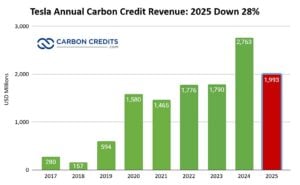
Tesla has also earned significant revenue from selling regulatory or carbon credits to other automakers. In 2025, the company generated almost $2 billion in total carbon credits from these sales, even as volumes shifted during the year. They are an important, though changing, revenue source for Tesla.
The pooling helps firms avoid large fines for missing emissions caps. In 2025, EU penalties for vehicles that exceed CO₂ limits could run into billions of dollars if automakers do not comply.
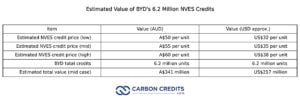
Under Australia’s NVES, credits are generated when a manufacturer’s fleet emissions fall below annual targets. While there is no fixed public trading price yet, industry modelling links the credit value closely to the penalty rate of A$100 per g CO₂/km per vehicle, per the NVES Act 2024.
Analysts estimate real trading values may range around A$50–A$60 per unit, or roughly US$32–US$38 at current exchange rates. Using a mid-range estimate of US$35 per credit, BYD’s 6.2 million credits could represent around US$217 million in potential compliance value.
For BYD, credit generation becomes an asset as well as a compliance indicator. It can potentially sell surplus credits to others and strengthen relationships across global auto markets.
This shift reflects a broader trend. More countries are now tying vehicle emissions to tradable credits. This helps boost EV adoption and cut transport emissions.
Policy Pressure Accelerates the EV Shift
Transport is a major source of global greenhouse gas emissions. Light-duty vehicles alone account for a large share of road transport emissions worldwide. Thus, many governments are tightening emissions standards. These include late-decade targets for EV sales and fleet emissions averages.
The European Union wants carmakers to cut average CO₂ emissions a lot by 2025. They aim for zero-emission sales by 2035.
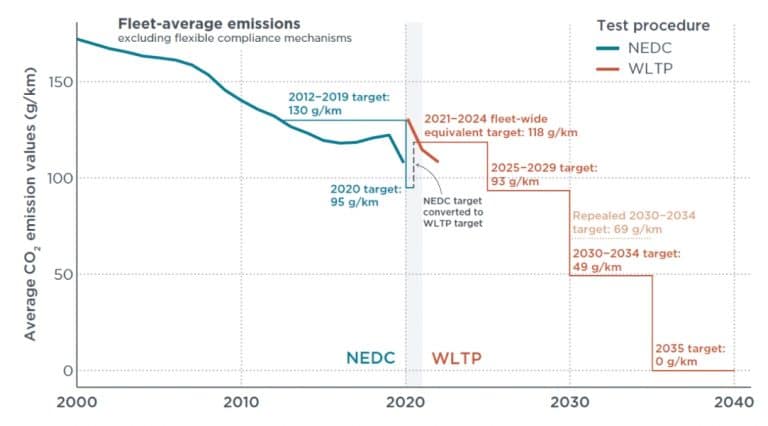
In Asia, BYD is also pushing EV adoption hard, often outpacing legacy brands in unit sales. Its production volume helps it to be a major source of low-emission vehicles.
Australia’s NVES scheme reflects similar intentions. It seeks to shift the vehicle fleet toward cleaner technology by rewarding low emissions and penalizing high emissions. The 6.2 million credits that BYD amassed show the scale of emissions improvement achievable when a market leader focuses on EV supply.
Legacy Automakers Face a Compliance Squeeze
Traditional or legacy automakers face increasing pressure from efficiency and emissions regulations. Automakers that still sell many ICE vehicles often fall short of targets. This forces them to purchase carbon credits or pay penalties.
Both options can incur high costs. For example, if automakers don’t meet the 2025 emissions targets set by the EU, they could face fines up to $15.6 billion.
BYD’s possible participation in carbon credit pools could be significant for global emissions markets. These structures help companies with low EV production get credits from top EV sellers. The business and compliance value of credits thus goes beyond one scheme or country.
Beyond Sales: BYD’s Long-Term Climate Commitments
BYD’s strong carbon credit position supports its broader sustainability strategy. The company aims to reduce its carbon footprint and align with global climate goals.
The EV maker has committed to achieving carbon neutrality across its value chain by 2045, guided by China’s national dual-carbon goals. It also aims to cut the carbon intensity of its own operations by 50% by 2030 compared with a 2023 base year.
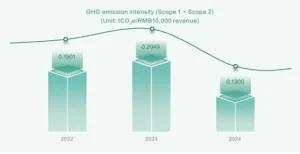
BYD’s sustainability work spans beyond EV sales. It invests in battery technology, solar power solutions, and recycling efforts that support circular energy systems.
Each EV model is designed to support long life and high safety. These models, including those using BYD’s proprietary Blade Battery technology, also enable recycling and reuse.
These efforts reinforce BYD’s positioning not just as an EV maker but as a broader participant in low-carbon technology markets.
A Glimpse of the Auto Industry’s Carbon-Driven Future
BYD’s 6.2 million carbon credits show how regulatory incentives can amplify low-emission technology adoption. They provide a compliance advantage for BYD and a potential revenue stream if credits are sold or pooled.
Credit generation also signals strong EV market performance tied to emissions rules. BYD shows that as carbon pricing and efficiency standards grow, top EV makers can gain both environmentally and financially.
For traditional carmakers, the rise of tradable carbon credits tied to vehicle efficiency will likely remain a key part of emissions compliance strategies.
As global climate policies tighten, carbon credits may increasingly bridge technology gaps and help accelerate the transition to zero-emission mobility.
The post BYD Banks 6.2M Carbon Credits Potentially Worth US$217M Under Australia’s EV Efficiency Scheme appeared first on Carbon Credits.
Carbon Footprint
NASCAR’s Biofuel Revolution: How America’s Biggest Motorsport Is Hitting Full Throttle on Net Zero
For decades, the National Association for Stock Car Auto Racing, aka NASCAR, stood for roaring engines, speed, and fierce competition. The sport, headquartered in Daytona Beach, Florida, built its reputation on powerful combustion engines and high-energy racing events across the United States.
However, the organization has recently shifted gears. Today, NASCAR is embracing sustainability and cleaner technology while still protecting the thrill of racing. The sport is working toward a bold target: net-zero operating emissions by 2035.
This goal forms the backbone of the NASCAR IMPACT strategy. The plan looks at emissions across the sport’s core activities—from race cars and racetrack facilities to large racing events. Instead of relying on a single solution, NASCAR is using multiple approaches, such as renewable energy, cleaner fuels, and improved waste management.
In short, the future of stock-car racing is becoming cleaner without losing its competitive edge.
NASCAR’s Net-Zero Mission
Back in 2023, NASCAR announced its commitment to reach net-zero carbon emissions from its operations by 2035. In simple terms, the goal focuses on the fuel and electricity used at NASCAR-owned racetracks and offices.
To make this happen, the organization plans to reduce overall energy consumption while increasing the share of renewable power used across its operations.
The strategy focuses on three main areas:
- Race cars
- Racing events
- Facilities and offices
Each of these areas produces emissions in different ways. For example, race cars consume fuel, while events require power generators and logistics fleets. Meanwhile, offices and racetracks use electricity, heating, and cooling systems. Therefore, NASCAR’s climate strategy combines efficiency improvements with cleaner energy solutions.
Here’s a snapshot of the motosport company’s 2024 electricity consumption and emisions profile:

Electric Innovation Hits the Track
One of the biggest steps toward cleaner racing arrived in July 2024. Through the ABB NASCAR Electrification Partnership, the sport introduced its first electric race car prototype.
The ABB NASCAR EV Prototype represents a new chapter in motorsports technology. Engineers from NASCAR built the vehicle with support from three major automakers, i.e., Chevrolet, Ford Motor Company, and Toyota.
The project shows how the racing world can experiment with emerging technologies. NASCAR does not plan to replace traditional engines overnight. Instead, the electric prototype works as a testing ground for future performance innovations.
Motorsports has always pushed automotive technology forward. Now, sustainability is becoming part of that engineering race.
A Major Biofuel Partnership with POET Changes the Game
Another major development came through NASCAR’s partnership with POET LLC, the world’s largest biofuel producer. The agreement named POET as the Official Bioethanol Partner of NASCAR. More importantly, the collaboration introduces zero-carbon bioethanol into the sport’s fuel mix.
NASCAR will blend this bioethanol with fuel supplied by its long-time partner Sunoco. As a result, the racing series will become the first major motorsport to use zero-carbon bioethanol fuel.
- This change highlights a key idea behind NASCAR’s sustainability strategy: improving performance while cutting emissions.

Bioethanol already offers several advantages. It burns cleaner than conventional gasoline and produces lower carbon intensity. At the same time, it maintains the high-octane performance required for competitive racing.
For drivers and teams, fuel keeps engines running at full power. For the environment, it reduces pollution.
The partnership also brings strong visibility for the biofuel industry. Beginning this season, POET sponsors the “POET Restart Zone” at NASCAR-owned tracks—one of the most intense moments during races when cars restart after caution periods.
In addition, POET branding now appears on all NASCAR fuel cans alongside Sunoco. This move reinforces the growing role of renewable fuels in motorsports.
Cleaner Fuels for the Next Generation of Race Cars
NASCAR’s national racing series already uses Sunoco Green E15, a high-performance unleaded fuel blend. The fuel contains 15% bioethanol and 85% gasoline.
During the 2024 racing season, NASCAR consumed over 261,000 gallons of Sunoco Green E15 across its three national racing series.
While combustion engines will remain part of NASCAR’s identity, the organization plans to keep improving fuel technology over the next decade. And cleaner fuels are a practical step. They allow the sport to reduce emissions without requiring major changes to vehicle design.

Renewable Diesel in NASCAR’s Hauler Fleet
Behind every NASCAR race lies a massive logistics operation. The sport’s equipment travels thousands of miles each season in heavy transport trucks.
In 2024, NASCAR’s fleet of 17 Mack diesel haulers traveled more than 805,000 miles—roughly the distance of going to the moon and back.
Significantly, the company started testing renewable diesel fuel from wood residues, agricultural waste, and used cooking oil to reduce emissions from transportation
The fuel works in existing engines without modifications. That makes it a convenient way to cut emissions immediately while longer-term solutions develop. It also burns cleaner than traditional diesel, which helps lower the environmental footprint of NASCAR’s logistics operations.
Powering Racetracks with Renewable Energy Credits
Beyond vehicles and events, NASCAR is also transforming the energy used at its facilities.
- In 2023, the organization committed to powering all of its facilities with 100% renewable electricity for the next five years. To achieve this, NASCAR partnered with NextEra Energy.
- The company purchased Green-e Certified Renewable Energy Credits (RECs) from wind farms across the United States. These credits ensure that an equivalent amount of renewable electricity enters the national power grid. By buying these credits, NASCAR offsets the electricity used at its racetracks and offices.
However, the organization does not plan to rely on credits forever. In the long run, NASCAR hopes to install solar panels directly at its facilities, producing clean electricity on site and strengthening local renewable energy supply.
Reducing Energy Demand at Facilities
Using renewable power is important. But reducing overall energy demand matters just as much.
NASCAR has begun implementing energy-efficiency programs across its buildings and racetracks. These measures focus on cutting electricity consumption while lowering operating costs.

Another key area involves fugitive emissions. These are small gas leaks from equipment such as air conditioners and refrigeration systems. Although they may seem minor, some of these gases can be powerful greenhouse pollutants.
Therefore, NASCAR closely monitors these systems and works to prevent leaks whenever possible.
Cutting Emissions at Racing Events
Large racing events require significant energy. Power generators, logistics fleets, and track equipment all contribute to emissions.
Therefore, NASCAR has started analyzing energy use across its race operations. Data collection helps the organization understand where emissions are highest and where improvements can deliver the biggest impact.
One example involves track dryers. After heavy rain, NASCAR uses specialized machines to dry racetracks quickly so races can continue. Previously, these machines used jet fuel. However, NASCAR recently introduced the first propane-powered track dryer with help from partner Suburban Propane.
- The change is expected to reduce emissions from these dryers by about 58%. It may seem like a small improvement, but these incremental changes add up over time.
Another example comes from the Chicago Street Race. By redesigning the layout of temporary power units, the event operations team managed to run multiple areas using a single hybrid generator.
- As a result, the race reduced fuel consumption by more than 27% compared with the previous year.

Recycling and Waste Reduction Across the Sport
Sustainability efforts at NASCAR extend beyond energy and fuel. Waste management has become another major focus.
The organization now operates expanded recycling programs across its tracks and offices. These programs target a wide range of materials, including aluminum cans, plastic bottles, used racing tires, and motor oil.
NASCAR also partners with waste-management companies to divert materials from landfills and promote circular economy practices.
Even fans play a role. During race weekends, it encourages spectators to recycle and dispose of waste responsibly. These engagement campaigns help reduce the environmental footprint of large racing events.
The Future of Sustainable Motorsports
NASCAR remains one of the most recognizable motorsports organizations in the world. Traditionally, the sport has focused on stock-car racing events across the Southeast and Midwest United States.
Yet today, NASCAR is also becoming a testing ground for sustainability innovation. From electric prototypes and renewable fuels to cleaner logistics and renewable energy systems, the organization is experimenting with multiple solutions at once.
Importantly, these efforts prove that high performance and environmental responsibility can coexist. Motorsports has always pushed the limits of engineering. Now, the industry is beginning to push the limits of sustainability as well.
The post NASCAR’s Biofuel Revolution: How America’s Biggest Motorsport Is Hitting Full Throttle on Net Zero appeared first on Carbon Credits.
Carbon Footprint
South Korea Mandates ISSB-Aligned Climate Reporting by 2028 for Corporate Giants
South Korea plans to require large companies to publish mandatory sustainability reports starting in 2028. The rule will apply first to major firms listed on the country’s main stock exchange.
Starting in 2028, KOSPI (the largest South Korean stocks) companies with at least 30 trillion won (around $22 billion) in assets will need to reveal their environmental, social, and governance (ESG) practices.
South Korea’s Sustainability Reporting Era Begins
The reporting requirement will expand in 2029 to companies with 10 trillion won or more in assets. The first phase will focus on about 58 of South Korea‘s largest listed companies. This is based on estimates from the Financial Services Commission (FSC).
Companies must publish clear details on climate risks, emissions, governance, and sustainability strategies. These disclosures will cover greenhouse gas emissions, climate financial risks, and plans to achieve climate goals.
The government says the policy will improve transparency for investors and strengthen confidence in Korea’s financial markets. It will also help the country align with global ESG reporting standards that investors increasingly expect.
South Korea has big industrial companies operating in electronics, cars, steel, and shipbuilding. These industries play a major role in global supply chains. Clear sustainability reporting could help these companies maintain access to international capital and markets.
A Gradual Rollout to Ease Corporate Burden
In 2026, South Korea’s Financial Services Commission released a roadmap for ESG disclosure. The policy forms part of the government’s broader strategy to support the country’s green transition.

Officials decided on a phased rollout to give companies enough time to prepare. Key elements of the plan include:
- Mandatory ESG reporting for large KOSPI companies starting in 2028.
- Expansion to additional companies in 2029.
- Full adoption of supply-chain emissions reporting by 2031.
Companies will receive a three-year grace period before they must disclose Scope 3 emissions. These emissions include indirect emissions across a company’s value chain. These can come from suppliers, transportation, product use, and waste.
For many firms, Scope 3 emissions represent the largest share of total emissions. The Carbon Disclosure Project (CDP) states that Scope 3 emissions can be over 11 times greater than direct operational emissions for many companies.
Regulators gave companies more time to create systems for measuring these emissions due to the complexity involved.
Initially, the rules will operate through stock exchange disclosure requirements. Over time, the government plans to convert them into formal legal reporting obligations.
How Climate Finance Powers Korea’s Green Shift
The new reporting framework supports South Korea’s broader climate policy and energy transition. The government aims to raise about 790 trillion won (around $590 billion) by 2032.
The funding will support climate-related investments and help industries modernize and reduce emissions. Priority sectors include renewable energy, hydrogen technologies, green infrastructure, low-carbon manufacturing, and energy efficiency upgrades.
Heavy industries are a key focus of these efforts. South Korea is a top producer of steel, petrochemicals, and semiconductors, which need a lot of energy. The country generates 33% of its electricity from coal, per International Energy Agency data.

The IEA says South Korea was one of the top ten energy consumers in 2024. Industry made up a large part of the electricity demand. The government will introduce transition finance frameworks. These will help high-emission industries get funding for cleaner technologies.

South Korea has pledged to reach carbon neutrality by 2050. The country also aims to reduce greenhouse gas emissions 40% below 2018 levels by 2030 under its updated climate plan. Stronger ESG reporting will help investors measure corporate progress toward these goals.

Why Mandatory ESG Reporting Is Going Global
South Korea’s policy reflects a global shift toward mandatory sustainability reporting. Governments and regulators increasingly require companies to disclose climate risks and emissions data. These rules show how climate change and energy policies can impact businesses.
The EU’s Corporate Sustainability Reporting Directive (CSRD) is a major reporting framework. The rule will eventually apply to around 50,000 companies operating in Europe, according to the European Commission.
Global standards are also emerging. The International Sustainability Standards Board (ISSB) released two key disclosure standards in 2023:
- IFRS S1, covering general sustainability disclosures
- IFRS S2, covering climate-related disclosures
More than 20 jurisdictions representing over half of global GDP have announced plans to adopt or align with ISSB standards. South Korea’s reporting framework follows these international guidelines.
The country set up the Korea Sustainability Standards Board (KSSB). Its job is to create national reporting standards that match the ISSB framework.
Companies will be required to disclose:
- climate risks and opportunities,
- governance structures for sustainability oversight,
- emissions data and reduction targets, and
- strategy and risk management practices.
This alignment helps investors compare companies across different markets using similar data.
Korean Corporations Step Up Sustainability Disclosures
Corporate sustainability reporting has already expanded in South Korea. By 2024, about 203 Korean companies will publish voluntary sustainability reports. This comes from ESG research groups that track disclosure trends.
Large Korean firms have increasingly adopted global reporting frameworks such as:
- Task Force on Climate-related Financial Disclosures (TCFD)
- Global Reporting Initiative (GRI)
- Sustainability Accounting Standards Board (SASB)
However, many companies asked regulators to delay mandatory reporting requirements. Businesses said they need more time to create reliable emissions measurement systems and reporting processes.
The government responded by pushing the start date to 2028. The extra time helps companies create internal ESG management systems and enhance data collection. Financial institutions strongly support stronger sustainability disclosure.
Investors increasingly use ESG data when evaluating risk and long-term performance. According to the Global Sustainable Investment Alliance, sustainable investment assets reached over $30 trillion globally in recent years. Analysts forecast it to reach $40 trillion by 2030.

Transparent ESG reporting helps companies attract capital from these investors. It also helps banks and asset managers assess climate risks across their portfolios.
The Future of ESG Disclosure in Asia
South Korea’s new rules could influence ESG reporting across Asia. Several financial centers in the region are strengthening climate reporting policies.
For instance, Japan plans to expand sustainability disclosure rules for major companies beginning around 2027. The country now requires climate risk disclosures for companies on its Prime Market. These disclosures must follow the TCFD framework.
Singapore and Hong Kong are both starting mandatory climate reporting that will follow ISSB standards. China is also expanding its climate disclosure rules to other major sectors.
- SEE MORE: China Expands Carbon Reporting to Airlines and Heavy Industry in Major Climate Disclosure Shift
These developments reflect growing pressure from global investors. Many asset managers now need detailed climate data from companies. They use this information before deciding on investments.
Consistent reporting frameworks also help multinational companies operate across multiple markets. Large corporations often face different disclosure rules in different countries. Aligning with global standards can reduce compliance costs and improve transparency.
As more countries adopt ESG reporting rules, sustainability reporting may become as common as financial reporting.
Transparency as the New Standard in Global Markets
South Korea’s plan to introduce mandatory sustainability reporting in 2028 marks a major step in the country’s climate and financial policy. The phased rollout will start with the largest listed companies and later expand to more firms. Companies will need to disclose detailed data on emissions, climate risks, and sustainability strategies.
The policy aims to improve transparency for investors and align South Korea with global ESG reporting standards. As sustainability disclosure becomes more common worldwide, companies with strong climate strategies and clear reporting systems may gain an advantage in global capital markets.
The post South Korea Mandates ISSB-Aligned Climate Reporting by 2028 for Corporate Giants appeared first on Carbon Credits.
Carbon Footprint
CATL’s Profit Surges 42% With Global Battery Demand and the Shift to a Zero-Carbon Future
The post CATL’s Profit Surges 42% With Global Battery Demand and the Shift to a Zero-Carbon Future appeared first on Carbon Credits.
-
Greenhouse Gases7 months ago
Guest post: Why China is still building new coal – and when it might stop
-
Climate Change7 months ago
Guest post: Why China is still building new coal – and when it might stop
-
Greenhouse Gases2 years ago嘉宾来稿:满足中国增长的用电需求 光伏加储能“比新建煤电更实惠”
-

Climate Change2 years ago
Bill Discounting Climate Change in Florida’s Energy Policy Awaits DeSantis’ Approval
-
Climate Change2 years ago
Spanish-language misinformation on renewable energy spreads online, report shows
-
Climate Change2 years ago嘉宾来稿:满足中国增长的用电需求 光伏加储能“比新建煤电更实惠”
-
Climate Change Videos2 years ago
The toxic gas flares fuelling Nigeria’s climate change – BBC News
-
Carbon Footprint2 years agoUS SEC’s Climate Disclosure Rules Spur Renewed Interest in Carbon Credits


