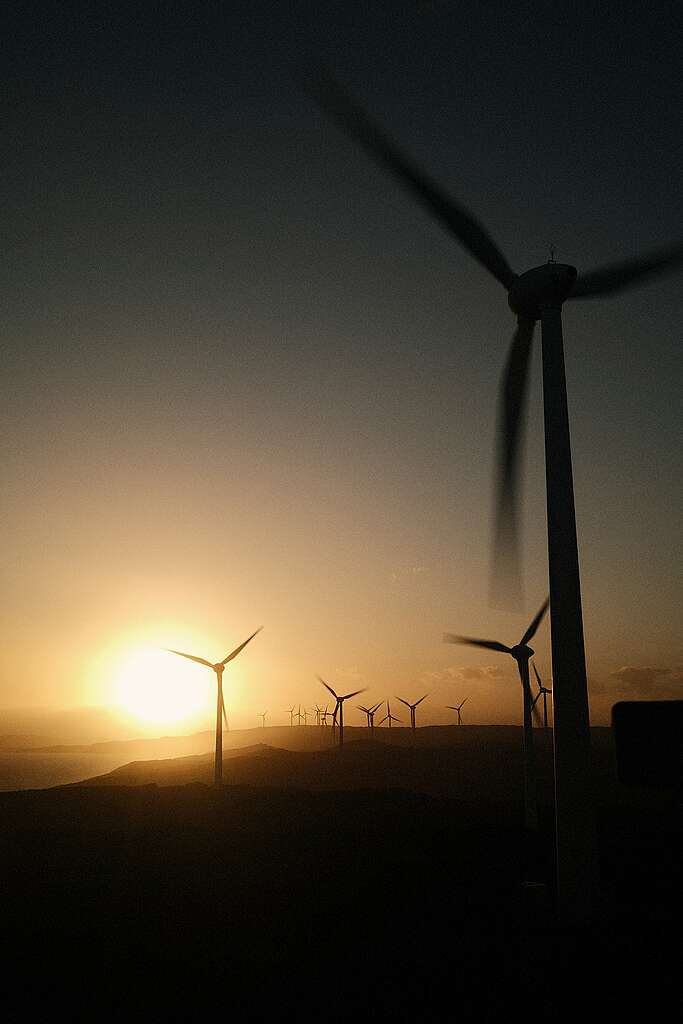
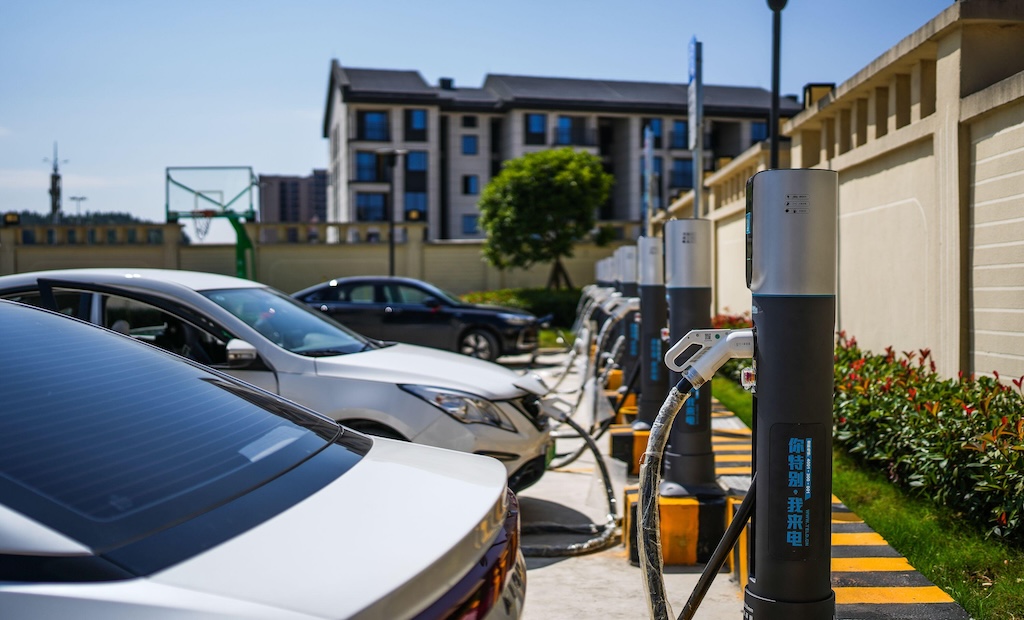
漫步在有着中国“新能源汽车第一城”之称的深圳街头,你不会错过停放在路边的大量新能源汽车,以及宣传“绿色低碳”生活方式的标语。
深圳是一座紧邻香港的城市,有着1800万人口。这座城市因40多年前成为中国的改革开放试验田而闻名。
如今,它在碳减排方面也走在前列,是中国“低碳城市”建设的“试点”地区之一。
深圳是中国首个将公交车、出租车和网约车全部实现电气化的城市。2024年,深圳新车销量中有约77%为新能源汽车,远高于48%的全国平均水平。
深圳还率先设立了碳排放总量控制机制,推动“能耗双控”向“碳排放双控”转型——这比全国层面出台碳排放总量控制政策更早。

此外,深圳的地方性碳排放权交易市场(ETS)和“绿色债券”也都早于国家层面推出。
尽管深圳在碳减排领域很早就采取了措施,但一些专家对Carbon Brief表示,深圳的政策——这被当地政府称为“深圳模式”——很难在中国其他进行低碳转型的城市复制。
Carbon Brief回顾了深圳在低碳转型方面迄今为止所做的努力,并评估了其减排成效。
电动交通
官方智库中国(深圳)综合开发研究院财税贸易与产业发展研究中心主任韦福雷对Carbon Brief表示,深圳的低碳转型并非一蹴而就,而是建立在早期规划、政府支持和市场驱动相结合的基础上。
深圳的低碳转型始于21世纪初,当时该市的空气重污染天数达到峰值。
BBC新闻2017年的一篇报道称,经过十年的污染治理,深圳的空气污染程度“下降了近一半”。
报道称,这一成果很大程度上源于其“产业基础”的改变,也使深圳成为全国首批“低碳城市”之一。
这一时期,当地官员们制定了“低碳发展”战略,其中包括培育一批“战略性新兴产业”,如“信息通信技术”。这些产业后来为深圳包括新能源汽车行业在内的低碳行业提供了核心技术支持。
例如,目前全球领先的电动汽车巨头比亚迪,正是在这样的背景下诞生于深圳的。
韦福雷指出:“有了这种‘产业基因’,深圳只需把产业链重新梳理一遍,,就能快速满足新能源汽车行业(在2020年代)的新需求。”
尽管人口仅占全国约1%,但2025年深圳地方“两会”上的政府工作报告显示,该市在2024年的新能源汽车产量占到全国的22%。
报告同时称,深圳将在未来一年启动大约100个“气候投融资项目”,计划新增“绿色贷款”约1800亿元人民币(约合240亿美元)。
能源与清洁空气研究中心(CREA)分析师和中国团队负责人沈昕一对Carbon Brief说,深圳地方政府在扶持新兴产业方面经验丰富。
她说:“20年前,风电、太阳能发电,以及电动汽车,都还是需要大量投资和技术研发的新兴行业……当时的失败风险很高,但深圳市政府敢于推出很多创新政策加以扶持。”
新能源汽车企业的迅猛发展带动本地市场中新能源汽车占比持续上升。除了国家层面的补贴,地方政府也在生产和消费两端给予有力支持。
2024年,深圳销售的新车中约77%为新能源汽车,远高于48%的全国平均水平。
此外,深圳还率先实现了本市公交车、出租车和网约车全部电气化,是中国首个做到这一点的城市。
伦敦大学学院(UCL)可持续基建、经济与金融学讲师郑赫然向Carbon Brief指出,“更环保的交通车队”加快了深圳的低碳转型步伐,因为一座城市的低碳转型主要依赖两个关键方面——“交通转型”和“产业脱碳”。
他说:“一个城市在碳减排上的政策工具其实有限,但它可以推动更绿色的交通。比如,伦敦设立了超低排放区,鼓励人们使用公共交通和更清洁的车辆。城市也可以推动产业升级和减排,但这更难做到,因为很少有城市愿意放慢经济增长的步伐。”
郑赫然表示,深圳“与中国一些煤矿城市不同”,在产业转型方面具有“优势”,这使其可以设定“更具雄心”的排放目标。
碳控机制
中国将能源强度和碳强度(即单位国内生产总值GDP的能源使用量和排放量)作为其气候政策的关键指标。
此外,自2016年以来,中国一直实行“能耗双控”机制,即同时控制能源消费强度和能源消费总量。但中国政府已经宣布将在2024年起转向“碳排放双控”机制。
新机制将对二氧化碳排放总量设定约束性上限,并将成为2030年后的主要目标,而2030年前的主要指标——碳强度——将逐渐成为次要目标。
在这一领域,深圳依然是先行者。据“对话地球”(Dialogue Earth)报道,早在2023年,深圳就已成为中国首个明确承诺实行“(碳排放)双控机制”的城市。
为此,深圳市在2023年发布了两份《实施方案》,同时设定了市级碳排放总量控制目标。
与国家层面的方案相比,深圳在进程上更具雄心,其目标是在2025年建立起市级“碳排放双控”机制,并计划于2026年至2030年“全面实施”。
其中一份方案提出:“力争到2028年实现深圳碳市场制造业基本采用碳排放双控方式开展配额分配工作……力争到2030年实现市场调节能力显著提升。”
深圳还计划到2025年底,将能源强度在2020年的基础上降低14.5%,高于同期全国13.5%的目标。
郑赫然表示,深圳的这些目标是“量力而行的”。他解释道:“(就中国整体而言)碳减排主要集中在三个领域——钢铁、水泥和电力。深圳没有大型钢铁或水泥产业,因此只需将重心放在电力领域……而且它也不属于化石燃料城市,不位于供应链上游,无需担心煤炭开采等业务。深圳的产业结构主要以‘高附加值’行业为主,比如科技和新能源汽车,这些行业的碳排放更容易削减。”
“此外,深圳是科技中心,很多高碳排企业已搬到周边城市,比如汕尾。这就是所谓的‘排放外包’,受益于此,深圳的绿色转型面临的障碍更少。”
去年,郑赫然和同事在《自然》杂志上发表了一篇有关中国城市间碳排放外包的研究,指出“一些城市从其他城市的碳减排成果中获得大于其自身的收益”,并建议政策制定者正视其影响。
他还指出,深圳与其他城市相比还有一个“巨大差异”:“深圳拥有自己的核电站”,而这对深圳实现电力转型具有“重要”意义。电力行业是深圳在当前低碳转型中需要着力的最后一环。
低碳能源
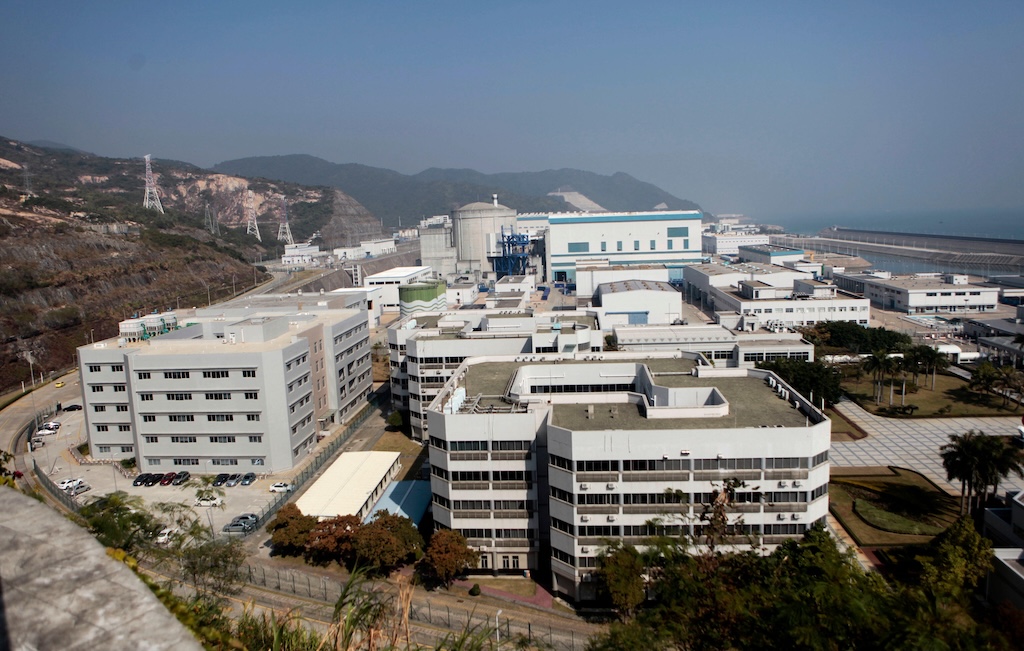
根据2021年的一份报告,大亚湾核电站是深圳“最大的本地电力来源”,总装机容量达6.1吉瓦(GW)。
2021年,核电在深圳总发电量中的占比达到35%。
这也拉高了深圳的低碳能源使用水平。2024年,深圳一次能源消费中约47%来自清洁能源。
对深圳而言,核能发电量远超其他并入城市电网的清洁能源来源。市政府在2025年工作报告中提到,当前本地太阳能发电装机容量约为1吉瓦,风电装机并未被提及。
《深圳市应对气候变化“十四五”规划》写道,由于本地能源资源匮乏,加之风电、光伏“受土地和资源限制”,可再生能源的增长空间“有限”。
与此同时,深圳对外来电力的依赖程度也非常高——约七成的用电从外部进口。
这种依赖限制了深圳对电力行业碳排放的掌控,也给本地电网在用电高峰期的调度带来压力。
2024年,中国批准在毗邻深圳的惠州建设更多核电机组。
根据2022年一份研究报告,深圳市政府计划“到2025年将天然气、核能和可再生能源在能源结构中的总占比从当前的77%提升至90%,远高于全国52%的平均水平”。
郑赫然表示,“深圳与邻近的香港非常相似,香港的能源转型也不依赖太阳能和风能的建设”。
他补充说,深圳和香港应充分发挥自身作为“金融城市”的优势,以实现可持续的能源转型。
“绿色金融”
韦福雷表示,深圳一直善于利用“市场机制”,“在政府支持与市场驱动之间”成功找到平衡。其中,企业“担任主力角色,承担了90%的工作”,政府只在必要时出手干预。
在政府干预较少的情况下,深圳早在2013年就成为全国首批建立碳排放权交易市场“试点”的七个省市之一,远早于2021年全国碳市场的上线。
和全国层面的碳市场类似,深圳的本地碳市场并不以绝对排放量为基准,而是根据企业的排放强度(即单位产值的碳排放量),为企业分配可交易的排放配额。
深圳本地的碳排放权交易市场启动时覆盖了全市约38%的碳排放量。国际碳行动伙伴组织(ICPA)在一份报告中指出,这一比例到2020年已经提升至50%,并将进一步扩大。深圳还宣布将从2027年起为碳排放设置“绝对上限”。
(目前,国家层面的碳市场也未设置排放总量上限,但这也将在未来有所改变。)
不过,咨询公司ClearBlue Markets分析师秦炎对Carbon Brief说,虽然深圳碳排放权交易市场的覆盖范围还在扩大,但许多试点地区的碳排放权交易市场正在“收缩”,因为越来越多企业选择退出地方市场,转而加入国家碳市场。
国际碳行动伙伴组织的研究也发现,自2019年深圳碳排放权交易市场“向国家市场过渡”以来,发电已不再被纳入深圳碳排放权交易市场。
尽管如此,秦炎强调,这些地方试点“仍是一个重要的试验田,为国家碳排放权交易市场的成功落地铺平道路。(它们)会继续存在,覆盖中小企业以及国家市场尚未涉及的行业”。
国际碳行动伙伴组织称,截至2022年,深圳的地方碳排放权交易市场涵盖了水利、燃气、供热、制造业和交通等多个行业。
根据《深圳商报》报道,截至2024年,深圳已拥有全国最大的地方碳排放权交易市场,年交易量连续多年居全国首位。
与此同时,深圳也在“绿色金融”领域积极布局,将私人投资引入市场。
2021年,深圳在香港发行了中国首支面向海外市场的“绿色政府债券”,并出台了中国首部地方性“绿色金融法规”。国际绿色金融研究所(International Institute of Green Finance)在一份对该立法的评估中指出,其为规范“绿色市场”提供了“坚实的制度保障”。
相比之下,中国的首支主权绿色债券自2025年4月起才向国际买家发行。
深圳还推出了多种“绿色金融”产品。据官媒《经济日报》报道,2024年上半年,沪深两地交易所内新能源、新能源汽车及其他环保相关行业公司的市值达约4.6万亿元人民币(约合6,330亿美元)。
不过,郑赫然表示,“绿色债券”的效果“很难评估”。他说:“有很多项目,比如污水处理,也可以被归入‘绿色债券’的范畴。”
据官媒中央电视台报道,深圳2021年发行的“绿色债券”涵盖了“普通公办高中建设、城市轨道交通和水治理”等项目。
郑赫然表示,这些项目虽然在一定程度上与提高能效有关,但它们对碳减排的直接影响仍“有限”。
他补充说,市场引导在一座城市的低碳转型中“不可或缺”,但“目前尚无关于绿色金融产品在减排方面能发挥多大作用的研究”。
沈昕一则指出,“金融工具”在支持低碳转型方面仍发挥着重要作用。
她说:“低碳产业的成本往往高于化石燃料相关行业……通过政策支持和金融工具,才能够规模化,成本才能够降下来。”
“深圳模式”
深圳地方政府和媒体将深圳在气候领域取得的成就誉为“深圳模式”,意在其可以被推广到其他地区。
深圳市生态环境局党组成员许化表示,在去年的联合国气候变化大会(COP29)上,这一模式“向世界展示了成果”:“一是持续完善顶层设计,坚持立法先行,构建政策体系……二是聚焦重点领域转型升级……将新能源、安全节能环保等战略性新兴产业纳入重点产业集群,培育赋能……三是坚持开放共享,探索绿色低碳发展新路径。”
许化补充说,深圳的“绿色发展水平走在全国前列”,截至2023年底,深圳的“万元GDP能耗、水耗、碳排放分别降到了全国平均水平的1/3、1/8和1/5”。
不过,沈昕一指出,深圳的发展路径并非完全“可复制”,因为“深圳抓住了时代的机遇”。
她对Carbon Brief说:“比如,深圳的产业链优势和技术工人的聚集,给其高端制造业提供了很好的基础。”
郑赫然也认同这一观点。他认为,深圳只能代表中国一种特定类型的城市。
“深圳就像中国的硅谷,在高端科技领域投入巨大。它只能代表一线城市这一(特定)类别的中国城市,比如北京、上海、广州。中国有三百多个城市,每个城市都面临着独特的转型形势。依赖煤炭的工业城市照搬深圳的做法并不现实。”
与此同时,中国的其他城市也开始探索各自的可持续发展之路。
苏州建成了中国首批低碳工业园区试点之一的苏州工业园区。当地还建立了“市场化碳普惠交易体系”,鼓励居民和中小企业“自愿”参与碳排放交易。
据新华社报道,天津也与新加坡开展合作,“探索城市绿色低碳发展路径”。
沈昕一表示,其他城市必须“因地制宜地制定策略”。这种理念也体现在国务院于2023年发布的《新时代的中国绿色发展》白皮书中。
该文件指出,地方政府要“依托资源环境禀赋和产业发展基础……充分发挥各地区比较优势。”
The post 解读:何为中国城市低碳转型的“深圳模式”? appeared first on Carbon Brief.
Climate Change
Experts: Why migration is ‘not a failure of adaptation’ in a warming world
Hundreds of scientists gathered in London this week to discuss the role of migration as a way for communities to adapt to climate change.
The impacts of a warming world, such as sea level rise and worsening extremes, are pushing many people around the world to leave their homes.
As a form of climate adaptation, a decision to migrate involves an array of different factors, such as politics, conflict and economic opportunity.
The conference unpacked these topics, as well as the impacts of climate change on livelihoods, relocation and gender norms across Africa and Asia.
The event had a strong focus on urban areas, with one co-convenor stating that “half of the world’s population now lives in the cities…A lot of the battles of climate adaptation will be won and lost in cities.”
Another co-convenor told Carbon Brief that the conference’s “focus really is on the climate change adaptation community, showing that migration is not a failure of adaptation – it is part of adaptation”.
Carbon Brief attended the conference to report on the sessions and speak to world-leading experts on climate-driven migration.
- Migration as adaptation
- Cities and livelihoods
- Immobility and relocation
- Legal pathways
- Changing narratives
Migration as adaptation
The two-day conference on “mobility in adaptation to climate change” was held at Wellcome’s headquarters in London. It gathered more than 100 leading experts in migration, adaptation and climate change from countries across Europe, Africa and Asia.
On day one of the conference, co-convenor Prof Neil Adger, a professor from the University of Exeter, told Carbon Brief:
“Our focus really is on the climate change adaptation community, showing that migration is not a failure of adaptation – it is part of adaptation.”
In his opening address, Adger highlighted that there were still many unknowns on climate migration – such as how and when it is an appropriate way to adapt to climate change, and who benefits and loses in these situations.

Dr Manuela Di Mauro – the head of climate-adaptation research at the UK Foreign Commonwealth and Development Office – took to the stage next. She told attendees that mobility has always been a part of human life, stating:
“We are all migrants. We are all part of the same history.”
She urged the scientific community to “learn the language and the political perspective” needed to support and engage with policymakers about climate-driven migration.
Conference co-convenor Dr Chandni Singh from the Indian Institute for Human Settlements (IIHS) then delivered the first in-depth talk of the conference, outlining the current state of knowledge on climate change and migration.
She explained that cross-border migration is “emotionally and economically arduous” adding “under a changing climate, people choose to move within national borders first”. (Estimates suggest that around three-quarters of total global migration is internal.)
Singh emphasised that “mobility choices are extremely complex and nuanced, based on one’s aspirations and capabilities, social norms and asset bases”. She continued:
“Some [people] are forced to move or are displaced, others are relocated preemptively to move people out of harm’s way and others choose to stay despite escalating risk – or because resilience-building measures allow people to stay.”
She stressed that people need resources to migrate, so the poorest people are often unable to move – leaving them in a state of “immobility”. However, she also noted that most people do not want to leave their homes, stressing the “visceral reality of place attachment”.
Singh explained that many families “live dual lives”, in which family members work in the city to save money for a life back in their village. This dynamic of living across two locations is often referred to as “translocality”.
For example, Singh shared the story of residents from the Indian village of Kolar, who travel more than 100km to and from Bangalore for work every day, or else live there in informal settlements.
These workers send the money they earn back home, where it is often used to dig bore wells to access water. However, Singh warned that climate change and poor water management mean these wells often fail year after year, trapping people in this cycle of travelling to Bangalore to earn more money.
Singh also stressed the prevalence of rural-to-urban migration. She cited UN estimates (that do not explicitly include climate-driven migration), which find that around 2.5 billion people are expected to migrate from rural to urban areas by 2050. It adds that 90% of the change occurring in Africa and Asia.
Singh added:
“Half of the world’s population now lives in the cities…A lot of the battles of climate adaptation will be won and lost in cities.”
She noted that although migration “helps to manage risks”, it also has “significant financial, personal and social costs”.
Singh went on to discuss the global goal on adaptation – a set of 59 indicators to measure global progress on adaptation. Singh said that “migration and mobility are completely invisible…and therefore completely overlooked” in the goals.
She concluded by discussing the importance of new narratives on climate change and migration, saying:
“It’s the narratives and stories we tell of this moment that can help us first acknowledge what is happening, help subvert misinformation and untruths, and really demand accountability.”
Cities and livelihoods
Migration from villages to cities was a central theme of the conference.
On day two of the conference, Dr Aromar Revi, founding director of the IIHS, told delegates that the “root cause of the climate emergency is maldevelopment” and emphasised the importance of pursuing adaptation, mitigation and development goals together.

He noted that the Intergovernmental Panel on Climate Change is currently working on a special report on climate change and cities and argued that “cities will play a decisive role in shaping global climate futures”.
He continued:
“Cities concentrate opportunities, but they also concentrate poverty, inequality and risk. And that’s something that we really don’t know how to understand, especially in a changing climate.”
Throughout the conference, many of the delegates presented nuanced stories of rural-to-urban migration from individual communities. These case studies highlighted the complex, interlinking factors that drive a person’s decision to move and the wide range of outcomes.
Dr Aysha Jennath from the IIHS presented the results from her research, which unpacks the experiences of migrants who have moved from rural to urban areas, for a range of reasons including the changing climate and for better livelihoods.
Jennath and her colleagues interviewed thousands of migrants living in informal settlements, or working in informal jobs, in large cities in Bangladesh, Bhutan, India and Nepal. The researchers’ questions aimed to understand the migrants’ “wellbeing, adaptive capacity and precarity”.
Overall, Jennath found that migrants in large cities are vulnerable to poor housing, unsafe working conditions and a lack of basic social services.
Dr Binaya Pasakhala and Dr Sabarnee Tuladhar from the International Centre for Integrated Mountain Development, presented initial results from the Climate Adaptation and Resilience (CLARE) project, in which researchers interviewed households across Bangladesh, Bhutan, India and Nepal about migration patterns.
They conducted hundreds of surveys to identify how households are adapting to the changing climate and grouped responses into a series of “pathways” describing the impacts of rural-to-urban migration on their livelihoods.

For example, Tuladhar noted that in Bhutan, there is a huge emphasis on education, which has “changed the aspirations of the community – especially the youth”. This drives “huge depopulation” from rural areas as young, educated people migrate to urban areas or internationally, she said.
This mass movement into the cities provides opportunities for young people. It also provides money for the families back home – a type of finance known as remittances.
However, it also “weakened resilience” in the villages through “gungtong” – a phrase which translates literally to “empty houses”.
However, they also described the case of Nepal’s Baragon mountain community, where remittances from people who moved to urban centres has allowed communities in the villages to shift livelihoods away from subsidence farming towards commercialised farming and tourism. In this case, “migration has actually strengthened the resilience of the community”, Tuladhar said.
Prof Nitya Rao is a researcher in gender and development at the University of East Anglia (UEA), also presented research funded by CLARE.
She told the conference that when men are forced to leave for work, due to a lack of other options, a lot of their earnings go towards “survival” and less is saved. On the other hand, “mixed migration” – such as the movement of a father and son – is often “aspirational”. It typically yields higher remittances and improves adaptive capacity back home, according to Rao.
Speaking to Carbon Brief, Rao argued that in order to “make migration a case of adaptation and not just survival in the short term”, destination cities need to do more to welcome migrants.

Dr Maria Franco Gavonel, a lecturer at the University of York and Prof Mumuni Abu, a senior lecturer from the University of Ghana, explored the concept of “social tipping points” in migration decision-making.
They suggested that as a drought intensifies, there may be a threshold at which households decide to leave. The authors compared drought indices to immigration patterns across communities in Ghana, Mali, Kenya and Ethiopia, but did not find evidence of a social tipping point.
This could be because households anticipate severe droughts and leave before they hit, the speakers suggested. They also noted that there are many government-led policy responses to drought that could affect a household’s decision to stay or leave.
For example, Kenya has a livestock-insurance policy to help families who lose animals during drought. Similarly the African Union uses satellite data to assess the severity of droughts and provide compensation to affected households.
In the final session of the conference, Dr Kasia Paprocki, an associate professor of environment at the London School of Economics and Political Science, provided a counterpoint to the idea that the vast majority of villagers want to abandon farming and move to the city.
She argued that people are often displaced from rural communities and unable to live farming lifestyles, even if they want to, adding:
“I have found that agrarian dispossession is being intensified through development interventions that are today being referred to as climate change adaptation.”
She argued for the need to “reorganise economies” to enable people to stay “if they would like to”, adding:
“Climate change adaptation and climate migration without meaningful agrarian reform will not produce climate justice.”
Immobility and relocation
Movement from rural to urban areas was not the only migration pattern discussed in the conference. Experts also discussed movement patterns including planned relocation and immobility.
The graphic below – adapted from the 2021 Groundswell report and originally published in Carbon Brief’s 2024 explainer on climate-driven migration – shows different categories of mobility and immobility due to climate change.

Dr Roman Hoffmann from the International Institute for Applied Systems Analysis’s migration and sustainable development research group opened a session on “immobility” by presenting a way of defining and measuring the phenomenon.
He told Carbon Brief that immobility is “basically the absence of movement”, adding:
“The are different types of immobility. We have voluntary and involuntary immobility – and sometimes these different forms are not so clearly distinguishable, but there’s more sort of a continuum. Basically, the question is whether people are able to realise their aspirations to move or to stay.”
In his talk, Hoffman noted that media narratives around migration often focus on large movements of people, while the topic of immobility “falls between the cracks”.
Immobility is often seen as a problem experienced by the poorest and most vulnerable members of society – for example, because people cannot find or afford the resources they need, such as food or transportation, because they are not healthy enough to move or because they do not have the social network they require to make such a big change.
However, Dr Joyce Soo from the Lund University Centre for Sustainability Studies, explained that there are also instances when “wealth enables immobility”.
Soo explained that in coastal regions of Sweden that are exposed to extreme events, many residents there choose to stay, as there is “strong trust in government protection”, such as coastal defences. She explained that in this instance “immobility is linked to identity and status”.
A separate session at the conference focused on planned relocation – the organised movement of a group of people away from a site that is highly vulnerable to climate extremes.
Dr Ricardo Safra de Campos, a senior lecturer in human geography at the University of Exeter, told the delegates that planned relocation is “arguably the most controversial aspect of mobility as a response to climate change” and is usually implemented when “all other forms of in-situ adaptation have failed”.
Safra de Campos and Nihal Ranjit, a senior research associate at IIHS, worked with a team of researchers to interview people who underwent planned relocation programmes in India and Bangladesh.
They told delegates that planned relocation is often implemented when people feel unsafe – for example due to climate extremes – resulting in an “erosion of habitability”.
However, Ranjit explained “safety alone doesn’t make relocation successful”. He argued that the most important aspect of planned relocation is to ensure that migrants do not lose their livelihoods.
He presented the example of Ramayapatnam – a fishing village in India where houses were slowly being lost to coastal erosion. Ranjit explained that a planned relocation programme was set up to move people away from the coast, but that many people refused to move, as doing so would mean losing their only means of earning money.
He also noted the many Indian citizens hold a deep mistrust of the government and question the authorities’ intentions.
Relocation must be “rights-based, participatory, livelihood-centred and attentive to culture, community and long-term wellbeing”, Ranjit said.
Meanwhile, Dr Annah Pigott-McKellar, a human geographer at the Queensland University of Technology, compared two case studies of relocation in Australia.
When devastating flash floods hit Queensland in January 2011, a relocation programme led by the local government was set up to move people. The first houses were built within a year, and people were moved in “extremely fast”, Pigott-McKellar said. She explained that the goal was to keep the town together and “keep some level of social continuity”.

Conversely, when northern New South Wales faced severe flooding in 2022, the response was slow, according to Pigott-McKellar. She explained that different members of the community were offered varying levels of assistance by the state. For example, some households offered buybacks for their lost properties, while others were not.
The result was a “fragmented and dispersed mobility pathway” that saw the community split up and mistrust in the government grow.
Pigott-McKellar emphasised the importance of follow-through and continuity in relocation, stating:
“Relocation isn’t a moment in time. It is a process that unfolds over months or years”.
Legal pathways
Most human migration happens within borders. However, conference delegates also discussed cases in which people move to other countries, with a focus on the possible legal pathways.
Prof Jon Barnett, professor in the school of geography, Earth and atmospheric sciences at the University of Melbourne, explained migration patterns in the south Pacific islands.
He told delegates that climate change is causing “significant social impacts” across the islands, adding:
“While we can’t say that climate change is a major factor in migration decisions…there is a “fingerprint of climate change in [all] migration decisions.”
Barnett outlined legal migration routes for Pacific islanders, such as Fiji’s climate relocation trust fund, which has already had more than 2,000 requests, or seasonal worker schemes to New Zealand, which have already issued 137,000 visas.
However, he noted that there is a “massive burden” for the women who stay on the Pacific islands when their husbands leave. He explained that not only do women substitute for the labour of the men, but climate change can also amplify their workload by making farming more difficult and illnesses more widespread.
He concluded:
“Migration cannot be the only adaptation strategy we offer to the Pacific Islands. It’s got to be one strategy in the portfolio.”
Speaking separately to Carbon Brief, he said:
“As climate change amplifies pressures on people’s livelihoods, we may end up with a whole series of transnational populations that are kind of constantly in churn – where they’re not just living on the island, but also in Australia, New Zealand, the US.
“That’s not necessarily a bad thing, I think, so long as people still have a right to return to their islands and can do so – and are making informed choices…to manage their climate risk.”
Demographer Prof Raya Muttarak, from the University of Bologna, told delegates that Italy is the only EU country with explicit legislation for climate-related protection.
This six-month residence permit was introduced in 2018, for people who are found to have faced a “contingent and exceptional calamity”. However, she noted that there are flaws in the evidence base for making these claims, which can make it difficult for people to obtain the permits.
Changing narratives
Many speakers discussed the framing of climate change and migration in their talks. There was also a workshop on how to develop and promote “new narratives” around migration as an adaptation response to a changing climate on the first day of the conference.

Dr Reetika Subramanian, a senior research associate at UEA who helped to organise the conference, told Carbon Brief that many media narratives around migration are “alarmist” and “crisis-based”, with a focus on people from poorer countries illegally entering wealthier countries.
However, explained that the conference convenors wanted to begin work on developing a new framing for migration – both in response to climate change and more generally – focusing on its “adaptive aspects”.
Dr Benoy Peter, the executive director of the Centre for Migration and Inclusive Development, told Carbon Brief that “far right” media and politics often “leverage” migration to present a negative framing.
However, he said that he sees migration as a “solution”, describing it as the “fastest way for intergenerational upward social mobility for people from socially and economically disadvantaged populations”.
Prof Kerilyn Schewel, assistant professor of sociology at the University of North Carolina at Chapel Hill, told Carbon Brief that the migration community has “moved beyond a ‘push factor’ narrative – that climate change is coming and uprooting communities – to a more nuanced perspective that recognises that people are already moving for all kinds of reasons”.
She said the new “research frontier” is “seeing how environmental factors intersect with these other social or developmental outcomes”, such as education.
Liby Johnson, the executive director of development organisation Gram Vikas, told the conference his reason for hope:

“Communities are figuring this out. They are not rejecting mobility – they are asking for mobility that is safer, fairer and more dignified. Communities affected by climate uncertainty are not simply enduring crises – they are actively using mobility to diversify risk, protect dignity and build better futures.”
Revi, from the IIHS, told Carbon Brief:
“The future of mobility is much more certain than the climate futures are. People have been mobile for a very long time. That’s been an important part of the transformation of societies and economies for centuries…Mobility is part of the solution. It is not the full solution, but it’s part of the solution. People are voting with their feet and with their aspirations to make a change.”
The post Experts: Why migration is ‘not a failure of adaptation’ in a warming world appeared first on Carbon Brief.
Experts: Why migration is ‘not a failure of adaptation’ in a warming world
Climate Change
Guest post: How CMIP7 will shape the next wave of climate science
Hundreds of scientists in dozens of institutions are embarking on the next phase of the world’s largest coordinated climate-modelling effort.
Climate-modelling groups use supercomputers to run climate models that simulate the physics, chemistry and biology of the Earth’s atmosphere, land and oceans.
These models play a crucial role in helping scientists understand how the climate is responding as greenhouse gases build up in the atmosphere.
For four decades, the Coupled Model Intercomparison Project (CMIP) has guided the work of the climate-modelling community by providing a framework that allows for millions of results to be collected together and compared.
The resulting projections are used extensively in climate science and policy and underpin the landmark reports of the Intergovernmental Panel on Climate Change (IPCC).
Now, the seventh phase of CMIP – CMIP7 – is underway, with more than 30 climate-modelling centres expected to contribute more than five million gigabytes of data – so much that downloading it using a fast internet connection would take two and a half years.
Here, we look at what is new for CMIP7, including its model experiments, updated emissions scenarios and “assessment fast track” process.
What is CMIP?
Around the world, climate models are developed by different institutions and groups, known as modelling centres.
Each model is built differently and, therefore, produces slightly different results.
To better understand these differences, CMIP coordinates a common set of climate-model experiments.
These are simulations that use the same inputs and conditions, allowing scientists to compare the results and see where models agree or differ.
The figure below shows the countries that have either produced or published CMIP simulations.

During this time, scientists use new and improved models to run experiments from previous CMIP phases for consistency, as well as new experiments to investigate fresh scientific questions.
These simulations produce a trove of data, in the form of variables – such as temperature, rainfall, winds, sea ice extent and ocean currents. This information helps scientists study past, present and future climate change.
As scientific understanding and technical capabilities improve, models are refined. As a result, each CMIP phase incorporates higher spatial resolutions, larger ensembles, improved representations of key processes and more efficient model designs.
CMIP7 objectives
Each CMIP phase has an “experimental design” that outlines which climate-model experiments should be run and their technical specifications, including the time period the models should simulate.
The CMIP7 experimental design has several components.
As in CMIP6, for a modelling centre to contribute, they are asked to produce a suite of experiments that maintain continuity across past and future CMIP phases.
This suite of experiments is known as the “diagnostic, evaluation and characterisation of klima” (DECK) and is used to understand how their model “behaves” under simple, standard conditions. These experiments are designed and requested directly by CMIP’s scientific governing panel.
Alongside the DECK, CMIP also incorporates experiments developed by model intercomparison projects (MIPs) run by different research communities. For example, experiments exploring what the climate could look like under different levels of emissions or those that explore how sea ice might have changed between the last two ice-ages.
Currently, CMIP is working with 40 MIPs. These groups investigate specific scientific questions at their own pace, rather than on timelines prescribed by CMIP.
Running a large number of simulations can take modelling centres a long time. To speed up the process, CMIP7 has launched the “assessment fast track”.
This is a small subset of CMIP7 experiments, drawn from past and present community MIPs, identified through community consultation as being critical for scientific and policy assessments.
Data from the assessment fast track will be used in the reports that will together form the seventh assessment (AR7) of the IPCC.
It will also be used as an input by other groups that create climate information, including organisations involved in regional downscaling and modelling climate impacts and ice-sheet changes.
The figure below shows the different components of CMIP7. It shows how a subset of CMIP7 experiments will be delivered on an accelerated timeline, while the majority of experiments will be led by MIPs.

CMIP7 experiments
There are three categories of experiments set to take place in CMIP7:
- Historical experiments, which are designed to improve scientific understanding of past climates. Model runs exploring the recent historical period also allow scientists to evaluate the performance of models by checking how well they replicate real-world observations.
- Prediction and projection experiments, which allow scientists to analyse what different climates could look like under varying levels of greenhouse gas emissions, as well as near-term (10-year) prediction experiments.
- Process understanding experiments, which are designed to better understand specific processes and isolate cause-and-effect relationships. For example, a set of experiments might change the emissions of one greenhouse gas at a time to see how much each pollutant contributes to warming or cooling the climate.
Modelling centres typically produce and publish their data for the historical and projection experiments first.
CMIP expects the first datasets to be available by this summer, with broader publication recommended by the end of the year, in time to be assessed by IPCC AR7 authors.
Drafting of the reports of AR7 is currently underway. However, countries are yet to agree on the timeline for when they will be published. This presents a challenge for the climate-modelling community, given the difficulties of working with a moving deadline.
(For more on the ongoing standoff between countries around the timing of publication of the reports, read Carbon Brief’s explainer.)
New emissions scenarios
Scientists use emissions scenarios to simulate the future climate according to how global energy systems and land use might change over the next century.
Crucially, these scenarios – also known as “pathways” – are not forecasts or predictions of the future.
The group tasked with designing the scenarios for CMIP phases, as well as producing the “input files” for climate models, is the “scenario model intercomparison project”, or ScenarioMIP.
In a new paper, the group has set out the new set of scenarios for CMIP7:
- High (H): Emissions grow to as high as deemed plausibly possible, consistent with a rollback of current climate policies. This scenario will result in strong warming.
- High-to-low (HL): Emissions rise as in the high scenario at first, but are cut sharply in the second half of the century to reach net-zero by 2100.
- Medium (M): Emissions consistent with current policies, frozen as of 2025, leading to a moderate level of warming.
- Medium-to-low (ML): Emissions are slowly reduced, eventually reaching net-zero emissions by the end of the century.
- Low (L): Emissions consistent with likely keeping warming below 2C and not returning to 1.5C before the end of the century.
- Very low (VL): Emissions are cut to keep temperatures “as low as plausible”, according to the paper. This scenario limits warming to close to 1.5C by the end of the century, with limited overshoot beforehand.
- Low-to-negative (LN): Emissions fall slightly slower than in the VL scenario, with temperatures just rising above 1.5C. Emissions then rapidly drop to negative to bring warming back down.
The figures below show the emissions (left) and the estimated global temperature changes (right) under the seven new scenarios for CMIP7, from the low-to-negative emissions scenario (turquoise) to a high-emissions scenario (brown).

As a set, the ScenarioMIP scenarios “cover plausible outcomes ranging from a high level of climate change (in the case of policy failure) to low levels of climate change resulting from stringent policies”, the paper says.
Compared to the scenarios in CMIP6, the range in future emissions they cover is now narrower, the authors say:
“On the high-end of the range, the CMIP6 high emission levels (quantified by SSP5-8.5) have become implausible, based on trends in the costs of renewables, the emergence of climate policy and recent emission trends…At the low end, many CMIP6 emission trajectories have become inconsistent with observed trends during the 2020-30 period.”
Put simply, progress on climate policies and cheaper renewable technologies means that scenarios of very high emissions have now been ruled out.
However, this progress has not been sufficient to keep society on track for the Paris Agreement’s 1.5C goal. The paper notes that, “at this point of time, some overshoot of the 1.5C seems unavoidable”.
The change to the high end of the scenarios has sparked misleading commentary in the media and on social media – even from US president Donald Trump. A Carbon Brief factcheck unpacks the debate.
Also notable in the new scenarios is the “low-to-negative” pathway, which has the explicit feature of emissions becoming “net-negative”. In other words, through carbon dioxide removal (CDR) techniques, society reaches the point at which more carbon is being taken out of the atmosphere than is being added through greenhouse gas emissions.
Reaching net-negative emissions is fundamental to “overshoot scenarios”, where global warming passes a target and then is brought back down by large-scale CDR.
Overshoot scenarios allow scientists and policymakers to investigate the impacts of a delay to emissions reductions and better understand how the world might respond to passing a warming target. This includes the question of whether some impacts of climate change, such as ice sheet melt, are reversible.
CMIP has encouraged modelling centres to run simulations using the “high” and “very low” scenarios first to ensure downstream users of the data – including groups working on regional climate projections (CORDEX), climate impacts modelling (ISIMIP) and ice-sheet modelling (ISMIP) – have enough time to produce their data for IPCC reports.
These two scenarios were selected as they sit at opposite ends of the spectrum of climate outcomes. The high scenario will demonstrate how models behave under high emissions, while the very low scenario will demonstrate how models behave when emissions are rapidly reduced.
CMIP has recommended that modelling centres then run the “medium” and “high-to-low” scenarios. The remaining scenarios should then follow and no official recommendation has been made yet on their production order.
Other new features
In addition to the assessment fast track and new scenarios, CMIP7 has a number of other new developments.
Updated data for simulations
Climate models use input datasets to define the set of external drivers – or “forcings” – that have caused the global warming observed so far. These drivers include greenhouse gases, changes to incoming solar radiation and volcanic eruptions.
CMIP recommends modelling groups use the same input datasets, as this makes it easier to compare model results.
In CMIP7, the historical forcing datasets available for modelling groups to use have been improved to better represent real-world changes and extended closer to the present day. The historical simulations will be able to simulate the past climate from 1850 through to the end of 2021, whereas CMIP6 only simulated the past climate through to 2014.
CMIP is also planning to extend these historical datasets through to 2025 and maybe further throughout the course of CMIP7.
Emissions-driven simulations
CMIP7 introduces a new focus on CO2 emissions-driven simulations, providing a more realistic representation of how the climate responds to changes in emissions.
In older generations of climate models, atmospheric levels of CO2 and other greenhouse gas concentrations have been needed as an input to the model. These levels would be produced by running scenarios of CO2 emissions through separate carbon cycle models. The resulting climate-model runs were known as “concentration-driven simulations”.
However, many of the latest generation of models are now able to run in “emissions-driven mode”. This means that they receive CO2 emissions as an input and the model itself simulates the carbon cycle and the resulting levels of CO2 in the atmosphere.
This development is important, as climate policies are typically defined in terms of emissions, rather than overall atmospheric concentrations.
This new development in modelling will enable a more realistic representation of the carbon cycle and a better understanding of how it might change under different levels of warming.
Enhanced model documentation and evaluation
All CMIP7 models will be required to supply standardised model documentation that ensures consistency across model descriptions and makes it easier for end users to understand the data.
Additionally, CMIP scientists have developed a new open-access tool that dramatically speeds up the evaluation of climate models.
This “rapid evaluation framework” allows researchers to compare model outputs with real-world observations, providing immediate insight into model performance.
The post Guest post: How CMIP7 will shape the next wave of climate science appeared first on Carbon Brief.
Guest post: How CMIP7 will shape the next wave of climate science
Climate Change
Could Georgia Voters Turn Their Utilities Commission Blue?
Democrats are within reach of a majority on Georgia’s Public Service Commission, a little-known body that oversees Georgia Power and utility rates.
Georgia Public Service Commission elections historically received limited public attention and turnout. That changed last year, when voters, frustrated by rising electric bills, ousted two GOP members of the utility regulator, previously made up entirely of Republicans. This year, Democrats have a chance to flip control of the five-member commission.
-
Greenhouse Gases9 months ago
Guest post: Why China is still building new coal – and when it might stop
-
Climate Change9 months ago
Guest post: Why China is still building new coal – and when it might stop
-
Greenhouse Gases2 years ago嘉宾来稿:满足中国增长的用电需求 光伏加储能“比新建煤电更实惠”
-
Climate Change2 years ago嘉宾来稿:满足中国增长的用电需求 光伏加储能“比新建煤电更实惠”
-
Climate Change2 years ago
Bill Discounting Climate Change in Florida’s Energy Policy Awaits DeSantis’ Approval
-
Renewable Energy7 months agoSending Progressive Philanthropist George Soros to Prison?
-
Carbon Footprint2 years agoUS SEC’s Climate Disclosure Rules Spur Renewed Interest in Carbon Credits
-
Greenhouse Gases10 months ago
嘉宾来稿:探究火山喷发如何影响气候预测