

The World Bank has called for governments in wealthy countries to shift subsidies from high-emitting to low-emitting foods in a landmark new report, but stopped short of criticising meat or telling people what to eat.
While scientists have long recognised that vegan and vegetarian diets are far better for the climate than typical Western meat-eating ones, governments and international bodies have often shied away from explicit calls for the public to consume fewer animal products.
Experts told Climate Home that diets are an emotive issue. Western politicians and lobbyists opposed to climate action have spread disinformation about green policies that affect food, falsely claiming that governments will limit hamburgers, tax T-bones or make citizens eat low-carbon forms of protein like insects.
Shift subsidies
The bank’s new “Recipe for a Livable Planet” report outlines a “menu of solutions” governments can take to reduce their planet-warming emissions from food production, including using more renewable energy, harvesting food from trees instead of cutting them down, and restoring forests.
It calls on high-income countries, whose diets are most polluting for the planet, to take the lead by providing finance for green measures to low and middle-income nations and by shifting subsidies away from high-emitting food sources like cattle for beef. This “would reveal their full price and help make low-emission food options cheaper in comparison”, the report says.
UN agrees carbon market safeguards to tackle green land grabs
Report author William Sutton, the bank’s lead on climate-smart agriculture, told Climate Home an example of a subsidy that is “not necessarily helpful for the environment” is providing free or cheap land for grazing livestock. While Sutton declined to single out countries, the US government, for example, allows cows to graze on public land for a knock-down price.
If subsidies for meat were reduced in line with its “true cost” to the planet, prices would be 20-60% higher, Sutton said. “Allow the price of meat to more accurately reflect its true cost and let consumers decide whether that’s what they want to consume or whether they would rather consume lower-emissions, lower-cost alternatives,” he added.
Options not prescriptions
Despite its report, the World Bank is not keen to be seen telling people what to eat or arguing for veganism. “The approach that we’ve taken is not to be prescriptive – not to tell people what they should and shouldn’t do – but to provide options on what they could do if they should so choose,” Sutton said.
The report contrasts high-emitting foods like red meat and dairy with “low-emission foods like poultry or fruits or vegetables”. While poultry meat, which is mainly chicken, is much less emissions-intensive than lamb or particularly beef, it is more polluting than plant-based proteins, as the report’s data shows.

This table from the report shows that vegan diets are the lowest emissions (Screenshot/World Bank)
Sutton said that changing to a more sustainable diet “doesn’t mean eliminating meat necessarily. It could be switching from beef or lamb to something like chicken or even pork.” But, he added, people “could also switch to soy or other types of beans… That will reduce emissions even more but we don’t think it’s useful to prescribe that.”
Greenpeace EU food campaigner Sini Eräjää agreed that promoting full vegetarianism or veganism is too “black and white”. But, she added, encouraging poultry consumption gives out the wrong message. “I know that there are different kinds of calculations between different kinds of meats,” she said, but “first and foremost we need to change to more plant-based diets”.
Paul Behrens, an environmental change professor at Leiden University, agreed, telling Climate Home that chicken farms drive zoonotic disease and antimicrobial resistance and pollute rivers and air, while poultry feed causes deforestation.
The World Bank still has investments in the meat and dairy sector. Last year, its International Finance Corporation arm loaned $47.3m for a company to develop a pig-rearing complex in China and invested $32.6m in a Brazilian dairy producer, despite opposition from environmentalists.
Asked about this, Sutton said the organisation had to “walk the talk” and had increased its support for adapting farming to climate change and reducing its emissions.
But, he added, the bank does support some investments in livestock “after careful consideration”, if it thinks it can improve a company’s approach by increasing efficiency, cutting emissions, and providing jobs and nutritious food to the poor.
Political hot-potato
Other international bodies have avoided criticising meat too explicitly. Former officials of the United Nations Food and Agriculture Organization (FAO) have said their employers censored them when they tried to criticise livestock. Meanwhile scientists have accused the FAO of misusing their research to underplay the role that changing diets can play in cutting climate-heating emissions.
In 2021, scientists working with the Intergovernmental Panel on Climate Change faced pressure from Brazil and Argentina – two major beef and animal feed producers – to remove from a report a mention of plant-based diets and reduction of meat and dairy consumption as being good for the climate.
Edward Davey, an advisor to the Food and Land Use Coalition, said that national governments in particular “tend to be quite shy about talking about this issue because they fear the political repercussions of being perceived to be telling people what to eat”.
The US government has made no moves to reduce meat consumption but right-wing media outlets like Fox News have falsely claimed that “Biden’s climate requirements” will restrict Americans to “one burger per month”.
The Australian government likewise has no policies to curb meat-eating. But opposition politicians there have spread misinformation that the country signing up to a global methane pledge amounts to a “T-bone tax” and the end of the Australian barbeque.
We heard warnings about an end to the Aussie barbeque, a T-bone tax and so on if Australia joins 120 other countries in signing a pledge to reduce methane emissions.
But for rhetorical flourish – no one was ever going to outdo Barnaby Joyce.#Insiders #auspol pic.twitter.com/ZHYkbS0HJ2
— Insiders ABC (@InsidersABC) October 15, 2022
Greenpeace EU’s Eräjää said she had seen early drafts of European Commission documents that included warnings about red meat’s health impact before those warnings were stripped out of the final version. “Meat is a four-letter word,” she said.
David Powell has researched the issue for Climate Outreach, a group that specialises in communicating effectively on climate change. He said that “what we see as normal to eat is closely linked with our identities and is very personal”.
“For most people, climate arguments alone won’t help persuade them to change what they eat,” he said, adding it is better to talk about the health benefits of eating less meat and dairy in a positive way rather than shaming people.

High-income countries eat more servings of animal-sourced products than the global average
Both Sutton and Davey stressed that the debate over meat-eating is largely a wealthy country concern. People in higher-income regions eat three times as many servings of meat, seafood, eggs and dairy per day than their counterparts in South Asia or Sub-Saharan Africa.
“Many, many people in the world – typically richer people in wealthier societies but also in unequal middle-income countries – need to eat much less meat for the purpose of their health, as well as for the climate, and many of the world’s poorer people need to eat more animal protein for their health, well-being and nutrition,” said Davey.
(Reporting by Joe Lo; editing by Megan Rowling)
The post World Bank tiptoes into fiery debate over meat emissions appeared first on Climate Home News.

Climate Change
“Sink or swim”: WA Gov hugely underestimating decline in regional gas demand while sleeping on green exports, new report finds
PERTH, Tuesday 13 October 2026 — A new report from Greenpeace Australia Pacific and Springmount Advisory reveals green commodity exports are an untapped economic opportunity for Western Australia in a declining Asian gas market, while offering a genuine solution for decarbonising Asia.
From Gas to Green: Building Western Australia’s Future State is a comprehensive analysis of the declining gas market in Asia, and the untapped economic opportunity for WA to become a global leader in green commodity exports while driving the regional shift away from fossil fuels.
The report offers key recommendations for the WA Government to support regional decarbonisation through an orderly phase out of gas exports in favour of green iron and other green exports. It comes as global climate leaders from across business, politics and advocacy prepare to meet for the Global Citizen Now: Perth event focused on decarbonising WA.
Key findings:
- Gas demand is falling across WA’s core markets in Asia: Gas demand fell in 2025 and is projected to continue to decline, driven by a combination of global geopolitical factors and domestic concerns.
- Policy shifts in key markets since the war on Iran now prioritise renewables and nuclear over gas: Japan, South Korea and China have legislated energy plans that prioritise renewables and nuclear over gas.
- New WA gas would arrive in a saturated, uncertain Asian market filled with cheaper gas: The US is now the world’s largest liquefied gas producer and plans to double its capacity as it also targets Asian markets.
- Green commodities offer a real solution to sustain WA’s economy: WA can lead Australia’s green commodity exports, which by 2060 could be worth almost a trillion dollars.
- Exporting more WA gas is likely to delay or impede Asia decarbonisation: Despite claims by the gas industry, there is no evidence that WA gas is displacing coal in Asia, and in fact diverts resources from genuine decarbonisation options.
Geoff Bice, WA Campaign Lead at Greenpeace Australia Pacific said: “As our export partners in Asia shift away from expensive and polluting gas, the WA Government has a golden opportunity to pivot our economy to green exports, like green iron, which is the most effective way to help our region to decarbonise.
“The writing is on the wall: gas is in decline, renewables are our future. In this context, it makes zero sense for the government to encourage high risk projects like Woodside’s reckless Browse gas proposal at Scott Reef.
“This report clearly shows that the WA Government faces a choice: sink or swim. They can either allow the gas industry to keep ripping off West Australians and continue propping up its decline, or choose the path that will deliver enormous benefits to the state and the world by becoming a leader in the rapidly expanding green economy.”
Tom Quinn, Managing Director of Springmount Advisory: “Western Australia prospers when it looks to the future and builds for future demand. Twenty years from now, what the world needs is green commodities made using WAs abundant renewable resources. Just like it did with iron ore in the 1950s and gas in the 1970s, WA should look to the future and build what the world will need, not sunsetting industries like gas that are already past their peak.”
-ENDS-
Media contact
Kate O’Callaghan on 0406 231 892 or kate.ocallaghan@greenpeace.org
Lucy Keller on 0491 135 308 or lucy.keller@greenpeace.org
A report from Greenpeace Australia Pacific and Springmount Advisory reveals the untapped green economic opportunity for Western Australia in a declining Asian gas market, which also offers a genuine solution for decarbonisation in Asia.
Is Western Australia clinging to a fading gas industry while a thriving green future passes it by? As major Asian trading partners rapidly pivot away from volatile gas imports toward cheap solar and battery storage, this report exposes a high-stakes choice: risk becoming stranded in an oversupplied fossil fuel market, or harness WA’s unmatched sun and wind to lead the global clean energy transition.
Summary
From Gas to Green: Building Western Australia’s Future State reveals that Western Australia (WA) faces a critical juncture as falling Asian gas demand, geopolitical gas supply volatility and accelerating renewable energy deployment undermine the long-term economic viability of gas exports. By harnessing its world-class wind and solar resources, the report demonstrates that WA can execute an orderly phase-out of gas and pioneer a green commodity export economy that could generate $987 billion in economic value by 2060, create 24,000 ongoing jobs, and drive a 9.6% reduction in global greenhouse gas emissions.
Key Findings
- Gas demand is falling in Asia – WA can no longer rely on gas exports: Gas demand in core Asian markets fell in 2025 and is projected to continue to decline in 2026. Legislated energy plans in Japan, South Korea, and China now prioritise renewables and nuclear over gas.
- Asia is increasing renewables, importing gas just gets in the way: Evidence from markets like Thailand suggests that gas imports are increasingly crowding out cheaper renewable energy investments and battery storage rather than displacing coal, locking in more emissions over time.
- Green commodities offer a real solution to decarbonise Asia – this is a major win for WA: With world-class renewables, WA can lead Australia’s green commodity exports, which by 2060 could be worth almost a trillion dollars ($987 billion) and support a genuine 9.6% reduction in global emissions.
Recommendations to WA government
Recommendation 1: Plan an orderly gas phase-out aligned with a trading partner pivot plan
Implement a managed, orderly phase-out of gas exports aligned with trading partners’ decarbonisation pathways, rather than waiting for demand to collapse, by:
- Developing and implementing a staged phase-out of gas facilities aligned with feedstock supply expiry or typical end of facility lifespans.
- Committing to no new gas development for gas expansion, including Browse and Kimberley fields.
- Developing new, reciprocal trade relationships with existing gas trade partners, structured to progressively replace gas exports with green commodities – integrated with recommendation 2.
Recommendation 2: Develop an integrated green commodity export strategy, positioning WA as a global green iron manufacturing hub
Establish an integrated green commodity export strategy that immediately prioritises green iron development, positioning WA as a global green iron manufacturing hub, by:
- Committing to green commodity export targets to give industry and investors a clear demand signal.
- Prioritising green iron as the lead sector within the broader green commodity strategy, given WA’s iron ore endowment and first-mover potential.
Recommendation 3: Reject false solutions such as carbon dumping (CCS) and blue hydrogen
Reject carbon dumping (also described as carbon capture and storage, or CCS) and blue hydrogen as viable decarbonisation technologies, and prioritise green hydrogen and proven renewables for clean energy and fuel production by:
- Excluding blue hydrogen projects (and CCS-dependent projects) from all government support programs.
- Requiring existing hydrogen-based production (including ammonia, methanol, synthetic fuels) to have clear, near-term transition timelines to switch to green hydrogen production.

What you can do
Together, we can push for a prosperous green future.
You can help by:
- Sending an email to Environment Minister Murray Watt and Prime Minister Anthony Albanese, calling on them to reject Browse.
- Sharing this story to help more Australians understand what’s at stake.
- Encouraging your friends and family to take action.
REPORT: “From Gas to Green” Building Western Australia’s Future State
Cleaner cooking projects in the UN carbon market will have to set aside a share of their credits to insure against the risk that the trees they save are lost to fire, drought or logging, after the market’s regulator rejected calls to exempt the sector.
The requirement is part of a new rulebook that the Paris Agreement carbon market regulator – the Article 6.4 Supervisory Body – approved last Friday for programmes that aim to cut emissions by distributing new and cleaner cookstoves in regions that still burn wood or charcoal for cooking.
These are the UN mechanism’s first rulebooks for cookstoves, one of the carbon market’s most popular credit types and also one of its most criticised for overstating climate benefits.
They consist of two methodologies: one for programmes that aim to cut greenhouse gas emissions by distributing more efficient cookstoves that burn less wood or charcoal, and a separate methodology for projects shifting households to lower-emissions cookers running on electricity or liquid petroleum gas (LPG).
Mkhuthazi Steleki, the South African chair of the Supervisory Body, said “this decision gives cleaner cooking projects a new pathway under the UN carbon market, with clear rules to ensure that each credit represents a real and credible emission reduction”.
Industry and NGOs lobby to weaken UN carbon credit rules in “coordinated” push
In copycat submissions and a private briefing to government officials, the groups have opposed a proposal to tighten safeguards for emissions offsetsLaunch of Africa Energy Bank delayed again in blow to oil and gas hopes
Repeated delays are raising questions about the bank’s momentum and whether it can mobilise investment to finance Africa’s oil and gas ambitions in an era of energy transition

Exemption push rejected
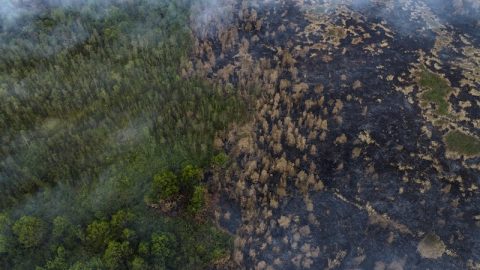
More efficient cookstove projects earn credits based on the amount of carbon they save by preserving trees that would have otherwise been cut down and burned for fuel. But if those trees later burn in a wildfire or are logged, the carbon stored would be released anyway, erasing the climate benefits of the credits.
Several carbon credit developers, conservation NGOs and the UN Environment Programme (UNEP) disputed that cookstove projects face this risk, in what critics described as a “coordinated lobbying campaign”.
They argued that, unlike forest protection schemes, this type of credit represents a “flow” of avoided emissions rather than a “stock” of stored carbon that can be released. They also warned that requiring a buffer would impose disproportionate costs and undermine the financial viability of these activities.
But the UN carbon market regulator was not persuaded by the argument. It decided that projects would have to protect against this reversal risk by handing over a percentage of credits to a so-called “buffer pool” instead of selling them.
‘New paradigm’
The amount of credits to be given up is calculated by applying different methods for natural risks, like wildfires, droughts or hurricanes, and human-caused ones, such as logging or land clearing.
For natural risks, project developers will need to apply local risk values derived from new modelling published by a group of independent scientists.
Campaigners have broadly welcomed the decision. Federica Dossi, an expert at Brussels-based advocacy group Carbon Market Watch, said it sets a new paradigm for calculating reversal risk based on empirical data. “This approach is grounded in science and we hope to see this now being adopted by other carbon crediting mechanisms in the voluntary market,” she added.
Backers claim this method is more rigorous than current practice in the voluntary carbon market, which largely relies on expert guesswork.
Pre-COP draws attention to Pacific’s climate plight and 1.5C goal
Pushback over science
As Climate Home News previously revealed, the same industry and NGO groups that sought an exemption from the “buffer pool”, along with some corporate buyers, criticised the use of a study backed by the UN carbon market’s ex