

With the International Court of Justice’s landmark advisory opinion on climate change hot off the press this July, hopes were high it could be used as a diplomatic lever for stronger climate action at COP30 in Brazil. But it proved a difficult tool to wield in a tense atmosphere.
The advisory opinion (AO) from the world’s top court – which determined that all states have obligations to protect the climate system from significant harm – has already been woven into new climate litigation and existing legal cases, and judges are starting to reference it in their rulings.
The Mexican community of El Bosque in Tabasco even managed to use it as leverage in recent negotiations with the central government over its latest national climate plan (NDC).
Yet, while some countries wanted the ICJ’s non-binding conclusions to feature in the main political decision approved at November’s climate COP in the Amazon city of Belém, the lack of a coordinated strategic push meant that did not happen, legal experts said.
-
Vanuatu pursues new UN resolution to turn ICJ climate opinion into action
The Pacific island nation, which led a campaign for the International Court of Justice (ICJ) to clarify states’ climate duties, said the legal opinion must not be “left on paper” -
Top UN court paves way to lawsuits over inadequate climate finance
The International Court of Justice has advised that the level of climate finance given to developing countries must be compatible with limiting global warming to 1.5C -
ICJ ruling expected to shape US climate lawsuits in defiance of Trump
The US administration’s efforts to roll back policies on clean energy and emissions cuts go against the top court’s opinion, which could be used by lawyers to fight back


Monaco, Mexico, the Alliance of Small Island States (AOSIS) and the group of Least Developed Countries (LDCs) all called for the ICJ’s decision – and two other climate advisory opinions from the Inter-American Court of Human Rights and the International Tribunal on the Law of the Sea – to be recognised during various COP30 presidency consultations.
But Jennifer Bansard, the Earth Negotiations Bulletin team leader, told journalists at COP30 that these requests were “at very generic levels” and did not go into the courts’ actionable findings.
“Deep, deep, deep red line”
The closest the ICJ advisory opinion came to being mentioned in a formal text was during a review of the Warsaw International Mechanism for Loss and Damage (WIM). This is key as experts believe the decision has particularly significant implications for the new loss and damage fund.
During these discussions, the Independent Alliance of Latin American and Caribbean Nations (AILAC) said the AO provides “an informed legal foundation” for advancing work on loss and damage. They pointed to “the need for comprehensive assessment and health protection” for vulnerable groups and “forms of reparation” This was supported by Vanuatu, which led the diplomatic work resulting in the ICJ opinion.
But Saudi Arabia, representing the Arab Group, responded that the ICJ’s final outcome is “non-binding” and “does not represent parties’ views” even though it participated in the process. Negotiations, it added, are a “party-driven process based on consensus, and not litigation”.
According to a source in the room, the Arab Group described the inclusion of the ICJ AO anywhere in the WIM document as a “deep, deep, deep red line”. “If you insist on discussing it, we might as well just suspend this session to not waste each other’s time,” said Saudi Arabia’s negotiator. The AO is not mentioned in the final agreed WIM text.
“We are still here” – COP30 tests resolve to keep fighting climate crisis
Harjeet Singh, founding director of the Satat Sampada Climate Foundation and strategic advisor to the Fossil Fuel Non-Proliferation Treaty Initiative, said the group was particularly concerned about the ICJ’s reference to the status of a state as developed or developing as “not static”.
“They feared that formally recognising the opinion would open the door to limitless legal liability for fossil fuel production,” he explained.
Left out of the COP30 cover decision
In addition, the AO’s recognition of a “just and fast transition in line with best available science” was mentioned by Fiji, for the Alliance of Small Island States (AOSIS), at an inaugural meeting on the Just Transition Work Programme. AILAC, Egypt and the UK also raised it during just transition negotiations, while Malawi used it to try to frame transition finance as a legal necessity.
Some states had expected the cover decision to recognise the AO in some form, but text drawn up by Brazil’s COP presidency did not include relevant wording.
The lack of references came despite the fact that the UN asked the ICJ for the advisory opinion unanimously and 96 countries spoke at the hearings.
Data visualisation developed by law professor Margaret Young and designers Dan Parker and Stanislav Roudavski.
Singh said the COP30 battle lines were drawn so sharply on the ICJ opinion because it validates the claims of vulnerable countries for climate justice, while historical and large polluters wanted “to avoid acknowledging any legal framework that implies liability”.
But, he added, while pushing back strongly against it, developed countries “neither championed nor explicitly opposed it in open plenary to avoid negative optics”.
The ICJ’s recognition that COP decisions may have legal effects could also make negotiators more wary of what they agree to.
In the closing COP30 plenary, Palau for AOSIS noted the ICJ’s clear assertion of 1.5C as the legal temperature limit. Yet the final Mutirao decision explicitly reiterates the Paris Agreement’s language of “pursuing efforts” to reach that level, while retaining the original goal of “well below 2°C”.
No coordinated push to champion the AO
Harj Narulla, a barrister specialising in climate litigation and counsel for the Solomon Islands, argued the COP30 decision “undermined” the ICJ’s conclusions. But barring a few nations like Saudi Arabia, he saw the overall outcome as a “failure of capacity and coordination, rather than a principled opposition to using the AO”.
Insiders said government negotiating teams remain too separate from their legal teams, and the former were not properly briefed on how the AO could be used in practice.
The leadership expected from climate-vulnerable countries, particularly the island nations that had advocated for the AO in the first place, also seems to have been absent. A briefing by Ed King and Lindsey Smith, who work on international climate strategy for the Global Strategic Communications Council, described AOSIS’s showing at COP30 in particular as “insipid”.
EU alliance with climate-vulnerable nations frays over finance trade-off
Ralph Regenvanu, minister of climate change of Vanuatu and a key architect of the AO campaign, mentioned it several times in public, including at Cambodia’s announcement that it would formally support a fossil fuel non-proliferation treaty. But his focus seemed to be on pursuing a new UN resolution recognising the ICJ’s findings.
Neither AOSIS nor Regenvanu responded to requests for comment.
Influencing the wider narrative
Nonetheless, Mohamed Adow, director of Power Shift Africa who has followed the climate talks for many years, believes the AO is “starting to influence the wider narrative around responsibility and liability”.
“Though it did not make the ‘waves’ in the formal text that many hoped for, it was clearly the ‘undercurrent’ beneath many streams of negotiation,” agreed Singh.
Nikki Reisch, climate and energy programme director at the Center for International Environmental Law, an organisation that supports the youth activists who sparked the AO process, said the opinion also supports “the need to reform the UNFCCC to make it fit for purpose”. That includes preventing fossil fuel industry influence and allowing majority voting so that a handful of countries cannot block climate action.
Eyes on Colombia fossil fuel transition conference
In 2026, the opinion may start to play a stronger role on the global stage, including at an international conference on a just transition away from fossil fuels co-hosted by Colombia and The Netherlands next April.
The Fossil Fuel Treaty initiative says that gathering will align with the AO, “which confirmed that states have a legal obligation to protect the climate, including by addressing fossil fuel production, licensing and subsidies”.
Colombia seeks to speed up a “just” fossil fuel phase-out with first global conference
Experts, meanwhile, expect more domestic lawsuits underpinned by the advisory opinion aimed at pushing countries to raise their ambition on cutting emissions and say inter-state litigation cannot be ruled out.
“COP30 in Belém is by no means the last word on the ICJ AO or the climate duties it confirms,” Reisch said.
A version of this article was originally published in The Wave.
The post Why the ICJ’s advisory opinion on climate change took a backseat at COP30 appeared first on Climate Home News.
Why the ICJ’s advisory opinion on climate change took a backseat at COP30

When oil and gas shipments stopped flowing through the Strait of Hormuz at the start of the Iran war, Southeast Asian nations were left reeling as the supply crunch laid bare their acute reliance on fossil fuel imports.
As prices soared, governments in the region scrambled to introduce emergency energy-saving measures – from a four-day working week to curbs on air conditioning. Thailand revived decommissioned coal plants while the Philippines, which imports nearly all of its oil, declared a “national energy emergency”.
But the crisis has also prompted renewed resolve to find a long-term solution to their vulnerability at a time when electricity demand is booming to power the region’s growing industry, cooling needs and the mushrooming of energy-hungry data centres.
At the heart of Southeast Asian nations’ response is a longstanding infrastructure project to connect the region’s power grids by 2045 and enable cross-border trading of clean electricity through a network of underground and subsea interconnectors.
-
Southeast Asia’s fragile grids threaten billions in clean energy investment
Renewables developers need reliable electricity infrastructure and stable policies to help the region meet climate goals and surging demand for power -
UN backs push to upgrade grids slowing clean power uptake in Africa and SE Asia
The Global Grids Accelerator will help turn national and regional plans to expand electricity infrastructure into viable projects on the ground -
China keeps Indonesia’s battery dream afloat but future less certain
Chinese capital and technology turned Indonesia into the world’s top nickel supplier, but its dependence on China and the rise of nickel-free batteries could upset its battery ecosystem plans
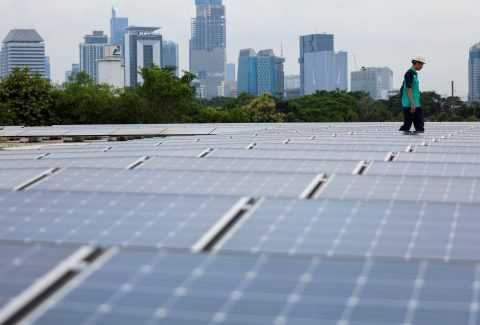
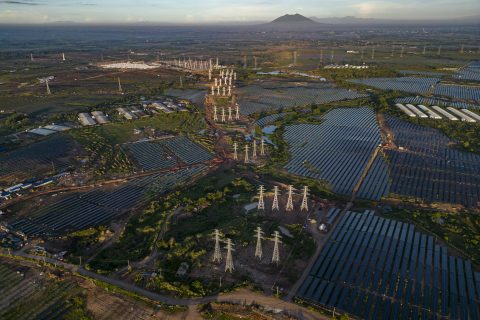
The plans will allow nations with high renewable energy generation potential to trade surplus power to their neighbours and major demand centres like Singapore, helping to integrate more renewables into the power mix and reduce reliance on fossil fuel imports.
“[It] will give us more energy security,” the Philippines’ energy secretary, Sharon Garin, told a press conference after a meeting of the Association of Southeast Asian Nations’ (ASEAN) energy ministers last week, when they discussed accelerating the delivery of the regional grid as part of measures to respond to the energy crisis.
“The Philippines is rich in solar power, Malaysia is rich in hydropower and Indonesia has geothermal: different countries have different resources. [The ASEAN Power Grid] will optimise the utilisation of renewables to the benefits of each member state,” said Garin.
But turning this decade-old political vision into a reality has been slow, held up by painstaking work to harmonise a patchwork of regulatory and legal frameworks and mobilise the private capital needed to build cross-border infrastructure.
More than $300 billion is needed to expand and modernise the region’s fragile grids to support the projected energy demand increase by 2050. This includes $27 billion required to deliver the cross-border interconnections by 2040, according to the International Energy Agency (IEA).
Every year of delay could cost the region billions of dollars in additional fuel costs and lock in new gas infrastructure for decades to come, according to analysis by global energy think-tank Ember.
The building block for energy security
With electrification high on the agenda of the COP31 climate talks in Türkiye next month, there is growing attention on the need to modernise and expand grid infrastructure to cope with growing electricity use and more renewables in the power mix.
Clean electrification and energy efficiency could deliver about a third of cumulative carbon emission reductions between 2026 and 2050, according to the International Renewable Energy Agency’s World Energy Outlook. But delivering that would require doubling annual global grid investment to $1 trillion between now and 2035.
Last month, the UN launched an initiative to accelerate investment into expanding and modernising grids in Southeast Asia and Africa.
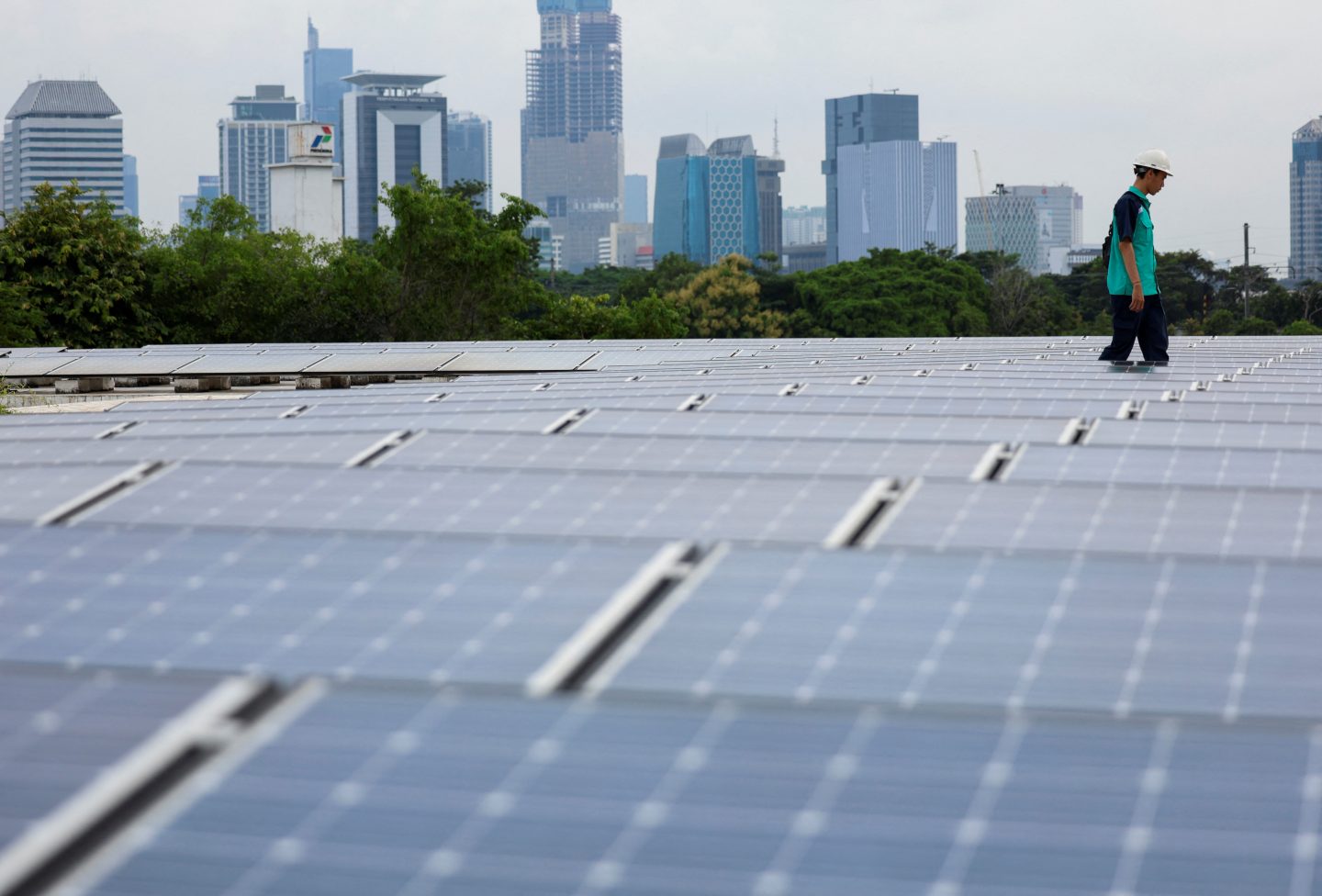
First conceptualised in 1997, the ASEAN Power Grid has gained fresh impetus in recent years as countries turn to renewables to cut their emissions and move away from volatile fossil fuel markets.
Energy supply disruption caused by wars in Ukraine and the Middle East has strengthened the case for regional grid connections. Before this year’s conflict began, the Middle East accounted for 60% of Southeast Asia’s crude oil imports. Competition for fewer, more expensive oil and gas shipments has left Southeast Asia facing a $160 billion energy import bill this year. Based on current policies, this could rise to $400 billion by mid-century.
In the Philippines last week, energy ministers agreed on an enhanced planning framework to deliver the ASEAN Power Grid and made progress on regulatory guidelines.
Garin said ministers were considering accelerating the project’s delivery. “The first study was to connect [by] 2045 – that’s too far,” she said.
A strong business case
The economic benefits of the plan have “captured the political imagination” of leaders in the region, Robert Cooke, grids advocacy lead at the Global Renewables Alliance, told Climate Home News. “The business case is stronger than ever,” he said.
“If countries were to go about building their own separate grids, of course that would be an expensive endeavour. But the discussion around the ASEAN Power Grid includes what costs could we share in building out this grid,” added Tiza Mafira, director of the Indonesia office for the Climate Policy Initiative.
Stronger grids would help the region meet collective targets to increase the share of renewable energy in total primary energy supply from 14% to 30% and in installed power capacity from 34% to 45% by 2030.
Connecting and pooling dispersed renewable resources would also help smooth local power shortages caused by daily and seasonal variations, reducing the need for backup gas plants and battery storage.
The IEA found the ASEAN Power Grid could help unlock some of the 20 terawatts of untapped solar and wind potential across Southeast Asia – an amount around 55 times the region’s current total power capacity.
From lines on a map to shovels in the ground
Rather than building a single unified network, the ASEAN Power Grid is developing cross-border links between neighbouring countries and smaller groups of nations.
As of 2025, nine of 18 priority interconnection projects are operational – accounting for around 10 GW of capacity with an additional 13.7 GW planned by 2040.
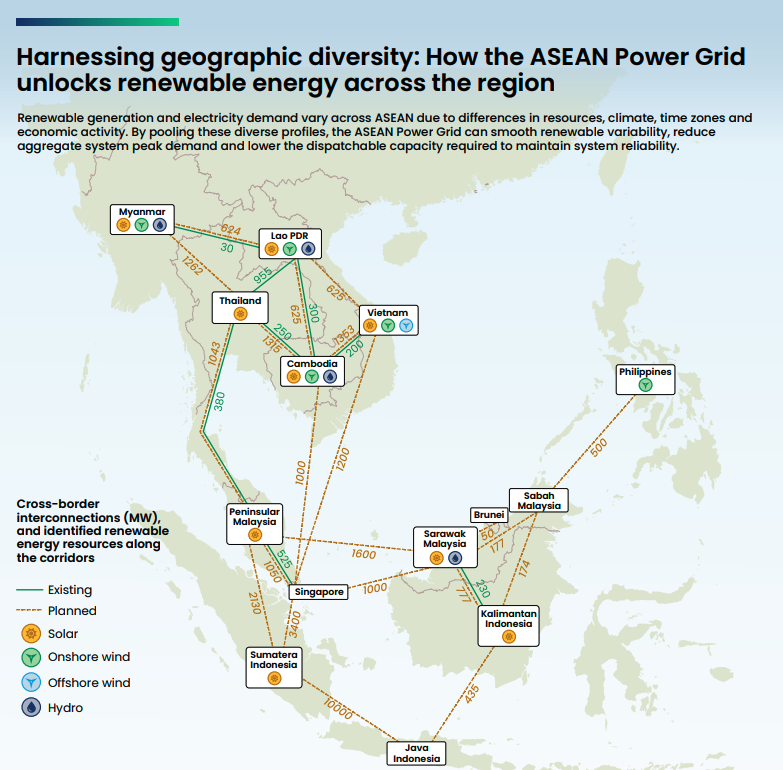
Source: Ember
A power line channelling up to 200 MW of clean electricity generated from hydropower in Laos to Singapore via Thailand and Malaysia has emerged as a key building block for grid-to-grid trading.
Progress on technical discussions will also help provide the clarity the private sector needs to invest in bankable projects, said Cooke.
In 2025, the Asian Development Bank and the World Bank announced a dedicated funding initiative to support the project.
“The enabling pieces are emerging,” said Monalisa Dimalanta, former chair of the Philippine Energy Regulatory Commission and the National Renewable Energy Board. “But the timelines remain unclear and a 2045 vision cannot answer today’s emergency,” she said.
“A power grid… that exists only on paper will not keep the lights on.”
Singapore: the delivery test
The implications of failing to deliver the ASEAN Power Grid are most acute in Singapore.
Constrained by space, with few renewable energy resources and dependent on gas for more than 90% of its electricity mix, Singapore has emerged as a leading proponent of a regional power grid as it seeks to achieve net-zero emissions by 2050.
To meet its power needs, the city-state aims to import 6 GW of low-carbon electricity by 2035, around one-third of its energy demand – a target which it is set to miss, however.
The plans heavily rely on building interconnectors to import solar power from Indonesia across the South China Sea. Around 40% of the ASEAN Power Grid’s planned interconnections are directed towards Singapore.
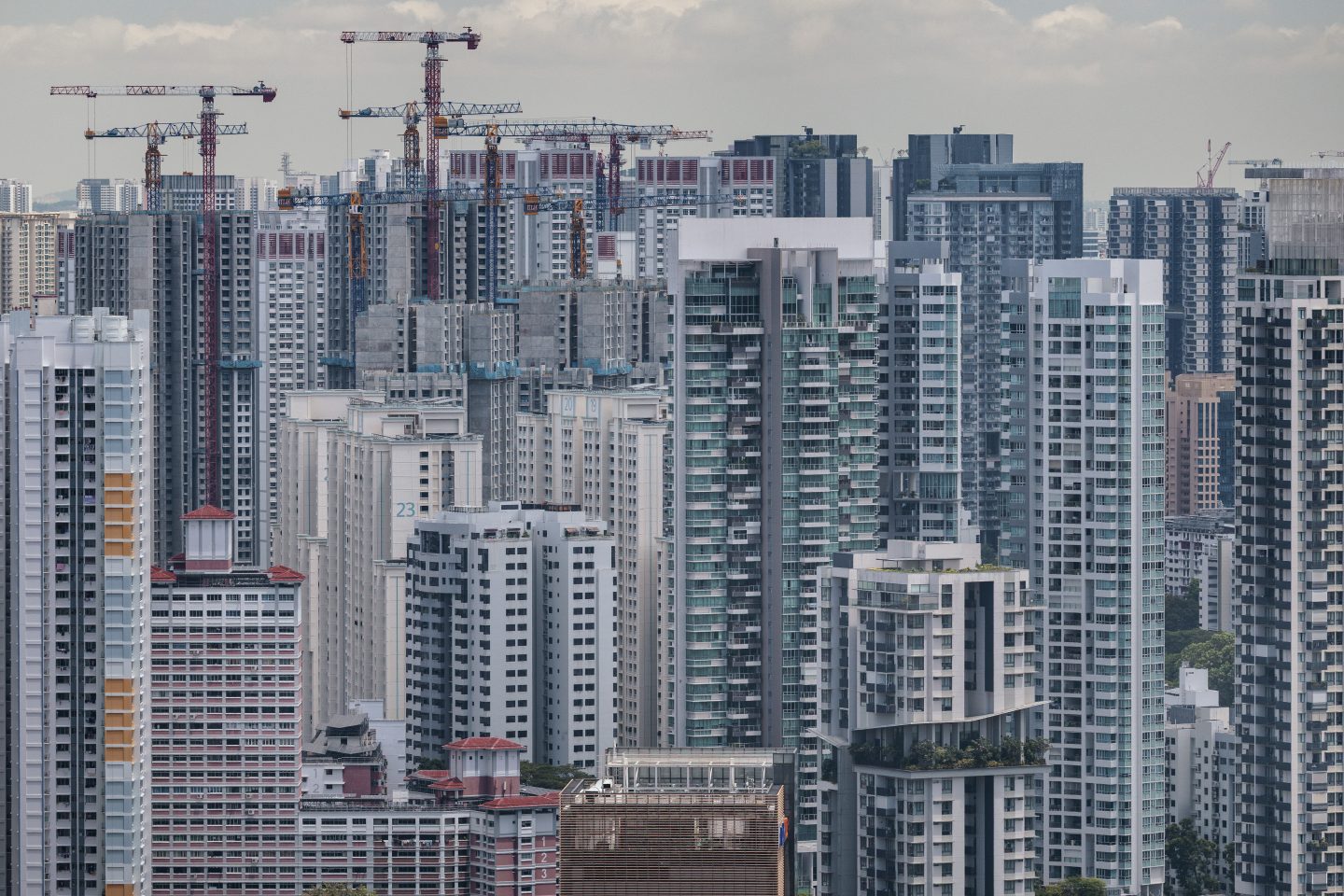
Ember’s analysis found that delivering the planned interconnectors by 2035 could enable renewables to meet nearly half of Singapore’s electricity demand. Delays could drop this to only a fraction of the country’s needs, and risk locking in new gas capacity until the 2050s. Without the ASEAN Power Grid, Singapore would need to install an additional 300 MW of gas-fired power capacity to bridge the gap by 2035.
Already home to the largest data centre capacity in Southeast Asia, Singapore’s electricity demand keeps rising, driven by the boom in AI infrastructure. “At one point, [it] either has to build a new gas plant, or it has to get the interconnection to supply that demand,” Lam Pham, an Ember energy analyst and the report’s author, told Climate Home News.
A region at a crossroads
With capital increasingly available, political will is now the biggest risk standing in the way of timely execution, said Pham.
But there are other challenges too, including the lack of frameworks on transmission tariffs and how to share the benefits of clean power trading. “It’s really hard to justify projects without that,” he said.
In addition, climate-fuelled weather events, including extreme heat and tropical storms, pose major threats to the region’s grid infrastructure. Experts say stronger grid interconnection can isolate damage and build the system’s resilience.
Efforts to deliver on the ASEAN Power Grid also come as ministers stressed the “continued importance of oil and gas” for economic development and seek to secure fossil fuel supplies and stockpile oil to prepare for the next crisis.
Despite an acceleration of renewable deployment, particularly solar, coal still generates nearly half the electricity supply in ASEAN member states and dominates the power mix in Indonesia, the Philippines and Vietnam, while Singapore and Thailand rely on gas.
While these measures might help the region with the immediate crisis, “the long-term answer is more domestic renewable energy, electrification, storage, efficiency and regional power trade”, Dimalanta said.