

Two days after the COP28 climate summit concluded on 13 December, Carbon Brief convened its team of specialist journalists to discuss the key outcomes of the two-week event in Dubai.
More than 1,300 people joined the webinar to hear about how issues such as the global stocktake, finance and adaptation featured at the talks, as well as how major nations such as China, India and the US approached the negotiations.
Carbon Brief published its detailed summary of the key outcomes hours after COP28 ended, outlining everything that happened both inside and outside the negotiating rooms.
A second in-depth piece zooming in on the outcomes for food, forests, land and nature at COP28 was published later in the week.
Eight Carbon Brief journalists and editors were on the ground throughout the summit and they all featured in the webinar.
A recording of the webinar (below) is now available to watch on YouTube.
The webinar was moderated by Carbon Brief’s editor and director, Leo Hickman, and featured the following Carbon Brief journalists:
- Dr Simon Evans, senior policy editor and deputy editor
- Daisy Dunne, special correspondent
- Josh Gabbatiss, policy correspondent
- Molly Lempriere, section editor for policy
- Dr Giuliana Viglione, section editor for food, land and nature
- Aruna Chandrasekhar, land, food systems and nature reporter
- Orla Dwyer, land, food systems and nature reporter
- Anika Patel, China analyst
Dr Simon Evans explained the “global stocktake” and, in particular, what it said about fossil fuels.
Daisy Dunne discussed the controversies around COP28 being held in a petrostate and the presidency being held by Sultan Al Jaber, the CEO of the Abu Dhabi National Oil Company.
Josh Gabbatiss spoke about the role of finance at this year’s COP – including the launch of the loss-and-damage fund. He also detailed the “global goal on adaptation”, which was given the green light in Dubai.
Molly Lempriere discussed a pledge by 130 countries to triple renewables by 2030. She also delved into the mitigation work programme.
Anika Patel followed China’s role in Dubai and analysed the country’s priorities at COP28 talks.
Aruna Chandrasekhar detailed India’s approach at COP28, looking ahead to the role the country will play at COP29 in Azerbaijan next year.
Orla Dwyer discussed the dynamics around civil society and activists in Dubai where protests are banned.
Dr Giuliana Viglione talked about how food was brought to the table in Dubai in a more significant way than at previous COPs.
Q&A
The Carbon Brief team also fielded questions from the audience and, where possible, answered them in writing within the webinar’s Q&A panel.
Below is an unedited copy of those questions and answers. The questioners’ names have been initialised, as have those of the Carbon Brief journalists:
PG: Isn’t what was agreed massively short of what is needed? The Saudi’s agreed to the wording because it allowed them to continue on a ‘business as usual’ basis, didn’t they?
SE: As we wrote in our summary, the wording on fossil fuels was probably as ambitious as it could have been – barring significant movement on new finance. More importantly, only countries themselves can implement action on the ground – the COP can’t do that. So the key test comes when countries submit their next climate pledges, by the end of 2025.
ML: Do the petrostates condemn all future COPs to achieving no more than incremental progress?
SE: I would say it’s important to note that there are 195 parties at the COP, each with their own priorities, red lines and compromises to make. So while individual countries or groups can veto decisions, there is rarely a single villain, due to the wide range of decisions being taken.
CBM: Could a COP ever be in a low lying island? Seychelles?
SE: The host rotates through five world regions. Fiji held the presidency in 2017 at COP23, but the summit was held in Bonn, Germany.
ME: With FT reporting ‘Big oil welcomes COP28 call to move away from fossil fuels in ‘orderly’ way’ – should cutting FF subsidies be the focus for the next COP?
SE: The stocktake does call on countries to phase out inefficient fossil fuel subsidies that do not support energy poverty “as soon as possible”, and this topic has come up repeatedly eg it was in the COP26 outcome, but I’m sure the focus on subsidies will continue – and for good reason.
EW: Like others, I am a bit surprised that people are pretending to be impressed by a statement of the obvious. With a different chair do you think we could have got something stronger.
SE: The presidency does play a big role at the COP but ultimately it’s a party-led process and if enough countries say they want something on the agenda, it’s hard for the presidency to stop that happening. (Last year at COP27 was a big different because attempts to address fossil fuels were in the “cover text”, which isn’t formally on the agenda and so the presidency has a bigger say on what’s in it)
MA: How close or how far will this deal land us in 1,5C?
SE: “IEA, ETC and CAT (sorry for acroynms) released analysis of COP28 pledges during the summit, see our summary. The tripling renewables and doubling efficiency one is the most significant, see this analysis we published before the COP to see why.
I think the CAT analysis said COP28 pledges closed around 1/3 of the gap to 1.5C, but it’s hard to quantify the “transitioning away from FF” part until we see the next country pledges.
EG: Is it not much better to focus on national government action and largely ignore the COP process which has never created a binding agreement at the level needed to ensure survival. At every COP we slip backwards again. The annual COP jamboree also distracts attention from the desperately urgent action we need on a national basis immediately. Ed Gemmell, Leader, the Climate Party in UK
AC: The Paris Agreement is in fact ALL about national government action, which is why they’re called NDCs or nationally determined contributions. After 2020, countries were supposed to start implementing their national pledges and will have to set new ones for 2025. COPs are where countries come together to set targets, review pledges and any binding commitments (including on finance), reflect on collective progress or the lack of it, and share knowledge and support and experiences. If you separate “jamboreee” from the actual negotiations, it is the one space, where once-a-year, ALL countries have a seat at the table to discuss climate actions and decisions are arrived at multilaterally.
TY: Did the global stocktake reveal which countries are particularly behind and what progress has been made in Europe? The implementation of the Global Stocktake has been reported by a lot of news papers, but I don’t think much detail has been reported.
SE: The stocktake was not really focused on national-level progress (or lack thereof) because countries didn’t want to be put in the spotlight / have their homework marked.
TM: Did the UK make any useful or significant contribution to COP28?
SE: The UK’s lead negotiator Alison Campbell was the co-chair of the stocktake negotiations, so she played a big role in the outcome (though the presidency took over the task into week two)
BM: As the phrase on transitioning away from foossil fuels has an extension, saying “so as to achieve net zero by 2050 in keeping with the science;” doesn’t that make this statement more meaningful? Net zero CO2 is needed for limiting warming to 1,5 C, so the whole sentence actually says that the transition away of fossil fuel should be realised by 2050, which is exactly what is needed. I know the “call upon Parties” context makes this whole statement rather weak, but nevertheless
SE: Thanks for the question Bert, yes you are correct, but nevertheless the key test will come with next country pledges.
EW: One of the main reactions I am getting from lay-friends is that the jamboree of thousands of people using carbon to fly to the COP is a terrible look. Is there any prospect of the COP being reformed so that it still achieves its goals but with 10-100 times fewer participants?
SE: This is definitely a very live question about how the COP is run. However, it’s worth emphasising that the amount of carbon associated with flights to the summit is not even a rounding error compared with annual global emissions (I think I worked it out as thousandths of a percent). Given the role of Paris and COPs generally in helping bend the curve on emissions, even small impacts on future warming would easily make all those flights worth it.
SC: Having documentation on exactly which countries were initially willing to sign up for “fossil fuel phase out” would be politically useful. Is that information available somewhere?
SE: “Yes, check out these pieces…
- COP28 DeBriefed 8 December: The fight over fossil fuels; Al Jaber defends ‘respect’ for science; Has COP ever finished on time?
- Q&A: Why defining the ‘phaseout’ of ‘unabated’ fossil fuels is so important at COP28
ML: What is the US rationale for its low $ commitment to the L&D fund relative to rich peers? Are they committing more elsewhere as an alternative for example?
SE: Republicans control the House, which holds the purse strings…
IR: do you think the outcomes would have been different if the president had not been distracted by having to defend himself agnst allegations of side deals etc? it did look as if he was getting somewhere at first.
SE: I would say the initial progress early on opened out space for the fight on fossil fuels. There are always big ups and downs in terms of progress at the COP so I wouldn’t read too much into this specific presidency on that.
NG: Why are developing countries not content with the L&D fund being held at the World Bank, and why would they prefer the UN?
SE: check out our Q&A here: Q&A: The fight over the ‘loss-and-damage fund’ for climate change
CP: John Kerry, the US climate envoy, is 80 and his Chinese counterpart, Xie Zhenhua, will be retiring next year. Who would take their place when these two people are no longer around and what could this mean for US-Chinese climate relations movng forward?
SE: I don’t think we know wrt Kerry but Liu Zhenmin is due to replace Xie Zhenhua, per our summary…COP28: Key outcomes agreed at the UN climate talks in Dubai
FM: Did (any) actions/speeches/etc. by the UK COP delegates give us any new insight as to the future approach of the UK to domestic climate action?
SE: I am not we gained any particular insights into the current government’s plans on climate, to be honest.
RE: If you have time, would you please talk about the issues blocking decisions related to the market mechanisms (A6.2 and 6.4)? Thank you.
SE: Thanks Ricardo, we addressed this briefly in our summary. For 6.2 it’s about whether to have process or control over how countries trade carbon with each other. The US was pushing for few rules while the EU, AILAC and others wanted the opposite. Some parties say attempting to put limits on the process goes against the mandate in this area. Big divides. Hard to see a way forward. On 6.4, the key stumbling block was on rules around carbon removals. I would expect those to be sorted out at COP29. Here’s a direct link to the relevant bit of our summary: COP28: Key outcomes agreed at the UN climate talks in Dubai – Article 6
AL: How will the doubling of energy efficiency be measured?
SE: The IEA already tracks the rate of improvement of efficiency, so I assume it’d be similar. I believe it’s an energy intensity measure. Q&A: Why deals at COP28 to ‘triple renewables’ and ‘double efficiency’ are crucial for 1.5C
CV: Do you actually feel we see a reduction in burning of fossil fuels as a direct outcome from this COP?
SE: It’s hard to judge until we see the next round of climate pledges, but narratives definitely matter because investors, markets, etc are people too and so they are influenced by what other people are saying.
CM: Whicvh are the ‘pressure points’ that climate justice action and campaign groups should be aiming at now post COP 28?
SE: The next round of NDCs (national climate pledges) due by end of 2025 are key. So – every natoinal govt is a pressure point.
VP: Is it so automatic that “triplicating renewables means move away from fossil fuels”? I am afraid that maybe fossil fuels will continue to be used as usual, while triplicating renewables (that today are not very important globally) will allow to continue being a highly energy consuming civilization worldwide. Can you comment on this?
SE: The IEA sees tripling renewables as a key lever. While you are correct that one does not automatically follow the other, we’d not be likely to see cuts in fossil fuel use unless alternative energy sources rapidly scale up. Q&A: Why deals at COP28 to ‘triple renewables’ and ‘double efficiency’ are crucial for 1.5C
JR: Doesn’t the tripling of world nuclear capacity fit in this section, not only RE
SE: We did cover this pledge, but it was explicitly aspirational and only signed up to by a small number of countries
JK: How important are the ‘side-deals’ at COP? Often multi-lateral deals are made on specific issues between groups of nations, like sustainable agricultural practices, water table monitoring frameworks, etc?
SE: The key issue with the side deals is the lack of accountability. Obv even national pledges lack binding accountability, but they are at least tied to some sort of process and monitoring. So – that’s why the next national pledges due in 2025 are key. They’re supposed to be informed by the stocktake and they have to explain how they are informed by it.
PN: How “visible” were the lobbyists from the oil companies at COP28? Was their presence/influence rather obvious or did they keep more in the back/quiet?
SE: I doubt they interacted directly with the negotiations/negotiators, which take place in their own specific bubble at the COP. But other attendees do influence the general vibes / what people are talking about.
SO: Good afternoon, thanks for organizing this webinar. Just hearing Leo in the introduction highlight that this was the first time that ‘fossil fuels’ were mentioned in a COP outcome, and we’ve heard others highlighting this too over the last 2 days. Actually looking through last year’s Sharm el-Sheikh COP27 cover decision (https://unfccc.int/sites/default/files/resource/cop27_auv_2_cover%20decision.pdf) it looks like ‘fossil fuels’ were mentioned (section IV. Mitigation, para 13) “Calls upon Parties … to phase-out inefficient fossil fuel subsidies…” This year the Dubai’s COP28 Global Stocktake Outcome (https://unfccc.int/sites/default/files/resource/cma2023_L17_adv.pdf) mentions (para 28 (h)) “Further recognizes the need … phasing out inefficient fossil fuel subsidies…” So given this sounds quite similar just interested in your views in how far we can call the mentioning of fossil fuels new. Thanks!
SE: The difference / significance is about this year’s decision targeting fossil fuels themselves, as a group collectively, as being a problem, which has never happened before.
JC: what is the sense of the role of the market in climate action? Since quality is at stake and market results have failed to deliver integrity, what is the result in the absence of a meaningful decision on Article 6?
SE: Hi Jacobo, this is an interesting tension…Article 6.4 is supposed to drive high quality markets but the longer it takes to get started, the more other market initiaves continue to grow in prominence. So far, I think there is more heat than light around voluntary carbon markets and I would be surprised to see that change dramatically even once ARticle 6.4 starts working.
EG: Sorry they did not agree to ‘double energy efficiency’. In fact the exact words are “doubling the global average annual rate of energy efficiency improvements by 2030” – they only agreed to double the RATE of annual IMPROVEMENTS to energy efficiency. If the average annual rate of “improvement” is 1% currently then this should be 2% by 2030 – overall energy efficiency is not being doubled. Or have I missed something?
SE: Hi Ed, yes it’s the rate of improvement, hopefully that is clear in all our coverage – sorry if that wasn’t clear in our brief spoken summaries just now. See eg: Q&A: Why deals at COP28 to ‘triple renewables’ and ‘double efficiency’ are crucial for 1.5
BW: Is there any chance for the COPs to adopt a majority (say at least 75%) instead of unanimous vote rule? Right now, one country is enough to block progress for everybody else and it would be good if there’d be a way around that.
SE: Hopefully covered in my answer just now…short answer, seems unlikely!
DO: In what ways (if any) is the phrase “transitioning away” different from “phasing-down”?
SE: I mean ultlimately it’s all wordsmithing, the key point is does it take us in the direction we need to go – see the chart in this piece: Q&A: Why defining the ‘phaseout’ of ‘unabated’ fossil fuels is so important at COP28
SS: Folks, please keep in mind, that this all is a volunatary commitment. No independent monitoring, verification. No 2030 goal. No money for enhanded adaptation and mitigation for poorer countries, bread crumps for L&D. And last but not least, based on US, Japan and others pressure, the baseyear for tripling/doubling renewables capacity and energy efficiency got lost – so allowing for significant gaming. I couled go on. So, what is the hype on this “monumental” outcome?
SE: Hi Stephan, you’re not wrong. To be fair, I don’t think we called it monumental, but despite all the shortcomings, it’s hard not to see it as historic to finally name the elephant in the room (fossil fuels), no matter how mealy-mouthed the language was.
GS: A question to Anika: Anika, thanks! You mentioned that while China didn’t contribute to L&D this year, China is contributing to adaptation through other channels. Could you talk more about the nature of those channels (for example: private vs public?, how can we know the investments are adaptation-related, where can we find the data/evidence)
AP: Thanks for the question Georgia! The data is all quite disparate and it’s quite complicated for a chat box, but I’d point you to this article we published recently on this topic: Guest post: Why some ‘developing’ countries are already among largest climate-finance contributors
HBP: ‘@orla and others – How are you tracking the announcements/commitments made for food and agriculture? What can civil society and journalists do to better verify claims are new/have real climate impact and not greenwashing?
OD: Hi Hope, you can find a lot of these announcements and detail on whether they are new or updated in our key outcomes piece published this afternoon… COP28: Key outcomes for food, forests, land and nature at the UN climate talks in Dubai
KH: Were there any new commitments made on implementation of the Action for Climate Empowerment (ACE) framework?
OD: Hi Kate, we have a section on what happened with ACE at this year’s COP in our main key outcomes piece – COP28: Key outcomes agreed at the UN climate talks in Dubai
KM: Do we think that China will eventually pay into the L&D fund?
AP: It’s not impossible, but I think there are a lot of outstanding issues that would first need to be changed (e.g. the World Bank’s oversight, developed countries meeting their existing obligations, ramping down trade tensions with the West) before China would be comfortable joining. China has other platforms (like the south-south cooperation fund, the Africa Climate Summit, etc) that it would be happier using to achieve the same thing.


The post Webinar: Carbon Brief journalists discuss COP28’s key outcomes appeared first on Carbon Brief.
Webinar: Carbon Brief journalists discuss COP28’s key outcomes

June Rubis is a steering group committee member for the Cali Fund, from Sarawak in Malaysian Borneo.
At COP16 in Cali, governments made a significant commitment: at least half of the funding from the new Cali Fund should support the self-identified needs of Indigenous Peoples and local communities, including women and youth. It was a watershed moment for multilateral benefit-sharing.
The challenge now is to translate that commitment into access arrangements that recognise the different institutions, priorities and decision-making processes of Indigenous Peoples and local communities.
For generations, biodiversity and traditional Indigenous knowledge have provided significant value to companies who depend on nature’s genetic diversity to discover new drugs that fight diseases, create products that improve health, and grow crops resilient to extreme heat and flooding events. While some compounds are sampled directly from the source country, increasingly the digital blueprints are held in online public databases which are freely accessible to use for innovation and research.
Countries urged to ramp up “insufficient” nature policies at COP17
The Cali Fund was established at COP16 to encourage commercial users of Digital Sequence Information, or DSI, to share benefits arising from its use. Estimates suggest it could generate over $3.5 billion a year – a stark contrast to the modest $10,656 currently committed to the fund from just five SMEs, underlining how much progress must be made at COP17 over the next two weeks.
The COP16 decision that set up the fund offers two routes for money to reach Indigenous Peoples and local communities: through government authorities, and through direct payments to institutions identified by Indigenous Peoples and local communities themselves.
Varied ways of organising
Indigenous Peoples and local communities organise through a wide range of institutions. Some have national or regional organisations experienced in managing international grants. Others work through territorial organisations, customary institutions, community associations, cooperatives or networks. Some have professional finance teams and audited accounts; others have extensive experience governing territories, collective resources or conservation work without having been organised around international funding requirements.
For direct access, some questions are already apparent. Which institutions should be able to receive funds? How should they be identified? What fiduciary standards should apply? How should safeguards and accountability work where institutional capacities differ? What support may be needed where institutions have strong community mandates but less experience with international finance?
Comment: Protecting nature is a public duty, not a Wall Street profit opportunity
If access is designed mainly around institutions that already meet the expectations of large international finance mechanisms, early funding will tend to favour those already familiar to funders. They will gain further experience and become better positioned for future funding, while institutions with less administrative capacity may remain outside the system despite strong community mandates and long histories of stewardship.
These first decisions matter most, because they set the terms for everyone who follows.
The role of intermediaries requires care. Some Indigenous organisations may want a fiscal host to hold and manage funds on their behalf. Communities may choose to work through an NGO they trust. Government-facilitated arrangements may work well in particular national contexts.
What matters is the function an intermediary performs and the authority that comes with it. Providing administrative support is different from deciding which Indigenous organisations qualify, which priorities can receive support, or how success will be assessed. Direct access means communities keep that decision-making authority.
Decision-making power
The COP16 decision refers to institutions that Indigenous Peoples and local communities identify. But authority among Indigenous Peoples does not sit in one kind of body. It may sit with territorial organisations, customary institutions, community associations or combinations of these. Legal recognition and customary authority do not always align neatly.
Global deforestation slowed in 2025 but Brazil’s election could undo “fragile” gains
An important feature of the Cali Fund’s governance is that Indigenous Peoples and local communities participate as full members of the Steering Committee, rather than as observers. Seven Indigenous Peoples and local community representatives, one from each of the seven socio-cultural regions, participate in consensus-based decision-making alongside representatives of governments and UN entities. Six additional representatives from civil society, scientific institutions and the private sector participate as observers.
That representation carries responsibility. Institutional legitimacy, access and representation take different forms across the seven socio-cultural regions. Indigenous Peoples and local communities members therefore have an important role in bringing those differences into the Fund’s governance and in ensuring that arrangements developed for one context do not become the assumed model for everyone else.
Safeguards and clear responsibilities
COP17 can establish the core principles and direction, while allowing operational pathways to develop in ways that respond to different regional contexts. The decisions countries take in Yerevan will shape how that flexibility is realised in practice.
The choices made around access will influence which institutions are able to participate, which routes become established and which forms of authority are recognised within the funding architecture. The aim should be an architecture with enough structure to maintain confidence while allowing for different forms of Indigenous and community governance.
A credible direct-access pathway will need safeguards, financial oversight and clear responsibilities. This would give the 50% commitment a stronger institutional foundation.
The Cali Fund’s importance will ultimately depend not only on how much funding reaches Indigenous Peoples and local communities, but on whether they are able to determine how the money is accessed, governed and used. This requires access pathways that recognise their institutions, priorities and decision-making processes, rather than requiring them to conform to a single predetermined model.
The post COP17 must settle who decides how Cali Fund money is disbursed appeared first on Climate Home News.
COP17 must settle who decides how Cali Fund money is disbursed
The UK government has approved extraction at the Jackdaw gas field in the North Sea, despite acknowledging that this decision could make it harder for Britain to convince other countries to move away from fossil fuel production.
UK energy secretary Miatta Fahnbulleh approved the drilling on Wednesday after months of high-profile debate, fuelled in part by interventions from US President Donald Trump. She argued that the project would boost energy security in the wake of the Middle East fossil fuel crisis, protect hundreds of jobs and add £2.9 billion ($3.88bn) to the UK economy.
She said Jackdaw’s gas would be cleaner than imported gas and would not prevent the UK from meeting its legally-binding carbon targets and its goal of net zero by 2050. As the field is already licensed, she said extraction was consistent with the Labour Party’s 2024 manifesto promise not to issue any new oil and gas licenses.
The same morning, the government announced a new Energy Wealth Fund to reinvest oil and gas revenues in the climate transition. It will start with £2 billion ($2.67bn) from the government and be topped up over time with tax revenues from offshore oil and gas production.
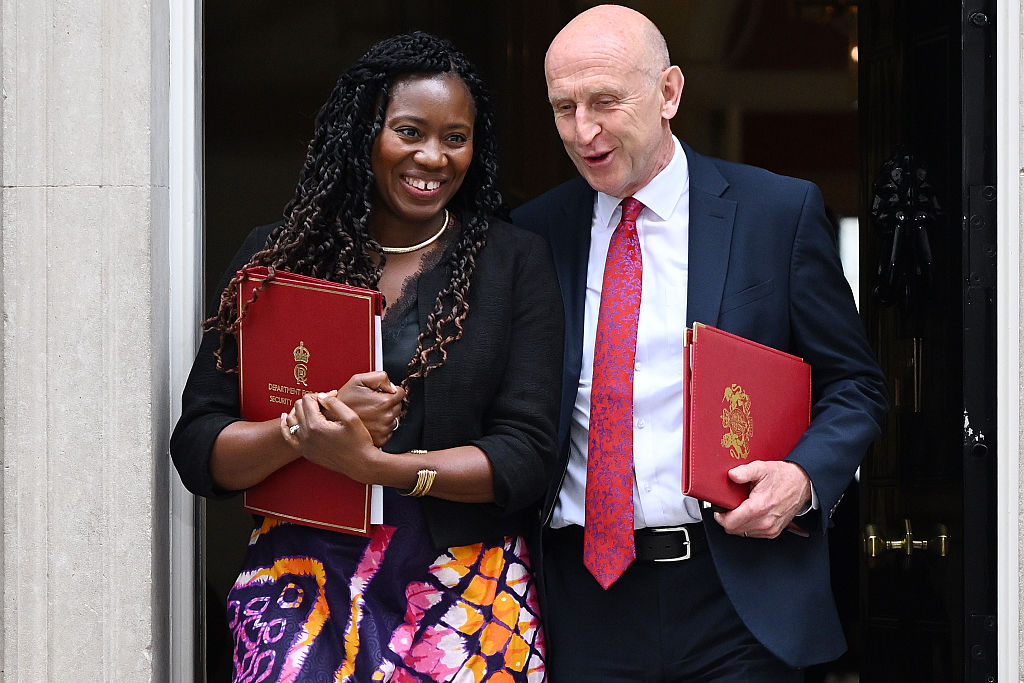
Climate campaigners in the UK and abroad were quick to condemn the decision, while a leading legal expert told Climate Home News it goes against the advice of the International Court of Justice. Meanwhile, the government’s own documents reveal that it recognises the drilling could damage the UK’s reputation and its ability to push forward the global transition away from fossil fuels.
“Climate leadership” blow
The 92-page decision document says Fahnbulleh “acknowledges that international standing on climate is important and accepts that a decision to grant consent may not further the UK’s international climate leadership.”
It adds: “She acknowledges concerns about the potential implications for the UK’s credibility and influence – including the difficulty inherent in encouraging other states to move away from fossil fuel production while the UK continues, in a limited and transitional way, to draw on its own domestic resources.”
While noting that Jackdaw has not been issued with a new license – just permission to extract gas – the document says Fahnbulleh “accepts this does not fully resolve the underlying tension in the UK’s position” but “considers this alongside the substance of the UK’s wider record [on emissions reduction], which remains significant”.
It continues that she accepts these concerns are “legitimate” and weigh against approving gas extraction, but only gives this argument a “moderate negative weight” set against the benefits of gas production.
“Huge” wrong signal
In international climate talks, the UK has long supported the transition away from fossil fuels and is one of very few major oil and gas producers to ban new licenses. Across the North Sea, the Norwegian government continues to make offshore areas available for oil and gas exploration through annual licensing rounds.
Climate experts and campaigners shared the concern, acknowledged in the decision document, that approving Jackdaw could set a precedent for fossil fuel production elsewhere. Sam Fankhauser, professor of climate change economics at Oxford University, said the direct climate impact of Jackdaw is “much smaller than the debate around it would suggest” but the “wrong signal it sends, however, is huge”.
-
Carbon capture industry faces tough future, as UK raids green spending
Despite a spate of projects getting underway, the mood at an industry conference in London this week was low with government subsidies set to shrink
