Connect with us

Published

on

Waymo Expands With Lyft Robotaxi Deal and Strong Safety Record

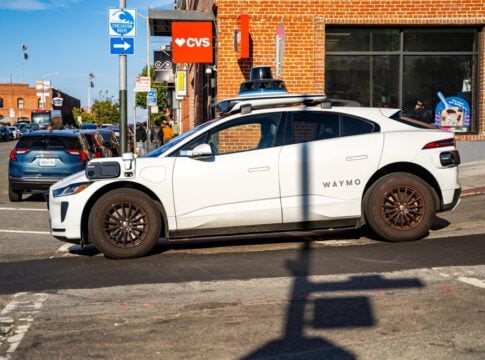
Waymo, formerly Google’s self-driving car project, keeps making moves. New safety data shows its self-driving cars crash far less than human drivers. Moreover, Waymo and Lyft just announced a robotaxi deal in Nashville that pushed Lyft’s stock up over 10%. These developments highlight Waymo’s growing influence in autonomous transportation.

Waymo’s Safety Data Shows Big Reductions

Waymo has driven over 96 million miles in rider-only mode in cities like Phoenix, Los Angeles, and San Francisco. It compared those miles to human driving on similar roads and found major safety improvements:

  • 79% fewer airbag-deployment crashes,
  • 80% fewer injury crashes, and
  • 91% fewer serious injuries or worse.

These findings show Waymo can reduce serious crashes significantly. They help build trust with regulators, passengers, and city leaders.

Lyft Rides the Robotaxi Wave

Alongside its safety data release, Waymo is teaming up with Lyft to launch robotaxis in Nashville by 2026. Under the plan, passengers will initially book rides through Waymo’s app, with Lyft’s app integration to follow.

Lyft will manage the fleet through its Flexdrive unit. This includes handling depots, maintenance, and charging. The partnership is designed to start with a smaller fleet and then grow to hundreds of vehicles as the service scales.

Investors reacted quickly. Lyft’s stock jumped by 13% to 14% after the deal was announced. This shows optimism about the company’s comeback in the ride-hailing and robotaxi market.
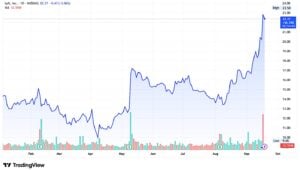
Lyft stock

For Waymo, the agreement is a way to expand without taking on the entire operational burden. For Lyft, it offers a way to participate in autonomous mobility after years of uncertainty about its role in the space.

Why This Partnership and More Waymo Deals Matter

The Nashville project is important. It’s Waymo’s first big partnership with Lyft for robotaxi services. The robotaxi company is changing its strategy. It will now partner with established ride-hailing platforms. This way, it can expand its reach without building everything on its own.

For Lyft, the deal brings new credibility. In recent years, the company has struggled to keep pace with Uber in traditional ride-hailing. By adding Waymo’s autonomous vehicles, Lyft gains a chance to position itself as a player in the future of mobility.

The stock market response shows that investors see this as more than just a pilot project—it is a sign of growth potential.

Cleared for Takeoff at SFO

Moreover, Waymo recently secured a permit to begin autonomous vehicle operations at San Francisco International Airport (SFO). The permit allows Waymo to roll out a phased testing plan there.

In phase one, Waymo will map airport roadways and conduct safety trials with a human safety driver supervising. 

The company will first provide rides to airport employees. Later, it will start pickups and drop-offs for passengers. SFO is a major transit hub, serving tens of millions of travelers annually, which makes this permit highly significant. 

The decision shows strong support from local regulators. It highlights Waymo’s safety record and technical skills. This airport rollout broadens Waymo’s reach. It also helps boost commercial autonomous mobility in tricky settings. It further strengthens Waymo’s role as a leader in safely scaling autonomous ride services.

Most recently, Waymo teamed up with Via to integrate its driverless robotaxis into public transit. This begins this fall in Chandler, Arizona.

The service will plug into Chandler Flex, an on-demand microtransit system run by Via. This decision aims to improve transit accessibility, reduce costs, and enhance safety for riders.

Analysts view this as a smart move for Waymo’s robotaxi growth. It adds to their recent Lyft partnership in Nashville. It also underscores Waymo’s push to embed autonomous vehicles (AVs) in shared, transit-oriented settings. 

Broader Context of Autonomous Expansion

Waymo’s expansion into airports and now through partnerships reflects a strategy of gradual scaling. At Phoenix Sky Harbor Airport, it already runs robotaxi services for travelers. 

The global picture also shows growing momentum for robotaxis. Analysts predict the autonomous vehicle industry might surpass $100 billion by 2030. They expect annual growth rates to exceed 30%. In North America, the AV market growth is staggering. 

AV market 2030 in north america

Cities are testing grounds for this technology. Companies like Waymo, Cruise, Zoox, and Motional are all seeking permits to operate.

Waymo’s advantage lies in its long record of safety data and its willingness to publish results. In contrast, many competitors offer fewer details. Waymo shows lower crash rates over millions of miles. This builds credibility and boosts its regulatory standing.

In addition to this, robotaxis are also considered as one way to help curb the transport sector’s carbon emissions. 

Robotaxis and Emission Reductions

Robotaxis, especially electric ones, can play a major role in cutting emissions. Waymo’s all-electric fleet provides over 250,000 rides weekly, avoiding about 315 tons of CO₂. In San Francisco, Los Angeles, and Phoenix alone, the service prevents another 135 tons each week by replacing traditional cars.

Studies back these gains: research from Lawrence Berkeley National Lab found that electric robotaxis could emit 87–94% less greenhouse gases per mile than gasoline cars. With durable designs and clean power, fleets could lower lifecycle emissions by up to 72%, showing strong climate potential as adoption grows.

If 5% of U.S. vehicle sales in 2030 were autonomous robotaxis, that shift could save 7 million barrels of oil per year. In turn, this can reduce CO₂ emissions by about 2.1 to 2.4 million metric tons annually.

The Roadblocks Ahead

Despite the strong data and new partnerships, challenges remain. Regulatory approval is complex and can differ widely from city to city. Public trust is another factor. While safety statistics are compelling, many passengers are still uneasy about riding in cars with no human driver.

Costs are also a concern. Building and maintaining fleets of autonomous vehicles requires significant investment in hardware, software, and infrastructure. Waymo’s partnership with Lyft helps share some of that burden, but scaling to hundreds or thousands of vehicles will still take time and capital.

Competition is increasing as well. Companies such as Cruise and Zoox are also testing services in U.S. cities, while global firms in China and Europe push forward with their own models. The race is becoming crowded, and success will depend on execution, cost control, and the ability to win regulatory and public acceptance.

Looking Ahead: Driving Into Tomorrow

Waymo’s next milestones are to expand operations at the San Francisco International Airport. They also plan to launch the Nashville project with Lyft in 2026. Both will be closely watched as tests of whether autonomous vehicles can operate at scale in busy, complex environments.

The Nashville service, in particular, could become a template for future partnerships between autonomous technology companies and ride-hailing platforms. If successful, it may lead to similar deals in other U.S. cities. 

Waymo’s recent safety results show how autonomous vehicles can greatly improve road safety, as shown by the sharp drop in crash rates. Challenges remain in regulation, costs, and public trust. But with clear momentum, strong data, and strategic alliances, Waymo is shaping the path toward safer and more connected urban mobility.

The post Waymo Expands With Lyft Robotaxi Deal and Strong Safety Record appeared first on Carbon Credits.

Continue Reading

Carbon Footprint

COP30 Moves Into a More Ambitious Phase: Key Updates to Know

Published

on

COP30 Moves Into a More Ambitious Phase: Key Updates to Know

COP30, held in Belém, Brazil, has shifted into higher gear. Ministers are now at the negotiation table. The talks are shifting from technical discussions to tough political bargaining.

The COP30 presidency has released a new summary document outlining 21 different options for resolving some of the most contentious issues. This is signaling a push for real progress.

A Menu of Options from the Presidency

At the heart of the summit is a 5-page note from COP30 President André Corrêa do Lago. This document does more than guide discussions: it frames possible outcomes by laying out 21 options across four major areas.

These major issue-areas include:

  • Strengthening national climate plans: whether countries should be urged to do more on their new emissions-reduction pledges.
  • Climate finance: especially the allocation of a $300 billion aid target from richer to poorer countries. Current climate finance flows are far too low. About $500 billion is available each year, but the world needs $1.3 trillion by 2030–2035. Rich countries made a promise: to give $100 billion a year by 2020. But they didn’t meet this goal.
  • Trade and climate: how to deal with trade barriers and climate-related trade disputes. Climate-related tariffs and disputes are rising. This shows that COP30 needs to tackle trade measures in a more organized way.
  • Transparency and reporting: improving how countries report their emissions and climate progress.

global climate finance vs COP30 target

The presidency says these options are not fixed decisions. Instead, they reflect different pathways that countries can endorse or reject. This structure is meant to give negotiators flexibility while still working toward a coherent package.

Some options call for a new three-year climate finance program. Others suggest simpler steps, like reaffirming current commitments.

One idea for trade is to host roundtables about how climate policies impact cross-border trade. Another is to create a formal platform to discuss climate-related trade measures under the UNFCCC.

  • The presidency also emphasizes core themes: multilateralism, putting people at the center, and moving from negotiation to implementation.

COP30 metrics show the size of these talks. Nearly 200 countries and many observer groups are represented.

Analysts say the document suggests a bolder COP30 outcome that could lead to roadmaps for phasing out fossil fuels. Also, it may establish a clearer link between climate finance and accountability.

Summary Note on COP30 Presidency consultations

Host Brazil Urges Action, Not Just Words

Brazil, as host, is pressing hard for concrete results. It has sent a strong message through a letter and its draft text, urging parties to negotiate in good faith and aim for real deliverables. And so negotiations extended into the nights to finalize the talks. 

President Lula da Silva and COP President do Lago both emphasize that talks must lead to a practical roadmap, not vague promises. They argue that to meet the challenges ahead, especially on fossil fuels and finance, countries must chart out “who does what, when, and how.”

In particular, Brazil is pushing for a roadmap to phase out fossil fuels. It sees this as both an ethical and strategic move: phasing out fossil fuels in a just way, while respecting development needs.

  • Global fossil fuel subsidies are about $500 billion each year.

Reform efforts are now closely tied to COP talks. This adds urgency to Brazil’s proposals.

Money Talks: Climate Finance Stalls Negotiations

Even though the presidency’s proposal is broad, finance continues to act as a major roadblock. Developing countries say rich nations still haven’t met their climate aid promises. This includes a goal of $300 billion each year by 2035. The shortfall compared to the estimated needs of $1.3 trillion annually illustrates the scale of the finance gap.

300 billion climate finance goal

These financial disputes have even prompted critics to warn that the absence of real funding could undermine the entire summit. Some say that until money flows, other issues — like emissions or transparency — may remain stalled.

South Korea’s Big Coal Shift

Meanwhile, a significant moment came when South Korea announced it would phase out many of its coal-fired power plants by 2040. The country joined the Powering Past Coal Alliance.

Under the plan, 40 out of its 61 coal plants are set to retire by 2040. The remaining 21 will be evaluated for closure later, based on economic and environmental factors.

South Korea aims to have 45% of its electricity supplied by renewables by 2040, supplemented by nuclear and gas. This commitment signals a major step toward a cleaner energy mix and the creation of green jobs.

south korea energy mix

But the pledge also raises geopolitical stakes. South Korea has long been a major coal importer. Its decision could ripple through global coal markets, especially affecting exporting countries.

The country accounts for about 1.5% of global emissions. This shows that its policies, though smaller than those of China or the U.S., still hold significant regional influence.

China Steps Up as the United States Steps Back

Complicating dynamics at COP30 is the notable absence of the United States. As such, China has stepped up its diplomatic efforts. With no top U.S. officials around, it is pushing for stronger cooperation among many countries.

Beijing’s delegation sees itself as a stabilizing force. They push for climate finance, technology cooperation, and working together on the Paris Agreement. China accounts for around 31% of global emissions, making its position critical for the overall climate outcome.

Before the summit, China updated its climate goals. It plans to cut emissions by 7–10% from peak levels and increase non-fossil energy use to 30% of total energy consumption by 2035.

Analysts note that, even with these plans, long-term goals and accountability are still necessary to keep warming within 1.5°C.

Share of Global Emissions by Country (2023)

What’s at Stake: A Turning Point for COP30

As COP30 presses on, what happens in the next few days could define its legacy. Here are the key things to watch out for as the summit takes its second week run:

  • The presidency’s “menu” of options gives countries flexibility, but risks producing watered-down outcomes.
  • Finance remains the most difficult divide. Without real funding, many fear COP30 could fall short.
  • Brazil is pushing for a fossil-fuel roadmap anchored in fairness — but that depends on buy-in from major emitters.
  • South Korea’s coal commitment could reshape export markets and send a signal to other coal-dependent nations.
  • China’s rising role highlights how power dynamics are shifting, especially in the U.S.’s absence.
  • Trade and climate measures, including tariffs and disputes, remain an area where COP30 could produce tangible frameworks to avoid future conflicts.

In short, COP30 may not just be another negotiation; it could be a turning point. Whether countries seize the moment to deliver real change will determine if this climate conference becomes a source of momentum or just another talking summit.

The post COP30 Moves Into a More Ambitious Phase: Key Updates to Know appeared first on Carbon Credits.

Continue Reading

Carbon Footprint

Carbon Credit Prices Hit New 2025 Highs: 7 Safe Platforms Every Buyer Should Know

Published

on

Carbon credit prices jumped to new 2025 highs this week, sparking intense market activity and a wave of interest from companies and investors racing toward net-zero goals. Fresh data from MSCI showed that high-rated credits traded at more than 300% above lower-rated ones in May.

Meanwhile, the MSCI Global ARR Index—which tracks afforestation, reforestation, and revegetation projects—climbed to a record $21.3 per ton in June. These trends reveal a clear shift: buyers now want transparent, verified, and high-impact credits.

As competition heats up, major players and new platforms are doubling down on quality. Because of this, buyers must choose trusted exchanges that offer verified, high-integrity carbon credits. Below, we break down why prices are rising, what trends are driving demand, and where buyers can find reliable credits in today’s fast-changing market.

MSCI carbon credit prices
Data as of June 2025. Source: MSCI Carbon Credit Price Indexes

Why Carbon Credit Prices Are Climbing in 2025

The 2025 carbon market looks very different from previous years. More than 95 million credits were retired in the first half of the year alone, according to Sylvera. This was the highest six-month total ever recorded. The surge reflects stronger climate action from governments and companies facing stricter rules.

Prices show the same direction. Carbon credits today cost 1.9 times more than in 2018. Demand for high-quality offsets hit new highs, while the supply of credible, recent credits remains tight.

carbon credits retirements

Premium Credits and Removals Capture Big Margins

High-rated credits led the price jump. In 2025, “investment-grade” credits—rated BBB or higher—averaged $14.80 per ton. Lower-rated credits averaged just $3.50. Buyers also paid more for newer credits. According to Ecosystem Marketplace, premiums for credits issued in the past five years reached 217%, up from 53% in 2023.

Carbon removal credits, such as reforestation or direct air capture, gained even more momentum. These credits now trade at a massive 381% premium over traditional reduction credits.

Although prices still vary—sometimes by 11% between credits from the same project—buyers show rising confidence. New standards, such as the ICVCM’s Core Carbon Principles and updated regulations, are making integrity a priority.

carbon credit market
Data as of June 2025. Source: MSCI Carbon Credit Price Indexes

Why High-Quality Carbon Credits Are in Such High Demand

Demand for trustworthy credits keeps rising due to tighter rules, corporate pressure, and growing public scrutiny. Programs like CORSIA, the global aviation offsetting system, now require stricter eligibility. In the first half of 2025, more than one-third of all new credits issued were potentially eligible for CORSIA Phase 1, depending on Article 6 approvals.

The Science-Based Targets initiative (SBTi) also pushed companies to use only high-integrity carbon removals for net-zero claims. As a result, businesses are moving away from cheap, low-quality credits. Instead, they are paying more for offsets that deliver proven climate and community benefits.

Technology-based removal credits—such as direct air capture—saw some of the highest prices in the market, often above $1,000 per ton. Nature-based credits remained important but typically traded between $7 and $24 per ton. This widening gap shows how buyers value durability and innovation.

The Top 7 Platforms to Buy Verified Carbon Credits in 2025

Because transparency matters more than ever, selecting the right exchange is essential. Here are seven reliable platforms offering verified carbon credits in 2025:

carbon credit companies

All these platforms work with leading standards bodies like Verra, Gold Standard, and the American Carbon Registry to ensure strong credibility.

How New Standards and Market Forces Are Reshaping 2025 Prices

Integrity-focused reforms, new technologies, and shifting buyer behavior continue to reshape the carbon market. According to the World Bank, new standards have led to fresh price swings—especially for high-quality nature-based credits. Issuances hit record highs, too.

  • Sylvera reported that 77 million credits were issued in Q2 2025, up 39% from Q1 and 14% from Q2 2024. Yet retirements grew even faster, keeping pressure on supply.
carbon credit prices
Source: Sylvera

Old vintage credits are quickly falling out of favor. Companies now want recent, high-quality offsets that meet new regulatory and investor expectations. As a result, BBB-rated credits and other premium assets are setting the tone for market pricing.

Some older credits still trade below $1 per ton, but high-integrity projects now define the market’s direction and future values.

What the Latest Data Says About Growth and the Road Ahead

The numbers reveal a market growing fast and evolving even faster. BloombergNEF’s High Quality scenario shows potential supply rising from 243 million tons in 2024 to 2.6 billion tons by 2030, and possibly 4.8 billion tons by 2050. Even with rising supply, prices are expected to climb.

  • BNEF forecasts an average of $60 per ton by 2030, increasing to $104 per ton by 2050 as demand for removals outpaces reduction credits.

Notably, Direct air capture will play a major role. By 2050, BNEF expects it to supply 21% of all carbon credits, helping push average prices above $100.

Market structure is also shifting. Bilateral (over-the-counter) deals have exploded—growing 27-fold since 2022—as buyers want tailored, audited solutions. Compliance markets, like those in Singapore and California, continue to raise prices through strong tax and allowance policies.

carbon credits supply
Data source: Bloomberg

The Bottom Line for 2025 and Beyond

The carbon market is moving toward a future defined by quality, transparency, and impact. Demand is rising fast, regulations are tightening, and buyers are paying more for verified, high-integrity credits.

In this new environment, the best opportunities will favor informed buyers—those who act early, choose reputable platforms, and prioritize integrity over volume. The road to net zero increasingly depends on credible, premium carbon credits that deliver real climate results.

The post Carbon Credit Prices Hit New 2025 Highs: 7 Safe Platforms Every Buyer Should Know appeared first on Carbon Credits.

Continue Reading

Carbon Footprint

What the IEA’s New Scenarios Mean for the Global Climate — and for COP30

Published

on

The energy world is changing fast, yet not fast enough to protect the planet from dangerous warming. The International Energy Agency’s (IEA) World Energy Outlook 2025, released at the start of COP30 in Brazil, lays out three futures for global emissions. These scenarios show how close — or far — the world is from meeting the goals of the Paris Agreement. The findings are sobering, but they also give countries clear signals on where action must accelerate.

The IEA makes one point very clear: 2024 was the hottest year ever recorded, and for the first time, global temperatures stayed above 1.5°C across the entire year. The last decade was also the hottest in history. This puts huge pressure on countries as they update their national climate plans at COP30.

Yet the IEA also stresses something important — none of its scenarios are forecasts. They are pathways, and the direction we take still depends on policy choices made today.

A World on a Hotter Track: What the IEA’s Scenarios Show

The IEA’s three major scenarios outline different ways the global energy system could evolve. Two reflect today’s conditions. The third shows what it would take actually to reach net-zero emissions by 2050.

Global energy demand
Source: IEA

Current Policies Scenario (CPS): The Dangerous Path

This scenario assumes governments stop at policies already written into law. No new climate pledges. No new incentives. No strengthened targets.

Under this path:

  • Coal use falls only slightly.
  • Oil and gas demand have been rising for decades.
  • Global energy-related emissions stay close to 2024 levels all the way to 2050.

The result is alarming. Global warming will hit 2°C by around 2050 and reach 2.9°C by 2100, and temperatures will still be rising. The IEA even warns there is a 5% chance of hitting 4°C, a level associated with extreme climate disruptions and irreversible tipping points.

The CPS was removed after 2020 because it seemed unrealistic in a world trying to cut emissions. But political pressure, especially from the Trump administration, pushed the IEA to bring it back. Its return shows how vulnerable global climate ambition can be when big economies shift direction.

Stated Policies Scenario (STEPS): Better, but Still Off-Track

This scenario reflects what governments say they plan to do — but not what they have legally locked in.

Here:

  • Emissions peak within a few years.
  • They fall slightly to 35.2 gigatonnes (Gt) in 2035.
  • Advanced economies and China reduce emissions.
  • But developing economies emit more as energy demand rises.

Even with these changes, the STEPS pathway still results in 2.5°C of warming by 2100. This is far above the Paris goal of “well below 2°C” and nowhere near keeping warming under 1.5°C. The IEA notes that this year’s STEPS outcome is worse than last year’s due to slower clean energy progress and higher expected coal use.

Net Zero by 2050 Scenario (NZE): The Only Path that Stabilizes the Climate

Net Zero by 2050 Scenario, often called the NZE, shows what a 1.5°C-aligned future would require. It is the only pathway that eventually brings warming back below 1.5°C by the end of the century.

But the challenge has grown sharply. Because real-world emissions remain high, the NZE scenario now includes:

  • a higher and longer overshoot of the 1.5°C limit
  • warming peaks around 65°C mid-century and slowly declines

Large-Scale Carbon Removal Technologies: The Saviour

The only way to return below that threshold later this century is to combine deep emissions cuts with large-scale carbon removal technologies. These technologies remain expensive and unproven at the scale required.

So the IEA emphasizes that countries must do everything possible to limit the overshoot by cutting emissions faster now. Notably, in the NZE pathway, global emissions fall by more than half by 2035 and reach net zero by 2050.

By the end of the century, carbon removal technologies would need to eliminate nearly four gigatonnes of CO₂ each year to bring temperatures back down.

A Fossil Peak Nears as Clean Energy Surges — but the World Still Falls Short

The IEA shows the energy system shifting, with coal already at or near its peak and oil expected to peak around 2030, though its decline will be slower than once expected. Gas demand levels off around 2035, but at a higher baseline than earlier forecasts, revealing how deeply rooted fossil fuels remain in the global mix.

fossil fuel demand
Source: IEA

At the same time, clean energy is rising fast. Solar capacity could more than triple by 2035, wind is set to nearly triple, and nuclear expands by close to 40 percent. Renewables will even overtake oil as the largest energy source by the early 2040s. Yet the world is still not moving fast enough. Under stated policies, renewable capacity reaches about 13,700 gigawatts by 2035, far short of the roughly 19,600 gigawatts required under the net-zero pathway.

Renewable energy
Source: IEA

Global Carbon Emissions: Peaks and Plateaus

Both IEA scenarios point to sustained high emissions, though at different levels. In the CPS, global energy emissions stay near 2024 levels through 2050, as small coal reductions are offset by rising oil and gas use. In the STEPS, emissions peak soon, drop to 35.2 gigatonnes by 2035, and decline slowly to 2050.

Reductions in advanced economies and China are balanced by rising emissions in developing regions. The gap between CPS and STEPS comes mainly from higher coal emissions, slower industrial efficiency, and delayed adoption of electric and efficient vehicles.

All in all, this gap underscores the need to accelerate clean energy deployment to align with global climate goals.

carbon emissions IEA
Source: IEA

Why COP30 Matters More Than Ever

With the world heating faster than expected and the 1.5°C threshold already breached annually, COP30 becomes a turning point. The IEA’s outlook directly shapes negotiations because it:

  • Shows the world is far off-track.
  • Highlights the widening gap between political promises and real action.
  • Makes clear that overshoot is now unavoidable.
  • Warns that delay will force much heavier reliance on expensive CO₂ removals later.

At COP30, countries need to submit new Nationally Determined Contributions (NDCs). The IEA warns that current NDCs do not reflect the full potential of national policies or domestic clean energy momentum. In other words, many countries are doing more at home than they are willing to commit to on paper.

COP30 is a chance to fix this gap.

What Can Be Done to Get on Track? The IEA’s Priority Actions

The message is clear: the world is not on track, and the window to avoid the worst climate impacts is shrinking. Still, the IEA shows that meaningful progress is underway.

It highlights several actions that could quickly bring global emissions closer to the NZE path. The world needs faster renewable energy deployment, stronger energy efficiency improvements, and large reductions in methane emissions from the energy sector.

Electrification of vehicles, buildings, and industry has to accelerate, and sustainable fuels such as biofuels and hydrogen must expand significantly. These steps are well understood, often cost-effective, and achievable with current technology. What remains missing is the political will to scale them up at the speed required.

With COP30, countries certainly have an opportunity to match ambition with action and take decisive steps toward a safer climate future.

The post What the IEA’s New Scenarios Mean for the Global Climate — and for COP30 appeared first on Carbon Credits.

Continue Reading

Trending

Copyright © 2022 BreakingClimateChange.com

