

Anglo American and Codelco have signed a landmark agreement to coordinate their copper operations in Chile. Through Anglo American Sur S.A. (AAS), the partners will integrate mine plans for Los Bronces and Andina, two neighboring sites. This deal, approved by both boards, builds on a memorandum of understanding signed in February 2025.
Let’s unlock all details about this deal:
Anglo and Codelco’s $5B Copper Leap
The plan unlocks 2.7 million tons of additional copper over 21 years, starting in 2030 once permits are secured. Annual output will rise by about 120,000 tons, split equally between both companies. Costs are expected to fall by roughly 15% compared to standalone operations, with minimal new capital required.
This integration could generate a pre-tax NPV uplift of at least $5 billion, evenly shared by AAS and Codelco. Combined output from the two sites would place them among the world’s top five copper mines, up from their current top 10 ranking.
A new jointly owned operating company will oversee the plan and optimize processing capacity across Los Bronces and Andina. While copper production and profits will be split equally, both Anglo American and Codelco will keep ownership of their assets and continue to manage their concessions.
The alliance also allows flexibility. Each company can still pursue independent projects, including underground resource development, while coordinating operations under the joint framework.
Duncan Wanblad, CEO of Anglo American, said,
“Copper is a vital resource for the global energy transition and is at the forefront of our growth ambitions. We are delighted to finalise this landmark agreement with Codelco, ushering in a new chapter for Los Bronces and Andina, which are two exceptional copper assets. I am immensely proud of the collaboration between Anglo American and Codelco, which has brought this ambitious vision to life. Together, we are demonstrating what is possible when two leading copper mining companies work together with a shared purpose and commitment to excellence. I express my sincere gratitude to our partners in Anglo American Sur – Mitsubishi and Mitsui – without whose support this would not have been possible. The outstanding work of our teams reinforces our confidence in the joint mine plan and the expected more than $5 billion of additional pre-tax value for Anglo American Sur and Codelco. Together we are unlocking the full value potential of these neighbouring assets and one of the world’s premier copper resource endowments, for the benefit of all stakeholders and, of course, for Chile.”
Máximo Pacheco, Chairman of Codelco, also emphasized,
“We are reliable companies that honour our commitments. In just eight months, we finalised the joint mining plan we announced in February. I value that this process included the voices of workers, as well as the intense effort, remarkable capabilities, and outstanding professionalism of our teams, who succeeded in reaching an agreement that had been waiting for years. We can now maximise the potential of the Andina-Los Bronces mining district without major investments and with significantly greater returns. This collaboration for sustainable mining will also help meet the urgent need for more critical minerals for the energy transition, in a world where copper production has so far remained stagnant.”
Commitment to Sustainability and Communities
Both parties agreed to a set of principles guiding the plan’s execution. These include maintaining environmental safeguards and supporting existing social programs. The joint approach aims to set new standards for innovation, efficiency, and sustainable mining.
The transaction remains subject to regulatory and competition approvals, along with environmental permits expected before operations begin in 2030.
Chile’s Copper Strength in the Global Energy Transition
Chile remains the world’s largest copper producer, accounting for 24–30% of global output. Copper exports are the backbone of its economy, driving GDP, trade surpluses, and government revenues.
In 2024, Chile exported $103 billion worth of goods, with total exports including services reaching over $105 billion. This created a trade surplus of $14.8 billion, underscoring the nation’s global competitiveness. China continues to lead as the top buyer of Chile’s copper, alongside the U.S., Japan, and South Korea.
Copper Demand Outlook
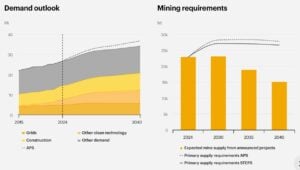
IEA data revealed that global demand for refined copper (excluding scrap) reached nearly 27 million tonnes in 2024. Forecasts show this figure climbing to 33 million tonnes by 2035, and as high as 37 million tonnes by 2050.
The electric vehicle (EV) transition, renewable energy expansion, and infrastructure growth are fueling this surge. For Chile, this creates a long-term opportunity to leverage its resource advantage.
Chile’s Export Strategy Beyond 2025
Looking ahead, Chile plans to strengthen exports by moving up the value chain. That means shifting from unrefined copper concentrate, currently about two-thirds of its output, to higher-value refined products and processed metals. The country also aims to expand exports in agroforestry and advanced food processing.
This strategy positions Chile not only as the world’s top copper supplier but also as a leader in sustainable and value-added trade. With the Anglo American–Codelco alliance, Chile is set to reshape the global copper market while reinforcing its role in powering the clean energy transition.
The post Anglo American and Codelco’s $5B Joint Mine Plan Secures Chile’s Copper Future appeared first on Carbon Credits.

EU carbon credit claims changed on 27 September 2026, the day the Directive (EU) 2024/825 began to apply across the European Union. The change is narrow. It changes how a company can talk about the credits it buys. A product can no longer be called neutral on the strength of compensation alone; however, every specific, evidenced statement about what a company measured, reduced, and funded stays fully available.

The post Promoting Improved Cooking Practices in Nigeria appeared first on Terrapass.



-
Climate Change1 year ago
Guest post: Why China is still building new coal – and when it might stop
-

 Greenhouse Gases2 years ago
嘉宾来稿:满足中国增长的用电需求 光伏加储能“比新建煤电更实惠”
-
Greenhouse Gases1 year ago
Guest post: Why China is still building new coal – and when it might stop
-

 Climate Change2 years ago
嘉宾来稿:满足中国增长的用电需求 光伏加储能“比新建煤电更实惠”
-

 Renewable Energy12 months ago
Sending Progressive Philanthropist George Soros to Prison?
-
Climate Change2 years ago
Bill Discounting Climate Change in Florida’s Energy Policy Awaits DeSantis’ Approval
-
Greenhouse Gases1 year ago
嘉宾来稿:探究火山喷发如何影响气候预测
-

 Climate Change2 years ago
Analysis: China’s CO2 falls 1% in Q2 2024 in first quarterly drop since Covid-19