

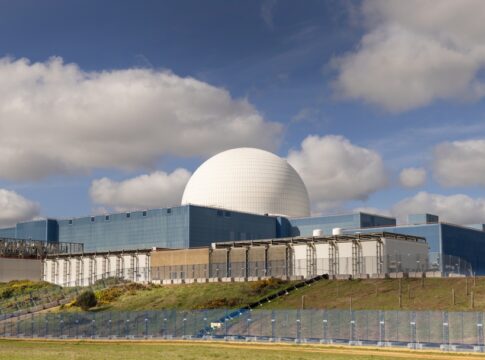
The UK government has approved the Sizewell C nuclear power plant. This decision shows the country’s commitment to clean and secure energy for the long term. Once completed, the plant will supply reliable, low-carbon electricity to about six million homes—roughly 7% of the UK’s total electricity needs.
Sizewell C is in Suffolk. It’s the first nuclear project to reach this stage since Hinkley Point C. It is one of the largest infrastructure efforts in Britain in decades.
The project is designed to produce 3.2 gigawatts (GW) of electricity, doubling the output of the existing Sizewell B reactor. Construction could take around 10–12 years, with the first electricity generation projected in the mid-2030s.
Financing the UK’s Nuclear Future
Sizewell C will be built using the Regulated Asset Base (RAB) model. This method helps investors recover construction costs from consumers sooner. This cuts financial risk and makes it easier to attract funding. However, this also means that a portion of the cost will be passed on to UK households in the form of slightly higher energy bills.
The UK government owns 44.9% of the project. Other investors include La Caisse de dépôt et placement du Québec at 20%, Centrica with 15%, EDF Energy at 12.5%, and Amber Infrastructure with 7.6%. The government has pledged up to £700 million in direct support, while the total project cost may exceed £20 billion.
The estimated cost of electricity from Sizewell C over its lifespan is between £86 and £100 per megawatt-hour (MWh). Nuclear energy may seem pricey compared to recent renewable sources. However, it provides unmatched reliability, especially when wind or solar power is low.
Nuclear’s Role in the UK Energy Mix
Nuclear energy provides about 15% of the UK’s electricity, with about 6.5 GW. However, most of the current plants are old and will close by 2030. Without timely replacements, the country risks a major supply gap.

Sizewell C is crucial to maintaining a stable baseload supply, especially as the UK increases its reliance on intermittent renewables like wind and solar.
The UK government’s target is to reach 24 GW of nuclear capacity by 2050—up from around 6 GW today. Achieving this would require a mix of large-scale plants like Sizewell C and emerging small modular reactors (SMRs). Examples are those being developed by Rolls-Royce.

Nuclear is also central to the UK’s strategy for decarbonizing industry, heating, and transportation.
Carbon Markets and UK ETS Reforms
The UK is reforming the UK Emissions Trading Scheme (UK ETS) alongside its nuclear strategy. The ETS covers around one-third of the UK’s emissions, including sectors like power generation, heavy industry, and aviation.
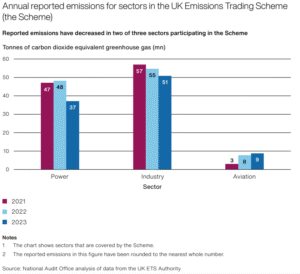
The UK ETS underwent a major reform in 2023 to align with the nation’s net-zero goals. The total cap on emissions is now set to decline more steeply—by 30% by 2030 compared to previous targets. This creates stronger long-term price signals to drive clean investment.
By 2028, the ETS is expected to expand to new sectors, including waste incineration and domestic maritime transport. These additions would significantly broaden the market’s impact and ensure more sectors pay the price for carbon pollution.
Starting in 2029, carbon removals will also be allowed into the UK ETS. Only high-quality removal projects will qualify. This includes direct air capture with geological storage and afforestation with strong permanence. These projects need to show carbon storage for at least 200 years. They also must follow strict monitoring, reporting, and verification (MRV) standards.
In another significant move, the UK is negotiating to link its ETS with the European Union’s carbon market. If this works, it will make a bigger, more active market. It will also align carbon prices and ease the compliance burden for companies in both areas.
The Nexus of Nuclear, Carbon Pricing, and Hydrogen
Sizewell C isn’t just about electricity. It also supports the UK’s broader net-zero roadmap, especially the scale-up of low-carbon hydrogen. The government plans to deploy 10 GW of hydrogen production by 2030. At least half of this will come from electrolytic (green) hydrogen, which is powered by renewable or low-carbon sources.
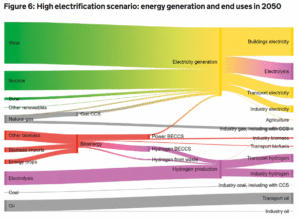
Nuclear plants like Sizewell C can supply the consistent, zero-carbon electricity needed for electrolysis. Nuclear plays a crucial role in producing green hydrogen. This is especially true in places where wind or solar energy is not always available.
Blue hydrogen projects will benefit from UK ETS reforms. These projects use natural gas with carbon capture and storage (CCS). CCS-based hydrogen hubs, such as the HyNet North West project, can earn tradable carbon credits. They do this by capturing and storing CO₂. This process lowers hydrogen production costs for industrial users.
Challenges in the UK Hydrogen Sector
Despite strong policy ambitions, the UK hydrogen sector has faced real-world challenges. Many projects have yet to reach final investment decisions (FIDs). In 2024, Air Products pulled out of its £2 billion Humberside hydrogen project. They said there was not enough support compared to the larger EU hydrogen subsidies.
The UK government has responded with updates to its Hydrogen Strategy and new funding rounds under the Hydrogen Production Business Model (HPBM). It has also launched the Net Zero Hydrogen Fund to provide grants and contracts for difference (CfDs) for early-stage projects.
Still, industry developers are calling for more certainty—especially in demand-side policy. Long-term agreements and public procurement can reassure investors. They show there will be customers for low-carbon hydrogen when production starts.
Looking Ahead: Delivering Net Zero Through Integration
The approval of Sizewell C and the strengthening of the UK ETS signal a decisive step toward a cleaner and more resilient energy system. Together, they create a foundation for future integration of clean power, carbon removals, and low-carbon fuels.
To maintain momentum, analysts believe that the UK should consider these actions:
-
Finalize and implement a robust EU-ETS linkage to promote investment certainty.
-
Establish clear regulatory pathways and funding support for carbon removals.
-
Encourage hydrogen demand through industrial procurement and public sector offtake.
-
Ensure timely and cost-effective delivery of Sizewell C, avoiding the delays that have plagued other nuclear builds.
As the UK navigates its energy transition, the interplay between nuclear energy, carbon pricing, and hydrogen production will shape the success of its net-zero strategy. If done right, this approach can put the country ahead in clean energy—boosting economic growth, reducing emissions, and improving long-term energy security.
The post UK Approves £38B Nuclear Project, Alongside ETS Reforms and 10GW Hydrogen Ambition appeared first on Carbon Credits.

EU carbon credit claims changed on 27 September 2026, the day the Directive (EU) 2024/825 began to apply across the European Union. The change is narrow. It changes how a company can talk about the credits it buys. A product can no longer be called neutral on the strength of compensation alone; however, every specific, evidenced statement about what a company measured, reduced, and funded stays fully available.

The post Promoting Improved Cooking Practices in Nigeria appeared first on Terrapass.



-
Climate Change1 year ago
Guest post: Why China is still building new coal – and when it might stop
-

 Greenhouse Gases2 years ago
嘉宾来稿:满足中国增长的用电需求 光伏加储能“比新建煤电更实惠”
-
Greenhouse Gases1 year ago
Guest post: Why China is still building new coal – and when it might stop
-

 Climate Change2 years ago
嘉宾来稿:满足中国增长的用电需求 光伏加储能“比新建煤电更实惠”
-

 Renewable Energy12 months ago
Sending Progressive Philanthropist George Soros to Prison?
-
Climate Change2 years ago
Bill Discounting Climate Change in Florida’s Energy Policy Awaits DeSantis’ Approval
-
Greenhouse Gases1 year ago
嘉宾来稿:探究火山喷发如何影响气候预测
-

 Climate Change2 years ago
Analysis: China’s CO2 falls 1% in Q2 2024 in first quarterly drop since Covid-19