

After two years of stonewalling, governments agreed at COP30 to hold a series of annual discussions about how their trade policies can enable emissions reductions while helping, rather than hindering, economic development. But analysts warn the process may not be able to achieve much in practice.
Since COP28 in Dubai in 2023, emerging economies including China, India and South Africa have been pushing – in the face of resistance from developed countries – to get the UN climate negotiations to discuss “unilateral trade measures”. These, they argue, include the European Union’s imminent tax on imports of certain high-emission products, known as the Carbon Border Adjustment Mechanism (CBAM).
The Brazilian presidency of COP30 bundled trade and other contentious issues such as finance and emissions-cutting together in the summit’s most high-profile outcome: the “Global Mutirão” decision of the Belém political package.
COP30 fails to land deal on fossil fuel transition but triples finance for climate adaptation
Under that, governments agreed to hold dialogues on opportunities, challenges and barriers for international cooperation on trade and climate at the mid-year June talks in Bonn for the next three years as well as an additional “high-level event” in 2028, and then produce a report.
Besides governments, other relevant bodies will be asked to participate in the dialogues, including the International Trade Centre, the United Nations Conference on Trade and Development and the World Trade Organization, the decision says.
On its own initiative, the Brazilian government has also launched what it calls an Integrated Forum on Climate Change and Trade, a three-year effort open to all countries that will bring together officials working on the two issues to consider how trade can support sustainable economic growth.
It is expected to develop ways for trade and climate policies to better intersect across key areas such as the energy transition, the fight against deforestation and carbon accounting
Mixed reactions to trade outcome
The formal move to broaden UN climate discussions on trade beyond their previous narrow placing under negotiations on climate response measures and just transition met with a mixed reaction.
One African negotiator, who is critical of the EU’s carbon border tax plan, told Climate Home News that while the UN dialogues are “a start, it is weak to not have a full COP item on it”. “What’s the point if it’s only at Bonn sessions and not going to COP?” they asked. “It’s like they want to kill it in a polite way.”
Aaron Cosbey, a climate and trade researcher at the European Roundtable on Climate Change and Sustainable Transition, said the dialogues are “very unlikely to have any impact” because most trade-climate topics are “just too hot to handle”.
-
Solar squeeze: US tariffs threaten panel production and jobs in Thailand
Chinese solar companies turned Thailand into a solar module assembly hub. Now thousands of Thai workers are caught in a trade war between Washington and Beijing -
Threat of EU carbon tax prompts dubious “green aluminium” claims in Mozambique
Mozambique’s biggest industry claims its aluminium is green, which would help it avoid European taxes – but those claims have been questioned -
Countries must deal with imported emissions in a fair and flexible way
Emissions in trade could add another source of multilateral tension unless they are dealt with in a fair and inclusive way


But Li Shuo, head of the China Climate Hub at the Asia Society Policy Institute, said he hoped the new discussions would help define a constructive role on the issue for the UN climate process, while Arunabha Ghosh, head of the Delhi-based Council on Energy, Environment and Water, said the dialogues represented “progress”.
Ellie Belton, E3G’s trade and climate lead, said referencing trade was a significant step towards addressing trade tensions in UN climate talks. Dialogues, she added, could “offer the space many countries have been calling for to continue collaborative discussions on both the opportunities and challenges, which should help to rebuild trust and unlock enduring solutions”.
The European Union agreed to these dialogues after references to unilateral trade measures – which the bloc regards as a loaded term targeting the CBAM – were downgraded. EU climate commissioner Wopke Hoekstra had told a press conference at COP30 that “we’re not going to be lured into the suggestion that [the EU’s carbon border tax] is a unilateral trade measure, and in that realm we’re also not going to discuss it.”
The final COP30 deal just repeats a previous agreement that “measures taken to combat climate change, including unilateral ones, should not constitute a means of arbitrary or unjustifiable discrimination or a disguised restriction on international trade”.

Europe’s contentious carbon border tax
From January 1 2026, the EU will tax imported cement, steel, chemicals, aluminium, hydrogen and fertilisers at a rate depending on the amount of greenhouse gases emitted during their production. The UK will introduce an almost identical policy a year later.
European countries argue that the new levy will level the playing field and ensure companies do not move their production out of the continent to countries with lower carbon taxes and weaker environmental regulations.
They have some international support, with Vanuatu’s climate minister Ralph Regenvanu telling Democracy Now at COP30 that measures such as this are important because they pressure countries to reduce emissions, rather than just relying on voluntary action as much of the Paris Agreement does.
-
Bolivia’s shift to the right renews ambition to mine vast lithium reserves
The election of a centre-right president after 20 years of socialist rule could open up the nation’s lithium reserves to foreign investment – the US is paying attention -
How Sumatra’s lost trees turned extreme rain into catastrophe
Deforestation by both legal and illegal means has steadily eroded ecological resilience in Indonesia, worsening the impacts of flooding in recent days -
For blighted Niger Delta communities, oil spill clean-ups are another broken promise
Many local people are disappointed by efforts to repair the devastation left by foreign oil firms even as the Nigerian government plans to restart drilling


Nonetheless, China, India, Russia, South Africa and others have argued that the European scheme is unfair, as developing countries cannot afford to clean up these industries on their territory or pay higher prices for green versions of the affected products.
The EU’s recent promise to offer “flexibilities” on the CBAM tax to the US also angered many developing countries, particularly as the bloc rejected calls to exempt the world’s least developed countries.
David Ryfisch, co-head of international climate policy at the Germanwatch advocacy group, praised the border tax for helping European industries decarbonise and pressuring governments outside Europe to improve their climate policies.
But, he said, the EU could have made the policy “more acceptable to other countries if it had consulted with them earlier and if the collected revenues were re-channelled to developing countries for them to accelerate decarbonisation domestically”.
Other issues that could be tackled by these UN climate dialogues and the Brazil-led forum include tariffs on green economy goods such as solar panels. The US has imposed tariffs on panels from China and some other parts of Asia. Meanwhile, other countries including India have introduced tariffs on solar panels in an attempt to encourage domestic manufacturing of clean energy equipment.
The post Trade breaks into agenda of UN climate talks – but will it have teeth? appeared first on Climate Home News.
Trade breaks into agenda of UN climate talks – but will it have teeth?

Next week, diplomats from around the world will descend on Yerevan, Armenia, to negotiate a series of decisions under the UN Convention on Biological Diversity (CBD).
Between 19 and 30 October, 196 parties will gather to hammer out the precise wording of the dozens of legal texts that make up the decisions under the Conference of the Parties (COP) to the CBD.
This year’s summit is particularly significant, as it marks the halfway point between the agreement of the Kunming-Montreal Global Biodiversity Framework and the deadline for achieving its targets.
The CBD has found that countries are currently not on track to meet 22 out of the framework’s 23 targets.
During the fortnight, delegates will also be negotiating decisions relating to the two supplemental protocols to the CBD: the Cartagena Protocol, which covers biosafety; and the Nagoya Protocol, which covers access and benefit-sharing for the use of genetic resources.
(The Cartagena and Nagoya Protocols, which are each governed by a “meeting of the parties”, or “MOP”, have fewer parties than the CBD as a whole, with 173 and 141, respectively.)
Carbon Brief is tracking the progress of countries towards consensus on dozens of negotiating texts using the interactive table below.
The tracker includes texts from the COP, as well as the MOPs for the Cartagena and Nagoya protocols. It also includes draft decisions from the most recent subsidiary body meetings, as these form the starting point for the negotiations in Yerevan.
The CBD has three subsidiary bodies: the subsidiary body on scientific, technical and technological advice (SBSTTA), the subsidiary body on implementation (SBI) and the subsidiary body on article 8(j) and other provisions (SB8J).
SB8J focuses on issues related to the Indigenous peoples and local communities. It was established at COP16 in Cali, Colombia, in 2024.
The first two columns of the interactive tracker list the topic of each agenda item and the relevant body, with subsequent columns including dates, page counts and links to the original documents.
The table is searchable and can be sorted using the arrows in the header.
Areas of disagreement in UN draft texts are denoted by square brackets. Counting the brackets in a particular iteration of a text therefore gives a sense of how far parties are from reaching consensus.
The bracket column is colour-coded, with dark green indicating a low number of brackets and red indicating a high number of brackets remaining.
Texts can also present parties with choices using “options” or alternatives (“alt”), which are counted together in the sixth column of the table.
The key discussions in Yerevan will centre around two agenda items in particular. The first is the global review, which will assess progress towards the GBF and make recommendations for accelerating action.
The second is finance, which can be separated into two parts: resource mobilisation and the financial mechanism. On resource mobilisation, biodiverse global south countries are likely to push for an increased amount of international finance for conservation.
Disagreement over the creation of the financial mechanism led to the suspension of COP16 in Cali in October 2024, as parties failed to find agreement on the mobilisation of finance before the end of the summit.
Global south countries want the establishment of a separate financial mechanism under the control of the CBD; global north countries largely prefer to maintain the existing mechanism, which sits under the Global Environment Facility.
At the resumed session of COP16 in Rome in early 2025, countries agreed on a roadmap that would lead to the establishment of a permanent mechanism.
related
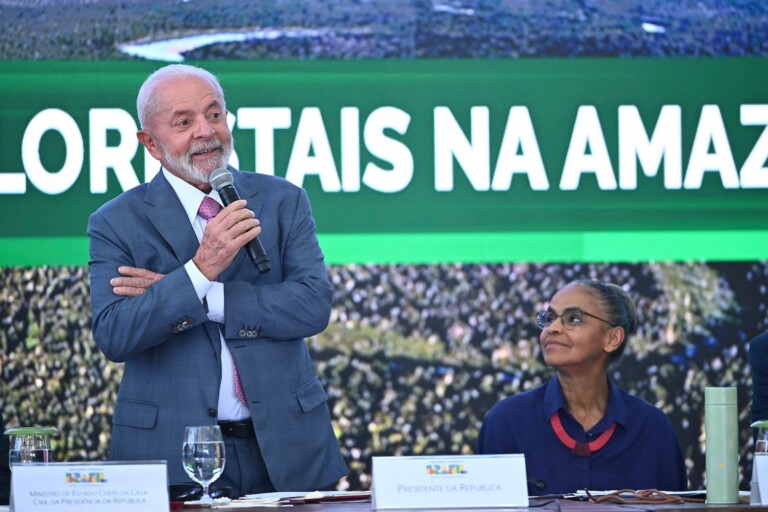
Analysis: Lula presidency saved at least 20,000km2 of Brazilian Amazon since 2022
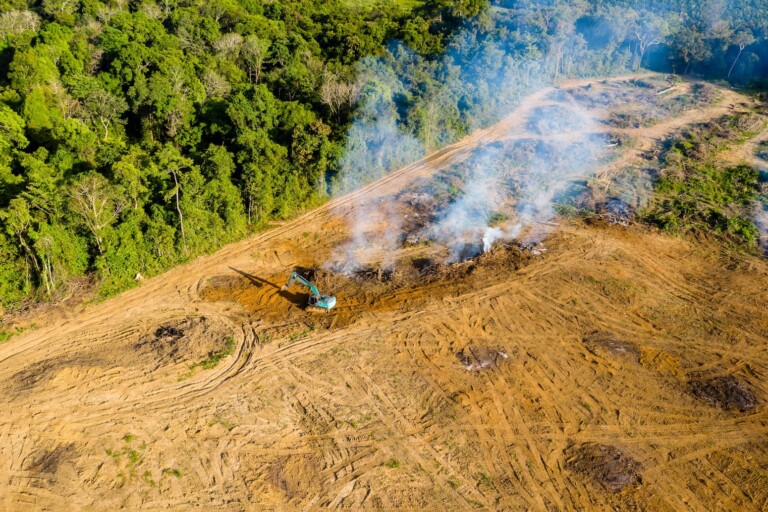
Why land-use emissions have fallen by a third this century – in six charts

Analysis: 84% of nations miss deadline to identify ‘nature-harming’ subsidies by 2025
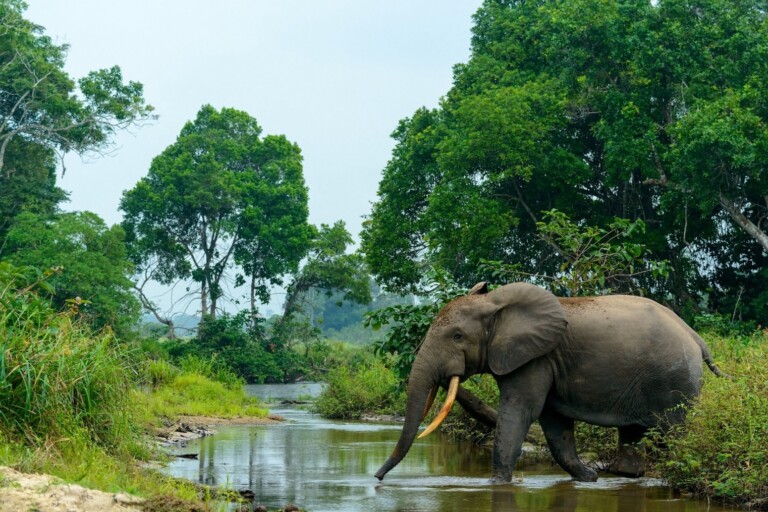
UK withdraws millions in funding from world’s second-largest rainforest in Congo
The post Interactive: Tracking negotiating texts at the COP17 biodiversity summit appeared first on Carbon Brief.
Interactive: Tracking negotiating texts at the COP17 biodiversity summit
A beacon of love
On an outer island of Fiji, two thousand nautical miles from Sydney, is a shining light of hope and resilience for our troubled world.
The island of Kioa is home to a Tuvaluan community who migrated from their atoll of Vaitupu in the late 1940s. It is a land of warm hearts, big smiles, and deep cultural roots; a place where the sound of a conch still summons the island together, where islanders paddle out to fish in carved outrigger canoes, and healthy happy children walk barefoot to school.
Here, culture is life. Kioans live sustainably through their traditional knowledge and practices. The island is alive with song, dance and the rhythms of a life tied to the tides, the winds, and the seasons.