Connect with us

Published

on

As businesses look for ways to reduce costs and improve sustainability, one of the best options is adopting solar energy. In 2025, solar power is becoming an even more attractive choice for businesses in Australia looking to lower energy bills.  

Solar for businesses is a great way to cut energy costs while contributing to a greener, more sustainable future. In this blog, we’ll explore how solar systems, particularly rooftop solar, can benefit your business and help you save money on electricity bills. 

Why Solar Energy is a Smart Choice for Businesses

Solar energy is a renewable energy source that uses the sun’s power to generate electricity. As the price of electricity continues to rise, more Australian businesses are turning to solar power as a way to cut costs and reduce their reliance on the grid.  

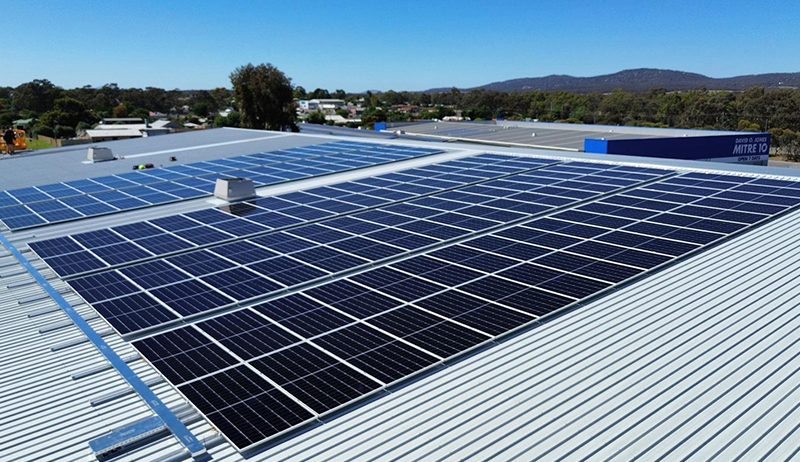
By installing solar panels for business use, companies can generate their own electricity, reducing the need to buy expensive energy from utilities. 

One of the main benefits of installing solar systems for your business is the potential savings on energy bills. Solar panels allow you to harness free energy from the sun, which can significantly reduce your monthly electricity costs.  

By using solar power, you can avoid paying high rates for energy from the grid and keep your energy bills under control. 

Take Kew Golf Club, for example. Located in Victoria, this premier golfing destination has seen impressive financial and environmental benefits since adopting solar power with the help of Cyanergy 

The club now saves over $26,165 annually, cutting its electricity bills by 50% while generating clean, renewable energy. 

After installing a 99kW solar system, Kew Golf Club’s annual energy costs dropped from $52,330 to $26,165. 

Your business can achieve similar energy savings, just like Kew Golf Club, while taking the lead in sustainability and producing clean, renewable energy for the future. 

How Does Rooftop Solar Work for Commercial Businesses?

Commercial solar power uses solar photovoltaic (PV) technology, which involves installing solar panels to turn sunlight into electricity. Rooftop solar is one of the most popular options for businesses looking to adopt solar power as it’s more cost-effective and solar helps to lower energy costs and reduce their environmental impact. 

Commercial solar systems are larger than residential ones and can produce more energy. For example, a typical residential solar system in 2025 is around 6kW-13kW. 

In contrast, commercial systems come in various sizes from 20kW-500kW, there are sizes available for small businesses to large. 

Since commercial systems are bigger, they can accommodate more panels and generate more electricity, which is especially useful for businesses with higher energy needs or large rooftops. 

However, commercial solar systems also come with higher installation costs and more complex setups compared to residential systems.  

This is mainly due to the grid connection process and the need for special protection units if the system exceeds 30 kW of inverter capacity. 

Recent advancements in solar PV technology have made commercial solar cells much more efficient. For example, Australian companies have developed some of the world’s most efficient commercial solar cells, with efficiency rates between 22% and 25% just ten years ago. This means businesses can now generate even more power from their solar systems. 

Understanding commercial solar power means knowing the differences between residential and commercial systems. Factors like system size, energy output, and improved solar cell efficiency help businesses make informed decisions about using solar energy to meet sustainability goals and reduce costs. 

The benefits of commercial solar power are clear: significant savings on energy bills, a reduced environmental footprint, and even a potential increase in property value, providing long-term returns on investment. 

In some cases, any extra energy generated by the solar system can be sold back to the grid, allowing you to earn money through feed-in tariffs. 

Feed-in tariffs are payments offered by energy providers for the electricity that your solar panels produce and send back to the grid.  

This is an excellent way for businesses to not only save on energy bills but also earn extra income. Depending on the tariff rates in your area, this can add up to significant savings and revenue. 

To ensure your solar system lasts and performs well, it’s important to choose the right equipment and work with a reliable solar installer.  

Commercial Solar

How Much Are Solar Panels for Business?

The cost of installing solar panels for business use depends on various factors, including the size of your building, the energy needs of your business, and the type of solar system you choose. 

On average, businesses in Australia can expect to pay anywhere from $12,999 to $73,000 for a commercial solar system. 

However, it’s important to consider that the long-term savings on energy bills can make the initial investment worthwhile. Plus, there are government incentives and rebates available for businesses in Australia, which can help reduce the upfront cost of installation.  

Over time, the energy savings will offset the installation cost, and your business can start seeing a return on investment. 

Benefits of Solar for Business

  1. Reduced Energy Bills: One of the main reasons businesses switch to solar energy is to lower electricity costs. With solar panels, you can produce your own electricity, reducing your need to buy from the grid. 
  1. Sustainability: Solar power is a clean, renewable energy source. By switching to solar, your business will reduce its carbon footprint and contribute to the fight against climate change. 
  1. Energy Independence: With solar power, you won’t be as dependent on energy suppliers. You’ll have more control over your energy costs, and during power outages, your solar system can continue to generate electricity if paired with batteries. 
  1. Increased Property Value: Installing solar panels can increase the value of your business property, making it more attractive to potential buyers or investors. 
  1. Government Incentives: Installing a solar system for your business can give you access to government rebates of up to $50,000! The Australian government encourages businesses to adopt solar energy, offering various rebates, subsidies, and loan options to reduce the cost of installing commercial solar panels and batteries. 

A key program, the Small-scale Renewable Energy Scheme (SRES), makes rooftop solar systems more affordable. This program provides tradable certificates called small-scale technology certificates (STCs) for most commercial solar systems if the installer is accredited. The value of these certificates is based on your system’s expected electricity generation until 2030, depending on its size and your business location. Typically, you can transfer the STCs to your installer in exchange for a discount on your system. 

solar for business

Get Solar for Business Today!

In 2025, solar for businesses is not just an option; it’s a smart financial move. By installing rooftop solar and taking advantage of feed-in tariffs, businesses can significantly reduce their electricity bills while contributing to a cleaner environment.  

If you’re thinking about going solar, it’s important to understand the costs involved, but with the right system, your business can start saving money and benefiting from renewable energy.  

Don’t wait too long – start exploring solar options today and begin cutting energy costs for your business. 

Cyanergy will support you with every step of your solar journey! For a smooth experience, talk to an expert or get a free quote. 

Your Solution Is Just a Click Away

The post Solar For Businesses: Cut Energy Costs in 2025 appeared first on Cyanergy.

https://cyanergy.com.au/blog/solar-for-businesses-cut-energy-costs-in-2025/

Continue Reading

Renewable Energy

Losing My Religion

Published

on

Some may find the claim at left compelling.

But consider Japan, China, the Czech Republic, Denmark, Norway, Sweden, and Finland that are almost completely atheist.  The other nations in Western Europe have also steadily moved away from religion.

Have they “lost their countries,” or is this a present-day scare tactic directed by fear-mongers, just as it has been since the Dark Ages?

Losing My Religion

Continue Reading

Renewable Energy

Is It Odd that Many Words in English are Supernumerary? Or Is that Superfluous? Extraneous? Unnecessary?

Published

on

Not at all.

English has an uncountable thousands of words it doesn’t need.  If you don’t believe me, check out “A Word a Day,” and learn the meanings of words that are completely useless.  The last two days brought us:

  • April 14: Flocculent (adjective: having a fluffy, woolly texture).
  • April 13: Impetrate (verb: to obtain by request or entreaty).

Maybe this impressed people a century ago, but if I wrote that a sheep was flocculent, I think you’d be rolling your eyes.

While some English speakers 400 years ago were discovering gravity, developing calculus, using newly minted telescopes to explore our solar system, and refining our understanding of logic as originally put forth by Aristotle, others were inventing words for groups of animals.

Sure, it’s useful to have words like “pack” (for dogs), “herd” (for cows and horses), “flock” (for birds), and perhaps a few others.  But what about a group of owls (a parliament), flamingos (a flamboyance), or ferrets (a business)?  And that’s just the beginning.

By contrast, Spanish has too few words, IMO.  For those interested, here are the 15+ possible meanings in English of the verb “llevar.” As someone who made an honest attempt to learn the language, I’d go into panic mode when someone would say something with any conjugation of that verb.  S***! Is he talking about wearing something, Giving someone a ride? Bringing something? Getting along well with someone?  Stealing something?

Is It Odd that Many Words in English are Supernumerary? Or Is that Superfluous? Extraneous? Unnecessary?

Continue Reading

Renewable Energy

The Universe Doesn’t Care About Us

Published

on

If you believe that a loving God has a plan for you, and is steadily guiding you towards happiness, then you disagree with the assertion here.

The rest of us are forced to admit that the universe is cooly indifferent to us and the outcome of our lives here on Earth.

This doesn’t mean, btw, that our lives are meaningless, but it does compel us to create our own meaning as we make our choices as we go along.

Another point to be made here is that there is no “galactic cavalry” that is going to come charging in, guns ablazing, to save us from the criminal insanity of the Trump administration.

The Universe Doesn’t Care About Us

Continue Reading

Trending

Copyright © 2022 BreakingClimateChange.com