

Weather Guard Lightning Tech
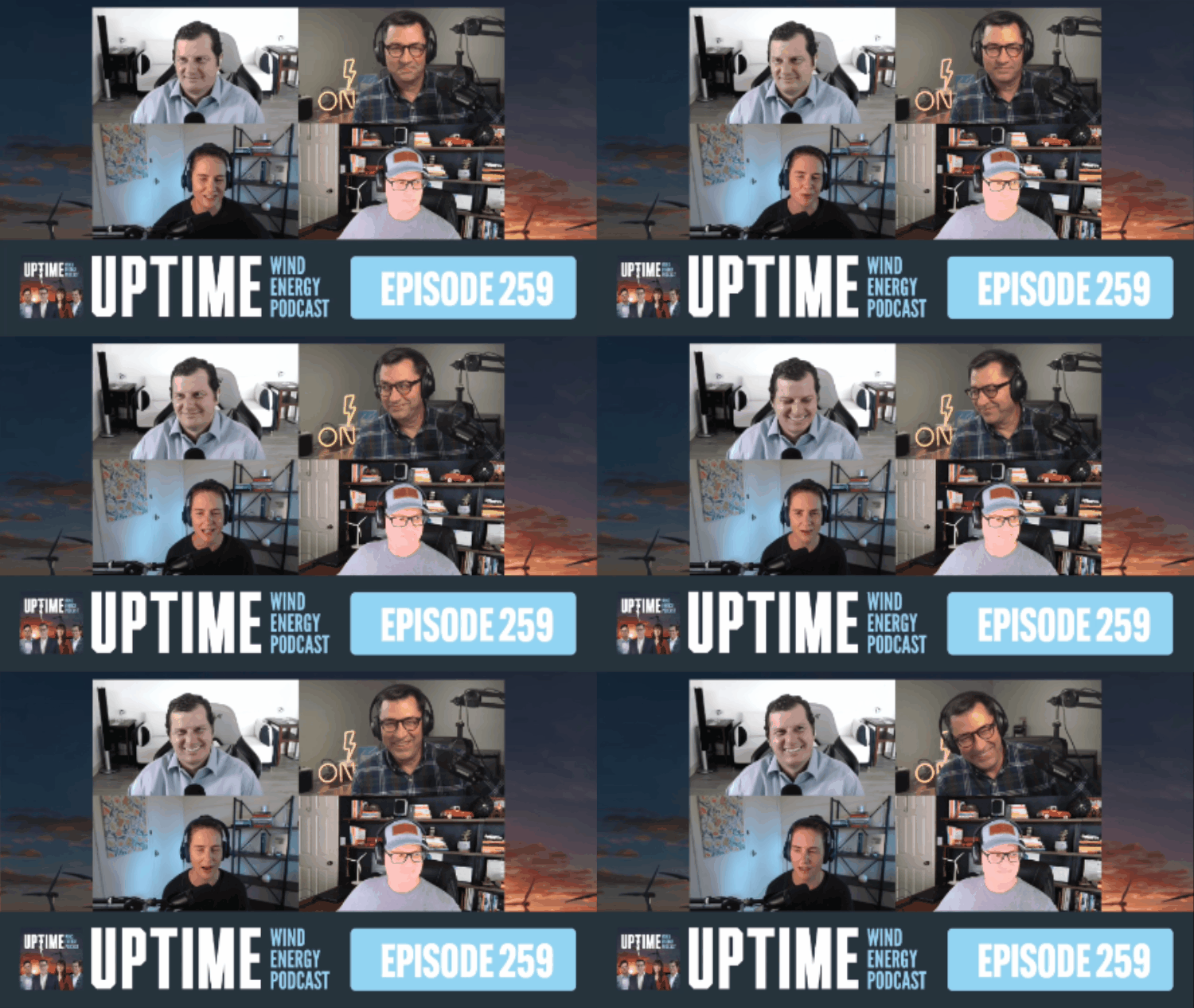
Energex Acquisition, LM Wind Power Builds Enercon Blades
We discuss the recent acquisition of Energex Renewable Energy by CDPQ for $3.6 billion, highlighting its implications on the wind industry. We also delve into LM Wind Power producing blades for ENERCON from its factory in Turkey and feature the Buffalo Mountain Wind Farm, a unique project on a reclaimed coal mine in Tennessee.
Fill out our Uptime listener survey and enter to win an Uptime mug!
Sign up now for Uptime Tech News, our weekly email update on all things wind technology. This episode is sponsored by Weather Guard Lightning Tech. Learn more about Weather Guard’s StrikeTape Wind Turbine LPS retrofit. Follow the show on Facebook, YouTube, Twitter, Linkedin and visit Weather Guard on the web. And subscribe to Rosemary Barnes’ YouTube channel here. Have a question we can answer on the show? Email us!
You are listening to the Uptime Wind Energy Podcast brought to you by build turbines.com. Learn, train, and be a part of the Clean Energy Revolution. Visit build turbines.com today. Now here’s your hosts, Allen Hall, Joel Saxum, Phil Totaro, and Rosemary Barnes.
Allen Hall: Big news, Energex Renewable Energy has announced that it will be acquired by CDPQ.
A major community and pension fund manager for about $13 and 75 cents per share. I’ve seen a couple different numbers about that. This transaction represents a total enterprise value of approximately 3.6 billion US dollars, and marks a really a substantial consolidation in the wind industry. The deal offers about a 40% premium on interjects closing share.
Of a couple months ago. So that’s a pretty good premium that CDPQ put on interjects value. And now Phil, this is part of a larger play of a lot of consolidation. This one in particular, interject is going to become a private company after this acquisition. Why?
Phil Totaro: It, that’s an interesting question because normally when a company gets taken private by a large institutional investor, it’s to restructure.
I am not sure that. Energex needs that much restructuring per se. It’s not like they’ve got a huge team to begin with. But a reasonably competent team in terms of the pedigree of their developments, obviously in Canada and throughout Europe as well. And they’ve been trying to venture off and dip their toe in other markets as well.
The reality of this is that it, it’s a fantastic thing for CDPQ to strengthen their position and it comes at a point in time when a lot of these Canadian pension funds are looking at the profitability and the returns that they’re seeing on their investments globally, including the US right now with all the trade tensions and everything we’ve got.
And I think you’re gonna see more of these Canadian. Pension funds and investors pulling back and doing things that are ignoring the US at this point. Looking at deals in Canada, looking at deals in Europe, looking at deals in Southeast Asia and South America for that matter.
Joel Saxum: I think it makes sense for me like CDPQ keeping their Canadian money mostly in Canada. However, I know Energex has a hand small handful of wind farms in the United States as well. Did you see a reality where just because of geopolitical reasons, they might just. Sell those couple of wind farms off.
Phil Totaro: Let’s put it this way, Brookfield’s not going anywhere and they’re always on the hunt for, good assets.
But there’s other people that could want to gobble up wind assets right now, especially if, the assets that Enerex owns in the US they’re not quite ready for repowering yet. But maybe that’s part of the play.
Joel Saxum: Moving forward. Yeah, I know, like you said, you mentioned Brookfield.
Brookfield, same thing. We’re talking about market consolidation. They just bought National Grid renewables not too long ago, and I know National Grid renewables in the States. A couple, A handful of wind farms and some solar assets, some other things. So yes, continuing to see that trend.
Allen Hall: I still wonder though if taking them private is a better long-term play.
Because of the turbulence that’s gonna happen over the next couple of years. It gets rid of all the shareholder complaints and the back and forth and where to save money and whatnot. If you’re really trying to look for a longer play, doesn’t taking renewable assets, especially large scale renewable assets off the public markets, the better long-term play.
I just think that. There’s so much turbulence in renewable energy, and it’s getting bashed so much that the value was still there, but in the public eye, it’s like it doesn’t have as much value. But when you’re producing power and you’re delivering it and getting paid, you’re still making money.
Phil Totaro: Maybe to answer that question. I think again, the reason that you would take something private is if you wanna avoid the scrutiny in general. And the reason to wanna avoid the scrutiny at this point is partly what you just described, but I think mainly if you’re looking to own and operate for a longer term, this is something, and look, CDPQ is putting money into something that they’re not making a short-term play themselves either. This isn’t just, Hey, let’s buy Inex to flip it in a year and a half or something. They’re, if they’re. Going in like they did with a minority stake that they’ve got in energy or any other investments that they’ve got and partnerships they’ve got around the world on individual projects or with development and owner operator companies then, they’re very deliberate about what they’ve done.
So again, taking it private. To me feels like they want to, just go about their business for the time being.
Allen Hall: Would the Canadian US tariff exchanges influence that decision
Phil Totaro: A little bit. I. Not necessarily a take private deal specifically, but you’ve got a scenario where, again, there, the Canadian pension funds and institutional investors, which is also gonna include, the likes of CDPQ and Brookfield.
They are going to make it a point to de-emphasize investments in the US for the time being, because there’s, it’s, and it’s really not even, ’cause look, we talked about this on the show before. If we end up in a recession and interest rates end up coming down, that’s actually really good for investors because they wanna plow money in when the cost of money’s cheap, if interest rates are low.
But the reality of it is we’re not quite there yet. We’re not, all the way into a recession yet there’s, everybody’s still on the fence. The what they’re, what everyone’s trying to avoid right now is the chaos that’s ensuing from the uncertainty around. The tariffs that are either in place, not in place, now they’re in place again.
We had Ontario trying to impose tariffs on the energy exports. Now they’re not, because there was a conversation with the commerce department. So I, who knows what’s gonna happen. This is the problem. Nobody knows what the hell’s gonna happen tomorrow. So how the hell can you plan financially?
Allen Hall: Don’t let blade damage catch you off guard. EOLOGIX-PING sensors detect issues before they become expensive. Time consuming problems from ice buildup and lightning strikes to pitch misalignment in internal blade cracks. EOLOGIX-PING has you covered. The cutting edge sensors are easy to install, giving you the power to stop damage before it’s too late.
Visit EOLOGIX-PING.com and take control of your turbine’s health today. LM Windpower has announced an extension of its partnership with Evolv. Company’s Intercon leading wind turbine provider, obviously. Through a new contract that’ll supply LM 78.3 meter blades for intercom’s, E one 60, EP five, E two wind turbines.
This, these blades are gonna be manufactured over in Turkey at the end of this year and it. It seems like LM is moving away from manufacturing GE equipment to picking up some work for other manufacturers. I, we’ve been noticing this trend for several months now. It does seem like this alliance falls into that bucket of maybe LM is moving on a little bit, but Turkey, the thing about this is LM getting work in Turkey because it did seem like a lot of.
Companies were starting to pull out a Turkey. Intercon is starting to fill the void. Isn’t that what it looks like, Phil?
Phil Totaro: Yes. Although this is slightly confusing. ’cause if you remember last year they were talking about laying everybody off in Turkey at LM and shutting the whole factory because I thought Intercon was working with TPI, who also has a facility there on the manufacturing of blades.
So did something happen? And if so, what? I don’t think we know. But also this, this deal, while it’s obviously not necessarily bad news for lm, keep in mind there’s only five or so gigawatts of order book for these intercon turbines. That’s specific model of turbine. So it’s not like this is game changing for lm and it’s not oh, this is gonna save the company, it’ll keep a factory in Turkey operational for.
18 months while they produce these things. And then after that, I don’t know what happens. ’cause intercom’s not been like the strongest in terms of their global sales lately. So we’ll see.
Joel Saxum: Yeah. So Rosemary, you worked at lm as part of some special projects. Of course you had one that was your general remit, but when things came through the door from other manufacturers of turbines, intercon being one of ’em, Intercon builds the turbine itself. They don’t build their own blades. How was that handled within lm? Do you, did you have any experience with that?
Rosemary Barnes: So when I started at lm, there was nothing but other companies blades, right? LM Wind Power didn’t make turbines and so the blades they made were exclusively for other manufacturers to put another manufacturers turbines.
And then a couple of years. Into my time at lm, I think must have been about 2018 or something. They got bought by ge who had been one of their main customers, one of the biggest customers. And wanted to, reduce some of the supply chain uncertainty by bringing that in-house.
And at the time there was lots and lots of reassurances of, we wouldn’t have paid so much for the company if we didn’t want you to still be making blades for other customers, and nothing’s gonna change there. There was a lot of effort put into they call them Chinese walls, right? Where like just because you’re working on one manufacturer’s technology, you just can’t go and work on their competitors and tell them all the, all their secrets and stuff like that.
I’d say that they did that as well as they probably could have not perfect. I’m sure. But yeah, as time’s gone on, I think that a lot of the other manufacturers got a little bit didn’t feel super duper comfortable even, with those things in place. There is of course still the worry that you’re just telling your competitor all of yeah, everything they need to know to just copy what you’re doing.
I think people have got less keen on it. Yeah, in a sense, like when I left LM it was only a couple of years into the merge and it really, things didn’t feel that different in terms of working for other manufacturers, but I’m sure that five years later it does. And so this is maybe more of a.
More of a big deal now, but yeah, to me it’s just the way that every project was. It didn’t make any difference if a blade was to be made for GE versus any of the other manufacturers.
Joel Saxum: I know Allen, with some of our work we’ve done with lightning protection in India, we’ve seen Intercon turbines with.
LM Blades, and I think we’ve seen Envision turbines with LM blades in India as well, haven’t we?
Allen Hall: Yes, we have.
Joel Saxum: Definitely.
Rosemary Barnes: I think LM made blades for maybe literally every single manufacturer. There were a few that they didn’t make many for. I know Vestas was one that they were continuously chasing and had never.
At the time I was working there, they had never really done a lot for vest and were always wanting to, but for the most part, I’m pretty sure that they had at least dabbled with every single OEM and I myself had some meetings at Anacon for yeah, for a deicing a blade that had deicing systems and it was very it was culturally very different to other manufacturers that I had worked with.
I worked a lot with ge and. A bit with Siemens Gomesa and just, I just did some introductory meetings at Anacon and it was exactly like you would expect the German engineering stereotype to, exactly like that would tell you. They really wanted things optimized. I’m much more of a, you make things.
As good as they need to be and not better because when you make them better, you make them more expensive, you make them take longer, you can often add extra points of failure that you know didn’t need to be there if the feature is a bit unnecessary. Yeah. But when you talk to. Maintenance personnel service teams, they love servicing anacon turbines.
I’ve heard it described over and over again as the Mercedes of wind turbines. They say, I’ve never climbed one, but they say that when you get up there, it is like the interior of a, I dunno, luxury yacht or something.
Allen Hall: As wind energy professionals staying informed is crucial and let’s face it difficult.
That’s why the Uptime podcast recommends PES Wind Magazine. PES Wind offers a diverse range of in-depth articles and expert insights that dive into the most pressing issues facing our energy future. Whether you’re an industry veteran or new to wind, PES Wind has the high quality content you need. Don’t miss out.
Visit PES wind.com today.
Joel Saxum: Isn’t it true with Intercon as well that they’d like, they won’t sell a turbine unless they get the maintenance contract
Phil Totaro: in Germany? Yes. I think they’ve had to relent in other countries because again, financiers may not allow that. To, like it’s just, oh, this is way too expensive.
’cause like a lot of OEMs, no matter how much an intercon turbine costs, when they’re also selling the maintenance package, they’re trying to make whatever they feel like they lost on the upfront CapEx and turbine costs up with the long-term service contract. They.
It just depends on which market. Definitely in Germany, they, I don’t think they’ll sell a turbine unless it’s their maintenance because they are so well-oiled. And you could probably argue almost all of Western Europe they’re so well-oiled in terms of, I, I heard a story once when I was at Clipper, this would’ve been around 2009, where there was a.
Intercon turbine in Germany that had a nelle fire and they literally had a brand new Nelle in 24 hours. They had swapped it, they had been able to swap out a newness cell and had the turbine back up and running within 24 hours of that fire, which is just astonishing. You’re paying for it like Rosie’s talking about, you’re paying for it.
Rosemary Barnes: That’s the kind of benefit that you would expect to see when you have OEM service agreement, right? That they have the ability to keep an inventory of spare parts and, nearby and they can just swap stuff out and everything’s very fast, but. We don’t see in Australia where those kind of agreements are very common.
We don’t see, we don’t see that kind of preferential treatment, that’s for sure. And then the second thing is that it may be technically the OEMs aren’t requiring that if you buy their turbines, you have to buy their service agreements. I. It’s almost like a, I don’t know, like a strong man kind of sales tactics.
Like sure you can, self self support this, self service this, but good luck getting any spare parts for it. Good luck getting any help. If you’ve got a, a warranty claim and they like pressure so much that you have no choice, which to me, like I would rather. That they were just honest, that they’re like, we can’t make a profit on the turbine without the service.
So you have to buy the service like that. I would rather know and have it, be honest about it than pretend like you’ve got a choice, but you’re just gonna be, like bullied and yeah, this thuggery to, to force you into using, or they’ll go outta their way to make your life hard.
Phil Totaro: And this, frankly, this is also what’s been talked about lately is that with people not being able to get access to spares for some, older.
Turbines and older models of blade. There are companies out there that are having the conversation. Do we just reverse engineer, one of these, one of these blades? Do we just buy one and scan it and figure out the arrow profiles and then. We already know how to manufacture a blade of that style anyway, so we’re just gonna do our own version.
And there are OEMs that are discussing that literally right now because they wanna be able to sell spare parts. Basically, and that’s probably extends beyond blades, but they wanna be able to sell spare parts to a market that is thirsty for spare parts. And it’s certainly happening, it’s conversations that are happening in the us but I could imagine it’s something that they would talk about in Australia too, because access to spares down there is also, quite finite and or time consuming to get your hands on.
Rosemary Barnes: One of the things, even, yeah back in my early LM days, that was one of the things that I learned early on. ’cause I was shocked at the secrecy and everyone rolled their eyes and said, it’s so dumb anyway, because the big customers, like if they buy hundreds of turbines worth of blades, then they buy an extra, one extra blade and slice it up into, I don’t know a hundred millimeter slices and then they can easily reverse engineer.
Maybe they don’t know. Exact materials, although I’m sure that it wouldn’t be too hard to do that either. Like you’re not gonna get a hundred percent of the way there. But I do think you could get like 95% of the way there and, do your own engineering on top to, do the analysis to, to make sure it’s okay.
So that, that’s why I think that the excessive secret is. Secrecy is silly because you send the you sell the product, you’re not in control of it anymore. Once it’s, left you, then why is it impossible to get from the OEM? Just like a simple line drawing that tells you where within the blade the lightning cable goes for instance, there’s just no reason for them to be um, like just to have their white knuckled grip on the, those drawings that they can’t even share.
Basic information like that, that you need to use their product properly when all you need to do is just yeah, you don’t even need to buy a spam, just wait till you’ve you’ve got a failure and okay, we’re not scrapping this blade, we’re slicing it. And then you’ll get all the information you need.
And, but with a harm drip relationship between customer and supplier, it doesn’t I don’t feel the need to make such an adversarial relationship over that.
Joel Saxum: The Wind Farm of the week this week is inspired by our A-C-P-O-M-S trip last week to Nashville. And it is one of the only wind farms within the state of Tennessee.
It’s called the Buffalo Mountain Wind Farm. It’s an old one. It’s been around for a long time. Started in October of 2000, so it’s in Anderson County, Tennessee, and it was the home of the first commercial wind generation facility in the southeastern United States. It’s owned by the Tennessee Valley Authority TVA, which is also the nation’s largest public power company, which I did not know.
They started by building three turbines up on top of a, former strip coal mine. So these were 660 kilowatt turbines. And they powered about a four, 400 homes. But then they expanded the wind farm in 2004 after it was successful to have 15 turbines. As of April, 2003, they’ve had 15 turbines and they’re producing about 9,500 megawatt hours of electricity per year.
The cool thing about this, like I was saying though, is this, is, this wind farm is located at the top. Of an abandoned or backfilled reclaimed coal mine. So the Coal Creek Mining Company was a part of this thing and it was a part of TVA’s Green Switch program. So this is using a, an formerly operated strip mine in Tennessee to produce renewable green energy with a 29 megawatt wind farm.
And energy works with TVA to run it. So the Buffalo Mountain Wind Farm. In Tennessee, you are the Wind Farm of the week.
Allen Hall: That’s gonna do it for this week’s Uptime Wind Energy podcast. Thanks for listening. Please give us a five star rating on your podcast platform and subscribe in the show notes below to Uptime, tech News or weekly substack newsletter and subscribe to engineering with Rosie because she’s going to hit 100,000 subscribers sometime over the next week or two.
We’ll see you here next week on the Uptime Wind Energy Podcast.
https://weatherguardwind.com/energex-lm-windpower-enercon/

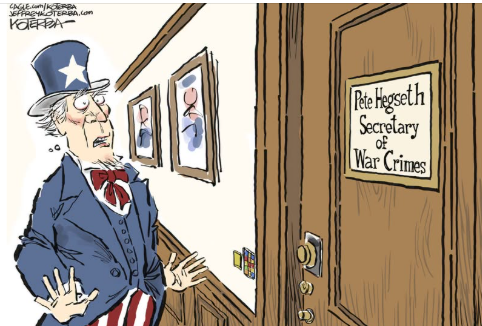 In a better world, the International Criminal Court would have much greater power to prosecute war crimes.
Today, winding up at The Hague requires terrible luck, and it’s virtually impossible to happen to a Donald Trump or a Pete Hegseth, given the enormous military might that the United States possesses.
Contrast this to what happened to Slobodan Milošević, who was arrested when his countries, Yugoslavia and Serbia, were overthrown.
 The prediction made here is nearly certain to come true.
The question is what happens at the point. E.g., how long does it take to rebuild trade deals and relationships with allies?
Keep in mind that regardless of the manner in which Trump loses power, there will always be “news” outlets like Fox and Newsmax, trying their best to convince the idiots that Trump was hounded and persecuted by the communists who hate America.
 All I can say about the me here is that personally I refused, against considerable pressure from my family, to indoctrinate my children into something I myself could not accept.
Is it actually “psychological abuse” to indoctrinate children into monotheistic religion? Whether to take it that far is an open question.
My parents, both atheists, sent my brother and me to Sunday School, as they thought it wrong to cut us off from a modality of growing up in America in the early 1960s. I don’t blame them, but again, it’s not something I was willing to replicate with my own children.



-
Climate Change1 year ago
Guest post: Why China is still building new coal – and when it might stop
-

 Greenhouse Gases2 years ago
嘉宾来稿:满足中国增长的用电需求 光伏加储能“比新建煤电更实惠”
-
Greenhouse Gases1 year ago
Guest post: Why China is still building new coal – and when it might stop
-

 Climate Change2 years ago
嘉宾来稿:满足中国增长的用电需求 光伏加储能“比新建煤电更实惠”
-

 Renewable Energy12 months ago
Sending Progressive Philanthropist George Soros to Prison?
-
Climate Change2 years ago
Bill Discounting Climate Change in Florida’s Energy Policy Awaits DeSantis’ Approval
-
Greenhouse Gases1 year ago
嘉宾来稿:探究火山喷发如何影响气候预测
-

 Climate Change2 years ago
Analysis: China’s CO2 falls 1% in Q2 2024 in first quarterly drop since Covid-19