

This op-ed was written by SACE’s Electric Transportation Director, Stan Cross. It originally appeared in the Georgia Recorder on July 3, 2024. It is reprinted here with permission.

Gov. Brian Kemp tours a Kia EV6 electric vehicle. Photo courtesy of Ross Williams/Georgia Recorder.
Since the first Ford Model T rolled off the assembly line in 1908, Detroit has been synonymous with the American automotive industry. But in the age of the electric vehicle, amid a renaissance in domestic manufacturing, Georgia is quietly but confidently emerging as the undisputed national leader in the electrifying auto sector.
It sounds like a provocative claim, but the numbers don’t lie. According to the Clean Economy Tracker and new data analysis recently released by Atlas Public Policy and the CHARGE coalition, Georgia currently leads the nation in committed investments and permanent jobs in EV and battery manufacturing, beating out every other state in the country — including Michigan. Since November 2021, when the Bipartisan Infrastructure Law began to inspire further corporate investment in clean energy, a whopping $22 billion and nearly 24,000 new jobs in private sector EV and battery manufacturing have been announced for Georgia.
These investments are already making a real impact in communities across the state. For example, Blue Bird’s factory in Peach County has taken advantage of the Bipartisan Infrastructure Law’s Clean School Bus program, helping companies shift production away from polluting diesel engines towards more efficient electric buses. Blue Bird’s electrified iconic yellow buses are cleaner and safer for the kids who ride them and the neighborhoods in which they operate. Today, its Fort Valley facility employs 2,000 workers in a town of only 9,000 residents — and Blue Bird has already announced plans to ramp up production from two EV buses per day to twenty. Blue Bird is also developing a “Registered Apprentice Program” to train workers in partnership with local colleges, high schools, and trade schools.
Hyundai is another automaker in Georgia that has several EV and battery-related operations. The company just entered into a memorandum of understanding with Savannah Technical College to provide prospective EV industry employees with training for jobs related to shop operations, electrical principles, and the servicing of hybrids and EVs. Similar programs now exist at Columbus and Augusta Technical Colleges, too. These newly trained workers will support growing manufacturing sites. Hyundai’s major $7.6 billion assembly plant in Ellabell is projected to create upwards of 2,000 construction and 8,500 permanent jobs that will eventually build 300,000 EVs annually. Domestic automakers are expanding their operations, too. The American electric SUV and pickup truck maker Rivian plans to build its second production facility in the state, which is anticipated to employ 7,500 workers by 2030.
The infusion of EV and battery industry funding driving this growth is supported directly by the Bipartisan Infrastructure Law and tax credits codified through the 2022 Inflation Reduction Act. FREYR, the Norwegian battery company, chose to build a $2.6 billion facility near Atlanta instead of Norway because of the IRA’s incentives. Out of 130 options across 25 states, the Atlanta metro area was selected due to its strong connections to air, sea, and rail ports and robust engineering workforce trained at schools like Georgia Tech.
During this chaotic election year, it’s no secret that EV policy has become a lightning rod for partisan politics — with Democratic leaders often claiming to be pro-EV and Republicans against. However, Gov. Brian Kemp recently visited the Kia plant in West Point to celebrate the hundreds of new jobs accompanying the production of the EV9, an EV that won North American Utility Vehicle of the Year. Interestingly, 97% of the nearly 24,000 EV and battery manufacturing jobs announced for the state since the passage of the Bipartisan Infrastructure Law are in Congressional districts represented by Republican legislators.
These EV facilities aren’t just creating much-needed jobs and tax revenues for the state — they’re cementing Georgia’s place as a major technology hub in the growing clean energy economy. As the governor said during his visit to West Point’s Kia factory, after driving the first Georgia-built EV off the production line, “We are working to become the e-mobility capital of the nation.”
The post Move over, Michigan: Georgia now leads in building next-generation cars appeared first on SACE | Southern Alliance for Clean Energy.
Move over, Michigan: Georgia now leads in building next-generation cars

 Sadly, a significant number of U.S. voters believe what House Speaker Mike Johnson says here, i.e., that “God isn’t finished with America yet,” and that “We need people (from the Republican party) of character and integrity,” as if there are any.
But what is that number, roughly?
After living through the first 18 month of Trump’s second term, with all the lies, the incompetence, and the corruption, this number has dwindled to a point that the Republicans are bracing themselves for the worst.
Republicans Manipulate American’s Ignorance — and it Doesn’t Take Too Much Skill
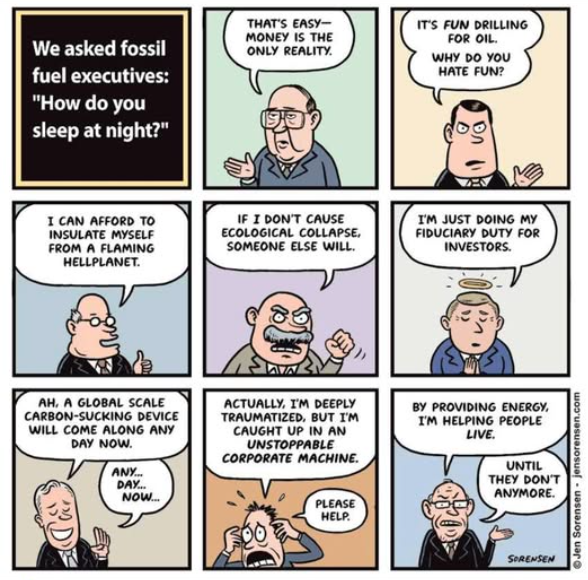
 I’m sure some of these excuses are extremely common in the minds of those making huge profits by destroying our planet.



-
Climate Change1 year ago
Guest post: Why China is still building new coal – and when it might stop
-
Greenhouse Gases1 year ago
Guest post: Why China is still building new coal – and when it might stop
-

 Greenhouse Gases2 years ago
嘉宾来稿:满足中国增长的用电需求 光伏加储能“比新建煤电更实惠”
-

 Climate Change2 years ago
嘉宾来稿:满足中国增长的用电需求 光伏加储能“比新建煤电更实惠”
-
Climate Change2 years ago
Bill Discounting Climate Change in Florida’s Energy Policy Awaits DeSantis’ Approval
-

 Renewable Energy10 months ago
Sending Progressive Philanthropist George Soros to Prison?
-
Greenhouse Gases1 year ago
嘉宾来稿:探究火山喷发如何影响气候预测
-

 Carbon Footprint2 years ago
US SEC’s Climate Disclosure Rules Spur Renewed Interest in Carbon Credits