Connect with us

Published

on

Weather Guard Lightning Tech
CNC Onsite Cuts Repair Costs With Uptower Machining

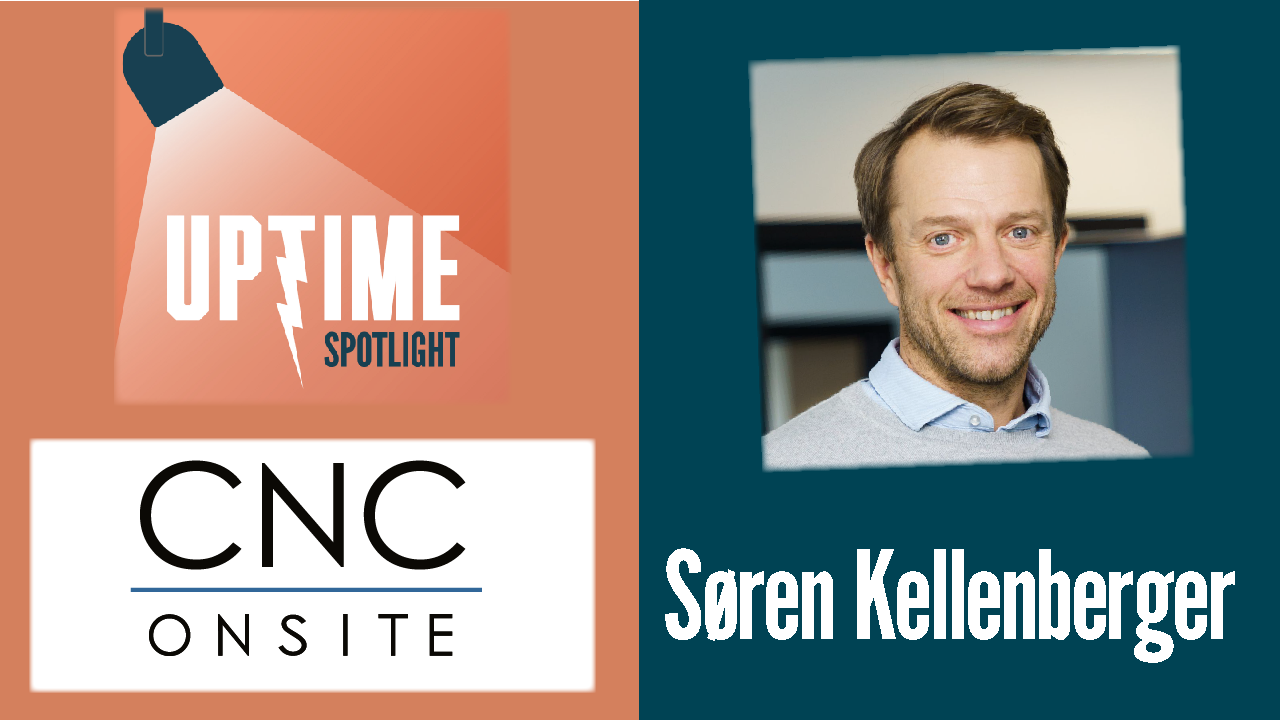
Søren Kellenberger, CEO of CNC Onsite, joins to discuss uptower yaw gear repairs, flat tower flanges, and replacing 1,000 blade root bushings across 26 turbines.

Sign up now for Uptime Tech News, our weekly newsletter on all things wind technology. This episode is sponsored by Weather Guard Lightning Tech. Learn more about Weather Guard’s StrikeTape Wind Turbine LPS retrofit. Follow the show on YouTubeLinkedin and visit Weather Guard on the web. And subscribe to Rosemary’s “Engineering with Rosie” YouTube channel here. Have a question we can answer on the show? Email us!

Allen Hall 2025: Soren, welcome back to the podcast.

Søren Kellenberger: Thank you, Allen, and, uh, nice doing it, uh, face-to-face- Yes, it’s great … and not as a team, uh, call. Right. That’s

Allen Hall 2025: true. Yeah. You’ve been doing a good bit of traveling, and you’re the new head of CNC Onsite.

Søren Kellenberger: I am, yes.

Allen Hall 2025: So congratulations on that.

Søren Kellenberger: Thank you very much.

Allen Hall 2025: And all the exciting new things that CNC Onsite [00:01:00] is doing, plus all the things you have developed and are now out in the field implementing, the, the list goes on and on and on.

I’m alwa- every time I talk to you, “Oh, we got a new-” Yeah … “machine to do something uptower.” So it’s all uptower, which is the, the beauty of CNC Onsite. You’re thinking about the operator and the cost to pull the blades off and do lifting the cell off and all those things. If we can do it uptower, we can save 30, 40, 50% of the cost of a repair.

Søren Kellenberger: Yeah.

Allen Hall 2025: That’s where CNC Onsite is just really killing it. You guys are doing great. Thank

Søren Kellenberger: you. Of course, we like what we do, but, uh, thank you.

Allen Hall 2025: Yeah. Yeah. Yeah, yeah. No, it’s good, it’s good. And, and so w- let’s talk about the things that I know about, and we’ll start there, and then we’ll go to all the new things you’re doing.

So the one that I see a lot of operators asking about is yaw tooth. Yeah.

Søren Kellenberger: Uh,

Allen Hall 2025: deformations, broken teeth on the yaw gear. That’s a big problem. And when I talk to [00:02:00] technicians, and I have them texting me about this, like, “Oh, well, I just weld on the gear back on, weld the tooth back on.” That’s a short-term solution.

That’s not gonna be long-term. The long-term solution is the CNC Onsite. Can you explain what you do to permanently fix these yaw gear problems?

Søren Kellenberger: Yeah. So what we do is actually we start by getting information about the, uh, original yaw ring, so the dimension of the teeth, and we get some load data. And, uh, then we start designing a replacement segment.

Uh, so what we ac- the process is actually that we bring a CNC controlled machine uptower, mount it on the yaw ring, and then we mill away that worn area, uh, creating a small pocket. And then those, uh, segments that we have designed, they are prefabricated. We bring them up and mount them in, in that, uh, pocket and bring the- The yaw ring back to where it’s, you can say, original design, uh, [00:03:00] that way.

Yeah

Allen Hall 2025: It’s better than the original design, ’cause you’re actually putting in better teeth than the, the manufacturer did originally.

Søren Kellenberger: True. Yeah, yeah.

Allen Hall 2025: So that happens, so you’re, you’re machining out those old teeth, broken teeth, putting the new set of teeth in th- and that all bolts in, and that’s it. That’s it.

But the, the difficulty is getting the machinery uptower to do that. That’s where a lot of your, your technology comes from, is getting this very accurate, uh, well-defined machine uptower and doing very controlled grinding and milling. Yes. So can you explain what that system looks like? If I’m gonna grind off those yaw, broken yaw teeth, how big is that kit?

Søren Kellenberger: It… Obviously, it depends a little bit on the turbine size. Sure, okay. Yeah. So, uh, it, so the, the newer five, six, uh, 10 megawatt turbines have larger teeth, so yeah, there you need a, a larger machine.

Allen Hall 2025: Okay.

Søren Kellenberger: But let’s say for, uh, Vestas three megawatt, the, the [00:04:00] complete machine weighs about 250 kilos. That’s it? So yeah.

So it, it comes up in smaller components. We just use, uh, the, the internal crane in, in the nacelle, and, uh, then we can lift the components to the yaw ring, assemble the machine, and then we are basically good to go. So it take, takes less than a day to get everything up and, uh, get set and be ready to, to machine.

Allen Hall 2025: So if you wanna fix a yaw gear problem, how long does it take from start to finish to get that done?

Søren Kellenberger: It typically, it takes one day to get everything up and get ready, and then per six teeth, which is a typical segment, it takes about a day to machine that. Okay. So, uh, let’s say you have, uh, somewhere between 10 and 15 teeth, it’s, uh, two to three segments.

So we do that in a week. Um-

Allen Hall 2025: Wow … and- ‘Cause the alternative is call a crane, have them lifting the cell off.

Søren Kellenberger: Yeah.

Allen Hall 2025: Take the yaw gear off, put a yaw gear on, if you can find a yaw gear. Yes. Put the nacelle back on. [00:05:00] Well, and I guess obviously the rotors are coming down too, so- Yeah. You’re talking about- Yes

hundreds of thousands of dollars in downtime. Yeah. It’s a big ordeal. The CNC Onsite method is so much easier.

Søren Kellenberger: We will just put our equipment in the back of our truck- … and then, uh, we’ll, we are ready to mobilize in a few days. So yeah, we can significantly, uh, bring down the downtime and, and as you said, the crane cost is of course extremely high.

And then you can add all the project management. You know, con- do I actually have my access roads, uh, still available? Right. Is the crane pad intact? And all of that stuff you need to organize. You can just forget about that and, uh- And

Allen Hall 2025: get it done …

Søren Kellenberger: get it done. Yeah.

Allen Hall 2025: Yeah. There’s, there’s a lot of owners, we, everybody knows who the machines are that have the, the, the yaw tooth problem.

Søren Kellenberger: Yeah.

Allen Hall 2025: So if you’re one of those owner operators, you better get ahold of CNC Onsite. Now, flanges on tower sections. It’s become a, a really critical issue. You hear a lot of, of [00:06:00] operators, OEMs talking about, “I’m putting together these tower sections and those flanges don’t really meet up quite right.”

Søren Kellenberger: Yep.

Allen Hall 2025: “I’m creating uneven torque patterns, bolt pat- my bolt tightening is not quite right.”

Søren Kellenberger: Yeah.

Allen Hall 2025: And it never really seats right, so you have this mechanical, built-in mechanical problem. CNC Onsite is now fixing that so those flanges are actually really flat. Really flat, yes. ‘Cause that’s what you need.

Søren Kellenberger: Yeah.

Allen Hall 2025: Yeah. They’re highly loaded.

Søren Kellenberger: If, if you want, uh… If you want your joints to be, uh, basically maintenance free, uh, we can, uh, achieve that with machining the flanges. And then, of course, you need to be in control with your bolt tightening process. Sure. But if you do those two things, you can have maintenance free bolted connections, and there’s so much money to be saved in the operations.

Um, and of course, when you have these bolts that end up fatiguing, some of them don’t get caught in time and you end up ha- having a catastrophic failure on the turbine. Uh- We’ve [00:07:00] seen that … because you have that zipper effect. Once a bolt starts breaking, the neighboring ones take that extra load and it accelerates really quickly.

Uh, yeah. Sure does.

Allen Hall 2025: Yeah. It’s a very serious situation, but it starts with this very simple solution which is just make the flange flat.

Søren Kellenberger: Yeah. But I think it’s some… a part of the issue is that those buying the towers aren’t necessarily responsible for the operational cost of maintaining that bolted connection.

So they might save a little bit of money when they buy the tower sections with rougher tolerances, but you will spend the money 10 times in the operations. Uh, and, and that’s, I think that’s where some of the operations, uh, re- the, the, those responsible for operational costs should, uh, get a little bit more CapEx spend, uh- Oh, sure.

Yeah. And, and then, uh, actually save a lot of money and, and reduce risk. Uh, it’s a huge, huge risk

Allen Hall 2025: It’s, it’s one of those lessons learned. You [00:08:00] don’t know that they should be flat. You shouldn’t know… You don’t know your flanges should be flat until you experience the problems, and then you want all your flanges flat from here on out.

Søren Kellenberger: Yeah.

Allen Hall 2025: But there’s only one way to do that really, and that’s to call CNC Onsite to come in and to make them flat.

Søren Kellenberger: Yeah.

Allen Hall 2025: Because it’s a difficult thing to do. You really need to have the machining prowess and the tight tolerances that CNC Onsite’s gonna deliver in a tool that can actually be adapted to that tower ring and make those surfaces flat.

It’s complicated. Exactly.

Søren Kellenberger: It is. Uh, but that is what we do every day, so, uh- Yes, I’ve noticed … yeah, so

Allen Hall 2025: so- You take on those challenges

Søren Kellenberger: So we are optimizing our machines to be not only fit for one-offs, but actually to go into a manufacturing, uh, process. So we have op- optimized our machines a lot with, uh, automatic alignment and, uh, stuff like that to, to really make that process, uh, easier.

Because it has been considered that when you had to machine a flange, you weren’t in [00:09:00] control with your production, uh, processes. But I think that is, um, a bit of a misinterpretation. It’s, it’s a little bit like saying when I have a casted component, I cannot get a bearing fit, uh, in my cast process. That’s not because your cast process is wrong, there’s just some limitations to what you can do.

Sure. And it’s basically the same here. Yes. And, and if you apply that con- uh, planned machining, you can gain some real benefits, uh, later on and the cost will, of course, drop dra- dramatically if you plan it, rather than call for one, uh, every time you have one that is out of tolerances and, and you can even narrow those tolerances down and get the benefits from maintenance-free bowler connections.

Allen Hall 2025: Right.

Søren Kellenberger: Uh-

Allen Hall 2025: Right, ’cause you’re gonna pay for it for the next 20, 30 years. Yeah. Yeah. That’s absolutely right. Now, you’re getting involved in some of the safety aspects of operating a turbine. Uh, some of the pins and the lockouts on the low-speed gearboxes get a little worn over time, so the hole [00:10:00] you put the pin in gets worn.

There’s a lot of loads on that and- Yeah … it starts to oblong out and eventually, if you’re trying to work on that gearbox, you’re trying to keep that and your technicians safe, which is what you’re doing- Yeah … that lockout pin doesn’t quite fit in the hole and it creates a little bit of a safety risk.

Yeah. So now CNC on-site’s coming in and saying, “Hey, wait a minute. We can realign that, clean that hole up, make that safe again.”

Søren Kellenberger: Yes.

Allen Hall 2025: Explain what that looks like and what that process is to do that.

Søren Kellenberger: Yeah. So again, it’s the same thought like with the, with the O-ring, uh, that instead of bringing a component down and trying to fix it, we have designed some machinery we can bring uptower and then make that repair.

So basically what we do is that, that we mill that hole a little bit larger and then we bring a bushing, uh, that we, uh, freeze into that hole- Okay … and to recreate that tight fit again with a, with a locking pin. Uh, so it’s, it’s not that [00:11:00] complicated, but you still need to know, of course, what you are doing.

So finding the center of the original hole is one of the critical things because you want the center of the new ring to be in that same position- Sure … to make sure it fits with the pin

Allen Hall 2025: right. So- Right. You can’t just take a drill up there and try to clean out that hole. No, no. That is not the way to do that

That,

Søren Kellenberger: that

Allen Hall 2025: won’t work. No, no . I’m sure it’s been tried, but- Yeah … no, you wanna have accurate mach- actual, uh, tight tolerance machinery up there to, to align that hole, drill it properly, put that insert back into that spot- Yeah … which is gonna be a hardened insert so it’ll last longer, right?

Søren Kellenberger: Yeah, yeah.

Allen Hall 2025: So once you do that, y- it’s a permanent fix to a otherwise nagging problem.

That’s wonderful.

Søren Kellenberger: Yeah.

Allen Hall 2025: So, th- again, that kit just goes right uptower, right up the, the lift, right up the cl- crane- Exactly … and bang, you’re done. Yeah. Okay.

Søren Kellenberger: So all our machines are designed to be able to be lifted with the internal crane-

Allen Hall 2025: Yeah …

Søren Kellenberger: of that specific nacelle.

Allen Hall 2025: Okay.

Søren Kellenberger: So obviously as the cells go bigger, they have more load cap- uh- Me too

load capacity. Yeah. So for the smaller [00:12:00] turbines, the machines come in, in a bit smaller parts- Okay … so that we are sure we stay within that 250 or 500 kilogram or even whatever the limit is of, of that- Yeah, yeah, yeah … crane. And then we can, uh, reassemble everything uptower and still do tolerances within a few hundredths of a millimeter.

And, and I think that is, that is really the core of, of what we do that, that we can achieve those workshop tolerances on site, um-

Allen Hall 2025: It’s crazy when I tell people that. I say, “Well, you know, CNC on-site, they can’t… I mean, those, those tolerances can’t be that tight.” And I say, “No, no, no, no. They’re talking about, you know, fractions of a millimeter,” which in, in American terms means fractions of a mil.

Yeah. That’s 1/1000th of an inch. That’s the tolerance you’re doing.

Søren Kellenberger: Yeah.

Allen Hall 2025: Uh, and that means quality at the end of the day. If you can machine things that tight, that means what you’re getting is gonna be right for that job. Yeah. It’s gonna fix that, fix that problem permanently, which is the goal. Yes. Don’t recreate the problem.

Just fix it once and be done. Now, blade root [00:13:00] inserts, huge issue. CNC on-site has been developing tooling to drill out those existing inserts and, and put in new inserts, and you’re having success with that.

Søren Kellenberger: Yeah.

Allen Hall 2025: That’s a… it seems like a complicated process, but you have owned that quite well. Talk about what that machinery looks like today, how you’re doing that process, and what have you learned from doing some, uh, field work.

Søren Kellenberger: It’s, uh… we actually, we’ve, we’ve developed two different machines now. Okay. So we, we have, we have one that is, uh, fully CNC controlled, uh, when you need to do a lot of bushings. Yeah. Um, that one takes a bit more, uh, time to set up, but, but, uh, each drilling process is, is really fast. Uh, and then we have developed a semi-automatic machine as well, uh, which is a little bit easier to mount, mounts directly on the blade.

And it’s, uh, really perfect when you only have smaller areas of the, the blade root where you don’t need to replace all bushings- But maybe typically it’s, it’s in the high load [00:14:00] area, which is 15 to 20 bushings maybe. Right. Something like that, right? Yes.

Allen Hall 2025: Yeah.

Søren Kellenberger: So, so there we can just mount it directly on the blade and, and then drill from, uh, from there.

Um, and it works really well. We completed, uh, the first large scale, uh, commercial, uh, project, uh, together with our good friends from, uh, We4C. Uh- Right.

Allen Hall 2025: Yes.

Søren Kellenberger: And, uh, and now we are producing, uh, two more drilling machines- Oh … uh, for, for new upcoming, uh, projects also together with, uh, the guys from, from We4C.

Allen Hall 2025: Wow.

Søren Kellenberger: So now it’s, it’s starting to, uh, to pick up. Um, it’s been a relatively long process, and I guess no one really wants to be the first mover on, uh, on new technology, right? Right. So we’ve had a lot of questions. Oh, that… And that looks interesting, but how many, uh, turbines, uh, or how many blades have you repaired?

And it’s been up until now, well, it’s only tested in the lab. Uh, but now we have the first, uh, large scale commercial, uh, project with, uh, 26, uh, turbines, [00:15:00] uh, repaired and, uh, and 1,000 bushings, uh, that were replaced, uh, across those, uh, 26 turbines. So-

Allen Hall 2025: Wow …

Søren Kellenberger: so I guess that is now large scale. Uh-

Allen Hall 2025: That’s large scale.

Yeah. Yeah. I would consider 1,000 a large scale test. Yeah. Yeah. Yes. And that brings all those turbines back to life.

Søren Kellenberger: Absolutely. They are up running, uh, full power again, so, uh, that is, uh-

Allen Hall 2025: That’s huge …

Søren Kellenberger: really nice.

Allen Hall 2025: For the operator, I’m sure they love that.

Søren Kellenberger: Yeah. And, and of course, uh, there’s, there’s been a lot of discussions about blades and, uh, bla- the, the waste, uh, issue you have on, on worn- Oh

out blades. Sure. So by being able to fix them instead of replacing them, not only is the, the cost for fixing a blade a lot lower than buying new ones, uh, but, but also from a, an environmental perspective. The not having to scrap them and create that waste is, uh, is also a nice, uh,

Allen Hall 2025: thing. Yeah, it’s one of the things that pops up more recently about replacing blades, and I think the [00:16:00] industry and the operators are pushing back on that.

Uh, because a lot of times the OEM wants to replace a blade, it’s just easier for them to do.

Søren Kellenberger: Yeah.

Allen Hall 2025: But the reality is, is that yeah, you’re creating this additional problem. What are you gonna do with the disposal of this blade? Do we really need to do that? Is it so far gone that I can’t recover it? I think a lot of times, especially with fiberglass blades- Yeah

you can bring them back to life.

Søren Kellenberger: Yeah.

Allen Hall 2025: Just with a little bit of engineering, uh, prowess and some good machinery- Yeah. You can, you can make magic happen, and that’s what CNC OnSite is doing. So that, that’s really amazing that, uh, you’re starting to get more adoption of that on, on the blade root inserts. I know across the United States there’s all kinds of issues, and you’re proving it out.

I think the adoption rate in America and all over is gonna really step up. Now, uh, you always have some cool new project, sort of top secret. What are you working on that the world needs to know about?

Søren Kellenberger: Yeah. W- I mean, we are constantly, uh, [00:17:00]expanding our, our line of services. Uh, so- Sure … so we are just out there trying to listen to what kind of issues do we see in, in the industry-

Allen Hall 2025: Yeah

Søren Kellenberger: and how can that be fixed, uh, uptower. So, so some of the, the latest, uh, innovations we’ve been doing is a, a new machine on, um… to, to do shaft milling. Uh, so that c- that can be on generator shafts, uh, for instance. There are some machines out there, but we’ve decided to go, uh, against CNC control- Okay

because it gives us a lot of, uh, opportunities both on, on speed, uh, of the process. It’s a more safe, uh, way to, uh, to do it.

Allen Hall 2025: Sure.

Søren Kellenberger: And we can actually also do different, uh, shapes on the shaft, so, so we can do more advanced, uh, repairs. Okay. We, we don’t need to stick to a certain diameter all the way. Now we can, we can mo- make grooves, and we can do, uh- Really?

all sort of sorts of stuff, uh- Oh … along that process because it’s CNC controlled.

Allen Hall 2025: Oh, sure. Okay. Um, and- Boy, okay. That makes a lot of sense. So you can actually take a, a, a basic, [00:18:00] basic, basic design of a shaft and make modifications to it- Yeah … to extend the lifetime and make it work better.

Søren Kellenberger: Yes. So typically we would mill down, uh, the shaft and- Sure

install a sleeve- Sure … to recreate a, a bearing fit, for instance.

Allen Hall 2025: Right. Yeah.

Søren Kellenberger: But we have possibilities to, uh, to create, um, grooves or anything that would do a stress relief or whatever you need, lubrication, or if you, if you want to do something, uh, afterwards, we, we can do that with, uh, with our machines.

Uh- Yeah. So yeah, we, we have some new machines for, for hollow shaft, uh, machining, so we can do stuff, uh, inside the main shaft, for instance. We can do stuff on the, the outside, as I mentioned on, on the generator shaft, but that could be on the gearbox as well. So- Sure … sometimes we see issues on the main shaft to, to gearbox, uh, connection.

Allen Hall 2025: Yeah.

Søren Kellenberger: We are able to, to fix, uh, those, uh, things uptower. Wow. And, uh, so yeah, lot of new, uh, stuff being, uh, developed.

Allen Hall 2025: That’s, that’s awesome.

Søren Kellenberger: [00:19:00] Yeah.

Allen Hall 2025: And I, I know you guys are busy, but- If somebody wants to get ahold of CNC Onsite and get work done this year, they better be making phone calls to you- … quickly. So I, I know your order book is filling up and you’re, you’re having to devote crews and machinery and time.

Yeah. How do people get ahold of you and get on that contact list and can start working the process?

Søren Kellenberger: I would say go into, uh, cnconsite.dk and, uh, there we have all our, our contacts. Uh, so just reach out. There’s a, yeah, formula you can, uh, fill in, uh, or you can find our direct contacts in our webpage, and, uh, then we can start looking at it.

So we are quite busy, but we are always- Yeah … open for, uh, discussions and, uh, yeah. That,

Allen Hall 2025: that’s a problem with being successful, is you’re just always busy running around trying to take care of problems, and that’s the thing, is that everybody I talk to that’s used CNC Onsite loves it-

Søren Kellenberger: Yeah …

Allen Hall 2025: and loves the process and loves the work you do.

So there’s gonna be a lot more phone calls and a lot more orders coming your way, and that’s- Yeah … that’s awesome. [00:20:00] Soren- Yeah … it’s so good to see you again and it’s so good to see you in person. Yeah. And congratulations on the promotion and everything that’s happening at CNC Onsite.

Søren Kellenberger: Thank you, Allen. It’s a pleasure.

CNC Onsite Cuts Repair Costs With Uptower Machining

Continue Reading

Renewable Energy

American Imperialism

Published

on

No one doubts that China is trying to take over the world; in fact, it could be argued that this has been an on-going effort for the last 6000 years.

Yet, unlike the United States, these people are patient and prefer to accomplish this task economically rather than militarily.

American Imperialism

Continue Reading

Renewable Energy

Court Saves Wind Safe Harbor, Norway Pauses Utsira Nord

Published

on

Weather Guard Lightning Tech

Court Saves Wind Safe Harbor, Norway Pauses Utsira Nord

A federal court restores the 5% safe harbor for wind tax credits, Norway’s parliament pauses the 35 billion krone Utsira Nord floating wind program, and the crew digs into Australia’s battery boom and the looming blade technician shortage.

Sign up now for Uptime Tech News, our weekly newsletter on all things wind technology. This episode is sponsored by Weather Guard Lightning Tech. Learn more about Weather Guard’s StrikeTape Wind Turbine LPS retrofit. Follow the show on YouTubeLinkedin and visit Weather Guard on the web. And subscribe to Rosemary’s “Engineering with Rosie” YouTube channel here. Have a question we can answer on the show? Email us!

Uptime324

Matthew Stead: [00:00:00] The Uptime Wind Energy podcast, brought to you by StrikeTape. Protecting thousands of wind turbines from lightning damage worldwide. Visit StrikeTape.com. And now, your hosts

Allen Hall: Welcome to this edition of the Uptime Wind Energy podcast. I’m Allen Hall here with Matthew Stead, Rosemary Barnes, and Yolanda Padron. And our week starts off in the courtroom. And if you’ve been watching the news lately, there’s a pretty substantial IRS case involving large-scale wind and solar having to do with the, uh, production tax credit and, uh, investment tax credit at the same time on the safe harbor, 5% safe harbor rule.

Uh, a federal judge handed the wind industry and solar industry a pretty substantial legal win that could reshape how the [00:01:00] projects qualify for tax credits. So a judge up in, uh, the District of Columbia vacated IRS Notice 2025-42. So if you remember that, uh, from a- about a year or so ago, uh, f- it found that the, that notice was arbitrary and capricious under the Administrative Procedure Act.

The notice, which was issued following a July 2025 executive order, had eliminated the 5% safe harbor for wind projects, uh, a provision developers have relied on since about 2013 to establish construction start dates without breaking ground. The court found the IRS failed to justify removing it, ignored industry comments, which I had read, and I agree with that, and gave no reason for treating wind differently f- than other clean energy technologies.

So That his executive order came down and said, “Hey, we don’t like wind. [00:02:00] IRS, write a rule and make it hard for wind to get installed in the United States.” And so they dutifully did it, but a court is throwing it out. This has some pretty significant implications because if you hadn’t broken ground before this ruling, I think the– what was happening was be- if you hadn’t broken ground by July 4th, your project wouldn’t qualify for some tax credits.

But now, if you have 5% safe harbor, you still are in the game, at least for now. Now, Wanda, that’s gonna make a big difference to asset managers and developers, won’t it?

Yolanda Padron: Yeah, it’s really exciting. I think it opens up the, the playing field for, for some of these projects that might be a little bit behind schedule.

Um, of course, a lot of teams had to change their plans and their pipeline when, um, you know, the big, beautiful bill passed and, I mean, it’s– of course, it adds a little bit of additional volatility, right, to, to wind and, and solar in the US, but it’s exciting to see at least things for, [00:03:00] for those of us that are in the wind and solar side, the, it’s a little, little bit of, of hope there.

Allen Hall: And Matthew, uh, even in terms of opening up o-o-operations and, uh, getting contracts signed, this should make a big difference in sort of opening the floodgates a little bit. Although there is a short timeframe. We’re, we’re recording on, what, what is today? June 10th. So you have, in theory, less than 30 days before the July 4th deadline, but hopefully this stays.

You think there’s a chance this just gets completely, uh, wiped out, the executive order and the IRS notice and- It’s back to what we remember for the, for the last, ooh, 12, 13 years?

Matthew Stead: Uh, yeah. I’m, I’m, I’m hopeful, and I, I agree with Yolanda. I think you, you said it really well. Um, I think this is a, a glimmer of hope in, um, a sometimes gloomy, um, environment.

So I think that’s great. In terms of going back to where it was, um, I mean, I guess my observation has been that, [00:04:00] you know, things in the US were a bit, um, distorted. You know, distorted through the, the PTC, um, and the whole repowering thing after 10 years is quite a distortion. So I think, um, you’re not necessarily going back to the good old days, um, might be the way, what will happen.

Allen Hall: I think there is a lot of people actively trying to dig holes at the moment, and I, I’m sure they’re gonna continue to do that. Yolanda, do you th- you think anybody’s gonna stop and kinda say, “Oh, we have the 5% rule. We’re, we’re good”? Do you think, or you think they’re gonna still go ahead and really start construction and then just keep things continually moving on site?

Yolanda Padron: I don’t think they, they can really stop, right? Because you, you don’t know if, if anything strange happens. A lot of people didn’t think the, a lot of the provisions in the big beautiful bill were gonna, were gonna see the light of day, and they did. Um, but it does, I really hope it brings at least a little bit of breathing room for some people.

I know it’s, it must be… I mean, I have some friends in development, and they’re, they’re q- a little [00:05:00] bit stressed right now just with everything going on. Um, so, so I really hope for them at least they, you know, if, if they’re a little bit behind schedule, then it, it’ll be, it’ll still be fine.

Allen Hall: Delamination and bondline failures in blades are difficult problems to detect early.

These hidden issues can cost you millions in repairs and lost energy production. CIC-NDT are specialists to detect these critical flaws before they become expensive burdens. Their nondestructive test technology penetrates deep into blade materials to find voids and cracks traditional inspections completely miss.

CIC-NDT maps every critical defect, delivers actionable reports, and provides support to get your blades back in service. So visit cicndt.com because catching blade problems early will save you millions[00:06:00]

Norway’s Storting has voted to pause the 35 billion Norwegian krone support program for floating offshore wind at Utsira Nord. The Conservative Party secured a parliamentary majority for the external quality assurance review, a socioeconomic analysis, and a technology development assessment, all before the Storting will authorize any commitments.

Equinor and Vårgrønn, along with EDF and Deepwind Offshore, each hold allocated 500-megawatt areas and were preparing to compete for that subsidy. Equinor says the project will continue for now. I think everybody is saying that at the moment. But, uh, Equinor cannot rule out consequences as framework uncertainty compounds in the already challenging nature of floating offshore wind development.

So Utsira Nord is a massive project. So it’s, it’s about three and a half billion US dollars [00:07:00] to go do this. We had Mads Furuseth and Anders Naslund about a year or so ago, maybe a little bit longer, talking about the project and how big it was and how important it was that Norway did this for floating offshore wind.

But with this, uh, recent change in the parliament of Norway, it does seem like they’re slowly going to try to kill it by putting in a number of, uh, reviews, which is how bureaucracies tend to kill things. Is put it under six, seven, eight reviews, different committees. They all take time to get together.

They have to put out a report. It could be two, three years from now. At that point, the world has completely changed, and everybody’s moved on. Does that seem like the outcome here at the moment?

Matthew Stead: Yes.

Allen Hall: In my mind, there’s really two big areas for floating offshore, which UK, right? That there, there’s some massive projects there, Green Volt being one of them, and then there was Sue & Nord.

So between the two, I feel like the, the UK one was going to [00:08:00] happen. The question whether the world was gonna move towards floating offshore wind was gonna happen up in Norway. If Norway decided to do it and could get it developed, and it has the capability to do it because, because they have that skill set, uh, right there in Norway.

If they could do it in Norway, everybody in the world would learn from it and figure out how to do it. Does this really set back floating offshore wind globally?

Matthew Stead: Yeah. I mean, going back to what I said before, and I, I’ll defer to Rosie on this as well, but, um, when I was at, at Blades Europe, um, one of the, one of my long-term contacts, um, y- was in floating wind, um, and had, um, left the industry.

He basically said i- in his view that the offshore wind industry was slowly, um, in decline or slowly dying. Um, so I’m just wondering if this is just evolution of viability of offshore wind.

Rosemary Barnes: Is offshore wind in decline? I think if you look globally, it’s, it’s not in decline. I, I haven’t looked in, in depth at the figures just based on what, you know, [00:09:00] headlines I’ve seen and podcasts I’ve heard, but I think that globally it’s still on the rise.

It’s just that- It’s only in Europe that things are really moving with speed, right? Like, people were expecting heaps of growth in the US and now no- nobody expects that. Floating offshore wind, it’s… I th- I still think it’s too early to say. There are plenty of countries that don’t have any good energy options besides, um, floating offshore wind, like Japan.

What their energy transition looks like is gonna depend a lot on their culture and what people think, ’cause, like, if you go through, like, the engineering solutions that Japan could have, the ones that make the most sense from an engineering point of view are not popular at all, are not politically viable.

Like, Japan could easily have a subsea cable connecting it with, um, with China, for example, or Korea, but I don’t think anybody, anybody thinks that that will ever happen because, you know, politically it’s, it’s very far from being possible. What else could they have? Geothermal. They’ve got heaps of [00:10:00]geothermal resources, like really good traditional geothermal resources, but my understanding is that it’s super unpopular because their onsen, um, community doesn’t want it.

Uh, my understanding is that they’re worried that if you put geothermal, um, if you exploit geothermal resources, then the onsens will not be hot anymore, and again, my limited research understanding is that it’s not true. It’s different resources. The two aren’t connected in any way. Um, and yeah, there’s actually a community geothermal, um, facility near Fukushima.

I’m trying really hard to get over there, but I’m, I’ve got a roadblock at the moment because, uh, n- no one there speaks English, so I need to find somebody to, to come with me and, you know, I’ll have one, one day to try and get there on the fast train and back to Tokyo in, in a single day. So it’s, it’s a bit of a stretch, but I’m gonna try.

But anyway, so yeah, what have we… We’ve ruled out, like, subsea cables, ruled out geothermal. Floating wind is good.

Allen Hall: Well, speaking of Fukushima, [00:11:00] there’s been a more recent push in Japan to start up some of the nuclear facilities. So after the tsunami, was that 2012, 2014 when that happened? It was a while ago.

Uh, when the tsunami happened and h- had that, uh, nuclear accident, they, they s- shut down all the nuclear facilities in Japan, but it does seem like they’re trying to restart some of them And, and maybe it’s just the demand for energy and, and they’re trying to weigh that off with offshore wind or floating offshore wind.

At what point, you know, which one do you choose? It has to be driven by cost and availability.

Rosemary Barnes: Yeah. And so Fukushima, I just looked it up, it was 2011. Um, and yeah, so I mean, I think it is very fair that they had a reaction to that and they wanted to put the handbrake on nuclear at that time, or they did more than put the handbrake on, they did like a handbrake turn.

Allen Hall: They shut it down.

Rosemary Barnes: So, and it, you know, it’s gradually ramping up. I think that their target for nuclear now is to, to regain, um, 20% of their electricity from [00:12:00] nuclear by 2040, something like that. It was 30% prior to that incident. Um, so that will be part of it, but it’s not, um, it’s not all of it. And then even if you think of, uh, okay, so forget climate change, just, you know, we want, Japan just wants energy and they don’t care about climate change, you know, ’cause that, that, that could be true.

What are their ch- choices for that? They import a whole bunch of… They, they import nearly all their energy. Everything that’s not nuclear basically is, is imported. Um, coal, but a lot of LNG, and, you know, that is not exactly an appealing prospect at the moment either. It’s not secure. Prices are very volatile.

We’ve had, like, two fossil fuel shocks in the last, what, like four years or something like that, and how many more, how many more are we g- are we going to have? You know, like energy security is important, totally separate from climate change issues. So I don’t think we need to rely on Japan, like, you know, [00:13:00] steadfastly staying the course because their, their existing o- opportunities are not, are not great for fossil fuels either.

Allen Hall: I don’t know what country’s gonna stay the course right now, really. Maybe the UK?

Rosemary Barnes: Oh, I think it’s- Countries that have other reasons for going to renewables are the ones that are gonna stay the, stay the course. Um, and there are plenty of examples of countries where it just, it is by far the easiest, cheapest, fastest option to get more electricity.

Um, you know, like all of Africa, for example, is, is facing that as a, uh, a better development path than trying to build big, um, fossil fuel power plants. But even that, you know, like in India, they’re making a huge transition, Pakistan, not to mention Australia, where now batteries are having more of an impact on electricity prices than gas is.

So our electricity prices now finally are dropping, um, this year for the first time because of how many batteries have come on and are now, you [00:14:00]know… Like they’ve just flattened. The evening price peak used to be on average about, like, I think $400 or something dollars a megawatt hour, and now it’s like 100.

In one year we had that, we had that change, yeah, just from the amount of batteries that have come on in the last year or two.

Allen Hall: Why does that make such a big difference in the price of electricity, the battery aspect?

Rosemary Barnes: Because, so the way that Australia… Australia’s electricity market is pretty similar to Texas, so if you understand that, then you can probably understand Australia’s.

But, you know, at any five-minute interval, people, like, they know how much demand there’s going to be, and then people are bidding in how much they would supply electricity for in that five minutes, in real time as well. It’s not like day ahead or anything like that in Australia. The, like, last one they need is what everybody gets paid.

So, like, solar power is gonna bid in at, like, you know, practically zero, um, or maybe negative prices actually if they’ve got power purchase agreements in place. And then, you know, wind a little bit more, and then coal, uh, you know, a, a bit [00:15:00] more than that, and then gas, the open cycle gas turbines, the peakers, they’re very expensive.

They’re bidding in at 400, $400 a megawatt hour. If there’s enough batteries that that gas doesn’t need to bid in, then all of a sudden we don’t have the gas price that everybody has to pay. We have the battery price that everyone has to pay, and that is very, very cheap and will become cheaper as there’s more of them in the, in the system.

So it’s like a threshold event. You, you know, um, even if you’re using only a tiny bit of gas, if you need any gas at all, even like, you know, one megawatt of gas, everybody gets paid the gas price. If you just get a little bit more battery in and you don’t need it anymore, bam, the price just falls. So that’s what we…

We’ve passed that threshold now.

Allen Hall: Isn’t that where the UK is trying to get, is to get past that threshold where renewables are that last addition to the grid and kick off peaker plants and some expensive other- fuel sources. That’s I, I [00:16:00] think where everybody’s gone because they have the same system where the, the last one in is what sets the price for everybody.

Rosemary Barnes: Yeah. The UK’s a little bit different because one, they’re connected to Europe, and two, they’ve got nuclear, so they do have that kind of base load.

Allen Hall: Let’s go down the rabbit hole just for a second. So if the peaker plants don’t come on, that means that the battery electricity supplying the grid is pretty low in price.

It seems like they are losing money on their investment in the battery That they were hoping the price would be higher. Because if the peaker plants are still going on, that would be a $400 price and they’re gonna come in at, like, 350, so that would make sense. It, it helps pay off the battery investment.

But if they’re dropping the price down from 400 to 100, it would seem like the battery investment may not be a, a wise decision.

Rosemary Barnes: For sure they’re making less money, but it was– they were making crazy profits for the first little, the first few, few years of, you know, grid-scale batteries. And even [00:17:00] home batteries, people were making a l- a lot of money off that, and it was crazy.

Like, I’m on some, um, some Reddit subreddits about, uh, you know, people with home batteries and-

Allen Hall: Slash battery?

Rosemary Barnes: Matt probably is too. Matt’s a Beta G enthusiast, so I’m sure that he is just as excited as me. But anyway, so on one of these subreddits, you know, people used to talk about, “Oh, I made 100 bucks last night,” um, or, or whatever, you know, just a household.

And now all the posts are complaining about there’s been no price spikes all year. You know, I thought that I was gonna make heaps of money off my battery, but people are really change- changing how they think of it. And now it’s like… And l- like I want– used to want to do this. I don’t have solar panels yet ’cause we need a new roof, and I’ve been waiting a few years to, one, live in a house that I own, and then two, get a freaking new roof.

Um, and I thought I’m gonna just, like, cover it in solar panels, get a huge battery, and I’m gonna be an energy trader in my free time and make heaps of money, and now that is [00:18:00] not the strategy anymore. The strategy is to just reduce your bills to the m- the minimum that you can. Um, that’s basically, that’s basically it.

So you are right that some of this arbitrage is, um, the opportunity’s over, and that it will be less, um, exciting for, uh, opportunity for people to put more, more batteries in.

Matthew Stead: Just to add to that, through the middle of the day quite often there’s, uh, negative pricing. So if you’ve got a battery, you’re being paid to charge through the middle of the day.

So that actually takes away some of the pain from having a lower, a lower price, um, during the peak.

Rosemary Barnes: But the thing about negative prices is that you need coal power plants for them to be… Like, the only reason we have such pervasive negative prices is not because solar plants have PPAs that are, you know, make it worthwhile for them to generate even when the price is slightly negative.

The real thing is that coal power plants don’t want to turn down below, I don’t know, yeah, like 20, 30% during the middle of the day. They have to be on if they want to make money in the evening, and that means that they bid in at, like, [00:19:00] negative 50, um, so that people– so that they can stay running. And that’s where the bulk of our negative prices come from.

So

As coal power plants close, those negative prices will go away. Um, and when they close, we should get some better evening price spikes again. So, you know, like nothing ever stays the same for long, which is why it is such a fascinating hobby to have, being interested in the electricity market, because it’s never the same from one year to another.

You’ll never understand it, ’cause it’s never, it never stays the same long enough to really get your head around it.

Allen Hall: You need other hobbies. You really do.

Matthew Stead: A friend of mine works in trading, and, uh, he said, “As long as there’s volatility, there will be progress.” So much like what Rosie was saying is the more volatile it is, the more opportunity there is for people to come in, um, and change it.

Allen Hall: I just don’t know how the battery thing plays out once that threshold is reached. When you have more batteries on the system and you knock down the price that [00:20:00] much, I think battery sales, industrial batteries really slow down because they’re all looking for that quick ROI And they’re not gonna get it.

Rosemary Barnes: You have to wait for all of the coal to close before you would find out what’s the right amount of batteries to have in the, in the grid.

Allen Hall: Yeah, yeah, yeah. That, I totally agree there, yeah.

Yolanda Padron: You’d still get, like in extreme weather events and stuff, you’d still get a big price spike, right, for all these batteries.

Allen Hall: Back to Matt’s point, more volatility.

Rosemary Barnes: If you want the market to respond, you need to give enough incentive to invest in assets so you’ll have enough when it’s needed. And because it’s really infrequent, then it has to be a super high price to, um, bring on enough investment. And will this system… The system has worked absolutely, you know, pretty well in Aus- Australia at least.

Will it continue into the future with more variable prices and renewables? I, I don’t know, and the government is starting to do some things like, uh, you know, like a lot of [00:21:00] electricity markets have, um, not just energy markets but also capacity markets where you will pay a battery or a gas plant something to be on standby basically, um, so that if there is, um, if there’s a shortfall then they, then they have to respond.

So in Western Australia they have that, but across the east of Australia th- they currently do not, do not have that. It’s energy only.

Allen Hall: Really? How do you not have capacity payments?

Rosemary Barnes: The majority of their profits are made in just a few hours a year when there are those price spikes, so that’s, that’s h- part of their business case.

Allen Hall: I mean, there, there is arbitrage happening on the electricity grid. That’s not the best place to be arbitraging things because you will have players that won’t provide electricity just to drive up the price.

Rosemary Barnes: Uh, and it happens in Australia too, but, um, you know, because batteries are such a distributed resource, it, it will become harder and harder to do that when, you know, the, um, the ownership of these batteries is, you know, households as well as, um, yeah, as well as [00:22:00] big companies.

Matthew Stead: So offshore wind, I was talking to an OEM a, a little while ago and, uh, talking about blade repairs for offshore wind, you know, floating, floating wind. Um, so specifically floating wind. The OEM was extremely concerned about floating wind, um, because it makes it very, very, very hard to change blades. So the story was that if you’ve got an offshore floating platform, you’re basically gonna have to tow the wind turbine back to port to change a, a blade.

Rosemary Barnes: They see that as a, as a pro, not a con though. Yeah. That, that’s because it’s very hard to… Like, it’s not only floating offshore wind where it’s very hard to remove a, a blade out at sea, like fixed bottom offshore wind, that’s incredibly expensive to remove a blade. So floating is like, well, you can just tow it back to shore and then you can do it all in the port.

I, I, you’re looking skeptical, Matt, and I’m also skeptical about how it actually plays out. I know that, um, what was it? The, [00:23:00] the one- An EOL project off the coast of Scotland. I can’t remember what it’s called now. Like what, the first big one, the big wind farm, a floating offshore wind farm

Allen Hall: HiWind Scotland

Rosemary Barnes: They had a, a problem.

I don’t know if it was a serial issue or also, like it’s the first big wind farm, and there might have been like some operating condition they weren’t aware of that caused some problems. They had to tow back everything to port, and they stayed there for months and months. So like maybe, maybe close to a year or over a year, I’m not sure.

It was a really long time. And so, um, yeah. But then, you know, like what’s the alternative? If that had happened out at sea, it would’ve been more expensive. If, it still would’ve been shut down, not doing anything, and you would’ve had like helicopters out there every single day bringing teams and, um, you know, huge vessels with cranes and yeah.

So like it’s, maintenance at sea is never good.

Allen Hall: But the whole point of the HiWind project was to get some of these problems figured out, and one of them was just towing it back to port and [00:24:00] doing major repairs or component exchanges make sense. I think it’s a, it’s a lesson well learned, and we’ve moved on.

I guess the question is, does offshore, floating offshore in particular, have much of a future if Norway’s not willing to do it?

Matthew Stead: I think it’s a good comparison with, um, data centers in space.

Rosemary Barnes: You know where else they’re planning to put data centers? Not just space and offshore, also like, um, underwater ones, like on the deep ocean floor, um, on the moon somewhat.

Like there’s an actual company that is apparently developing a, a data center on the moon

Allen Hall: As wind energy professionals, staying informed is crucial, and let’s face it, difficult. That’s why the Uptime podcast recommends PES Wind magazine. PES Wind offers a diverse range of in-depth articles and expert insights that dive into the most pressing issues facing our energy future.

Whether you’re an industry veteran or new to wind, PES Wind has the high-quality content you need. Don’t [00:25:00] miss out. Visit peswind.com today. Well, in this quarter’s PES Wind magazine, there are a number of great articles, and if you haven’t downloaded your copy, you should do that at peswind.com. There’s a good article from Global Blade Services USA, and it’s talking about the technician problem and how it’s not gonna, it solve itself, obviously.

But Global Blade Service is putting some numbers to it. And Rosemary, this is really directed at you. Blades represent roughly 20% of the total, total turbine capital cost and are the leading driver of unplanned downtime.

Rosemary Barnes: Yeah, 40% of O&M.

Allen Hall: Right, and 75% of all blade repairs are already handled outside OEM warranty.

That number seems really high, but maybe after the warranty expires?

Rosemary Barnes: Do you say 30% of, of repairs are repaired under warranty? That’s, uh, unexpectedly high from my point of view. [00:26:00] But, you know, how would I know? No one’s getting in touch with me if, you know, they’ve got a problem with their blades and it just got fixed under warranty.

Then they’re not paying a consultant to come sort it out. I only, I’m, I’m only there when the warranty is nearly up or it’s already over.

Allen Hall: So they, they’re saying that the, the ratio’s even gonna grow more towards out of warranty repairs. But the problem is having technicians. And the deeper problem is developing all those technicians in time as that need grows.

Uh, reaching full structural repair competency takes a rope access technician eight to 10 years. A basket technician is five to seven, and a factory technician is four to five years, meaning the workforce, uh, the industry needs for the next decade has to start training now. I, I think we’re seeing this in full force.

I- the issue is keeping good people in the industry as it fluctuates up and [00:27:00] down all the time and is very seasonal. Because there are really good rope technicians out there who know what they are doing, and it does take a, a minimum of three years to be competent. And then to be that lead person, it takes four or five solid.

And to be, uh, the, the relied-upon person, especially for some of the more complicated repairs, it’s gonna be six, seven, eight years before you’re there. It’s just an exposure thing. Are we in a technician crisis?

Rosemary Barnes: Crisis is maybe a little bit inflammatory, but, uh, we’re in a technician challenge

Matthew Stead: But it’s a pretty, it’s a pretty basic topic, Allen, isn’t it?

Like, um, you know, there’s more and more wind turbines, there have to be more and more technicians. It takes time to train. So, you know, it’s, it’s just, it’s pretty much basic maths and, um, you know, it’s like te- you know, tradies to build houses. Um, you know, unless you’ve got the tradies, you can’t build houses in a cheap way.

Yolanda Padron: Part of the issue is that, you know, say there’s [00:28:00] 10 technicians that are available in the area, right? Then you … maybe they work under two different companies, and then one company goes bankrupt, so then they all work with the same company. Another company pops up, or someone gets kicked off site from the OEM side, and then a month later they’re back with the third party.

And then it’s just really difficult to keep track of kind of who’s still there and who’s not, because some people have the certifications and maybe they’re not really, really great at what they do, or other people have a lot of training and a lot of experience, and it’s just difficult to track exactly, you know, where they are now.

I know that the, the strategy here oftentimes is you’ll find one person that you like and you kind of follow him around, or follow them around whatever company they’re, they’re with at the moment, and then just use that company.

Matthew Stead: The other point I was going to make is that there’s also the seasonality, isn’t there?

So you know, if you’ve got a great, a great technician, when it’s cold, they can’t earn cash from [00:29:00] repairing blades.

Rosemary Barnes: Aren’t they hired as, like, seasonal workers in America and they just don’t get paid for part of the year? That’s not how it’s done here. I mean, I guess we don’t have the climate where you have to, like, totally shut down, so they’re not, like, sitting around getting paid for nothing.

But, like, that’s a really unim- unappealing feature of the of the, um, field, isn’t it? If you’re deciding what you wanna, what kinda job you wanna do, you want one where you can get paid for 12 months out of the year, not just, I don’t know, like eight or whatever it is.

Matthew Stead: I know there’s been a lot of discussion between, like, Australian US repair companies of, like, shipping technicians down here during the Northern Hemisphere winter and vice versa, and it gives, you know, chance of exploring the world.

But, you know, if you’ve got kids and family, you’re not gonna necessarily wanna do that either.

Rosemary Barnes: It’s such a tiring job, though. I don’t… Like, there’s, um, I think it’s fine if people do it for, like, a hard 10 years and then, um, yeah, move on to… Because you obviously learn a lot as a technician, so y- you know, like, there’s a lot of office jobs that you would be really good at [00:30:00] because you had that physical experience.

But yeah, like, I, I do think that there’s heaps of young people that are traveling the world being wind turbine technicians.

Yolanda Padron: At least in Texas, I know a lot of rural areas where they don’t necessarily have a lot of opportunities to get higher education, and so going to be a technician is a good route for them to then go into a larger part of the industry, um, to, to kinda get a head start there.

Um, and they get a lot of really valuable skills, and oftentimes, like you said, Rosie, they’ll, they’ll get picked up by, um, by the owners or the OEMs or someone, um, because of their experience there. But it, but it is quite a bit of, of hard work and, and physical, physical labor. I climbed one tower and I was sore for two weeks, so really, really not my cup of tea.

Rosemary Barnes: I’m always, like, so excited to, to be climbing towers ’cause I only do it, like, you know, sometimes no times in a year, sometimes twice a year. Um, yeah, so, like, I’m really excited to go climb, and it’s really cool the first day, and then the second day it’s like, “Oh, this harness is [00:31:00] so heavy. Am I really putting this on again?

Oh my God.” Yeah, so it’s, uh, it’s ob- obviously you get used to it if you, um, if you do climb a lot. The last, uh, last site that I was at, a lot of the technicians were just climbing the ladders so that they wouldn’t have to, you know, go to the gym afterwards. So there’s a lift there, but they use the ladder because then they get their cardio for the day.

So, you know, they’ve obviously got some surplus energy.

Allen Hall: I think it is kind of a myth outside the US, uh, uh, seasonal workers, uh, at least in Europe, I haven’t seen a lot of seasonal workers. It doesn’t mean they don’t exist, of course. But in the United States, there’s a lot of seasonal workers from construction and all kinds of other industries.

People figure it out And it, it’s a lot more common than I think y- being an engineer you think it is, but there are a lot of seasonal workers. So being a, a wind technician is not a bad job.

Rosemary Barnes: I guess they’re just getting [00:32:00] paid extra for the time that they’re working and they just know they’re used to budgeting to cover the few months off.

Allen Hall: They have a winter job. They’ll, they have employment. They already have it lined up where when it gets cold outside, they have someplace else to go. Back into construction for a few months. They’re maybe driving a truck or doing other things that, that bring in income. They have it pretty well figured out.

When– At least the technicians I’ve talked to seem to have a, a plan about it, and they’re not sitting by the television for six months. That’s not what’s happening. It, that there’s a lot of employment opportunities here in the States, and so they, they’re pretty nimble. So if you haven’t read this article or a number of our other great articles in PES Wind, you should go to peswind.com right now and download a copy today.

That wraps up another episode of the Uptime Wind Energy podcast. If today’s discussion sparked any questions or ideas, we’d love to hear from you. Reach out to us on LinkedIn, and don’t forget to subscribe so you never miss an episode. [00:33:00] For Yolanda, Rosemary, and Matthew, I’m Allen Hall, and we’ll see you here next week on the Uptime Wind Energy podcast.

Court Saves Wind Safe Harbor, Norway Pauses Utsira Nord

Continue Reading

Renewable Energy

Why Is Trump Still Here?

Published

on

I challenge anyone to watch this short video and explain how Trump still has enough standing with the American people to remain president.

This is just so embarrassing.

Rich Americans aren’t happy that their country is a laughingstock around the world, but their fortunes are multiplying, so what’s the big deal?  How does personal integrity come into play when there is so much money at stake?

The MAGA crowd, i.e., uneducated white people, believe Trump when he says that he has brought back respect for the United States.

Why Is Trump Still Here?

Continue Reading

Trending

Copyright © 2022 BreakingClimateChange.com