

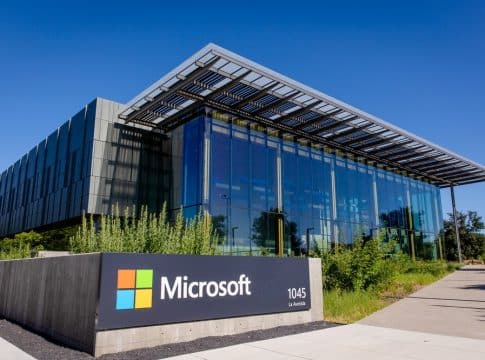
Microsoft has taken a significant step in the global renewable energy transition by partnering with Acadia Infrastructure Capital to launch the Climate and Communities Investment Coalition (CCIC). This ambitious $9 billion initiative aims to develop 5 gigawatts (GW) of renewable energy projects across the United States over the next five years.
The move underscores Microsoft’s commitment to sustainability and highlights corporations’ growing role in accelerating clean energy development.
Sparking a Green Revolution: How Microsoft and Acadia are Powering Up the Future
Acadia Infrastructure Capital specializes in driving investments into North America’s proven energy transition infrastructure. The company strategically deploys tax credits and structured/common equity into mid-market, real asset-based opportunities. By focusing on bespoke product structuring, Acadia goes beyond conventional investment approaches to adapt seamlessly to the dynamic energy market landscape.
The CCIC is designed to address the dual challenges of:
- Expanding clean energy capacity, and
- Ensuring that communities benefit from the renewable energy transition.
The coalition’s projects are expected to generate enough power for nearly 1 million homes. It can also prevent about 15 billion pounds of carbon emissions annually.
These efforts align with Microsoft’s long-standing commitment to reducing its carbon footprint and achieving sustainability goals.
The coalition’s first project is a 210-megawatt (MW) solar farm in Texas. It is financed in collaboration with Matrix Renewables and supported by the Sustain Our Future Foundation. The project serves as a model for how corporate investment can drive the renewable energy sector forward while providing tangible benefits to local communities.
Corporate-Led Climate Action
Dr. Brian O’Callaghan, Vice President at Acadia Infrastructure Capital, emphasized the coalition’s mission to fast-track corporate-led renewable energy financing. He stated that:
“The CCIC’s reason for being is to accelerate corporate-led renewable energy financing with real tangible benefits to local communities.”
This approach not only aids in achieving environmental goals but also delivers economic and social benefits.
The CCIC initiative is strategically designed to assist businesses in accessing Renewable Energy Certificates (RECs). Also known as renewable energy credits, RECs are essential for offsetting carbon emissions and greening supply chains. These certificates will enable participating corporations to meet sustainability targets while supporting the U.S. energy transition.
Just a few days ago, Meta also announced a similar move of purchasing green credits from 4 big solar energy projects in the U.S. The deal will produce 760 megawatts of solar power that the big tech can use to negate its carbon emissions.
Tech Meets Climate: Microsoft’s Role in a Global Green Shift
Microsoft’s role as an anchor member of the CCIC reflects its broader sustainability vision. The tech giant has been a leader in climate action, with initiatives ranging from reducing its carbon emissions to designing zero-water data centers.
Unlike other recent renewable energy announcements, Microsoft has not tied the CCIC projects to specific data centers. Instead, the RECs generated are expected to flow into Microsoft’s general sustainability efforts, supporting its commitment to becoming carbon-negative by 2030, which means removing more carbon than it emits.
Microsoft’s Path to Carbon Negativity by 2030
The tech giant aims to remove all emissions since 1975 by 2050. However, achieving this ambitious goal involves tackling complex challenges, particularly the reduction of Scope 3 emissions, comprising over 96% of its carbon footprint. These emissions largely stem from purchased goods, capital goods, and the use of sold products.
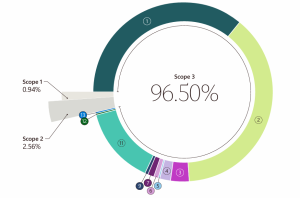
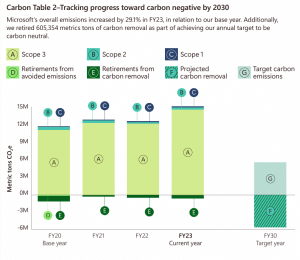
Despite progress, Microsoft’s total emissions rose by 29.1% in FY23 compared to 2020, driven by infrastructure investments. Still, the company has reduced Scope 1 and 2 emissions by 6% through clean energy procurement and efficiency initiatives.
- To scale clean energy, Microsoft expanded its renewable energy portfolio to 19.8 GW across 21 countries by 2023.
It signed power purchase agreements in countries like Brazil, Poland, and New Zealand. The tech company became the first major entity to use 24×7 clean energy services for its Washington data center.
Microsoft also focuses on data center efficiency, achieving a PUE of 1.12 and reducing hardware needs for Azure by 1.5%, cutting embodied carbon. The company is electrifying its fleet, with plans to achieve a 100% electric fleet by 2030.
To address unavoidable emissions, Microsoft is investing in carbon dioxide removal (CDR) projects, contracting over 5 million metric tons annually starting in 2030. In 2023, it secured landmark deals, including reforestation in the Amazon and bioenergy with carbon capture. These efforts highlight Microsoft’s commitment to driving sustainability and global decarbonization.
The CCIC further strengthens Microsoft’s renewable energy portfolio, which includes diverse projects across the globe. Danielle Decatur, Director of Environmental Justice at Microsoft, highlighted the coalition’s significance:
“The CCIC program provides us opportunities to meet our goals through high-quality renewable energy procurement.”
A Triple Win for Corporate Climate Leaders
The CCIC’s success relies on its ability to attract additional corporate members. With Microsoft’s leadership and Acadia’s expertise, the coalition is actively recruiting other companies to amplify its impact.
Tim Short, Managing Partner at Acadia, described the coalition as offering a “triple win” for corporations with these aspects:
- clean energy,
- improved earnings, and
- meaningful community impact.
One of the standout features of the CCIC is its focus on community benefits. The coalition aims to:
- Expand access to affordable clean energy for low-income households.
- Create local jobs and promote economic inclusion.
- Support diverse contractors and suppliers, ensuring equitable growth.
With these goals, the CCIC emphasizes environmental justice, ensuring that renewable energy projects contribute positively to underserved communities. By involving more corporations, the CCIC aims to scale its impact significantly, accelerating the transition to a sustainable energy future.
Microsoft and Acadia’s partnership set a benchmark for how businesses can lead in the renewable energy space while delivering tangible benefits to local communities. By combining financial resources, technological innovation, and a commitment to social equity, the coalition can help shape the U.S. clean energy landscape over the next five years.
The post Microsoft’s $9 Billion Power Move: Revolutionizing U.S. Clean Energy and Communities appeared first on Carbon Credits.

EU carbon credit claims changed on 27 September 2026, the day the Directive (EU) 2024/825 began to apply across the European Union. The change is narrow. It changes how a company can talk about the credits it buys. A product can no longer be called neutral on the strength of compensation alone; however, every specific, evidenced statement about what a company measured, reduced, and funded stays fully available.

The post Promoting Improved Cooking Practices in Nigeria appeared first on Terrapass.


Ming Yang Eyes 33 MW Turbine, Greenvolt Delays FID
‘A strong start’: WA’s transition to renewable energy powerhouse aided by Premier’s announcement
WA EPA warned Woodside of ‘serious, significant and irreversible’ harms to Scott Reef from gas plans, new documents reveal
-
Climate Change1 year ago
Guest post: Why China is still building new coal – and when it might stop
-

 Greenhouse Gases2 years ago
嘉宾来稿:满足中国增长的用电需求 光伏加储能“比新建煤电更实惠”
-
Greenhouse Gases1 year ago
Guest post: Why China is still building new coal – and when it might stop
-

 Climate Change2 years ago
嘉宾来稿:满足中国增长的用电需求 光伏加储能“比新建煤电更实惠”
-

 Renewable Energy1 year ago
Sending Progressive Philanthropist George Soros to Prison?
-
Climate Change2 years ago
Bill Discounting Climate Change in Florida’s Energy Policy Awaits DeSantis’ Approval
-
Greenhouse Gases1 year ago
嘉宾来稿:探究火山喷发如何影响气候预测
-

 Climate Change2 years ago
Analysis: China’s CO2 falls 1% in Q2 2024 in first quarterly drop since Covid-19