


Meta Platforms—the parent company of Facebook, Instagram, and WhatsApp—signed a major deal to secure 791 megawatts (MW) of renewable energy from Invenergy. This brings Meta’s total clean energy procurement from Invenergy to 1,800 MW, supporting the company’s net-zero goals and expanding data center and AI operations.
The new agreement includes four projects:
- 300 MW Yellow Wood Solar (Ohio)
- 140 MW Pleasant Prairie Solar (Ohio)
- 155 MW Decoy Solar (Arkansas)
- 196 MW Seaway Wind (Texas)
All projects are scheduled to go live between 2027 and 2028. While the electricity flows into the local grid, Meta receives clean energy credits to meet its sustainability goals.
From Likes to Zero: Meta’s Climate Mission Takes Shape
Meta’s new renewable energy deal—nearly 800 megawatts (MW) of wind and solar power from Invenergy—is more than just a clean energy purchase. It’s part of the company’s larger plan to reach net-zero emissions across its entire value chain by 2030.
Meta first achieved 100% renewable energy for its global operations in 2020, powering all of its data centers and offices with clean electricity. Since then, it has continued to expand its renewable energy portfolio, which now totals nearly 10 gigawatts (GW) globally.
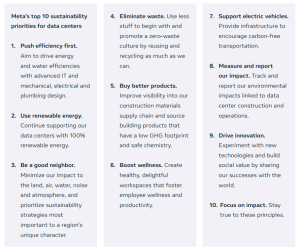
The new Invenergy agreement helps Meta maintain this progress as it builds more data centers to support AI, the metaverse, and other digital services. Invernergy is America’s largest privately held developer, owner, and operator of clean energy solutions.
Meta’s Head of Global Energy, Urvi Parekh, stated:
“We’re laser-focused on advancing our AI ambitions—and to do that, we need clean, reliable energy. We’re grateful for Invenergy’s longtime partnership that helps us support our energy needs and implement our clean energy goals, and look forward to continued collaboration.”
These clean energy investments also support Meta’s work to reduce Scope 3 emissions—those linked to suppliers, hardware production, and transportation. By partnering with clean energy developers and encouraging sustainable practices across its supply chain, Meta is helping to cut emissions beyond its direct operations.
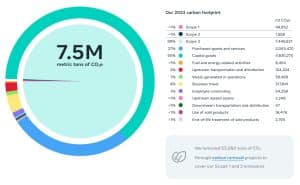
Meta is also improving energy efficiency at its data centers through advanced cooling systems, automation, and AI-powered power management. In 2023, over 80% of Meta’s suppliers had set or committed to science-based climate targets, further aligning with the company’s net-zero strategy.
In addition to reducing emissions, Meta is investing in long-term carbon removal solutions, such as reforestation and direct air capture. These efforts aim to balance out any remaining emissions the company can’t eliminate.
The latest renewable energy deal shows how Meta is linking its clean energy procurement directly to its climate goals—making sure that the growing demand for digital infrastructure doesn’t come at the cost of the environment.
Why Clean Energy Matters for Meta’s Data Centers
Data centers are the backbone of the internet, housing vast amounts of data and requiring constant power to run servers and cooling systems. According to the International Energy Agency, data centers currently use around 1–1.5% of the world’s total electricity. This number is set to rise sharply because of AI, video streaming, and cloud computing.
To prevent rising emissions alongside increasing demand, Meta is building new data centers powered entirely by clean energy. These facilities aim for energy efficiency. They are also located close to renewable energy sources.

U.S. data centers used about 239 terawatt-hours (TWh) of electricity in 2024. That’s nearly as much as Florida uses in a year. A lot of this power still comes from fossil fuels.
Meta reached its 100% renewable energy target for operations in 2020. It plans to add 9.8 gigawatts (GW) of renewables to U.S. grids by the end of 2025. However, growing data infrastructure demands make continued large-scale clean energy deals essential.
- SEE MORE: Meta and XGS Energy Launch 150 MW Geothermal Project to Power its Data Centers in New Mexico
Strategic Benefits of the Invenergy Partnership
Partnering with Invenergy, the leading private clean energy developer in the U.S., nearly doubles Meta’s capacity. It jumps from 1,000 MW to 1,800 MW. This expansion brings several benefits:
-
Renewable energy credits to help Meta stay on track with its net-zero targets
-
Access to grid-based electricity that supports regional power systems
-
Contribution to U.S. clean energy development and energy security
The projects boost economic activity in Ohio, Arkansas, and Texas. Here, solar and wind installations create local jobs and improve power reliability.
Big Tech’s Clean Energy Arms Race
Meta’s move is part of a broader trend in the tech industry. As AI drives up electricity needs, major firms are racing to secure clean power. Amazon, Microsoft, Google, and Meta boosted their clean energy contracts more significantly compared to the previous year.
According to the Clean Energy Buyers Association (CEBA), companies purchased a record-breaking 21.7 gigawatts of clean energy in 2024 alone—the highest annual total to date. With this surge, corporate-driven clean energy capacity in the U.S. has now reached 100 gigawatts since 2014.

Regional power grids are feeling the strain. Some utilities are pushing back on renewable projects to focus on fossil fuel plants. This raises worries about air pollution and environmental justice. To offset this, companies are using mechanisms like power purchase agreements (PPAs) and environmental attributes purchase agreements (EAPAs).
Meta often uses EAPAs. They buy renewable energy credits instead of electricity. This approach helps fund new clean power projects without directly using the energy source.
Meta is exploring nuclear energy. They are also looking into on-site renewables and sustainable infrastructure. This is important in places where grid expansion can’t keep up with data center growth.
Charging Ahead: Meta Plots a Cleaner, Smarter Grid Game
Meta plans to continue investing in clean energy to match the electricity needs of its expanding data center footprint. This latest deal reflects a commitment to powering large-scale infrastructure sustainably. Such agreements can boost local clean energy markets and create industry standards for responsible growth.
As technologies like AI, virtual reality, and cloud services evolve, energy demand will keep rising. Meta aims to meet this demand without growing its carbon footprint. The company is also investing in storage technologies and energy-efficient systems to maximize the impact of its clean energy use.
By securing long-term renewable energy partnerships, the tech giant supports both innovation and climate progress.
The post Meta Powers U.S. Data Centers with Nearly 800 MW of Clean Energy Deal with Invenergy appeared first on Carbon Credits.

EU carbon credit claims changed on 27 September 2026, the day the Directive (EU) 2024/825 began to apply across the European Union. The change is narrow. It changes how a company can talk about the credits it buys. A product can no longer be called neutral on the strength of compensation alone; however, every specific, evidenced statement about what a company measured, reduced, and funded stays fully available.

The post Promoting Improved Cooking Practices in Nigeria appeared first on Terrapass.



-
Climate Change1 year ago
Guest post: Why China is still building new coal – and when it might stop
-

 Greenhouse Gases2 years ago
嘉宾来稿:满足中国增长的用电需求 光伏加储能“比新建煤电更实惠”
-
Greenhouse Gases1 year ago
Guest post: Why China is still building new coal – and when it might stop
-

 Climate Change2 years ago
嘉宾来稿:满足中国增长的用电需求 光伏加储能“比新建煤电更实惠”
-

 Renewable Energy12 months ago
Sending Progressive Philanthropist George Soros to Prison?
-
Climate Change2 years ago
Bill Discounting Climate Change in Florida’s Energy Policy Awaits DeSantis’ Approval
-
Greenhouse Gases1 year ago
嘉宾来稿:探究火山喷发如何影响气候预测
-

 Climate Change2 years ago
Analysis: China’s CO2 falls 1% in Q2 2024 in first quarterly drop since Covid-19