

Local officials are often viewed as relatively weak actors in China’s governance structure, largely implementing policies issued from the central level.
However, a new book – “Implementing a low-carbon future: climate leadership in Chinese cities” – argues that these officials play an important role in designing innovative and enduring climate policy.
The book follows how four cities – Shenzhen, Zhenjiang, Xiamen and Nanchang – approached developing low-carbon policies over the course of almost a decade.
It identifies “bridge leaders” – mid-level local bureaucrats who have a strong interest in a specific policy area and who are unlikely to move often between different posts – as key to effective local climate policymaking.
Carbon Brief interviews author Weila Gong, non-resident scholar at the UC San Diego School of Global Policy and Strategy’s 21st Century China Center and visiting scholar at UC Davis, on her research.
The interview has been edited for length and clarity.
- Gong on why cities are important: “Over 85% of China’s carbon emissions come from cities. The majority of Chinese people live in cities, so the extent to which cities can become truly low-carbon will also influence China’s climate success.”
- On what motivates local policymakers: “Mid-level bureaucrats need to think about how to create unique, innovative and visible policy actions to help draw attention to their region and their bosses.”
- On cities as a way to test new policies: “Part of the function of local governments in China is to experiment with policy at a local level, thereby helping national-level officials develop responses to emerging policy challenges.”
- On how local policymakers get results: “Even though we tend to think that local officials are very constrained in terms of policy or financial resources, they can often have the leverage and space to build coalitions.”
- On uneven city-level engagement: “To begin with, all regions received political support if they joined the [low-carbon city] pilot programme. But over the years, different regions have engaged very differently.”
- On the need for ‘entrepreneurial bureaucrats’: “China will always need local officials willing to introduce new legislations or try new policy instruments…For that, it needs entrepreneurial bureaucrats who are willing to turn ideas into actions.”
- On international cooperation: “Even with how geopolitics is really complicating things, many cities continue to have common challenges. For example, collaboration between Shanghai and Los Angeles on green shipping corridors is still ongoing”.
- On the effectiveness of mid-level bureaucrats: “They are creative, they know how to convince their boss about the importance of climate action and they know how that can bring opportunities for themselves and their boss. And because of how long they have worked in one area, they understand the local politics, policy processes and the coalitions needed to provide solutions.”
Carbon Brief: You’ve just written a book about climate policy in Chinese cities. Could you explain why subnational governments are important for China’s climate policy in general?
Weila Gong: China is the world’s largest carbon emitter, so the extent to which global efforts to address climate change can actually reach their goal is largely influenced by China’s efforts.
If you look at the structure of China’s carbon emissions, over 85% of China’s carbon emissions come from cities. The majority of Chinese people live in cities, so the extent to which cities can become truly low-carbon will also influence China’s climate success. That’s why I started to look at this research area.
We tend to think of China as a centralised, big system and a unitary state – state-run and top-down – but it actually also has multi-level governance. No climate action or national climate targets can be achieved without local engagement.
We also tend to think subnational level [actors], including the provincial, city and township levels, are barriers for environmental protection, because they are focused on promoting economic growth.
But I observed these actors participating in China’s low-carbon city pilot programme [as part of my fieldwork spanning most of the 2010s]. I was really surprised to see so many cities wanted to participate in the pilot, even though at the time there was no specific evaluation system that would reward their efforts.
We think of local governments just as implementers of central-level policy. When it comes to issues like climate change and also low-carbon development – in 2010 [policymakers found these concepts] very vague…So I was curious why those local officials would want to take on this issue, given that there was no immediate reward, either in terms of career development or in terms of increasing financial support from the central government.
CB: Could you help us understand the mindset of these bureaucrats? How do local-level officials design policies in China?
WG: The role of different local officials in promoting low-carbon policy is not very well understood. We tend to focus on top political figures, such as mayors or [municipal] party secretaries, because we see them as the most important policymakers.
But that is not entirely true. Those top local politicians are very important in supporting efforts to tackle problem areas…but the focus in my book is the mid-level bureaucrats.
Unlike mayors and party secretaries, mid-level officials tend to stay in one locality for their entire career. That helps us to understand why climate policy can become durable in some places and not others.
Mayors and party secretaries are important for [pushing through policy solutions to problem] issues, but they can also be key barriers for ensuring continuation of those policies – particularly when they change positions…as they tend to move to another locality every three to five years.
Therefore, these top-level officials are not the ones implementing low-carbon policies. That’s why I looked at the mid-level bureaucrats instead.
The conventional understanding of these bureaucrats is that they are obedient and only follow their bosses’ guidance. But actually, when low-carbon policies emerged as an important area for the central government in 2010, opportunities appeared for local governments to develop pilot projects.
Mid-level local officials saw this as a way to help their bosses – the mayors and party secretaries – increase their chances of getting promoted, which in turn would help the mid-level bureaucrats to advance their own career.
Impressing central government officials isn’t really a consideration for these officials…but their bosses need visible or more reliable local actions to show their ability to enforce low-carbon development.
As such, mid-level bureaucrats need to think about how to create unique, innovative and visible policy actions to help draw attention to their region and their bosses.
Secondly, mid-level bureaucrats are more interested in climate issues if it is in the interest of their agency or local government.
For example, Zhenjiang [a city in east China] came to be known as a leader in promoting low-carbon development due to a series of early institutional efforts to establish low-carbon development. In particular, in part because of this, it was chosen for a visit by president Xi Jinping in 2014.
As a result, the city created a specialised agency [on low-carbon development]. This made it one of the first regions to have full-time local officials that followed through on low-carbon policy implementation.
This increased their ability to declare their regulatory authority on low-carbon issues, by being able to promote new regulations, standards and so on, as well as enhancing the region’s and the local policymakers’ reputations by building institutions to ensure long-term enforcement.
Another motivation for many local governments is accessing finance through the pilot programmes. If their ideas impress the central-level government, local policymakers could get access to investment or other forms of financial resources from higher levels of government.
In the city of Nanchang, for example, officials were trying to negotiate access to external investment, because the main central government fund for low-carbon initiatives only provided minimal finance.
Nanchang officials tried to partner with the Austrian government on sustainable agriculture, working through China’s National Development and Reform Commission (NDRC).
It didn’t materialise in the end, but they still created a platform to attract international investment, and gathered tens of millions of yuan [millions of dollars] in central-level support because the fact they showed they were innovating allowed them to access more money through China’s institutional channels.
CB: Could you give an example of what drives innovative local climate policies?
WG: National-level policies and pilot programme schemes provide openings for local governments to really think about how and whether they should engage more in addressing climate change.
The national government has participated in international negotiations on climate for decades…but subnational-level cities and provinces only joined national efforts to address climate issues from the 2010s – starting with the low-carbon city programme.
So we can see that local responses to addressing climate change have been shaped by the opportunities provided by the national government, [who in turn] want more local-level participation to give them successful case studies to take to international conferences.
Local carbon emission trading systems (ETSs) are an example of giving local governments opportunities to experiment.
In my book, I look at the case of Shenzhen, which launched China’s first local ETS. [Shenzhen was one of seven regions selected to run a pilot ETS, ahead of the national ETS being established in 2018.]
Part of the function of local governments in China is to experiment with policy at a local level, thereby helping national-level officials develop responses to emerging policy challenges.
I remember a moment during my field research in 2012, when I was with a group of officials from both the national and local government.
The national government officials asked the local officials to come up with some best practices and solutions, to help them envision what could be done at the national level.
Then there are drivers at the international level, which I think is very interesting.
I observed that the officials particularly willing to take on climate issues usually had access to international training.
During the early stages of subnational climate engagement, organisations such as the German Agency for International Cooperation (GIZ) worked with the NDRC and other national-level agencies to train local officials across the country.
This created more opportunities to help local officials understand what climate change and carbon markets were, and how to use policy instruments to support low-carbon development.
In Shenzhen, local bureaucrats also turned to their international partners to help them design policy.
The city created a study group to visit partners working on the EU ETS and learn how it was designed. They learned about price volatility in the EU ETS and pushed legislation through the local people’s congress [to mitigate this in their own system].
One thing that made the Shenzhen ETS so successful is what I call “entrepreneurial bureaucrats” [who have the ability to design, push through and maintain new local-level climate policies].
Shenzhen’s vice mayor worked with the local people’s congress to push the ETS legislation through. This was the first piece of legislation in China to require compulsory participation by more than 600 local industrial actors. It also granted the local government authority to decide the quotas and scope of the ETS.
These 600 entities also included Shenzhen’s public building sector[, a powerful local interest group].
This shows that, even though we tend to think that local officials are very constrained in terms of policy or financial resources, they can often have the leverage and space to build coalitions – even in China’s more centralised political system – and know how to mobilise political support.
CB: You chose to look at the effectiveness of four cities – Shenzhen, Zhenjiang, Xiamen and Nanchang – in climate policymaking. Why did you choose these cities and how representative are they of the rest of China?
WG: We tend to believe that only economically-advanced areas or environmentally-friendly cities will become champions for low-carbon development…But I was surprised, because Zhenjiang and Nanchang are not known for having an advanced economy, but [they nevertheless built impactful climate] institutions – regulations, standards and legislation that shape individual and organisational behaviours in the long term. I thought they were interesting examples of how local regions can really create those institutions.
Then there was Xiamen, which is seen as an environmentally-friendly city and economically is comparable to Shenzhen when you look at GDP per capita. Xiamen actually did not turn its low-carbon policy experimentation into long-term institutions, instead randomly proposing new initiatives [that were not sustained].
I conducted more than 100 interviews, talking with policy-practitioners inside and outside of government about specific policies, their processes and implementation.
I found that, over the course of eight years, these [cities] showed very different levels of engagement.
Some I categorised into substantive engagement, where the local government delivered on their climate goals. [Shenzhen falls into this category.]
Then there is performative engagement – such as in the case of Nanchang – where the local government was more interested in [using climate policies to] attract external investment and access projects from higher levels of government.
But they were not able to enforce the policies, because impressing higher levels of government became the primary motivation.
Zhenjiang was a case of symbolic engagement. It actually created a lot of institutions, such as a specialised agency and a screening system to ensure new [low-carbon] investment. When I was observing Zhenjiang, from 2012 to 2018, officials recognised they needed to be carbon-constrained.
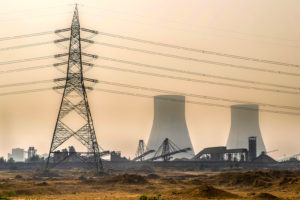
The problem was that Zhenjiang has a very strong power sector – mainly coal power – which supplies the whole eastern coast. That meant, even though the government was very determined to promote low-carbon policies, they faced [opposition from] very strong local actors – meaning the government could only partially implement the targets they set.
Then there is sporadic engagement, as seen in Xiamen. [The city’s approach to climate policy was incremental and cautious] because of a lack of political support [from officials in Xiamen], as well as local coalitions between key actors. So instead, we find random initiatives being promoted.
This explains the uneven policy implementation in China. To begin with, all regions received political support if they joined the pilot programme. But over the years, different regions have engaged very differently, in terms of the regulations, standards and legislation they have introduced, and whether those were paired with enforcement by a group of trained personnel to follow through on those initiatives.
CB: What needs to be done to strengthen sub-national climate policy making?
WG: It’s very important to have groups of personnel trained on climate policy. Since 2010, when I started studying the low-carbon pilot programme, there were no provincial-level people or agencies fully responsible for climate change. Back then, there was only the [central-level] department of climate change under the NDRC.
By the time I finished the book, provincial-level departments of climate change had been created across all provinces. But almost nothing has been established at the city level, so most city-level climate initiatives are being managed under the agencies responsible for air quality.
That means climate change is only one of those local officials’ day-to-day responsibilities. Only a handful of cities have dedicated staff working on climate issues: Beijing, Shanghai, Zhenjiang, Shenzhen and Guiyang.
Nanchang devised some of China’s first legislation to include an annual [financial] budget for low-carbon development. But when I revisited the city, officials were not actually sure about how and whether that budget was being used, because there wasn’t a person responsible for it.
Therefore, even if there are resources available, they can go unused because local officials at the city level are so busy. If climate policy is not prioritised, or written into their job responsibilities, that can be a challenge for sustaining implementation.
In China’s governance structure, the national government comes up with ideas, and the provincial level transfers these ideas down to local-level governments. City-level governments are the ones implementing these ideas.
So we need full-time staff to follow through on policies from the beginning right up to implementation.
Secondly, while almost all cities have now made carbon-peaking plans, one area in which the Chinese government can make further progress is in data.
China has recently emphasised the need to strengthen carbon-emissions data collection and monitoring. But when I was conducting my research, most Chinese cities had not yet established regular carbon-accounting systems.
As such, inadequate energy statistics and insufficient detail remain key barriers to effective climate-policy implementation.
In addition, the relevant data usually is owned by China’s National Bureau of Statistics (NBS), which does not always share it with other agencies. Local agencies can’t always access detailed data.
When I visited Xiamen, officials told me the local government is now improving emissions monitoring systems. But there should be more systematic and rigorous data collection, covering both carbon emissions and non-CO2 greenhouse gases. Also, much of the company-level data is self-reported, which could affect the accuracy of carbon-emissions statistics.
For continued climate action, it’s also important that the central government ensures that local officials have the institutional support needed to experiment and propose new ideas.
…China will always need local officials willing to introduce new legislations or try new policy instruments – like Shenzhen with its ETS, or establishing new carbon-monitoring platforms.
For that, it needs entrepreneurial bureaucrats who are willing to turn ideas into actions. Ensuring that local governments have the right set of conditions to do this is very important.
CB: What did you find most surprising when researching this book?
WG: That international collaboration is still very important. I found that many officials learnt about climate change through international engagement.
In the current situation, I think international engagement is still very important – particularly given how, even with how geopolitics is really complicating things, many cities continue to have common challenges. For example, collaboration between Shanghai and Los Angeles on green shipping corridors is still ongoing.
That can bring opportunities for continuing climate action at the city level in the face of rising international tensions, as long as national governments give them space to be involved in international climate action.
Another surprise was the factors of what exactly made climate action durable. I was really surprised that many of the cities that I revisited were still involved in the pilot programmes, despite the central government restructuring that shifted the climate change portfolio from the NDRC to the Ministry of Ecology and Environment – which created challenges for the local governments who had to navigate this.
I also thought that the change in mayors for all four cities would lead to climate initiatives falling off the agenda.
But actually, Zhenjiang, Xiamen and Nanchang all maintained their low-carbon initiatives, despite these changes. This showed it isn’t only strong mayors that bring success, but rather a group of trained personnel building and enforcing regulations and standards. So the importance of bureaucrats and bureaucracy in making climate action durable was actually way beyond my initial expectations.
I was also surprised that bureaucrats can be entrepreneurial, even though they work in a centralised system. They are creative, they know how to convince their boss about the importance of climate action and they know how that can bring opportunities for themselves and their boss. And because of how long they have worked in one area, they understand the local politics, policy processes and the coalitions needed to provide solutions.
The post Interview: How ‘mid-level bureaucrats’ are helping to shape Chinese climate policy appeared first on Carbon Brief.
Interview: How ‘mid-level bureaucrats’ are helping to shape Chinese climate policy

Scientists have vowed to keep working on the next flagship set of reports for the Intergovernmental Panel on Climate Change (IPCC), after a political row over the timeline for their release saw its latest session suspended on Friday evening without agreement.
During the weekend, government officials and scientists alike expressed disappointment over the inability to reach a compromise before some delegates from developing countries and small island states had to leave the week-long meeting in Ethiopia to catch flights home.
The disagreement – which has persisted since early 2024 – turns on whether the three key parts of the AR7 assessment should all be published before the conclusion of the UN’s next Global Stocktake of global climate action, which is due to be completed in late 2028.
The IPCC issued a statement after the close of the session, saying that “key agenda items” – the timelines for the three AR7 reports, as well as the IPCC budget – remain open and under discussion. It said the IPCC’s plenary session and its deliberations on the pending agenda “will resume at the earliest opportunity”, giving no further details of when.
IPCC Chair Jim Skea told delegates in closing remarks that recent months had been some of the most turbulent for the climate science panel and that, if there were stronger words than “profound disappointment” he would use them, according to a summary published by the Earth Negotiators Bulletin (ENB). IPCC discussions happen behind closed doors.
IPCC scientists remained committed
In an open letter, issued on Monday, a group of nearly 120 scientists – from a total of 664 AR7 authors – said they “stand committed to continue working to deliver the AR7 reports in a manner that is rigorous, timely and inclusive, in line with our mandate to be policy-relevant”.
“An assessment that arrives after the decisions it is meant to inform cannot serve its purpose,” they emphasised. “The second Global Stocktake in 2028 is such a decision point, and the world should not have to face it without the IPCCʼs latest assessment.”
Europe, small islands and the least developed countries, plus many Latin American and developed nations, want the IPCC to meet this deadline, arguing that the findings from the UN climate science body are irreplaceable in the UN climate policy-making process.
However, around a dozen developing countries plus Russia have argued that the reports should come later in order to allow for greater research input from the Global South – something that, in their view, would make the findings fairer. They also claim that a shorter timeline would put excessive pressure on experts.
-
Who shapes climate science? The equity question facing the IPCC
Early completion of the next global climate science assessment reports risks excluding research from the Global South, which is key to ensuring the findings are fair -
Governments that support climate science must stand firm against naysayers
The IPCC is meeting to decide the timing of its next major report, as some countries try to delay it and weaken the case for faster emissions cuts


The most vocal of this group at last week’s meeting were India and Saudi Arabia, according to the ENB summary and a developed country diplomat. Critics see this push for a longer timeline as an excuse to deprive government decision-makers of the latest science and ease pressure on emerging economies to raise their ambition, particularly on cutting emissions.
Commenting on last week’s meeting, France’s ambassador for climate negotiations Benoît Faraco said a broad coalition of developed and developing countries from all five continents, “united in their support for science and the timeline proposed by scientists”, had withstood pressure “from a few countries” seeking to slow down the process of adopting the IPCC reports.
He added that France would not back down and would “continue to fight tirelessly for science, protect the integrity of information, and convince our partners that without the best available scientific data, we will be less effective in tackling climate change and protecting our populations”.
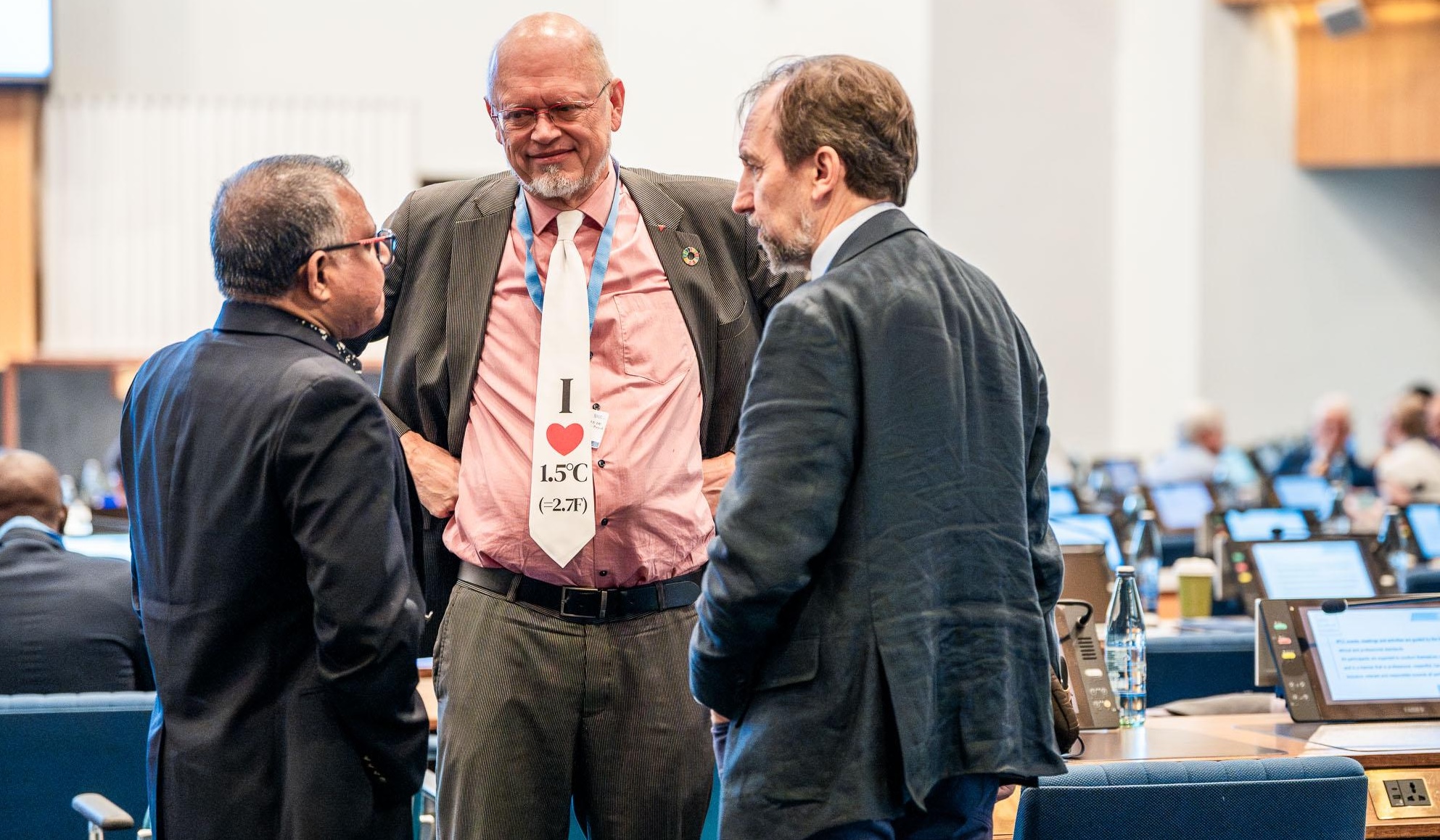
Inclusivity proposal stalled
In a bid to unlock a solution for the AR7 timeline, countries discussed ways to improve the inclusivity of the IPCC’s work. One option put on the table was for the IPCC to expand its funding for delegates from developing countries to attend some or all of its sessions from one to two participants, according to the ENB summary and a delegate speaking to Climate Home News.
That would increase the costs for the IPCC to complete AR7 by up to a quarter, according to an assessment shared by the secretariat. The panel’s budget is under severe strain and its officials have warned that, without additional voluntary contributions, it risks running out of money before it can deliver on this assessment cycle.
Climate Home News understands that some of the IPCC’s traditional donors – which mainly include European countries, Japan and Australia – indicated a willingness to support funding for an additional developing country participant. But without an agreement over the budget or the timeline for the reports, that option was ultimately not adopted.
‘Disappointed and worried’
The three reports are managed by working groups that collate and draw overall findings from the latest scientific studies and data on the physical effects of global warming around the world, how to adapt to it, and pathways for cutting planet-heating emissions in order to meet the temperature goals of the Paris Agreement.
Winston Chow, an urban climate professor at Singapore Management University who co-chairs Working Group II on adaptation, wrote in a LinkedIn post that he was “disappointed and worried” for the IPCC authors who have worked “extraordinarily hard” to assess the relevant climate science over the past two years.
He said he shared their concern that “the rigour, time and goodwill they’ve invested are now being put at risk by the Panel’s stalemate”.
As science comes under attack at UN talks, climate movement splits over how to respond
For Working Group II, a meeting for 250 experts writing that report is scheduled for January 2027, followed by the approval of a special report on cities and climate change in Singapore next March.
But because the IPCC’s budget has not been confirmed due to uncertainty about the AR7 schedule, travel support for those researchers is at risk, wrote Chow. “If they cannot participate, our assessments will lose vital expertise, perspectives and scientific breadth, and the collective effort of our authors will be undermined,” he warned.
Scientific work continues
Despite the political holdups, he – together with French climate scientist Robert Vautard, co-chair of Working Group 1 – agreed with IPCC head Skea who told the IPCC’s closing session on Friday: “The engine room of the IPCC is working, and it’s healthy.”
Vautard commented in a separate post on LinkedIn after it ended: “The boat is at full steam.” Working groups I and II are due to start revising the first drafts of their reports, while Working Group III on reducing emissions is finalising its first draft which will be out soon, he wrote.
“The most exciting two years of the cycle are ahead, for the authors. The momentum in the engine room is here and now. Trust the engine room!” he added.
The IPCC and some scientists report that progress has been made towards achieving an equitable balance of authors from the Global North and the Global South.
The group of researchers who signed the open letter on Monday noted that “inclusivity is at the heart of how we work”, with author teams bringing together experts from developed and developing countries with diverse backgrounds and at different stages of their careers.
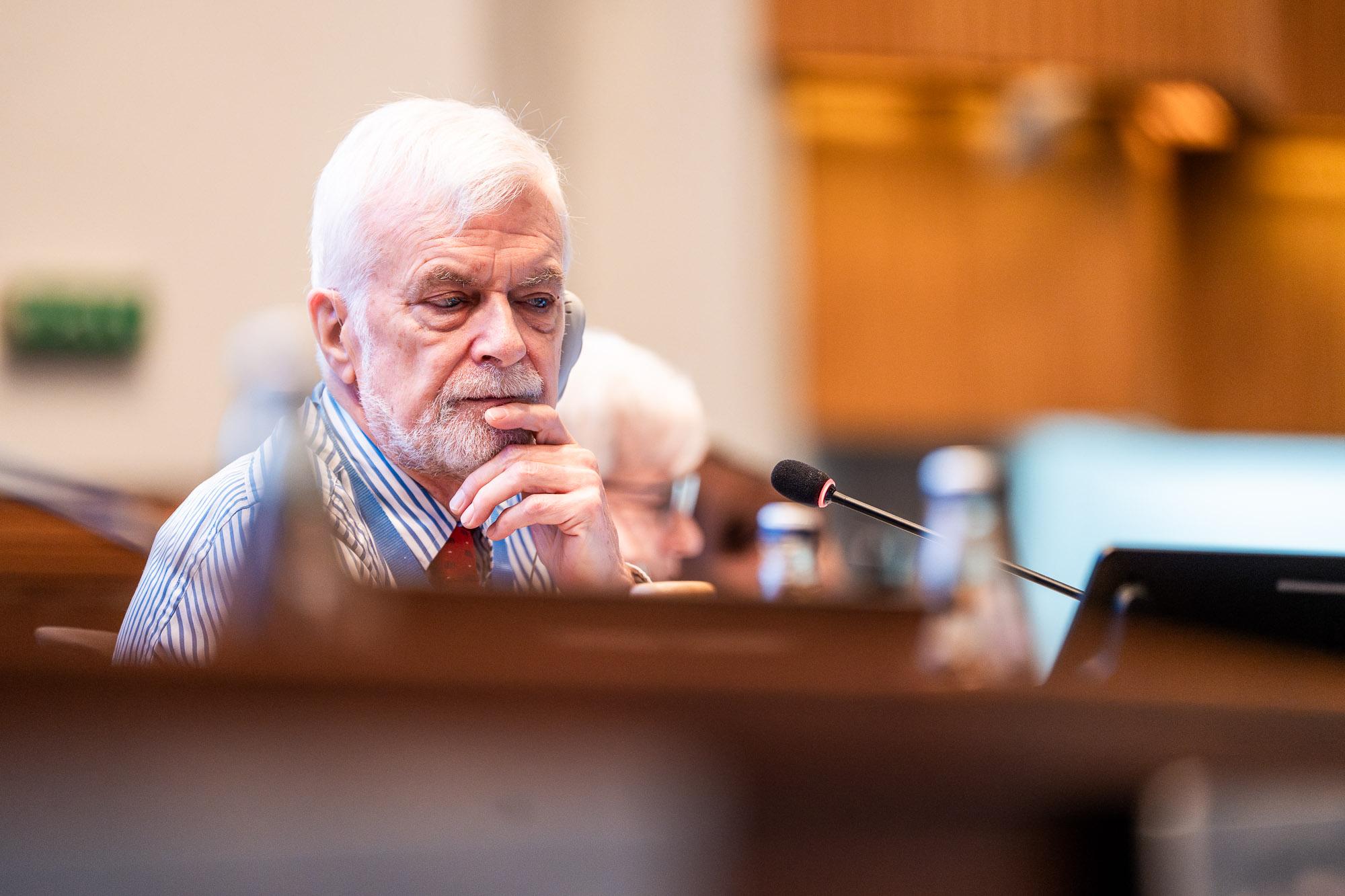
Plea to overcome political differences
The signatories include several scientists from some of the countries opposed to the alignment of all IPCC reports with the Global Stocktake.
“We are committed to an assessment in which the knowledge, experience and priorities of every region are fully reflected, a commitment we share with the leadership of the IPCC.
Equity is built into how our assessment is being drafted,” they added.
They appealed to governments that make up the IPCC “to overcome their political differences and work together as we do as a global scientific community, so that we can deliver the IPCC reports the world needs to hear”.
In a statement published on Monday, IPCC chair Skea said reaching consensus on the schedule for the reports is “vital”. He added that the assessments provide authoritative scientific evidence to inform national climate policies, strengthen adaptation and resilience and support access to climate finance, as well as helping communicate the scale of the climate crisis and the urgency of efforts to tackle it.
The post IPCC scientists vow to press on with climate reports despite political deadlock appeared first on Climate Home News.
IPCC scientists vow to press on with climate reports despite political deadlock
An Lambrechts is a biodiversity politics expert at Greenpeace International with extensive experience in biodiversity-related multilateral negotiations. She is the head of the Greenpeace delegation at the Convention on Biological Diversity (CBD) COP17 happening in Yerevan, Armenia.
In 2022, COP15 delivered the landmark Kunming-Montreal Global Biodiversity Framework to halt and reverse biodiversity loss by 2030. With COP17 starting in Yerevan,