


Intel Corporation (NASDAQ: INTC), one of the world’s largest semiconductor makers, has made headlines with a notable surge in its stock price. INTC stock jumped nearly 9.8% after SoftBank announced a $2 billion investment in the chipmaker. The deal shows that confidence in Intel’s turnaround is growing while the company is increasing its semiconductor manufacturing capacity.
The development also raised questions about possible U.S. government support for Intel. This could be part of efforts to boost domestic chip production. Investors reacted well, and Intel’s stock had one of its largest single-day gains in months.
While investors focus on Intel’s turnaround strategy, another side of the company is drawing attention: its ambitious sustainability goals and efforts to cut greenhouse gas emissions.
Let’s examine Intel’s recent stock performance and then cover the company’s net-zero goals, emissions profile, and broader ESG initiatives that influence its long-term strategy.
Intel Stock’s Big Rebound
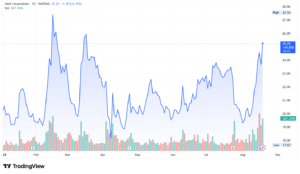
Intel is one of the world’s largest semiconductor companies, with a market capitalization of over $110 billion. It has a strong footprint in personal computer processors, data centers, and advanced chip design.
More recently, Intel has been putting a lot of money into foundry services. This move helps them compete with companies like TSMC and Samsung. The $2 billion SoftBank investment is viewed as a major boost to its strategy.
Analysts think this capital can help Intel speed up research, boost production, and catch up in the race for advanced chip tech.
The stock surge shows that investors believe in Intel’s turnaround plan. This plan includes increasing manufacturing capacity in the U.S. and Europe. The U.S. government’s CHIPS and Science Act encourages domestic semiconductor production. This has improved Intel’s market outlook.
Intel’s stock mainly relies on financial performance. However, many investors are also watching the company’s sustainability efforts. This is especially true as ESG-focused funds and climate-conscious stakeholders assess tech companies based on their environmental impact.
Green Chips: Intel’s 2040 Net-Zero Roadmap
Intel has committed to reaching net-zero greenhouse gas (GHG) emissions across its global operations by 2040. This pledge covers both direct emissions (Scope 1) and indirect emissions from purchased energy (Scope 2).
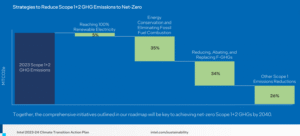
The company also wants to team up with suppliers and customers to cut value chain emissions (Scope 3). However, this goal is tougher to achieve.
Key pillars of Intel’s net-zero roadmap include:
- Achieving 100% renewable electricity globally by 2030 (Intel has already reached this milestone in the U.S. and Europe).
- Improving energy efficiency across operations and products.
- Creating advanced technologies helps customers reduce their carbon footprints. For example, energy-efficient processors for data centers play a key role.
- Investing in water restoration and waste reduction programs.
Intel stresses that its strategy goes beyond meeting regulations. It focuses on building long-term resilience. In today’s world, this is important as sustainability is key to staying competitive.
Crunching Carbon: Emissions Progress and Challenges
Intel publishes detailed environmental data in its annual Corporate Responsibility Report. According to the company’s latest 2024 data:
- Intel cut its Scope 1 and 2 emissions by over 10% year-over-year. This drop came mainly from using renewable energy and efficiency projects.
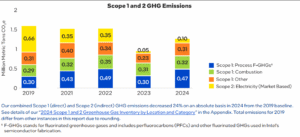
- The company has maintained >90% renewable electricity use worldwide, with plans to close the remaining gap by 2030. It achieved 98% in 2024.
- Scope 3 emissions make up the biggest part of Intel’s carbon footprint. This is mainly due to the upstream supply chain and the energy used by Intel-powered devices. Intel is working with suppliers to improve reporting and emissions reduction strategies.
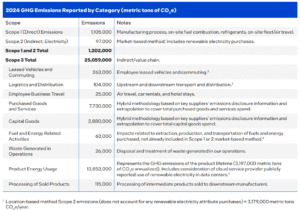
This emissions data highlights both progress and challenges. While Intel is making strides in its operational footprint, addressing Scope 3 will be critical if it wants to reach its full net-zero ambitions.
Beyond Silicon: Intel’s Broader ESG Moves
Intel’s ESG framework goes beyond carbon emissions. The semiconductor company has integrated sustainability across multiple dimensions:
- Water stewardship:
Intel has restored billions of gallons of freshwater through conservation projects. In 2023 alone, the company restored over 3 billion gallons to local watersheds. Its long-term goal is to become net positive on water use by 2030. - Circular economy and waste:
The chipmaker sends less than 1% of waste to landfill, focusing instead on recycling and material recovery. - Diversity and inclusion:
Intel maintains programs to expand workforce diversity and promote inclusive hiring practices, aligning with its ESG reporting standards. - Product efficiency:
The company creates processors that use less power for each unit of performance. This cuts energy use in data centers, which are some of the fastest-growing sources of electricity demand globally.
These initiatives position Intel not only as a chipmaker but also as a leader in corporate sustainability.
Balancing Growth with Green Goals
Intel’s ability to grow and compete in the semiconductor market is tied to two forces:
- technological innovation, and
- sustainable practices.
As demand for AI and data center chips grows, so does the scrutiny of their environmental impact. Investors are increasingly asking how chipmakers will balance massive energy needs with climate commitments.
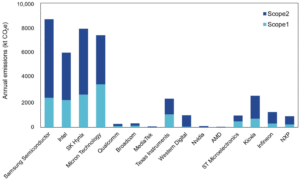
Intel’s net-zero pledge and ongoing ESG projects suggest the company is preparing for this future. By reducing operational emissions and pushing suppliers toward greener practices, Intel can strengthen its reputation with both regulators and investors.
The Future of Chips: Innovation Meets Sustainability
Intel’s recent stock surge underscores renewed investor optimism in its recovery plan and competitiveness in the global chip industry. At the same time, its ambitious net-zero goals and ESG commitments highlight how sustainability has become a core part of its strategy.
The chipmaker aims to be a technology leader by cutting emissions, investing in renewable energy, and promoting efficiency. This way, it balances growth with responsibility.
The company’s path to net-zero isn’t finished yet, especially regarding Scope 3 emissions. Still, its progress proves that financial strength and sustainability can go hand in hand.
As the semiconductor industry grows in importance for AI, cloud, and digital infrastructure, Intel’s ability to align innovation with environmental responsibility may prove to be just as critical as its financial gains.
The post Intel Stock Surges 9.8% on $2B SoftBank Deal: Can Its Net-Zero Push Power the Future of Chips? appeared first on Carbon Credits.

EU carbon credit claims changed on 27 September 2026, the day the Directive (EU) 2024/825 began to apply across the European Union. The change is narrow. It changes how a company can talk about the credits it buys. A product can no longer be called neutral on the strength of compensation alone; however, every specific, evidenced statement about what a company measured, reduced, and funded stays fully available.

The post Promoting Improved Cooking Practices in Nigeria appeared first on Terrapass.



-
Climate Change1 year ago
Guest post: Why China is still building new coal – and when it might stop
-

 Greenhouse Gases2 years ago
嘉宾来稿:满足中国增长的用电需求 光伏加储能“比新建煤电更实惠”
-
Greenhouse Gases1 year ago
Guest post: Why China is still building new coal – and when it might stop
-

 Climate Change2 years ago
嘉宾来稿:满足中国增长的用电需求 光伏加储能“比新建煤电更实惠”
-

 Renewable Energy12 months ago
Sending Progressive Philanthropist George Soros to Prison?
-
Climate Change2 years ago
Bill Discounting Climate Change in Florida’s Energy Policy Awaits DeSantis’ Approval
-
Greenhouse Gases1 year ago
嘉宾来稿:探究火山喷发如何影响气候预测
-

 Climate Change2 years ago
Analysis: China’s CO2 falls 1% in Q2 2024 in first quarterly drop since Covid-19