

Pepukaye Bardouille is the Director of the Bridgetown Initiative and Special Advisor in the Prime Minister’s Office of Barbados. Kerrie Symmonds is Barbados’ Minister of Energy and Business and Senior Minister coordinating Productive Sectors.
When conflict erupts in one region, consequences can reverberate across the globe. Beyond the tragic human toll, the economic impact is palpable. In 2022, the war in Ukraine illustrated this clearly: fractured supply chains and soaring oil prices sent fuel import bills skyrocketing. And again, today, as oil prices spike amidst conflict in the Middle East, the stakes could not be higher, in particular for Small Island Developing States (SIDS).
For SIDS, resilience and energy have always been inseparable. When a hurricane hits, power lines fall. When shipments stall, oil dependence becomes a liability. Yet these countries also hold a strategic advantage in the form of abundant wind, sun, waves, and in many cases geothermal resources.
Harnessed effectively, these can power entire economies cost-effectively. With this in mind, SIDS have set some of the world’s most ambitious climate targets, with several pledging 100% renewable electricity within the next decade or two. And they have made progress: installed renewable capacity across SIDS tripled from 3.3 GW in 2014 to 9.4 GW in 2024.
But execution and financing still lag well behind ambition – and in the midst of an oil shock, closing that gap isn’t a policy preference for SIDS. It’s a matter of survival.
Lessons from Barbados
Barbados offers an example of what a credible pathway looks like. Its 50MW Lamberts and Castle project will be the country’s first utility-scale onshore wind farm and one of the largest in the Caribbean – building on a renewables base that already supplies 16% of power capacity.
Developed as a public-private partnership, it evolved from a 10MW concept into a utility-scale investment. That journey holds several lessons for other SIDS looking to accelerate their energy transition.
First, be honest about what is politically palatable and ensure the population shares in the upside. Many SIDS operate state utilities that view private power producers as threats to sovereignty or revenue. But private actors often bring the capital and expertise that large-scale projects require.
The answer is smart design. Barbados models this well, pairing private generation ownership with structures that ensure national benefit, including opportunities for citizens to invest directly.
-
Middle East war is another wake-up call for fossil fuel-reliant food systems
Much of the world’s food production depends on fossil fuels for fertiliser and transportation, and the crisis in the Gulf will push up prices – and, in turn, hunger -
India sets achievable green electricity and emissions intensity targets
While most analysts hailed the 2035 goals, some said they are too easy to meet given the progress India is already making


Second, ensure that the financials really work. Small islands face high per-megawatt costs, which logistics compound: transporting and installing large wind turbines can require port reinforcements, specialist cranes, and road widening.
These numbers rarely appear in headline budgets but can quietly kill a deal. Financing packages must therefore cover not just generation, but storage, grid upgrades, and the full logistics chain. These are too often treated as afterthoughts when they are, in practice, the difference between a project that gets built and one that doesn’t.
Collaboration required
Third, development partners must streamline energy transition support without compromising sustainability. Environmental and social studies, bird and bat surveys, community consultations, and grid analyses all take time, and rightly so. But their multiyear development timelines before a tender is issued are incompatible with 2030 or even 2035 energy targets.
SIDS need simplified processes with upfront permitting clarity, clearer regulatory pathways, and predefined safeguards. Development partners must move from project-by-project structuring to practical, time-sensitive and replicable models that reduce procedural drag while upholding environmental rigor.

Fourth, recognize that land access is critical to national energy security. In land-constrained countries, which most SIDS are, a handful of parcels can determine whether critical capacity is built. In Barbados, we expanded the Lamberts and Castle wind project site from 30MW to 50MW through careful planning and negotiation. These decisions can make or break a project’s financials, so landowners must be partners in the process, not obstacles to it.
Finally, mandate ‘all of government’ teams with the stamina to deliver. The Lamberts and Castle project advanced because the Ministry of Energy and Business, Barbados National Energy Company, Barbados Light and Power, community stakeholders and International Finance Corporation – the government’s transaction adviser – worked as a unified team.
Cheaper electricity and greater security
Energy transition projects need cross-agency partners empowered to make timely decisions, and a shared mission – all cemented by the ability to remove bottlenecks at the highest level. Institutional collaboration is not a nice-to-have, it is the engine of delivery.
Resilience cannot be outsourced, nor achieved through pledges alone. It must be built: panel by panel, battery by battery, turbine by turbine, grid by grid.
Building on the progress at Lamberts and Castle, Barbados is exploring the possibility of tripling its wind energy capacity through a public–private partnership model. Importantly, this expansion will not compromise food security. Wind turbines typically occupy less than 5% of the land area, allowing the remaining space to continue supporting agricultural production, another key resilience priority for Barbados.
In Barbados, new turbines will soon turn in the same trade winds that once powered sugar windmills, this time delivering cheaper electricity, greater economic security, and the ability to meet climate goals on our own terms. By putting renewables at the heart of resilience, SIDS can secure energy independence and lead the world in climate and economic security.
The post How small island states can make renewables the bedrock of resilience appeared first on Climate Home News.
How small island states can make renewables the bedrock of resilience

Countries’ climate plans would cut global emissions only half as much by 2035 as the UN projected a year ago, its annual assessment showed, after the US exit from the Paris Agreement and weaker new pledges worsened the outlook.
Taking into account the nationally determined contributions (NDCs) of 154 countries, which cover about 71% of global emissions, and current policies in the rest of the world, global emissions would fall to about 6% below 2019 levels by 2035. Last year’s update, based on 113 countries, put the figure at 12%.
According to the Intergovernmental Panel on Climate Change, emissions need to go down by 60% over the same period to limit global warming to 1.5C – a threshold that is now inevitably going to be breached, at least temporarily.
The latest NDCs put the world on course for between 2.1C and 3.2C of warming by the end of the century, depending on what countries do beyond 2035. That is slightly higher than the 1.9C–3.0C range that the UN climate body estimated in last year’s update, published during COP30.
-
Early speakers’ list suggests few powerful leaders will attend COP31
Just 77 heads of state or government are scheduled to address the COP31 climate summit in Antalya, a third less than the COP28 peak -
Paris Agreement committee names three countries snubbing it over NDCs
More than 30 countries have failed to submit an NDC, but only three have repeatedly ignored the committee’s efforts to engage with them


US exit worsens picture
A major factor is the US, the world’s second-largest emitter. Last year’s UN assessment included the pledge to cut emissions by between 61% and 66% by 2035, made under the administration of former President Joe Biden.
But, since the US has officially left the Paris Agreement, its NDC has been excluded from the tally and its emissions projections have now been derived from current policies, which point to far higher levels of pollution.
US emissions grew significantly last year as a result of growing electricity demand and the policies of President Donald Trump’s administration, which has rolled back support for clean energy and backed the burning of fossil fuels.
Weak new NDCs
Another reason for weaker emission reduction projections is that the approximately 40 new NDCs submitted since last year’s update have been less ambitious than the earlier UN modelling had hoped for.
India, the world’s third-largest emitter, submitted its NDC in April. Its plan would let emissions climb to 6.3 billion tonnes by 2035, almost 64% above 2023 levels, according to analysis by Climate Action Tracker (CAT). Its targets are weaker than India’s current policies and it could meet them as early as 2030.
-
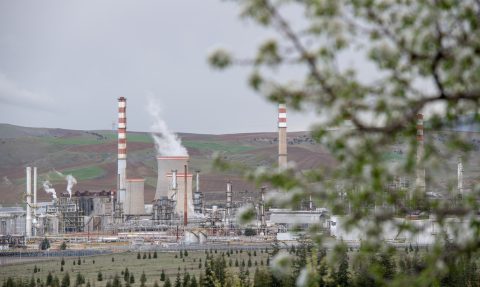
Turkish giant sponsoring COP31 cut climate goals then cashed in on oil boom
COP31 sponsors should be screened for “climate integrity”. Yet Koç Holding has become a top partner while its oil refiner runs flat out and its climate targets slip -
Early speakers’ list suggests few powerful leaders will attend COP31
Just 77 heads of state or government are scheduled to address the COP31 climate summit in Antalya, a third less than the COP28 peak -
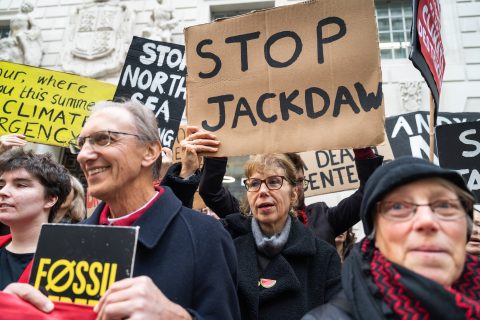
UK approves gas drilling despite admitting blow to “climate leadership” status
The government accepts that approving the Jackdaw field will weaken its climate reputation and downplays the legal weight of the International Court of Justice opinion
Saudi Arabia’s plan, submitted at the end of last year, sets no 2035 target, but has only a 2040 goal to reduce, avoid or remove 335 million tonnes a year against an undisclosed baseline. CAT rates it “critically insufficient”, estimating 2035 emissions at between 13% below and 18% above 2019 levels.
About 30 countries, including Egypt, Vietnam and Argentina, have still not produced an updated NDC, which all governments should have submitted more than a year and a half ago.
UN climate chief Simon Stiell said this year’s assessment report demonstrates again that collective progress remains insufficient, that global transitions are very uneven and that many countries face substantial barriers to delivering their targets and pledges.
He added that COP31 in Türkiye can help address some of the key gaps highlighted in this year’s reports, through ambitious outcomes on emission-cutting efforts, adaptation, climate finance and just transitions, as well as presidency-led initiatives on electrification, curbing methane emissions and progressing towards zero waste.
The post National climate plans now promise half the emission cuts expected by UN appeared first on Climate Home News.
National climate plans now promise half the emission cuts expected by UN
Climate Change
‘A strong start’: WA’s transition to renewable energy powerhouse aided by Premier’s announcement
PERTH, Tuesday 27 October 2026 — In response to WA Premier Roger Cook’s announcement of a doubled renewable energy target for WA’s main energy system, reported today, the following comments can be attributed to WA Campaign Lead at Greenpeace Australia Pacific, Geoff Bice:
“A Western Australian renewable energy target of 75% by 2030-31 is a welcome step in the right direction following sustained calls from across the WA community including unions, industry and advocacy groups.
“This common sense policy is a vital roadmap for WA’s shift to affordable and reliable solar and wind backed by batteries, and gives certainty to business and investors in a volatile global environment.
“Clear policy on renewable energy for WA’s main electricity grid will allow the phase out of polluting coal-fired power from the system and begin to remedy our reliance on expensive and polluting gas.
“This commitment is a positive first step for WA’s clean energy future, but the Cook Government must also address the state’s rising climate pollution driven by the gas industry and industrial processing.
“A natural step towards tackling rising emissions is rejecting any new fossil fuel projects, including Woodside’s proposal to drill for gas at Scott Reef.
“Expert advice and analysis compiled by Greenpeace and Springmount Advisory clearly lays out a viable pathway for WA to follow a staged transition away from fossil fuels and unlock almost $1 trillion of economic value by 2060 by replacing gas exports with green exports.
“The renewable energy target is a strong start — it must now be paired with emissions reduction targets to ensure climate pollution from WA starts falling urgently, and a plan for WA to become a renewable energy powerhouse must be prioritised.”
-ENDS-
Media contact
Emma Sangalli at emma.sangalli@greenpeace.org or 0431 513 465
‘A strong start’: WA’s transition to renewable energy powerhouse aided by Premier’s announcement
Climate Change
WA EPA warned Woodside of ‘serious, significant and irreversible’ harms to Scott Reef from gas plans, new documents reveal
SYDNEY/PERTH, Tuesday 27 October 2026 — In response to Western Australian Environmental Protection Authority (WA EPA) documents about Woodside’s plans to drill for gas at Scott Reef, as reported today, the following comments can be attributed to Glenn Walker, Head of Nature at Greenpeace Australia Pacific:
“These WA EPA documents show the depth of concern echoed by multiple regulators about Woodside’s plans to drill for oil and gas at Scott Reef, a proposal that flouts legislated nature protection principles.
“The WA EPA appears to have informed Woodside that the Browse project was bound for rejection based on an extensive review process and the opinion of multiple state government departments and independent experts.
“Greenpeace analyses have confirmed this year that Woodside’s gas drilling plans at Scott Reef still risk destroying vulnerable green turtle homes, further endangering pygmy blue whales with atomic bomb-level seismic blasting noise, and unleashing the worst oil spill in Australian history.
“The federal environment department raised similar red flags about oil spill risk from Woodside’s Scott Reef drilling plans in 2025 and 2026 before handing the project’s assessment over to the National Environmental Protection Authority.
“Woodside’s suggested ‘fixes’ in response to grave concerns for the wellbeing of Scott Reef and threatened species have been unilaterally criticised by independent experts for lacking in scientific basis and adequate detail.
“It would be a major backflip for both the WA EPA and the National EPA to now recommend approving this project. It is now critical that these regulators maintain their independence from corporate and political influence and reject this destructive project once and for all.”
-ENDS-
Notes to editor
Greenpeace Technical assessments of Woodside’s Browse Pygmy Blue Whale Management Plan, the Turtle Management Plan, and an analysis of Woodside’s Browse Oil Spill Modelling and Risk Mitigation Plan
High res images and footage of Scott Reef can be found here
Media contact:
Emma Sangalli at emma.sangalli@greenpeace.org or 0431 513 465