

According to most metrics, economic inequalities across the world have been declining since the late 1980s.
This has been driven by decreasing inequalities between countries – due to rapid economic growth in Asia – and has occurred despite increasing inequalities within a number of countries.
However, this trend could be reversed by the impacts of climate change.
While the repercussions of a warming climate are being felt in all corners of the world, the scale of these impacts on different countries, regions, communities and individuals varies hugely. The degree of economic inequality in the future will largely depend on how well different groups can adapt.
In a new review study, published in Environmental Research Letters, we analysed the existing literature and gathered evidence on whether, where and how climate change exacerbates economic inequality.
We find robust evidence that climate change impacts do indeed increase economic inequality and disproportionately affect the poor – both globally and within countries on all continents.
Climate change increases inequalities locally and globally
Our review covers 127 peer-reviewed studies into climate change and inequality.
These research papers cover a wide range of geographies, climate impacts, types of economic inequality measured (such as income disparities, differences in consumption or welfare disparities), methods used (such as econometric models or surveys) and findings.
The vast majority of studies confirm that climate change is exacerbating economic inequalities or hitting the poorest the hardest. This finding holds true across regions, types of physical impacts, sectors, types of inequalities and assessment methods. It is particularly prominent in studies that compare the impact of climate change across countries.
There are only two studies that find that climate change reduces inequality, but they focus on specific local circumstances – that is, flooding in Pakistan or price disparities among fishers and traders in Mexico.
Similarly, four papers find that the wealthy – whether households or countries – are more affected by climate change than the poor. However, these instances are exceptions and mostly limited to specific circumstances. For example, one study shows that the tropical cyclone Bulbul in Bangladesh caused higher losses for richer shrimp farmers, because they had larger farms.
The chart below summarises these overarching results across the 127 studies, categorised by the percentage of studies showing a negative (red), positive (blue) or mixed (yellow) impact on inequality. Orange indicates a finding that does not fit one of the categories, while grey shows studies that could not reach a conclusion.
The different bars represent the geographical focus of the different studies. Most of the studies we reviewed either look at the global picture (46) or focus on individual countries (44).

When it comes to global studies, the consensus is that climate change is widening inequalities or affecting the poor the most, with around 78% of the papers reaching this conclusion.
Some studies also highlight other groups being disproportionately impacted by climate change, such as rural communities, urban populations, women or specific regions and sectors.
However, there’s a minority of papers that remain inconclusive about both the impact of climate change on inequalities and which groups are most affected.
When it comes to national studies, the trend remains consistent: around 68% of these papers find that climate change is driving up economic inequality or hitting the poorest the hardest (30 out of 44 papers).
As the map below shows, this holds true in all parts of the world. The purple shading indicates the number of studies finding a negative climate impact on inequality for each country.

The countries with the highest number of studies (more than five) showing that climate change increases economic inequality or disproportionately affects the poor are China, Brazil, Ethiopia and the US.
Different climate impacts contribute to inequality
Looking at the breakdown of studies, we found that the percentage of papers pinpointing a particular climate impact as exacerbating inequality or affecting the poor more significantly ranges from 60% for changes in rainfall to 89% for sea level rise.
You can see this in the left-hand chart below, which shows the findings of the literature review separated by climate impact. The right-hand chart shows the findings separated by sector. The categories are the same as in the earlier chart.

A majority of studies focus on the impact of rising temperature, with 72% of these concluding that temperature changes worsen economic inequality or affect the poor the most.
Most of the studies that find a reduction in inequality concern extreme weather events. This is often because these studies assess the impact on physical assets, which are predominantly owned by the wealthiest.
There are several channels through which biophysical climate change impacts translate into economic effects. These channels include broad economic effects that influence all sectors, changes in agricultural revenues due to factors such as crop yield declines, impacts on labour productivity, changes to infrastructure and physical assets, shifts in energy demand or water availability.
We found that studies identifying labour productivity or energy as the main channel through which climate change affects economic inequalities overwhelmingly conclude that inequalities increase or that the poor are more impacted.
A decline in labour productivity may indeed increase inequality if it disproportionately affects low-skilled workers, especially those who work outdoors or in non-air-conditioned environments.
Notably, a large proportion of the studies where physical assets are identified as the main channel suggest that inequality actually decreases due to climate change or that the wealthy suffer more. This is because rich individuals tend to face greater losses due to the higher value of their property.
Tackling climate impacts on inequality
Our investigation into the impacts of climate change on economic inequality was motivated by the need to better understand the climate change impacts are distributed across the world. This provides the other side of the coin to the effects of mitigation policies on inequality, which are often more widely discussed.
The evidence strongly indicates that the impacts of a warming climate are regressive across countries. Tackling the impacts of climate change on economic inequality will demand substantial policy changes and financial resources.
At the national level, policymakers will need to ensure that adaptation finance and loss and damage compensation effectively reach low-income households to reduce their vulnerability and increase their resilience to climate change impacts.
The results of our review underscore the importance of policymakers integrating climate risk management strategies into the design of “climate-proof” social programmes in poor regions, which are crucial for achieving climate justice objectives.
Of course, other forms of inequality beyond economic inequality, such as gender inequality, are important and interact with climate change, but this is a topic for another review.


The post Guest post: How climate change could reverse gains in global inequality appeared first on Carbon Brief.
Guest post: How climate change could reverse gains in global inequality

Saturday, 17 October 2026
7.18 AM AWST
Hi folks! We’re joining you live from the Rainbow Warrior where we will be providing you with updates as our four activists continue scaling and occupying Woodside’s gas platform. The activists are peacefully protesting against Woodside’s latest gas expansion plans, the Browse project, which would see up to 57 toxic wells drilled at Scott Reef.
“Right now our activists are scaling Woodside’s massive Floating Production Unit. They are scaling the South-East pillar and the underside of the Helideck. They’ll be setting up camp soon and have plenty of provisions with them – so stick around!”
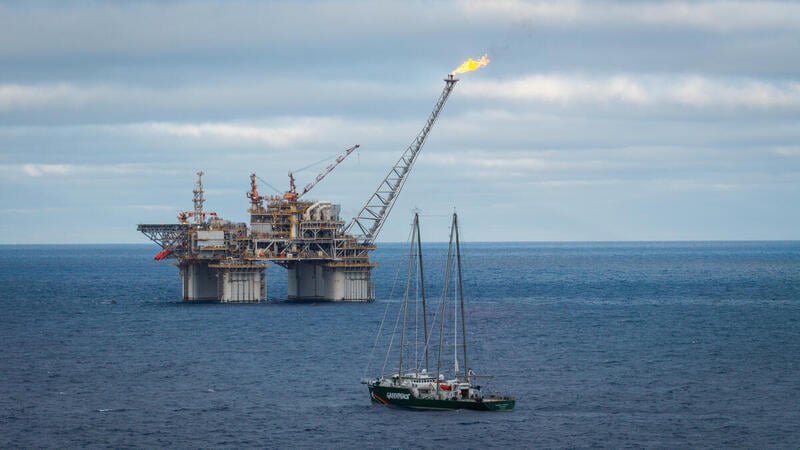
5:45 AM AWST
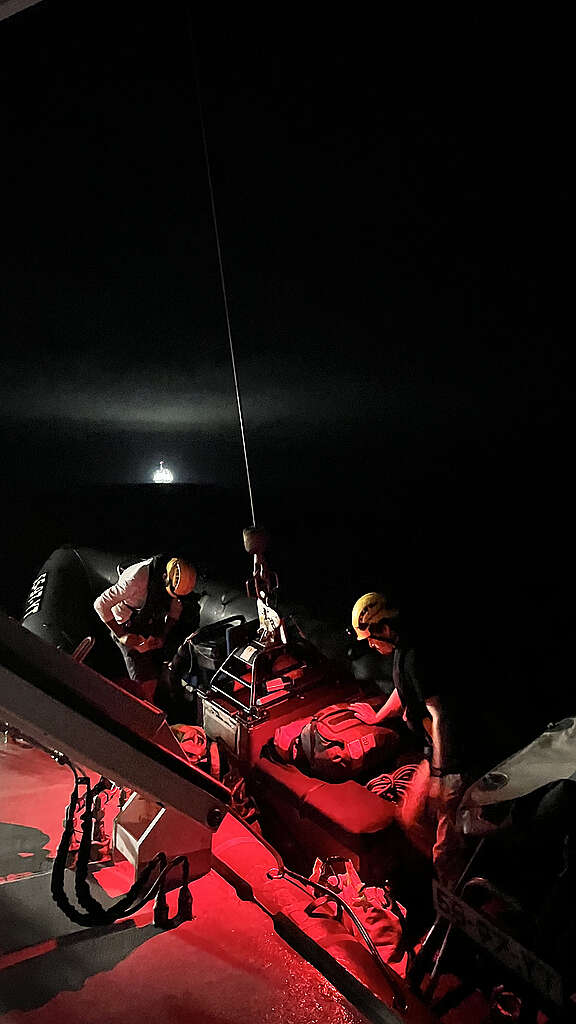
Our RHIBS are in the water! We’ve deployed our four activists and our ship crew on our small fast boats, headed to the gas platform. We’re carrying crew and equipment, plenty of food, all of our safety climbing gear, some big banners, cameras and a whole lot of heart… someone even has something to read after they get settled in.
5:26 AM AWST
Before sunrise activists prepared to launch RHIBS from the Rainbow Warrior.
Looking for a front seat view?
You can follow along with the Live Rainbow Warrior bow cam here!
Looking for more?
Follow us on Instagram for a peek behind the scenes and hear from our Rainbow Warrior crew.
Live blog: Greenpeace activists occupy Woodside gas project to save Scott Reef
Climate Change
Greenpeace activists climb and occupy Woodside’s Scarborough gas project calling on the Australian government to “Stop Woodside’s Dirty Gas” and “Save Scott Reef”
PERTH, Saturday 17 October 2026 — Four Greenpeace Australia Pacific activists are scaling and occupying a Floating Production Unit at Woodside’s Scarborough gas project off the coast of Western Australia, displaying banners reading: “Stop Woodside’s Dirty Gas. Save Scott Reef.”
- Photos and video available here and here. More will be uploaded throughout the day.
- Content and live updates will be uploaded to a live blog and to Instagram
Early this morning at 05:45 AWST, Greenpeace Australia Pacific activists launched from the Rainbow Warrior, Greenpeace’s flagship vessel, scaling and attaching themselves to a Floating Production Unit (FPU), a key piece of gas processing infrastructure at the Scarborough gas field over 200km off the coast of Exmouth.
Woodside has since confirmed it has initiated a temporary shut down of the FPU.
Greenpeace Australia Pacific is occupying the gas platform in peaceful protest of Woodside’s plans to drill for oil and gas at Scott Reef as part of its Browse proposal.
David Ritter, CEO at Greenpeace Australia Pacific, said: “Greenpeace Australia Pacific is taking action today to expose the unacceptable risk to Scott Reef posed by Woodside’s plans.
“Australians love our oceans. Woodside’s reckless Browse gas proposal would turn the magnificent Scott Reef into an industrial gas zone. Woodside wants to drill up to 57 toxic wells around Scott Reef, Australia’s largest oceanic reef, home to nesting green sea turtles, and endangered species like pygmy blue whales and the dusky sea snake; it is a place like nowhere else on Earth.
“Woodside has an alarming track record of oil spills, incidents and environmental neglect, and can’t be trusted with our oceans. From whaling in Albany in the seventies, to Woodside’s threat to Scott Reef today, there’s more than fifty years of history, of Greenpeace taking action off WA’s coasts to protect our oceans.
“There’s no future in new gas projects. Our future is in secure homegrown renewable energy, green industry and exports, where communities and places like Scott Reef are protected — there’s no future in dirty gas shipped offshore.
“The prospect of drilling for oil or gas on the Great Barrier Reef would be considered absolute madness today, but that is exactly the decision before the government: save Scott Reef or risk its destruction at the hands of a gas corporation.”
From aboard the Floating Production Unit, Dr Chris Holden, Greenpeace Australia Pacific activist said: “As a doctor, when I see new fossil fuel projects like Woodside’s Browse project being put forward, I can’t help but think about the impact this is going to have on the health of our communities and planet, and feel a sense of duty to act.
“Not only will this project do irrevocable harm to nature at Scott Reef, it will have a terrible impact on our climate, putting all of our lives at risk.
“On the Rainbow Warrior I’m carrying a copy of the 2025 Lancet countdown report, which warns that health impacts of climate change are worsening, with millions dying needlessly each year due to fossil fuel dependence, growing emissions, and failure to adequately adapt.
“With warnings like this from the leading global health professionals, our government simply can’t allow fossil fuel projects like Woodside’s Browse project to go ahead. It is their duty to do what is in the best interest of our communities.”
Almost half a million people have signed a petition calling on the government to Save Scott Reef and Woodside’s Browse gas project.
-ENDS-
Notes:
- Dial-in, SimSat and Zoom interviews with Geoff Bice, WA Campaign Lead at Greenpeace Australia Pacific, currently aboard the Rainbow Warrior, can be organised separately
Media contact:
Greenpeace Australia Pacific media team on +61 406 231 892 or +61 407 581 404
The board of the Fund for Responding to Loss and Damage (FRLD) will decide on Thursday on whether to “provisionally set aside” $20 million for Nepal to deal with some of the effects of the climate-driven flood it suffered in August.
The motion, seen by Climate Home News, has been drafted by a group of board members from both developed and developing countries and so is likely to pass easily at the fund’s first-ever extraordinary board meeting on October 22.
It invites the government of Nepal to submit a proposal for how to use the money, with the board then deciding at one of its regular board meetings whether to approve the proposal or not.
While Nepali officials have described $20 million as merely “symbolic” in the face of the $4.8 billion estimated costs of recovery and reconstruction, it would be the first time the new FRLD – agreed in 2022 months after devastating floods in Pakistan – has set aside money for a specific disaster.
Until now the fund has only taken requests through a single call for proposals, launched at COP30 in Belém last November, that gave countries six months to submit requests.
Most of the 180 projects the FRLD is currently considering are designed to help countries avoid damage from future climate disasters, for example by strengthening responses to floods in Bangladesh and Lagos.
The draft decision says Nepal’s proposal will serve as a pilot for how funding requests can be submitted outside of the fund’s current timetable. That could let governments seek funds quickly after a climate disaster strikes, rather than waiting for the next call.
This arrangement would set the fund apart from other United Nations funds designed for climate adaptation or cutting emissions like the Green Climate Fund.
Climate campaigners from Fill the Fund said the draft decision is “a real step forward” as it is “the first time this Fund has moved to respond to a specific disaster”.
Too little, too late
The FRLD was agreed by governments at COP27, set up and operationalised at COP28 in 2023 but has yet to award any money. The 180 funding requests it is currently considering would cost around $2.8 billion, but it only has $350 million to allocate.
The United Nations Secretary-General António Guterres has described the amount of money available in the fund as “ridiculously small” and Fill the Fund said $20 million “is a meaningful signal but it is a drop against an ocean of need”.
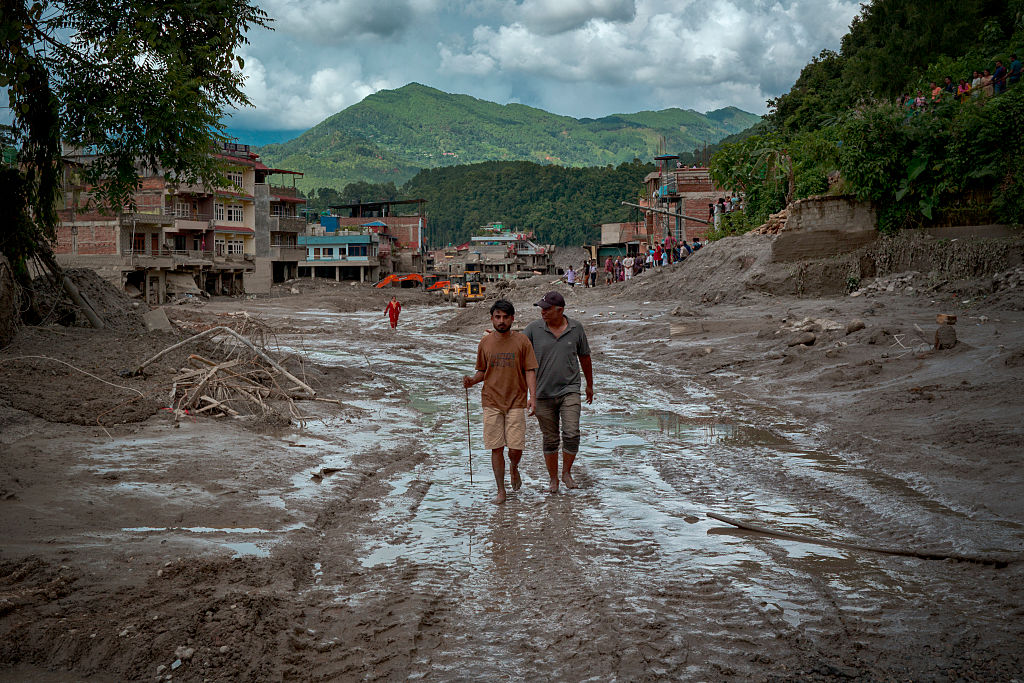
A glacial rock and ice collapse sent a torrent of water and debris through Nepal and the Chinese-administered region of Tibet on August 26. It killed more than 1,400 people, left thousands more missing and destroyed homes, bridges, roads and hydropower plants. Nepal’s finance and environment ministers quickly appealed to the FRLD board for funds, saying that “time is of the essence”.
Their call was followed swiftly by a letter from developing country FRLD board members urging the board’s co-chairs to organise an extraordinary meeting to allocate funds to Nepal.
But developed countries initially called for an informal consultation rather than a full board meeting. It took a further 45 days for the board’s co-chairs to organise an extraordinary board meeting for October 22 and to draft a motion for adoption.
Fill the Fund called for a permanent way of the fund rapid responding to disasters as “Nepal should not have required historic letters, an informal drafting group and the Fund’s first-ever extraordinary meeting simply to unlock an emergency response. The next country cannot wait two months and a bureaucratic marathon. Speed must be built in, not improvised.”
The post UN’s loss and damage fund set to give Nepal $20m for flood recovery appeared first on Climate Home News.
UN’s loss and damage fund set to give Nepal $20m for flood recovery


Is a Team of Is a Bunch of MAGA Thugs Beating the Snot Out of a Woman a New Low, or Is it What We Now Need to Expect?

