
Google has announced a new climate finance commitment. The company pledged $50 million by 2030 to fund projects that aim to eliminate superpollutants. These are greenhouse gases (GHGs) that heat the atmosphere much faster than carbon dioxide (CO₂) .
Google said it will work alongside other corporations in a collective effort called the Superpollutant Action Initiative. In total, participating companies have committed $100 million to this cause.
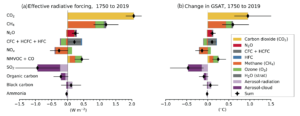
Short-lived GHGs include methane, fluorinated gases like hydrofluorocarbons (HFCs), and black carbon. These gases trap heat in the atmosphere far more effectively than CO₂ in the short term, making them a key target for near-term climate action.
Randy Spock, Google’s Carbon Credits and Removals Lead, stated:
“As we continue to support superpollutant elimination projects, we’ll ensure our impact is catalytic and accurately measured and pave the way for additional companies and governments to follow. Since common superpollutants like methane are shorter lived than CO2, taking action against them helps address near-term rather than long-term warming, complementing our ongoing carbon removal efforts.”
What Are Superpollutants and Why They Matter
Superpollutants are greenhouse gases with high global warming potential (GWP). This means that each ton of these gases can trap much more heat in the atmosphere than a ton of CO₂.
Methane (CH₄), for example, warms the planet about 80 times more than CO₂ over a 20-year period. Other short-lived GHGs, such as HFCs used in refrigeration, can be thousands of times more potent per ton than CO₂.
Unlike CO₂, which can stay in the atmosphere for centuries, many short-lived GHGs break down much faster. Reducing them can deliver significant cooling benefits in the near term due to their high potency and short lifespan.
Scientists say that superpollutants, like methane and black carbon, cause almost half of all global warming observed so far.
How Google’s Bold Pledge Fits Into Broader Climate Goals
Google will spend $50 million to fund projects that remove short-lived GHGs worldwide by 2030. The company plans to back initiatives that make a real difference for the climate. It also aims to help more companies and governments take similar steps.
The pledge focuses on both methane and fluorinated gases, which come from sources such as:
- landfills and waste operations
- refrigeration and air-conditioning systems
- industrial leaks and fuel systems
This funding boosts the tech giant’s climate work. It includes buying carbon removal and investing in clean energy.
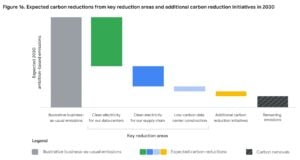
The company aims to reach net‑zero emissions across all operations and its supply chain by 2030. This includes running on carbon‑free energy 24/7 and cutting emissions from data centers, offices, and supply chains.
By 2024, Google’s data centers ran on an average of 64% carbon‑free energy, even as electricity use grew 27% due to AI and other services. The company has also avoided 44 million tonnes of CO₂-equivalent emissions since 2011 through renewable energy and efficiency measures.

In 2024, Google added 2.5 GW of clean energy from new projects and signed contracts for 8 GW more, the largest annual total in its history. These projects include geothermal and nuclear SMRs in Asia and the U.S.
- SEE MORE: After $102B Quarter Revenue and Record Stock, Google Turns to Nuclear to Power the AI Boom
The $50 million superpollutant pledge complements these efforts. Reducing superpollutants gives fast climate benefits while Google continues long-term CO₂ reductions and clean energy expansion.
Partnership Power: Corporates Team Up for Global Impact
Google is not acting alone. A group of top global companies, including Amazon, Salesforce, Autodesk, Figma, JPMorgan Chase, and Workday, launched the Superpollutant Action Initiative with Google. They will invest $100 million through 2030 to reduce superpollutants.
The initiative will fund high-impact projects worldwide that cut these short-lived but potent pollutants. The goal is to deliver climate, health, and economic benefits while accelerating progress where it’s most needed.
The tech giant has also signed partnerships with third‑party organizations that focus on reducing these planet-warming GHGs.
In 2025, Google teamed up with Recoolit and Cool Effect. Their goal is to cut over 25,000 tons of superpollutants by 2030. These partnerships focus on capturing and destroying harmful gases. This includes HFCs from cooling systems in Indonesia and methane from landfills in Brazil.
- READ MORE: Google Bets Big on Next-Gen Nuclear and Carbon Credits from Superpollutants For a Greener AI
Recoolit, an Indonesian company, has partnered with Google. They will sell 250,000 carbon credits. These credits come from destroying refrigerant gases found in HVAC systems.
Moreover, Google and its partners backed a project with Vaulted Deep. This project aims to permanently remove 50,000 tonnes of CO₂ and methane emissions. They use technology that injects organic waste underground for storage.
The tech giant’s partnerships aim to reduce superpollutants. They also strengthen the science behind measuring and certifying these efforts.
Near‑Term Impact, Long‑Term Strategy
Climate scientists emphasize that reducing the pollutants can produce rapid climate benefits. Because these gases are potent but short‑lived, cutting them can slow warming quickly, within years rather than decades.
Analysts and climate assessments show that cutting methane quickly can slow warming. Some studies suggest that strong reductions could lower global temperature rise by about 0.4–0.5 °C by 2050. This is compared to a scenario without these cuts.
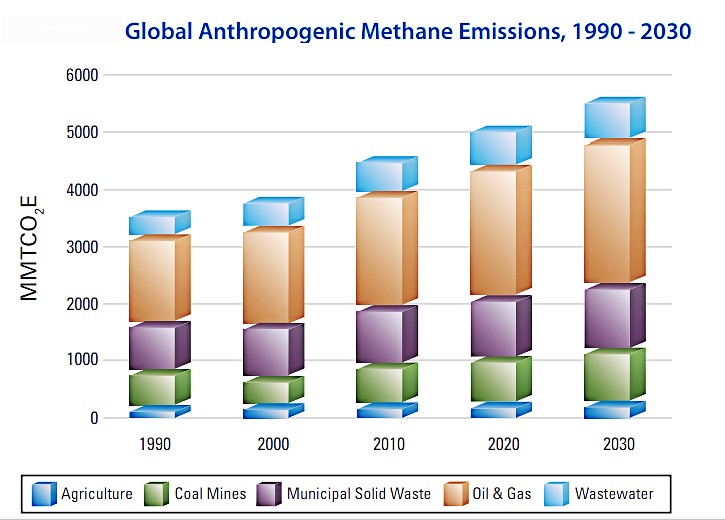
A peer-reviewed study found that cutting global methane by 40% by 2050 could lower warming by about 0.4 °C by mid-century. Bigger reductions might push this down to 0.5 °C during that time.
Superpollutant mitigation also has public health benefits. Methane and black carbon contribute to ground‑level ozone and air pollution, which can cause respiratory and cardiovascular issues. Cutting them can improve local air quality while also addressing climate change.
Google and its partners plan to track and report the impact of funded projects regularly. The Superpollutant Action Initiative will work with scientists and research groups. They aim to create global plans to boost action.
Markets and Money: Carbon Credits Meet Corporate Action
Google’s pledge comes at a time of rising corporate climate commitments worldwide. Many companies are boosting their spending on carbon credits. They are also investing in carbon removal technologies and emissions measurement tools.

Many corporate climate efforts aim to cut CO₂ emissions. However, superpollutants are now in the spotlight. Reducing them can quickly improve the climate, while also supporting long-term CO₂ strategies.
Compliance systems like emissions trading schemes now also recognize the role of powerful greenhouse gases beyond carbon dioxide.
Google teaming up with big companies shows that corporate collaboration on climate issues is increasing. This group aims to scale funding and knowledge sharing on superpollutants at a global level.
A Tactical Move for Near‑Term Climate Impact
Google’s $50 million pledge to reduce the GHGs through 2030 highlights a growing focus on near-term climate action.
Superpollutants, though short-lived, have outsized warming effects that make them a critical target for climate mitigation. Google and its partners fund elimination projects and work with experts and non-profits. They aim to speed up progress on global warming beyond what CO₂ reductions can achieve alone.
This initiative also reflects corporate climate strategy trends. As markets for carbon credits and climate solutions expand, companies are committing capital and resources beyond traditional carbon focus areas. In doing so, they aim to bring scalable, measurable progress in areas that can deliver both immediate and long-lasting climate benefits.
- FURTHER READING: Meta, Amazon, Google, and Microsoft Dominate Clean Energy Deals as Global Buying Slips in 2025
The post Google Pledges $50M to Fight Superpollutants by 2030: A Near-Term Climate Game Changer appeared first on Carbon Credits.
Carbon Footprint
China’s New 2030 Climate Playbook and What It Means for the EV Market
China has released updated climate goals for the period leading to 2030, framed as part of its 15th Five‑Year Plan (2026–2030). These goals focus mainly on improving carbon efficiency, that is, lowering emissions relative to economic output, rather than capping total emissions.
Under the new plan, China aims to reduce carbon dioxide (CO₂) emissions per unit of gross domestic product (GDP) by 17% between 2026 and 2030. The immediate 2026 target is to cut carbon intensity by about 3.8% from the prior year.
The world’s largest emitter has not announced a new absolute cap on total CO₂ emissions for 2030. This means emissions could still rise in total even as the economy becomes more efficient. That cautious tone has drawn attention from analysts.
Norah Zhang, China country lead for Climate Action Tracker, remarked:
“In 2025, renewable electricity generation in China grew faster than overall electricity demand, which helped reduce coal-fired power generation and lowered CO₂ emissions in the power sector. However, the new five-year plan does not update the 2030 target for newly-installed solar and wind capacity, which China already achieved in 2024. By not updating these targets, the new plan misses an opportunity to create additional momentum through more ambitious goal setting for 2030 and beyond.”
What the New Targets Mean in Practice
China has long said it will peak carbon emissions before 2030 and achieve carbon neutrality by 2060 — often called its “dual‑carbon” goals under the Paris Agreement. However, the new 2030 plan places greater emphasis on intensity improvements rather than absolute reductions.

China’s updated climate strategy reflects a balance between economic growth and emissions control. The plan includes a GDP growth target of 4.5–5% for 2026, suggesting the government expects continued industrial expansion. But this raises the possibility that total CO₂ emissions could climb even as carbon intensity improves.
The new plan also prioritizes energy transition actions, such as:
- Replacing ~30 million tonnes of coal per year with renewables
- Relying on China’s booming renewable industry to limit coal use
- Supporting wind, solar, nuclear, and transmission infrastructure
- Expanding the carbon emission trading system
- Setting up a low‑carbon transition fund and energy storage build‑outs
However, the absence of an absolute emissions cap means China’s total carbon output may still grow if economic expansion is strong.
China’s Global Emissions Weight: Why It Matters
China is the world’s largest emitter of greenhouse gases, accounting for roughly 30% of global CO₂ emissions. Most studies suggest that the country’s emissions will peak between 2027 and 2030 with a peak between 11.6 and 13.2 gigatonnes of CO₂ equivalent (GtCO₂e) under current policy trajectories.
China’s transition has been supported by rapid renewable energy growth. China accounts for more than half of global solar panel production and is a global leader in wind and solar deployment.

Growth in clean energy helped fossil fuel use fall by an estimated 2% in 2025, and renewable sources met about 84% of electricity demand growth, according to independent analysis. This trend is expected to make global fossil fuel demand begin to decline by 2030 if current energy shifts hold.

EV Market Spotlight: Cleaner Power, Bigger Demand
China is also the world’s largest electric vehicle (EV) market. The country plays a major role in EV adoption, and its policies can shape global trends, including demand for vehicles from companies like Tesla.
The Asian nation’s 2030 goals indirectly influence EV demand. Strong efficiency and clean energy targets can make EVs more attractive versus traditional combustion cars by lowering emissions from electricity generation. EVs reduce local pollution and align with both national and global climate ambitions.
Tesla has been expanding in China, including with the Gigafactory Shanghai that supplies vehicles domestically and for export. China’s EV market is projected to grow further, supported by urban electrification policies and consumer incentives.

However, policies that rely mainly on carbon intensity reductions — as opposed to absolute emissions limits — may slow the pace of structural changes needed to fully decarbonize transport and power sectors. Still, China’s rising clean electricity share helps strengthen the climate case for EV adoption by lowering the lifecycle emissions of electric vehicles.
Broader Market Trends, Forecasts, and Investment Signals
China’s cautious climate plan comes amid shifting global policy dynamics. While many countries are enhancing climate targets, some have pulled back from earlier commitments. For example, changes to U.S. federal climate policy have created uncertainty in long‑term emissions strategies.
As of late 2025, around 145 countries had announced or were considering net‑zero targets, covering about 77% of global greenhouse gas emissions. China remains a key driver in this global push.

In carbon markets, China has also taken steps to expand its emissions trading system (ETS). Recent policy outlines suggest broader coverage of sectors and possibly higher stringency in future phases. This could help drive cleaner investments and offer market signals to investors and companies.
- READ MORE: China Expands Carbon Reporting to Airlines and Heavy Industry in Major Climate Disclosure Shift
Renewable energy and clean tech markets may benefit from China’s cautious but steady approach. The country’s demand for solar panels, batteries, and wind equipment can sustain supply chains and keep manufacturing costs down globally — benefiting EV makers and green tech firms alike.
Ambition vs. Reality: Tracking China’s Climate Trajectory
Despite progress in clean energy, challenges remain. China has not set a firm limit on total emissions through 2030, and coal consumption continues to play a major role in power generation. The reliance on carbon intensity targets means that total emissions may grow if GDP expands faster than emissions decline per unit of output.
To stay aligned with Paris Agreement goals, many analysts believe stronger absolute cuts are needed. Independent research suggests that China could reduce emissions by up to 30% by 2035 relative to current levels with more ambitious policy action.
However, the current 2030 plan keeps a cautious balance between economic growth and climate policy. The country aims to improve carbon efficiency and expand clean energy, but stops short of committing to cuts in total emissions. These targets are part of its long‑term plan to peak emissions before 2030 and achieve carbon neutrality by 2060.
For markets and companies like Tesla, China’s climate strategy will continue to matter. As the largest EV market and a leader in clean energy production, China’s demand trends and policy frameworks shape global investment and manufacturing patterns.
The cautious tone of China’s new climate goals shows a complex trade‑off between growth and climate action. Whether China will accelerate its ambition before 2030 remains a key question for global decarbonization and the broader energy transition.
The post China’s New 2030 Climate Playbook and What It Means for the EV Market appeared first on Carbon Credits.
Carbon Footprint
India–Canada Usher in a New Era of Partnership as Cameco Signs $2.6B Uranium Deal
Cameco has signed a major long-term uranium supply agreement with India. The Canadian uranium giant will deliver nearly 22 million pounds of uranium ore concentrate (U3O8) to India over nine years. The contract is valued at about $2.6 billion.
Deliveries will begin in 2027 and continue through 2035. The uranium will power India’s growing fleet of nuclear reactors. The agreement strengthens energy ties between Canada and India at a time when nuclear power is gaining fresh momentum worldwide.
A Strategic Boost for India–Canada Relations
The agreement was celebrated in New Delhi in the presence of Narendra Modi, Mark Carney, and Saskatchewan Premier Scott Moe. Carney’s 2026 visit marked a reset in India–Canada relations.
As we have read and heard earlier, diplomatic ties have been strained in recent years. However, both leaders described this visit as the start of a “new era of partnership.”
The uranium deal was one of the key outcomes of the visit. In addition, both countries renewed efforts to finalize a Comprehensive Economic Partnership Agreement (CEPA) by the end of 2026.
India and Canada also set a bold trade target. They aim to increase bilateral trade to $50 billion by 2030, up from nearly $9 billion in 2024–25.
Both sides agreed to deepen cooperation in:
- Critical minerals
- Renewable energy
- Energy security
- Advanced nuclear technologies, including SMRs
This uranium agreement fits directly into that broader economic and strategic framework.
India’s Nuclear Ambitions and Uranium Demand
India currently operates 24 nuclear reactors. However, the country has much larger plans. Under its long-term energy roadmap, India aims to reach 100 gigawatts (GW) of nuclear capacity by 2047.

The Union Budget 2025–26 placed nuclear energy at the center of this strategy. The government launched the Nuclear Energy Mission for Viksit Bharat. This mission focuses on expanding nuclear capacity, cutting fossil fuel use, and boosting energy security.
- A key part of the plan is the development of small modular reactors (SMRs) that are smaller, more flexible, and easier to deploy. They can power remote regions and replace retiring coal plants.
The government has allocated $2.4 billion to build at least five indigenously designed SMRs by 2033. This move signals strong policy backing for advanced nuclear technology.
As electricity demand rises due to industrial growth and data centers, nuclear power offers a stable, round-the-clock, low-carbon energy source. Therefore, securing a long-term uranium supply is critical for India’s expansion goals.
Cameco Strengthens Its Long-Term Strategy
For Cameco, the deal aligns perfectly with its disciplined contracting model. The company avoids chasing short-term spot fces. Instead, it focuses on securing long-term contracts with reliable customers.
By the end of 2025, Cameco had about 230 million pounds of uranium under long-term contracts. This provides strong revenue visibility for years.
The new India agreement was already included in the company’s disclosed long-term contracting volumes and price sensitivity analysis. The estimated $2.6 billion value is based on a uranium price of $86.95 per pound, reflecting late February 2026 spot price averages.
Uranium: The Backbone of Cameco’s Business
In 2025, the company reported strong financial results. Earnings before income tax in the uranium segment rose by $50 million year over year. Adjusted EBITDA increased by $76 million.

Although fourth-quarter earnings dipped slightly due to sales timing, underlying pricing remained strong. But operationally, Cameco delivered solid production results:
- At Cigar Lake, production reached 19.1 million pounds (100% basis), exceeding annual expectations.
- At McArthur River/Key Lake, production totaled 15.1 million pounds, meeting revised guidance.
Average realized uranium prices improved as market-linked and escalated contracts reflected higher pricing.

Canada’s Expanding Uranium Role
Canada is one of the world’s leading uranium producers. Saskatchewan hosts some of the richest uranium deposits globally. Major mines such as Cigar Lake, McClean Lake, and Rabbit Lake have supplied uranium for decades. Recently, Canada approved its first large-scale uranium mine in over 20 years.
The federal and provincial governments cleared the Phoenix In Situ Recovery (ISR) uranium project. This project is part of Denison Mines’ Wheeler River development in Saskatchewan. Approval allows the construction of both the mine and its processing facilities.
This decision signals Canada’s commitment to supporting global nuclear growth. As more countries expand nuclear capacity, demand for a secure uranium supply continues to rise.

A Deal With Long-Term Impact
Around the world, nuclear energy is regaining policy support. Countries are seeking reliable, low-carbon power to meet climate targets and rising electricity demand. India stands out as one of the fastest-growing nuclear markets. Its target of 100 GW by 2047 represents a massive expansion from current levels.
To reach that goal, India will need a steady uranium supply, new reactor builds, and strong international partnerships. The Cameco deal addresses one key piece of that puzzle: fuel security.
Overall, this agreement goes beyond a simple supply contract. It reflects deeper economic and strategic alignment between the two major democracies. While India secures uranium to power its future reactors, Canada strengthens its role in the global nuclear fuel market. Meanwhile, bilateral trade and diplomatic ties gain fresh momentum.
As nuclear energy returns to the global spotlight, long-term fuel partnerships will become even more important. In that context, Cameco’s $2.6 billion agreement with India marks a decisive step toward a more secure and low-carbon energy future for both nations.
- SEE MORE: Canada Approves First Uranium Mine in 20 Years as Tech Giants Eye Nuclear Fuel for AI Power
The post India–Canada Usher in a New Era of Partnership as Cameco Signs $2.6B Uranium Deal appeared first on Carbon Credits.
Carbon Footprint
TerraPower Wins U.S. Permit for First Natrium Reactor as Advanced Nuclear Moves Closer to Reality
The United States took a major step toward the next generation of nuclear energy after the U.S. Nuclear Regulatory Commission approved a construction permit for TerraPower’s first Natrium reactor.
The permit allows the company to begin building Kemmerer Unit 1, a commercial-scale advanced nuclear power plant in Wyoming. Notably, this is the first advanced reactor project in the U.S. to receive such approval, marking an important milestone for the future of clean energy and nuclear innovation.
Developed by TerraPower in partnership with GE Vernova Hitachi Nuclear Energy, the Natrium system combines a 345-megawatt sodium-cooled fast reactor with a molten salt energy storage system. The project is also supported through the U.S. Department of Energy Advanced Reactor Demonstration Program.
With regulatory approval secured, TerraPower plans to begin construction within weeks and aims to complete the plant by 2030.
A Long Regulatory Journey Reaches a Breakthrough
Securing approval for a new nuclear design is a rigorous and lengthy process. TerraPower spent more than four years working closely with regulators to reach this stage.
The company first engaged with the NRC through extensive pre-application consultations. These discussions helped refine the reactor’s design and ensured regulators fully understood the new technology. TerraPower then submitted its official construction permit application in March 2024, and the NRC formally accepted the filing in May 2024.
Initially, the regulator expected the review process to take 27 months. However, the timeline moved faster than anticipated.
Several factors helped accelerate the review:
- TerraPower submitted a comprehensive technical application.
- The company responded quickly to regulator questions.
- NRC staff prioritized the project’s review.
- Federal policies encouraged faster licensing of advanced reactors.
As a result, the approval process finished in 18 months, making it one of the fastest regulatory reviews for a new nuclear technology in the United States.
This milestone positions TerraPower as a first mover in the advanced reactor market, which many experts see as essential for meeting future energy demand while reducing emissions.
Natrium: A New Kind of Nuclear Reactor
Unlike traditional nuclear plants, the Natrium system uses sodium instead of water as its coolant. This design change brings several operational advantages.

Most existing nuclear facilities rely on light water reactors, which operate under high pressure. In contrast, the Natrium reactor runs at low pressure and high temperatures, reaching more than 350°C (662°F) while remaining far below sodium’s boiling point.
Because of this design, the reactor can rely on natural forces such as gravity and thermal convection for cooling. This passive safety approach reduces the need for complex emergency systems and lowers construction costs.
Another key innovation is the plant’s integrated energy storage system.
The reactor continuously produces 345 megawatts of electricity, ensuring stable baseload power. Meanwhile, molten salt storage can hold excess heat and release it later to boost output to 500 megawatts during periods of high demand.
Instead of running at a constant power level like traditional nuclear plants, the system can adjust electricity production based on grid needs. That flexibility allows it to complement renewable energy sources such as wind and solar.
Thus, this capability makes the Natrium plant unique among advanced reactor designs.
In addition, the design separates the nuclear reactor from the energy storage and power generation systems. This “decoupling” means non-nuclear teams can operate components such as steam turbines and salt tanks outside the nuclear island, improving safety while reducing operational costs.
Supporting Decarbonization Beyond Electricity
The Natrium plant is designed to deliver more than just electricity.
Because the reactor produces high-temperature heat, it can also supply industrial steam and thermal energy. This opens opportunities to decarbonize sectors that are traditionally difficult to electrify, including heavy industry and manufacturing.
The technology can therefore support multiple applications:
- Carbon-free electricity generation
- Industrial heat supply
- Steam production for industrial processes
- Grid stability alongside renewables
With an expected operational life of up to 80 years, the Natrium system could provide reliable low-carbon energy for decades.
Nuclear Power’s Role in America’s Energy Strategy
The approval of TerraPower’s Natrium project comes as the United States seeks to significantly expand its nuclear power capacity.
The U.S. already leads the world in nuclear generation, producing roughly 30% of global nuclear electricity. According to the Energy Department, the country has about 100 gigawatts of nuclear capacity today.
However, the government aims to quadruple that capacity to 400 gigawatts by 2050 to meet growing electricity demand and climate targets.
Federal policies are increasingly focused on rebuilding the nuclear supply chain and accelerating the deployment of new reactors.

Recent initiatives include:
-
$2.7 billion investment in uranium enrichment was announced in January 2026 to strengthen the domestic nuclear fuel supply.
-
$800 million in funding for small modular reactors was awarded in December 2025 to support projects led by utilities and developers.
-
A $1 billion loan to restart the Crane Clean Energy Center nuclear plant in Pennsylvania.
These measures reflect a broader push to ensure the United States maintains leadership in advanced nuclear technology.
Several companies are already developing next-generation reactors, including Oklo, Kairos Power, and X-energy. However, many of those projects are expected to deploy in the mid-2030s.
That timeline makes TerraPower’s Natrium project one of the earliest large-scale demonstrations of advanced reactor technology in the United States.
Rising Power Demand From AI and Data Centers
Another factor driving interest in nuclear energy is the rapid growth of data centers and artificial intelligence infrastructure.
Large technology companies, or the hyperscalers, are building massive data centers to support AI systems and cloud computing. These facilities consume enormous amounts of electricity and require reliable, constant power. As demand grows, many tech companies are exploring nuclear energy to secure their own supply rather than relying solely on public grids.
This trend could reshape the energy landscape. Governments must balance the needs of fast-growing digital industries with the need to keep electricity affordable for households and businesses.
The outcome may also influence the global AI competition between the United States and China, where access to reliable power could become a strategic advantage.

Nuclear Generation Remains Strong in the U.S.
Despite maintenance cycles, nuclear power continued to provide stable and high levels of electricity in 2025. According to the Energy Information Administration (EIA), U.S. nuclear generation stayed consistently strong throughout the year. Output typically dipped during scheduled maintenance periods but rebounded quickly afterward.
The year ended on a particularly strong note. December 2025 recorded about 72–73 million megawatt-hours of nuclear generation, one of the highest monthly totals of the year.

This reliability is one reason policymakers continue to support nuclear energy as a key component of the country’s low-carbon power system.
In conclusion, the construction permit for the Natrium plant signals that advanced reactors are moving from concept to reality. And for TerraPower, the next step is clear: begin construction and prove that advanced nuclear technology can deliver reliable, carbon-free power at commercial scale.
The post TerraPower Wins U.S. Permit for First Natrium Reactor as Advanced Nuclear Moves Closer to Reality appeared first on Carbon Credits.
-
Greenhouse Gases7 months ago
Guest post: Why China is still building new coal – and when it might stop
-
Climate Change7 months ago
Guest post: Why China is still building new coal – and when it might stop
-
Greenhouse Gases2 years ago嘉宾来稿:满足中国增长的用电需求 光伏加储能“比新建煤电更实惠”
-

Climate Change2 years ago
Bill Discounting Climate Change in Florida’s Energy Policy Awaits DeSantis’ Approval
-
Climate Change2 years ago
Spanish-language misinformation on renewable energy spreads online, report shows
-
Climate Change2 years ago嘉宾来稿:满足中国增长的用电需求 光伏加储能“比新建煤电更实惠”
-
Climate Change Videos2 years ago
The toxic gas flares fuelling Nigeria’s climate change – BBC News
-
Carbon Footprint2 years agoUS SEC’s Climate Disclosure Rules Spur Renewed Interest in Carbon Credits


