

Data centers are usually built with carbon-heavy materials like concrete and steel. However, cement and steel production together contribute to about 15% of global carbon emissions. That makes them key targets for climate action. To reduce this impact, Facebook owner Meta announced that it is turning to mass timber.
So what’s mass timber? It’s a strong, engineered wood that has a much lower carbon footprint. Unlike steel and concrete, mass timber stores carbon absorbed by trees during their growth.
From Steel to Timber: Meta’s Smart Shift in Construction Materials
Meta is rapidly expanding its global infrastructure. But with growth comes responsibility. The company has committed to reaching net zero emissions across its value chain by 2030. This includes Scope 1, Scope 2, and Scope 3 (emissions from suppliers, construction, travel, and product use).
To meet this goal, Meta is acting on all fronts. One major step is rethinking how it builds its data centers. Notably, this move is a major step toward targeting Scope 3 emissions tied to building construction and materials.
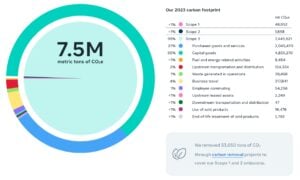
In 2023, its market-based net emissions were about 7.5 million metric tons of CO₂e, while location-based emissions stood at 14 million metric tons. However, the company has maintained net zero emissions in its global operations since 2020, cutting emissions by 94% from 2017 levels.
This year, Meta started using mass timber at its data center campuses. And the company’s first mass timber office building was completed in Aiken, South Carolina, with more projects underway in Cheyenne, Wyoming, and Montgomery, Alabama.
Check out the video here:
Why Mass Timber Matters for the Planet
Mass timber offers multiple environmental and operational benefits. For example:
- It can cut embodied carbon by about 41% compared to traditional materials.
- Since timber products are prefabricated, construction times are shorter and on-site emissions are lower.
- The material’s lighter weight reduces the need for deep concrete foundations—further reducing carbon impact.
Moreover, this approach significantly reduces Scope 3 emissions from construction activities, while also supporting Scope 1 and 2 targets through smarter, cleaner infrastructure operations.
Strength, Safety, and Speed in One Material
Beyond its climate advantages, mass timber is strong and fire-resistant. Engineered to handle industrial use, it meets the safety standards required for large-scale buildings like data centers. Its high strength-to-weight ratio means it can even outperform steel in some applications.
Additionally, mass timber can be pre-insulated and customized for use in walls, roofs, and floors. When exposed indoors, it contributes to biophilic design, a building style that connects people with nature and boosts workplace morale and well-being.
Responsible Sourcing for a Greener Future
Meta is also focused on ensuring that the timber it uses is sustainably harvested. It requires third-party audits to verify that the wood is traceable back to responsibly managed forests. These audits ensure that forests are protected for long-term health and that timber operations uphold fair labor practices and community benefits.
In certain cases, reclaimed wood is used to avoid new harvesting altogether—helping further reduce Scope 3 emissions tied to raw material sourcing.
Partnering for Climate-Smart Forestry
In addition to using sustainable timber, Meta is investing in nature-based carbon removal projects that benefit both people and the planet.
For instance, the company partnered with BTG Pactual Timberland Investment Group in Brazil to support a major reforestation effort. This long-term agreement will deliver up to 3.9 million carbon removal credits through 2038—helping offset residual emissions that cannot be eliminated, particularly in Scope 3.
These credits come from a $1 billion Latin America forestry strategy, guided by Conservation International to ensure biodiversity and social equity.
Besides using low-carbon building materials, Meta is embedding circularity into its data center hardware lifecycle, further cutting Scope 1 and Scope 3 emissions.
A key example is Meta’s use of lithium-ion battery backup units (BBUs), which replaced older lead-acid versions starting in 2014. These new batteries last longer, take up less space, and are easier to monitor and reuse.
By tracking battery health, the tech giant determines which units are suitable for reuse—even after hardware decommissioning. Currently, about 95% of BBUs are eligible for reuse, and this is expected to climb to 98% as diagnostics improve. Unused components are recycled responsibly, keeping valuable materials in circulation and reducing demand for virgin resources.
Additionally, the company is working with the iMasons Climate Accord (iCA) and the Open Compute Project (OCP) to tackle the issue of embodied carbon in data centers. The goal is to create a standard, transparent way to measure and report the carbon emissions tied to building and running data centers.
This new framework will help operators understand their carbon footprint better and make smarter choices to cut their environmental impact.
Scaling Up: Timber Pilots Show the Way
While building with mass timber has clear benefits, scaling it across the data center industry remains a challenge. However, the company’s pilot projects serve as real-world models for how to do it successfully.
As Meta continues to grow, it is committed to scaling low-carbon building strategies to tackle emissions in all three scopes.
As said before, the emissions generated from making and transporting steel and concrete are far higher than those from mass timber. By choosing bio-based, sustainable materials, Meta shows how tech companies can build smarter, cleaner, and more climate-resilient digital futures.
- ALSO CHECK: Facebook Owner Meta Stock Surges After Beating Q2 Forecasts and Sustainability Milestone Progress
The post From Steel to Mass Timber: Meta’s Low-Carbon Data Center Makeover appeared first on Carbon Credits.

EU carbon credit claims changed on 27 September 2026, the day the Directive (EU) 2024/825 began to apply across the European Union. The change is narrow. It changes how a company can talk about the credits it buys. A product can no longer be called neutral on the strength of compensation alone; however, every specific, evidenced statement about what a company measured, reduced, and funded stays fully available.

The post Promoting Improved Cooking Practices in Nigeria appeared first on Terrapass.



-
Climate Change1 year ago
Guest post: Why China is still building new coal – and when it might stop
-

 Greenhouse Gases2 years ago
嘉宾来稿:满足中国增长的用电需求 光伏加储能“比新建煤电更实惠”
-
Greenhouse Gases1 year ago
Guest post: Why China is still building new coal – and when it might stop
-

 Climate Change2 years ago
嘉宾来稿:满足中国增长的用电需求 光伏加储能“比新建煤电更实惠”
-

 Renewable Energy12 months ago
Sending Progressive Philanthropist George Soros to Prison?
-
Climate Change2 years ago
Bill Discounting Climate Change in Florida’s Energy Policy Awaits DeSantis’ Approval
-
Greenhouse Gases1 year ago
嘉宾来稿:探究火山喷发如何影响气候预测
-

 Climate Change2 years ago
Analysis: China’s CO2 falls 1% in Q2 2024 in first quarterly drop since Covid-19