



- What timeline options were delegates debating?
- How did the timeline discussions unfold?
- What were the main points of disagreement?
- Why is the IPCC in a ‘serious funding crisis’?
- How have scientists reacted?
- What other issues remain unresolved?
- How are the IPCC AR7 reports progressing?
- How might the IPCC use AI and enhance gender inclusivity?

A Canadian start-up run from a private home was chosen by Democratic Republic of Congo for a technically complex project to extract methane from the deep waters of a volatile lake, despite the company not meeting the tender’s financial criteria, documents seen by Reuters show.
President Felix Tshisekedi, who is seeking re-election in December, has promised to shake off Congo’s reputation for opaque dealings as he pushes plans to develop dozens of oil and gas blocks – many of them in environmentally sensitive areas.
First to be auctioned were three methane blocks in Lake Kivu, sometimes dubbed a “killer lake” because of a risk of deadly eruption. The extraction project aims to supply gas for power generation, including to hundreds of thousands of people living on the lake’s shores.
The auction, which took place last year, was the first of its kind to be conducted in Congo under a law from 2015 that was designed to promote transparency in the oil and gas sector.
Rooftop solar panels offer fragile lifeline to besieged Gazans
Canada-based Alfajiri Energy Corporation was included in the auction although an evaluation report produced by a government-appointed commission in October 2022 found the company did not meet minimum financial requirements.
The report, along with two others, was obtained by Reuters in collaboration with the Bureau of Investigative Journalism, a non-profit news organisation. Reuters also independently interviewed three sources directly involved in the auction.
Additionally, a technical report assessing the bid, dated 8 December 2022, appeared to have been altered in Alfajiri’s favour, according to the documents and the sources. The documents do not show why Alfajiri was included in the auction, who requested that the report be edited, or why.
No financial records
Hydrocarbons Minister Didier Budimbu denied any problems with the tender process in an emailed response to questions from Reuters.
Rich nations offer loans not grants for Vietnam’s coal transition
“The process was very transparent and it will remain so. I will make sure of it,” he said in an earlier text message exchange.
Tshisekedi’s office declined to comment, saying any questions about the auction should be directed to Budimbu.
In a written reply on 23 October, Alfajiri’s founder and chief executive Christian Hamuli called the process “rigorous, transparent and credible.”
Congo-born Hamuli registered Alfajiri Energy Corporation on January 10, 2022, three weeks after plans for the auction were first announced, using the address of his home in Calgary, Canada’s company registry shows.
The hydrocarbons ministry’s call for expressions of interest in the project spelt out a clear stipulation, only companies with three years of financial records would be considered suitable, a requirement that reflected a clause in Congo’s new oil and gas regulations.
Specifically, articles 66 and 67 of the regulations say offers will be rejected if they do not meet certain conditions including “the presentation of balance sheets and statements from the last three financial years.”
First hurdle
The first hurdle to clear was the pre-selection stage where a panel of government oil sector officials and technical experts evaluated the suitability of the companies competing for the three blocks.
Having only existed for a few months, Alfajiri failed to produce the required financial records, according to the eight-page, Oct. 22 report from the committee. It showed the three rival applicants for the Lwandjofu block met the requirement.
Joseph Nzau was a lawyer for the ministry when the regulations governing the sector were drafted. He said the financial history requirement was created after several companies that signed previous oil and gas contracts ended up lacking the means to execute projects.
“The rule is clear. A company applying for pre-selection must provide proof of its accounts and balance sheets for the past three years,” he said. He declined to comment on the merits of individual companies.
China objects to UN fund warnings on solar’s forced labour risks
In his response to Reuters, Minister Budimbu denied Alfajiri’s lack of financial records should have disqualified it in the pre-selection phase, saying this amounted to a misinterpretation of the law.
Budimbu was responsible for organising the auction to find suitable operators. He was also in charge of forming the panel that drew up the bid assessment reports and passing the panel’s conclusions to the council of ministers, which approved the winner based on the recommendations.
He said Alfajiri scored highly enough to make it through the pre-selection stage despite its lack of paperwork.
Alfajiri’s Hamuli did not directly address questions about the lack of required financial records in Alfajiri’s bid. Alfajiri has “highly qualified and experienced professionals with integrity capable of developing the project in a secure manner,” he said.
The ministry has not announced the size of the investment in the blocks, how the project will be financed, or production goals.
“Killer lake”
Lake Kivu lies in the Rift Valley on Congo’s eastern border with Rwanda. Dissolved at great pressure in water hundreds of meters down near the lake’s bed are large methane reserves and even greater quantities of carbon dioxide.
Lake Kivu is one of three lakes in Africa scientists say are at risk of limnic eruption.
Extracting methane from Lake Kivu, located in one of Africa’s most heavily populated areas, could provide power to some of the 80% of Congolese who have no access to electricity, and potentially reduce the risks from the lake, the Congolese government and experts say.
However, some scientists, including vulcanologist Dario Tedesco, say failure to properly reinject water and by-products could increase the chances of eruptions of carbon dioxide and poisonous hydrogen sulfide, pollute the lake bottom and alter its delicate chemical and physical balance.
Moving on
Despite its lack of financial history, Alfajiri advanced in the process, and its bid for the Lwandjofu block was assessed alongside those of US firm Winds Exploration and Production and Congolese-Lebanese firm Ray Group.
Alfajiri’s bid performed badly on several criteria at this stage, and a report from the panel dated Dec. 8, 2022 showed it received the lowest suitability score among the three bidders.
Of the three submissions, Alfajiri initially received the lowest score – a total of 30.7 points out of a possible 100 – on a scale that assessed how well the bids met financial and technical criteria including their proposed partnership terms with Congo, work plan, and the qualifications of key personnel.
Of that score, it received just two of a possible 30 points in the financial portion of the assessment and 28.7 out of 70 points in the technical portion.
Movement mourns ‘driving force for climate justice’ Saleemul Huq
Alfajiri failed to demonstrate it employed qualified staff, had not submitted a feasibility study or a timetable for the project and “had not taken account of public safety issues,” the report said.
Winds scored the highest of the three bidders, with 53.8 points, the report shows.
Score boosted
But then, an edited version of the report put Alfajiri in first place, the documents show.
The report’s second version – also dated 8 December and seen by Reuters – raised Alfajiri’s score to 55.75, putting it ahead of Winds.
In his response, Budimbu told Reuters the only version of the final report that mattered, and that he had received, was the one in which Alfajiri was awarded the highest score.
Although it gave a higher score, the final report added a number of concerns to the earlier version, including comments that Alfajiri had proposed insufficient financing for requisite state bonuses and social projects.
Saving the Three Basins means stopping fossil fuel expansion
Reuters was unable to establish the motive for the new scores in the second report.
Asked if he was aware about any irregular change to the results, Frank Ihekwoaba, chief executive of Winds said “we heard rumours” but had not wanted to escalate it to avoid souring relations with the government. He said the process seemed rigorous for Winds, which won another of the three blocks.
Ray Group did not respond to Reuters’ request for comment.
Hamuli did not directly respond to Reuters’ questions about the changes in the report that led to it winning the block.
Regarding Alfajiri’s suitability for the project, he said Alfajiri was a start-up that would use a better extraction method than competitors, without giving further details on this method.
“I am very proud and confident of our team’s ability to bring the project to fruition,” Hamuli said by text message in September.
The post DRC hands gas rights to Canadian start-up that failed criteria appeared first on Climate Home News.
DRC hands gas rights to Canadian start-up that failed criteria
Continue Reading
Three countries have been named by the Paris Agreement’s compliance committee for failing to submit a nationally determined contribution (NDC) and repeatedly snubbing offers of help with their climate plans.
After months of internal debate over whether to identify serial non-responders, the Paris Agreement’s Implementation and Compliance Committee (PAICC) named the three countries which have failed to engage with it over their NDCs on Friday.
It named Democratic Republic of Congo, Senegal and North Korea in a footnote of its annual report, adding that it decided to name them “with a view to facilitating engagement”, adding that representatives of the three nations had been invited to its meeting in early 2027 “with the purpose of identifying any challenges and constraints”.
“The Committee noted the importance of Parties engaging with the Committee in a timely manner, while noting that some delays may be due to the national capabilities and circumstances of the Parties”, the report said.
-
Under US pressure, World Bank says it will back gas “where appropriate”
The US wants the World Bank to expand its gas support while climate campaigners are pushing for it to end – its head spoke this week of limited backing for the fossil fuel -
IPCC scientists vow to press on with climate reports despite political deadlock
After governments again failed to agree a timeline, nearly 120 IPCC authors pledged to complete their assessment on time and with full scientific rigour -
Paris Agreement committee snubbed over missing NDC climate plans
Many governments have still not submitted a nationally determined contribution to the UN, breaching a key requirement of the Paris Agreement
In July, PAICC said 12 countries had ignored its repeated attempts to discuss why they had not published an NDC as required every five years under the 2015 Paris accord.
Members of the committee had been divided over whether to name them, but at a September meeting decided to do so in their annual report to the annual climate COP summit.
By the time the report was published on Friday, only Congo, Senegal and North Korea “had not communicated an NDC or submitted a [Biennial Transparency Report] and had not yet responded to any of the Committee’s notifications, despite several reminders issued by the Committee in this regard”.
Rainforest and renewable energy ambitions
The silence from Congo and Senegal is notable because the former is home to much of the Congo Basin rainforest while the latter has sought billions of dollars in climate finance to support its renewable energy ambitions.
After Brazil, Congo has more rainforest than any country in the world. This forest, and the country’s peatlands, absorb huge amounts of greenhouse gas but are fast being lost to expanding farmland, charcoal production, logging and mining.
Senegal signed a Just Energy Transition Partnership with Canada and wealthy European nations in 2023, to help it meet its renewable energy targets under the-then government of Macky Sall. It was chair of the Least Developed Countries group between January 2022 and December 2023.

Tejas Rao, who is researching the PAICC as part of a doctoral thesis at Cambridge University, said the governments of the three countries should engage with the committee.
“Engagement costs these governments very little and the committee has shown it will listen,” he said.
“Silence leaves the committee with no basis to help, and it leaves the [governments] exposed to the narrative that they are simply disengaged,” he told Climate Home News.
Paris Agreement requirement
The 2015 Paris Agreement requires all parties to publish an NDC every five years outlining their emissions reduction targets, with each plan meant to be more ambitious than the country’s last NDC.
The latest set – the third round of plans, with new targets for 2035 – was due in February 2025. While most countries missed this deadline, all but around 30 – mostly small emitters but including Egypt, Vietnam and Argentina – have now submitted them.
Over the year, the PAICC – which is made up of government climate officials from developed and developing countries – has been communicating with governments that have not submitted NDCs and trying to overcome barriers to them doing so.
Some nations have cited exceptional circumstances as the reason for not submitting an NDC, a process that requires a significant amount of work in tracking emissions and consulting on how to curb them across the economy. For example, a letter from a Sudanese official to the PAICC, seen by Climate Home News, said that the country’s civil war had led to the suspension of its NDC preparation.
-
IPCC scientists vow to press on with climate reports despite political deadlock
After governments again failed to agree a timeline, nearly 120 IPCC authors pledged to complete their assessment on time and with full scientific rigour -
Under US pressure, World Bank says it will back gas “where appropriate”
The US wants the World Bank to expand its gas support while climate campaigners are pushing for it to end – its head spoke this week of limited backing for the fossil fuel -
Who shapes climate science? The equity question facing the IPCC
Early completion of the next global climate science assessment reports risks excluding research from the Global South, which is key to ensuring the findings are fair
The US and Iran are not signed up to the Paris Agreement and so do not have active NDCs, nor does Taiwan, which is not a UN member state.
Rao said that because the PAICC is “facilitative and non-punitive”, naming the countries “is meant to open a door, not close one – the invited consultation is the point”.
“In recent months, governments that explained their constraints, whether capacity, finance or domestic process, have been met with follow-up and support rather than sanction, and the number of silent governments has fallen sharply,” Rao said.
The post Paris Agreement committee names three countries snubbing it over NDCs appeared first on Climate Home News.
Paris Agreement committee names three countries snubbing it over NDCs
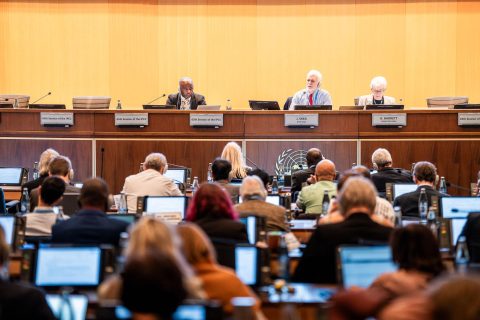
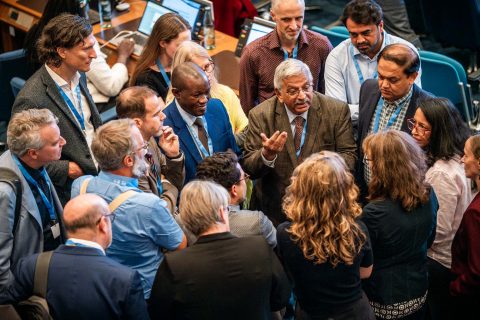
Countries have failed – for the sixth time running – to agree on the timeline for publishing the Intergovernmental Panel on Climate Change’s (IPCC) next set of influential reports.
The IPCC’s 65th session (IPCC-65) was seen by many to be the final opportunity for countries to agree on a schedule where its seventh assessment report (AR7) would be published in time for the UN’s second “global stocktake” of climate action.
Before last week’s meeting in Addis Ababa, Ethiopia, IPCC chair Prof Sir Jim Skea had warned that releasing the reports in time for the stocktake in 2028 would depend on a timelines being agreed by the end of 2026.
But the week-long meeting descended into fraught disagreements betwee