

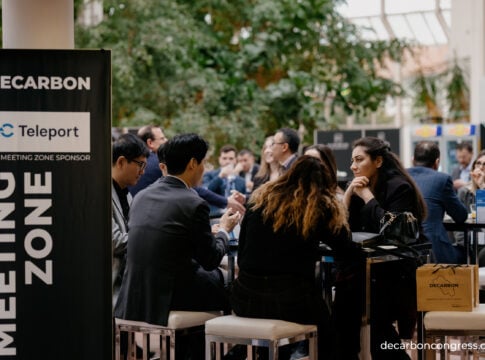
Hosted by Shell and held in partnership with Moeve, Fluor, Gasunie, The International Association of Oil & Gas Producers, Repsol, Spiecapag and Germany Trade and Invest, DECARBON 2026 centred on practical decision-making at the intersection of policy, technology and implementation across the oil and gas value chain in Vösendorf, Austria.
On 9 February, the first day opened with an Executive Opening Panel that set the strategic context for DECARBON by linking emissions targets with the operational capabilities required to deliver them. Drawing on perspectives from Petro IT, Shell Austria, Saipem SpA, Austrian Gas Grid Management AG, Chromalox, NEUMAN & ESSER Deutschland GmbH & Co KG and PCK Raffinerie GmbH, the discussion addressed investment priorities, data-driven decision-making and on-site constraints, clarifying why a strategic approach and clearly defined NetZero targets play a central role in modern oil and gas operations.
As Rainer Klöpfer, Country Chair & Managing Director at Shell Austria, emphasised, the conversation around net-zero must account for the full carbon intensity of energy products, spanning production, supply chains and end use. He underlined that operating plans are updated regularly and reflect today’s economic realities, while long-term net-zero targets sit beyond immediate planning cycles and require steady structural progress. This perspective shifted the focus from ambition to execution and naturally opened the floor to the next strategic question: which concrete low-carbon solutions can integrate into existing systems at scale.
This was followed by the Leaders Panel on low-carbon hydrogen as a decarbonisation tool, with contributions from a broad range of energy, infrastructure and technology players, including MOL Group, Eurogas, NextChem, Alléo Energy, Moeve and Italgas Reti. The panel examined hydrogen’s role within decarbonisation strategies and its interaction with existing infrastructure and regulatory frameworks.
Pedro Medina, Hydrogen Technology Manager at Moeve, outlined the company’s transformation of its refineries in San Roque and Palos de la Frontera into diversified energy parks adapted for renewable fuels, including biofuels and green hydrogen. He emphasised Southern Europe’s strong production potential and referred to the development of European hydrogen corridors connecting hubs such as Huelva and Algeciras with
Rotterdam, illustrating how green hydrogen is taking shape as a cross-border value chain within the evolving European energy landscape.
The conversation then continued through two roundtable discussions. The first roundtable on the digital approach to emissions performance brought together representatives from Siemens AG, Gradyent and other industry participants to explore digitalisation, automation and data-driven sustainability initiatives. The next roundtable on institutional readiness, with participants from Wood, OPEC, OGE and others, addressed regulatory risk, compliance requirements and policy developments.
Day One also featured two thematic sessions examining decarbonisation pathways in downstream operations through low-carbon fuels and feedstock, alongside practical levers for emissions reduction in upstream activities, with contributions from companies including TotalEnergies, Chromalox, VEM Sachsenwerk GmbH and others.
It concluded with a gala dinner and prize draw at Casino Baumgarten, located in the heart of Vienna. Live music, a magician’s performance and a gift raffle from BGS Group and participating delegates created a vibrant atmosphere, while conversations continued over dinner in an informal setting that strengthened professional connections.
The second day moved the discussion toward evaluation and optimisation, bringing sharper focus to cost, performance and implementation. During a moderated debate, representatives of Reganosa, Saras, Gas Infrastructure Europe and The Carbon Capture and Storage Association examined the financial implications of decarbonisation and the investment logic behind transition pathways. Roundtable 3 then turned to energy efficiency in downstream, where Fluor, Akselos and other sector specialists shared operational case studies and technical insight. The Congress concluded with a Closing Panel on CCUS, featuring perspectives from Petrofac, DESFA, Worley Comprimo and others, highlighting carbon capture, utilisation and storage within long-term emissions reduction strategies.
Phillip Cooper, Project Director at Petrofac for the Design of the Aramis CCS Pipeline System, summarised the key lesson from project delivery: effective CCS development requires a collaborative and knowledgeable client and FEED team in the room from the outset to ensure alignment and accelerate resolution. He stressed that system engineering across the entire value chain is critical, as the whole system must function as one despite contractual boundaries, and that early involvement of contractors and vendors is essential to understand what the project will realistically cost and to avoid unnecessary cost premiums.
Over the two days, DECARBON 2026 reinforced its role as a closed-door platform for senior executives, technical leaders and policy experts to engage in implementation-oriented dialogue grounded in real operational contexts. More than 180 pre-arranged B2B sessions took place within a structured networking format, coordinated by dedicated personal managers assigned to each delegate. Participants highlighted the productivity and efficiency of these targeted exchanges, with many confirming follow-up discussions and outlining future joint projects.
Registration for DECARBON 2027, taking place on 15-16 February 2027 in Berlin, Germany, is now open. Follow the Congress updates and secure participation in the next edition focused on real-world decarbonisation strategies: https://sh.bgs.group/3ui
The post DECARBON 2026 Concludes with Two Days of Strategic Debate and Practical Decarbonisation Insights appeared first on Carbon Credits.

EU carbon credit claims changed on 27 September 2026, the day the Directive (EU) 2024/825 began to apply across the European Union. The change is narrow. It changes how a company can talk about the credits it buys. A product can no longer be called neutral on the strength of compensation alone; however, every specific, evidenced statement about what a company measured, reduced, and funded stays fully available.

The post Promoting Improved Cooking Practices in Nigeria appeared first on Terrapass.



-
Climate Change1 year ago
Guest post: Why China is still building new coal – and when it might stop
-

 Greenhouse Gases2 years ago
嘉宾来稿:满足中国增长的用电需求 光伏加储能“比新建煤电更实惠”
-
Greenhouse Gases1 year ago
Guest post: Why China is still building new coal – and when it might stop
-

 Climate Change2 years ago
嘉宾来稿:满足中国增长的用电需求 光伏加储能“比新建煤电更实惠”
-

 Renewable Energy12 months ago
Sending Progressive Philanthropist George Soros to Prison?
-
Climate Change2 years ago
Bill Discounting Climate Change in Florida’s Energy Policy Awaits DeSantis’ Approval
-
Greenhouse Gases1 year ago
嘉宾来稿:探究火山喷发如何影响气候预测
-

 Climate Change2 years ago
Analysis: China’s CO2 falls 1% in Q2 2024 in first quarterly drop since Covid-19