

Welcome to Carbon Brief’s DeBriefed.
An essential guide to the week’s key developments relating to climate change.
This week
US to pull out from UNFCC, IPCC
CLIMATE RETREAT: The Trump administration announced its intention to withdraw the US from the world’s climate treaty, CNN reported. The move to leave the UN Framework Convention on Climate Change (UNFCCC), in addition to 65 other international organisations, was announced via a White House memorandum that states these bodies “no longer serve American interests”, the outlet added. The New York Times explained that the UNFCCC “counts all of the other nations of the world as members” and described the move as cementing “US isolation from the rest of the world when it comes to fighting climate change”.
MAJOR IMPACT: The Associated Press listed all the organisations that the US is exiting, including other climate-related bodies such as the Intergovernmental Panel on Climate Change (IPCC) and the International Renewable Energy Agency (IRENA). The exit also means the withdrawal of US funding from these bodies, noted the Washington Post. Bloomberg said these climate actions are likely to “significantly limit the global influence of those entities”. Carbon Brief has just published an in-depth Q&A on what Trump’s move means for global climate action.
Oil prices fall after Venezuela operation
UNCERTAIN GLUT: Global oil prices fell slightly this week “after the US operation to seize Venezuelan president Nicolás Maduro created uncertainty over the future of the world’s largest crude reserves”, reported the Financial Times. The South American country produces less than 1% of global oil output, but it holds about 17% of the world’s proven crude reserves, giving it the potential to significantly increase global supply, the publication added.
TRUMP DEMANDS: Meanwhile, Trump said Venezuela “will be turning over” 30-50m barrels of oil to the US, which will be worth around $2.8bn (£2.1bn), reported BBC News. The broadcaster added that Trump claims this oil will be sold at market price and used to “benefit the people of Venezuela and the US”. The announcement “came with few details”, but “marked a significant step up for the US government as it seeks to extend its economic influence in Venezuela and beyond”, said Bloomberg.
Around the world
- MONSOON RAIN: At least 16 people have been killed in flash floods “triggered by torrential rain” in Indonesia, reported the Associated Press.
- BUSHFIRES: Much of Australia is engulfed in an extreme heatwave, said the Guardian. In Victoria, three people are missing amid “out of control” bushfires, reported Reuters.
- TAXING EMISSIONS: The EU’s landmark carbon border levy, known as “CBAM”, came into force on 1 January, despite “fierce opposition” from trading partners and European industry, according to the Financial Times.
- GREEN CONSUMPTION: China’s Ministry of Commerce and eight other government departments released an action plan to accelerate the country’s “green transition of consumption and support high-quality development”, reported Xinhua.
- ACTIVIST ARRESTED: Prominent Indian climate activist Harjeet Singh was arrested following a raid on his home, reported Newslaundry. Federal forces have accused Singh of “misusing foreign funds to influence government policies”, a suggestion that Singh rejected as “baseless, biased and misleading”, said the outlet.
- YOUR FEEDBACK: Please let us know what you thought of Carbon Brief’s coverage last year by completing our annual reader survey. Ten respondents will be chosen at random to receive a CB laptop sticker.
47%
The share of the UK’s electricity supplied by renewables in 2025, more than any other source, according to Carbon Brief analysis.
Latest climate research
- Deforestation due to the mining of “energy transition minerals” is a “major, but overlooked source of emissions in global energy transition” | Nature Climate Change
- Up to three million people living in the Sudd wetland region of South Sudan are currently at risk of being exposed to flooding | Journal of Flood Risk Management
- In China, the emissions intensity of goods purchased online has dropped by one-third since 2000, while the emissions intensity of goods purchased in stores has tripled over that time | One Earth
(For more, see Carbon Brief’s in-depth daily summaries of the top climate news stories on Monday, Tuesday, Wednesday, Thursday and Friday.)
Captured
The US, which has announced plans to withdraw from the UNFCCC, is more responsible for climate change than any other country or group in history, according to Carbon Brief analysis. The chart above shows the cumulative historical emissions of countries since the advent of the industrial era in 1850.
Spotlight
How to think about Africa’s just energy transition
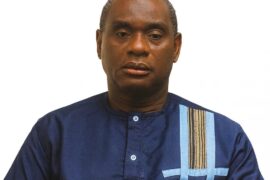
African nations are striving to boost their energy security, while also addressing climate change concerns such as flood risks and extreme heat.
This week, Carbon Brief speaks to the deputy Africa director of the Natural Resource Governance Institute, Ibrahima Aidara, on what a just energy transition means for the continent.
Carbon Brief: When African leaders talk about a “just energy transition”, what are they getting right? And what are they still avoiding?
Ibrahima Aidara: African leaders are right to insist that development and climate action must go together. Unlike high-income countries, Africa’s emissions are extremely low – less than 4% of global CO2 emissions – despite housing nearly 18% of the world’s population. Leaders are rightly emphasising universal energy access, industrialisation and job creation as non-negotiable elements of a just transition.
They are also correct to push back against a narrow narrative that treats Africa only as a supplier of raw materials for the global green economy. Initiatives such as the African Union’s Green Minerals Strategy show a growing recognition that value addition, regional integration and industrial policy must sit at the heart of the transition.
However, there are still important blind spots. First, the distributional impacts within countries are often avoided. Communities living near mines, power infrastructure or fossil-fuel assets frequently bear environmental and social costs without sharing in the benefits. For example, cobalt-producing communities in the Democratic Republic of the Congo, or lithium-affected communities in Zimbabwe and Ghana, still face displacement, inadequate compensation, pollution and weak consultation.
Second, governance gaps are sometimes downplayed. A just transition requires strong institutions (policies and regulatory), transparency and accountability. Without these, climate finance, mineral booms or energy investments risk reinforcing corruption and inequality.
Finally, leaders often avoid addressing the issue of who pays for the transition. Domestic budgets are already stretched, yet international climate finance – especially for adaptation, energy access and mineral governance – remains far below commitments. Justice cannot be achieved if African countries are asked to self-finance a global public good.
CB: Do African countries still have a legitimate case for developing new oil and gas projects, or has the energy transition fundamentally changed what ‘development’ looks like?
IA: The energy transition has fundamentally changed what development looks like and, with it, how African countries should approach oil and gas. On the one hand, more than 600 million Africans lack access to electricity and clean cooking remains out of reach for nearly one billion people. In countries such as Mozambique, Nigeria, Senegal and Tanzania, gas has been framed to expand power generation, reduce reliance on biomass and support industrial growth. For some contexts, limited and well-governed gas development can play a transitional role, particularly for domestic use.
On the other hand, the energy transition has dramatically altered the risks. Global demand uncertainty means new oil and gas projects risk becoming stranded assets. Financing is shrinking, with many development banks and private lenders exiting fossil fuels. Also, opportunity costs are rising; every dollar locked into long-lived fossil infrastructure is a dollar not invested in renewables, grids, storage or clean industry.
Crucially, development today is no longer just about exporting fuels. It is about building resilient, diversified economies. Countries such as Morocco and Kenya show that renewable energy, green industry and regional power trade can support growth without deepening fossil dependence.
So, the question is no longer whether African countries can develop new oil and gas projects, but whether doing so supports long-term development, domestic energy access and fiscal stability in a transitioning world – or whether it risks locking countries into an extractive model that benefits few and exposes countries to future shocks.
CB: What is the hardest truth about Africa’s energy transition that policymakers and international partners are still unwilling to confront?
IA: For me, the hardest truth is this: Africa cannot deliver a just energy transition on unfair global terms. Despite all the rhetoric, global rules still limit Africa’s policy space. Trade and investment agreements restrict local content, industrial policy and value-addition strategies. Climate finance remains fragmented and insufficient. And mineral supply chains are governed largely by consumer-country priorities, not producer-country development needs.
Another uncomfortable truth is that not every “green” investment is automatically just. Without strong safeguards, renewable energy projects and mineral extraction can repeat the same harms as fossil fuels: displacement, exclusion and environmental damage.
Finally, there is a reluctance to admit that speed alone is not success. A rushed transition that ignores governance, equity and institutions will fail politically and socially, and, ultimately, undermine climate goals.
If Africa’s transition is to succeed, international partners must accept African leadership, African priorities and African definitions of development, even when that challenges existing power dynamics in global energy and mineral markets.
Watch, read, listen
CRISIS INFLAMED: In the Brazilian newspaper Folha de São Paulo, columnist Marcelo Leite looked into the climate impact of extracting more oil from Venezuela.
BEYOND TALK: Two Harvard scholars argued in Climate Home News for COP presidencies to focus less on climate policy and more on global politics.
EU LEVIES: A video explainer from the Hindu unpacked what the EU’s carbon border tax means for India and global trade.
Coming up
- 10-12 January: 16th session of the IRENA Assembly, Abu Dhabi
- 13-15 January: Energy Security and Green Infrastructure Week, London
- 13-15 January: The World Future Energy Summit, Abu Dhabi
- 15 January: Uganda general elections
Pick of the jobs
- WRI Polsky Energy Center, global director | Salary: around £185,000. Location: Washington DC; the Hague, Netherlands; New Delhi, Mumbai, or Bengaluru, India; or London
- UK government Advanced Research and Invention Agency, strategic communications director – future proofing our climate and weather | Salary: £115,000. Location: London
- The Wildlife Trusts, head of climate and international policy | Salary: £50,000. Location: London
- Children’s Investment Fund Foundation, senior manager for climate | Salary: Unknown. Location: London, UK
DeBriefed is edited by Daisy Dunne. Please send any tips or feedback to debriefed@carbonbrief.org.
This is an online version of Carbon Brief’s weekly DeBriefed email newsletter. Subscribe for free here.


The post DeBriefed 9 January 2026: US to exit global climate treaty; Venezuelan oil ‘uncertainty’; ‘Hardest truth’ for Africa’s energy transition appeared first on Carbon Brief.

Three countries have been named by the Paris Agreement’s compliance committee for failing to submit a nationally determined contribution (NDC) and repeatedly snubbing offers of help with their climate plans.
After months of internal debate over whether to identify serial non-responders, the Paris Agreement’s Implementation and Compliance Committee (PAICC) named the three countries which have failed to engage with it over their NDCs on Friday.
It named Democratic Republic of Congo, Senegal and North Korea in a footnote of its annual report, adding that it decided to name them “with a view to facilitating engagement”, adding that representatives of the three nations had been invited to its meeting in early 2027 “with the purpose of identifying any challenges and constraints”.
“The Committee noted the importance of Parties engaging with the Committee in a timely manner, while noting that some delays may be due to the national capabilities and circumstances of the Parties”, the report said.
-
Under US pressure, World Bank says it will back gas “where appropriate”
The US wants the World Bank to expand its gas support while climate campaigners are pushing for it to end – its head spoke this week of limited backing for the fossil fuel -
IPCC scientists vow to press on with climate reports despite political deadlock
After governments again failed to agree a timeline, nearly 120 IPCC authors pledged to complete their assessment on time and with full scientific rigour -
Paris Agreement committee snubbed over missing NDC climate plans
Many governments have still not submitted a nationally determined contribution to the UN, breaching a key requirement of the Paris Agreement

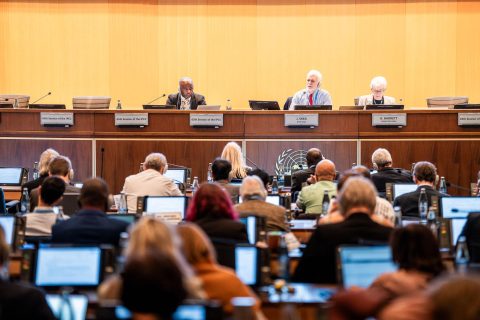

In July, PAICC said 12 countries had ignored its repeated attempts to discuss why they had not published an NDC as required every five years under the 2015 Paris accord.
Members of the committee had been divided over whether to name them, but at a September meeting decided to do so in their annual report to the annual climate COP summit.
By the time the report was published on Friday, only Congo, Senegal and North Korea “had not communicated an NDC or submitted a [Biennial Transparency Report] and had not yet responded to any of the Committee’s notifications, despite several reminders issued by the Committee in this regard”.
Rainforest and renewable energy ambitions
The silence from Congo and Senegal is notable because the former is home to much of the Congo Basin rainforest while the latter has sought billions of dollars in climate finance to support its renewable energy ambitions.
After Brazil, Congo has more rainforest than any country in the world. This forest, and the country’s peatlands, absorb huge amounts of greenhouse gas but are fast being lost to expanding farmland, charcoal production, logging and mining.
Senegal signed a Just Energy Transition Partnership with Canada and wealthy European nations in 2023, to help it meet its renewable energy targets under the-then government of Macky Sall. It was chair of the Least Developed Countries group between January 2022 and December 2023.

Tejas Rao, who is researching the PAICC as part of a doctoral thesis at Cambridge University, said the governments of the three countries should engage with the committee.
“Engagement costs these governments very little and the committee has shown it will listen,” he said.
“Silence leaves the committee with no basis to help, and it leaves the [governments] exposed to the narrative that they are simply disengaged,” he told Climate Home News.
Paris Agreement requirement
The 2015 Paris Agreement requires all parties to publish an NDC every five years outlining their emissions reduction targets, with each plan meant to be more ambitious than the country’s last NDC.
The latest set – the third round of plans, with new targets for 2035 – was due in February 2025. While most countries missed this deadline, all but around 30 – mostly small emitters but including Egypt, Vietnam and Argentina – have now submitted them.
Over the year, the PAICC – which is made up of government climate officials from developed and developing countries – has been communicating with governments that have not submitted NDCs and trying to overcome barriers to them doing so.
Some nations have cited exceptional circumstances as the reason for not submitting an NDC, a process that requires a significant amount of work in tracking emissions and consulting on how to curb them across the economy. For example, a letter from a Sudanese official to the PAICC, seen by Climate Home News, said that the country’s civil war had led to the suspension of its NDC preparation.
-
IPCC scientists vow to press on with climate reports despite political deadlock
After governments again failed to agree a timeline, nearly 120 IPCC authors pledged to complete their assessment on time and with full scientific rigour -
Under US pressure, World Bank says it will back gas “where appropriate”
The US wants the World Bank to expand its gas support while climate campaigners are pushing for it to end – its head spoke this week of limited backing for the fossil fuel -
Who shapes climate science? The equity question facing the IPCC
Early completion of the next global climate science assessment reports risks excluding research from the Global South, which is key to ensuring the findings are fair
The US and Iran are not signed up to the Paris Agreement and so do not have active NDCs, nor does Taiwan, which