Welcome to Carbon Brief’s DeBriefed.
An essential guide to the week’s key developments relating to climate change.
This week
Farewell to coal
142 YEARS: The UK’s “142-year history of coal-fired electricity” ended on Monday as the UK’s last coal power station, Ratcliffe-on-Soar, turned off its turbines for the final time, reported the Guardian. The UK is now the first major economy and the first country in the G7 to successfully phase out coal power, reported the Times.
10BN TONNES: From 1882 until Ratcliffe’s closure, the UK’s coal plants will have burned through 4.6bn tonnes of coal and emitted 10.4bn tonnes of carbon dioxide (CO2) – more than most countries have ever produced from all sources, according to a comprehensive timeline of the nation’s coal phase-out from Carbon Brief. Carbon Brief’s analysis was cited by publications globally, ranging from US radio station NPR to Indonesian newspaper Kompas.
PERMISSION REFUSED: In other coal news, the UK’s coal regulator the Coal Authority refused to grant licences for what would have been the country’s first new coal mine in 30 years, the Press Association reported. Also on Monday, Tata Steel, the UK’s biggest steelworks, shut down its last coal-powered furnace after more than 100 years, reported Sky News.
Global storms
HURRICANE HELENE: More than 200 people have been killed and at least one million are still without power after Hurricane Helene hit the US south-east and midwest last week, reported CNN. A preliminary study from the Lawrence Berkeley National Laboratory found that “climate change caused 50% more rainfall during the hurricane in some parts of Georgia and the Carolinas”, the Guardian reported. Hurricane Helene is now the second deadliest to hit the US after Hurricane Katrina, reported the Times.
SWING STATES: Georgia and North Carolina are both key battlegrounds for presidential candidates Donald Trump and Kamala Harris, reported Reuters. Former president Donald Trump visited victims in Georgia on Monday evening, only to court oil executives during meetings held on Wednesday, reported the Guardian. Vice-president Kamala Harris visited Georgia on Wednesday calling the damage “extraordinary” and the loss of life “particularly devastating”, reported the Washington Post.
TYPHOON KRATHON: At least two people have been killed after Typhoon Krathon slammed into Taiwan, Al Jazeera reported. Typhoons often hit the east coast of the island, but Krathon directly hit the west coast, leading Taiwan’s media to label it a “weird” storm, the publication added. In Nepal, heavy flooding and rain killed 193 people in Kathmandu and the surrounding area, the Associated Press reported.
Around the world
- BLACK GOLD: Oil prices have breached $75 a barrel amid reports that Israel could strike Iranian oil facilities, fuelling fears of conflict escalation and resulting global energy supply disruption, reported the Times.
- DRAW DOWN: The UK government announced up to £21.7bn of support over 25 years for carbon capture and storage projects, the Financial Times reported. Meanwhile, a Carbon Brief exclusive reported that the nation will miss the deadline to submit a new nature pledge ahead of the COP16 biodiversity summit this month.
- FORESTS FEATURE: Environment ministers from the Group of 20 (G20) nations agreed on Thursday to increase funding for tropical forest conservation, the Associated Press reported. It comes as the EU moved to delay its anti-deforestation law for a year amid trade backlash, the Financial Times said.
- UNCHARTERED TERRITORY: Melting glaciers fuelled by climate change have forced Italy and Switzerland to redraw a border in the Alps, the Daily Telegraph reported.
- EU TARIFFS: The European Commission is set “to adopt tariffs” of up to 45% on Chinese electric vehicles after saying it had received enough support from member states in a vote earlier today, Reuters reported.
106 million
The amount of CO2, in tonnes, released by Arctic wildfires this summer, roughly equivalent to the annual emissions of Kuwait, reported the Times.
Latest climate research
- National rates of partner violence against women can be higher two years after some climate “shocks”, such as storms, landslides and floods, according to a study in PLOS Climate.
- A new study in Communications Earth and Environment found that the northern Amazon has seen a three-fold increase in the number of days with “extreme fire weather conditions” since 1971.
- Satellite images suggest that the Antarctic Peninsula is experiencing “an accelerated rate” of “greening” in response to recent warming, according to research published in Nature Geoscience.
(For more, see Carbon Brief’s in-depth daily summaries of the top climate news stories on Monday, Tuesday, Wednesday, Thursday and Friday.)
Captured

Following a rapid withdrawal from nuclear power after the Fukushima nuclear disaster in 2011, 10 of Japan’s 33 nuclear reactors are now back online. Nuclear was a key topic of debate in the country’s recent leadership race, touted by business leaders and the previous administration as a necessity for energy security and to meet decarbonisation goals. New leader Shigeru Ishiba (more below) entered the campaign with a platform of reducing nuclear power to “close to zero”. Just one day after taking office, however, he released a nuclear plan consistent with the previous administration, reported Reuters.
Spotlight
Japan’s new prime minister and climate change
This week, Carbon Brief speaks to experts about where Japan’s new prime minister stands on climate change, nuclear and renewables.
Japan welcomed its 65th prime minister on Tuesday as Shigeru Ishiba won the closest leadership race in almost seven decades to become the next leader of the ruling Liberal Democratic Party (LDP) party.
Ishiba is a former defence and agriculture minister who has sat in parliament for almost four decades.
Ishiba has previously demonstrated an impressive literacy on climate change, likely influenced by his childhood in the rural prefecture of Tottori, Tobias Harris, founder of Japan Foresight, a Japan-focused advisory firm in the US, told Carbon Brief:
“Judging by his August 2024 book Hoshu seijika [Conservative Politician], he is well informed of the science on climate change, citing IPCC [Intergovernmental Panel on Climate Change] reports, noting the impacts ranging from wildfires, methane gas release in Siberia, sea level rise, and more severe storms, as well as the human impacts, including refugee flows, food and water shortages, and, interestingly, the possibility for ‘climate fascism’ – he actually uses the phrase.
“It’s hard to think of a Japanese politician of his stature who has used this kind of language to talk about climate change.”
As part of his platform, Ishiba proposed a new government agency for disaster management in response to extreme weather events in Japan.
As recently as August, Typhoon Shanshan caused widespread damage in Japan, killing seven and leaving at least 131 injured. A rapid attribution study by Imperial College London found Typhoon Shanshan was made 7.5% more intense and 26% more likely by climate change.
Renewables and nuclear
At the start of his campaign, Ishiba broke with mainstream LDP thought by advocating for maximising Japan’s renewable potential, while reducing reliance on nuclear power to “close to zero”.
Under the previous administration, Japan had sought to actively restart nuclear plants and develop new ones to meet energy security and climate goals. But nuclear remains a controversial subject in Japan following the Fukushima disaster in 2011, in which a tsunami claimed more than 2,000 lives and flooded a nuclear power plant in the prefecture.

Just a day into his premiership, however, Ishiba’s newly appointed minister of economy, trade and industry told a press conference that Japan would continue restarting nuclear plants under Ishiba’s government.
This “appears to be a continuation of previous administrations’ positions”, Yuri Okubo, a senior researcher at the Renewable Energy Institute in Japan, told Carbon Brief.
This policy change could have been influenced by pressure from business groups, Yuko Nakano, Japan chair at the Center for Strategic and International Studies in the US, added to Carbon Brief:
“Comments from business leaders reflect the private sector’s caution towards the new prime minister’s [original] energy policy.”
With a snap election later this month, Ishiba will also be seeking to “heal party divisions and secure a national mandate”, Reuters reported.
Meanwhile, the government is in the process of revising its strategic energy plan, which will set the course of Japan’s energy policies in the medium and long-term, Nakano told Carbon Brief. It is expected by March 2025.
Harris told Carbon Brief that “Ishiba’s shift” reveals “how the politics around nuclear energy have shifted in recent years” in Japan, adding:
“Whereas it was once primarily touted as a way to promote energy independence, it has increasingly been promoted as part of its decarbonisation efforts.”
Watch, read, listen
SOLAR BOOM: The DER Task Force podcast spoke to Jenny Chase of Bloomberg New Energy Finance about Pakistan’s distributed solar boom.
‘PEACEWASHING’: Ahead of COP29 next month, human rights professor Brian Brivati in the Conversation discussed Azerbaijan’s history, including “military aggression, human rights abuses and violations of international law”.
VAN GOGH PROTEST: Politico dived into the story of two climate activists who were imprisoned last week after throwing paint over a Van Gogh.
Coming up
- 9 October: Mozambique presidential and parliamentary elections
- 9 October: International Energy Agency (IEA) Renewables 2024 report launch
- 10-12 October: China Council for International Cooperation on Environment and Development (CCIED) annual general meeting, Beijing
Pick of the jobs
- Duke University, assistant professor of climate policy (accenture chair) | Salary: Unknown. Location: Durham, North Carolina
- Royal Geographical Society, press and digital communications officer | Salary: £32,590 to £35,385. Location: London
- CPRE The Countryside Charity, media officer | Salary: £41,006. Location: London
- Environment Agency, carbon specialist | Salary: £39,635. Location: UK
DeBriefed is edited by Daisy Dunne. Please send any tips or feedback to debriefed@carbonbrief.org.
This is an online version of Carbon Brief’s weekly DeBriefed email newsletter. Subscribe for free here.


The post DeBriefed 4 October 2024: UK turns the lights out on coal; Hurricane Helene; Where does Japan’s new PM stand on climate? appeared first on Carbon Brief.

Jacynta Fa’amau is a Pacific campaigner at global grassroots climate movement 350.org and a secretariat member of Pacific Climate Warriors.
The first thing that struck me was the sheer size of Queensland’s Saraji coal mine. Standing at the edge of the enormous pit, my brain scrambled for words as I scanned the earth’s open wound – a whole island could probably fit inside it.
Looking down, I noticed footprints of an emu and a koala, pressed and dried in what was once a puddle – signs of how drought had driven animals in desperate search of water, so dangerously close to the coal trucks and heavy machinery ahead.
Earlier this year, I joined a small group of Pacific Islanders on a journey through the Bowen Basin to learn from First Nations communities battling Australia’s mammoth coal industry. Of the more than 40 coal mines operating in the area, BHP & Mitsubishi Alliance’s Saraji mine is one of the largest. So it came as a painful shock to us when in August, the Australian government approved the mine’s extension just months after our visit.
-
As COP31 co-host, Australia should make its polluters pay for climate damage
With UN climate funds running short on cash, now is the time to start taxing the companies whose emissions are driving harm in the Pacific and other vulnerable parts of the world -
At pre-COP, UN climate chief warns of heat threat to mothers and babies
The spotlight on maternal health came on the first day of the pre-COP31 meeting in Fiji, where Pacific concerns are set to top the agenda as ministers gather for talks

Witnessing coal extraction is devastating. It is bad enough to see what pillaging tonnes of coal can do to a mine’s immediate surroundings: dry creek beds, dwindling wildlife, denuded land. But to know that this coal will be shipped across the ocean, bring air pollution, and eventually lead to the destruction of Pacific islands thousands of miles away is another kind of heartbreak.
Rising ocean waters
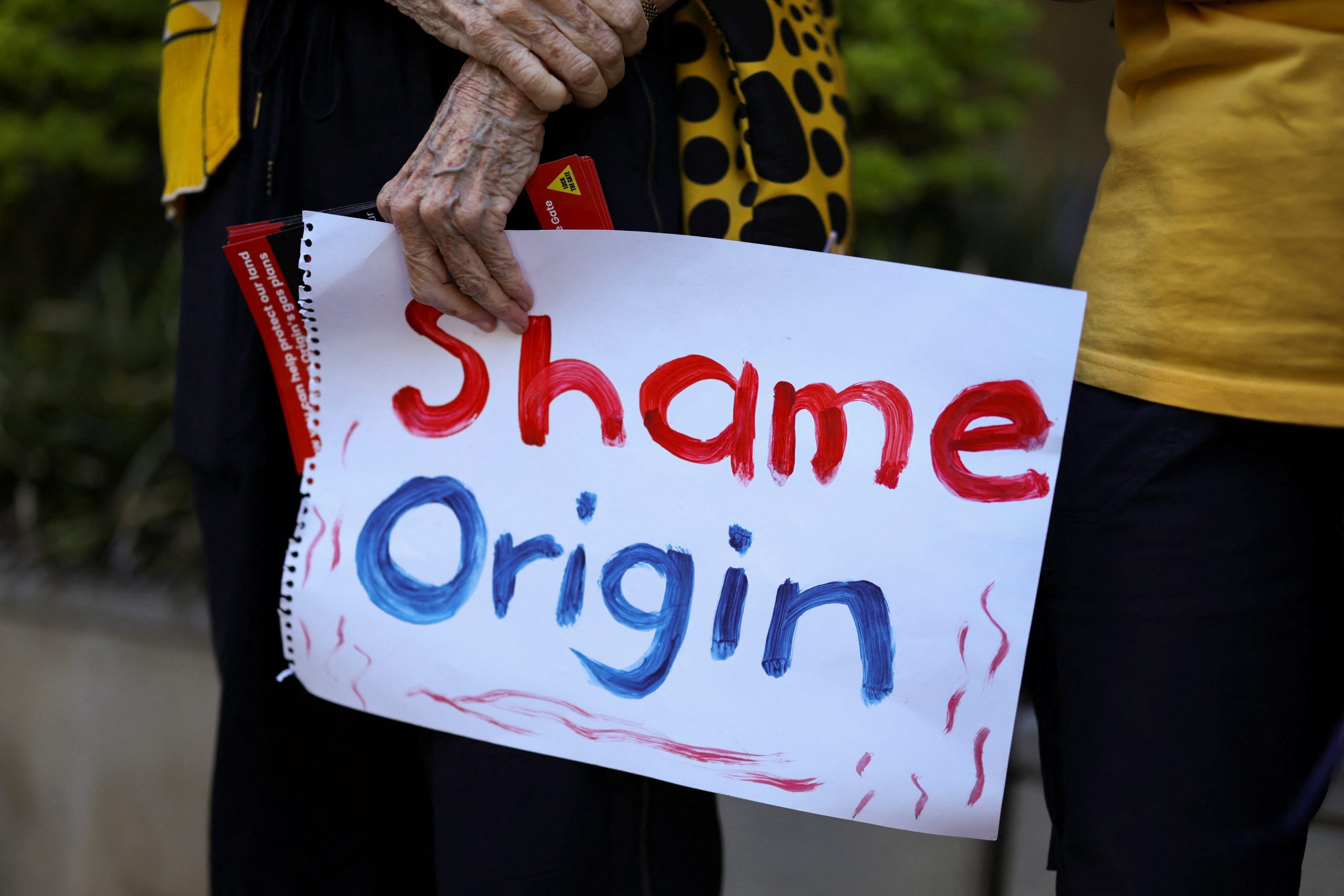
I’m an Australian-born Samoan. In 2002, I visited my family home for the first time. My father took me to the rural community where generations of my family were raised. He did not have the words to describe how much has changed since rising ocean waters had taken away almost a third of the beach.
I learned of how we had to relocate my great‑great‑grandparents’ grave to higher ground twice in the last 15 years. Of how my cousins have to paddle out further to sea to catch fish, since warmer waters have destroyed much of the reef. Of how the ocean crashes so close to my uncle’s home that he had to build a new house further away.
We saw reflections of our own climate destruction in the Pacific when we shared these stories with our First Nations relatives at the edge of the Saraji mine. Murrawah Johnson and Teila Watson, both Birri Gubba and Gangulu women, made clear connections between their struggles and ours. “We don’t get to inherit our land and we don’t get to inherit our traditional roles. We are fighting a war on extinction,” Murrawah said.
Coal extraction devastated their lands and cultures – totems have disappeared, fresh water has become scarce – while the effects of using it have devastated ours. “King tide, cyclones, all the violence that has been enacted on your country and people is because of the violence that has been allowed here, to us and our country,” Teila said.
Wearing the mantle of climate leadership
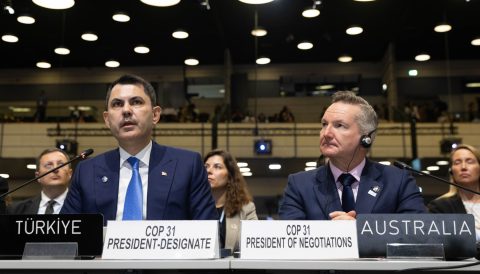
This week, Australia is assuming the mantle of climate leadership as co-president and head of negotiations of this year’s UN Climate Change Conference, COP31. It will lead on deliberating the summit’s priorities as world leaders and climate negotiators descend on Fiji and Tuvalu for the pre-COP meetings.
Ironically, just days before the pre-COP began, the New South Wales Independent Planning Commission approved the largest-ever coal project the state has seen, set to emit an extra 800 million tonnes of carbon emissions. I joined the Pacific Climate Warriors and other communities in submitting about 4,000 appeals to oppose the project – yet these all fell on deaf ears.
-
Fossil fuel expansion threatens COP31 hosts’ credibility, experts warn
Türkiye and Australia are pushing coal, oil and gas at home with no national timeline for their own fossil fuel phase-out -
This Australian coal community is co-designing its own green future
The mining town of Collie offers a promising example of how to survive – and even thrive – amid the global transition to net-zero emissions

But the fight is not yet over. The project still requires federal approval to proceed, so every promise that Australia makes while at the helm of the climate talks counts. These promises will be measured against actual decisions it makes at home: to either lock us into more decades of climate pollution, or begin shutting down coal and gas once and for all.
Pacific leaders have made it clear that countries must align their policies with the 1.5-degree warming goal, a limit that we already know will be breached within the decade. Any chance of keeping this still within reach requires an immediate end to fossil fuel expansion and concrete plans to phase out existing projects. But success will be an uphill battle if COP31’s own head of negotiations refuses to lead by example.