

The Academy of Macroeconomic Research (AMR) is a research institution under the direct supervision of China’s National Development and Reform Commission (NDRC), the ministry in charge of economic development and planning.
As a “national high-end thinktank”, the AMR’s Energy Research Institute is a well-respected body conducting energy transition research and providing vital suggestions on the energy transition to Beijing.
At this year’s COP29 in Baku, it launched the executive summary of 2024 China Energy Transformation Outlook (CETO), a key report describing China’s pathways to net-zero.
The launch was attended by a number of high-level officials, including climate envoy Liu Zhenmin and the head of the International Energy Agency, Dr Fatih Birol.
Carbon Brief’s Wanyuan Song was granted a rare – and lengthy – joint interview with its director general, Prof Lyu Wenbin, and director, Prof Bai Quan, who is also the lead author of the report, to hear their views about China’s energy transition.
- On China’s commitment to climate action: “Climate change doesn’t just affect China, it affects every country in the world…Climate change is not fake. It is happening and we are all on the same boat.”
- On international collaboration: “The joint work [on energy transition pathways] was meant to allow for a deeper grasp of the problems, making the research findings more scientific and [suggestions] more reasonable.”
- On an early emissions peak: “[W]e would love to try our best…but we can’t rule out all possibilities to peak even earlier than planned.”
- On updates in this year’s outlook: [This year w]e have also placed more emphasis on international cooperation.”
- On the need for global cooperation: “To achieve the best scenario, China shouldn’t be the only country that puts efforts into energy transition.”
- On stimulus and carbon reduction: “China’s ‘two new’ (“两新”) policy – large-scale equipment renewals and trade-ins of consumer goods – is one of [the policies]. The first three aspects [of ‘two new’] directly promote carbon reduction.”
- On managing electricity grids and markets: “China has never faced this kind of challenge before. The demand for electricity is huge, and soaring.”
- On China’s coal use: “With renewable energy becoming more powerful and energy storage becoming cheaper and more flexible, coal plants can play the role of ‘firefighters’ in the system – used in an electricity crisis whenever it is needed.”
- On the role of “green hydrogen”: “[I]t is very expensive at the moment…Commercial and technology innovation are needed to reduce costs.”
- On calls for greater ambition from China: “It can’t be the case that developing countries need to cut more emissions than developed countries – that would break the UN’s principle of ‘common but differentiated responsibilities’.”
CB: Why is China so determined to achieve its energy transition and combat climate change?
Bai Quan: Climate change doesn’t just affect China, it affects every country in the world. No one is excluded from it. China is one of the victims of extreme weather. The horrifying typhoon in Shanghai in recent months has blown windows off of skyscrapers – Shanghai didn’t have that many typhoons in the past. Autumn in Qinghai province [in west China] used to be cool and dry, but now it has become rainy. The weather forecast [once] said there was light rain in Beijing, but the heavy rain in the neighbouring province Hebei drowned people. Summer is getting hotter and winter is getting colder – this is climate change, and no one can survive alone. If Shanghai was drowned, would London be spared, would New York be OK? Climate change is not fake. It is happening and we are all on the same boat.
Combating climate change is a must, it is one of our core needs, and the primary thing we need to do to secure life and production. Low-carbon issues have been part of China’s policy for a long time but it wasn’t as big of a focus until President Xi vouched for climate action with the “dual-carbon” goal. The [“dual-carbon” goal] promise to the world is serious and, after President Xi announced it in 2020, it has become a hot topic [in media and among ordinary people]. The energy transition, as a sustainable solution, helps the “dual-carbon” goal to be realised.
CB: Your institute is working with national and international partners to produce an annual “China energy transformation outlook”. Can you tell me how that collaboration came about and what the aims of the project are?
Lyu Wenbin: The Chinese government has proposed the “dual-carbon” goal, and the energy transition is an important part of this process. Now that a goal has been clearly set, what we should do to deliver it is to choose the best pathway. Our research was conducted along with the Danish Energy Agency and Columbia University. The joint work was meant to allow for a deeper grasp of the problems, making the research findings more scientific and [suggestions] more reasonable.
CB: We covered your CETO 2023 report, in which you listed three stages of transformation. The first of these phases is the peaking phase, which lasts until 2030. With China rapidly expanding renewable energy this year and hitting its wind and solar capacity targets six years early, do you think China could peak even earlier than planned – “before 2030”?
BQ: There are many uncertainties and changes in the world economy, geopolitics and even military actions at the moment. Uncertainty also exists in climate change. China’s electricity consumption grew faster than expected and we would love to try our best to overcome all the difficulties to meet China’s carbon peaking goal before 2030, but we can’t rule out all possibilities to peak even earlier than planned.
CB: What differences are there in your outlook for China’s energy transition this year, compared to 2023?
BQ: The scenarios are different, although they are basically aligned. We have also placed more emphasis on international cooperation. The report itself has absorbed experiences from different places, such as Denmark’s experience in heating, for modelling, pathway design and other suggestions in the report. We would be very interested in discussing more new ideas and sharing our experience with everyone else.
CB: What would be needed for China to realise the most ambitious energy transition scenario featured in your report?
BQ: To achieve the best scenario, China shouldn’t be the only country that puts efforts into energy transition. China, as a developing country, at the government level and at the individual level, has already done a lot. The energy transition needs global cooperation. More people will realise the urgent need to combat climate change if we all join hands together. Solving some problems, such as commercialising hydrogen, also needs more joint research.
CB: You have previously said China’s energy transition relies on comprehensive policy support for green industry, “effective” investment in the green and low-carbon sector as well as promoting green consumption. Do you see signs of this in government plans for economic stimulus?
BQ: Yes, many! China’s “two new” (“两新”) policy – large-scale equipment renewals and trade-ins of consumer goods – is one of them. In the document issued by the State Council [China’s central government], there are four aspects: “implementing equipment updates, trade-in of consumer goods, recycling, and improving standards”.
The first three aspects directly promote carbon reduction. The first one is to service industrial sectors, the second one is to serve the general public, and the third one is for China’s “circular economy”. The last aspect indirectly serves energy saving and carbon reduction goals, by setting standards [for energy usage, emissions and recycling] to prevent people from re-purchasing outdated equipment with low energy efficiency.
In the past, it was difficult to recycle old production equipment, such as large motors. One obstacle is the challenge of acquiring a “first receipt” to be eligible for tax deductions. [Scrapped product sellers often cannot provide the purchase receipt – the “first receipt” – to the resource recycling companies for value-added tax deductions.] The new policy allows an ordinary invoice to be used for pre-tax deduction, solving the problem. This is a very important incentive to meet the 2027 goals [of the “two new” policy].
For the ordinary people, the “two new” policy also benefits their daily life. For example, they can receive subsidies for about 10-20% of a new purchase, with up to 2,000 yuan ($276) to trade-in a new fridge. [Trade-in subsidies for home appliances cover fridges, washing machines, televisions, air conditioners and computers.] They can get new energy saving electronics appliances at a very low price.
The “two new” policy documents clearly state the delineation of responsibilities of both the central and local governments, including funding they should provide. [The central government accounts for about 90% of funding and has issued a 300bn yuan ($41bn) bond to support this effort.] China holds regular press conferences stating progress on the “two new” policy, including on the renewal of outdated solar and wind equipment.
Another vital policy is the “guidelines to ramp up green transition of economic, social development” issued by the Central Committee of the Communist Party of China and the State Council. [See Carbon Brief’s China Briefing for more.] That is to say, it’s not just the [state-affiliated] State Council that promotes the “green transformation”, the Central Committee [the leading body of the Communist party] also really values it. There was a green transition policy before, but this new policy is a top-level design of “full green transition” [across every aspect of society]. It is a blueprint of China’s transition in industry, building [construction], transportation, energy and many other areas. Together with the “two new”, which is an implementation document for this top-level design, we now have both a direction and a manual for the energy transition.
CB: China is attempting to upgrade its electricity grids and markets to manage the variability of wind and solar power. What are the biggest challenges it faces in this area?
BQ: China has never faced this kind of challenge before. The demand for electricity is huge, and soaring. Reforms in the electricity pricing system and grid management are underway, and so are many other reforms. These reforms need to be economical, fair and feasible. Reforms, in general, have less impact on the rich than the poor. In the end, we can’t just ignore energy safety and cut electricity supply, nor ignore the poor being unable to afford it. This is a big challenge for the government to achieve in such a short time, especially if we are to peak carbon before 2030. Current price reform, in terms of whole reform effort, is happening very quickly, with the medium-to-long term contract reforms, as well as the spot market and the ancillary market reforms. However, it is a complicated matter, with each province facing different situations. Industrial usage and civilian usage are also different – we need to protect ordinary people’s needs.
CB: There has been significant international criticism of China’s decision to use coal-fired power plants as “flexibility providers” in its energy transition. Will coal continue to be necessary for China’s energy mix as it approaches carbon neutrality in 2060 and beyond, and how effective are China’s current efforts to develop low-carbon coal-fired power?
BQ: China’s principle is “construction new before destruct old” (先立后破), which is also translated as “build before breaking”. [See Carbon Brief’s articles from 2021 and 2022 for background.] The challenge China faces is different [from other countries], our electricity consumption is growing too fast. Energy security for us is most important, and cutting coal out completely does not match the basic principle of energy supply. What we can do is to increase the share of green electricity when improving the overall quantity and quality of electricity supply. Power grids also need to improve capacity for electricity generated from renewable sources, to counter their variable nature. Energy storage is an ideal solution for us, but it is too expensive at the moment.
The only pragmatic solution at the moment is asking coal plants to “tiao feng” (调峰, part-load operation, which means run below full-capacity). The old design of a coal-fired power plant was to operate for 5,500 hours annually, but they are at about 4,000 hours now. With renewable energy becoming more powerful and energy storage becoming cheaper and more flexible, coal plants can play the role of “firefighters” in the system – used in an electricity crisis whenever it is needed.
Overall, electricity is the core of future development. Reforms in electricity generation, power grids, electricity usage and electricity demand are all needed. Developing countries in particular face harder challenges. It is not only China – Vietnam and India also are exploring solutions to their power problems. Therefore, we emphasise global cooperation, which is vital for finding a solution for us all.
CB: Will “green hydrogen” play a significant role in China’s future energy mix and, if so, when do you think it will be deployed at scale?
BQ: Yes. Green hydrogen is a great alternative for fossil fuels in the chemical industry and the transportation sector. We were excited about it when it was first discovered, but it is very expensive at the moment. To deploy green hydrogen, commercial and technology innovation are needed, to reduce costs.
China’s carbon pricing has not reached the chemical industry yet, but it might change with changes in the market. The commercialisation of hydrogen is very important, a hydrogen fuel-cell vehicle needs to be affordable. We face the same problem that the EU faces and we would love to learn from them.
CB: Recent research has suggested that China should reduce emissions to at least 30% below 2023 levels by 2035, to align with the Paris Agreement goal of limiting warming to 1.5C. Some Chinese scientists have called this 30% figure “too ambitious”. Do you think a 30% reduction would be achievable?
BQ: I haven’t read the paper so can’t comment on it. I am not sure if there are suggestions for other countries in this research paper. [International expectations for China’s climate goals] need to be fair for China, as a developing country. [They] need to consider the shared responsibilities of the developed countries, including the US and EU. It can’t be the case that developing countries need to cut more emissions than developed countries – that would break the UN’s principle of “common but differentiated responsibilities”. China has not yet reached carbon peak, it still has some ways to go.


The post The Carbon Brief Interview: Prof Lyu Wenbin and Prof Bai Quan appeared first on Carbon Brief.
The Carbon Brief Interview: Prof Lyu Wenbin and Prof Bai Quan

Jacynta Fa’amau is a Pacific campaigner at global grassroots climate movement 350.org and a secretariat member of Pacific Climate Warriors.
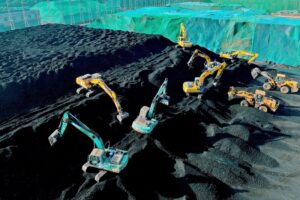
The first thing that struck me was the sheer size of Queensland’s Saraji coal mine. Standing at the edge of the enormous pit, my brain scrambled for words as I scanned the earth’s open wound – a whole island could probably fit inside it.
Looking down, I noticed footprints of an emu and a koala, pressed and dried in what was once a puddle – signs of how drought had driven animals in desperate search of water, so dangerously close to the coal trucks and heavy machinery ahead.
Earlier this year, I joined a small group of Pacific Islanders on a journey through the Bowen Basin to learn from First Nations communities battling Australia’s mammoth coal industry. Of the more than 40 coal mines operating in the area, BHP & Mitsubishi Alliance’s Saraji mine is one of the largest. So it came as a painful shock to us when in August, the Australian government approved the mine’s extension just months after our visit.
-
As COP31 co-host, Australia should make its polluters pay for climate damage
With UN climate funds running short on cash, now is the time to start taxing the companies whose emissions are driving harm in the Pacific and other vulnerable parts of the world -
At pre-COP, UN climate chief warns of heat threat to mothers and babies
The spotlight on maternal health came on the first day of the pre-COP31 meeting in Fiji, where Pacific concerns are set to top the agenda as ministers gather for talks

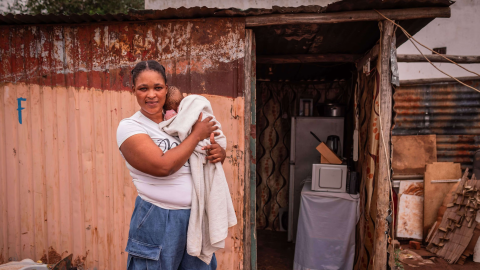
Witnessing coal extraction is devastating. It is bad enough to see what pillaging tonnes of coal can do to a mine’s immediate surroundings: dry creek beds, dwindling wildlife, denuded land. But to know that this coal will be shipped across the ocean, bring air pollution, and eventually lead to the destruction of Pacific islands thousands of miles away is another kind of heartbreak.
Rising ocean waters
I’m an Australian-born Samoan. In 2002, I visited my family home for the first time. My father took me to the rural community where generations of my family were raised. He did not have the words to describe how much has changed since rising ocean waters had taken away almost a third of the beach.
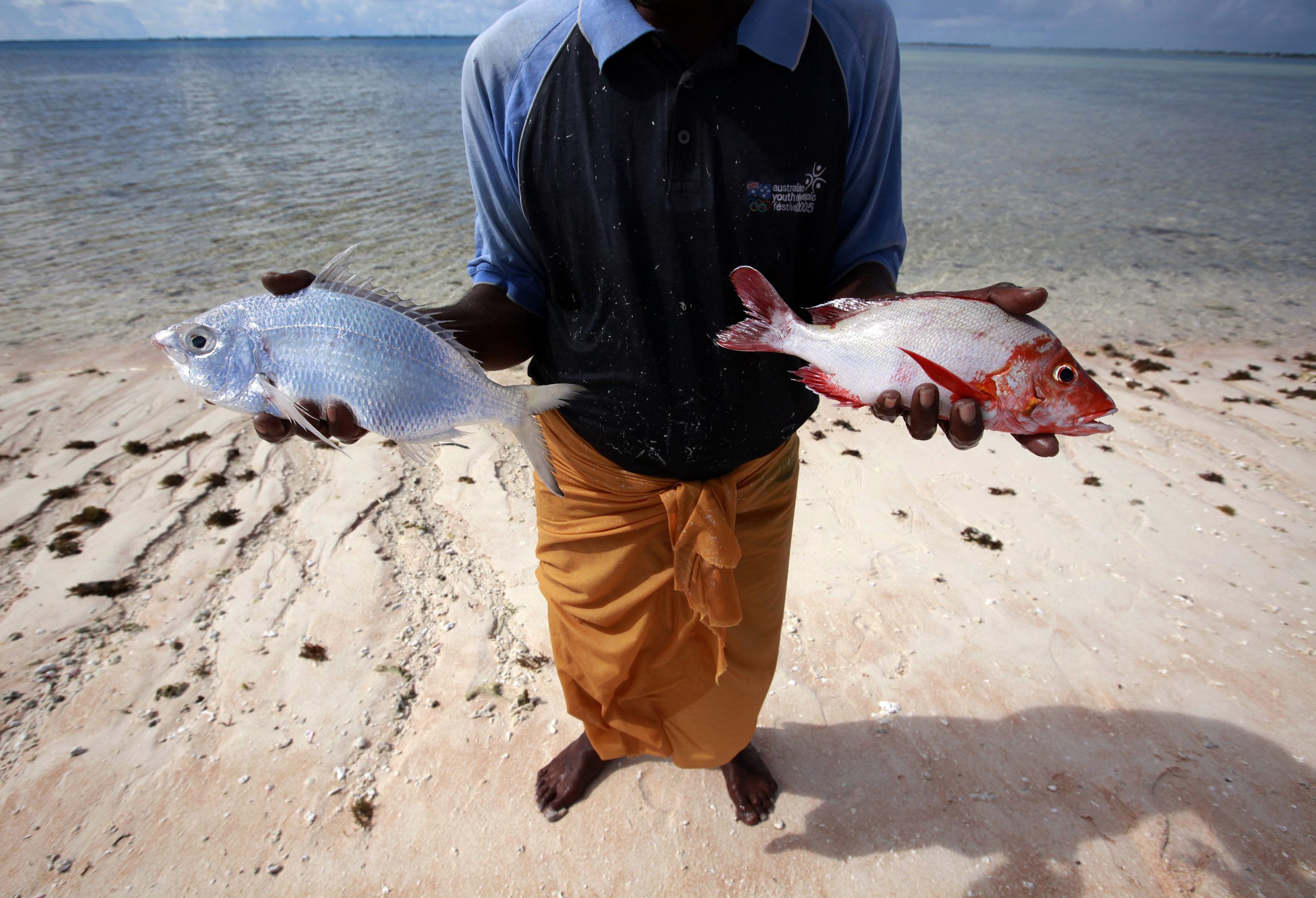
I learned of how we had to relocate my great‑great‑grandparents’ grave to higher ground twice in the last 15 years. Of how my cousins have to paddle out further to sea to catch fish, since warmer waters have destroyed much of the reef. Of how the ocean crashes so close to my uncle’s home that he had to build a new house further away.
We saw reflections of our own climate destruction in the Pacific when we shared these stories with our First Nations relatives at the edge of the Saraji mine. Murrawah Johnson and Teila Watson, both Birri Gubba and Gangulu women, made clear connections between their struggles and ours. “We don’t get to inherit our land and we don’t get to inherit our traditional roles. We are fighting a war on extinction,” Murrawah said.
Coal extraction devastated their lands and cultures – totems have disappeared, fresh water has become scarce – while the effects of using it have devastated ours. “King tide, cyclones, all the violence that has been enacted on your country and people is because of the violence that has been allowed here, to us and our country,” Teila said.
Wearing the mantle of climate leadership
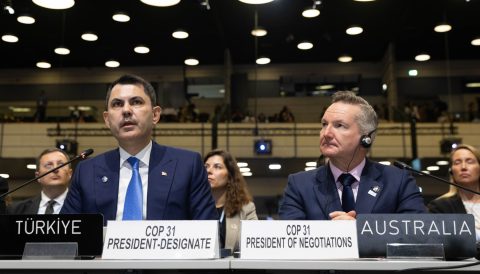
This week, Australia is assuming the mantle of climate leadership as co-president and head of negotiations of this year’s UN Climate Change Conference, COP31. It will lead on deliberating the summit’s priorities as world leaders and climate negotiators descend on Fiji and Tuvalu for the pre-COP meetings.
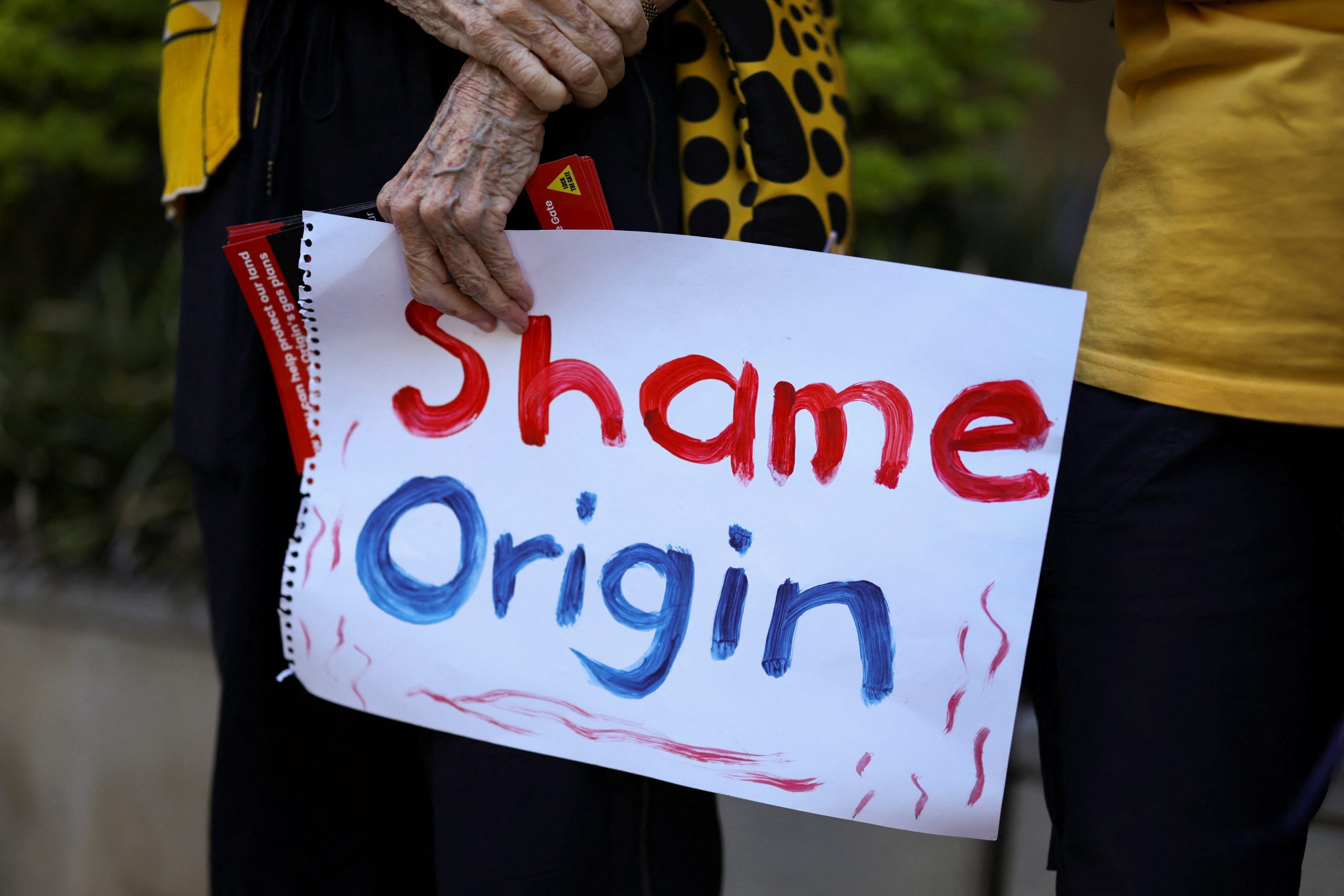
Ironically, just days before the pre-COP began, the New South Wales Independent Planning Commission approved the largest-ever coal project the state has seen, set to emit an extra 800 million tonnes of carbon emissions. I joined the Pacific Climate Warriors and other communities in submitting about 4,000 appeals to oppose the project – yet these all fell on deaf ears.
-
Fossil fuel expansion threatens COP31 hosts’ credibility, experts warn
Türkiye and Australia are pushing coal, oil and gas at home with no national timeline for their own fossil fuel phase-out -
This Australian coal community is co-designing its own green future
The mining town of Collie offers a promising example of how to survive – and even thrive – amid the global transition to net-zero emissions

But the fight is not yet over. The project still requires federal approval to proceed, so every promise that Australia makes while at the helm of the climate talks counts. These promises will be measured against actual decisions it makes at home: to either lock us into more decades of climate pollution, or begin shutting down coal and gas once and for all.
Pacific leaders have made it clear that countries must align their policies with the 1.5-degree warming goal, a limit that we already know will be breached within the decade. Any chance of keeping this still within reach requires an immediate end to fossil fuel expansion and concrete plans to phase out existing projects. But success will be an uphill battle if COP31’s own head of negotiations refuses to lead by example.
Australia remains the second-largest coal exporter in the world. It is one of the very few industrialised countries under the Paris Agreement’s Annex I that still has no coal phase-out plan. Since 2022, the Albanese government has approved 37 new, expanded or extended coal, oil and gas projects. It is thus unsurprising that its own mitigation policies have been rated by Climate Action Tracker as “insufficient”, even without factoring in fossil fuel exports and related expansion.
Keeping 1.5C alive
Australia must course-correct to earn the mantle it has been given, especially by Pacific nations that backed the country’s bid for the COP31 co-presidency. As a first step, the government must end all coal expansion and explicitly declare a coal phase-out date. It’s the only way to show that it’s capable of leadership that moves beyond endlessly deliberating the “if”, and starts implementing the “how” of keeping the 1.5C target alive.
The dread I felt staring down at the abyss on the edge of that coal mine months ago still exists. I carry it with me as I show up at the pre-COP to demand that leaders heed the calls of Pacific people. But it is tempered with resolve to keep our lands and communities alive. We remain steadfast in our efforts to secure an outcome that protects people everywhere and brings us back below 1.5 degrees as soon as possible.
The post Coal mines and hypocrisy must not be Australia’s COP31 legacy appeared first on Climate Home News.
Coal mines and hypocrisy must not be Australia’s COP31 legacy