

Welcome to Carbon Brief’s DeBriefed.
An essential guide to the week’s key developments relating to climate change.
This is an online version of Carbon Brief’s weekly DeBriefed email newsletter. Subscribe for free here.
This week
Fossil fuels out
COP28 CUTBACKS: France and the US will back a ban on private financing for new coal power at the COP28 climate summit in Dubai, which kicks off next week, Reuters reported. The EU parliament passed a resolution calling for countries to agree to “a tangible phase-out of fossil fuels as soon as possible…including by halting all new investments in fossil fuel extraction”, said another Reuters story. (Note that the parliament is distinct from the EU itself, which has only committed to pushing for a phaseout of “unabated” fossil fuels at COP28.)
COAL RUSH: Meanwhile, India’s power ministry has said that the country plans to expand its coal generation capacity by adding “at least 80 gigawatts (GW) by 2031-32”, Indian newspaper Mint reported. “New Delhi won’t bow down to any pressure to take coal phasedown targets” at COP28, Indian newspaper Economic Times reported.
Extreme heat
RED ALERT: Brazil reached its hottest temperature on record on 19 November, when the southeastern town of Araçuaí hit 44.8C, according to the Brazilian Report. Brazil’s National Institute of Meteorology put large parts of the country under a red alert, the Guardian said. The Independent cited a rapid attribution analysis, which found that “temperatures in Rio were up to 4C warmer last week than they were in the period from 1979-2000”. Meanwhile, the Associated Press reported that a fan died during a Taylor Swift concert in Brazil due to the heat.
AFRICAN HEAT: The record-breaking heatwave engulfing Madagascar in October would have been “virtually impossible” without human-caused warming, according to a new rapid attribution study, the Guardian reported. The report highlighted the lack of media coverage of the heatwave, the newspaper added. Elsewhere, News24 reported that South Africa recorded an all-time national temperature record of 43C this week.
Around the world
- SCEPTICS TRIUMPH: Far-right climate sceptics have won elections in Argentina and the Netherlands. Argentina’s new president Javier Milei has called climate change a “socialist lie”, according to E&E News. The Party for Freedom, which has won the most seats in the Dutch parliament, says in its manifesto that “we must stop being afraid” of climate change, the Agence France-Presse reported.
- JUST TRANSITION: Indonesia has released its final plan to mobilise $20bn of investment from rich countries to help it build renewables and replace its fleet of coal power plants, according to Nikkei Asia.
- PEAKING EARLY: A survey of experts found that more than 70% think that China is on track to hit its target of peaking its carbon dioxide (CO2) emissions before 2030, Chinese-language outlet Jiemian reported.
- UK SPENDING: Climate measures were “thin on the ground” in the UK’s autumn statement, Carbon Brief reported.
- ‘SUPERCHARGE’ RENEWABLES: The Australian government plans to “supercharge” its renewables ambitions by underwriting 32GW of low-carbon power projects by 2027, said the Australian Financial Review.
- GAS IN GAZA: As Israel’s conflict with Hamas continues, Haaretz reported that the US wants Israel to develop offshore gas fields as a new “revenue stream” to help “revitalise” the Palestinian economy.
7,200
The number of fossil-fuel representatives that have attended UN climate talks over the past 20 years, according to the Washington Post.
Latest climate research
- Labourers on rice and maize fields are the most exposed agricultural workers to dangerous humid heat, new research in Environmental Research Communications found.
- The occurrence of “ocean-onto-land” droughts – which originate over the oceans and migrate onto land – has increased in the past 60 years, according to a study in Nature Climate and Atmospheric Science.
- A new paper in Science Advances presented the first “fine-scale” observations of methane and CO2 emissions from NASA’s Earth Surface Mineral Dust Source Investigation imaging spectrometer. The authors attributed the emissions to their sources, including the oil and gas, waste and energy sectors.
(For more, see Carbon Brief’s in-depth daily summaries of the top climate news stories on Monday, Tuesday, Wednesday, Thursday and Friday.)
Captured

There is a relatively small amount of allowable carbon emissions – known as the “carbon budget” – remaining if global warming is to be limited to 1.5C, the ambition of the Paris Agreement. As Carbon Brief’s coverage of the UN Environment Programme emissions gap report shows, as of the start of 2023, the remaining carbon budget for having a 50% chance of keeping temperatures at 1.5C was only around 250bn tonnes of CO2 (GtCO2), which is roughly six years of current emissions.
Spotlight
IEA’s ‘moment of truth’ for oil-and-gas companies
Carbon Brief takes a dive into the International Energy Agency’s (IEA) latest report on the future of oil and gas. It has been launched to coincide with the start of COP28, which IEA chief Dr Fatih Birol described as a “moment of truth” for the sector.
Fossil fuels are set to take centre stage at COP28 in Dubai, a city built on decades of oil extraction. Dozens of nations say they want the event to yield a global commitment to reducing fossil-fuel use.
COP28 president Sultan Al Jaber, who is also chief executive of the Abu Dhabi National Oil Company (Adnoc), has said cutting fossil-fuel supply is “inevitable and essential”. Doing so would require oil companies such as his to radically change their business models.
In its new report, the IEA lays out the role such companies could play in this transition. It also punctures many of the narratives that the oil industry has formed in recent years concerning its climate action – or lack of it.
‘Central to the solution’
Al Jaber has stressed that oil companies are “central to the solution” for climate change. The IEA agrees that the net-zero transition will be “more costly and difficult” without oil companies on board, but says a “step change” is required.
Oil majors such as Shell and BP have made much of their low-carbon investments. Yet, in 2022, the IEA says the industry channelled just 2.7% of its capital spending into clean energy. (It notes that Adnoc says it invests in clean energy, but has not revealed how much.)
Many spend nothing at all. More than 80% of oil and gas is produced by companies with no plans to invest in clean alternatives. State-owned firms such as Adnoc, which account for more than half of global production, have been particularly hesitant.
The IEA says oil industry spending on low-carbon alternatives could be brought in line with the agency’s “net-zero by 2050” scenario, if it increases to around 50% of capital expenditure by 2030. However, this would require shareholders and governments to accept lower returns, something there “does not appear to be a large appetite [for]”.
No ‘status quo’
Many oil-and-gas companies plan to cut emissions from their operations and drilling sites – rather than those from burning their products. Adnoc, for example, intends to be a “net-zero” company by 2045.
Yet these efforts are lacking in sufficient ambition, according to the IEA. It says less than 2% of oil-and-gas production is covered by an emissions target that aligns with the agency’s net-zero scenario.
There are also question marks over how oil companies are cutting their emissions.
The report stresses that relying on the still-emergent technology of carbon capture and storage (CCS), as many oil companies appear to be doing, cannot be “a way to retain the status quo”. It says the $3.5tn annual cost of scaling up CCS enough to maintain production while hitting climate targets is equivalent to the industry’s entire revenue.
The IEA also cautions against reliance on carbon offsets, which three-quarters of oil companies with emissions targets have stated they will use.
‘Last ones standing’
Oil companies often emphasise the world’s “need” for fossil fuels and, indeed, the IEA sees a small amount of oil and gas extraction necessary even as companies “evolve their portfolios”.
Still, the IEA reiterates that its net-zero pathway means no new oil-and-gas fields. In fact, it says new developments since it first issued this warning in 2021 mean some would now have to be closed early.
Various oil companies clearly intend to be the “last ones standing” – extracting oil long into the future. To them, the IEA issues a warning: “Many producers say they will be the ones to keep producing throughout transitions and beyond. They cannot all be right.”
Watch, read, listen
THE CLIMATE 1%: The Guardian has published a new series titled “the great carbon divide”, examining “who is most responsible for the emissions that are driving the escalating climate crisis, and what to do about carbon inequality”.
OFFSETS OUTED: A new Channel 4 documentary investigated the shadowy world of carbon-offsetting, travelling to Cambodia to try to speak to reticent industry representatives and investors, as well as local journalists who pointed to rights abuses in projects.
REFORMING FINANCE: As calls to transform the global financial system grow stronger at COP28, Boston University and the Centre and Science Environment, a research advocacy organisation in India, hosted a webinar to unpack what this could look like.
Coming up
- 27-29 November: UN Forum on Business and Human Rights, Geneva, Switzerland
- 29 November: Launch of IEA Energy Efficiency 2023 report
- 30 November-12 December: UNFCCC COP28, Dubai, UAE
Pick of the jobs
- World Resources Institute (Europe), food, land and water policy lead | Salary: €80,000-101,000 if based in the Netherlands and £65,000-82,000 if based in the UK. Location: The Hague, Netherlands, or London
- The Sunrise Project, co-director for the global finance programme | Salary: $143,275-171,248 if based in the US; £110,000-132,000 if based in the UK and €100,340-107,181 if based in the Netherlands. Location: North America, Europe or Asia
- The Fletcher School at Tufts University, assistant professor in climate policy, Salary: Unknown. Location: Massachusetts, US
DeBriefed is edited by Daisy Dunne. Please send any tips or feedback to debriefed@carbonbrief.org
The post DeBriefed 24 November 2023: Fossil fuels under fire on eve of COP28; Record heat from Brazil to South Africa; IEA’s ‘moment of truth’ for oil and gas appeared first on Carbon Brief.

When oil and gas shipments stopped flowing through the Strait of Hormuz at the start of the Iran war, Southeast Asian nations were left reeling as the supply crunch laid bare their acute reliance on fossil fuel imports.
As prices soared, governments in the region scrambled to introduce emergency energy-saving measures – from a four-day working week to curbs on air conditioning. Thailand revived decommissioned coal plants while the Philippines, which imports nearly all of its oil, declared a “national energy emergency”.
But the crisis has also prompted renewed resolve to find a long-term solution to their vulnerability at a time when electricity demand is booming to power the region’s growing industry, cooling needs and the mushrooming of energy-hungry data centres.
At the heart of Southeast Asian nations’ response is a longstanding infrastructure project to connect the region’s power grids by 2045 and enable cross-border trading of clean electricity through a network of underground and subsea interconnectors.
-
Southeast Asia’s fragile grids threaten billions in clean energy investment
Renewables developers need reliable electricity infrastructure and stable policies to help the region meet climate goals and surging demand for power -
UN backs push to upgrade grids slowing clean power uptake in Africa and SE Asia
The Global Grids Accelerator will help turn national and regional plans to expand electricity infrastructure into viable projects on the ground -
China keeps Indonesia’s battery dream afloat but future less certain
Chinese capital and technology turned Indonesia into the world’s top nickel supplier, but its dependence on China and the rise of nickel-free batteries could upset its battery ecosystem plans
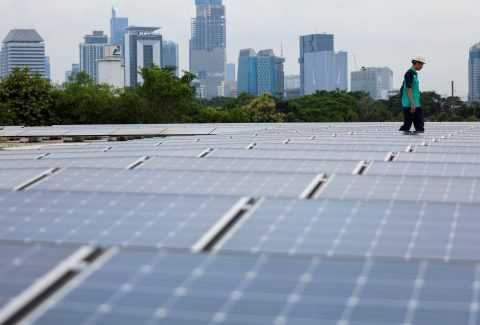
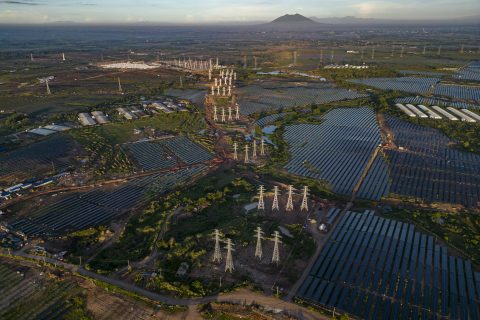
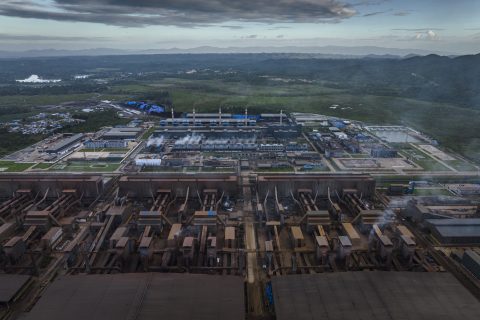
The plans will allow nations with high renewable energy generation potential to trade surplus power to their neighbours and major demand centres like Singapore, helping to integrate more renewables into the power mix and reduce reliance on fossil fuel imports.
“[It] will give us more energy security,” the Philippines’ energy secretary, Sharon Garin, told a press conference after a meeting of the Association of Southeast Asian Nations’ (ASEAN) energy ministers last week, when they discussed accelerating the delivery of the regional grid as part of measures to respond to the energy crisis.
“The Philippines is rich in solar power, Malaysia is rich in hydropower and Indonesia has geothermal: different countries have different resources. [The ASEAN Power Grid] will optimise the utilisation of renewables to the benefits of each member state,” said Garin.
But turning this decade-old political vision into a reality has been slow, held up by painstaking work to harmonise a patchwork of regulatory and legal frameworks and mobilise the private capital needed to build cross-border infrastructure.
More than $300 billion is needed to expand and modernise the region’s fragile grids to support the projected energy demand increase by 2050. This includes $27 billion required to deliver the cross-border interconnections by 2040, according to the International Energy Agency (IEA).
Every year of delay could cost the region billions of dollars in additional fuel costs and lock in new gas infrastructure for decades to come, according to analysis by global energy think-tank Ember.
The building block for energy security
With electrification high on the agenda of the COP31 climate talks in Türkiye next month, there is growing attention on the need to modernise and expand grid infrastructure to cope with growing electricity use and more renewables in the power mix.
Clean electrification and energy efficiency could deliver about a third of cumulative carbon emission reductions between 2026 and 2050, according to the International Renewable Energy Agency’s World Energy Outlook. But delivering that would require doubling annual global grid investment to $1 trillion between now and 2035.
Last month, the UN launched an initiative to accelerate investment into expanding and modernising grids in Southeast Asia and Africa.
First conceptualised in 1997, the ASEAN Power Grid has gained fresh impetus in recent years as countries turn to renewables to cut their emissions and move away from volatile fossil fuel markets.
Energy supply disruption caused by wars in Ukraine and the Middle East has strengthened the case for regional grid connections. Before this year’s conflict began, the Middle East accounted for 60% of Southeast Asia’s crude oil imports. Competition for fewer, more expensive oil and gas shipments has left Southeast Asia facing a $160 billion energy import bill this year. Based on current policies, this could rise to $400 billion by mid-century.
In the Philippines last week, energy ministers agreed on an enhanced planning framework to deliver the ASEAN Power Grid and made progress on regulatory guidelines.
Garin said ministers were considering accelerating the project’s delivery. “The first study was to connect [by] 2045 – that’s too far,” she said.
A strong business case
The economic benefits of the plan have “captured the political imagination” of leaders in the region, Robert Cooke, grids advocacy lead at the Global Renewables Alliance, told Climate Home News. “The business case is stronger than ever,” he said.
“If countries were to go about building their own separate grids, of course that would be an expensive endeavour. But the discussion around the ASEAN Power Grid includes what costs could we share in building out this grid,” added Tiza Mafira, director of the Indonesia office for the Climate Policy Initiative.
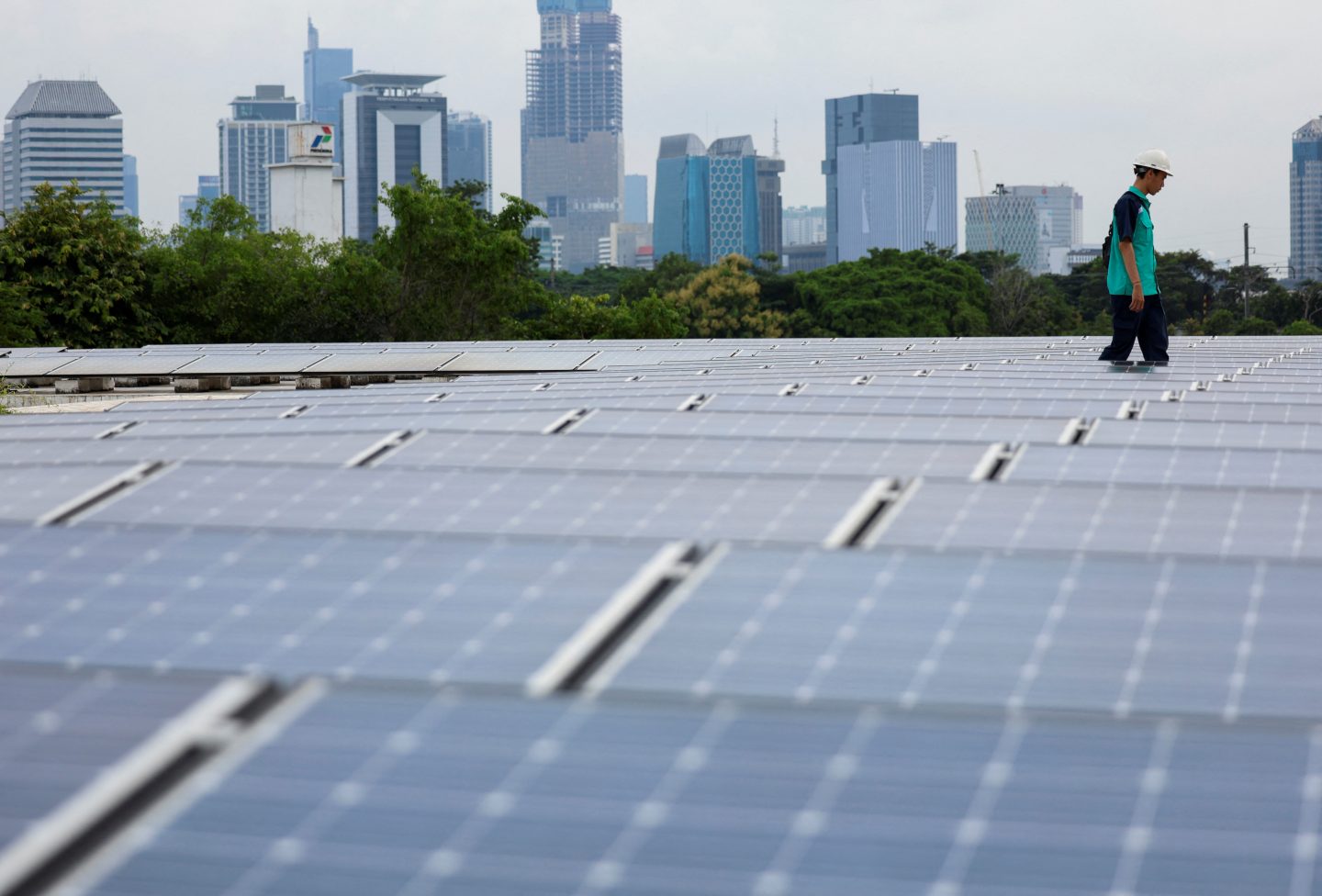
Stronger grids would help the region meet collective targets to increase the share of renewable energy in total primary energy supply from 14% to 30% and in installed power capacity from 34% to 45% by 2030.
Connecting and pooling dispersed renewable resources would also help smooth local power shortages caused by daily and seasonal variations, reducing the need for backup gas plants and battery storage.
The IEA found the ASEAN Power Grid could help unlock some of the 20 terawatts of untapped solar and wind potential across Southeast Asia – an amount around 55 times the region’s current total power capacity.
From lines on a map to shovels in the ground
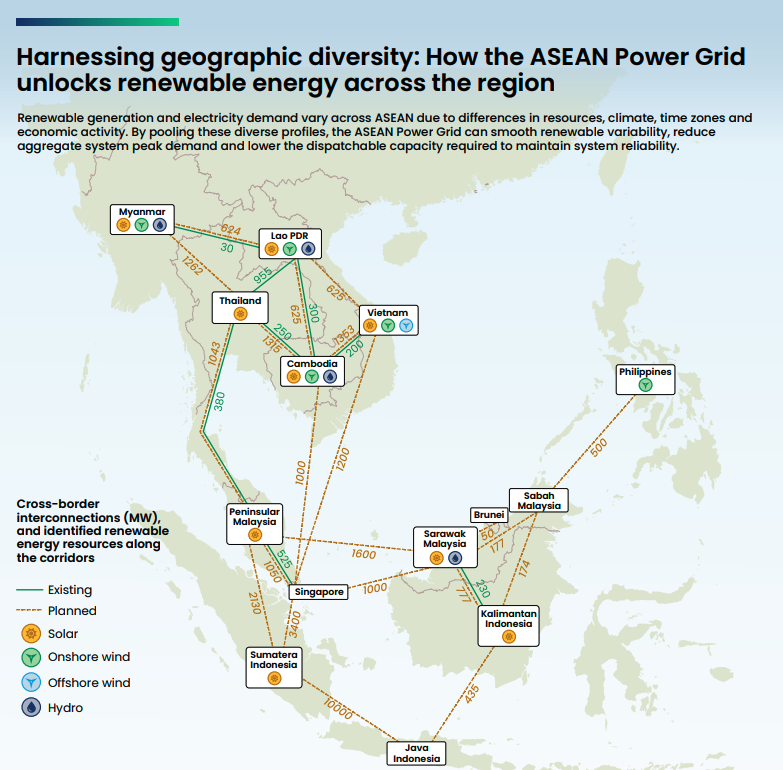
Rather than building a single unified network, the ASEAN Power Grid is developing cross-border links between neighbouring countries and smaller groups of nations.
As of 2025, nine of 18 priority interconnection projects are operational – accounting for around 10 GW of capacity with an additional 13.7 GW planned by 2040.
Source: Ember
A power line channelling up to 200 MW of clean electricity generated from hydropower in Laos to Singapore via Thailand and Malaysia has emerged as a key building block for grid-to-grid trading.
Progress on technical discussions will also help provide the clarity the private sector needs to invest in bankable projects, said Cooke.
In 2025, the Asian Development Bank and the World Bank announced a dedicated funding initiative to support the project.
“The enabling pieces are emerging,” said Monalisa Dimalanta, former chair of the Philippine Energy Regulatory Commission and the National Renewable Energy Board. “But the timelines remain unclear and a 2045 vision cannot answer today’s emergency,” she said.
“A power grid… that exists only on paper will not keep the lights on.”
Singapore: the delivery test
The implications of failing to deliver the ASEAN Power Grid are most acute in Singapore.
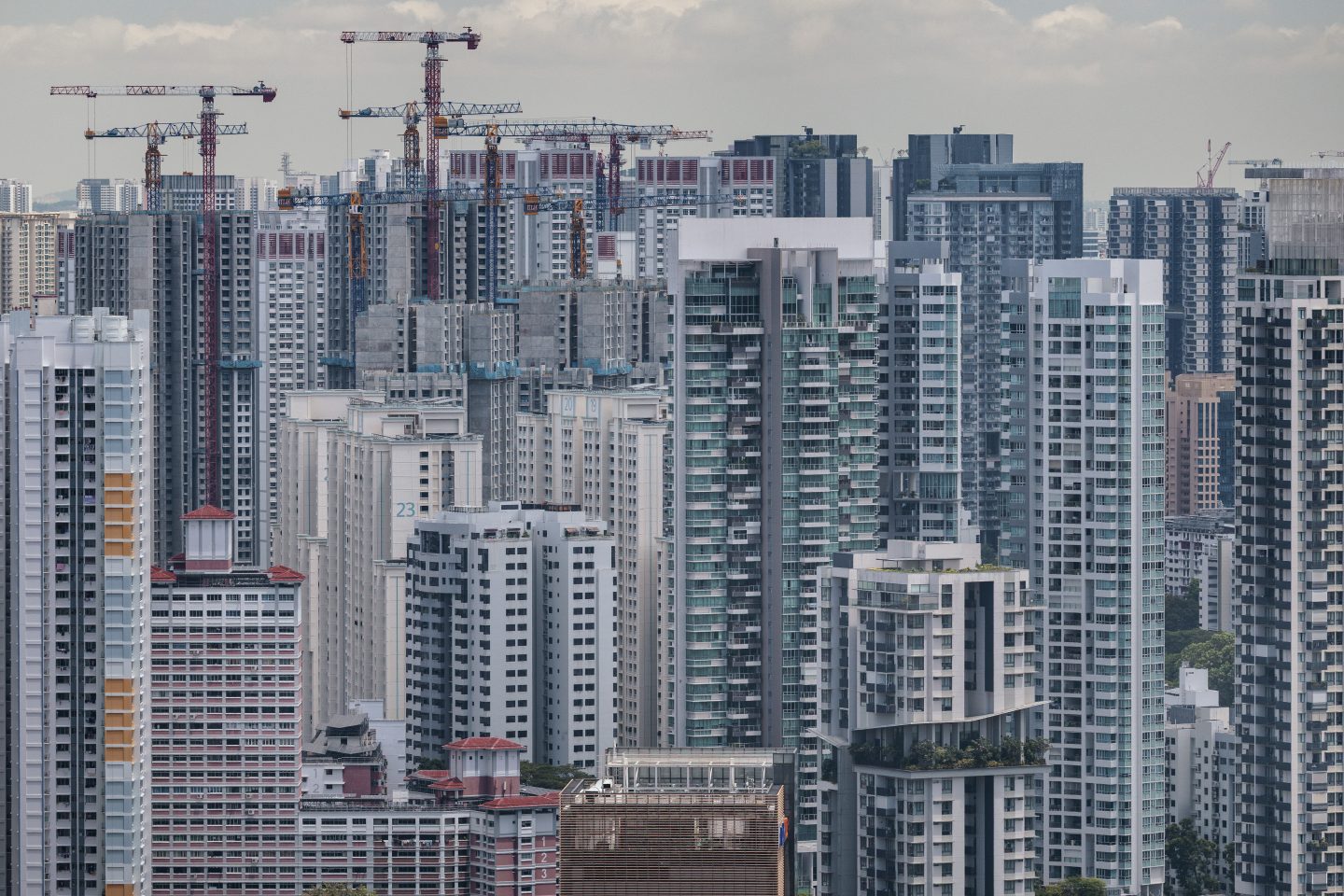
Constrained by space, with few renewable energy resources and dependent on gas for more than 90% of its electricity mix, Singapore has emerged as a leading proponent of a regional power grid as it seeks to achieve net-zero emissions by 2050.
To meet its power needs, the city-state aims to import 6 GW of low-carbon electricity by 2035, around one-third of its energy demand – a target which it is set to miss, however.
The plans heavily rely on building interconnectors to import solar power from Indonesia across the South China Sea. Around 40% of the ASEAN Power Grid’s planned interconnections are directed towards Singapore.
Ember’s analysis found that delivering the planned interconnectors by 2035 could enable renewables to meet nearly half of Singapore’s electricity demand. Delays could drop this to only a fraction of the country’s needs, and risk locking in new gas capacity until the 2050s. Without the ASEAN Power Grid, Singapore would need to install an additional 300 MW of gas-fired power capacity to bridge the gap by 2035.
Already home to the largest data centre capacity in Southeast Asia, Singapore’s electricity demand keeps rising, driven by the boom in AI infrastructure. “At one point, [it] either has to build a new gas plant, or it has to get the interconnection to supply that demand,” Lam Pham, an Ember energy analyst and the report’s author, told Climate Home News.
A region at a crossroads
With capital increasingly available, political will is now the biggest risk standing in the way of timely execution, said Pham.
But there are other challenges too, including the lack of frameworks on transmission tariffs and how to share the benefits of clean power trading. “It’s really hard to justify projects without that,” he said.
In addition, climate-fuelled weather events, including extreme heat and tropical storms, pose major threats to the region’s grid infrastructure. Experts say stronger grid interconnection can isolate damage and build the system’s resilience.
Efforts to deliver on the ASEAN Power Grid also come as ministers stressed the “continued importance of oil and gas” for economic development and seek to secure fossil fuel supplies and stockpile oil to prepare for the next crisis.
Despite an acceleration of renewable deployment, p