


This is a republication of November’s edition of The Climate Agenda – a subscriber-only newsletter designed to keep you informed of the key events, negotiations and announcements happening every month. If you want to receive The Climate Agenda straight to your inbox at the start of each month, sign up as a subscriber today.
COP31 begins in one week, and we’ll have five specialist reporters on the ground in Antalya, Türkiye, bringing you every development as it happens. From the negotiations to leaders’ speeches and side events, we’ll be there to dissect what it all means for international climate policy on electrification, just transition, adaptation finance and much more.
Here’s what you need to know for November, why it matters and what to expect.
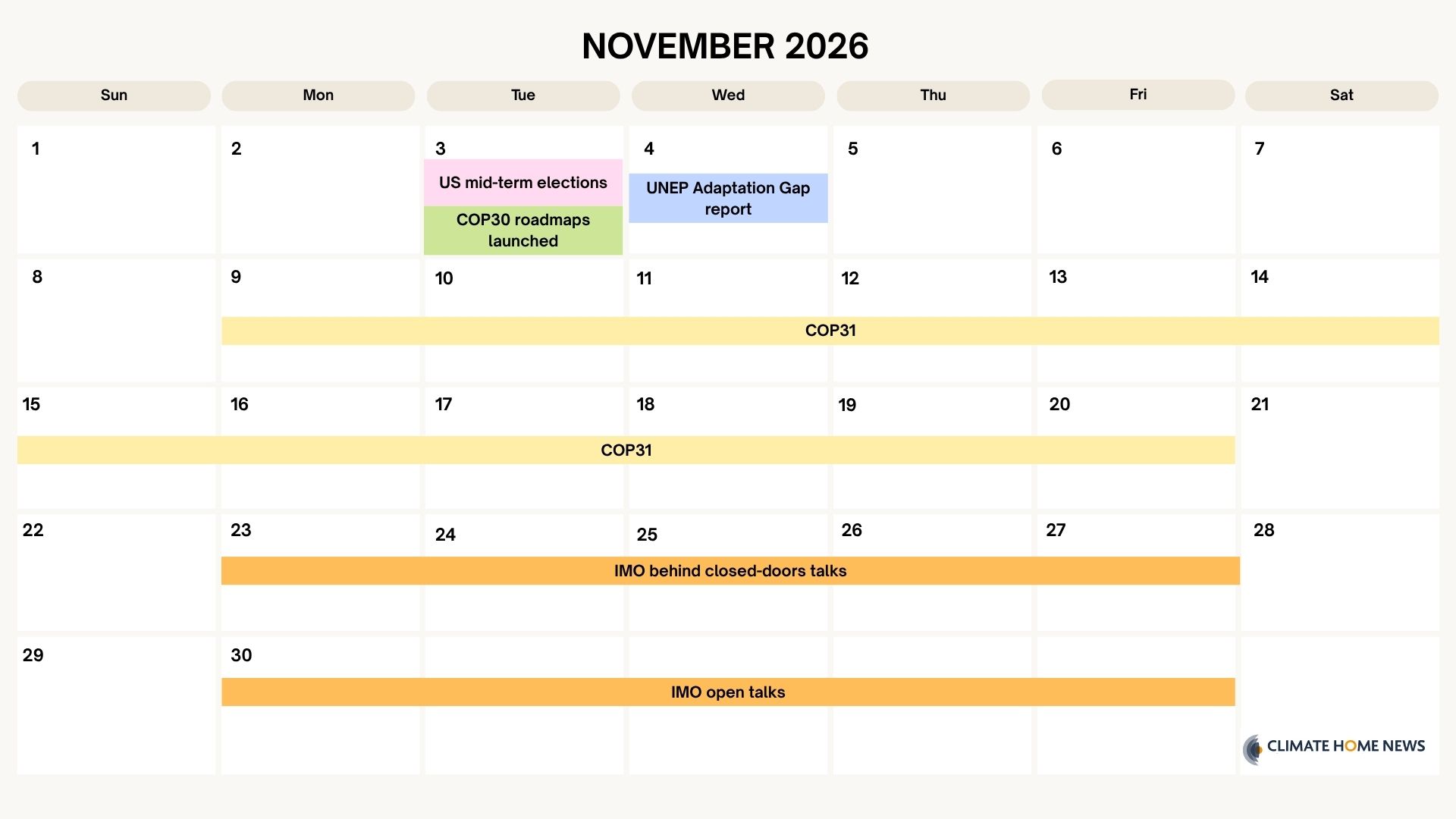
US midterm elections
Tuesday 3 November – United States
The geopolitical highlight for the first week of November is the US midterm elections, which will show whether American voters are in any mood to forgive President Donald Trump for failing to bring down the cost of living. From an energy perspective, his pro-oil and gas stance hasn’t led to cheaper prices for consumers, pushed up by the US-instigated Iran conflict. And his diesel deal with Russia won’t yet have made a difference at the pump.
The key issue for climate and energy policy is whether the Republicans hold onto their governing trifecta. If so, then expect continued dismantling of regulations that protect the environment, as well as strong backing for fossil fuel production. If the Democrats regain control of Congress, which polls suggest is possible, it could trigger a push to restore Biden-era clean energy tax credits, and support states wanting to restart mothballed wind and solar projects.
Data centres have been a hot-wire issue, with growing community opposition to their expansion – partly due to concerns over rising utility bills as the facilities gobble power. Whether Republicans or Democrats win Congress, both are likely to make tech firms pay for the extra electricity production they need, with the latter favouring renewable sources.
Governor races are also taking place in key states for climate issues, including Democrat-run California, which has used the courts to fight Trump’s attacks on clean energy.
Read more: National climate plans now promise half the emission cuts expected by UN
Read more: The more Europe relies on the US for energy, the more it’s vulnerable to pressure by Trump

COP30 Deforestation and Fossil Fuel Transition Roadmaps
Tuesday 3 November – Brazil
Brazil is set to unveil two global roadmaps: one for transitioning away from fossil fuels, the other for ending deforestation.
The COP30 presidency promised them in the dying hours of the Belém summit last November as a last-minute fix to break a political impasse. Since then, it has been consulting with countries, experts and campaigners around the world to gather ideas and sketch out the elements to include in these blueprints.
Don’t expect the roadmaps to offer any new global targets or give direct instructions on what countries must do, either to cut fossil fuel production and consumption or better protect forests. Rather, Brazil has said the documents will identify barriers and priority actions, highlight existing mechanisms and present a range of options that can be adapted to different national contexts.
It remains unclear what will happen with the reports once they are delivered on Tuesday. At the Bonn talks last June, a group of European and small island nations called for the roadmaps to be brought into the official negotiations, warning that a one-off report won’t cut it. But such efforts would undoubtedly face stiff opposition from fossil fuel-producing nations that objected to drafting the energy transition roadmap within the formal UN process last year.
Read more: European, island states seek clear future for global roadmap to cut fossil fuels
Read more: COP30 roadmap to end deforestation will invite countries to draft domestic plans
Read more: What we need to see in the roadmap to transition away from fossil fuels
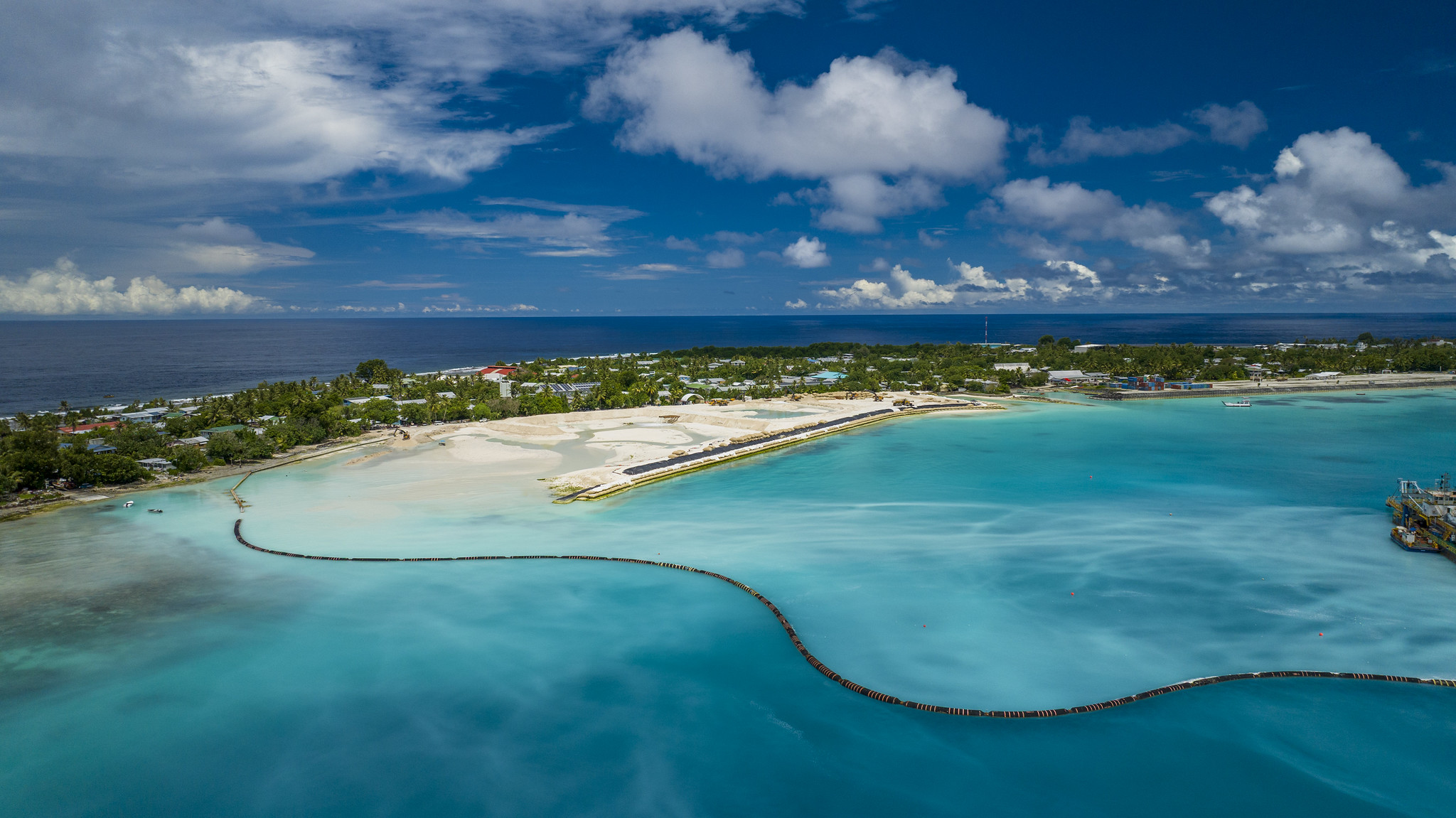
UNEP Adaptation Gap Report
Wednesday 4 November – Nairobi, Kenya
The UN Environment Programme (UNEP) will publish its annual assessment of how well the world is planning, implementing and – crucially – financing measures to cope with worsening climate impacts.
Past editions have made for grim reading. Last year’s report warned of a widening gap between what developing countries need for adaptation and what they can access. It estimated they will need $310–365 billion a year by 2035, which is 12 to 14 times current international flows. The report also found that a goal of doubling international public adaptation finance by 2025 was likely to have been missed.
This year’s edition will be closely watched with adaptation expected to be a big-ticket item at COP31. Governments are likely to discuss the specifics of a commitment to triple adaptation finance for developing nations by 2035, agreed at COP30 last year – particularly what the baseline for that pledge is. Negotiators will be debating how to track progress against the 59 indicators of the Global Goal on Adaptation.
Read more: Editor’s Desk: Nepal’s disaster has laid bare the world’s adaptation accountability gap
Read more: Bonn climate talks end in “gridlock” on adaptation and emissions-cutting
Read more: New data shows rich nations likely missed 2025 goal to double adaptation finance
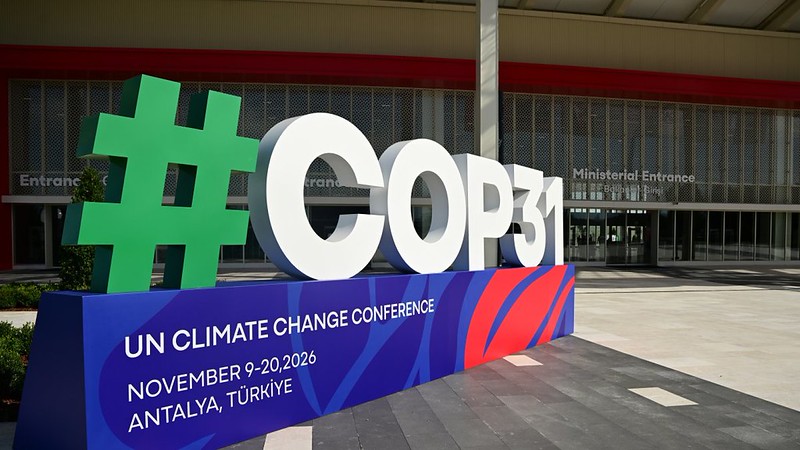
COP31 Climate Conference
Monday 9 November – Friday 20 November – Antalya, Türkiye
The climate community’s attention turns this month to Antalya for the annual UN climate summit. From the outset, COP31 will have an unprecedented, and potentially explosive, set-up: Türkiye is COP president overseeing the non-negotiated Action Agenda, while Australia runs the negotiations.
Billed, once again, as an “implementation COP”, the talks come amid a global energy crisis largely sparked by the actions of the US government, which is not expected to show up on the Turkish Riviera. It is also the first COP in the era of climate overshoot, coming just weeks after the UN officially confirmed the 1.5C warming limit will be breached and set out a narrow pathway to bring temperatures back down to the most ambitious Paris goal.
Unlike most recent COPs, the formal negotiations lack a clear headline item. Countries are due to establish and define the scope of the Just Transition Mechanism agreed in Belém last year, including its rules, governance and possible funding arrangements. On adaptation, vulnerable countries want a clearer path to delivering last year’s pledge to triple finance by 2035 and to putting the new progress indicators to work on the ground.
Governments are also likely to clash over next steps on the transition away from fossil fuels, and especially over whether the mitigation work programme – the forum dedicated to emission-cutting measures – has any future beyond this year.
Notable events to look out for in Antalya:
Opening session (9 November): The summit kicks off with the customary first-morning plenary. After the usual pageantry from the host nation, negotiating blocs and individual countries will deliver statements setting out their stall for the next two weeks. Watch out for a potential fight over the summit’s agenda – perhaps on issues relating to finance and trade following submissions requesting additional items – also a COP tradition.
Electrification (10 November): On Energy Day, the Turkish presidency is expected to formally launch its flagship electrification pledge, revealing which countries have signed up. Signatories will voluntarily commit to raising electricity’s share of global final energy consumption to 35% by 2035, though the current text does not require that power to come from clean sources. There is also a question mark over whether and how this can be included in the political cover decision the COP co-hosts have said they will aim to produce.
Leaders Summit (11-12 November): Heads of state and governments will jet into town for the traditional high-level segment in the middle of the first week, where world leaders typically talk up their climate record, air their grievances and call for more action.
Relatively few powerful leaders are on the list this time. Brazil’s Lula is set for another star turn this year, fresh from his surprise election win in October. The UK’s Andy Burnham, Spain’s Pedro Sanchez and China’s vice-premier Ding Xuexiang are expected, alongside Türkiye’s Recep Tayyip Erdogan and Australia’s Anthony Albanese. In addition, African and small island nations will feature prominently.
Our COP31 Briefing newsletter will offer a more in-depth preview of the talks later this week.
Read more: Early speakers’ list suggests few powerful leaders will attend COP31
Read more: COP31 electrification pledge leaves out clean power commitment
Read more: From Belém to Antalya – gains, gaps and challenges for a new Just Transition Mechanism
International Maritime Organization (IMO) Shipping Talks
Monday 23 November – Friday 4 December – London, United Kingdom
One year on from explosive talks in which Trump’s officials teamed up with Saudi Arabia to delay a deal to make the shipping industry greener, governments will gather on the banks of the Thames for another attempt to reach agreement.
The Net Zero Framework, provisionally agreed in October 2025, includes a series of emissions reduction targets for the owners of large ships along with penalties for not meeting them, rewards for doing so and measures to make the maritime transition fair.
The framework is likely to be either tweaked or radically rewritten so that it’s more acceptable to the US and Saudis. Brazil and Japan have submitted compromise proposals. Analysts find those will move shipping further away from being able to meet its climate goals.
There will be closed-door talks between November 23-27 and a second week of talks open to accredited media from November 30 to December 4. Agreement on a proposal, perhaps decided through a vote, is expected after long and technical negotiations. The shipping industry’s 3% share of the world’s emissions is at stake.
Read more: London talks raise hopes for green shipping deal
The post What’s on the climate calendar for November 2026? appeared first on Climate Home News.
Delegates will soon gather in the Turkish resort city of Antalya for UN climate negotiations, against a backdrop of war, energy crisis and climate extremes.
At COP31, nations will try to find agreement on various issues, including climate finance for developing countries and a global “just transition” towards a cleaner economy.
This summit is unusual due to its joint presidency, which means that Australia is leading the negotiations while Turkey hosts the conference.
Outside the formal negotiations, Turkey is also pushing its own priorities as part of a wider “action agenda”, including electrification, oceans and “green industrialisation”.
In order to track parties’ positions on key negotiating points and wider issues at COP31, Carbon Brief has analysed around 100 documents and captured them in the interactive table below.
The first column shows the countries and UN negotiating blocs, the second shows the topics up for debate and the third indicates specific issues within those topics.
The final column indicates the positions that the parties have expressed on each topic. These range from “priority” – meaning the party is likely to be pushing the issue – to “oppose”, meaning it is likely to push against it.
This is a “living document” that will be updated over the course of COP31.
Please get in touch if you would like to offer additions by emailing policy@carbonbrief.org.
Brief explanations of the key issues and jargon-filled language that permeate the talks can be found below the interactive table.
Just transition
At COP30 in Brazil in 2025, nations agreed to establish a practical mechanism to help drive a “just transition” to a low-carbon economy.
Key aspects of this “Belém-Antalya mechanism” (BAM) – often referred to as the “just transition mechanism” (JTM) – were agreed during the June climate negotiations this year, but many details are missing and dividing lines remain between parties.
Parties have disagreed about the scope of the mechanism and whether it should be tied to the provision of finance.
Nevertheless, following progress in June within the “just transition work programme” (JTWP), civil society groups highlighted that getting the mechanism up and running is a “key expected outcome” from COP31.
Climate finance
Climate finance is always a highly contested issue at UN climate negotiations.
Developing countries have successfully pushed for a “work programme” on climate finance to feature on the conference agenda.
These parties see this programme as a way to pressure developed countries into providing more funding from their public coffers, specifically under Article 9.1 of the Paris Agreement. Some are even proposing a “burden sharing” arrangement for climate-finance provision.
This comes against a backdrop of major donors cutting their aid budgets and the Trump administration in the US pressuring multilateral development banks (MDBs) to drop their climate objectives.
Developed countries, which have traditionally been responsible for providing finance, would prefer to keep a broader focus on issues such as improving access to existing finance and broadening the range of donors. Some developing countries, such as small-island states, also support these goals.
Nations have also been discussing Article 2.1c of the Paris Agreement under the “Veredas dialogue”. This focuses on making all global “financial flows” consistent with climate action.
Countries have different views about what this involves, with developing countries again hoping to keep the focus on developed countries’ responsibilities to financially support them.
Adaptation and mitigation
At negotiations in June, parties were unable to agree on the details of a “global goal on adaptation” (GGA), which is intended to drive climate adaptation worldwide.
Having agreed at COP30 on a list of 59 “indicators” – ways to assess progress towards the GGA – nations now need to refine these before COP32 in Addis Ababa, Ethiopia. This is a highly technical process that involves a taskforce working out how to use and track these indicators.
Broadly, developing countries stress the importance of finance to fund adaptation efforts, rather than simply to track progress. They also want reassurances about a pledge made last year to “triple adaptation finance”.
At the June climate negotiations, negotiators also failed to make any progress when discussing the mitigation work programme (MWP) – the only formal agenda item that concerns cutting greenhouse gas emissions.
Among other things, parties disagreed on whether the MWP should continue running over the next few years, or simply be brought to a close.
Global stocktake and NDCs
Back in 2023, the first “global stocktake” (GST) of the Paris Agreement set out the state of climate action and what needed to be done to set the world on course.
On mitigation, nations agreed to a package of measures, including “transitioning away from fossil fuels”, tripling renewable energy and “halting and reversing deforestation” by 2030.
Some of these outcomes remain contentious among certain parties, particularly large, developing countries and those with economies that rely on fossil-fuel exports.
Developing countries have persistently argued that they need more climate finance to implement the global stocktake outcomes.
Parties were meant to update their climate plans under the Paris Agreement, informed by the first global stocktake, by 2025. These plans, known as nationally determined contributions (NDCs), cover the period out to 2035.
So far, only 150 parties – responsible for three-quarters of global emissions – have submitted new NDCs.
Iran, Vietnam, Egypt and Argentina are among those without new NDCs – and the US has withdrawn its climate plan under the Trump administration.
Some parties, such as the EU, have stressed the need for countries to submit their new NDCs ahead of COP31 – and to ensure they are aligned with the 1.5C temperature limit.
COP31 will also see the launch of the second global stocktake, which will conclude in 2028.
Action agenda and other issues
Turkey will be pushing its “action agenda” priorities at COP31, including global targets for electrification, reducing waste and reducing building-sector emissions.
(The Australian “presidency of negotiations” is intending to pursue a “cover text” decision at COP31 that may capture some of these wider targets, such as the electrification goal.)
The action agenda is meant to provide a complementary track to the formal negotiations, where governments and non-state actors can advance specific, real-world solutions.
A new COP31 presidency effort dubbed the “climate implementation bridge” is also meant to complement these ambitions by turning NDC goals into an “investable project portfolio”
Some parties have explicitly signalled their support for various elements beyond the formal negotiations, in the run-up to COP31.
For example, a joint letter signed by 105 parties called for COP31 to “put the ocean at the heart of climate action” by embedding ocean-based climate action in the UNFCCC architecture.