Connect with us

Published

on

Instead of reacting to the next power bill shock, many Australian businesses are starting to think forward.

Every day, more and more Australian companies are asking a simple question we all seek an answer to: How can we reduce energy costs without compromising performance?

Well, for many, the answer lies in commercial solar power, and Cyanergy is one of the Australian companies helping businesses take that step with confidence.

With hands-on experience delivering commercial solar solutions across a wide range of industries, from farms and sporting clubs to breweries and large manufacturing facilities, Cyanergy’s real-world projects demonstrate how tailored solar systems can transform energy usage and significantly reduce operating expenses.

In this blog, we’ll explore what commercial solar power is, why it matters today, and how Cyanergy’s real-world case studies illuminate the path to a cleaner, more profitable energy future, both financially and environmentally

Let’s get into it!

What Are Commercial Solar Solutions? |Why does this matter?

Solar solutions for commercial applications are photovoltaic (PV) systems designed to meet the energy needs of businesses, large facilities, and organizations. This system often consumes much more power than residential households.

Commercial solar systems typically include:

  • Solar PV panels that capture sunlight and convert it to electricity
  • Inverters and electrical integration are used to convert DC to usable AC power
  • Monitoring and performance systems are installed to track energy generation
  • Optional battery storage to support energy autonomy and peak demand management

Unlike residential solar, commercial systems are scaled to handle larger loads and are often optimized for financial return, corporate sustainability goals, and energy independence.

Why Australian Businesses Are Turning to Solar Now?

Throughout the world, many companies are adopting solar power for several compelling reasons. It is already proven
that solar can:

  1. Reduce Operational Costs
  2. Electricity prices are volatile and often increasing worldwide. Incorporating a solar panel helps businesses lock
    in
    energy cost savings by
    producing electricity on-site rather than relying exclusively on grid power.

  3. Strong Financial Returns
  4. Commercial solar systems can pay back their investment in just a few years, far shorter than the 25 to 30 years
    the
    panels last. This ultimately means, after that, you are left with decades of essentially free electricity.

  5. Sustainability and Brand Value
  6. Customers, employees, and stakeholders increasingly value organizations that visibly commit to environmental
    responsibility.

  7. Energy Security
  8. Generating power locally reduces reliance on external sources and grid outages, a huge advantage for businesses
    with
    continuous operations.

    This mix of economic, environmental, and operational benefits makes commercial solar a smart choice for
    forward-looking organizations and commercial
    property
    owners
    .

4 Proven Solutions Through Real Case Studies by Cyanergy

To understand how these benefits play out in real situations, let’s dive into several commercial solar projects executed by Cyanergy. These case studies show diverse applications of solar power and tangible outcomes for different kinds of businesses.

1. Kew Golf Club (VIC): Sporting Facility Goes Solar

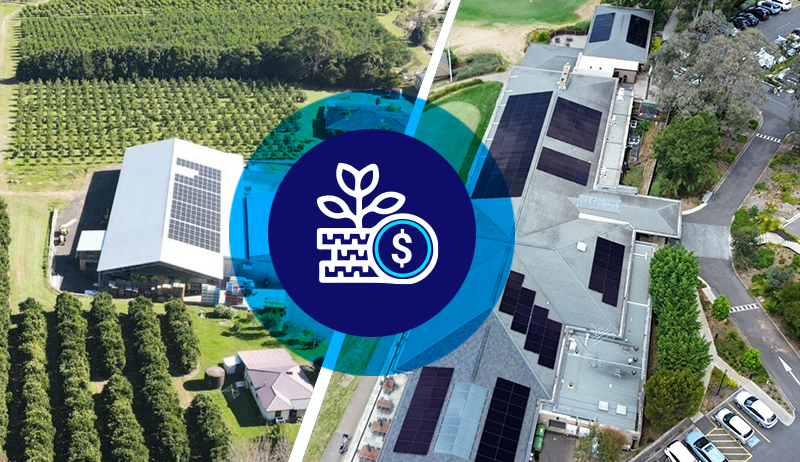
At a local golf club that relied on consistent electricity for lighting, clubhouse operations, and course facilities, Cyanergy installed an 88 kW commercial solar system to reduce costs.

Key Results

  • Payback period: around 63 months (5 years)
  • Annual savings: $26,165, a 50% drop in electricity costs
  • Energy generated per year: 141 MWh

This project demonstrates that not only industrial property but also community-oriented facilities can benefit greatly from solar power.

Beyond cost savings, the golf club also reinforced its commitment to sustainability, attracting eco-conscious members and reducing its carbon footprint.

Why This Matters?

Solar is not limited to manufacturing or heavy industry. In Australia, many Sports clubs, community centres, and similar facilities often have high energy use during peak daylight hours, which can be supported by solar.

2. Sparacino Farms: Where Agriculture Meets Solar Innovation!

Whether for irrigation, cooling, processing, or storage, agricultural operations have faced rising energy costs for a long time.

Similarly, Sparacino Farm was suffering from high electricity costs. For this family-run farm, Cyanergy implemented a 99.76 kW solar system that revolutionised their energy expenses.

Project Highlights

  • Electricity cost dropped: from $48,000 to $12,000 per year
  • Monthly savings: roughly $3,000
  • Payback period: 30 months (2.5 years)
  • Annual clean energy production: 87 MWh

This dramatic turnaround showcases how rural and agricultural businesses can achieve some of the fastest returns on solar investments.

In environments where a roof, sunlight, or a shed space is available, solar becomes both a strategic and practical choice.

The Sparacino farms example proves that solar isn’t just an environmental sustainability, it’s a core business decision that can significantly improve margins.

3. Philter Brewing: Crafting Sustainability

Sustainability often aligns naturally with brand identity, and for Philter Brewing, this was a perfect match.

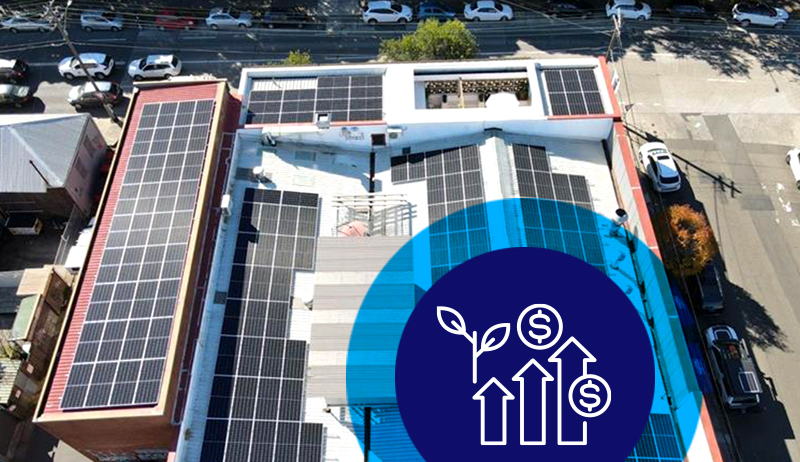
With the help of Cyanergy, the brand installed an 86 kW system to slash power costs and support green operations.

Project Impact

  • Annual energy generated: 99 MWh
  • Annual savings: $29,130, cutting electricity costs from $81,900 to $52,770
  • Payback period: 45 months (3.75 years)

The brewery not only reduced operating expenses but also strengthened its reputation as an environmentally conscious brand, a powerful differentiator in a competitive market.

4. Uniplas Mouldings International: Heavy Industry Solar Success

In one of Cyanergy’s most impactful case studies, a large industrial manufacturer significantly transformed its energy profile with solar. And that’s Uniplas Mouldings International!

Project Features

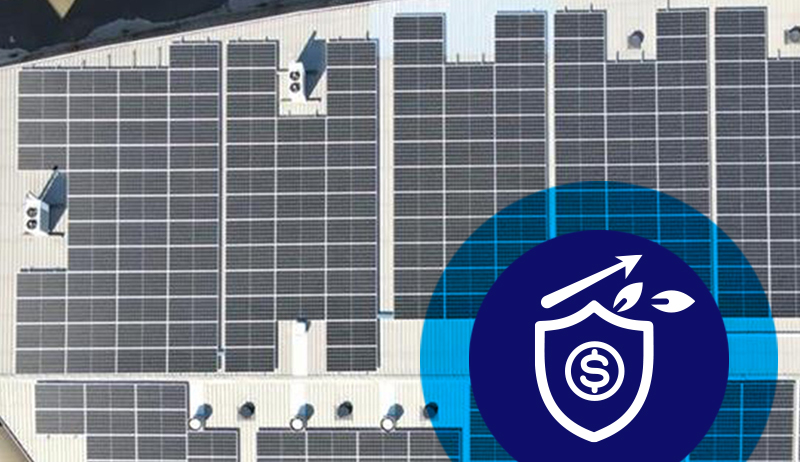
  • Total installed solar: 490 kW, executed in staged phases
  • Timeline: Stage 1 (200 kW) completed in just 4 weeks
  • Subsidy optimisation: Accessed three sets of government incentives
  • Payback period: as short as 37 months
  • Annual generation: 752 MWh
  • Energy cost savings: Lowered from $647,000 to $456,000 per year

Big industrial energy users can unlock dramatic operational savings with solar, saving hundreds of thousands of dollars a year while achieving rapid ROI that justifies investment sooner, without delay.

Beyond Case Studies: Cyanergy’s Approach to Commercial Solar

Across all these projects, Cyanergy’s methodology shares some common themes that contribute to success:

1. Customized System Design

We all know that no two energy profiles are identical, whether it’s a golf club or a manufacturing plant.

At Cyanergy, we design systems tailored to the business’s actual energy usage, site orientation, and financial goals. So you don’t have to worry about adding a solar solution.

2. Financial Optimization

From government incentives to financial investment planning, Cyanergy helps businesses structure their solar projects to reduce upfront costs and improve payback timelines.

3. End-to-End After-Sale Support

Proper solar implementation requires more than panels; it requires site assessment, design, installation coordination, monitoring, and performance guarantee.

At Cyanergy, we support clients at every step, from early energy audits to post-installation support.

4. Monitoring and Reporting

Tracking system performance and energy generation ensures ongoing optimization and confidence in the investment.

Our real-time monitoring tools empower business owners to understand exactly how solar contributes to their bottom line.

The Transformative Role of Solar in Business Strategy

The benefits of commercial solar extend far beyond the energy generated or the energy cost that’s reduced. Overall, solar is a strategic business asset that impacts:

Profitability: Lower operating costs mean more available working capital, whether for reinvestment, dividends, or growth initiatives.

Resilience: Energy independence provides a hedge against market volatility in electricity pricing.

Sustainability Credentials: Solar investments signal that your organization is serious about environmental stewardship, which is crucial to investors, customers, and regulators alike.

Employee and Community Engagement: A company that commits to clean energy signals a long-term vision, strengthening morale and community trust.

Takeaway Thoughts

Cyanergy’s real case studies show how businesses from farms to breweries to industrial giants have harnessed solar to cut costs, stabilize operations, and enhance sustainability.

Whether your organization is exploring its first solar project or looking to scale existing efforts, the data is clear: smart solar investment delivers measurable ROI and long-term value.

As energy dynamics continue to evolve, solar power will become increasingly relevant, and companies that act now will secure economic and environmental advantages for years to come.

So, it’s time for you to take the next move! For more information, contact us today and win a free solar quote!

Your Solution Is Just a Click Away

The post Commercial Solar Solutions: Real Case Studies by Cyanergy appeared first on Cyanergy.

https://cyanergy.com.au/blog/commercial-solar-solutions-real-case-studies-by-cyanergy/

Continue Reading

Renewable Energy

Siemens Gamesa Warns Europe, Shell Sells Offshore Wind

Published

on

Weather Guard Lightning Tech

Siemens Gamesa Warns Europe, Shell Sells Offshore Wind

Allen covers Siemens Gamesa’s warning that Europe is 40 GW short on offshore wind, Shell’s plan to sell its offshore wind farms, Maine’s multi-state bidding round, and Egypt’s grid financing deal.

Sign up now for Uptime Tech News, our weekly newsletter on all things wind technology. This episode is sponsored by Weather Guard Lightning Tech. Learn more about Weather Guard’s StrikeTape Wind Turbine LPS retrofit. Follow the show on YouTubeLinkedin and visit Weather Guard on the web. And subscribe to Rosemary’s “Engineering with Rosie” YouTube channel here. Have a question we can answer on the show? Email us!

The wind industry got a warning this week… and it came from the top.

Siemens Gamesa, the world’s largest maker of offshore wind turbines, says governments in Europe may be running out of time. The company’s chief executive sounded the alarm Thursday. Europe is currently forty gigawatts short of its one-hundred-and-twenty gigawatt offshore target for twenty thirty. Sixteen gigawatts of projects in Germany alone are at risk of delay, tangled up in lengthy permitting and grid connection backlogs. The plants are running full today. But without new orders soon, factories could go dark for contracts starting in twenty twenty-eight.

“It is not yet an existential threat,” said Siemens Gamesa chief Vinod Philip, “but it could become one.” He stopped short of predicting shutdowns. But he said the company would likely have to downsize resources if governments fail to act quickly. Europe’s offshore supply chain has already committed fourteen billion euros to meet the twenty thirty targets. That is roughly sixteen billion dollars… with no guarantee the orders will follow.

Meanwhile… one of the world’s biggest oil companies is quietly walking away from wind. Shell is preparing to sell its offshore wind farms in a deal that could fetch more than one billion dollars. The company has hired advisers to run the process, which could launch before the year is out, with a sale expected sometime in twenty twenty-seven.

Shell once dreamed of becoming the world’s largest electricity producer. That vision died when its current chief executive took over in early twenty twenty-three and shifted the focus back to fossil fuels and shareholder returns. Since then, Shell has been unwinding its green power portfolio piece by piece. It sold its European onshore renewables arm. It sold Indian renewable company Sprng Energy, which it had bought just years earlier for one-point-five-five billion dollars. And it walked away from planned offshore wind farms in Scotland. When this latest sale closes, Shell will have little wind left in its portfolio.

But where one door closes… another opens. Up in the northernmost corner of Maine, a region that has sat on one of the best wind resources in the country for years, a long-awaited breakthrough may finally be at hand. The Maine Public Utilities Commission is closing its latest round of bidding for wind and solar generation in Aroostook County, plus the new transmission lines needed to move that power south to the rest of New England. The target: at least twelve hundred megawatts. Enough to power hundreds of thousands of homes.

Maine is not going it alone this time. Connecticut, Massachusetts, Rhode Island, and Vermont are sharing the cost of the new transmission infrastructure. The previous attempt in twenty twenty-one fell apart. Costs rose. Deals could not be finalized. Landowners fought the proposed one-hundred-forty-mile power line. This time, officials say things are different. The multi-state partnership changes the math. And northern Maine’s wind resource has not gone anywhere. Dozens of energy companies have signed up to compete, from local developers to major multinationals. If everything goes to plan, the best-case scenario puts new turbines spinning in the twenty thirties.

And half a world away… Egypt is making a major investment to keep pace with its own renewable ambitions. The Egyptian prime minister this week witnessed the signing of a financing agreement worth sixty billion Egyptian pounds, earmarked for the national electricity transmission network. That money will go toward upgrading the grid so it can absorb the solar and wind power Egypt plans to add in the coming years. The target: forty-five percent of national electricity from renewable sources by twenty twenty-eight. The electricity minister said modernizing the grid is a “continuous and evolving process,” and that implementation timelines are being compressed to meet that twenty twenty-eight deadline.

The wind is shifting. The question is… who moves with it.

And that’s the state of the wind industry for the 15th of June 2026. Join us for the Uptime Wind Energy podcast tomorrow.

Siemens Gamesa Warns Europe, Shell Sells Offshore Wind

Continue Reading

Renewable Energy

Cage Fighting on the White House Lawn

Published

on

Maybe turning the White House into an attraction for the country’s least educated people (some say “trailer trash”) isn’t a good idea. It’s often referred to as the most demeaning moment in U.S history.

But let’s be real.  Our nation is at its lowest point since its founding.  Maybe we can, as a country, use this moment of extreme degradation as alcoholics refer to as “hitting rock bottom.”

https://www.2greenenergy.com/2026/06/14/white-house-lawn/

Continue Reading

Renewable Energy

An Encounter on Tariffs

Published

on

I met a fellow earlier today who, with a partner, owns and runs a company that imports a wide variety of goods into the United States from China.

I asked him, naively, how tariffs are affecting him.  He said, “Well, until recently, taxes on our goods were 3.5%; now they’re 45%. I pass most of this this on to my (retailer) customer, and he passes it on to you.  If you’re wondering why the price of a stick of deodorant has just gone through the roof, you’ve just figured it out.”

In retrospect, I shouldn’t have brought it up in the first place.

An Encounter on Tariffs

Continue Reading

Trending

Copyright © 2022 BreakingClimateChange.com