

COP30 delegates could find themselves sleeping in converted classrooms, cruise ships or even tents as a shortage of hotel beds in the Brazilian host city of Belém forces organisers and locals to come up with creative solutions.
With about 50,000 people expected at November’s UN climate conference, the accommodation crunch has raised questions about the decision to hold it in Belém, a city of 1.3 million people that is not one of Brazil’s biggest tourist destinations.
But COP organisers have pledged to provide at least 24,000 extra beds in the Amazon city, the state capital of Pará, including about 7,300 in public schools and military barracks. The newly built “COP30 Village” will offer 400 suites for heads of state and other leaders – who are due to give their set speeches before the official start of the talks to ease pressure on logistics.
Brazil decides leaders will speak before COP30, easing logistics crunch
An official COP30 accommodation platform is due to launch in the coming weeks, and Pará’s Vice-Governor Hana Ghassan has said that this – along with the additional rooms – should help cool a surge in prices.
Meanwhile, business-minded locals are hoping to cash in on the influx by rolling out options for every budget.
Private listings on short-rental platforms including Airbnb have shot up and entrepreneurs are coming up with some novel solutions – from makeshift floating guesthouses on exclusive yachts to spruced-up love hotels.
“For us, COP30 is not going to be in November. It has already started,” Cleyson Chagas, 43, who operates river tours, told Climate Home.

His company, Lancha Nemo, normally takes tourists on river tours to the islands surrounding the city. But when Chagas saw the need to provide accommodation ahead of the two-week COP, he started to bring in yachts from elsewhere in the Amazon and is already negotiating with four groups of international delegates.
Each vessel can provide up to 10 rooms. For delegations that need more space, he is also offering accommodation on ferry boats, each with between 34 and 50 rooms.
“Everything can be adapted according to the needs of the clients,” he said. “Some clients prefer to close the deal including chefs, cleaning service and other transport, such as vans.”
Brazil’s COP30 president: Climate summits must move from words to real action
Opportunity to tackle pollution?
On laidback Outeiro island, which lies close to the city on the estuary of the Guajará-Açú River, a cargo port will be used to dock two vast cruise ships providing about 4,500 beds for delegates – a plan experts said would require major port works, environmental safeguards and improved transport links to conference venues.
Geologist Aline Meiguins da Silva, a professor and researcher at the Federal University of Pará, said significant dredging would be needed to allow the transatlantic vessels to dock safely.
She urged authorities to take the opportunity to clean up Outeiro’s contaminated beaches and crack down on pollution from boats. “Public authorities need to take care to provide a quality environment for the arrival of cruise ships and to leave a legacy of COP30,” she said.
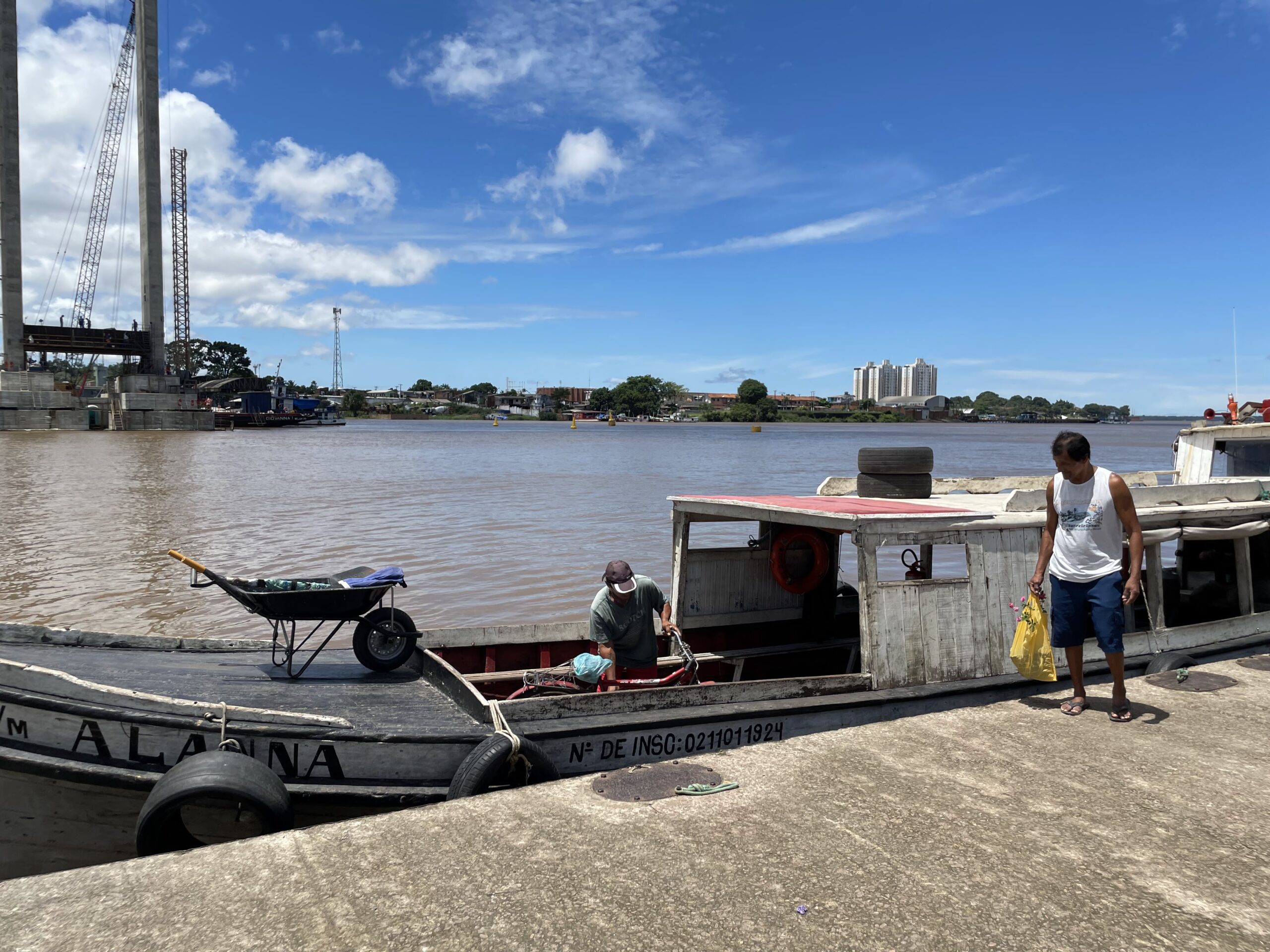
Six months before the event, some Outeiro residents said they knew little about the conference or what to expect, calling for the government to do more to help them prepare and ensure benefits for local businesses.
“I heard some talk about some works, but I haven’t seen any movement so far,” said Socorro Soares, 54, who runs a restaurant in front of the port, which is mainly used for cargo at present. “Right now we are not prepared,” she said.
The Brazilian government’s COP30 secretariat did not respond to a request for comment on the port preparations.
Comment: Why accusations of Brazilian hypocrisy on climate are ill-judged
Building bridges
Some key infrastructure projects are on track. Work on a bridge that will connect Outeiro with the COP venues in downtown Belém started in January 2024 and is now two-thirds complete, according to the state government.
The bridge, which is a short walk from the port, will dramatically shorten travel times into the city centre and make it easier for locals to access shops and other services in Belém long after the delegates leave.
“Today, we have to cross by boat,” said Eliesio Furtado, 38, as he sold pureed açaí berries at his stall close to the bridge construction site. “With the bridge, everything will be quicker and more convenient.”
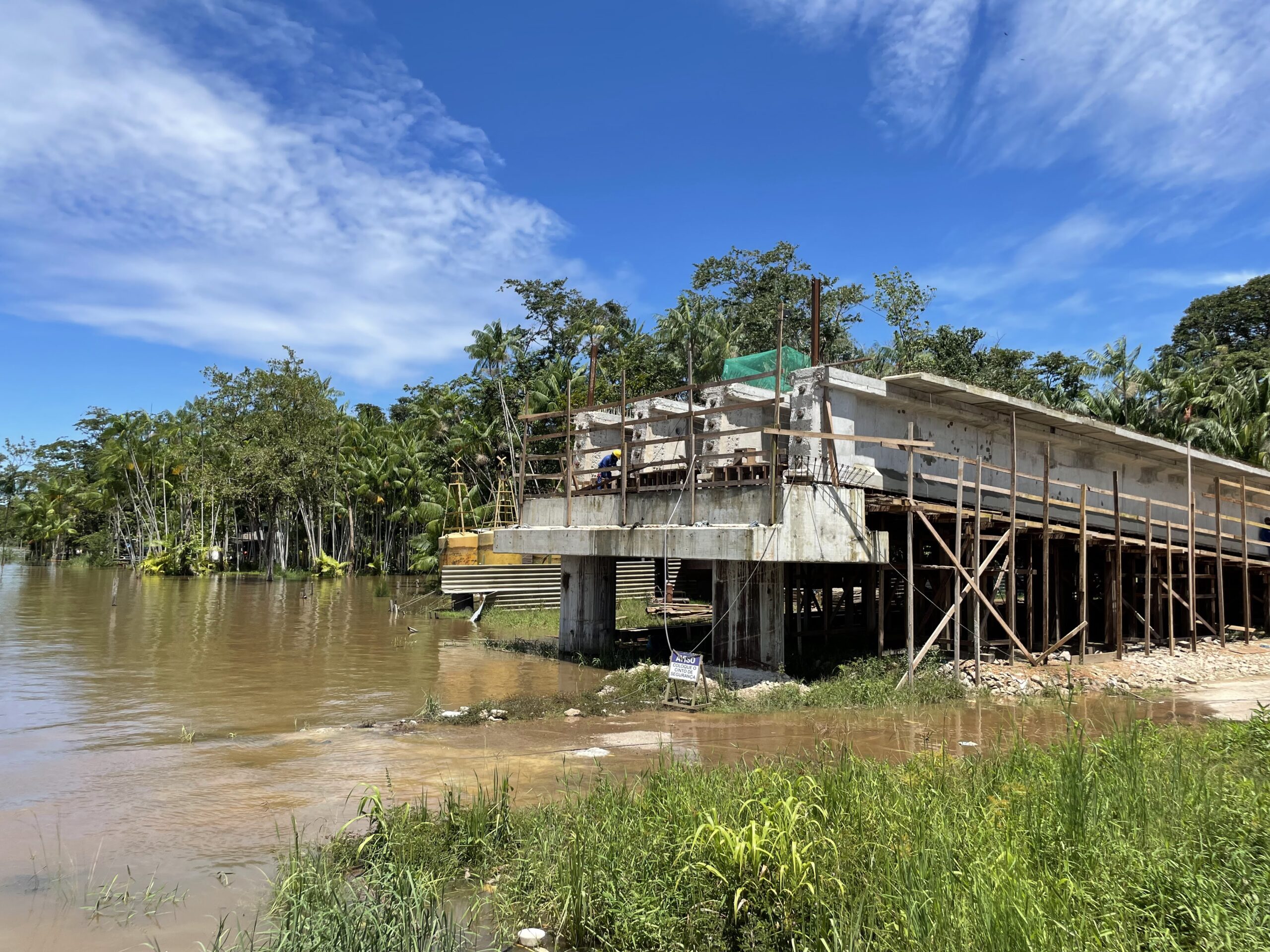
Close to conference venues, the state government is overseeing work on the 19,000-square-metre (205,000-square-foot) COP30 Village, the cost of which has not been disclosed.
After the climate conference, the state government plans to use the site to accommodate state secretariats that are currently in rented buildings.
No time for lunch?
In Outeiro, however, some people are sceptical over whether the conference will bring significant or lasting benefits for the local community. “I don’t really know what this COP is going to be about,” said Furtado, the açaí vendor.
“I just know that there’s going to be a lot of movement, but I don’t know if it’s going to involve us here that closely,” he said, suggesting many attendees will head straight from their hotels to the conference venues – without stopping for lunch or a snack.

At the shoreline near the new bridge, Raimundo Maciel, 49, ferries people in his small boat across the water. About 30 families have made a living by providing the service for generations.
Maciel said the bridge was a positive development for the community, but worries about losing his sole income. “It’s going to make it easier for (my son) to get to school more quickly, but for me it’s going to turn my life upside down,” he said.
The post Brazil’s Belém races to make room for COP30 influx appeared first on Climate Home News.

Next week, diplomats from around the world will descend on Yerevan, Armenia, to negotiate a series of decisions under the UN Convention on Biological Diversity (CBD).
Between 19 and 30 October, 196 parties will gather to hammer out the precise wording of the dozens of legal texts that make up the decisions under the Conference of the Parties (COP) to the CBD.
This year’s summit is particularly significant, as it marks the halfway point between the agreement of the Kunming-Montreal Global Biodiversity Framework and the deadline for achieving its targets.
The CBD has found that countries are currently not on track to meet 22 out of the framework’s 23 targets.
During the fortnight, delegates will also be negotiating decisions relating to the two supplemental protocols to the CBD: the Cartagena Protocol, which covers biosafety; and the Nagoya Protocol, which covers access and benefit-sharing for the use of genetic resources.
(The Cartagena and Nagoya Protocols, which are each governed by a “meeting of the parties”, or “MOP”, have fewer parties than the CBD as a whole, with 173 and 141, respectively.)
Carbon Brief is tracking the progress of countries towards consensus on dozens of negotiating texts using the interactive table below.
The tracker includes texts from the COP, as well as the MOPs for the Cartagena and Nagoya protocols. It also includes draft decisions from the most recent subsidiary body meetings, as these form the starting point for the negotiations in Yerevan.
The CBD has three subsidiary bodies: the subsidiary body on scientific, technical and technological advice (SBSTTA), the subsidiary body on implementation (SBI) and the subsidiary body on article 8(j) and other provisions (SB8J).
SB8J focuses on issues related to the Indigenous peoples and local communities. It was established at COP16 in Cali, Colombia, in 2024.
The first two columns of the interactive tracker list the topic of each agenda item and the relevant body, with subsequent columns including dates, page counts and links to the original documents.
The table is searchable and can be sorted using the arrows in the header.
Areas of disagreement in UN draft texts are denoted by square brackets. Counting the brackets in a particular iteration of a text therefore gives a sense of how far parties are from reaching consensus.
The bracket column is colour-coded, with dark green indicating a low number of brackets and red indicating a high number of brackets remaining.
Texts can also present parties with choices using “options” or alternatives (“alt”), which are counted together in the sixth column of the table.
The key discussions in Yerevan will centre around two agenda items in particular. The first is the global review, which will assess progress towards the GBF and make recommendations for accelerating action.
The second is finance, which can be separated into two parts: resource mobilisation and the financial mechanism. On resource mobilisation, biodiverse global south countries are likely to push for an increased amount of international finance for conservation.
Disagreement over the creation of the financial mechanism led to the suspension of COP16 in Cali in October 2024, as parties failed to find agreement on the mobilisation of finance before the end of the summit.
Global south countries want the establishment of a separate financial mechanism under the control of the CBD; global north countries largely prefer to maintain the existing mechanism, which sits under the Global Environment Facility.
At the resumed session of COP16 in Rome in early 2025, countries agreed on a roadmap that would lead to the establishment of a permanent mechanism.
related
Analysis: Lula presidency saved at least 20,000km2 of Brazilian Amazon since 2022
Why land-use emissions have fallen by a third this century – in six charts

Analysis: 84% of nations miss deadline to identify ‘nature-harming’ subsidies by 2025
UK withdraws millions in funding from world’s second-largest rainforest in Congo
The post Interactive: Tracking negotiating texts at the COP17 biodiversity summit appeared first on Carbon Brief.
Interactive: Tracking negotiating texts at the COP17 biodiversity summit
A beacon of love
On an outer island of Fiji, two thousand nautical miles from Sydney, is a shining light of hope and resilience for our troubled world.
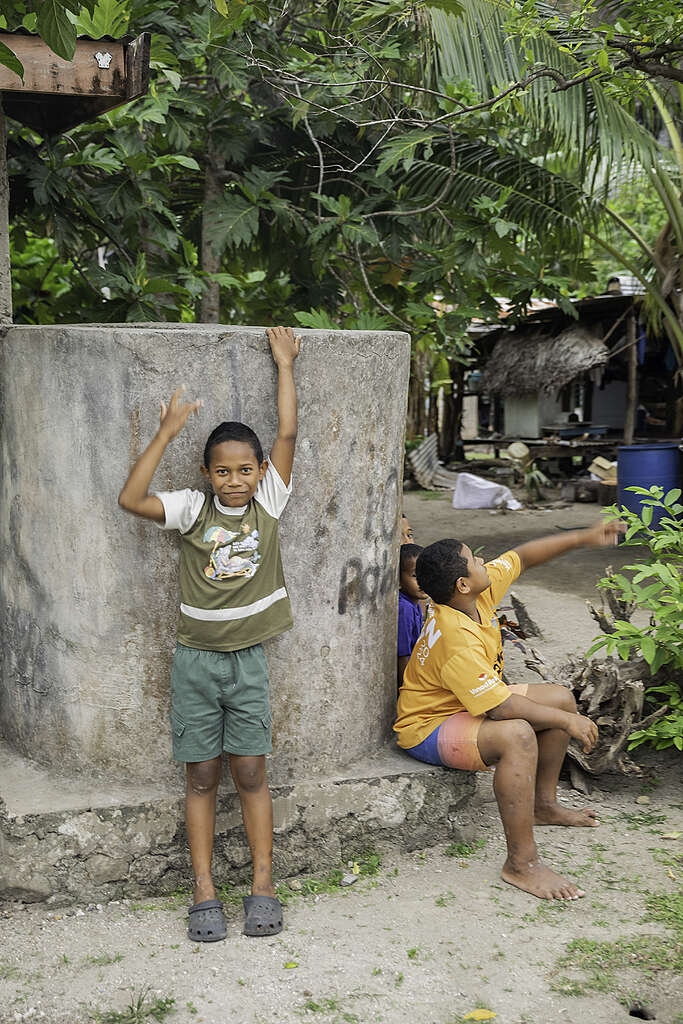
The island of Kioa is home to a Tuvaluan community who migrated from their atoll of Vaitupu in the late 1940s. It is a land of warm hearts, big smiles, and deep cultural roots; a place where the sound of a conch still summons the island together, where islanders paddle out to fish in carved outrigger canoes, and healthy happy children walk barefoot to school.
Here, culture is life. Kioans live sustainably through their traditional knowledge and practices. The island is alive with song, dance and the rhythms of a life tied to the tides, the winds, and the seasons.
Facing the future
Greenpeace has been lucky to have a relationship with Kioa for a number of years now, and we are continually learning from this remarkable community.
Last week, as part of our Voyaging Oceania project, we returned to the island. Our purpose was twofold —- to carry messages from the island to leaders gathering in Nadi this week for the Pacific Pre-COP, and to support the Kioa community in their efforts to improve water security for the island.
Unlike Tuvalu itself, with its eight atolls, Kioa is a mountainous, forested and richly fertile island. It will remain habitable far into the future. Kioans did not initially migrate from Vaitupu due to climate change, but the move was prophetic. They now have a lifeboat.
However, even Kioa faces challenges on our rapidly warming planet, in particular when it comes to water. Climate change is shifting once reliable rainfall patterns. On top of this, the island is already feeling the effect of this year’s intensifying El Niño event, which for Fiji means reduced rainfall and prolonged dry spells.
Right now, fresh water has to be carefully rationed, and is only available for a few hours a day. During last week’s visit aboard our campaigning ship Oceania, Greenpeace was privileged to work with the Kioa community on a new solar-powered water distribution project for the island.
Designed and led by the island, the project involves using a solar pump to move water from a reliable source to a storage tank and then using gravity to distribute the water around the village.
It was a lesson in how local knowledge and ingenuity can be the backbone of today’s climate solutions. To build a dam around the source, the local community knew the exact spot where they could gather gravel at low tide to mix with the cement. They took only what was needed, knowing that all resources must be carefully conserved. Kioa has no roads and no machinery, and it was an all-of-island effort to carry the materials up to the project site, including many heavy bags of sand and rock.
Such projects truly bring to life the vision of a resilient, locally-led, fossil fuel free Pacific.