Wind Energy
Introduction Largest Wind Farm in the world
What is Wind Farm
A wind farm is a collection of wind turbines that are installed in a specific location to generate electricity from wind energy.
Wind turbines convert the kinetic energy of wind into electrical energy by using blades to capture the wind and spin a rotor, which turns a generator to produce electricity. Wind farms are typically located in areas with strong and consistent wind patterns, such as coastal areas, hilltops, or open plains.
Wind farms can range in size from a few turbines to hundreds of turbines, and they can generate enough electricity to power a small town or a large city. Wind energy is a renewable and clean source of energy, which means that it does not produce greenhouse gases or other pollutants that are harmful to the environment. As a result, wind farms are becoming increasingly popular renewable energy as a way to reduce reliance on fossil fuels and mitigate climate change.
How wind farm works?
Wind farms generate electricity by harnessing the kinetic energy of the wind to turn turbines, which in turn generate electricity through a generator.
The basic components of a wind turbine include:
Rotor blades: These are the long, aerodynamic blades that capture the wind and start to turn when wind hits them.
Nacelle: This is the housing that sits atop the tower and contains the gearbox, generator, and other key components.
Tower: This is the tall structure that supports the rotor blades and nacelle.
Control system: This system monitors wind speed and direction and controls the turbine’s yaw system, which turns the nacelle and rotor to face the wind.
Electrical equipment: This includes transformers, switchgear, and power cables, which transmit the electricity generated by the turbine to the power grid.
As the wind blows, it spins the rotor blades, which are connected to the generator in the nacelle. As the rotor blades turn, the generator produces electricity, which is then sent to the power grid. The electricity generated by each turbine is relatively small, but when many turbines are combined in a wind farm, the amount of electricity generated can be significant.
The efficiency of a wind turbine depends on several factors, including the wind speed, the size and design of the rotor blades, and the altitude of the turbine. The optimal wind speed for generating electricity is between 12 and 25 miles per hour.
Benefits of a wind farm
Wind farms have several benefits, including:
Renewable and Clean Energy: Wind energy is a renewable source of energy that does not produce greenhouse gases or other pollutants. Wind farms generate clean electricity, which can help reduce reliance on fossil fuels and mitigate climate change.
Energy Security and Independence: Wind energy is a domestic source of energy that can help reduce dependence on imported energy sources. Wind farms can improve energy security and independence by providing a reliable source of electricity.
Job Creation and Economic Development: Wind farms can create jobs and stimulate economic development in rural areas. The construction and operation of wind farms require skilled workers, and wind energy can provide a new source of income for landowners.
Low Cost: Wind energy has become increasingly cost-competitive with traditional sources of electricity, such as coal and natural gas. As a result, wind farms can provide low-cost electricity to consumers.
Flexibility: Wind farms can be built in a range of sizes, from small-scale projects to large utility-scale projects. Wind energy can be integrated with other renewable energy sources, such as solar energy, to provide a more reliable and flexible source of electricity.
Reduced Carbon Emissions: Wind farms can help reduce carbon emissions by displacing electricity generated from fossil fuels. This can help mitigate climate change and improve air quality.
Wind farms can provide a range of environmental, economic, and social benefits to communities and society as a whole.
20 Largest Wind Farm in the world
The development of renewable energy sources has become a crucial aspect of combating climate change and reducing our dependence on fossil fuels. Wind power is a rapidly growing sector, and the 20 largest wind farms in the world are playing a significant role in generating clean and sustainable energy.
These wind farms, located across different countries and continents, collectively have a massive capacity to generate power, with some producing enough electricity to power entire cities. They not only help reduce carbon emissions but also create job opportunities and boost local economies.
As we continue to transition towards a greener and more sustainable future, it is crucial to invest in the development of renewable energy sources such as wind power.
The 20 largest wind farms in the world are a testament to the potential of this sector and serve as an inspiration for future projects.
22,500 MW – State Grid Corporation of China
Gansu Wind Farm Spesification
The Gansu Wind Farm is one of the largest wind power projects in the world, located in Jiuquan, Gansu province, China. The wind farm consists of several clusters of turbines spread out across an area of over 70,000 hectares (173,000 acres) of desert terrain. The farm was built in several phases, with construction starting in 2004 and continuing through 2019.
The Gansu Wind Farm has a total installed capacity of 20,000 MW, generated by over 7,000 wind turbines. The turbines are manufactured by a variety of companies including Goldwind, Vestas, and Sinovel, among others. The turbines range in size from 850 kW to 6 MW, with rotor diameters ranging from 52 to 135 meters.
The wind farm is operated by several different companies, including China Guodian Corporation, China Datang Corporation, and China Huadian Corporation, among others. Together, these companies are responsible for maintaining the turbines and ensuring that the wind farm operates at maximum efficiency.
The Gansu Wind Farm plays an important role in China’s efforts to reduce its reliance on fossil fuels and increase its use of renewable energy sources. The project has helped China to become the world’s leading producer of wind power, and has helped to reduce the country’s greenhouse gas emissions. The wind farm also provides a significant source of employment for people in the region, with over 20,000 people estimated to be employed in the wind power industry in Gansu province alone.
2. Jiuquan Wind Power Base, China
20,000 MW – China Guodian Corporation and China Three Gorges Corporation
Jiuquan Wind Power Base, China – spesification
Jiuquan Wind Power Base is one of the largest wind farms in the world, located in Jiuquan, in the Gansu province of China. Here are some specifications of the Jiuquan Wind Power Base:
Total capacity: 20,000 MW
Number of turbines: Over 7,000
Area covered: Approximately 43,000 square kilometers
Investment: Approximately 120 billion yuan (US$18.5 billion)
Annual power generation: Over 40 TWh (terawatt hours)
Carbon dioxide reduction: Over 16 million tons per year
The Jiuquan Wind Power Base is operated by the State Grid Corporation of China and was developed in multiple phases. Construction on the wind farm started in 2006 and was completed in 2020, making it one of the most recent and largest wind power bases in China. The Jiuquan Wind Power Base plays a crucial role in China’s efforts to reduce its carbon emissions and promote the use of renewable energy.
3. Alta Wind Energy Center, USA
1,550 MW – Terra-Gen Power
Alta Wind Energy Center, USA – spesification
The Alta Wind Energy Center is located in the Tehachapi Pass, Kern County, California, USA. It is one of the largest wind farms in the world, with a total installed capacity of 1,548 megawatts (MW). Here are some specifications of the Alta Wind Energy Center:
Total installed capacity: 1,548 MW
Number of wind turbines: 586
Turbine capacity: Varies depending on the model, ranging from 1.5 MW to 3 MW
Owner and operator: Terra-Gen Power LLC
Year of commissioning: The wind farm was built in several phases between 2010 and 2013.
Power output: The wind farm generates enough electricity to power around 450,000 homes annually.
Environmental benefits: The wind farm displaces approximately 5.1 million metric tons of CO2 emissions each year, equivalent to removing over one million cars from the road.
Employment: The wind farm has created approximately 3,000 jobs during the construction phase and 35 permanent jobs for operation and maintenance.
Transmission: The wind farm is connected to the grid via Southern California Edison’s Tehachapi Renewable Transmission Project, which includes a network of new transmission lines and substations to transport the renewable energy from Tehachapi to major population centers in Southern California.
Investment: The total cost of the project was around $2.5 billion, making it one of the largest renewable energy investments in the United States.
781.5 MW – E.ON Climate and Renewables
Roscoe Wind Farm, USA – spesification
Roscoe Wind Farm is a wind power project located in the western part of Texas, USA. Here are some of its specifications:
Capacity: 781.5 MW
Turbines: 627 wind turbines
Turbine Manufacturer: General Electric (GE)
Total Area: Over 100,000 acres
Annual Production: Over 2 billion kilowatt-hours (kWh) of electricity per year
CO2 Emissions Avoided: Over 1.5 million metric tons per year
Operator: E.ON Climate & Renewables
Construction Started: 2007
Cost: Approximately $1 billion USD
5. Horse Hollow Wind Energy Center, USA
735.5 MW – NextEra Energy Resources idAmerican Energy
Horse Hollow Wind Energy Center, USA – spesification
Horse Hollow Wind Energy Center is a wind farm located in Taylor and Nolan Counties, Texas, USA. It was the largest wind farm in the world at the time of its completion in 2006, and it is still one of the largest in the world. Here are some specifications of the Horse Hollow Wind Energy Center:
Number of turbines: 421
Total installed capacity: 735 MW
Owner and operator: NextEra Energy Resources
Commissioning date: 2006
Turbine height: 213 feet (65 meters)
Rotor diameter: 331 feet (101 meters)
Blade length: 139 feet (42 meters)
Annual electricity production: Approximately 2 billion kilowatt-hours, which is enough to power around 220,000 homes in the USA
Carbon dioxide emissions avoided annually: Approximately 1.2 million metric tons, which is equivalent to taking around 225,000 cars off the road
The Horse Hollow Wind Energy Center provides a significant amount of clean energy to the Texas power grid and helps to reduce carbon emissions.
6. Shepherds Flat Wind Farm, USA
845 MW – Caithness Energy
Shepherds Flat Wind Farm, USA – spesification
The Shepherds Flat Wind Farm is located in Oregon, USA and is one of the largest wind farms in the world. Here are some of its specifications:
Total capacity: 845 MW
Number of wind turbines: 338
Turbine manufacturer: General Electric
Turbine model: GE 2.5xl
Rotor diameter: 100 meters
Hub height: 80 meters
Blade length: 49 meters
Annual energy output: Approximately 2 billion kilowatt-hours, enough to power about 235,000 homes
Owner and operator: Caithness Energy
Construction of the Shepherds Flat Wind Farm began in 2009 and it began commercial operation in 2012. The wind farm generates clean energy that is delivered to Southern California Edison under a long-term power purchase agreement.
1050 MW – Statkraft and TrønderEnergi
Fosen Vind, Norway – spesification
Fosen Vind is a cluster of six wind farms located on the Fosen peninsula in Trøndelag, Norway. Here are some of its specifications:
Capacity: Fosen Vind has a total installed capacity of 1,056 MW, making it the largest onshore wind farm in Europe.
Number of turbines: There are a total of 278 turbines in Fosen Vind, spread across six different wind farms.
Height: The turbines at Fosen Vind have a hub height of 80 meters and a rotor diameter of 112 meters.
Cost: The total cost of the project was approximately 11 billion Norwegian krone (NOK).
Annual production: The wind farm produces around 3.6 TWh of renewable energy annually, enough to power around 170,000 Norwegian homes.
Ownership: Fosen Vind is jointly owned by the Norwegian power companies TrønderEnergi, Statkraft, and Nordic Wind Power DA.
630 MW – Ørsted, EON, and Masdar
London Array, UK – Spesification
The London Array is a large offshore wind farm located in the outer Thames Estuary in the UK. Here are some specifications:
Capacity: 175 turbines with a total capacity of 630 MW
Turbine type: Siemens SWT-3.6-120
Height: Each turbine has a height of 147 meters (482 feet) from sea level to blade tip
Distance from shore: Located approximately 20km (12.4 miles) off the coast of Kent, UK
Area covered: 100 km² (38.6 mi²)
Annual output: Approximately 2.5 TWh, enough to power around 500,000 UK homes
Commissioned: Fully operational in 2013
Owners: A consortium comprising of EON, DONG Energy, and Masdar.
9. Anholt Offshore Wind Farm, Denmark
400 MW – DONG Energy
Anholt Offshore Wind Farm, Denmark – Spesification
The Anholt Offshore Wind Farm is a large-scale offshore wind farm located in the Kattegat Sea, about 20 km off the coast of Djursland, Denmark. It was commissioned in 2013 and is currently one of the largest offshore wind farms in the world. Here are some of its specifications:
The wind farm consists of 111 wind turbines, each with a capacity of 3.6 MW, for a total installed capacity of 400 MW.
The rotor diameter of each turbine is 120 meters, and the hub height is 80 meters above sea level. The blade length is 58.5 meters, making the total height of the turbine 198.5 meters.
The wind farm covers an area of approximately 88 square kilometers and is capable of producing enough electricity to power around 400,000 Danish households per year.
The project was developed by DONG Energy (now Ørsted), and cost around €1.2 billion to build.
The wind farm is expected to reduce CO2 emissions by around 900,000 tonnes per year, compared to traditional fossil fuel power plants.
The Anholt Offshore Wind Farm is connected to the Danish grid via a 150-kilometer-long submarine cable, which brings the electricity ashore at the town of Grenaa on the eastern coast of Jutland.
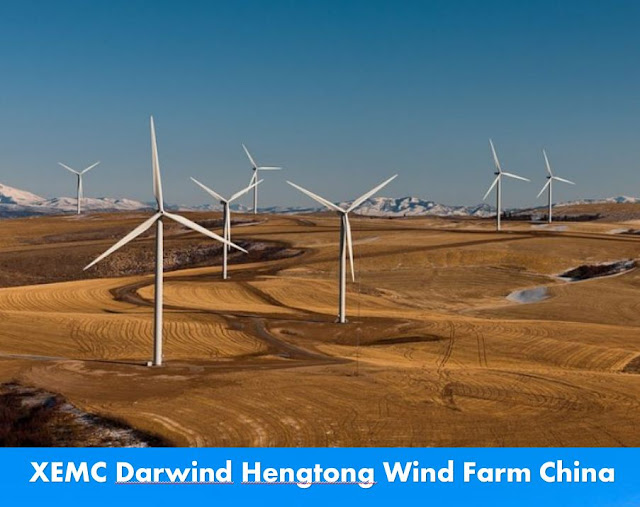
10. XEMC Darwind Hengtong, China
400 MW – XEMC Group
XEMC Darwind Hengtong, China – Spesification
XEMC Darwind Hengtong is an offshore wind farm located in Fujian province, China. Here are some specifications:
Total capacity: 30 MW
Number of turbines: 7
Turbine model: XD115/4.5MW
Rotor diameter: 115 meters
Hub height: 90 meters
Total height: 141 meters
Water depth: 23-33 meters
Distance to shore: 15 km
Year of commissioning: 2017
The XD115/4.5MW turbines are specifically designed for offshore wind farms and feature a permanent magnet direct drive system, which provides high energy efficiency and reliability. The wind farm is operated by XEMC Darwind, a Dutch wind turbine manufacturer, and Hengtong Group, a Chinese cable manufacturer.
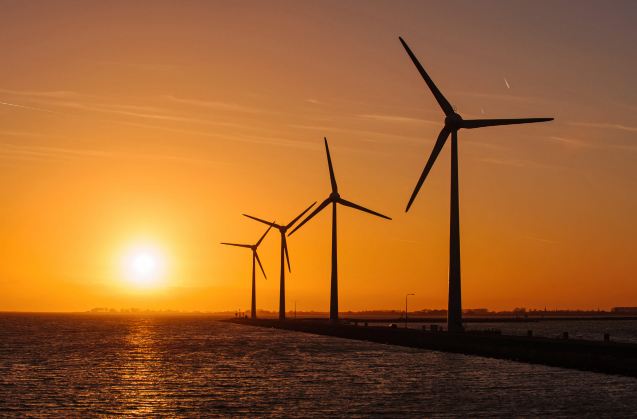
11. Sheringham Shoal Offshore Wind Farm, UK
316.8 MW – Equinor, Statkraft, and Green Investment Group
Sheringham Shoal Offshore Wind Farm, UK – Spesification
The Sheringham Shoal Offshore Wind Farm is located in the North Sea, approximately 17-23 kilometers off the coast of Norfolk, UK. It became operational in 2012 and is owned by Equinor (40%), Green Investment Group (20%), and two utilities from Norway (Stadtwerke München and Agder Energi) with a 20% stake each. Here are some specifications of the wind farm:
Number of turbines: 88 Siemens Gamesa turbines
Turbine capacity: 3.6 MW each
Total capacity: 317 MW
Annual electricity production: Approximately 1.1 TWh, which is enough to power around 290,000 UK homes
Substations: Two offshore substations and one onshore substation
12. Macarthur Wind Farm, Australia
420 MW – AGL Energy and Meridian Energy
Macarthur Wind Farm, Australia – Spesification
The Macarthur Wind Farm is a large-scale wind energy project located in Victoria, Australia. Here are some of its specifications:
The wind farm has a capacity of 420 MW and is one of the largest in the southern hemisphere.
The project consists of 140 Vestas V112-3.0 MW wind turbines, each with a rotor diameter of 112 meters and a hub height of 85 meters.
The turbines are spread over an area of around 5,500 hectares and are connected to a 500 kV substation via a 70 km transmission line.
The Macarthur Wind Farm was developed by AGL Energy and Meridian Energy, with construction starting in 2010 and commercial operations commencing in 2013.
The wind farm generates around 1,500 GWh of clean electricity annually, enough to power around 220,000 Australian homes and offset approximately 1.7 million tonnes of carbon dioxide emissions each year.
13. Gemini Wind Farm, Netherlands
600 MW – Canadian Pension Plan Investment Board, Northland Power, and Siemens Financial Services
Gemini Wind Farm, Netherlands – Spesification
The Gemini Wind Farm is a large offshore wind farm located in the Dutch part of the North Sea, approximately 85 kilometers north of the coast of Groningen. Here are some specifications of the Gemini Wind Farm:
Capacity: 600 MW
Number of turbines: 150 Siemens SWT-4.0-130 turbines
Turbine height: 115 meters (hub height) and 190 meters (tip height)
Turbine rotor diameter: 130 meters
Total area: 68 square kilometers
Distance from shore: 85 kilometers
Developer: Gemini Wind Park B.V.
Owner: Northland Power (60%) and Siemens Financial Services (40%)
Construction started: 2015
Commissioned: 2017
Annual electricity production: Approximately 2.6 TWh, which is enough to power around 1.5 million households and reduce CO2 emissions by approximately 1.25 million tonnes per year.
Gemini Wind Farm is one of the largest offshore wind farms in the world and plays a significant role in the Netherlands’ transition towards renewable energy.
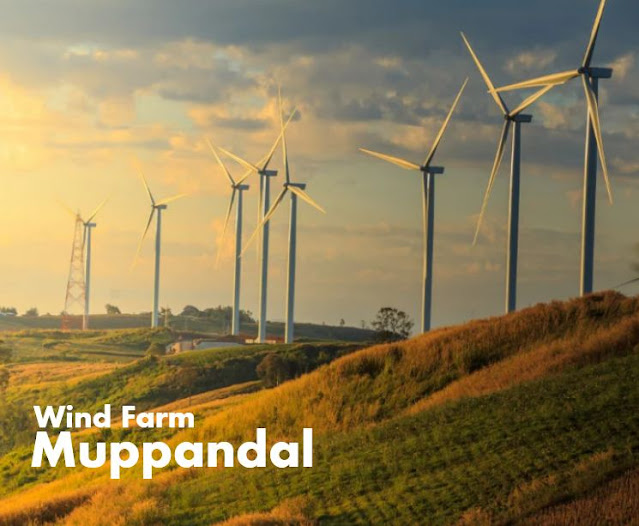
14. Muppandal Wind Farm, India
1500 MW – Suzlon Energy and China Power Investment Corporation
Muppandal Wind Farm, India – Spesification
The Muppandal Wind Farm is located in the state of Tamil Nadu, India. It was commissioned in 2001 and has a total installed capacity of 1,500 MW, making it one of the largest wind farms in India. The wind farm comprises of over 3,000 wind turbines, which are spread across the Muppandal hill range and the neighbouring areas. The turbines have a hub height of 50-80 meters and a rotor diameter of 43-46 meters. The wind farm generates over 3 million units of electricity per day, which is supplied to the Tamil Nadu Electricity Board. The project was developed by the Tamil Nadu Electricity Board and has been instrumental in promoting the use of renewable energy in India.
15. Rosarito Wind Farm, Mexico
300 MW – Fuerza Eólica de San Matías
Rosarito Wind Farm, Mexico – Spesification
The Rosarito Wind Farm is a proposed wind energy project located in the municipality of Playas de Rosarito in the state of Baja California, Mexico. Here are some of its specifications:
Capacity: The wind farm is expected to have a capacity of 156 MW, generated by 39 wind turbines.
Turbines: The wind farm will use 39 wind turbines, each with a capacity of 4 MW.
Investment: The project is expected to require an investment of approximately $300 million USD.
Developer: The project is being developed by Eoliatec del Pacífico, a subsidiary of the French energy company Engie.
Electricity production: The wind farm is expected to generate approximately 565 GWh of electricity annually, which is enough to power around 220,000 homes in Mexico.
Carbon dioxide reduction: The Rosarito Wind Farm is expected to reduce carbon dioxide emissions by approximately 232,000 metric tons annually, which is equivalent to taking around 50,000 cars off the road.
16. Penonome Wind Farm, Panama
270 MW – InterEnergy Holdings and Actis
Penonome Wind Farm, Panama – Spesification
The Penonomé Wind Farm is a wind power project located in the Penonomé District, Coclé Province, Panama. It is considered the largest wind farm in Central America and the Caribbean. Here are some specifications:
Number of turbines: 220
Total capacity: 555 MW
Turbine manufacturer: General Electric
Turbine model: GE 2.5-116
Annual production: 1,600 GWh
Developer: InterEnergy Holdings
Commissioned: 2015
Investment: $450 million
CO2 savings per year: 400,000 tons
The Penonomé Wind Farm covers an area of approximately 42,000 hectares and is expected to generate around 7% of Panama’s electricity consumption. The wind farm has helped Panama to diversify its energy mix and reduce its dependence on fossil fuels, contributing to the country’s goal of achieving 70% renewable energy generation by 2050.
17. Tarfaya Wind Farm, Morocco
300 MW – NAREVA Holding and Enel Green Power
Tarfaya Wind Farm, Morocco – Spesification
The Tarfaya Wind Farm is a large wind energy project located in the Tarfaya Province of Morocco. Here are some of its specifications:
The wind farm has a total installed capacity of 301 MW.
It consists of 131 wind turbines manufactured by Siemens Gamesa with a capacity of 2.3 MW each.
The wind turbines have a hub height of 80 meters and a rotor diameter of 108 meters.
The wind farm covers an area of 8,900 hectares (22,000 acres).
The project was developed by Moroccan utility company Nareva Holding in partnership with the French energy company Engie.
It started operations in 2014 and supplies electricity to over 1.5 million people in Morocco.
The project cost around $560 million and is expected to reduce carbon dioxide emissions by 900,000 tons annually.
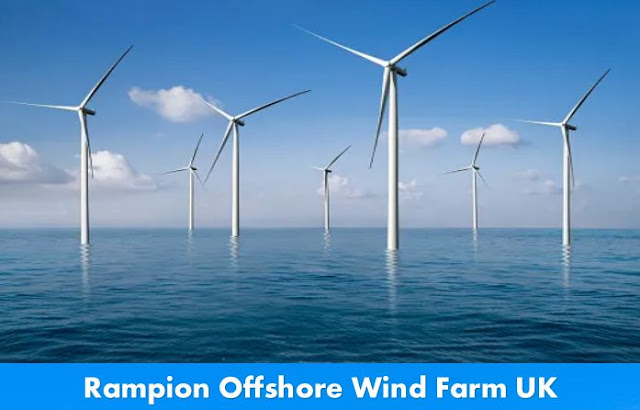
18. Rampion Offshore Wind Farm, UK
400 MW – EON, Green Investment Group, and Canadian Pension Plan Investment Board
Rampion Offshore Wind Farm, UK – Spesification
The Rampion Offshore Wind Farm is a wind farm located in the English Channel off the coast of Sussex, UK. Here are some specifications:
Total capacity: 400 MW
Number of turbines: 116
Turbine manufacturer: Siemens Gamesa
Turbine capacity: 3.45 MW each
Total project cost: £1.3 billion
Annual electricity generation: equivalent to the needs of around 350,000 homes
CO2 savings: equivalent to taking around 200,000 cars off the road
Owned by: E.ON (50.1%), UK Green Investment Rampion Ltd (25%), and Enbridge (24.9%)
Operational since: 2018
19. Ocotillo Wind Energy Facility
The Ocotillo Wind Energy Facility is a wind farm located in the Ocotillo area of Imperial County, California, United States.
Here are some of its specifications:
Capacity: 265 MW
Turbines: 112 Siemens 2.37 MW turbines
Rotor diameter: 101 meters
Blade length: 49 meters
Total height: 140 meters
Annual output: Approximately 850,000 MWh
Commissioned: 2013
Operator: Pattern Energy
Land area: 12,436 acres
Location: Ocotillo, Imperial County, California, United States
Cost: Approximately $600 million
Carbon offset: Approximately 464,000 metric tons of CO2 per year
20. West of Duddon Sands Wind Farm
West of Duddon Sands – Spesification
West of Duddon Sands is an offshore wind farm located in the Irish Sea, about 14 kilometers (8.7 miles) from the Cumbrian coast of England and about 10 kilometers (6.2 miles) south-west of the Walney Island wind farm.
Here are some of its specifications:
The wind farm was completed in 2014 and has a capacity of 389 MW, enough to power approximately 280,000 homes in the UK.
It comprises 108 turbines with a rotor diameter of 130 meters (427 feet) and a total height of 190 meters (623 feet).
The turbines were manufactured by Siemens and feature a direct-drive system.
The wind farm is jointly owned by Ørsted (formerly DONG Energy) and ScottishPower Renewables.
The project was built at a cost of approximately £1.6 billion ($2.2 billion USD).
It has a total area of approximately 67 square kilometers (26 square miles) and is located in water depths of up to 20 meters (66 feet).
The electricity generated by the wind farm is transmitted to shore via subsea cables to an onshore substation at Heysham, Lancashire.
Conclusion for 20 Largest Wind Farm in the world and their Capacity
The world’s largest wind farms are primarily located in China and the United States, with a few notable exceptions in Europe, Australia, India, Mexico, Panama, Morocco, and the Netherlands.
The largest wind farm in the world is the Gansu Wind Farm in China, with a total installed capacity of 22,500 MW. Other large wind farms include the Jiuquan Wind Power Base in China, the Alta Wind Energy Center in the USA, and the Fosen Vind in Norway. These wind farms provide significant amounts of clean and renewable energy, which can help reduce carbon emissions and mitigate climate change.
Wind energy is one of the fastest-growing sources of renewable energy worldwide, with a total installed capacity of over 743 GW.
The 20 largest wind farms listed earlier, there are many other notable wind farms around the world, including:
Walney Extension, UK – 659 MW
Shiloh Wind Power Plant, USA – 300 MW
Whitelee Wind Farm, UK – 539 MW
Clyde Wind Farm, UK – 523 MW
Kaunisvaara Wind Power Plant, Sweden – 235 MW
Lake Turkana Wind Power, Kenya – 310 MW
These wind farms, along with many others, are contributing to the global transition to clean and renewable energy. Wind energy has the potential to provide a significant share of the world’s electricity needs, and as technology continues to improve, it is likely that wind farms will continue to grow in size and capacity.
https://www.exaputra.com/2023/04/20-largest-wind-farm-in-world-and-their.html
Renewable Energy
Offended By Trump Flags?
My personal reaction to Trump flags is more of pity than offense. Life is tough enough without being deprived of a moral compass and even a meager level of intelligence.
In any case, we see such displays in ever-decreasing numbers, as Trump’s approval rating continues to fall, due to the president’s cognitive decline and brazen criminality.
Renewable Energy
She’s “Low IQ”
One has to wonder how much more gas Trump has in the tank when he calls those who disapprove of him (especially blacks and women) “low IQ.”
Aren’t we approaching a point when this type of stupidity will cease to be effective?
There must be a bottom of the pit we’ve fallen into.
Renewable Energy
PowerCurve’s Innovative Vortex Generators and Serrations
Weather Guard Lightning Tech
![]()
PowerCurve’s Innovative Vortex Generators and Serrations
Nicholas Gaudern from PowerCurve joins to discuss SilentEdge serrations with up to 5 dB noise reduction, Dragon Scale VGs for AEP recovery, and their approach to products that actually perform in the field. Contact PowerCurve on LinkedIn for more information.
Sign up now for Uptime Tech News, our weekly newsletter on all things wind technology. This episode is sponsored by Weather Guard Lightning Tech. Learn more about Weather Guard’s StrikeTape Wind Turbine LPS retrofit. Follow the show on YouTube, Linkedin and visit Weather Guard on the web. And subscribe to Rosemary’s “Engineering with Rosie” YouTube channel here. Have a question we can answer on the show? Email us!
Welcome to Uptime Spotlight, shining Light on Wind. Energy’s brightest innovators. This is the Progress Powering tomorrow.
Allen Hall: Nicholas, welcome back to the show.
Nicholas Gaudern: Thanks, Allen. Always a pleasure.
Allen Hall: Well, there’s a lot of new products coming outta PowerCurve. And PowerCurve is the aerodynamic leader in add-ons and making your turbines perform at higher efficiency with less loss. Uh, so basically taking that standard OEM blade and making it work the way it was intended to work.
Nicholas Gaudern: Yes. We
Allen Hall: like to
Nicholas Gaudern: think so. Yeah.
Allen Hall: And there’s a, there’s a lot of new technology that you’ve been working on in the lab that you haven’t been able to explore to the, introduce to the world, so to speak. Yeah. And we’ve seen some of it from the inside of, you know, you’re working behind the scenes or working really hard to get this done, but now that technology has been released to the world, and we’re gonna introduce it today, some new trailing edge.
[00:01:00] Components. Yeah. That really, really reduce the noise. But they, they look a little bit odd. Yes. There’s a lot of ADON dams going on with
Nicholas Gaudern: Yeah.
Allen Hall: With these. So what, what do you call these new trailing edge parts?
Nicholas Gaudern: So, so what you have in your hand here? This is the Silence edge, uh, serration. So this is our new trailing Edge Serration products.
Now, most people, when they think of training restorations, they are thinking of triangles.
Allen Hall: Exactly.
Nicholas Gaudern: These Dino tails. Dino Tails, that’s the Siemens, Siemens name for them. Pretty, pretty standard. You see ’em on a lot of turbines now. Sure. And they work, you know, they do do a job. They do a job. They reduce noise.
But like with lots of things in, in aerodynamics, there’s lots of different ways that you can solve a problem and some are better than others. So we’ve worked for a long, long time in the wind tunnel, uh, in the CFD simulations, and we’ve come up with this pretty unique shape. We think,
Allen Hall: well, the, the, the shape is unique and if you, if you look at it, there’s actually different heights to the, the triangle, so to speak.
To mix the air from the pressure and the [00:02:00] suction side to reduce the, the level of noise coming off the blade
Nicholas Gaudern: e Exactly. So we have, uh, we have an asymmetry to the part. We have these different tooth lengths. We have, uh, a lot of changes in thickness going on across the part. So it may be a little bit difficult to see on the camera, but these are quite sculpted 3D components.
They’re not, they’re not flat stock white triangles. No, no. There’s a lot of thickness detail going on here. We’ve paid a lot of attention to the edges. We’ve paid a lot of attention to these gaps between the teeth as well. So all of this is about trying to figure out what is the best way to reduce noise.
And something that not a lot of people will, will admit, but it’s true, is that as an industry we don’t really understand the fundamentals of how serrations work.
Allen Hall: It’s a complicated
Nicholas Gaudern: problem. It’s a really complicated thing. Problem, yeah. Yes. So trying to simulate it in CFD is an absolute nightmare. The, the mesh sizes required, the physics models required are really, really difficult.
So what we found is that you’re probably better off spending [00:03:00] most of your time and money in the wind tunnel. Yes. So, so we go to DTU, they have this wonderful, uh, air acoustic wind tunnel, the pool of core tunnel. It’s one the best tunnels in the industry for doing this kind of work. It
Allen Hall: is
Nicholas Gaudern: because you can measure acoustics and aerodynamics at the same time.
So this allows us to do a lot of very cost effective iteration for this kind of design work. So we know what’s important. You know, we’ve, we’ve studied all the different parameters of serrations lengths, aspect ratios, angles, thicknesses, all this kind of stuff. And it’s about bringing them together into a, into a coherent product.
So this is, this is a result of a lot of design of experiments, a lot of iteration, and combining wind tunnel and CFD to kind of get the best of both of those tools. So,
Allen Hall: so what’s the. Noise reduction compared to those standard triangular trailing aerations. Yeah.
Nicholas Gaudern: So there’s lots of different ways of, of thinking about noise reduction, but I think probably the most useful is the O-A-S-P-L.
So this is the overall sound pressure level. Right. Is kind of what [00:04:00]typically you’ll be measuring in an IEC test.
Allen Hall: Right.
Nicholas Gaudern: And that’s measured in decibels, but a way to decibels because it’s important that we’re waiting to what the human ear can actually hear. Right. Perceive. Exactly. So that’s the numbers we report.
For the field test we’ve recently completed with Silent Edge, we’re seeing up to five decibels of O-A-S-P-L noise reduction.
Allen Hall: Okay. So what’s that mean in terms of what I hear on the ground?
Nicholas Gaudern: So that is an absolutely huge reduction. It’s multiple times of reduction because you know, decibels on a log scale,
Allen Hall: right?
Nicholas Gaudern: So five DB is is enormous. It’s
Allen Hall: a lot. Yeah.
Nicholas Gaudern: And what’s really interesting is that if you have a turbine that’s running in a noise mode, just one decibel reduction. Of power, sound, sound, power level might be three or 4% P loss. I mean, that, that’s, that’s huge. Think about that loss. So if you need to reduce noise by five decibels to get within a regulation, imagine how much a EP you have to throw away by basically turning down the [00:05:00] turbine to do that.
Allen Hall: That’s right.
Nicholas Gaudern: So that’s really what the, the business case for these kind of products is. It means you can escape noise modes because as soon as you use a noise mode. You are throwing away energy.
Allen Hall: You’re throwing well you’re throwing away profits.
Nicholas Gaudern: Exactly.
Allen Hall: So you’re just losing money to reduce the noise.
Now you can operate at peak.
Nicholas Gaudern: Yep.
Allen Hall: Power output without the creating the noise where you have that risk. Right. So, and particularly in a lot of countries now, there are noise regulations. Yes. And they are very well monitored.
Nicholas Gaudern: Yep.
Allen Hall: We’re seeing it more and more where, uh, government agencies are coming out and checking.
Yes. ’cause they have a complaint and so you get a complaint. Oh, that’s fine. Or someone can complain. Yeah. You know, you need to be making your numbers.
Nicholas Gaudern: Yep. And, and the industry needs to be good neighbors, you know? It
Allen Hall: certainly does.
Nicholas Gaudern: Uh, we have to make sure that people are, you know, approving and comfortable with having wind turbines in their backyard.
Sure. And noise is a big part of that.
Allen Hall: It is.
Nicholas Gaudern: So yeah. Ap sure. That’s really important. Being a good [00:06:00] neighbor also important.
Allen Hall: Right.
Nicholas Gaudern: Meeting the regulations. Obviously you have to meet the regulations. So this product, um, has been through a really long development cycle, and we’re now putting the final touches to the, to the tooling.
So this is available now.
Allen Hall: Oh, wow.
Nicholas Gaudern: Okay. Great. Um, and we’re hoping that in the next uh, few months we’ll be getting even more turbines equipped out in the field with, with the technology.
Allen Hall: So, oh, sure. There’s a, you think about the number of turbines that are in service, hundreds of thousands total worldwide.
A lot of them have no noise reduction at all.
Nicholas Gaudern: No. No.
Allen Hall: And they have a lot of complaints from the neighbors.
Nicholas Gaudern: Exactly.
Allen Hall: Trying to expand wind into new areas, uh, is hard because the, the experience of the previous Yes. Neighbor
Nicholas Gaudern: Yep.
Allen Hall: Grows into future neighbors. So fixing the turbines you have out in sight today helps you get the next site.
I know we don’t always think about that, but that’s exactly how it works. Yeah, of course. Uh, we need to be conscientious of the people of the turbines we have in service right now. So that we can continue to grow wind [00:07:00] globally and more regulations on noise are gonna come unless we start taking care of the problem ourselves.
Nicholas Gaudern: Yep. And another really important thing with Serrations is that you have to design them so that they don’t impact the loads on the rest of the turbine.
Allen Hall: Right. And people forget about that.
Nicholas Gaudern: Yes.
Allen Hall: Can you just, can’t just throw up any device up there. And think, well, my blade’s gonna be happy with it. It may not be happy with that device.
Nicholas Gaudern: You have to really carefully understand what the existing blade aerodynamic signature is.
Allen Hall: Sure.
Nicholas Gaudern: How is that blade performing? What is the lift distribution across the span? Yeah.
Allen Hall: Right. Yeah.
Nicholas Gaudern: So what we do, and we, we’ve talked about it before we go and laser scan blades. We build CAD models, we build CFD models so we can actually understand how much lift a blade can take and what’s the benefit or the penalty of doing so.
So these serrations are designed by default to be load neutral. They won’t increase lift. They won’t reduce lift. That’s what
Allen Hall: it should
Nicholas Gaudern: be. That’s where you should start,
Allen Hall: right?
Nicholas Gaudern: And maybe there’s some scope to do something else [00:08:00] on certain turbines, but you shouldn’t, you shouldn’t guess. You, you need to calculate, you need to simulate, you need to think very carefully about that.
So that’s what we do with these, uh, with these serrations, we go through this very careful aerodynamic design process to make sure that they reduce noise and that’s it. They don’t increase loads, they don’t reduce AP by killing lift. And that’s, that’s an important aspect.
Allen Hall: Well, that’s the goal.
Nicholas Gaudern: Yes,
Allen Hall: exactly.
I don’t necessarily want to increase power. I don’t wanna put more load in my blade, but people do that. I’ve seen that happen and man, they regret it.
Nicholas Gaudern: Yeah, regret it. There’s, there’s some pretty wild claims out there as well about observations can and can’t do. And uh, like with lots of things, it’s important to just do the simulations, speak to some experts and, um.
Yeah, maybe take the, the less exciting path, you know, sometimes,
Allen Hall: well, no. Yeah. Well, less exciting path where I don’t have a broken blade.
Nicholas Gaudern: Yeah, exactly.
Allen Hall: Yeah. That’s a lot less exciting. It’s, it’s definitely more profitable. Now, the Dragon Scale Vortex generator has been [00:09:00] around about a year or so.
Nicholas Gaudern: Yep, yep.
Allen Hall: And the thing about these devices, and they’re so unique, interesting to think about because you typically think of a vortex generator as this being this little bit of a fence.
Where you are tripping the air and making it fall back down onto the blade.
Nicholas Gaudern: Yep.
Allen Hall: A really, it works.
Nicholas Gaudern: It works.
Allen Hall: But it’s it’s
Nicholas Gaudern: been around a long time.
Allen Hall: Yeah. Yeah. It, it does, it does do this thing. And they, they were, they came outta the aviation business. We use ’em on airplanes to keep air flow over the control surfaces so we can continue to fly even in close to stall conditions.
All that makes sense. And airplanes are not a wind turbine.
Nicholas Gaudern: Yes.
Allen Hall: So there’s different things happening there. So although they work great on on aircraft, they’re not necessarily the most efficient thing for a wind turbine where you’re trying to generate power and revenue from the rotation of the blades.
Nicholas Gaudern: Exactly.
Allen Hall: So this is a completely different way of thinking about getting the airflow back onto the blade where it produces [00:10:00] revenue.
Nicholas Gaudern: And what’s really nice is to actually see this together with silent edge, because historically, and maybe not even historically. Serrations VGs, they’re triangles. They work, they do a job.
But that doesn’t mean you can’t do it in a different way. In a better way.
Allen Hall: Right.
Nicholas Gaudern: And that’s the same principles from applying with Silence Edge and Dragon Scale. We want to work the flow in the most efficient way possible.
Allen Hall: Right. You’re trying to get to an
outcome.
Nicholas Gaudern: Yeah, exactly.
Allen Hall: Efficiently.
Nicholas Gaudern: We want to, we want to target very specific things on the blade, and that’s where you can see there’s a few different styles of Dragon Scale that we have on the table here.
We have some that are two fins. We have some that are three fins. We have different sizes, and this is because they’re tailored to different parts of the blade. So these three Fin Dragon scales, their focus is ultimate lift. We are creating a really powerful vortex through this combination of three air foils, if you imagine, um, the inside of a Turbo fan.
You have these cascading air force. [00:11:00] You look at the leading edge slacks on an aircraft. You look at the front wing of a Formula one car. It’s that kind of concept.
Allen Hall: It’s like that,
Nicholas Gaudern: and it’s these air force that are cooperating with each other.
Allen Hall: Right.
Nicholas Gaudern: To end up with a more beneficial result. ‘
Allen Hall: cause an air force by itself does a function, but when you combine airflows together in the right way
Nicholas Gaudern: Exactly.
Allen Hall: You can really control airflow efficiently, less losses. More of what you want out the backside. Yeah, exactly. It’s, it’s the backside you’re trying to work on, on a VG or, or dragon scales. You’re trying to create this flow which gets the airflow back onto the blade to create power. We,
Nicholas Gaudern: we want as much attached flow as possible and down exactly down in the roots of a blade.
We have to have really thick aerofoils, you know, blades about round. They’re basically cylinders.
Allen Hall: Yeah.
Nicholas Gaudern: And that, that’s essential, right? We have to have the blade take a lot of load into the root aerodynamically. They’re horrible.
Allen Hall: Yeah.
Nicholas Gaudern: So this is where these, uh, these powerful Dragon Scale VGs come into play because what they do is they’re [00:12:00] reenergizing the flow over the aerofoils, and they’re ensuring that that flow remains attached for much, much longer than if those bgs weren’t there.
So down in the root, you’ll get significant boosts to the lift that those sections can generate. And what’s more lift? It goes to more torque, it goes to more power, goes to more a EP. So these dragon scale VGs in the root are there to boost, lift, and boost EP out on the tip of the blade. Things are actually a little bit different because it’s way different.
You shouldn’t really have stall there to begin with if your blade’s been designed well.
Allen Hall: But if you have leading edge erosion exactly. Or some other things that are happening, you can have real aerodynamic problems.
Nicholas Gaudern: So yeah, as soon as you have erosion, uh, maybe your stall margin is not as big as you thought it was.
You’re starting to get some significant losses of lift Yes out towards the tip of the blade. So that’s where these, uh, TwoFin uh, variants come in. So it’s still a dragon scale vg, it’s still the same concept of these cascading error foils. Yeah, but these are [00:13:00] designed for basically ultimate lift to drag ratio.
Mm-hmm. So we don’t really want more maximum lift outta the tip. We kind of have enough, but what we do want is to keep stable attached flow and we want to do it for the less, uh, least drag penalty possible. So basically we want to get rid of as much parasitic drag as we can. These two fin dragon scales, we are seeing 25 plus percent improvements in lift to drag ratio.
Compared to a standard triangle vg. I mean that’s huge.
Allen Hall: That that is really
Nicholas Gaudern: huge.
Allen Hall: That’s huge, right? Because people have seen these, uh, triangular VGs in a lot of places. And one thing I’m noticing more recently is that those VGs, because they’re so draggy, they tend to flutter and they tend to break in just off.
Nicholas Gaudern: Interesting.
Allen Hall: So you’re having this failure mode because this thing is just blocking the air, getting the air to trip.
Nicholas Gaudern: Yeah.
Allen Hall: It’s not efficient. It does have its downsides ’cause it is. D definitely drag. Just face it, it’s it, is it a draggy [00:14:00] 1940s technology? That’s what it is. Where with the dragon scales, now we’re doing things a lot more efficiently and thinking about how do I get the airflow that the blade designer originally wanted?
Nicholas Gaudern: Yes,
Allen Hall: because the blade designer, they’re really intelligent people. They’re, they’re sitting designing blades. But the reality is what you design is on an ideal airflow, and what you have out in service are totally different things. As, as it turns out, the shape of the airflow is not what you think it is because it comes out of the tool and there’s a lot of touching with by humans that are grinding on the leading edges and doing the things that have to be done to manufacture it.
So you don’t really have an ideal blade when it comes out of the
Nicholas Gaudern: No. You
Allen Hall: never do factory. No, you never do.
Nicholas Gaudern: And it’s not polished either.
Allen Hall: It’s not polished. Right. So
Nicholas Gaudern: when you go to the wind tunnel, you have a perfect profile. Yes. And it’s polished. And it works basically. It
Allen Hall: works great. It
Nicholas Gaudern: works great.
Allen Hall: The theoretical and the actual match.
Yeah. In reality they do. I think a lot of operators are not [00:15:00] connected with that reality of, Hey, that Blade should be producing this amount of revenue for me, and it’s not. And you hear that discussion all the time, particularly in the us. It should be producing this amount of power. I’m doing all the calculations.
We are not producing that power. Why? The blade length’s saying, but the power’s not coming out of it. Well take a look at your leading edge, take a look at your yard full of shape and realize you’re going to have to do something like dragon scales to get that E energy. Exactly. Revenue back.
Nicholas Gaudern: You need to do a full aerodynamic health check.
Basically you do. And see what are all the possibilities to improve my blade performance. And some of it is down to the fundamental shape of the blade,
Allen Hall: right?
Nicholas Gaudern: But some of it is down to blade condition. Yes. Blade Blade manufacturing quality.
Allen Hall: Yes.
Nicholas Gaudern: Uh, what kind of paint did they put on it? What day of the week was it made?
And all these things can be compensated for by VGs and you’ll get more revenue out at the end.
Allen Hall: You say? ’cause what happens? The, the, the scenario which is hard to visualize unless [00:16:00] you’re an A and emesis, is that there comes on the suction side, and it should be, in a ideal sense, rolling all the way to the back edge of the blade and coming off.
What happens is though, is that. When you get leading edge erosion is that the air flow actually separates. Yeah.
Nicholas Gaudern: It
Allen Hall: doesn’t
Nicholas Gaudern: always make it, yeah.
Allen Hall: Doesn’t make it to the back edge. Yeah. And so you can see that, especially if, if there’s dirt in the air, you can look on dirty blades, you can see where that separation line is, and a lot of operators have sky specs, images or Zeit view images, and then go back and look at the blades.
It takes two minutes to go. I have
Nicholas Gaudern: particularly down in the root, you’ll see it.
Allen Hall: Oh, in the root all the time. You, you
Nicholas Gaudern: see it really clearly that that separation line
Allen Hall: all the time, you really see that separation line. I’m seeing it more and more up towards the tip. Interesting. That’s where the lightning protection, yeah.
Systems sit.
Nicholas Gaudern: Yeah.
Allen Hall: I see a lot of airflow that is not front to back on the suc. Well, you
Nicholas Gaudern: have a lot of three dimensional flow out there.
Allen Hall: You do towards the tip you do. And you realize how much power you’re losing there. And I think operators are just throwing away money.
Nicholas Gaudern: Yeah, exactly.
Allen Hall: So you could [00:17:00] put dragon skills on it very efficiently, very quickly.
Get that revenue back into your system and it’s gonna stay. So even if leading edge erosion happens, the dragon scales are gonna compensate for it. It’s gonna get the airflow back where it should be.
Nicholas Gaudern: Exactly. And the nice thing about this is, you know, we are building on well over a decade of upgrading turbines with aerodynamic components.
Oh yes. So this technology stands on the foundations of all of that work. In terms of the materials, the work instructions. Um, the fatigue calculate, you know, everything
Allen Hall: Yes.
Nicholas Gaudern: Is built on thousands of installations that we’ve done. Yes. So, although it’s a new technology aerodynamically, it’s not really new in lots of sensors.
Allen Hall: Well, I look at it this way. If you turn on Formula One today and look at what the new generation of cars running around as you look at the, that front. Yes. Uh. Fin. Yeah. What do I call it? Air foil shape in the front. It’s super complicated.
Nicholas Gaudern: The sculpting of the [00:18:00] surfaces is really impressive,
Allen Hall: right? There’s a lot of thought going into those surfaces versus you turn on a Formula One race or go on YouTube and look at a Formula One race from the 1980s.
Yeah, it’s basically a piece.
Nicholas Gaudern: Yeah.
Allen Hall: To provide down downforce. That’s it. The aerodynamics wasn’t really there, so we come a long way and a lot of that technology that happens in Formula One that happens in aviation eventually rolls down into. Yeah. Wind.
Nicholas Gaudern: Exactly
Allen Hall: right. So we, we, although we are not designing Formula One style blaze today, we’re taking that same knowledge and information and we’re applying that back in.
Nicholas Gaudern: Yeah. We’re
Allen Hall: secondarily we,
Nicholas Gaudern: which is a right thing to do. We’re taking, taking inspiration from all these different aerodynamic fields and, you know, picking the best
Allen Hall: Yes.
Nicholas Gaudern: From what’s available and just allowing ourselves to be a little bit more creative.
Allen Hall: Yes.
Nicholas Gaudern: And thinking outside the box a bit. There’s so many ways to do this as we’ve been saying.
And the import. And the
Allen Hall: data’s there.
Nicholas Gaudern: The data’s there. Exactly.
Allen Hall: The data’s there because you’ve been at the DTU Yep. Uh, wind Tunnel, which also has the acoustic piece to it. Yeah. So you have measured data from a reliable source. [00:19:00] You have field data, and you know, you put all these together, you’re gonna get that improvement back.
You’re gonna get your invest back, you’ll be more profitable.
Nicholas Gaudern: So Dragon Scale, focus on the AP. And that a EP will, uh, vary depending on the turbine.
Allen Hall: Sure.
Nicholas Gaudern: But we’ll assess the turbine and, and decide the best configuration, and then say silent edge. That’s the focus on the noise reduction. And we’re seeing up to five decibels OASP on the field.
It’s, which
Allen Hall: is crazy.
Nicholas Gaudern: It’s even more That’s really good that we were hoping for, you know?
Allen Hall: Yeah.
Nicholas Gaudern: So we, we know this is gonna be a, a great product.
Allen Hall: It looks very interesting.
Nicholas Gaudern: It does.
Allen Hall: It does it. It looks complicated and you think air airflow is complicated. It’s a compressible fluid. It’s not easy to, to just assume it’s gonna do what you think it is.
Yeah. You need to get into the tunnel. You need to replicate, you need to do all that work, which is expensive in time consuming. That’s why you go to someone like Power. Curver knows what they’re doing in the wind tunnel, knows how to measure those things and know when they’re getting nonsense. Out of their computer.
I
Nicholas Gaudern: mean, you, you’ll pay thousands and thousands of [00:20:00] Euros dollars a day to run a wind tunnel.
Allen Hall: You will.
Nicholas Gaudern: You’ve gotta Absolutely. You’ve gotta turn up with your plan in hand, that’s for sure.
Allen Hall: Oh, oh yeah, yeah, yeah. And I think there’s a lot of assumptions because it, aerodynamics is hard. You know, you watch these blade spin around, you don’t realize how complicated these devices are.
They are complicated. Those air force shapes we are running today have been through a lot of history, a lot of history to get to where we are now. Now we’re just gonna take him into the next generation. This, we’re bringing ’em into the two thousands. In sort of a
Nicholas Gaudern: sense, what I’m hoping to see is, you know, with the OEMs, some OEMs do it already, but it’s important to think about these components when you’re designing new blades as well, you should because then that will allow you a much bigger design space to work in.
And
Allen Hall: a lot less customer complaints.
Nicholas Gaudern: Yes.
Allen Hall: Where’s my power?
Nicholas Gaudern: Exactly. You know, these products, particularly the VGs, are really important tools for PowerCurve robustness. And some OEMs have known this for a long, long time.
Allen Hall: Yep.
Nicholas Gaudern: And you’ll see VGs on most of their blades. Mm-hmm. Others not so much. And that’s a design choice.
It’s a design philosophy. Um, and I think it may not [00:21:00] be the right one, you know?
Allen Hall: Well, I think the operators are asking to get the most out of their turbines. Yeah. Why shouldn’t they? They should be asking for that.
Nicholas Gaudern: I think for a, for a long time, and it’s not just in wind devices, like these have been considered, you know, band-aids fixes when you’ve, you’ve messed something up.
But I feel that’s a really negative way to think about products like this. They’re doing something that the kind of raw air fall shape on its own cannot achieve. Sure. Oh no. Right. You know, you might be able to mold some interesting stuff. Uh, as part of the blade, it’s very difficult to, to recreate the kind of aerodynamic effects that these products, uh, have.
Allen Hall: Right.
Nicholas Gaudern: So they shouldn’t be considered bandaids or fixes. No. They should be considered opportunities. And ways that you can maximize performance and unlock areas of the design space that previously weren’t accessible to.
Allen Hall: Sure. Every possible component that deals with fluid air is moving this way.
Nicholas Gaudern: Yes.
Allen Hall: Jet engines, you look at jet engine, how much more is going into those jet engines today in terms of this kind of [00:22:00] technology?
Yeah. All the race colors, doesn’t matter what class, where it is, is all looking at this anything to do with aircraft, it’s all over this.
Nicholas Gaudern: Yeah,
Allen Hall: exactly. Or, or doing this today. It’s just wind that’s behind
Nicholas Gaudern: wind. Wind is
Allen Hall: significantly
Nicholas Gaudern: behind. No,
Allen Hall: it’s not magic. It’s proven technology. It’s
Nicholas Gaudern: just good engineering.
Allen Hall: Well, it’s good engineering and if you call PowerCurve, they’re gonna help you under to to, to understand what you have today and what you could have tomorrow.
Nicholas Gaudern: Yes.
Allen Hall: And how this, these devices will improve your revenue stream.
Nicholas Gaudern: Exactly. You know, we will look at your blades, we’ll give you some good advice and maybe that advice will be that.
You know, a certain product isn’t right for your blade. Right. That’s fine.
Allen Hall: That’s an answer.
Nicholas Gaudern: That’s an answer.
Allen Hall: Yeah, it is.
Nicholas Gaudern: But let’s, let’s look at the blade. Let’s see what’s possible, and let’s just have a, have a proper conversation about it over some real data, some real
Allen Hall: facts. Right. I think that’s the key, and a lot of operators are afraid to talk about aerodynamics is it’s, it’s a difficult area to, to start the conversation on, right?
Yeah. But I think at the end of the day, when I work with PowerCurve, and I’ve worked with you guys for a [00:23:00] number of years, the answers I get back are intelligent and they’re not. Super complicated. This is what you’re gonna see. This is the improvement. And then we can, this is how we’re going to show you can get that improvement.
It’s not magic,
Nicholas Gaudern: no
Allen Hall: power crews backing up with data, which I think is the key, right? Because you’re the, you do hear a lot of noise in this industry about magical products that’ll do all these things. Particularly aerodynamic ones. Yes. PowerCurves, the ones really bringing the data.
Nicholas Gaudern: Yeah. And we have, we have the track record now.
We have like we do 17, 1800 turbines. Should be over 2000 very soon with our products on. Yeah. So we have a lot, we have a lot of data to draw on to know that we’re doing a good thing.
Allen Hall: Well, and speaking of that, because one of the questions that always pops up is, well, we have put these new VGs or trailing edges on, are they gonna stay on?
How durable are they?
Nicholas Gaudern: Yeah. And that’s a, that’s a really important question to ask was it doesn’t matter how fancy aerodynamic product is, if it falls off the blade.
Allen Hall: Right.
Nicholas Gaudern: So, you know, we’ve spent a lot of, uh, time and effort looking at how we should be fixing these products on. [00:24:00] So we use a, uh, a wet adhesive.
We specify a plexus adhesive to put our products in place. Really good adhesive. It’s a great adhesive and it means that they are not going anywhere. Basically. It’s a very, uh, forgiving adhesive. Uh, and it’s a very high spec. So we, we don’t use, uh, sided tape. We might have some of our products for some initial tack to help, you know, get the clear, the clear outta the line exactly.
But in terms of the bond itself, that is with a, a proper structural adhesive. So one thing that we are really proud of is that we haven’t got any, uh, reported failures of our panels over all the installations we’ve made. And that’s a combination of materials, but also geometry, work, instructions, adhesive.
It’s, it’s the full package. So it’s something that, um, yes, say we’re very proud of. And I think it’s, it’s a big part of what we do at PowerCurve, making sure the product is the right shape. Sure. But also making sure it stays on the blade.
Allen Hall: Well, you see it [00:25:00] from OEMs who have all kinds of aerodynamic treatments on there, and they’ll double set a tape to the blade, and then those parts are on the ground.
Nicholas Gaudern: Yeah. And double-sided tape. You can get some really nice spec tape. Sure.
Allen Hall: You,
Nicholas Gaudern: yeah. But it’s not
a
Allen Hall: 20 year device.
Nicholas Gaudern: No. And the installation tolerance required on surface prep is really, really high. So it’s possible. It’s just harder. I think it’s riskier,
Allen Hall: it’s risky.
Nicholas Gaudern: So, you know, I think for us, the adhesive is, is the way to go.
And, and it’s been proven out by the, by the track record.
Allen Hall: And some of the things we’ve seen over in Australia is when trailing ulcerations have come off, it’s been a safety concern. So now you got
Nicholas Gaudern: absolutely
Allen Hall: government officials involved in safety because parts are coming up. Turbine.
Nicholas Gaudern: Yeah.
Allen Hall: You
Nicholas Gaudern: can’t have these components flying, flying through the air.
That’s, that’s not safe.
Allen Hall: That’s because PowerCurve has done the homework.
Nicholas Gaudern: Yes.
Allen Hall: And has the track record. That’s why you wanna choose PowerCurve. So how do people get a hold of PowerCurve? How do they get a hold of you, Nicholas, to start the process?
Nicholas Gaudern: So, um, you’re welcome to reach out to us in lots of different ways.
We’re on LinkedIn. Uh, we have our website, [00:26:00] PowerCurve, dk, um, so yeah, LinkedIn websites. There’ll probably some links on this podcast as well to get in touch. But, um, yeah, whatever way works best for you.
Allen Hall: Yeah, it’s gonna be a busy season. So if you’re interested in doing anything with PowerCurve this year, you need to get on the website, get ahold of Nicholas.
And get started, uh, because now’s the time to maximize your revenue.
Nicholas Gaudern: Thanks a lot and great to talk to you,
Allen Hall: Nicholas. Thanks so much for being back on the podcast.
-
Climate Change8 months ago
Guest post: Why China is still building new coal – and when it might stop
-
Greenhouse Gases8 months ago
Guest post: Why China is still building new coal – and when it might stop
-
Greenhouse Gases2 years ago嘉宾来稿:满足中国增长的用电需求 光伏加储能“比新建煤电更实惠”
-
Climate Change2 years ago
Bill Discounting Climate Change in Florida’s Energy Policy Awaits DeSantis’ Approval
-
Climate Change2 years ago嘉宾来稿:满足中国增长的用电需求 光伏加储能“比新建煤电更实惠”
-
Climate Change Videos2 years ago
The toxic gas flares fuelling Nigeria’s climate change – BBC News
-
Renewable Energy6 months agoSending Progressive Philanthropist George Soros to Prison?
-
Carbon Footprint2 years agoUS SEC’s Climate Disclosure Rules Spur Renewed Interest in Carbon Credits


